© Shutterstock
 Votre guide Ryo
Activities in Annecy and Surroundings: The Complete 2026 Guide
Everyone comes to Annecy for the lake. Few leave having truly grasped the full extent of what the city and its surroundings have to offer. Yet activities in Annecy and the surrounding area go far beyond summer swimming: hikes along the ridges of the Semnoz with 360° views over the Alps, medieval villages frozen in their beauty just twenty minutes from the old town, via ferratas in the Bauges, and white-pebble beaches beneath limestone cliffs. The lake itself is so clear — you can see the bottom at ten metres depth — that it draws swimmers, photographers, and boating enthusiasts in equal measure.
This guide to activities in Annecy and the surrounding area covers both the essentials and the hidden gems: from the Palais de l'Île to the Château de Menthon-Saint-Bernard, from the lake circuit by bike to the ski runs of La Clusaz and Le Grand-Bornand, from the Gorges du Fier to the panoramas of the Col de la Forclaz. In 2026, the city welcomes more than two million visitors a year, yet a few kilometres are all it takes to find deserted trails, untouristed mountain hamlets, and bays where the only sound is water lapping over pebbles. To start exploring the old town with a depth that no brochure can offer, the Ryo audio guide La Venise des Alpes strings together 21 stops over 2.5 km in one hour, from the Palais de l'Île to the lakeshore — a great starting point before widening the radius towards the mountains and villages beyond.
The Old Town and Its Canals: The Historic Heart of Annecy
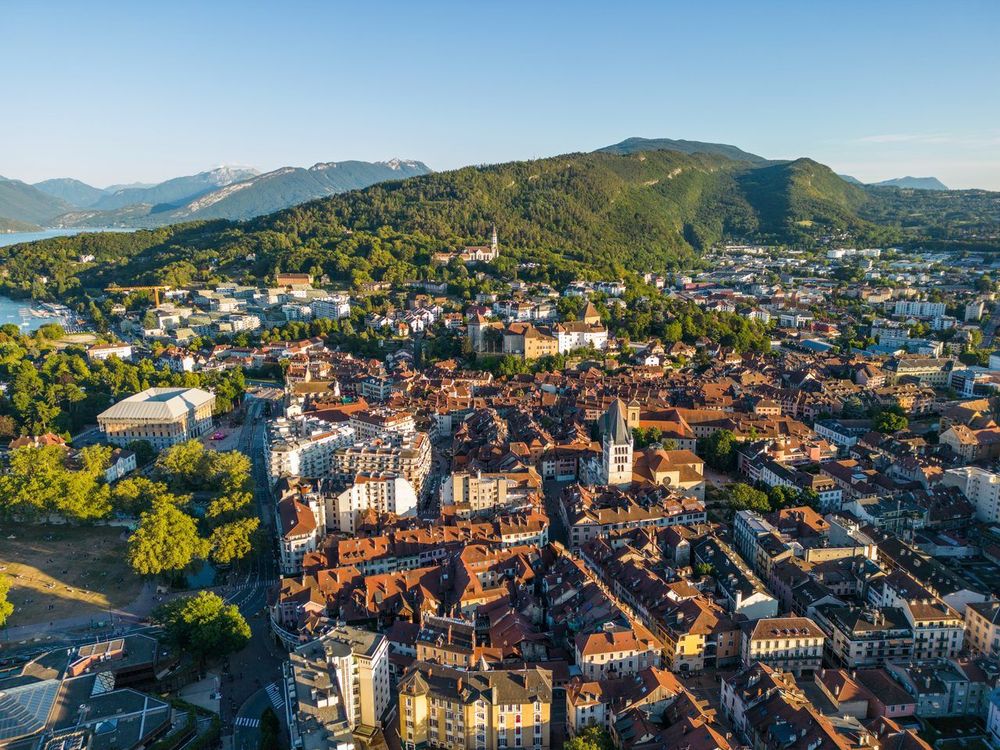
Few French towns have preserved such an intact medieval centre. Annecy's old town is built around its canals, coloured by geraniums in the windows and crossed by a dozen bridges, some dating back to the 12th century. Starting with the arcades of rue Sainte-Claire is the obvious choice: it is the main commercial artery, 350 metres long, lined with arcaded buildings that shelter you from both sun and rain.
At the junction of the Canal du Thiou and the Canal du Vassé, the Palais de l'Île rises like a stone ship set upon the water. This former 12th-century prison, now converted into an exhibition centre, is arguably the most photographed building in the French Alps. The entrance is worth it: inside, permanent exhibitions cover the history of Annecy and Savoie, and the windows look directly out onto the current of the Thiou. Admission is €3.80.
From the Palais de l'Île, walk up along the Quai de l'Évêché to the Pont d'Amour, a small vaulted 18th-century bridge that has become a romantic symbol of the city. Tradition has it that couples who cross it together will stay bound to one another — which explains the permanent crowd and the padlocks on the railings. Just beyond, the Jardins de l'Europe offer a rare breathing space: a 2-hectare park on the lakeshore, planted with century-old chestnut trees and open to an unobstructed view of the mountains. It is one of the few green spaces in the centre that is entirely free and accessible year-round.
Strolling eastward, you reach the Quai des Vieilles Prisons, where orange façades reflect in the waters of the Thiou. This is where restaurants and bistros are most concentrated — and most touristy. To avoid overcrowded terraces in summer, time your visit for the evening: from 6pm onwards, the light on the façades turns golden in ways that few brochures ever capture.
The Cathédrale Saint-Pierre closes this walk on the northern side: built in the early 16th century in a late Gothic style, it became in 1535 the refuge cathedral for the bishops of Geneva driven out by the Reformation, and it was from Annecy that the Catholic response to Calvinism was organised. Saint Francis de Sales later served here as bishop. The interior is austere, but the proportions are imposing, and the Baroque organ is worth a few minutes of quiet contemplation before heading back to the canals.
One thing to know: the old town is extremely busy from mid-July to mid-August between 10am and 5pm. Arriving before 9am or after 6pm completely changes the experience — the lanes recover their calm, the reflections on the canals are sharp, and the shopkeepers have time to chat. Those are also the best hours to walk our audio-guided tour, from the lakeshore to the Palais de l'Île.
Lake Annecy: Swimming, Water Sports, and Boat Cruises
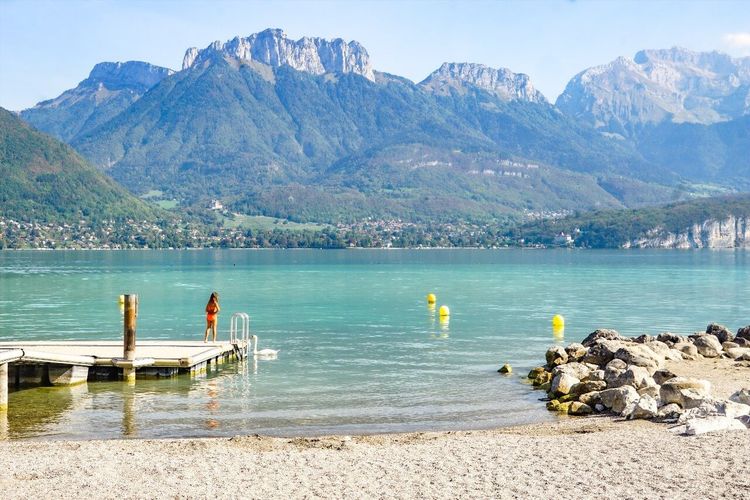
Lake Annecy is one of the purest lakes in Europe, the result of strict environmental policies that began in the 1960s when eutrophication threatened its waters. Today, the clarity is such that you can see the pebbles several metres below the surface. In summer, the surface temperature reaches 24–25°C, making it as effective a swimming destination as any Mediterranean coastline.
Beaches are spread all around the lake. Plage d'Albigny, in Annecy-le-Vieux, is the most popular on the town side: free entry, 800 metres of lawn, diving boards, and a play area. Plage Impérial, more central, is paid (around €4 in season) but offers quality facilities, changing rooms, and on-site catering. Plage de Clos Savoie, less well known, draws families for its shallow section and quieter setting. Our selection of the best swimming spots in Annecy details all the options with their specific features.
On the water, the offer is wide. Paddleboard, kayak, and pedalo rental operators are set up on the main beaches and offer hourly hire (from €8 for a paddleboard, €12 for a double kayak). Sailing schools run beginner courses from age 8, using light dinghies on the generally calm morning waters. On summer afternoons, the wind picks up from the north — the "Vent du lac" — much to the delight of windsurfers and kitesurfers concentrated along the eastern shore between Doussard and Saint-Jorioz.
For a more contemplative approach, the Compagnie des Bateaux du lac d'Annecy (1 Place aux Bois, 74000 Annecy, rated 4.2/5 on Google from 1,811 reviews) offers commentary cruises (departing from the Pâquier, March to November) and ferries serving Talloires, Menthon-Saint-Bernard, and other villages around the lake. The panoramic cruise lasts 1h15 and offers a unique perspective on the châteaux of the eastern shore, visible from the lake with a sense of relief that the road simply cannot convey. The all-day pass allows unlimited back-and-forth between the villages.
Outside summer, the lake takes on a different character. In autumn, misty mornings create a perfect mirror effect, the crowds thin out, and the light on the mountains becomes genuinely spectacular. It is also the ideal season for cycling along the shore without the pressure of summer crowds. Our article on what to do at Lake Annecy details water activities season by season.
The Best Viewpoints over Lake Annecy
When it comes to viewpoints, activities in Annecy and the surrounding area gain altitude: the lake reveals itself differently depending on the height from which you observe it. From the old town, you glimpse its edges and the nearest summits. To take in the full expanse of water — 14.6 km long, 3.2 km wide, surrounded by mountains rising above 2,000 m — you need to climb.
The Col de la Forclaz (1,150 m) is the reference viewpoint over the lake on the eastern side. Reachable by car from Talloires in about fifteen minutes, the pass overlooks the entire lake, the old town, and the Aravis summits. It is also the most popular paragliding launch site in Haute-Savoie — in summer, the colourful wings in the sky are a landscape feature in their own right. Our article on hikes at the Col de la Forclaz details the walking routes from the pass towards the overlooking ridges.
The Semnoz (1,699 m), to the south-west of the lake, offers the widest view in the region. On a clear day, you can see Mont Blanc to the east, the Aravis, the Bauges, and to the south, the peaks of Belledonne. The Semnoz road is open in summer and reachable by car from Annecy in 30 minutes. In winter, the Semnoz resort offers family-friendly ski runs with the lake as a backdrop — a setting that few ski areas can match.
The Mont Veyrier (74290 Veyrier-du-Lac, rated 4.8/5 on Google from 92 reviews) (1,292 m), above Veyrier-du-Lac, is more discreet but perhaps even more beautiful. The old cable car that once ran up from the village closed in 1984 and was never replaced: today you climb on foot, partly following the former cable car route. The view over the old town, the mouth of the Thiou, and the northern shore is striking. Allow around 1h30 for the ascent via the marked trail, with changing views over the lake depending on which side of the slope you are on.
For those less comfortable with hiking or mountain driving, the château d'Annecy belvedere offers a panorama over the old town and the lake, reachable on foot from the centre in a 15-minute climb. Less dramatic than the sites above, it remains an excellent option for a sunset from the heights.
Hiking around Annecy: Trails for Every Level
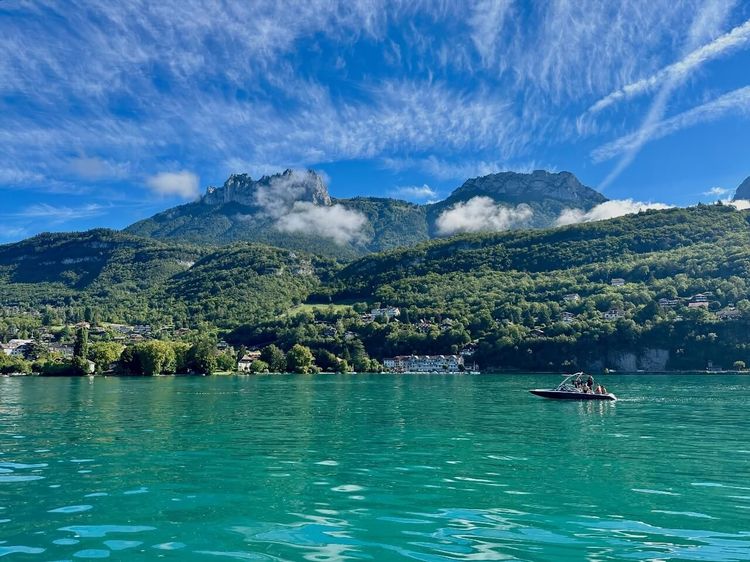
Hiking ranks among the top activities in Annecy and the surrounding area: the local geography is a paradise for walkers. Less than 30 minutes from the town centre, a dozen trail starting points offer very varied profiles, from easy lakeside walks to exposed ridgelines. If you plan to hike in winter or from autumn onward, our guide to the most beautiful hikes around Annecy in winter covers the routes that are passable in snow.
The lake circuit trail is the reference route for walkers with no particular experience. Over 43 km, it follows the shoreline alternately via footpaths, cycle paths, and a few tarmacked sections. It can be split into stages and combined with water shuttles for the return. The most beautiful stretch runs between Talloires and Menthon-Saint-Bernard, where the path winds between beech forest and the lake's edge.
For hikers seeking elevation gain, Mont Veyrier is a classic option: 690 m of ascent from Veyrier-du-Lac, 2h30 return, with views over the lake that broaden with every step. From the summit, a ridge connects Veyrier to the Dent de Lanfon (1,824 m) — for more experienced walkers, an airy ridgeline route with some wind-exposed sections.
The Montagne du Semnoz offers several itineraries. The most accessible starts from the Croisée du Semnoz (reachable by car), reaches the ridges in 1h30, and provides the panoramas described above. For a longer version, the full ascent from the Brogny neighbourhood of Annecy involves 1,000 m of elevation gain and half a day's effort — the reward is proportionate. Our article on the most beautiful hikes in Haute-Savoie completes this regional overview with routes away from the most frequented paths.
The Montagne de Mandallaz, north of Annecy, is less spectacular but very accessible for families: beech forest, modest elevation gain, and several marked loops of 2 to 3 hours. It is a good option on overcast days, when the ridges are in cloud but the woods are still walkable. The Mandallaz plateau (74370 Argonay, rated 4.8/5 on Google from 4 reviews) is also used for snowshoe outings in winter.
For hikers who want to combine walking and history, the village of Entrevernes is one of the least touristy destinations around the lake. Perched at 900 m altitude facing the Aravis, it earns its beauty after a 45-minute climb from Doussard. The reward: a view of Lake Annecy from above, with the silhouette of the Château de Duingt in the foreground and the Bauges ridges in the background.
The Gorges du Fier (see excursions section) are also accessible on foot from Lovagny station. The path follows the river from the village, passes through oak woodland, and reaches the gorge entrance in 20 minutes — a good way to combine a walk with a visit to a natural site.
The Château d'Annecy and Cultural Life
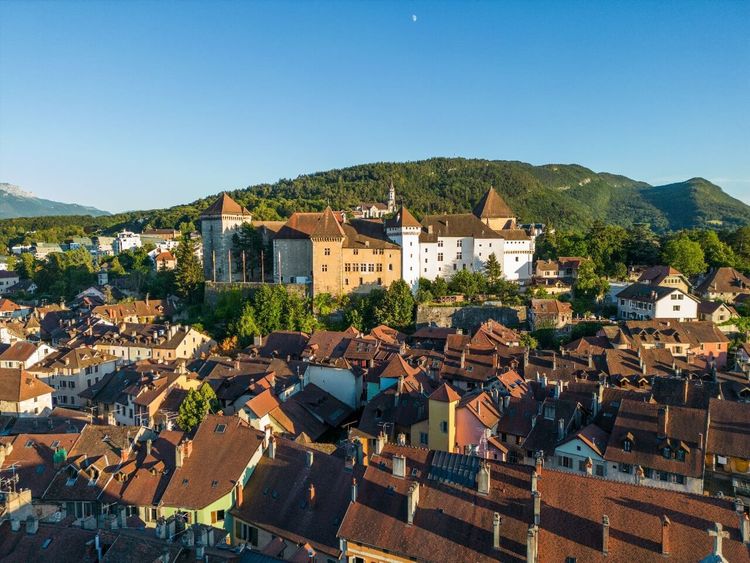
The Château d'Annecy (Place du Château, 74000 Annecy, rated 4.1/5 on Google from 5,698 reviews) dominates the old town from a wooded hill — it is visible from almost everywhere in the historic centre. Built from the 13th century onwards and remodelled several times until the 16th century, it now houses the Musée-Château d'Annecy, which brings together two permanent collections: one devoted to regional Savoyard arts (ceramics, furniture, antique textiles), the other to contemporary art and Alpine natural sciences. Admission is €5.50 for adults, and the view from the keep over the lake is alone worth the visit.
The château puts on temporary exhibitions throughout the year, often linked to Alpine history or regional contemporary art. In summer, performances are sometimes staged in the inner courtyard. Check the full schedule of events in Annecy so you don't miss any one-off programmes.
Cultural life is not limited to the château. Every June, Annecy hosts the International Animation Film Festival (CITIA), one of the most important in the world in this field. Free open-air screenings take place on the Pâquier throughout the festival, drawing thousands of spectators each evening. Beyond this major event, the Bonlieu (national stage) stages theatre, dance, and music throughout the year.
To go deeper into the old town's history, the Ryo audio guide La Venise des Alpes offers 20 audio stops telling the story of the canals, the château, the cathedral, and the figures who shaped the city — to listen to at your own pace, without a human guide, over 2.6 km. It is a way of engaging with Annecy's heritage with a density of information that no conventional guided tour can compress.
The Lake Circuit by Bike
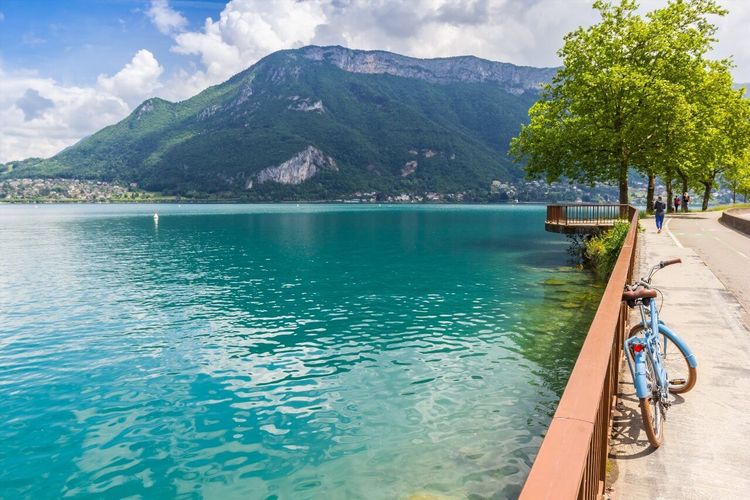
The lake circuit by bike is arguably the most rewarding of all activities in Annecy and the surrounding area. Over 43 km that are almost entirely flat (or very gently rolling), the dedicated cycle path loops around the entire lake and passes through dozens of villages, beaches, and viewpoints. For an average cyclist, the full loop takes 3 to 4 hours at a leisurely pace with stops.
Several bike hire operators are based in the town centre, near the Pâquier and around the station. Hourly, daily, and weekend rentals are available in standard bikes, mountain bikes, and electric bikes. Electric bikes are particularly popular with families and less-trained riders: the gentle climbs on the eastern shore no longer pose any problem, and the full circuit becomes accessible to everyone from age 8.
The stretch between Annecy-le-Vieux and Menthon-Saint-Bernard is the most scenic: the road hugs the eastern shore with the Château de Menthon-Saint-Bernard as a backdrop, and several beaches invite swimming stops. On the western shore, the section between Duingt and Saint-Jorioz is the quietest, passing through untouristy hamlets right at the water's edge.
A practical tip: in July and August, cycling the lake circuit anticlockwise (starting along the western shore) means the sun is at your back in the morning and you arrive at the liveliest beaches in the late afternoon.
Paragliding, Canyoning, and Outdoor Activities
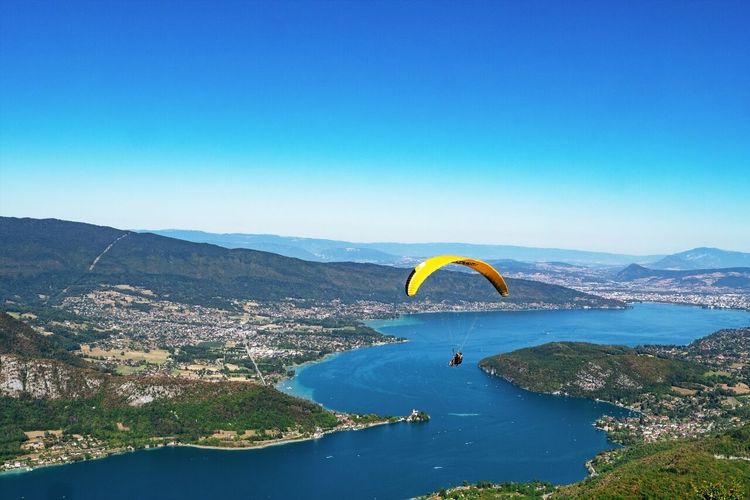
Outdoor sports occupy a special place among activities in Annecy and the surrounding area: the territory is one of the regions of France with the highest concentration of outdoor sports. The altitude, topography, and diversity of terrain — lake, forest, limestone cliffs, and Alpine summits — allow for a range of activities that is rare for such an accessible area.
Paragliding is the emblematic activity. The Col de la Forclaz is one of the most frequented paragliding sites in Europe, with more than 30,000 launches per year. Dozens of schools and operators offer tandem flights for beginners (30 to 45 minutes, €90–110), landing on the beach at Doussard by the lake. The view from 1,500 m altitude over the turquoise expanse of water is unforgettable, and makes for an outstanding travel memory even for those who never fly otherwise. To prepare your outdoor day from the old town, start with an hour of discovery on the Ryo app before heading out to the activity sites.
Canyoning is well developed in the Bauges and Aravis. The Borne canyon (near Thônes, 40 km) is the most accessible for beginners: abseil descents, natural water slides, and cold-water pools, all led by qualified guides. Allow around €60–80 for a half-day with equipment.
For climbing enthusiasts, the Via Ferrata de la Roche au Feu (commune of Doussard) offers equipped routes accessible from age 10 with gear available to hire on site. Difficulty levels range from easy to hard depending on the section chosen.
Excursions within 30 Minutes: Gorges du Fier, Talloires, and Menthon-Saint-Bernard
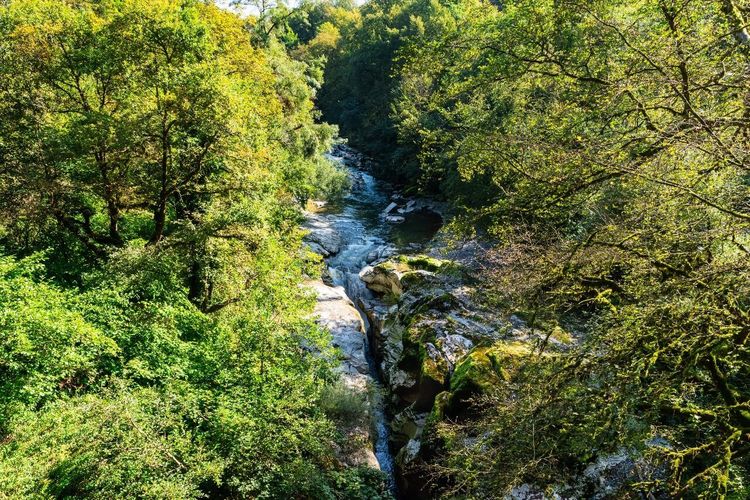
Short excursions rank among the best activities in Annecy and the surrounding area: the density of remarkable sites within a very short radius is exceptional. Less than 30 minutes by road, three destinations stand clearly apart from the rest.
The Gorges du Fier (at Lovagny, 12 km north of Annecy) are a striking geological spectacle. The Fier river has carved over 250 metres a narrow canyon that you walk through on metal walkways bolted to the cliff face, just a few metres above the current. The site is open from mid-March to mid-October, with admission of around €7 for adults. Allow 45 minutes for the full visit, more if you continue to the Château de Montrottier adjacent to the gorges — a 15th-century castle whose collections of bronzeware, armour, and tapestries are surprisingly rich for such an under-the-radar site.
Talloires (10 km south-east of Annecy) is the most elegant village on the lake circuit. With its charming hotels, its 11th-century Benedictine abbey converted into a hotel complex, and its white-pebble beach, it is a destination in its own right. The village has drawn wealthy families and painters since the 19th century: Cézanne stayed at the abbey in the summer of 1896 and painted his celebrated "Lac d'Annecy" there, depicting the Château de Duingt as seen from the bay. Today, it makes an ideal summer day trip: swimming from the Talloires beach, kayaking across the bay, lunch on a terrace with a commanding view of the limestone cliffs dropping into the lake.
Menthon-Saint-Bernard (10 km south of Annecy) hides its hand. The lakeside village is understated, but the Château de Menthon-Saint-Bernard (Place du Château, 74290 Menthon-Saint-Bernard, rated 4.5/5 on Google from 5,935 reviews), perched 200 m above the lake on a wooded promontory, is one of the best-preserved medieval châteaux in the French Alps. Continuously inhabited since the 11th century and still the property of the de Menthon family, it is said — according to persistent local tradition — to have served as the model for the Sleeping Beauty castle at Disney. Guided tours run from 1 May to 30 September, at around €10. Our guide to the most beautiful beaches in Annecy also covers the small pebble beach at Menthon.
Aravis, Bauges, and the Lac du Bourget: Getaways within an Hour
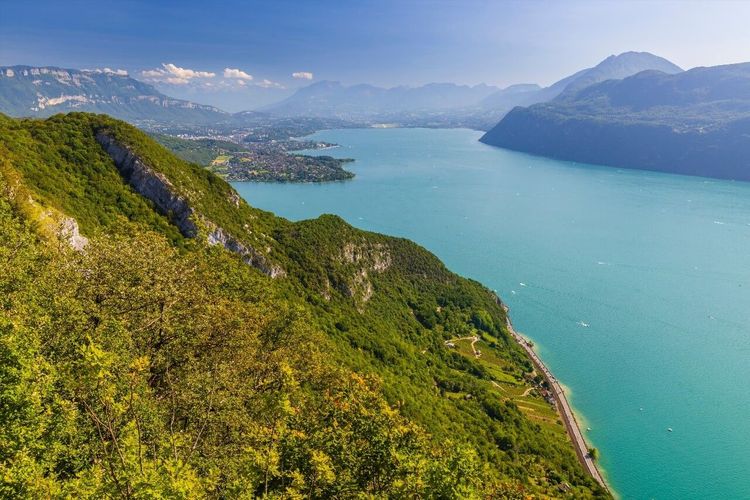
Extending the radius to an hour's drive, activities in Annecy and the surrounding area expand into a collection of complementary Alpine destinations, each with its own identity.
The Aravis form the mountain chain to the east of Annecy, and the villages nestled within it are among the most beautiful in Haute-Savoie. La Clusaz (35 km, 45 min) is the best known: a ski resort in winter, it transforms in summer into a hiking base with a network of 200 km of marked trails. Its summer local produce market (every Tuesday) and its authentic Savoyard village architecture also make it a destination for those who prefer not to lace up their walking boots. Le Grand-Bornand (40 km, 50 min) is similar in spirit but more family-oriented, with a glacial lake (the Lac du Chinaillon) reachable on foot from the village in an hour.
Thônes (25 km, 30 min), in the Aravis valley, is less touristy but deeply charming: weekly markets, artisan cheesemakers (this is the home of AOC reblochon), and a traditional Alpine market-town architecture that tourism has not yet smoothed over. Our article on the most beautiful villages around Annecy lists the must-sees in this area.
The Parc Naturel Régional du Massif des Bauges (to the south-west) is less well known than the Aravis but equally spectacular. This 85,000-hectare territory is home to chamois, ibex, and golden eagles, with lightly touristed alpine hamlets. Le Châtelard and Aillon-le-Jeune are good entry points for half-day hikes in the Bauges. The park organises guided outings to discover wildlife — ibex observation at dawn, migrating bird counts in autumn — a rare experience less than an hour from Annecy.
Aix-les-Bains and the lac du Bourget (Aix-les-Bains, 73100 Aix-les-Bains, rated 4.6/5 on Google from 3K reviews) (50 km to the south-west) make up another first-rate excursion. The lac du Bourget is the largest natural lake in France — even broader than Lake Annecy — and the town of Aix-les-Bains retains an intact Belle Époque thermal elegance with its grand hotels, thermal baths, and casino. The lac du Bourget beach is easily accessible and noticeably less crowded than those of Annecy. The road between the two lakes passes through the Massif des Bauges, making the drive itself a panoramic experience.
Annecy in Winter: Ski Resorts and Snow Activities
Winter completely changes what Annecy and its surroundings have to offer. The town itself is very beautiful under snow — canals gripped by the cold, the château lit up at night, Christmas markets in December spreading across the old town squares from 1 December. But it is above all the easy access to ski resorts that makes Annecy a formidable winter base for mountain stays.
Just 30 minutes from Annecy, the Semnoz offers around ten family-friendly runs (a 220-hectare ski area, 670 m of vertical drop), perfect for children and beginners. The view over the lake from the pistes is unique — few resorts can boast a panorama over a turquoise stretch of water at their feet. The day pass remains affordable (around €25 for an adult), making it a quality option without the budget of a major resort.
La Clusaz (45 min) is the best-known resort in the area: 125 km of runs spread across 5 massifs, from beginner green to expert black, with modern lifts. The resort regularly hosts Alpine Ski World Cup events. Le Grand-Bornand (50 min) is quieter, with 90 km of alpine runs and a cross-country skiing area with 75 km of Nordic trails — one of the largest in Haute-Savoie.
Manigod (40 km), less well known, offers less crowded runs and lower prices than the larger neighbouring resorts. Its ski area links up with the La Clusaz–Manigod massif at peak season, giving access to a combined 200 km of runs.
For non-skiers, winter options are just as plentiful: snowshoeing on the Semnoz plateau or in the Bauges (around ten marked routes), guided snowmobile circuits on the Aravis side, a temporary ice rink on the Pâquier in Annecy in December and January, and dog-sledding organised by several farms in the Aravis.
Savoyard Gastronomy: Markets, Cheeses, and Local Specialities
Savoyard cuisine is straightforward and generous. Fondue savoyarde, raclette, tartiflette, diots with white wine — the list of warming dishes is long, and in Annecy they are omnipresent on the menus of the old town's restaurants. But the real local gastronomy is discovered elsewhere than in the tourist-facing establishments of the centre.
The Annecy Market (Place Sainte-Claire, 74000 Annecy, rated 4.5/5 on Google from 1,311 reviews) is held every Tuesday, Friday, and Saturday morning across several squares of the old town — Place Sainte-Claire, Quai Perrière, Place Notre-Dame. Saturday is the most complete: cheese sellers with beaufort, abondance, tomme de Savoie, and alpage reblochon, charcuterie producers, greengroers, and florists set up from 7am. This is where Annecy residents do their shopping — not tourists, generally — which makes it an authentic experience.
To understand the depth of the local cheese-making tradition, our guide to Annecy's culinary specialities covers the subject in detail, from AOC cheeses to Savoyard crozets, taking in farcements and late-summer blueberry tarts.
The old town's restaurants are plentiful but quality varies. Favour the side streets — Rue du Pré Carré or the lanes behind the cathedral — over the main tourist arteries such as Rue Perrière, where prices are often 20 to 30% higher for equivalent or lesser results. Outside the centre, the Cran-Gevrier neighbourhood and mountain inns in the villages around the lake often offer the best value for home-made Savoyard cooking.
What to Do in Annecy When It Rains
Not all activities in Annecy and the surrounding area depend on good weather. The weather in Haute-Savoie can be changeable even in summer, and rainy spells — often brief but intense in the mountains — are worth planning for.
The Musée-Château d'Annecy is the go-to cultural option for a rainy morning. Two hours are enough to work through both permanent collections. In season, themed guided visits are organised at weekends — check times at the tourist office or online.
The Palais de l'Île also hosts temporary exhibitions in its vaulted galleries, and the building itself — with its dungeons and barrel-vaulted rooms — visits very well in the rain. For families with children, the Vitam'Parc aquatic complex (indoor pools, water slides, play area) is a reliable option that fills several hours. Pathé Annecy cinema (Grand Épagny, outside the centre) runs continuous screenings. In town, a few cheese and charcuterie tasting shops organise discovery workshops by reservation.
Rain is also the right moment to settle comfortably at a table: the area around Rue Royale and Place Notre-Dame has a few good independent cafés where it is pleasant to spend an hour with a book.
Practical Information: Getting around Annecy and the Surrounding Area
Annecy is very walkable. The old town, the Pâquier, and the nearby beaches are 15–20 minutes on foot from the SNCF train station. The urban bus network Sibra covers the rest of the urban area with frequent services and extended hours.
For excursions around the lake, the water shuttles run by the Compagnie des Bateaux are the most pleasant solution: they serve Veyrier-du-Lac, Menthon-Saint-Bernard, Talloires, and Doussard from mid-June to mid-September, with tickets at €5–8 depending on the destination. The all-day "lake circuit" pass allows unlimited back-and-forth trips. A car, however, remains essential for reaching the Aravis, the Bauges, or the Bourget valley. Parking in town is difficult and paid in summer — use the park-and-ride car parks on the outskirts (Pâquier car park, Marquisats car park) with shuttle services to the centre. Bear in mind that mountain roads to the passes and ski resorts can be heavily congested on winter weekends.
For accommodation, our selection of the best hotels in Annecy covers options across all price ranges, from lakeside palaces to charming hotels in the old town. For a stay in the heart of nature, our guide to the best campsites in Annecy lists the best addresses with lake views or forest settings.
FAQ
What can you do in Annecy and the surrounding area in summer?
In summer, Annecy revolves around the lake: swimming on the beaches (Albigny free, Impérial paid, Clos Savoie for families), water sports (paddleboarding, sailing, kayaking, pedalos), and panoramic boat cruises. The old town is very lively with its markets, terraces, and exhibitions. Around Annecy, the Col de la Forclaz for paragliding and viewpoints, the Gorges du Fier, Talloires, and Menthon-Saint-Bernard are the top excursions. For hikers, the Semnoz and Mont Veyrier offer the finest views over the lake. In June, the International Animation Film Festival puts on free open-air screenings on the Pâquier.
Are there free activities in Annecy?
Yes, several. Strolling through the old town, the Jardins de l'Europe, the Albigny beach (free and the largest), the Tuesday, Friday, and Saturday markets, the lake circuit trails, and the marked hiking paths all cost nothing. The animation film festival offers free open-air screenings. The Palais de l'Île (€3.80) and the Château d'Annecy (€5.50) remain affordable. Our article on the must-do things in Annecy lists both the free and paid essentials.
What are the best day trips from Annecy?
Three destinations stand out: the Gorges du Fier combined with the Château de Montrottier (12 km, half a day), the Talloires–Menthon-Saint-Bernard loop along the eastern shore of the lake (combinable by bike and water shuttle), and La Clusaz or Le Grand-Bornand for an immersion in an Alpine village. An hour away, Aix-les-Bains and the lac du Bourget offer a different world — Belle Époque thermal baths, a vast lake, and fewer tourists than Annecy.
Which ski resorts are close to Annecy?
The Semnoz is 30 minutes away: a family-friendly domain of 220 ha with a unique view over the lake and affordable lift passes. La Clusaz (45 min) is the largest: 125 km of runs across 5 massifs. Le Grand-Bornand (50 min) is quieter, with 90 km of alpine runs and a large cross-country ski area. Manigod (40 min) is less well known and less crowded — a good choice for weekday outings.
Is Annecy suitable for families with children?
Very much so. The lake beaches are shallow at the edges and supervised in summer. The e-bike lake circuit is suitable from age 8. The Gorges du Fier and the Château de Menthon-Saint-Bernard are much loved by younger visitors. In winter, the Semnoz is the resort of choice. For an unusual romantic or family weekend, our guide to unusual weekend stays in Annecy offers original experiences off the beaten track.
When is the best time to visit Annecy?
July and August are the busiest months — ideal for swimming but crowded with tourists and difficult for parking. June and September are often better: the lake is still at a comfortable (or warm) temperature, crowds are lighter, and accommodation is cheaper. December is lovely for the Christmas markets. Winter (January–March) suits ski enthusiasts. Spring (April–May) is green and lightly touristed, with hiking trails reopening gradually depending on altitude — it is the favourite season for local hikers on the Semnoz ridges and the Bauges trails. Out of season, our audio-guided tour runs from the Pâquier to the Palais de l'Île with barely another visitor in sight.
Conclusion
Activities in Annecy and the surrounding area form one of the most versatile offerings in the French Alps. In summer and winter alike, for families, sports enthusiasts, or lovers of heritage and gastronomy, the territory meets a variety of expectations that are rarely found concentrated within such a short radius. Twenty minutes from the town centre is enough to move from a medieval palace to alpine ridges, from a cheese market to a paragliding launch site.
To discover the old town at your own pace, without time constraints or guided groups, start with the Ryo audio guide "La Venise des Alpes": 20 audio stops over 2.6 km, available on the Ryo Annecy page — for a first hour of exploration that lays the groundwork before opening out towards the lake, the mountains, and the villages beyond.
À lire également