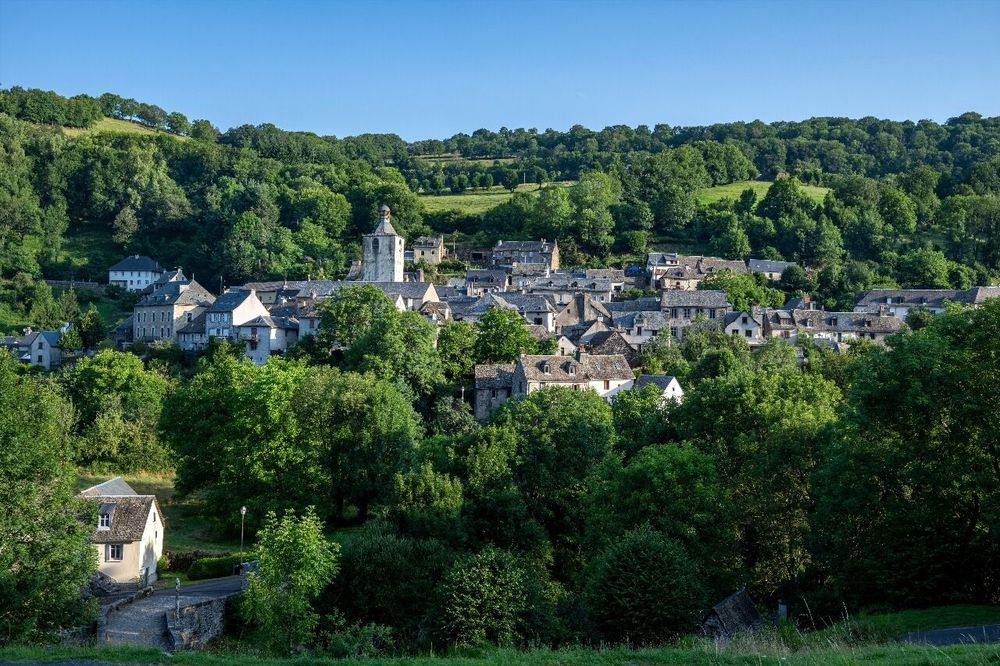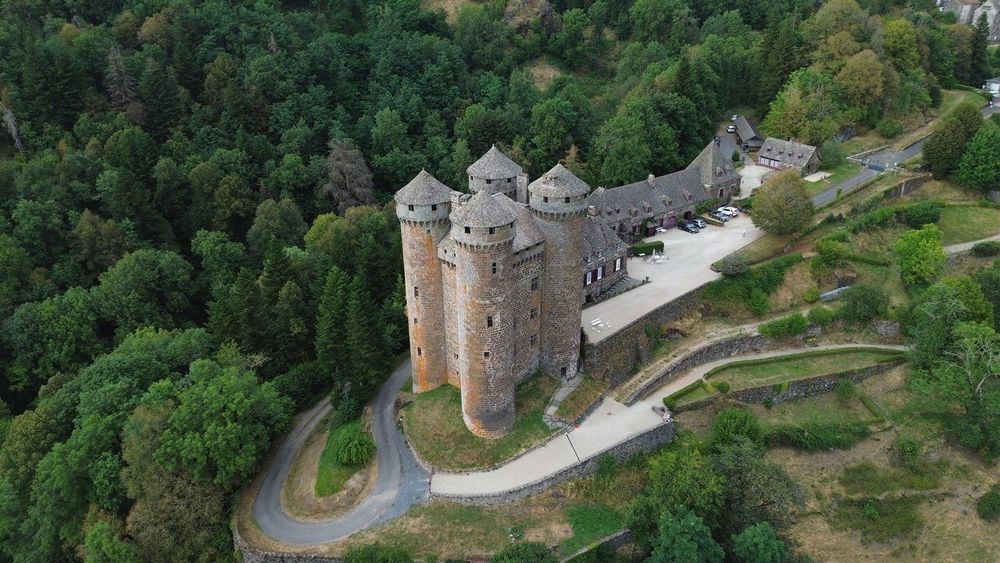
© Shutterstock
 Votre guide Ryo
The 15 Most Beautiful Villages in Cantal to Visit in 2026
Cantal doesn't reveal itself from the motorway. You must venture into its glacier-carved valleys, follow the rivers that descend from the largest stratovolcano in Europe, 1,855 metres at the Plomb du Cantal, and pass through hamlets where the black basalt and grey schist give the houses the same colour as the mountain surrounding them. This department, one of the least densely populated in France with barely 23 inhabitants per km², nevertheless concentrates some of the most beautiful villages in Cantal, a medieval heritage, volcanic sites, and living traditions that few French regions can rival. Three of its villages carry the official label of the Plus Beaux Villages de France — Salers, Tournemire, and Marcolès — and a fourth, Blesle, borders it on the Haute-Loire side; a dozen others would easily deserve to join them. To go further in discovering French village heritage, the Ryo selection of the most beautiful villages in France covers many other regions.
Among the stops in this selection, you will find a natural thermal spring that has gushed at 82°C since the Middle Ages, a medieval castle that has remained in the same family since 1435, a village perched on a basalt flow at 950 metres above sea level where mahogany-coated cows still graze on the summer pastures from May to October, and a Margeride plateau so vast and so silent that wolves returned there on their own from the 2010s onwards. Here are the 15 villages of Cantal that are worth the detour, with everything you need to know to make the most of them.
1. Salers, the Most Preserved Volcanic Town in the Massif Central
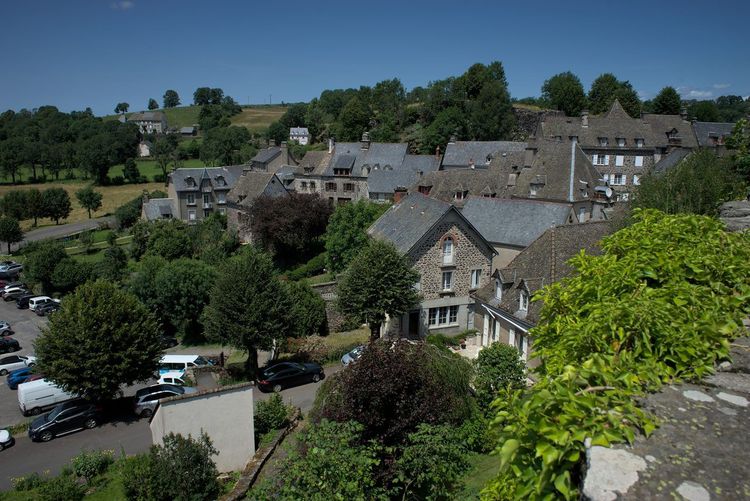
Perched at 950 metres above sea level on a volcanic spur overlooking the Maronne valley, Salers is without doubt the most impressive village in Cantal. Its black basalt stone houses, its corbelled towers, its Renaissance mansions built by magistrates and Cantal bourgeoisie in the 15th and 16th centuries form an urban ensemble of rare coherence, which made it one of the founding members of the Plus Beaux Villages de France: it was precisely in Salers that the association was born in 1982, at the instigation of a few dozen mayors.
The place Tyssandier-d'Escous forms the heart of the town. Surrounded by seigneurial residences and shops, it leads to cobbled lanes that radiate towards the medieval ramparts, largely preserved. The porte du Beffroi, which marks the northern entrance to the village, dates from the 15th century. The former Cordeliers convent, now repurposed, testifies to the religious importance of Salers at the end of the Middle Ages.
Inside the village, the collegiate church of Saint-Mathieu deserves half an hour's visit. It houses a polychrome 15th-century Entombment — fifteen life-size figures sculpted in calcareous tufa — one of the finest in the Massif Central. The building is composite: Romanesque for the oldest parts, Gothic for the nave, with lateral chapels added up to the 17th century. Look up at the carved capitals of the nave: the animal heads and plant interlacing bear witness to a high-quality local workshop.
Salers is also a living terroir. The Salers cow, a breed with a mahogany coat recognisable by its lyre-shaped horns, heads to the surrounding summer pastures from May to October. It produces a rich milk used in making Salers AOP cheese, one of the six Auvergne appellation cheeses, produced only on the farm, only between 15 April and 15 November, and only as an uncooked pressed cheese aged for at least three months. Several farms in the surrounding area organise visits to their burons (traditional mountain chalets) and tastings between May and September.
The surroundings of the village are as worthy as the village itself. The gorge de la Rhue, accessible from the road to Riom-ès-Montagnes, passes through a spectacular landscape of basalt columns. The viewpoint at Puy Violent (4 km to the east) offers a panorama over the peaks of Cantal and the lake of la Rhue on a clear day.
Practical tip: in July and August, the streets of Salers are overrun with visitors from 10am. Arrive before 9am or after 5pm to recapture the silence of the cobblestones and the raking light on the black basalt that gives the village its full majesty.
2. Tournemire, the Medieval Village of the Château d'Anjony
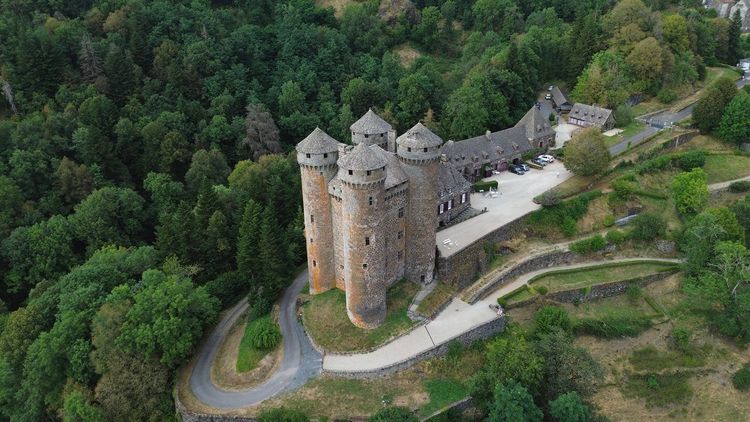
Tournemire is a village of a few hundred inhabitants perched on a rocky promontory overlooking the Maronne valley, about twenty kilometres north of Salers. What sets it apart, beyond its membership in the same circle of exceptional villages, is the presence of the château d'Anjony, one of the best-preserved medieval castles in the Massif Central, whose silhouette of four towers with conical roofs rising from the vegetation is immediately recognisable.
Built between 1435 and 1439 by Louis d'Anjony, a companion of Joan of Arc, the castle has remained in the same family to this day — nearly six centuries of uninterrupted ownership — which explains the site's exceptional state of preservation. The building can be visited from April to October, with costumed guides at weekends. The entrance fee is around €8 for adults.
Inside, the 16th-century chapel frescoes and the Hall of Heroes draw the most attention. The frescoes depict scenes from the life of Christ and the saints in ochre and red tones of a vividness surprising for their age. The Hall of Heroes presents a series of historical and mythological figures painted on the walls — an ambitious iconographic programme that testifies to the humanist culture of the lords of Anjony during the Renaissance.
The village of Tournemire (Le Bourg, 15340 Tournemire, rated 4.4/5 on Google based on 134 reviews) itself is more discreet than its castle. The 12th-century Romanesque church with its wall belfry, characteristic of Auvergne architecture, is worth a stop. The panoramic road that winds around the promontory offers views of the Chaîne des Puys and the Limagne plain on a clear day.
In the same Maronne valley, the château de la Lébège (15th century, visible from the road) and the villages of Saint-Martin-Valmeroux and Fontanges make a worthwhile addition to a full day of discovery.
3. Murat, the Capital of Haute Auvergne beneath the Roche de Bonnevie
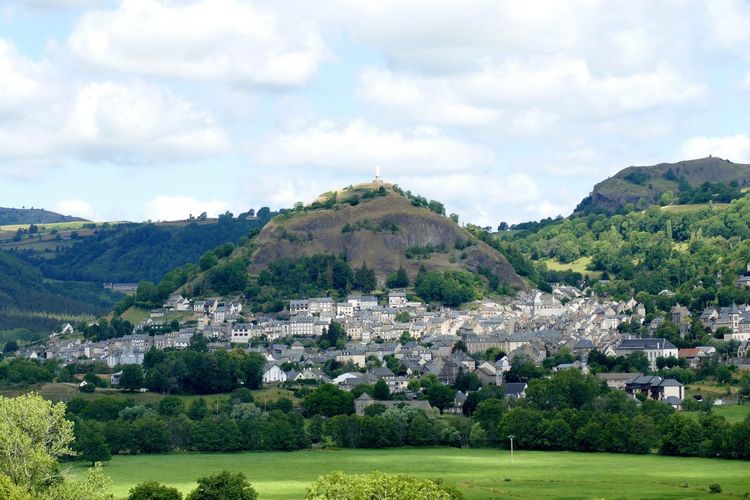
With its 2,000 inhabitants, Murat is technically a small town rather than a village, but its medieval lanes and unique geological setting make it an essential stop on any Cantal itinerary. What strikes you on arrival is the roche de Bonnevie, a column of prismatic basalt that rises some fifty metres above the rooftops, topped by a 5-metre statue of the Virgin, visible for several kilometres around. This remnant of an ancient volcanic chimney dominates the Murat basin with a presence that is as much theatrical backdrop as geographical landmark.
The historic town is organised around the collegiate church of Notre-Dame-des-Oliviers, a Gothic building from the 14th–15th centuries listed as a Historic Monument. The interior preserves 15th-century carved wooden choir stalls and a remarkably well-preserved 14th-century Black Virgin. The streets climbing from the collegiate church towards the base of the roche de Bonnevie pass through a district of half-timbered houses and bourgeois residences from the 15th–16th centuries.
Murat is also an ideal base for exploring the Cantal massif. The GR 400, the trail around the Cantal volcano, passes along the ridges above the town. In an hour's climb from the centre, you reach panoramas over the Plomb du Cantal, the Puy Griou, and the valleys opening to the east and north.
The Wednesday morning market brings together cheesemakers, charcutiers, honey producers and market gardeners from across Haute Auvergne. It is a good opportunity to understand why Cantal's economy remains deeply rooted in its local produce, and to stock up before a day's hiking.
4. Blesle, the Romanesque Village with Colourful Houses
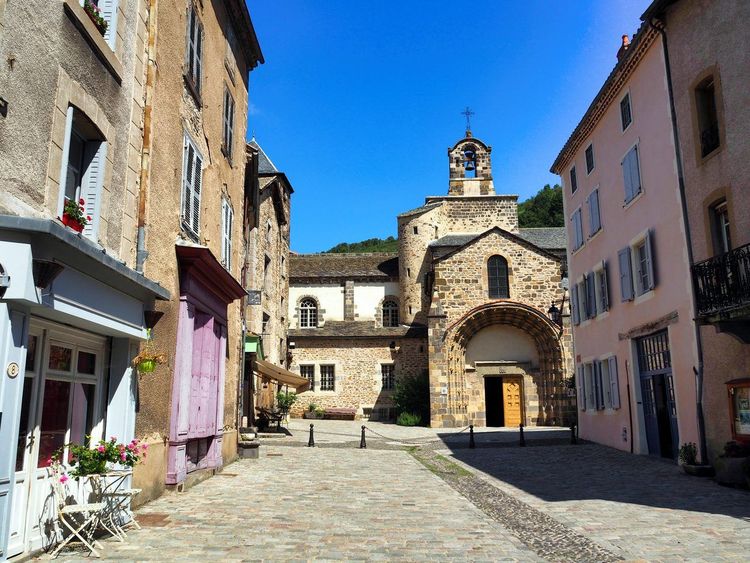
Blesle is the most easterly listed village in this selection. It actually lies just across the departmental border, in Haute-Loire, but it remains so close to Cantal, and so close in spirit, that no regional selection ever leaves it out. It is also the least known of these listed villages, which makes it perhaps the best preserved from mass tourism — a rare quality.
The village owes its existence to a Benedictine abbey founded in the 9th century. The abbey church of Saint-Pierre, of which remarkable Romanesque sections remain, dominated local life for eight centuries. The square tower, the Romanesque apse and the partially preserved cloister bear witness to the scale of this monastic foundation. The plain interior, with its cylindrical pillars and historiated capitals, is a fine example of Auvergne Romanesque art.
Blesle's architectural particularity lies in the alternation between black volcanic basalt and light granite, two stones that give the façades a distinctive variegated appearance found nowhere else in the region. The corbelled houses, exterior staircases and vaulted cellars lend a very medieval air to a village that has barely changed since the 15th century. The tour du Dauphin, an ancient watchtower, offers a panorama over the steep valley from its summit.
Blesle deserves a full morning. The cobbled lanes of the medieval quarter are easy to explore on foot in an hour. The remaining time can be spent at the abbey church, the chapelle des Pénitents (which hosts temporary exhibitions in season), and in the cafés that liven up the main square on market days. The river Voireuze, which flows at the foot of the village, invites a few hours of riverside strolling.
Practical note: Blesle administratively belongs to Haute-Loire (postal code 43), not Cantal. But its immediate proximity and its landscape kinship with Haute Auvergne earn it a place in all regional selections. Don't be put off by the postcode.
5. Chaudes-Aigues, the Thermal Town with Boiling Springs
The name says it all: Chaudes-Aigues (in Occitan: «hot waters»). This town of 900 inhabitants in the Remontalou valley possesses the hottest natural thermal spring in Europe open to the public: the source du Par, which has gushed at 82°C without interruption for millennia. In other words, the water emerges from the ground almost at boiling point, scalding hot in every season, winter included.
This volcanic heat has been harnessed since the 14th century — municipal archives mention thermal baths as early as 1330. Chaudes-Aigues also boasts the first geothermal district heating network in France: since the Middle Ages, hot spring water has circulated through pipes to heat the town's houses. Residents therefore need no boiler — the mountain takes care of it. A system that today stands as a model for the energy transition.
Today, Caldéa, the modern thermal centre opened in the early 2000s and regularly renovated, offers treatments, baths and pools at varying temperatures accessible for the day. It is a popular stop for hikers at the end of a route, as well as for families looking for a break in a packed itinerary.
The springs discovery trail allows you to see a dozen natural springs gushing at various temperatures — a geological curiosity accessible free of charge and without reservation. The Musée Géo-Charles, dedicated to the pioneers of physical education and sport in France in the early 20th century, offers an original collection in an Art Deco building that stands in contrast to the surrounding granite houses.
20 kilometres to the north, the gorges de la Truyère and the viaduc de Garabit, a masterpiece by Gustave Eiffel inaugurated in 1884 — five years before the Eiffel Tower — spanning the Truyère at more than 120 metres in height, absolutely deserve an additional half-day.
6. Montsalvy, the Walled Town of the Cantalian Rouergue
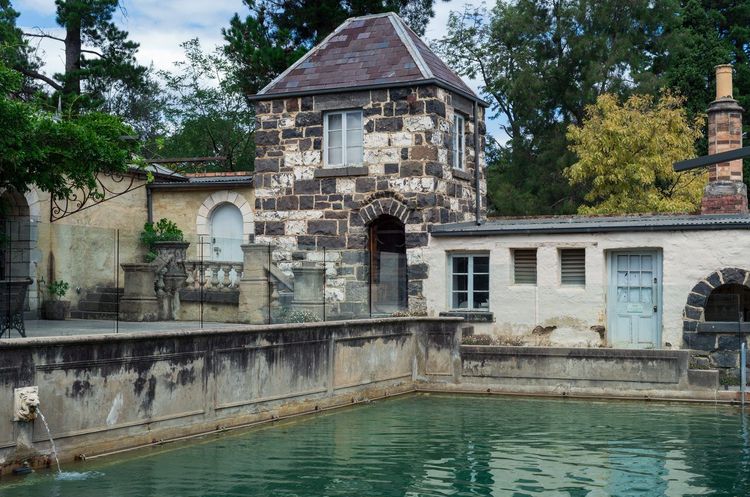
Montsalvy (Place du Prieuré, 15120 Montsalvy, rated 4.8/5 on Google based on 11 reviews) is not the most visited village in Cantal, but it may be the one that best preserves the atmosphere of an ordinary medieval town — not an open-air museum, but a living community where residents still gather under the covered arcades of the main square.
The village grew up around an Augustinian priory founded in the 11th century, of which the Romanesque priory church remains: a plain nave, a square Romanesque bell tower, and a barrel-vaulted apse typical of Auvergne Romanesque art. The cloister has disappeared, but the partially preserved conventual buildings still define a claustral space you can sense as you walk through the adjacent lanes.
What gives Montsalvy its charm is its still-legible defensive system. Two medieval gateways survive — the porte de Séguret and the porte de la Rode — along with sections of ramparts running along the slope of the promontory. The 15th–16th-century houses lining the lanes have retained their carved lintels and granite porches.
The weekly Thursday morning market is one of the most authentic rural markets in southern Cantal: local cheeses, charcuterie, honey, garden vegetables. Montsalvy is also a starting point for hikes in the pays de la Châtaigneraie, the bocage area in southern Cantal where chestnut and walnut trees produce spectacular autumn colours from October to November.
7. Marcolès, the Medieval Village of the Châtaigneraie
Marcolès, the third Cantal village to carry the label, is located in the Châtaigneraie, the south-western Cantal region of green hills, century-old chestnut trees and sunken lanes. Its character is profoundly different from the volcanic villages of the north of the department: here, it is the gentleness of the bocage, not the severity of the basalt.
The village is organised around the place de la Halle, onto which opens an oak-covered market hall from the 15th century, one of the most photographed architectural elements in Cantal. This hall once sheltered the market for cloth and leather — craft activities that kept Marcolès busy until the 19th century.
The houses lining the square and the adjacent lanes mostly date from the 14th to 16th centuries. Several retain mullioned windows, pointed arches or Gothic carvings on their lintels — details you discover by looking up. The church of Saint-Barthélemy, late Romanesque with Gothic additions, has a characteristic faceted apse.
The route des Panoramas, accessible from Marcolès, offers views over the Lot gorges and the Aubrac mountains on a clear day. The neighbouring villages of Cassaniouze and Sénezergues share the same chestnut bocage character and are worth an additional detour.
8. Laroquebrou, the Citadel on the Shore of Lac de Saint-Étienne-Cantalès
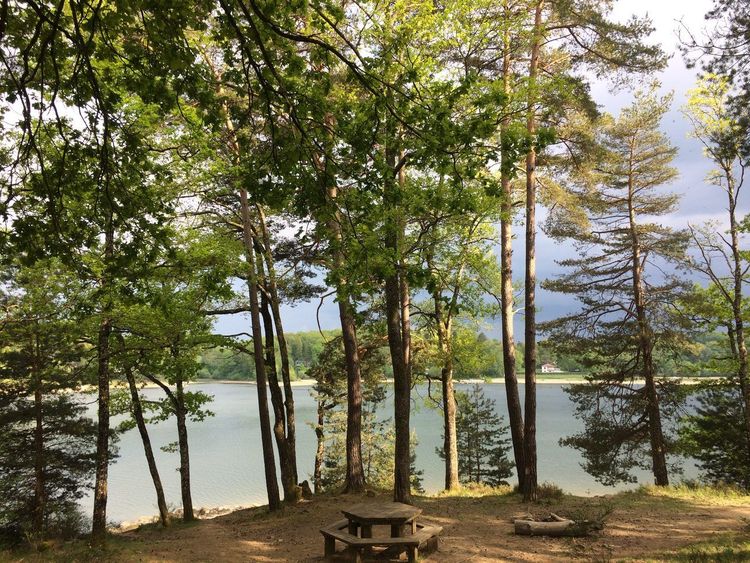
Laroquebrou (Place de l'Église, 15150 Laroquebrou, rated 4.2/5 on Google based on 290 reviews) is a town of 1,200 inhabitants on the edge of the lac de Saint-Étienne-Cantalès, an artificial lake created by the dam on the Cère, which gives the area the look of an Auvergne fjord with its arms plunging into wooded gorges.
The medieval village clings to its rocky promontory overlooking the river. The remains of the château des vicomtes de Carlat — a round tower and sections of wall — dominate the town and offer from their heights one of the finest views in southern Cantal over the lake and the wooded hills of the Ségala.
The lower town, around the place des Pépinières, preserves a few 15th-century arcaded houses. The lac de Saint-Étienne-Cantalès, a few kilometres to the south, offers water activities — canoeing, pedalos, supervised swimming in summer — and a lakeside campsite very popular with families.
The national forest surrounding the lake offers marked trails of 4 to 12 km with plunging views over the gorges. The area is particularly striking in autumn for the colour of the oaks and chestnut trees that blanket the hillsides.
9. Saint-Urcize, the Lost Village of the Margeride Plateau
Saint-Urcize (Le Bourg, 15110 Saint-Urcize) illustrates what geographers call the «Cantal desert»: a granite plateau at 1,100 metres above sea level, swept by the wind, covered in broom and moorland, where the population density is around 3 inhabitants per km².
The village, with its 300 inhabitants, nonetheless possesses a 12th-century Romanesque church of remarkable quality for such an isolated location. The sculpted portal, historiated capitals and octagonal bell tower testify to a considerable architectural investment for a medieval mountain community, most likely funded by revenues from livestock passing along the drove roads.
This is where you best understand the isolation of deep Cantal. The farms scattered across the plateau — granite buildings with schist roofs surrounded by dry-stone walls — maintain a vernacular architecture virtually unchanged for three centuries. The plateau de la Margeride extends as far as Lozère, a wild expanse to be explored on foot or by mountain bike.
The wolves, which naturally returned to the Massif Central from the 2010s onwards, are present on this plateau. Information panels in the village explain their return and the measures taken to coexist with livestock farming — a contemporary reality of rural Cantal life that few tourist guides mention.
10. Raulhac and the Château de Messilhac
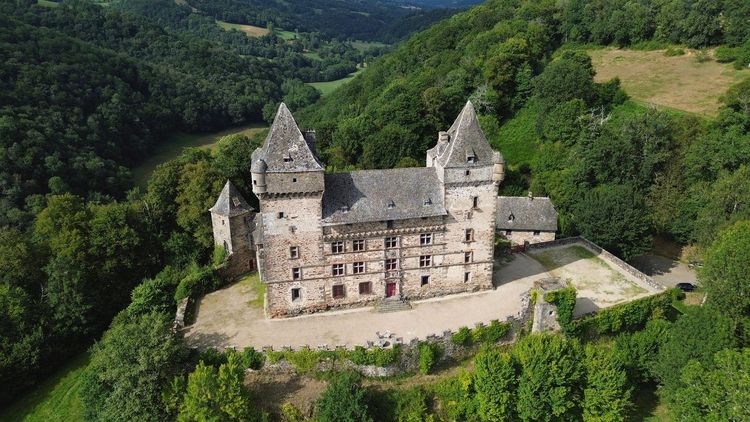
Raulhac is a small village in north-eastern Cantal that owes most of its interest to the château de Messilhac, a 16th-century Renaissance building rising 2 kilometres from the village on a spur overlooking the Goul valley.
The château de Messilhac is a fine illustration of Cantal noble architecture in the 16th century: an orderly façade with mullioned windows, sculpted dormers and a hexagonal French-style staircase tower. The ensemble is more evocative of the Loire Valley than of Auvergne, a testament to the cultural influences that permeated Cantal's nobility under Francis I. It can be visited in summer and during the Journées du Patrimoine in September.
The village of Raulhac (Place du Village, 15800 Raulhac, rated 4/5 on Google based on 9 reviews) is itself modest: around a hundred inhabitants, an 11th-century church that has been altered over the centuries, a few basalt houses grouped around the square. But the surrounding Goul valley is one of the finest in the department for hiking. The paths following the river pass through waterfalls, basalt cliffs and flower-filled summer meadows in June.
Practical tip: Raulhac can easily be combined with a drive up towards the Cantal ridges via the col de Curebourse (994 m), accessible by car, in the direction of Aurillac.
11. Allanche, Gateway to the Cézallier Plateau
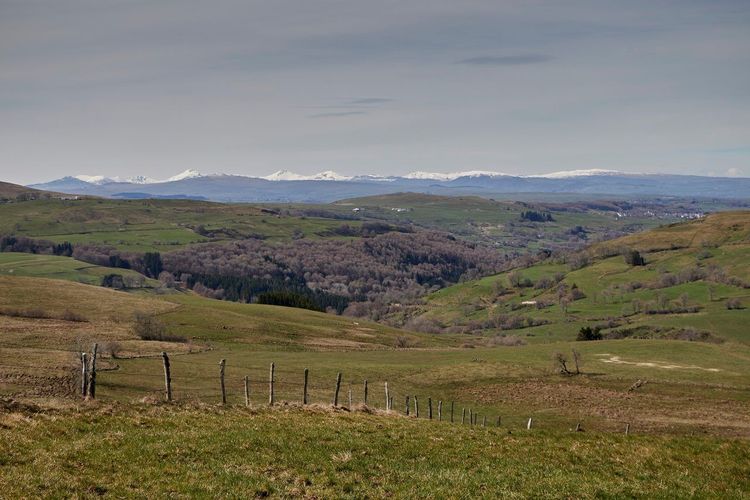
Allanche (Place du Marché, 15160 Allanche, rated 4.2/5 on Google based on 180 reviews) is the gateway town to the plateau du Cézallier, that immense grassy volcanic plateau at over 1,000 metres above sea level, stretching between Cantal and Puy-de-Dôme across nearly 800 km². This is where the Cantal summer pastures reach their purest expression: herds of Salers as far as the eye can see, short grass and vast skies.
The town (fewer than 1,000 inhabitants) is an unpretentious rural village whose main appeal lies in what it gives access to: the plateau, its hiking trails, its glacial lakes (lac du Pêcher, lac de la Godivelle) and its remarkable flora. The yellow gentians that flower in June and July are harvested on these heights for the production of Avèze liqueur.
The 12th-century Romanesque church is worth a stop for its naïve capital sculptures. The horse fair held each autumn is one of the last genuine equestrian fairs in Auvergne, a rural event that draws breeders from across the Massif Central. For hikers, Allanche is the starting point of the tour du Cézallier, a 3-to-5-day loop across the plateau with panoramas over the Puy de Dôme to the north and the Monts du Cantal to the south.
12. Menet, the Belvedere Village
Menet (Le Bourg, 15400 Menet, rated 4.3/5 on Google based on 140 reviews) lives up to its nickname of «balcony of Cantal». Perched on a ridge between the Rhue valley and the Mars valley, this village of 350 inhabitants offers from its church a 360-degree panorama over the Monts du Cantal, the Cézallier plateaux and, on exceptionally clear days, as far as the Puy-de-Dôme.
The église Saint-Flour de Menet (11th–12th centuries) is a fine example of rural Cantal Romanesque art: plain apse, square bell tower, capitals decorated with foliage and animals. The austere interior allows these sculptures to stand out all the more.
The village, with its basalt houses aligned along a main street, is modest. But its position on the ridge line, exposed to westerly winds and open to an immense horizon, makes it an exceptional natural viewpoint. The Espace Nature du Cézallier, managed by the Parc naturel régional des Volcans d'Auvergne, organises guided discovery outings on the flora and fauna of the summer pastures from Menet between June and September, by reservation.
13. Pleaux, in the Heart of the Maronne Country
Pleaux (Place de la Mairie, 15700 Pleaux, rated 4/5 on Google based on 10 reviews) is a town of 1,500 inhabitants that serves as the local hub in the pays de la Maronne, in south-western Cantal. Less spectacular than Salers or Tournemire, it nonetheless offers a coherent medieval architectural ensemble and a local vitality not found in smaller villages.
The old town is organised around a 15th-century grain hall and a Gothic church with a flat east end. The grey basalt houses, with their paired windows and exterior staircases, testify to a medieval prosperity linked to the timber and cheese trade. The weekly Saturday morning market brings local producers and craftspeople together in this medieval setting — a Cantal terroir experience well off the beaten tourist track.
The artificial lake of Saint-Étienne-Cantalès, reachable by car in 10 minutes, is the main summer attraction: swimming, canoeing, lakeside trails. In winter, Pleaux is a starting point for snowshoe hikes on the surrounding heights and for frozen gorge landscapes along the Maronne.
14. Condat, in the Rhue Valley
Condat is a village in the Rhue valley, tucked between two wooded massifs in a basin at 820 metres above sea level. Its main draw is the abbaye de Féniers, a Cistercian monastery founded in the 12th century of which some buildings survive, converted into a farm. The most significant remains — part of the abbey church, the chapter house — are visible from the road.
The Rhue valley around Condat offers walks along the trout stream, through mixed forests that turn red and gold in autumn. The cascades de la Rhue, reachable on foot in 30 minutes from the village, are one of Cantal's least known natural curiosities: a series of falls in a basalt canyon, with no excessive tourist signposting.
Condat can be visited in 1h30 to 2 hours and pairs naturally with Murat (25 km) or with a drive up to the lac de la Crégut on the heights of the Cézallier.
15. Thiézac, at the Foot of Puy Mary
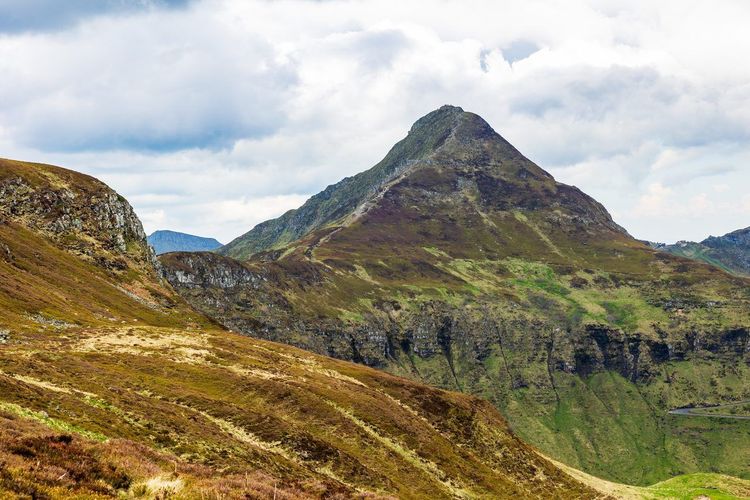
Thiézac (Place du Village, 15450 Thiézac, rated 4.3/5 on Google based on 280 reviews) closes this selection with a village that embodies better than any other the relationship with the great Cantal landscape. Located in the Cère valley at 830 metres above sea level, it opens directly onto the slopes of Puy Mary (1,783 m), Cantal's second-highest peak and one of the most iconic natural destinations in the Massif Central.
The village is small — fewer than 400 inhabitants — but its 17th-century Baroque church with its characteristic bulbous bell tower stands in sharp contrast to the Romanesque austerity of the rest of the department. The interior preserves a quite exceptional collection of Baroque furnishings for a village of this size: sculpted altars, painted altarpieces and polychrome statues that testify to a prosperity linked to the passage of livestock along the drove roads.
Thiézac is above all a gateway to the Puy Mary massif. In one to two hours' walking from the Pas de Compaing (accessible by car from the village), you reach the ridges and their 360-degree panorama over the glacial cirques of Cantal — one of the most accessible high-mountain panoramas in France. In summer, the route des Crêtes climbing from the valley towards the Pas de Peyrol is the department's most frequented tourist route: the views over the summer pastures, the cliffs and the steep valleys are breathtaking.
FAQ
Which villages in Cantal hold the Plus Beaux Villages de France label?
Cantal has three villages officially labelled Plus Beaux Villages de France: Salers (where the association was founded in 1982), Tournemire and Marcolès. A fourth listed village, Blesle, borders the department but administratively belongs to Haute-Loire. The association today groups more than 180 communes across France, selected on strict heritage criteria including at least two protected sites and a genuine quality of public space enhancement.
What is the best season to visit Cantal?
Spring (May–June) and autumn (September–October) offer the best conditions. The Salers cows head to summer pastures in May, the broom flowers in June, and the colours of the Châtaigneraie in October are spectacular. Summer (July–August) is the peak tourist season and Salers can be crowded in the morning. Winter closes many sites (château d'Anjony, ridge roads) but offers a unique atmosphere for those seeking an authentic and silent Cantal.
How do you get around Cantal?
Cantal is a rural department where a car is essential to reach almost all the villages in this selection. The prefecture Aurillac is accessible by train from Paris-Gare de Lyon via Clermont-Ferrand (approximately 3h30). From Aurillac, a week-long loop circuit allows you to cover the main villages. Allow 40 to 60 minutes of driving between each stop on winding but well-maintained mountain roads.
Where can you taste Cantal's local specialties?
Specialties to look for in each village: truffade (potatoes and fresh Cantal tomme pan-fried together), aligot (elastic mashed potato with tomme, a specialty of the border Aubrac), mountain charcuterie (dried ham, petit salé), and cantal and salers AOP cheeses. In the villages, rural inns offer set lunches for €15–22 with starter, main course and cheese — a genuine farm-to-table experience directly from producers at summer mountain farms.
Can you visit Cantal with children?
Yes, several villages on this list offer family-friendly experiences. The Caldéa thermal centre in Chaudes-Aigues is suitable from age 4. The château d'Anjony offers costumed guided tours that children love. The lake of Saint-Étienne-Cantalès offers swimming and water activities in summer. Puy Mary is accessible via an easy hike from the Pas de Peyrol for children aged 7–8 and up. Local markets (Salers, Murat, Montsalvy) bring the Auvergne terroir to life in a vivid way.
Are there resources to help plan an itinerary in Cantal?
To plan your trip, the Cantal tourism office website (Cantal Destination) offers maps and themed itineraries. The Ryo app offers audio guides to explore many cities and regions of France, and its articles cover other selections of heritage villages, such as the Ryo guide to the most beautiful villages of Dordogne or the Ryo selection of villages in Calvados. These Ryo resources allow you to extend your discovery well beyond Cantal alone.
Conclusion
Cantal is a department that rewards curiosity and patience. Its villages do not give themselves up easily: you must accept the winding roads, the distances that look short on the map but take time to cover in the valleys, and a mountain weather that can change everything within an hour. It is precisely this somewhat closed, somewhat demanding character that has allowed these villages to pass through the centuries without changing too much.
If you can only choose one, start with Salers, the volcanic hilltop town where medieval history and cheese-making tradition can be read at every street corner. Then let yourself be surprised by the discreet Blesle, Chaudes-Aigues and its geothermal mystery, Saint-Urcize and its plateau isolation. To explore other heritage gems of rural France in the same spirit, the Ryo selection of the most beautiful villages in France will offer comparable itineraries in regions as varied as Dordogne, Brittany and Provence.