© Shutterstock
 Votre guide Ryo
The 12 Most Beautiful Villages in Cantal Worth the Detour (2026)
Cantal is one of Auvergne's best-kept secrets. This volcanic department, home to Europe's largest stratovolcano with a diameter of 70 kilometres, harbours a concentration of medieval villages, black basalt market towns and spa resorts that most conventional travel guides treat too briefly — or overlook entirely. Salers, perched at 950 metres on its basaltic spur with its 15th-century mansions. Chaudes-Aigues, whose springs gush at 82 °C from the volcanic subsoil. Montsalvy and its 11th-century Augustinian priory, which receives even fewer visitors than it deserves. The most beautiful villages of Cantal do not reveal themselves along main roads: they require narrow lanes, time and a little curiosity. Ryo has selected 12 Cantal stops that are worth the journey, with what makes each one truly unique. Our guide to the most beautiful villages in France completes this selection with the finest gems from across the country.
1. Salers, the Black Medieval City
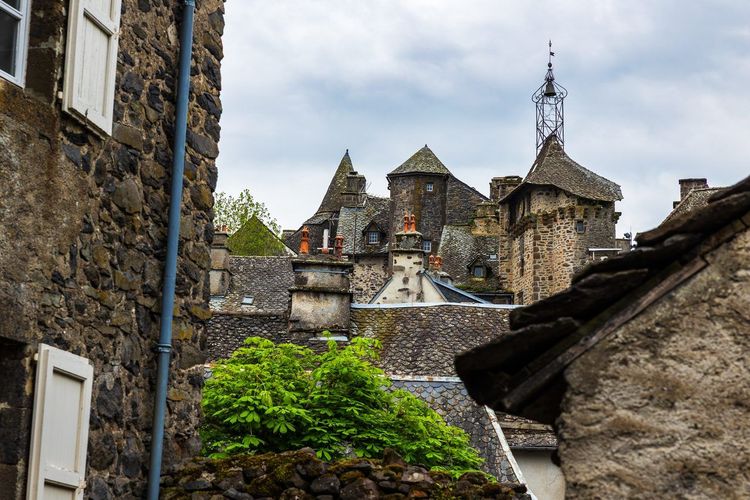
At 950 metres above sea level, perched on a basaltic spur overlooking the Maronne valley, Salers is Cantal's trump card. Labelled 'Most Beautiful Village in France', this settlement of fewer than 400 inhabitants unfolds cobbled streets lined with 15th- and 16th-century mansions built entirely from dark volcanic stone. The morning light on these black and grey facades is one of the most singular sights in all of Auvergne. There is not a white limestone wall or a Roman tile in sight: the buildings are entirely mineral, as austere as the lava from which they are made.
The Grande Place (officially Place Tyssandier d'Escous) is the heart of the village. It is surrounded by houses with turrets and carved dormers that bear witness to the prosperity of the families of lawyers and merchants who built Salers' fortune in the 15th and 16th centuries. The Maison des Templiers, at the north-west corner of the square, is one of the best-preserved buildings: it now houses a museum dedicated to the history of the town and the local cheese-making tradition.
For Salers is also a cheese appellation known well beyond Cantal. The Salers cattle breed, a auburn cow with a strong character that has been present in the surrounding meadows since the 12th century, lends its name to two distinct PDO cheeses. Cantal is the more widespread; Salers is reserved for summer pasture production, made exclusively between 15 April and 15 November, from the milk of grass-fed cows. You will find it at the producers' stalls at the Thursday morning market, as well as in the cheese shops in the lanes around the square.
The Porte du Beffroi from the 15th century marks the main entrance to the medieval town. From the walkway above the gate, the view over the Maronne valley and the Cantal mountains is particularly striking on a clear day. A half-hour walk from the village, a waymarked path climbs to the Puy Violent viewpoint (2h30 round trip, 650 m of elevation gain), with a panoramic view over the entire massif.
Salers is best explored on foot, in half a day for the main sites or a full day if you combine it with a hike in the surrounding area. Plan to arrive early in the morning: tourist coaches arrive in force at midday during July and August. The village has several restaurants where you can enjoy a truffade (potatoes melted with fresh tome cheese) or aligot stretched into elastic strings before your eyes.
2. Tournemire and the Château d'Anjony
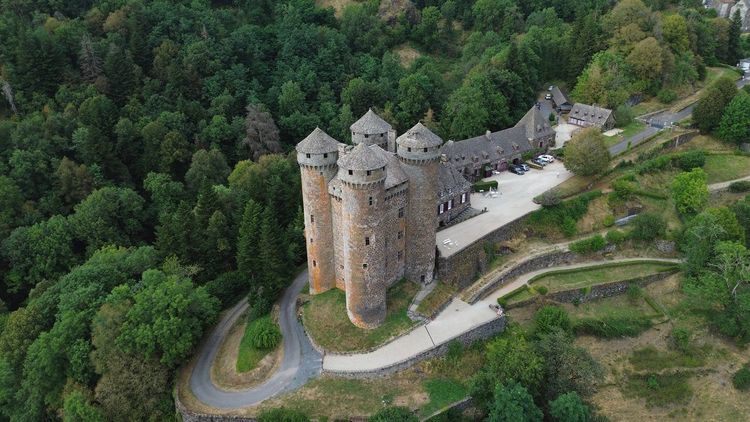
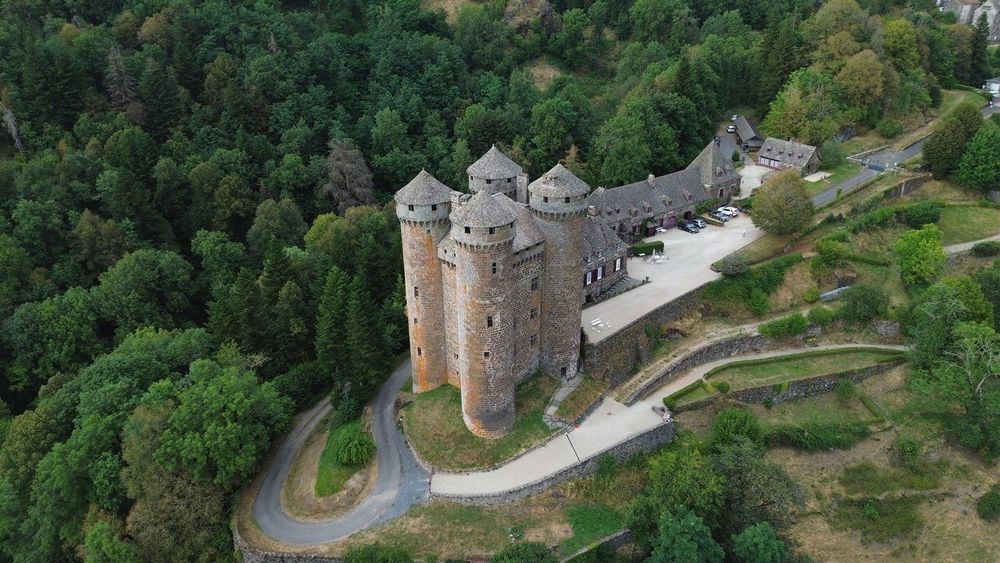
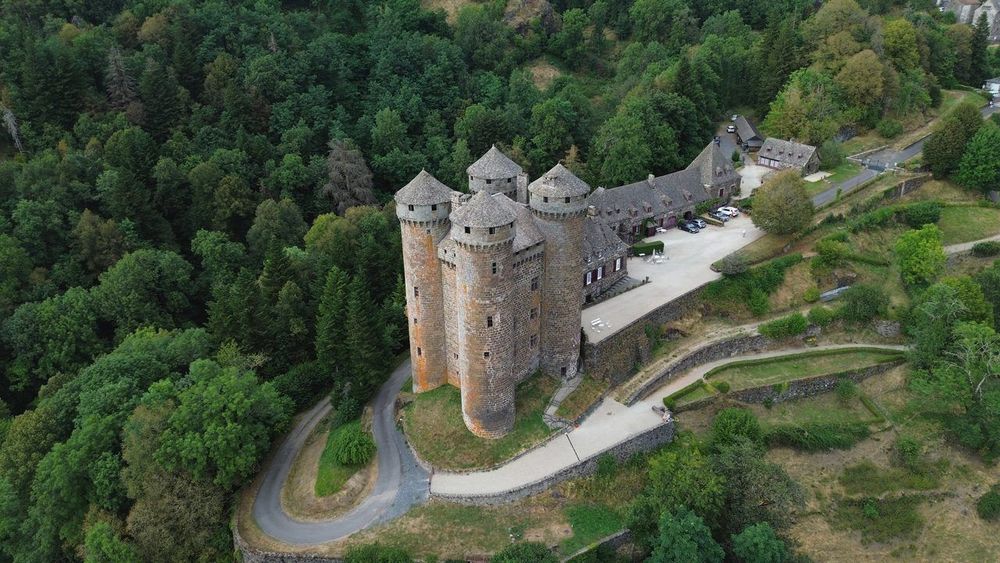
Tournemire is a village of fewer than 200 inhabitants, but it conceals one of the finest medieval fortresses in the Massif central. The Château d'Anjony (Tournemire, 15310 Tournemire, rated 4.5/5 on Google from 1,043 reviews) stands out from afar with its four round towers topped with pepper-pot roofs dominating the green hills of the Maronne. Built between 1439 and 1467 by Louis II d'Anjony, a companion of Joan of Arc, it has remained in the same family for six centuries — an exceptional longevity that accounts for the remarkable state of preservation of the interiors.
The guided tour (compulsory, approximately 45 minutes) reveals 16th- and 17th-century frescoes in the Tour des Dames, depicting scenes of chivalry and portraits of the lords of Anjony. The ensemble is remarkably intact: Aubusson tapestries, period furniture, monumental fireplaces. The château is open from April to the end of October, with reduced hours outside the season.
The village of Tournemire itself is worth a brief walk. A few basalt houses, a Romanesque church and an open view over the foothills of Cantal compose a quiet scene, far removed from the bustle of top-tier tourist sites. Combined with Salers (about twenty kilometres away via the D35), it makes for a pleasant half-day exploring the Maronne valley.
3. Chaudes-Aigues, Europe's Hottest Spring
The name says it all. In Chaudes-Aigues, the water rises from the ground at 82 °C, the highest natural temperature recorded in continental Europe for a thermal spring. This small town in the south of Cantal has been renowned for this geological peculiarity since Antiquity, but it was in the Middle Ages that its most enduring use was found: as early as the 14th century, the inhabitants were channelling the hot water to heat their homes, making Chaudes-Aigues one of the earliest known examples of urban geothermal heating in the Western world.
The main spring, known as 'Par', still feeds a communal heating network and the Caldaguès thermal centre, renovated during the 2000s. It offers treatments and baths at adapted temperatures (between 34 °C and 42 °C depending on the pool). For those who do not wish to book a full treatment, the spring can be viewed in its public basin right in the town centre: the steam rising from it even in summer lends a slightly surreal atmosphere to the main square.
The town also has a Geothermal Museum that explains the volcanic phenomenon behind the springs and traces the history of thermal uses from Gallo-Roman times. Chaudes-Aigues is also the starting point for several trails in the Truyère valley, and lies 40 km south of Saint-Flour.
What makes this village particularly useful on a Cantal circuit is the contrast it provides with the black basalt towns of the north. The valleys widen here, and the landscape takes on a softer, almost southern quality. A good pivot for anyone exploring the south of the department who wants to alternate between different atmospheres.
4. Allanche, Gateway to the Monts du Cantal
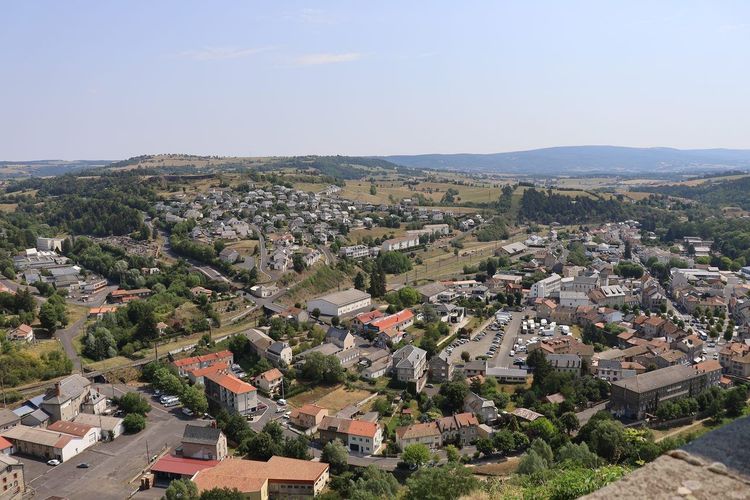
Allanche is a market town set on the Planèze de Saint-Flour, a volcanic plateau at over 1,000 metres above sea level. It is not the most spectacular village on this list, but it is one of the most authentic: no tourist label, no souvenir shops, a weekly Tuesday market attended mainly by livestock farmers and local producers.
Allanche's appeal is primarily geographical: the town is the most direct access point to Puy Mary from the north of the department, and a natural crossroads for hikers crossing the massif. The Saint-Blaise church (12th–14th centuries) is worth a glance for its basalt porch-tower. The plateau surrounding Allanche is crossed by waymarked paths, often quiet even during peak season.
For those who want to sleep in the heart of the massif without paying the rates charged at accommodation in Salers or Murat, Allanche offers a few bed-and-breakfasts and gîtes at reasonable prices — a practical base for two or three days of intensive hiking in the surrounding mountains.
5. Marcolès, an Artists' Village in the Châtaigneraie
Towards the south of Cantal, where chestnut trees gradually replace the cattle meadows, Marcolès appears around a bend in a narrow road like a medieval film set. This village, labelled 'Most Beautiful Village in France', has retained its partial ramparts, its paved lanes and its timber-framed, corbelled houses — an architecture more reminiscent of the Quercy or Périgord than the black basalt towns of the northern Cantal.
The Porte de la Boissière marks the main entrance to the fortified town. Inside, a network of lanes leads to the central square and the Gothic church. Since the 1980s, Marcolès has attracted a community of craft artists who have taken over the old houses: ceramicists and potters form the most visible group, with around ten workshops open in summer, notably during the medieval festival held between July and August (dates to be confirmed each year on the Marcolès town hall website).
The Cantal Châtaigneraie is also a land of distinctive flavours. Chestnuts and forest honey have their producers here, as does artisan charcuterie from a handful of local farmers. Marcolès is an excellent base for exploring this often-overlooked part of Cantal, which tends to be bypassed in favour of the tourist triangle of Salers, Murat and Puy Mary.
6. Laroquebrou and the Gorges de la Truyère
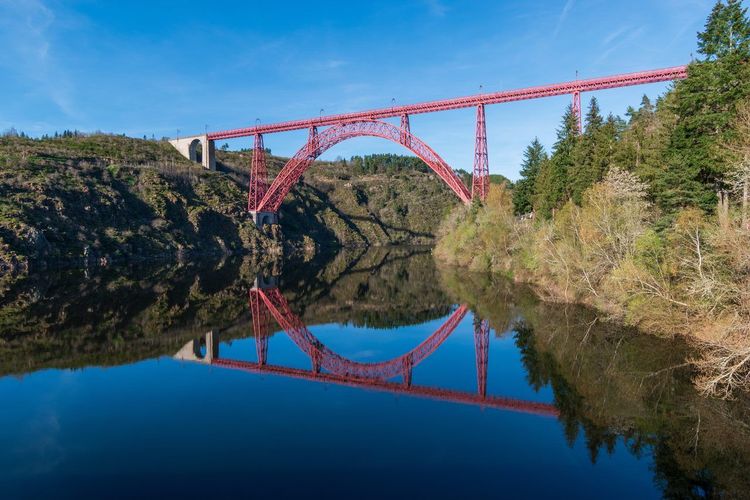
Laroquebrou overlooks the Truyère from a rocky spur some forty metres high. This medieval town in the south-west of Cantal is the ideal starting point for exploring the Gorges de la Truyère, one of the most spectacular landscapes in the Massif central. The gorges are largely submerged beneath the reservoirs of the Sarrans and Brommat dams, but the scenery of deep lakes enclosed between granite and basalt cliffs is worth the journey in itself.
The village retains the ruins of its medieval castle and a 17th-century timber-covered market hall that still hosts the Thursday market. The quays along the riverbank offer direct access to the Truyère for fishing or simply for a stroll. By kayak, several sections of the gorges are navigable downstream from Laroquebrou, with equipment hire available in season.
7. Montsalvy, the Forgotten Medieval Abbey
Montsalvy is one of those villages you discover almost by accident and then regret nearly having missed. Classified as a 'Petite Cité de Caractère', it is home to the remains of an 11th-century Augustinian priory, whose conventual church (now the parish church) is one of the finest examples of Auvergne Romanesque art in the department. The octagonal bell tower, visible from the approach road, dates from the 12th century.
The medieval town is organised around a plane-tree-shaded square where a few café terraces provide a welcome rest in summer. The grey stone houses, topped with slate or lauze, form a coherent and largely unaltered ensemble. What strikes you in Montsalvy is the customary absence of crowds: unlike Salers or Murat, the car parks here are never full, even in July.
The area around Montsalvy is that of the upper Lot valley, whose source lies some thirty kilometres to the east, in Lozère. Several hiking trails cross the wooded hills nearby, and the village offers a few gîtes for those who wish to stay the night. For lovers of quiet rural life and heritage without excessive tourist staging, Montsalvy is one of Cantal's finest secrets.
8. Murat, the Town at the Foot of the Volcano
At 908 metres above sea level, Murat is less a village than a small town of 2,000 inhabitants, but its volcanic character sets it apart from every other place on this list. It is built at the foot of a basaltic neck — an ancient volcanic chimney — crowned by a white statue of the Virgin visible for kilometres around. The Falaise de Bonnevie, the eastern face of the neck, forms a wall of vertical basalt columns fifty metres high — a striking geological spectacle accessible on foot from the town centre in under ten minutes.
The historic centre is organised around the Collégiale Notre-Dame (13th–15th centuries), whose Romanesque lantern tower contrasts with the Gothic facade. The lanes running down towards the Alagnon river retain medieval houses and vaulted cellars that speak to the town's former mercantile prosperity. Murat was, in the Middle Ages, an important commercial crossroads on the route linking Clermont-Ferrand to the Languedoc.
The town is also an efficient base for mountain activities. Super Lioran, the largest ski resort in the Massif central (1,160 to 1,850 m), is 12 kilometres away via the Col de Font de Cère. In summer, that same pass offers a cycling route with panoramic views over the slopes of the Plomb du Cantal (1,855 m, the department's highest point). Cross-country skiers have access to a network of nordic trails from November when there is sufficient snow.
In July, Murat hosts a cheese market that brings together around thirty local producers. It is a chance to taste Cantal PDO in its three official forms: young (mild and supple), in-between (aged 2 to 6 months, slightly piquant) and old (more than 6 months of ageing, bold and crumbly). The weekly Friday morning market is one of the liveliest in the department throughout the year.
9. Saint-Urcize, the Aubrac in Its Purest Form
Few villages in Cantal give such a strong sense of being at the end of the world. Saint-Urcize sits on the edge of the Aubrac plateau, at 1,054 metres above sea level, on the border between Cantal, Aveyron and Lozère. The meadows stretch as far as the eye can see, dotted with dry-stone burons, and herds of Aubrac cattle whose lyre-shaped horns stand out against the sky. This is where the Cantal landscape reaches its most elemental expression.
The Romanesque church of Saint-Gilles (12th century) is one of the best-preserved Romanesque buildings in the high Auvergne. Its sculpted portal and semi-circular apse are worth stopping for, even if you are not particularly passionate about medieval architecture. The village has barely 300 permanent inhabitants, one café-grocery and a few gîtes. Saint-Urcize is a stop on the GR 65 (the Way of Saint James) and on several variants of the GR de Pays du Tour des Monts d'Aubrac — a destination for walkers above all, but also for those seeking a night of near-total silence, far from any tourist flow.
10. Raulhac and the Château de Messilhac
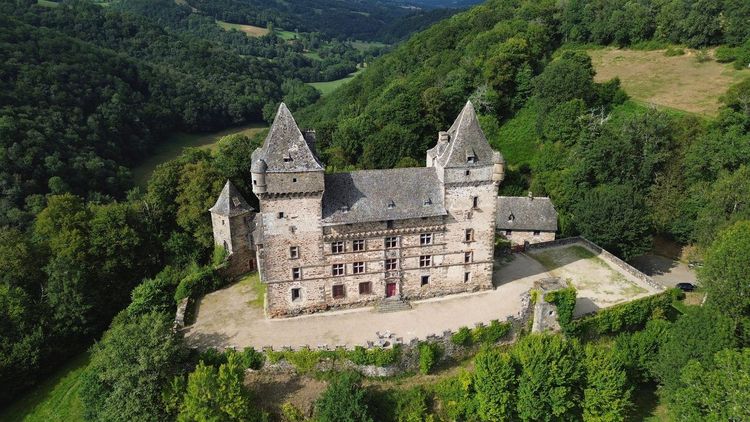
The name Raulhac is little known, but the Château de Messilhac (Raulhac, 15800 Raulhac, rated 4/5 on Google from 82 reviews), which dominates the valley from a wooded hill a few hundred metres from the village, is worth the journey. This 16th-century Renaissance château, with its corner towers, moat and formal French gardens restored during the 20th century, is one of the most photogenic castles in Auvergne.
The village of Raulhac itself is a quiet settlement of a few hundred inhabitants, with a medieval square tower (the only remaining vestige of the former village castle) and a 15th-century basalt church. The road linking Raulhac to Murat along the Rhue valley is one of the most beautiful in the department: a sunken river, oak and beech forests, several waterfalls visible from the road. The Château de Messilhac is open to visitors from June to September; the guided tour lasts around an hour and covers the period-furnished apartments, the private chapel and the outbuildings.
11. Menet, Cantal's Secret Beach
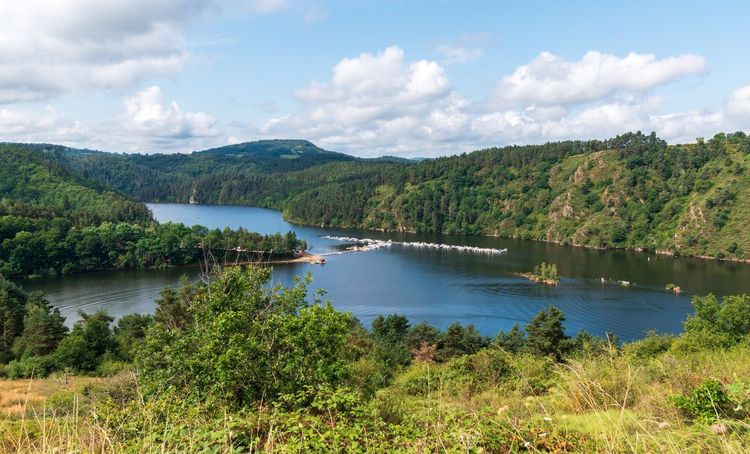
Cantal is not a seaside destination, but Menet almost makes you forget that detail. The village overlooks the Lac de Saint-Étienne-Cantalès, an artificial reservoir on the Truyère that offers several kilometres of accessible shoreline. A supervised beach, pedal boats, grassy picnic areas under the oaks — an unexpected atmosphere in a high-altitude volcanic department.
The village itself is understated: a square, a Romanesque church, a few grey stone houses. But Menet has made good use of its proximity to the lake to offer a range of leisure activities that sets it apart from the other villages in this selection. Kayaking, family swimming, carp fishing (the lake is well regarded among Massif central specialists) and mountain biking on the trails along the eastern bank — the activities are more varied than you might initially expect. For families with young children, Menet is one of Cantal's best bases: no crowds, an accessible lake, gîte accommodation at reasonable prices. The leisure centre is open from mid-June to the end of August.
12. Pleaux, Guardian of the Gorges
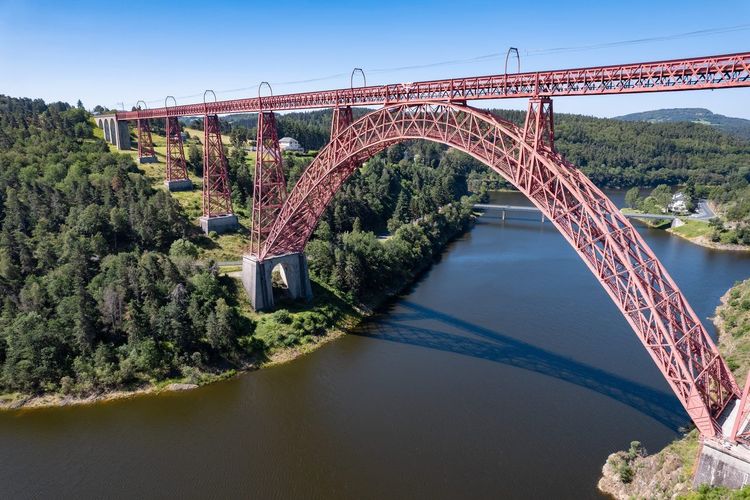
Pleaux is the last name on this list, but by no means the least interesting. This medieval town in the north-west of Cantal is one of the most accessible viewpoints over the Gorges de la Truyère and the Lac de Sarrans, whose turquoise waters contrast strikingly with the dark basalt walls that frame them.
The Tour de l'Horloge from the 14th century, the sole remaining vestige of the old town walls of Pleaux, dominates the central square. The stone houses, sloping lanes and wash houses bear witness to a medieval history preserved without excessive restoration. Pleaux does not hold the 'Most Beautiful Villages in France' label, but its intact character and its position above the gorges earn it a mention in most serious guides to Cantal.
The road from Pleaux to Laroquebrou follows the gorges for several kilometres with exceptional viewpoints over the Truyère. A drive that holds some fine surprises, particularly at dusk when the raking light makes the waters of the Lac de Sarrans gleam like molten metal.
FAQ
What is the most beautiful village in Cantal?
Salers is regularly cited as the most beautiful village in Cantal, and the 'Most Beautiful Villages in France' label was awarded to it in the very first years of the national ranking. Its black basalt architecture, its 15th- and 16th-century mansions and its location at 950 metres above sea level make it a truly exceptional site. If you are looking for something less crowded, Montsalvy or Marcolès offer a more authentic experience, with far fewer visitors even at the height of summer.
What is the best time to visit the villages of Cantal?
Spring (May–June) and autumn (September–October) are the best windows. In May and June, the meadows are in bloom, the herds have moved up to summer pastures and the mountain roads are clear. Autumn gives the Cantal bocage spectacular colours, and the villages are almost empty of tourists after mid-September. Summer (July–August) is still possible, but Salers and the Puy Mary area can be very busy. In winter, several villages remain accessible, but the restaurant and accommodation offering is reduced during the week.
How can you visit the villages of Cantal without a car?
It is tricky but not impossible. Trains serve Aurillac, Saint-Flour and Murat on the Clermont-Ferrand/Aurillac line. Regional coach routes connect certain villages, but the timetables are not particularly convenient for tourists. The most realistic solution without a personal vehicle is to focus on villages near Aurillac and set off by e-bike, with several hire companies offering marked-route outings from the city. For walkers, the GR 65 passes through Saint-Urcize and links several villages in the south of the department.
How many villages in Cantal hold the 'Most Beautiful Villages in France' label?
Cantal has 3 villages holding the 'Most Beautiful Villages in France' label: Salers, Tournemire and Marcolès, the last of which joined the network in 2024. Montsalvy, often mentioned in guides, actually holds the 'Petite Cité de Caractère' label instead. The national association lists 184 labelled villages across France in 2026, and Auvergne-Rhône-Alpes is among the best-represented regions. The label is awarded according to a set of criteria that includes architectural quality, heritage enhancement policy and the municipality's involvement in its upkeep.
Can you visit several of these villages in a single weekend?
A weekend reasonably allows you to see 4 to 5 villages by car depending on your pace. An efficient itinerary from Aurillac: on Saturday, Salers then Tournemire then Murat (around 120 km in a loop); on Sunday, Montsalvy then Marcolès or Chaudes-Aigues (around 80 km). To cover all 12 villages in this selection, allow a minimum of 4 days. Ryo audio guides are available for several destinations in the Massif central and can enrich your cultural stops throughout the circuit.
Further Reading
Cantal is a wonderful gateway into rural and volcanic France, but it is just one chapter in a far broader territory. Lovers of medieval villages will find equally remarkable counterparts in the most beautiful villages of Dordogne or in the most beautiful villages of Calvados, two regions that Ryo documents with the same care to help you plan every getaway.
For a nationwide overview, our selection of the most beautiful villages in France gathers the finest gems from across the country. Whether you are travelling by car or on foot along waymarked paths, Ryo's audio-guided tours are the perfect complement to this kind of off-the-beaten-track circuit — a way of going deeper than interpretation panels and local brochures.