© Shutterstock
 Votre guide Ryo
Visit Doubs: 14 must-sees to discover
Located in the heart of the Bourgogne-Franche-Comté region, Doubs is a department that fascinates with the richness of its historical, cultural and natural heritage. Between Jura mountains, green valleys, majestic fortresses and picturesque villages, this land of contrasts offers a multitude of experiences to discover. Whether you are a hiking enthusiast, history lover or seeking authenticity, Doubs will seduce you with its preserved landscapes and hidden treasures. Here is our selection of 14 must-do things to visit Doubs and fully enjoy this little-known but absolutely captivating destination.
1. Besançon, Comtois capital with rich heritage
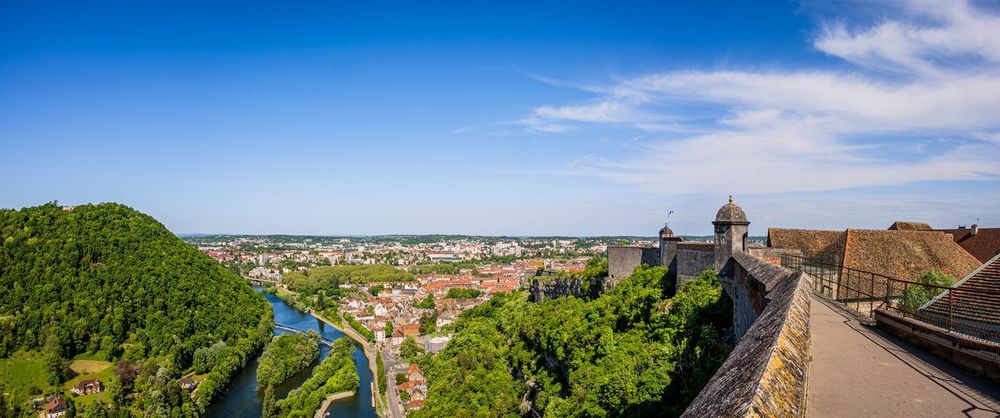
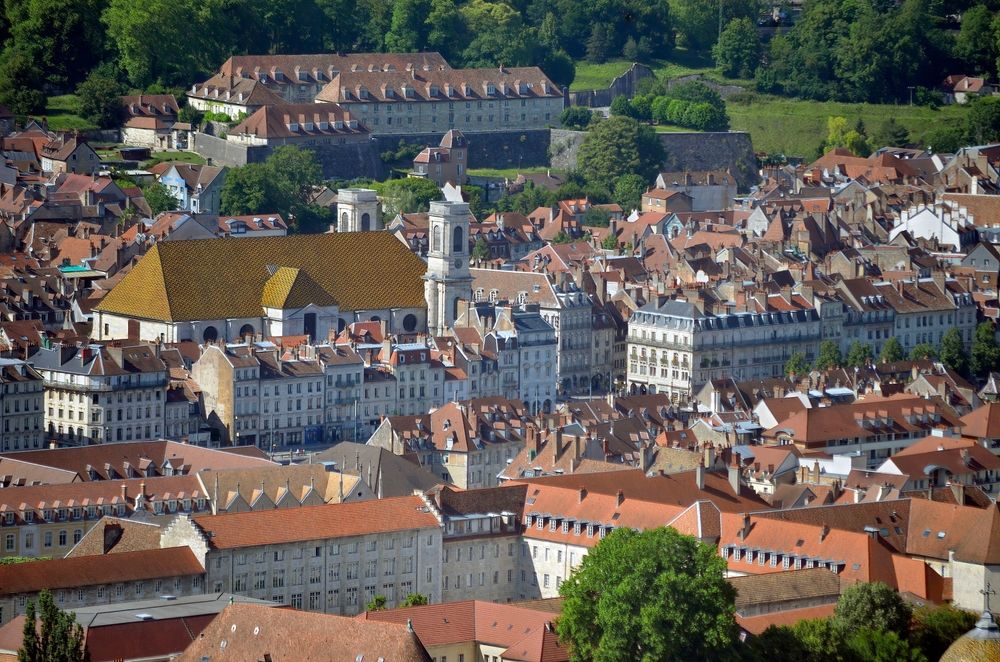
Impossible to visit Doubs without stopping at Visit Besançon, its prefecture and true architectural jewel. Surrounded by a meander of the Doubs that gives it a natural strategic position, the city has been inhabited since prehistoric times and preserves visible traces of each era it has lived through.
The historic center of Besançon, called la Boucle, is discovered on foot along its cobbled streets lined with Renaissance private mansions. Don't miss the Porte Noire, a finely sculpted Roman triumphal arch dating from the 2nd century, impressive testimony to the Gallo-Roman past of the city. The Saint-Jean cathedral, Carolingian basilica with origins dating back to the 3rd century, houses artistic treasures including a remarkable astronomical clock.
Download the audio-guided circuit to discover Besançon on foot and independently
To fully enjoy your discovery of Besançon, let yourself be guided by the Ryo visit itinerary which will take you through 25 places of interest in the Franc-Comtois capital. This fun audioguide lasting 2h10 will allow you to explore independently the must-sees of the city, from the birthplace of the Lumière brothers to the Palais Granvelle, passing through the Battant quarter and its colorful houses. Thanks to interactive navigation and historical comments enriched with anecdotes, you will discover the soul of this city steeped in history at your own pace.
Culture lovers will also appreciate the Museum of Fine Arts and Archaeology, considered the oldest public museum in France, founded in 1694. Besançon is also a green city, elected first green city in France, with its numerous parks and gardens that invite strolling. The Place de la Révolution, lined with old buildings, concentrates several museums including the Time Museum, installed in the Palais Granvelle. Both the museum and the Palais Granvelle feature on our audio-guided walk through Besançon, a 26-stop loop around the Doubs meander.
2. The citadel of Besançon, Vauban's masterpiece
Dominating the city from a hill at more than 100 meters high, the citadel of Besançon represents one of the finest examples of Vauban's military genius. Listed as UNESCO World Heritage, this 17th-century fortress was built after the conquest of Franche-Comté by Louis XIV.
On its twelve hectares, the citadel offers much more than a simple historical visit. You will discover three fascinating museums: the Museum of Resistance and Deportation, the Comtois Museum and the Naturalium. The ramparts offer spectacular panoramas over Besançon and the meanders of the Doubs. Children will particularly appreciate the zoo housing more than 300 animals, the insectarium and the noctarium.
To visit Doubs in depth, the citadel is a must-see that combines military history, UNESCO heritage and naturalist discoveries in an exceptional architectural setting (Citadelle de Besançon, 99 Rue des Fusillés de la Résistance, 25000 Besançon, rated 4.4/5 on Google for 2,331 reviews).
3. The Lison springs, natural water spectacle
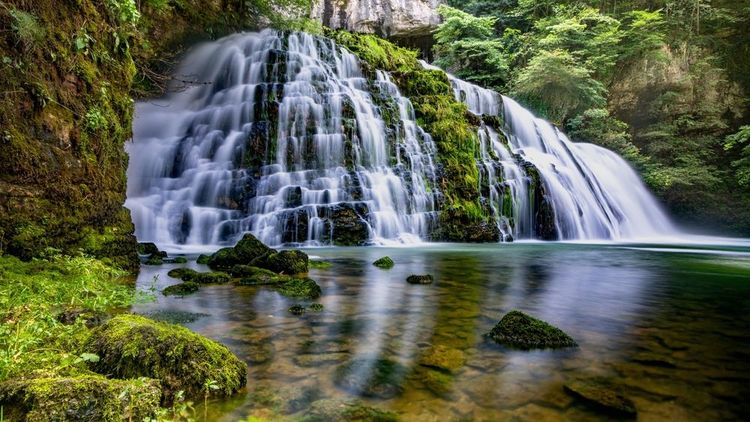
In a green setting at the foot of an imposing 80-meter high cliff, the Lison springs offer a striking natural spectacle. Water gushes from a cave before cascading in a grandiose mineral setting. The site is easily accessible and developed to allow visitors to enter the cave and admire the spring from a platform.
Following the course of the Lison, you will discover the Sarrazine cave, a geological curiosity worth the detour. Nearby, the charming village of Nans-sous-Sainte-Anne houses the Taillanderie museum, living testimony to traditional Franc-Comtois craftsmanship. This karstic region offers several hiking trails allowing exploration of the green landscapes of the valley.
The Lison springs constitute a refreshing stop to visit Doubs, particularly enjoyable during hot summer days. The constant flow of the spring allows admiring this natural spectacle throughout the year.
4. The death ladders, thrills guaranteed
Despite their worrying name, the death ladders constitute an accessible hike offering thrills in a spectacular natural setting. Located near Charquemont at the Swiss border, these metal stairs on the cliff face were once used by smugglers.
The route, well secured, allows climbing along blue rocky walls while enjoying exceptional panoramas over the Jurassian forests. Several viewpoints punctuate the itinerary, offering vertiginous views over the valley. This walk of about 2 hours will delight nature lovers and moderate adrenaline seekers.
Not recommended for people prone to vertigo, the death ladders nevertheless allow most visitors to live a unique experience to visit Doubs from a different angle. The alpine landscapes and limestone cliffs compose a natural setting of striking beauty.
5. The royal saltworks of Arc-et-Senans, architectural utopia
Masterpiece of visionary architect Claude-Nicolas Ledoux, the royal saltworks of Arc-et-Senans represents much more than a former salt manufacture. Built in the 18th century, this "ideal factory" in a perfect semicircle shape testifies to a revolutionary conception of industrial and social architecture.
Listed as UNESCO World Heritage since 1982, the saltworks now hosts several permanent exhibitions retracing the history of salt, Ledoux's work and his utopian vision of the ideal city of Chaux. The symmetrical organization of buildings, the majesty of neoclassical architecture and landscape gardens create a unique atmosphere.
Beyond the heritage aspect, the site offers cultural events throughout the year, thematic gardens and a fun course for children. Visiting the royal saltworks of Arc-et-Senans allows understanding the economic importance of salt in modern times and admiring a visionary architectural jewel (Saline royale, Grande Rue, 25610 Arc-et-Senans, rated 4.2/5 on Google for 1,008 reviews).
6. The Osselle cave, underground wonder
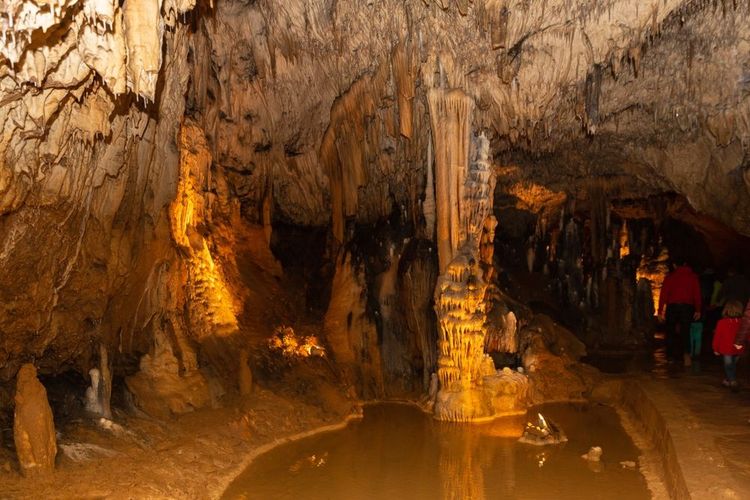
Located between Doubs and Jura, the Osselle cave holds a double record: it is both the oldest known tourist cave in France (with the cave of Antiparos in Greece) and an exceptional paleontological site. Discovered in the 13th century, it welcomed its first visitors as early as 1504.
Over 1,300 meters of developed route, you will discover spectacular limestone formations: stalactites, stalagmites, draperies and columns sculpted by water over millennia. The site also contains a dry zone with walls polished by the ancient watercourse, testimony to past geological activity.
The Osselle cave has yielded nearly 3,000 skeletons of cave bears, making it a first-rate paleontological treasure. During the French Revolution, refractory priests took refuge there and built a clay altar, still visible today. Bring a cardigan as the temperature remains constant at 7°C year-round (Grotte d'Osselle, Rue de la Grotte, 25410 Roset-Fluans, rated 4.5/5 on Google).
7. The Loue springs, natural jewel
Emerging from a cave carved at the foot of a 100-meter high semicircular cliff, the Loue springs offer a grandiose natural spectacle. This karstic resurgence pours its crystalline waters in cascade in a rock amphitheater of striking beauty.
The site is easily accessible by car and benefits from amenities allowing admiring it from several viewpoints. Nearby, the romantic ruins of an old mill add to the charm of the place. Unlike some intermittent springs, the Loue maintains a constant flow thanks to rain inputs and losses from the Drugeon, allowing a visit in any season.
Several hiking trails start from the springs and allow exploring the Loue valley, renowned for its green landscapes and picturesque villages. Painter Gustave Courbet, native of Ornans, immortalized these landscapes in several of his paintings. To visit Doubs in communion with nature, the Loue springs represent an essential stop.
8. The Consolation cirque, natural contemplation
In the heart of the Jura massif, the Consolation cirque forms a spectacular reculée, a dead-end valley bordered by steep rocky walls. This typically Jurassian landscape creates a natural amphitheater of rare beauty, conducive to contemplation and meditation.
An easy hike accessible to all leads to the heart of this preserved site. The path crosses mossy forests where the song of streams accompanies each step. The particular atmosphere of the place, both serene and majestic, has inspired its evocative name.
At the end of the walk, the Tabourot spring emerges from the rocky wall before plunging from its 47-meter height in an impressive aquatic roar. The limestone cliffs surrounding the cirque culminate at several hundred meters, creating a striking natural setting. The Consolation cirque figures among the most remarkable natural sites to visit Doubs and discover the karstic landscapes of the Jura.
9. The Château de Joux, sentinel of the Pontarlier cluse
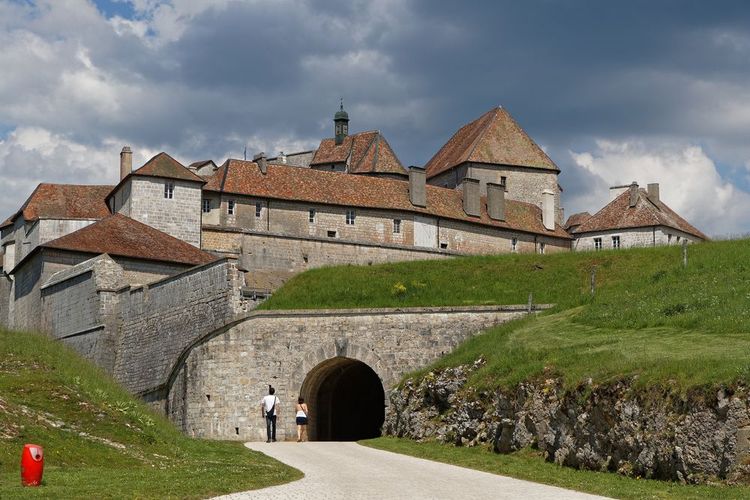
Perched on a rocky spur dominating by more than 100 meters the strategic passage of the Pontarlier cluse, the Château de Joux embodies a millennium of military history. Built from the 11th century, it has been constantly modified and reinforced over the centuries, becoming an almost impregnable fortress.
The one-hour guided tour allows discovering its five successive enclosures, witnesses to the evolution of fortification techniques from the Middle Ages to Vauban. The halls, corridors, drawbridges and casemates tell the story of this stronghold that controlled the salt route in the 13th century and watched over the Swiss border.
The Château de Joux was also a formidable prison where Toussaint Louverture, hero of Haitian independence, died in 1803. Collections of ancient weapons and historical reconstructions enrich the visit to this emblematic site. For those who wish to visit Besançon and its surroundings, the Château de Joux represents an essential excursion just a few kilometers from Pontarlier (Château de Joux, 25300 La Cluse-et-Mijoux, rated 4.5/5 on Google for 491 reviews).
10. The Poudrey chasm, underground cathedral
With its unique hall of nearly one million cubic meters, the Poudrey chasm houses one of Europe's largest natural cavities. This underground cathedral impresses with its colossal dimensions and the beauty of its limestone concretions sculpted by water over millennia.
The visit route allows admiring stalactites, stalagmites and columns with evocative shapes. A small underground lake with tranquil waters adds to the magic of the place. Each visit concludes with a sound and light show that stages the legend of the Vouivre, mythical creature half-woman half-serpent from Franc-Comtois legends.
This magical animation, accessible to children as well as adults, plunges visitors into the fantastic universe of regional tales. The constant temperature of 7°C requires bringing warm clothing regardless of the season. The Poudrey chasm constitutes a fascinating stop to visit Doubs and discover the geological riches of the Jurassian massif.
11. The Mont d'Or, exceptional alpine panorama
Culminating at 1,463 meters altitude, Mont d'Or offers one of the most beautiful panoramas in the Jura massif. From its summit, on clear days, the view embraces the Swiss Alps and can even distinguish Mont Blanc, giant of the Alps at more than 100 kilometers distance.
The ascent of Mont d'Or reserves beautiful naturalist surprises. The altitude pastures welcome herds of Montbéliard cows whose bells resonate in the mountain. Attentive hikers can observe chamois, marmots and remarkable alpine flora, notably wild orchids in season.
Several hiking itineraries allow reaching the summit, from the most sporty to the most accessible. In winter, the site transforms into a Nordic ski area appreciated by cross-country skiers. The preserved and wild nature of Mont d'Or makes it a must-see to visit Doubs and immerse yourself in the mountain landscapes of Haut-Doubs.
12. The blue spring of Malbuisson, turquoise mystery
Between the villages of Malbuisson and Montperreux gushes a spring with extraordinary turquoise waters. This 6-meter deep karstic resurgence fascinates with its deep and brilliant blue, optical phenomenon due to the depth and mineral composition of the water.
A romantic 12th-century legend attributes this color to the tears of Berthe de Joux, whose blue eyes wept the death of her lover, knight Amey de Montfaucon. Reality or legend, the blue spring exerts undeniable fascination on all its visitors.
The site, easily accessible, is discovered during a short walk in a preserved natural setting. Note that Franche-Comté has several resurgences with blue or green waters, characteristic of the region's karstic relief. The blue spring constitutes a poetic and photogenic stop to visit Doubs and discover its natural curiosities.
13. Montbéliard, city of Princes
Former independent principality until 1793, Montbéliard preserves a unique atmosphere marked by its particular history and Germanic influences. Old Montbéliard seduces with its colorful facades, picturesque alleys and warm atmosphere that evokes Germany more than France.
The Saint-Martin temple, built in 1601, holds the title of oldest Protestant temple in France. The castle of the Dukes of Wurtemberg dominates the city and houses a museum retracing local history. To recharge, the Près-la-Rose park, located on a peninsula, brings together a hundred plant species in a romantic setting conducive to strolling.
Montbéliard is also world-renowned for its Peugeot Adventure Museum, located in Sochaux. This exceptional site traces more than two centuries of industrial history through 450 objects and 130 vehicles on display. The city celebrates each winter one of the most beautiful Christmas markets in France, the "Christmas Lights", attracting thousands of visitors (Musée de l'Aventure Peugeot, Carrefour de l'Europe, 25600 Sochaux, rated 4.4/5 on Google for 487 reviews).
14. The Saut du Doubs, majestic cross-border waterfall
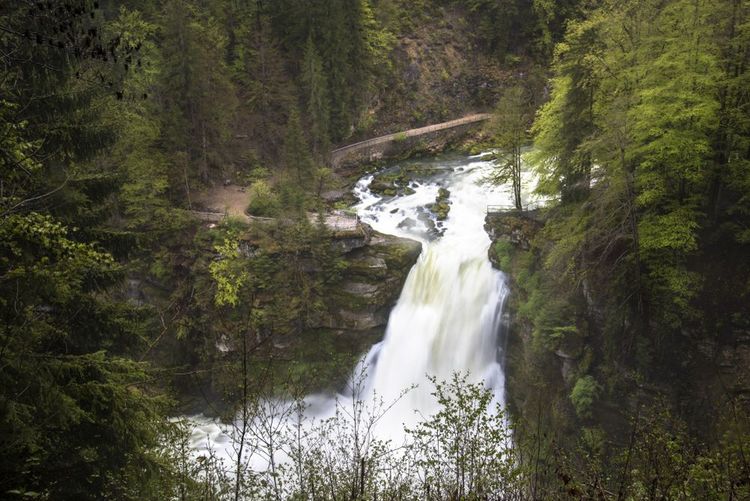
At the Franco-Swiss border, the Saut du Doubs forms one of France's most beautiful waterfalls. 27 meters high (reaching 40 meters during floods), it plunges thunderously in a grandiose setting of limestone cliffs and lush forests.
The spectacle is particularly impressive in autumn after rains, when the river's flow increases. Several itineraries allow reaching the site: on foot via hiking trails offering magnificent viewpoints, by riverboat departing from Villers-le-Lac for a romantic approach, or even by horse-drawn carriage for an authentic and typically Comtois experience.
The Doubs gorges leading to the waterfall cross preserved natural landscapes where vegetation clings to rocky walls. The site constitutes a natural border between France and Switzerland, adding to the unique character of this spectacular place. The Saut du Doubs represents one of the most emblematic natural sites to visit Doubs and beautifully conclude the discovery of the department.
In conclusion, visiting Doubs offers a complete tourist experience combining exceptional historical heritage, character villages and spectacular natural sites. From the majestic citadel of Besançon to the waterfalls of Saut du Doubs, passing through mysterious caves and crystalline springs, each stop reveals a different facet of this preserved territory. Whether you are seeking culture, adventure or simply tranquility in the heart of authentic landscapes, Doubs will seduce you with its richness and diversity. Don't hesitate to extend your stay and discover Besançon following the Ryo audio-guided itinerary, which will allow you to explore in depth this Comtois capital full of history and charm.


Frequently asked questions
What is the best time to visit Doubs?
The best time to visit Doubs extends from May to September, when temperatures are pleasant and nature in full bloom. Summer allows fully enjoying hikes and natural sites. Autumn offers flamboyant landscapes and waterfalls are particularly impressive after rains. Winter reserves its share of charm with the Montbéliard Christmas market and Nordic skiing activities, notably at Mont d'Or.
How much time to plan to visit Doubs?
A long weekend allows discovering the main sites around Besançon. For a more thorough discovery including natural sites, villages and museums, ideally plan 5 to 7 days. This will give you time to alternate cultural visits and hikes, stroll in character villages and savor local gastronomic specialties without rush.
What are the culinary specialties of Doubs not to miss?
Doubs is a paradise for gourmets. Among the must-tries: Comté AOP, excellent cheese produced in Jura fruitières, Morbier recognizable by its ash stripe, creamy Mont d'Or to taste hot, smoked Morteau sausage from the tuyé, Luxeuil ham, cancoillotte (typical cheese specialty), and for sweets, Brimbelles (wild blueberries) and Pontarlier, anise aperitif heir to absinthe.
Is Doubs suitable for family visits with children?
Absolutely! Doubs offers numerous family activities: the zoo and museums of the Besançon citadel, the Poudrey chasm with its sound and light show, the Peugeot Adventure Museum, the Osselle caves, as well as many accessible hiking trails. Natural sites like springs and waterfalls fascinate children. Moreover, distances between sites remain reasonable, limiting travel time.
À lire également