© Shutterstock
 Votre guide Ryo
Unusual Visit to Besançon: 13 Secret Places to Discover in 2026
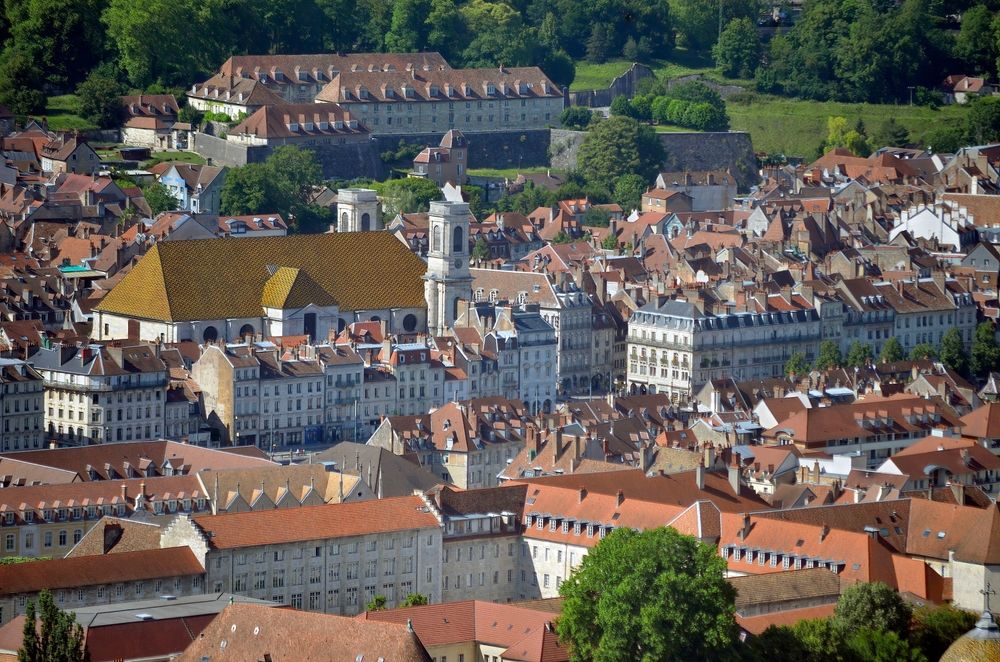
Beneath Vauban's ramparts, Besançon hides another city, and this short guide to unusual Besançon gathers its thirteen finest secrets: Roman ruins behind an anonymous gate, a tunnel where the waters of the Doubs plunge beneath the rock, a clock made of 30,000 parts that still shows the tides of thirteen ports around the world. The capital of clockmaking, crowned by a UNESCO-listed citadelle, has a staid reputation; yet an unusual visit to Besançon reveals a very different face — more secretive, and often absent from mainstream guides. To discover these curiosities in whatever order suits you, the Ryo audio-guided tour of Besançon already marks several of them right in the city centre.
Expect to descend beneath the fortified citadelle to encounter former prison cells, to travel back in time before an astronomical clock commissioned in 1857, or to board a boat that passes through the rock via a tunnel dug in the 19th century for river navigation. Around the city, ancient caves and treetop cabins with spas round out this list of thirteen addresses and experiences, from the historic heart to the nearby forests of the Doubs. More than enough to extend an unusual visit to Besançon well beyond its famous citadelle.
The Square Castan, a Hidden Archaeological Garden in the City Centre
Behind a wrought-iron gate, just steps from the Citadelle, a terraced garden conceals the remains of a Roman theatre and nymphaeum dating from the 2nd century. The Square Castan takes its name from archivist Auguste Castan, who excavated the site in the late 19th century before architect Alphonse Delacroix transformed it into a hanging garden in the 1970s.
Few visitors push open the gate, yet the place is free and can be explored in ten minutes. You will find truncated columns, a Roman basin and an unobstructed view of the Saint-Jean bell tower. The contrast between the ancient stone and the Haussmann-era buildings surrounding it makes it one of the most photogenic and least visited corners of the historic centre. Come in the late afternoon, when the raking light catches the ruins and the garden's silence stands in sharp contrast to the bustle of the nearby Grande Rue, a stop that Ryo's A Matter of Time audio-guided tour ties in with the Square Castan.
The Porte Noire, the Roman Triumphal Arch Everyone Ignores
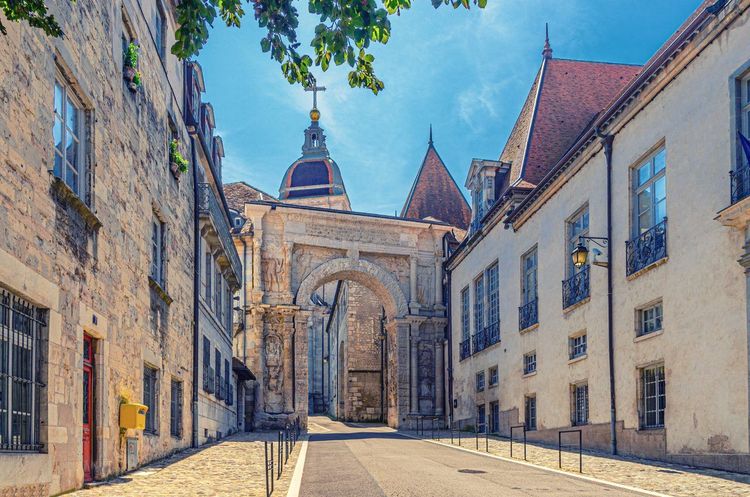
A few metres from the cathedral, a Roman triumphal arch blackened by centuries of soot and fires goes almost unnoticed by hurrying passers-by. The Porte Noire was erected around 175 AD in honour of Emperor Marcus Aurelius, and is among the last monumental Roman arches preserved in Franche-Comté.
Its name comes not from its function but from the colour of its stone, charred by a 17th-century fire that also damaged some of its sculpted reliefs. Take a moment to look up at the friezes still legible today: battle scenes, foliate motifs and mythological figures worn by nearly nineteen centuries of weathering. Many visitors walk past it without stopping on their way to the neighbouring cathedral, yet it deserves a five-minute pause in its own right.
The Citadelle de Besançon Seen Differently: Tunnels, Wells and Forgotten Walkways
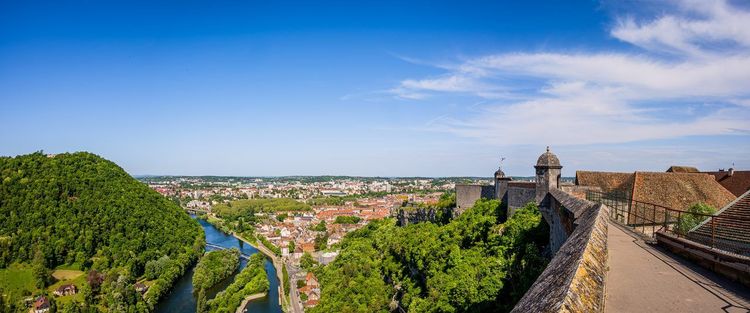
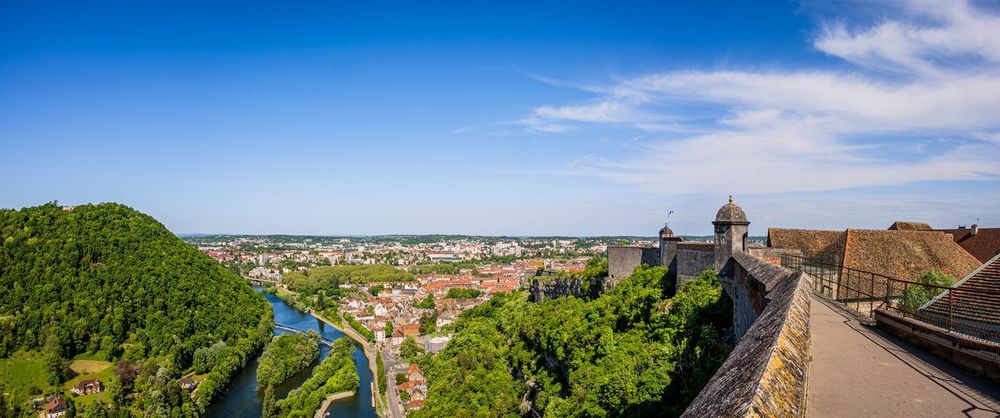
The Citadelle de Besançon (99 Rue des Fusillés de la Résistance, 25000 Besançon, rated 4.5/5 on Google from 8,930 reviews), a masterpiece by Vauban completed in 1684 and inscribed on the UNESCO World Heritage List since 2008, draws several hundred thousand visitors each year for its three museums and its panoramic view over the Doubs loop. Most stop at the main front without ever exploring the lower levels of the fortress.
Yet it is underground that the Citadelle reveals its darkest history. A network of underground galleries and former casemates served as a place of detention and execution during the Occupation: more than a hundred resistance fighters were shot there between 1940 and 1944. The Musée de la Résistance et de la Déportation, housed in the former military buildings, retraces this period through deliberately sober, almost austere spaces that contrast sharply with the whiteness of the bastioned front outside. A thematic guided tour, offered on certain dates, descends into the galleries closed to individual visitors — ask at the ticket desk when you arrive.
The so-called prisoners' well, dug directly into the rock to supply the garrison with water during a siege, descends several dozen metres. Few signs point it out clearly, so ask at the welcome desk for the detailed site map: it shows access points to the least-visited levels, including the south walkway, which is almost always deserted even at the height of the season.
Another curiosity hides in the animal section of the site. The Citadelle houses a zoo, an insectarium and a noctarium where nocturnal animals move about in artificially recreated darkness. Few visitors think to time their visit for the late afternoon, yet that is precisely when nocturnal species begin to stir behind the tinted glass. Allow an extra hour if you want to visit the noctarium and still see the rest of the site before closing time.
The combined ticket giving access to all three museums costs less than buying them separately and is valid for the entire day, allowing you to split the visit into several sessions if you are staying nearby. Many visitors in a hurry see only one museum, whereas the full circuit, including the underground sections, really requires three to four hours.
From the Bastion Saint-Étienne, at the eastern end of the site, the view plunges directly onto the Doubs meander and the slate rooftops of the old city. It is one of the few vantage points from which you instantly grasp why the city was built on a peninsula almost completely encircled by the river. If you listen to our Ryo app on the way up, several audio commentaries explain the defensive logic Vauban devised, bastion by bastion, without your needing to decipher the technical panels along the path.
Full-price admission is around 11 euros for the whole site, and opening hours vary considerably by season: closing as early as 5 pm in winter compared with 7 pm in summer. Check the hours before you go, especially off-season, as certain areas such as the noctarium or the Résistance underground sections sometimes close earlier than the rest of the site.
The Citadelle is part of a wider network of twelve Vauban sites jointly inscribed on the World Heritage List in 2008, a collective listing that is fairly rare and underlines the coherence of the defensive system devised under Louis XIV. Few visitors know that the same engineer redesigned the fortifications of cities as far apart as Briançon and Saint-Martin-de-Ré, applying similar principles adapted to each terrain.
The Musée du Temps and the Astronomical Clock of Saint-Jean
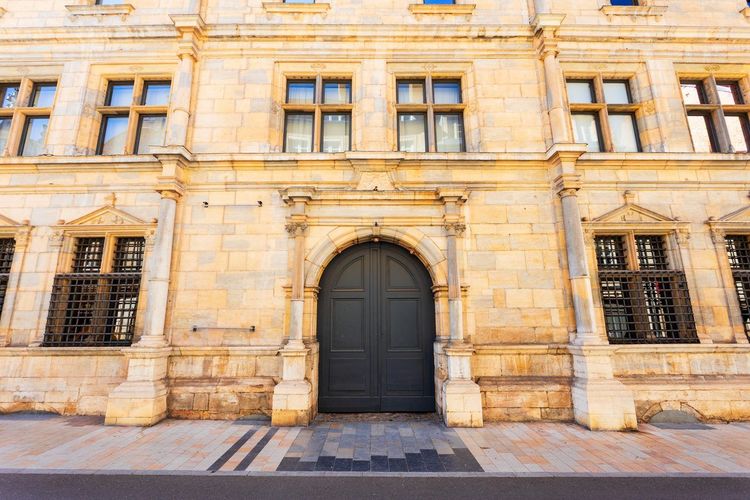
Besançon has held the title of France's clockmaking capital since the 18th century, a status born of the arrival of Swiss watchmakers fleeing religious persecution and seeking new markets across the border. The Musée du Temps, housed in the Palais Granvelle — a Renaissance palace built for the chancellor of Charles V — tells this industrial story through mechanisms, pocket watches and automata sometimes three centuries old.
The palace's inner courtyard, with its Italian-style arcades, is worth the detour on its own even if you do not visit the collections. You can access it free of charge during opening hours, making it a pleasant stop between two paid visits in the historic centre. The museum also offers an animated reconstruction tracing the evolution of watchmaking techniques from the first mechanical watches of the 16th century to quartz movements — an educational trail that appeals to children and seasoned horology enthusiasts alike.
The city's other clockmaking curiosity is a few hundred metres away, in the north arm of the Cathédrale Saint-Jean (Rue de la Convention, 25000 Besançon, rated 4.5/5 on Google from 638 reviews). The astronomical clock commissioned by Cardinal Mathieu in 1857 and completed three years later by clockmaker Auguste-Lucien Vérité contains more than 30,000 parts spread across 57 dials.
It displays not only the time and date but also the phases of the moon, upcoming eclipses and the tide times of several French ports — a complex and vertiginous calculation given that Besançon lies more than 300 kilometres from the nearest sea. The guided tour of the clock, limited to a small group per slot, allows you to observe the mechanism from the rear, which completely transforms your perception of the object once you understand how it works.
Book your slot at the tourist office as soon as you arrive in the city: places are limited and tours, generally scheduled in late morning and early afternoon, sell out at the start of school holidays. If you cannot get a place, the Musée du Temps offers a reconstruction of the mechanism accessible without a reservation — less spectacular but sufficient to understand the principle of the religious automata that come to life on the hour.
The Besançon clock is considered one of the most complex in the world, alongside that of Beauvais — another clock made by the same clockmaker a few years later. The two cities have been friendly rivals over the title for more than a century, each putting forward a slightly different number of functions depending on the source.
Allow around 3 euros for the guided tour of the clock and 6 euros for admission to the Musée du Temps — modest sums given the historical richness of each site. Both close on Mondays, a detail worth checking before planning your route through the city centre.
To extend this immersion in the city's clockmaking history, the Ryo audio-guided tour Une histoire de temps devotes several stops to this heritage, passing through watchmakers' workshops and displays of Comtoise clocks, over just over two kilometres from the city centre.
The Kursaal, a Belle Époque Concert Hall on the Banks of the Doubs
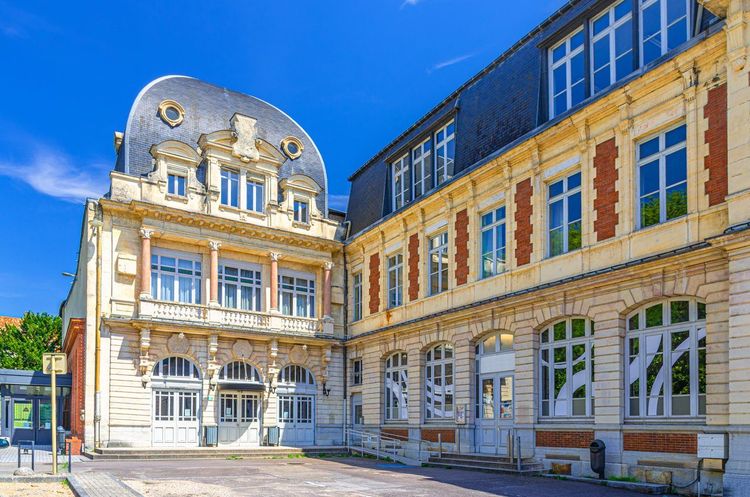
Along the Promenade Micaud, on the banks of the Doubs, an ornate Belle Époque concert hall surprises passers-by who did not expect to find such a setting outside the historic centre. The Kursaal was built in 1892 in an eclectic style blending Moorish and Art Nouveau influences, at a time when Besançon's bourgeoisie sought a leisure venue worthy of the great spa towns.
The building has weathered changing fashions without losing its character: first a casino then a ballroom, it now hosts concerts, shows and community events in a hall with surprisingly good acoustics for its modest size. You can generally visit the foyer and terrace without a show ticket, simply by pushing open the door during office hours.
The terrace overlooking the Doubs, at the rear of the building, offers a rarely photographed view of the river and the canopy of the Promenade Micaud. It makes a pleasant stopping point after a visit to the Citadelle, a ten-minute walk along the quays. Few guides mention the Kursaal, yet it encapsulates on its own the history of bourgeois leisure in Besançon at the Belle Époque — a facet of the city largely overshadowed by its medieval and Roman heritage.
The Cimetière des Chaprais, a Stroll Among Sculpted Tombs
A walk through a cemetery rarely appears on any tourist itinerary, yet the Chaprais cemetery is worth the detour for anyone interested in funerary sculpture and local history. The Cimetière des Chaprais (Rue Just Becquart, 25000 Besançon, rated 4.5/5 on Google from 15 reviews) features tombs from the 19th and early 20th centuries, some adorned with Art Nouveau bronzes that are now rare since so much of that material was melted down during the requisitions of the Second World War.
You will find the burial places of several watchmaking and industrial families who built the city's fortunes, with funerary monuments disproportionate to the apparent modesty of the surrounding neighbourhood. A military section groups the graves of soldiers from both world wars, aligned with a regularity that contrasts with the vegetative disorder of the rest of the cemetery.
Allow thirty to forty minutes for a quiet visit, preferably in late morning when the light filters through the canopy of century-old trees planted along the main paths. Entry is free and open all year round, and the silence of the place contrasts with the bustle of the historic centre a few hundred metres away. This is clearly not a stop for everyone, but if historic cemeteries interest you elsewhere in France, this one ranks among the richest in the region in terms of funerary heritage.
In the Footsteps of Victor Hugo, the Little-Known Birthplace
At 140 Grande Rue, a discreet façade conceals the house where Victor Hugo was born on 26 February 1802, the son of a Napoleonic army officer then stationed in Besançon. The maison natale de Victor Hugo (140 Grande Rue, 25000 Besançon, rated 4.2/5 on Google from 1,026 reviews) has been turned into a museum retracing the writer's itinerant childhood, between Franche-Comté, Italy and Spain where his father was posted during successive military campaigns.
The reconstructed apartment evokes the atmosphere of an early 19th-century bourgeois home rather than a setting frozen around the adult writer, which often surprises visitors expecting to find echoes of Les Misérables or Notre-Dame de Paris. The visit takes around thirty minutes, making it easy to slot in between the Square Castan and the Porte Noire, both less than ten minutes away on foot, a pairing that Ryo's A Matter of Time audio-guided tour also links together.
The Forgotten Forts of the Fortified Belt: Griffon, Bregille and Trois-Châtels
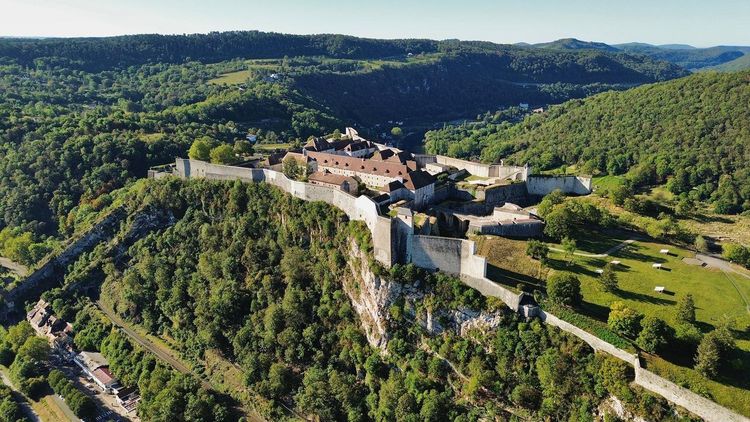
Besançon is encircled by around ten forts built in the 19th century to supplement the Citadelle's defensive system, and most of them can be explored freely from the outside, without ever featuring on mainstream tourist routes.
The Fort Griffon, perched on the hill of the same name, has been repurposed since its military days and now hosts community and cultural activities. Its surroundings remain accessible during the day, and the high point offers a bird's-eye view of the Citadelle and the Doubs loop, without the queues of the main site.
The Fort de Bregille (Chemin du Fort de Bregille, 25000 Besançon, rated 4.5/5 on Google from 369 reviews), on the other side of the river, dominates the city from the hill of the same name. An orientation table near the ramparts helps you identify the main monuments of the historic centre — a useful exercise before heading back down to explore the neighbourhoods spotted from the heights. Several of these forts lend themselves well to an impromptu picnic, especially Fort de Bregille, whose grassy surroundings offer enough space to settle without disturbing the handful of local walkers who regularly frequent the site on Sunday mornings.
Further out, the Fort de Trois-Châtels is visited mainly for the hike leading to it, through a woodland that changes atmosphere completely with the seasons. The interior of the fort is not open to the public outside occasional events organised by local associations, but the surrounding area is enough for an hour's walk.
None of these three forts appears in the tourist brochures distributed in the city centre, which explains why you will probably have them to yourself, even on a spring Saturday afternoon. Wear sturdy shoes: the access paths are almost always steep and can be slippery after rain, and none of the three sites has any catering on site. Bring water, especially if you plan to visit several forts in the same day — something the modest distances between the hills make quite feasible.
Most of these fortifications date from the defence programme conceived after 1870, when France reinforced its ring of frontier forts following defeat by Prussia. They never had to defend the city during a siege, which explains their generally good state of conservation despite the absence of tourist maintenance. For military heritage enthusiasts, the contrast between Vauban's 17th-century Citadelle, designed according to an offensive Italian doctrine, and these 19th-century forts conceived for modern artillery, offers an open-air military history lesson — free of charge and rarely commented upon.
One final tip: combine a visit to just one fort with another stop on this list rather than visiting all three in the same day — the walk between each hill soon takes its toll on legs already tested by the rest of the route.
The Doubs Loop Seen from the Water: the Tunnel Beneath the Citadelle
Besançon occupies a peninsula almost completely encircled by the Doubs, a geographical configuration you truly grasp only by getting on the water rather than watching it from a bridge. The boats that depart from the Promenade Micaud offer a full circuit of the Doubs loop, including a brief but unexpected passage beneath the rock of the Citadelle.
This tunnel, dug in the 19th century to allow boats on the Rhône-Rhine Canal to cut through the hillside rather than navigate the full length of the loop, measures several hundred metres. The canal, completed in 1833, once linked the Mediterranean to the North Sea via a network of more than a hundred locks, several of which still exist around Besançon without always being in active service for leisure boating. The boat crossing, through damp semi-darkness lit in places, contrasts sharply with the open light of the river immediately before and after the passage.
Allow around one hour for this guided boat tour, with an on-board commentary detailing the history of each neighbourhood passed, from the river port to the gardens lining the left bank. Departures are more frequent in high season, generally every hour between April and September, and thin out considerably outside that period.
If you prefer a more active approach, several hire operators offer kayaks or stand-up paddleboards to explore the loop at your own pace, without commentary but with the freedom to stop wherever you like. The tunnel passage is reserved for official boats for safety reasons, but the rest of the loop is well suited to a one- or two-hour kayak trip depending on your fitness level.
Opt for a late-morning or late-afternoon departure: the raking light on the water shows off the colourful façades lining some of the quays to particular advantage, especially around the Battant neighbourhood. At midday in midsummer, the glare off the water makes boating less comfortable and photographs often too contrasty.
The full tour costs around 11 euros per adult, with reductions for children and groups. Online booking is not compulsory off-season, but is recommended in July and August when some departures sell out by early afternoon.
Many visitors content themselves with admiring the loop from the quays without ever boarding a boat, missing the only vantage point that reveals why the entire city is effectively built on an island. To extend this river discovery, the Ryo article Visiting the Doubs: 14 Must-Sees details other remarkable stops along the river upstream and downstream of the city — useful if you plan to extend your stay beyond the historic centre.
Underground Around Besançon: the Souterroscope d'Osselle and the Grotte de la Glacière
About twenty minutes by road from the city centre, the subsoil of the Doubs hides a mineral world that few passing visitors take the time to explore. The Souterroscope d'Osselle, developed in a cave known and exploited since the 16th century, combines spectacular limestone formations with prehistoric archaeological remains discovered during 19th-century excavations.
The guided tour lasts about an hour and takes place at a constant temperature year-round, around 12 to 14 degrees Celsius, making it a pleasant outing both in the height of summer and in winter when the cold makes outdoor walks less appealing. Guides explain the formation of the stalactites and stalagmites, some hundreds of thousands of years old according to the most recent geological estimates, alongside prehistoric animal bones found on site.
Further away, towards the plateau, the Grotte de la Glacière (Chaux-lès-Passavant, 25360, rated 3.7/5 on Google from 153 reviews) at Chaux-lès-Passavant takes its name from a rare natural phenomenon: the configuration of the chasm traps cold air in winter and prevents it from rising in summer, creating ice stalagmites that sometimes persist well into July.
This phenomenon, documented since the 18th century by naturalists who came from across Europe to observe it, remains one of the most astonishing geological curiosities in the entire Jura massif. The descent to the bottom of the chasm is via a metal staircase, manageable for most visitors but not recommended for people with reduced mobility given the gradient and the constantly damp steps.
These two sites lie in opposite directions from Besançon, so combining them in a single day is difficult without devoting a large part of your visiting hours to travel. If you can only choose one, favour the Souterroscope d'Osselle for its richer archaeological dimension, or the Grotte de la Glacière if the phenomenon of natural ice in midsummer intrigues you more than the prehistoric remains.
Always bring a warm layer, even in a heatwave: the temperature at both sites stays cool year-round and regularly catches visitors off guard when they arrive in light summer clothing. Closed-toe shoes are also recommended, as the cave floors remain damp and sometimes slippery throughout the visit.
A car is essential for both sites, as no public transport runs directly to either Roset-Fluans or Chaux-lès-Passavant from Besançon. Allow around twenty minutes to reach the Souterroscope d'Osselle and about forty minutes for the Grotte de la Glacière, with free parking on site in both cases.
Admission prices range from around 9 to 12 euros per adult depending on the period, with fixed guided tour slots rather than free access. Book online where possible during July and August weekends, when family numbers can add thirty minutes or more to the on-site wait.
For more dedicated cavers, several local associations organise supervised outings into undeveloped cavities in the Jura massif, reserved for people in good physical condition and generally accompanied by full equipment provided on site. This option, more niche than a standard visit to the Souterroscope, caters to a small audience but opens up galleries completely closed to the general public.
The Jura and the Doubs are among the richest massifs in France for karstic cavities, with several hundred caves recorded within a fifty-kilometre radius of Besançon. These two sites therefore represent only a glimpse of a much larger underground heritage, to be explored over future stays if the subject captivates you.
Sleeping Differently Around Besançon: Treehouses and Nordic Spas
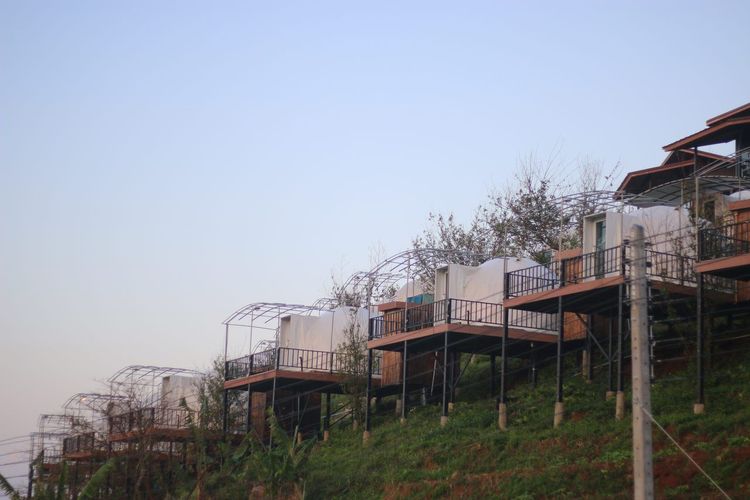
The forests surrounding Besançon, between the Doubs, the Jura and the Haute-Saône, are home to a remarkable concentration of treehouses and lodges equipped with private spas — an unusual accommodation offer that has grown considerably over the past decade. You will find these addresses fifteen, thirty or forty-five minutes by road from the city centre, generally nestled in private forest estates.
These accommodations come in several forms: a cabin on stilts with an outdoor Nordic spa, a treehouse built directly in the branches of a centuries-old tree, or a ground-level lodge with a sauna and an open view over the Comtoise countryside. Most offer a local breakfast basket delivered directly to the cabin, a service that avoids any morning journey and prolongs the digital detox these stays are designed to provide.
Prices vary considerably by season and level of facilities, from around 150 euros for a simple cabin on a weekday out of season to more than 350 euros for a lodge with a private spa on a spring weekend. Autumn and winter remain the most sought-after seasons for this type of accommodation, with the combination of a wood fire, a hot outdoor bath and a frost-covered landscape forming the main draw for couples.
Ideally book two to three months in advance for a weekend between November and February, a period when the best cabins fill up as soon as reservations open. Availability is broader on weekdays and outside school holidays, sometimes with prices 20 to 30 per cent lower than at weekends.
This type of accommodation pairs particularly well with an unusual visit to Besançon: you spend the day exploring the urban curiosities detailed above, then retreat to the forest calm in the late afternoon for an evening in the spa before resuming your exploration the next day. Many estates are within a close enough radius to allow a day trip if you prefer to stay in the city at night.
Before booking, always check the cancellation policy and the actual distance from the car park to the cabin: some estates require you to carry luggage along several hundred metres of forest trail, a detail rarely highlighted in promotional photos but significant if you are travelling with children or bulky equipment. Also check whether the spa is heated year-round or only during certain months, as some outdoor facilities close in winter for maintenance reasons.
The Doubs département concentrates most of the offer around Besançon, but the neighbouring Jura and Haute-Saône massifs also have several well-regarded estates, sometimes barely further in travel time. Widening your search to these two neighbouring départements considerably increases your chances of finding availability, particularly for the most sought-after winter weekends.
Several estates promote the use of local timber for construction and wood-burning heating to reduce the environmental footprint of these installations in the middle of a forest. If this matters to you, enquire directly with each owner before booking, as practices vary considerably from one estate to another despite often similar language on booking platforms.
Whatever estate you choose, plan to arrive before dark on your first visit: forest tracks, often unlit, are far easier to navigate in daylight than by headlight beam.
Original Experiences in Besançon: Escape Rooms, Night Tours and Via Ferrata
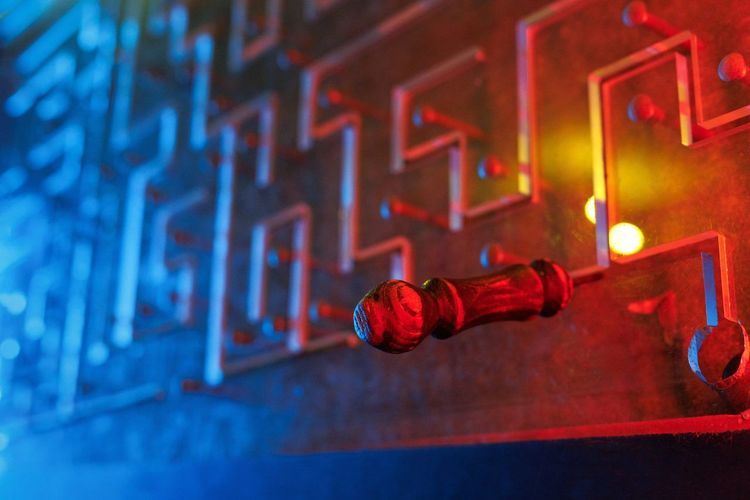
Beyond the sites to visit, Besançon offers a handful of experiences that step outside the classic tourist framework, combining play, thrills and nocturnal rediscovery of heritage.
Escape rooms set in the historic centre often draw on themes dear to the city: puzzles around clockmaking, scenarios inspired by the Resistance, or plots set in the alleyways of the Battant neighbourhood. Allow around an hour per session and book ahead at weekends, as these activities fill up several days before the most popular slots.
The candlelit night guided tour, organised on certain summer evenings by the tourist office, winds through the streets of the historic centre by the light of lanterns rather than the usual street lighting. The atmosphere changes completely: the 17th-century façades, the Porte Noire and the area around the cathedral take on a particular depth once stripped of daytime activity and tourist groups.
For thrill-seekers, the via ferrata routes in the Doubs valley, a short distance from Besançon, offer equipped climbing above the river — accessible without prior experience thanks to introductory routes, with more challenging options for experienced climbers.
Equipment is generally available to hire on site or from local providers, saving you from transporting harnesses and lanyards from home. Allow two to three hours for a full route including gearing up and the return journey, and wear sturdy closed-toe shoes, as the rock holds can remain damp even in summer.
Another way to gain altitude: hot-air balloon flights over the Citadelle and the Doubs loop, generally offered at sunrise when wind conditions are most stable. The flight provides a view impossible to achieve from the ground, with the almost island-like shape of the old city becoming clearly visible once the first few metres of altitude are gained.
Kayaking on the Doubs, already mentioned for the urban loop, also comes in a more sporty version upstream of the city, in narrower gorges where the current is more noticeable. Several operators offer guided half-days suited to beginners as well as more experienced paddlers looking for a bit more of a challenge.
Expect to pay around 25 to 45 euros per person for a guided via ferrata session, and roughly 200 to 250 euros for a hot-air balloon flight including transport to the launch point and a glass of Jura sparkling wine on landing — a local tradition that accompanies almost every such outing.
Most of these activities should be booked online at least 48 hours in advance, particularly at weekends and during school holidays. Some, such as the via ferrata or the balloon flight, are heavily weather-dependent and may be postponed at the last minute — so build some flexibility into your schedule if you are set on ticking one of these experiences during your stay.
Many visitors focus their stay on the monuments and leave without having tried a single one of these experiences, even though they often provide the most memorable moment of the trip — more so than the classic photo in front of the Citadelle. To round out this programme, the Ryo selection Top 6 Activities to Do in Besançon details further options by season, useful if your stay extends beyond a simple weekend.
Planning Your Unusual Visit to Besançon: Duration, Getting There, Season and Budget
Allow a minimum of two full days to cover the essentials of this list, and three days if you add an excursion to the caves or a night in a cabin in the surrounding area. Besançon is reached by TGV from Paris in just over two hours, and from Dijon in under an hour, making it an accessible destination even for a short weekend.
Spring and autumn remain the most pleasant seasons for combining urban visits with outdoor excursions, with tourist numbers significantly lower than in midsummer. Winter suits the caves particularly well, as their temperature stays constant year-round, and the cabins with spas, whose appeal is greatly enhanced by the cold outside.
Budget around 60 to 90 euros per person per day for admissions, excluding accommodation, covering the Citadelle, the Musée du Temps, the astronomical clock and one outdoor activity such as a via ferrata or a boat tour. The historic centre is entirely walkable; no car is needed for the majority of the sites in this guide, with the exception of the caves and the forest cabins located on the outskirts.
Always keep two to three hours of flexibility in your schedule: between limited guided-tour slots and weather uncertainty for outdoor activities, flexibility remains your greatest ally for making the most of a city that rewards a little more effort than its more widely publicised neighbours.
FAQ
What is the most unusual visit to do in Besançon?
The Square Castan and its Roman ruins hidden behind a plain gate rank among the most surprising discoveries, as does the boat crossing through the tunnel carved beneath the Citadelle. For a more sensory experience, the candlelit night tour of the historic centre radically changes the perception of a city too often reduced to its clockmaking and fortified reputation.
How much time should I allow for an unusual visit to Besançon?
Two full days are enough to cover the main secret sites of the historic centre, the Citadelle from a different angle, and a boat trip along the Doubs loop. Add a third day if you wish to include an excursion to the surrounding caves or a night in a treehouse with a spa in the nearby forests.
Where can I sleep in an unusual way near Besançon?
The forests of the Doubs, Jura and Haute-Saône are home to several treehouse estates with private spas, located fifteen to forty-five minutes by road from the city centre. Book several months in advance for an autumn or winter weekend, the most sought-after period for this type of accommodation.
Can you visit the Citadelle de Besançon at night?
The Citadelle generally closes in the late afternoon or early evening depending on the season, but the noctarium allows visitors to observe nocturnal species in artificially recreated darkness during regular opening hours. Certain special evening events, occasionally organised in summer, exceptionally extend access to the site beyond the usual closing time.
Which caves should I visit near Besançon?
The Souterroscope d'Osselle, about twenty minutes from the city centre, combines spectacular limestone formations with prehistoric archaeological remains. The Grotte de la Glacière de Chaux-lès-Passavant, slightly further away, is distinguished by its natural ice stalagmites that sometimes persist well into summer.
Is Besançon easily accessible by train from Paris?
Yes, the direct TGV line connects Paris to Besançon in just over two hours, with several return journeys daily. From Dijon, the journey takes under an hour, making the city easily accessible for a weekend without needing a car to explore the historic centre.
What is the best time to discover Besançon in a different way?
Spring and autumn offer the best compromise between pleasant weather and reduced tourist numbers for exploring the sites featured in this guide. Winter remains ideal for the caves with their constant temperature and for the cabins with spas, whose appeal is greatly enhanced by the cold outside.
Conclusion
Besançon is not summed up by its Citadelle and its astronomical clock, impressive as they are. This list of thirteen extraordinary sites and experiences reveals a city of many layers: Roman beneath the Square Castan and the Porte Noire, resistant in the underground galleries of the fortress, industrial in its clockmaking heritage, and almost insular once seen from the waters of the Doubs.
You will probably not have time to do everything in a single unusual visit to Besançon, and that is fine: keep a few addresses in reserve for a future trip, particularly the surrounding caves and the forest cabins, which deserve a dedicated escape rather than a quick detour between two urban visits. To plan your route through the historic centre, the Ryo audio-guided tour of Besançon remains the simplest starting point: it already marks several of the sites mentioned here, in an order designed for walking.
One thing is certain: once you have pushed open the gate of the Square Castan or crossed the Citadelle tunnel by boat, it is hard to see this city again as a mere clockmaking stopover on the road between Paris and Switzerland, an impression that Ryo's A Matter of Time audio-guided tour reinforces, linking the Square Castan to the Porte Noire.