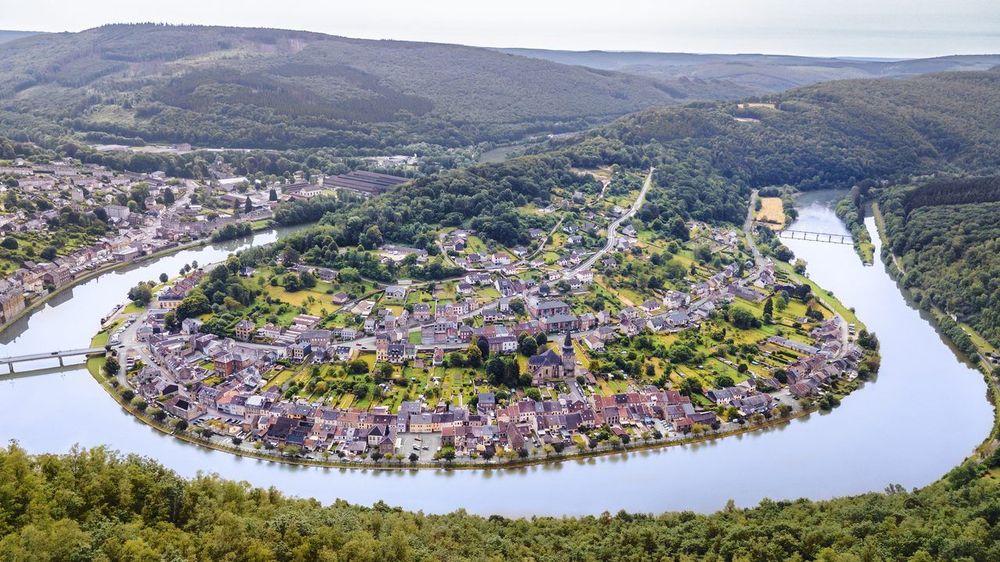
© Shutterstock
 Votre guide Ryo
The 6 Most Beautiful Villages in the Ardennes to Visit in 2026
The Ardennes have the distinctive quality of resembling no other region in France: deep forests carved by the Meuse, villages clinging to rocky promontories, a northern light that entirely changes the way you perceive blue stone and slate. If you are looking for the most beautiful villages in the Ardennes, forget the well-worn lists — the hidden gems are sometimes just two kilometres from the Belgian border, sometimes at the bottom of a valley that GPS devices do not always locate correctly.
Rocroi and its star-shaped ramparts designed by Vauban, Hierges and its medieval castle overlooking the Meuse, Mouzon and its Gothic abbey whose stained glass filters a green light in summer, Monthermé wedged at the confluence of two wild valleys, Redu and its forty bookshops in a village of 500 inhabitants, Chassepierre and its lanes along the Belgian Semois: each of these villages has its own identity and a compelling reason to make the detour. The Ryo team has selected these six destinations to offer you an authentic map of the most remarkable villages in the French and Belgian Ardennes. To go further in your exploration of rural France, discover our Ryo guide to villages of character in France.
Rocroi, Vauban's Citadel
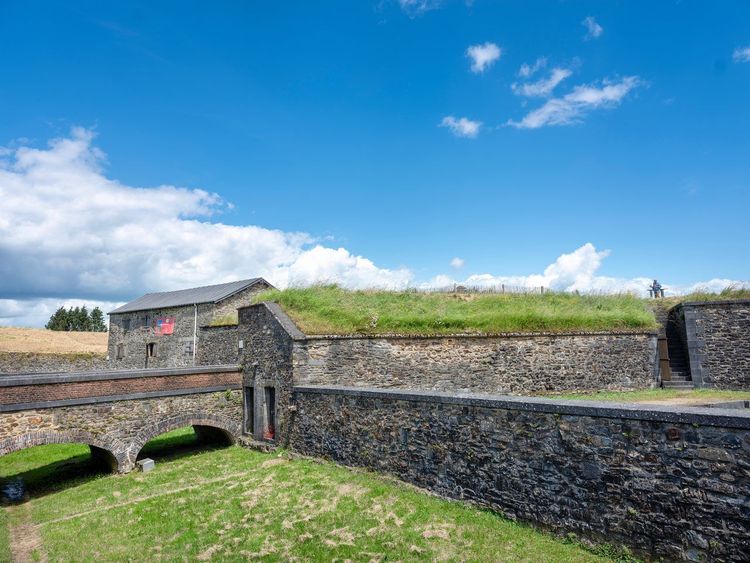
There is no other fortified town in Europe whose plan is so pure. Rocroi spreads across its Ardennes plateau like a five-pointed star, a geometric layout whose military logic — conceived by Vauban in the 17th century — is immediately apparent from the air. Yet it is from street level that you truly grasp what it means to live inside a fortress that is still inhabited.
The town was founded in 1555 by Henri II, who wished to defend the kingdom's northern border against the Habsburgs. Vauban would only intervene a century later, perfecting a system of bastions and demi-lunes already in place and adding the advanced outworks characteristic of his style. The result: a more than 80% preserved enclosure, listed as a Historic Monument, which makes Rocroi one of the most complete examples of French military architecture from the Grand Siècle.
The name of Rocroi remains inseparable from a battle. In May 1643, the young Duke of Enghien, the future Grand Condé, then aged 21, crushed the legendary Spanish infantry of the tercios here, bringing an end to their invincibility that had lasted more than a century. A municipal museum retraces the episode and the history of the fortified town in the armoury of the central square. The collections are modest, but the building itself — a 17th-century former town hall — is worth a look.
To understand the geometry of the place, climb the ramparts through the Porte de France: in a twenty-minute stroll, you will complete a full circuit of the bastions. The view over the Ardennes forest to the north is a reminder that you are barely 5 km from the Belgian border. Below, the Place d'Armes with its 17th-century church and red-brick houses forms one of the most coherent urban ensembles in the Ardennes department.
Allow half a day for Rocroi: the walk along the ramparts is free and accessible year-round, the museum visit costs around €3, and a coffee on the square is best enjoyed without rushing. In summer, the village hosts historical re-enactments of the 1643 battle, particularly popular with families.
Hierges, a Labelled Medieval Gem
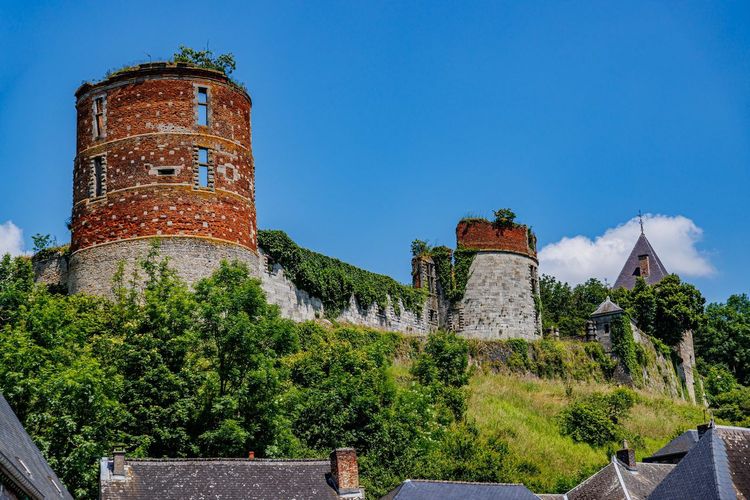
Some villages need an introduction. Hierges speaks for itself: the village reveals itself from the road that runs along the Meuse, and the silhouette of the medieval castle on its limestone promontory is enough to justify stopping. It is no coincidence that Hierges appears on the list of Les Plus Beaux Villages de France — the only label that truly counts in this field.
The village has barely 300 inhabitants and is squeezed between the river and the cliff. The Château de Hierges (Route de Hierges, 08320 Hierges, rated 3.8/5 on Google from 60 reviews), whose origins date back to the 11th century, dominates the meander of the Meuse from a strategic position that explains its defensive role over several centuries. The de Cröy family made it one of the most powerful fortresses in the region during the 15th and 16th centuries. Today partially restored, it can be visited during days organised by local heritage associations — check the dates at the town hall before visiting.
The houses of Ardennes blue stone clustered along the main street, the Romanesque church of Saint-Étienne, and the terraced gardens create an atmosphere that the Ardennes reproduce nowhere else. The light in the late afternoon, when it strikes the grey and blue stones of the castle, is particularly striking — photographers have known about it for years.
Hierges is located 15 km north of Givet, easily combined with a visit to the Fort de Charlemont, which has dominated that town since the 16th century. This stretch of the Meuse valley, on the Belgian border, concentrates several of the most remarkable villages in the Ardennes: a full day will not be too much to explore its details. Hiking enthusiasts will find marked trails that descend to the banks of the Meuse, with views of the meanders that only a footpath can reveal.
Hierges remains a discreet village — which is precisely its strength. No souvenir shops, no crowds in July, just residents who maintain their heritage with a quiet dignity that commands respect.
Mouzon and Its Gothic Abbey
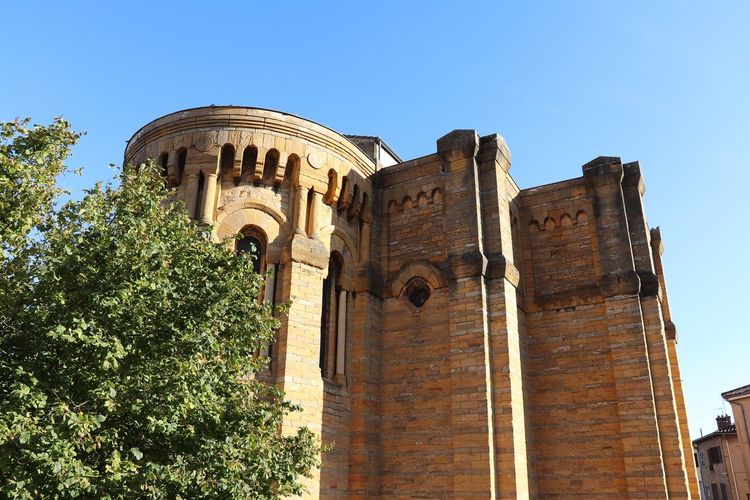
At the far east of the department, where the Meuse begins to grow wider and more peaceful, Mouzon occupies a special place in the Ardennes landscape. The town (2,700 inhabitants) is more of a small historic town than a village in the strict sense, but its scale remains human and its heritage far exceeds anything you might reasonably expect from a commune of this size.
The Abbaye Notre-Dame de Mouzon is the must-see monument. Built in the 12th and 13th centuries, it is one of the first Gothic buildings in the region, contemporary with Notre-Dame de Paris and sharing its characteristic way of stretching proportions skyward. The choir's stained glass filters light in green and blue, creating an interior of rare intensity in the Ardennes. The western façade, sober and powerful, looks out onto an ordinary village square — the contrast between the scale of the building and its immediate surroundings produces a lasting sense of surprise.
Mouzon's medieval ramparts are also worth the detour. Built between the 12th and 15th centuries, they once encircled the entire town. Significant sections have been preserved, including the Porte de Bourgogne and several towers, which allow you to mentally reconstruct the fortified town. The Ardennes Tourist Office runs guided walks in season to explain the defensive logic — an hour well spent.
Mouzon is also known in more specialised circles for its artisan felt: the town was home to one of the last major felt manufacturing plants in France. The Musée du Feutre traces this singular industrial history, with a collection of tools and pieces that illustrates a craft now almost entirely lost. A local curiosity that complements the abbey visit nicely and gives Mouzon a dual identity: medieval heritage and industrial memory.
Monthermé, between Valleys and Rocks
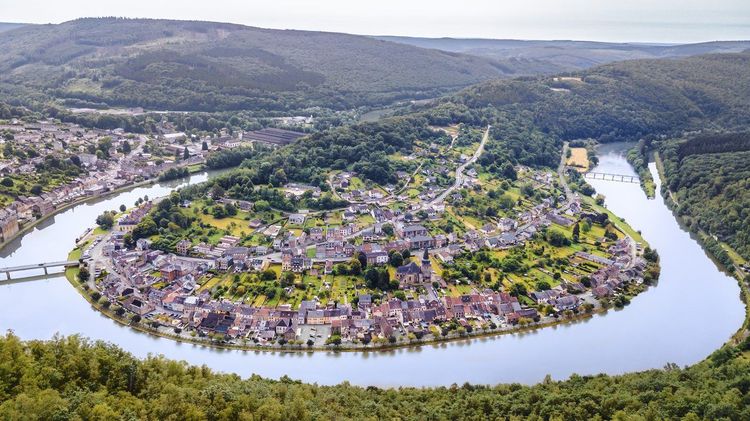
The geography of Monthermé is difficult to sum up in a few words: the village is wedged inside a meander of the Meuse, where the river makes a bend of almost 180 degrees before receiving the Semoy. The rocks framing the confluence — some rising to over 200 metres — transform this corner of the Ardennes into something that resembles a miniature fjord more than a French provincial village.
The Roche à Sept Heures (Monthermé, 08800 Monthermé, rated 4.7/5 on Google from 45 reviews) is the classic viewpoint: from this promontory, you look down over the Meuse valley and its wooded meanders, with a panorama that Ardennes walkers regularly rank among the finest in the region. The climb takes around 30 minutes from the village centre, on a marked trail accessible to most fitness levels. More demanding, the Long Rocher offers a 360-degree view taking in both the Meuse and the Semoy valley — a one-hour round trip from the village.
The village itself stretches along the valley floor, its grey slate houses clustered along the quays of the Meuse. The church of Saint-Léger, its steeple visible from the heights, dates in part from the 16th century. The Saturday morning market on the quays draws residents from the surrounding villages — a good reason to time your visit accordingly.
Monthermé is also an excellent starting point. The road that follows the river towards Thilay and Les Hautes-Rivières passes through landscapes of dense forest and damp meadows that cyclists on the Trans-Ardennes greenway particularly enjoy. If you spend a night in the Ardennes, Monthermé is worth sleeping in: the valley inns offer menus based on river trout and local game, at prices that defy any comparison with neighbouring tourist regions.
Redu, the Belgian Village of Booksellers
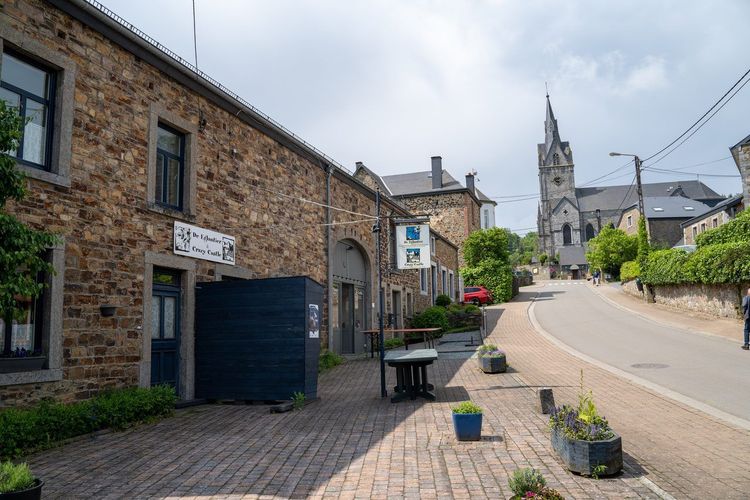
Crossing the border into the Belgian Province of Luxembourg opens up another dimension of the Ardennes. Redu is a village of 500 inhabitants that has achieved something extraordinary: transforming itself, from 1984 onwards, into a book village on the model of Hay-on-Wye in Wales, and sustaining that identity for four decades without wavering. Today, some forty bookshops and secondhand booksellers are spread across the blue-stone houses — antiquarian books, comic strips, travel books, prints, sheet music.
The idea was born from Noël Anselot, who wanted to revitalise his home village by making books its primary trade. The gamble paid off: Redu now welcomes around 100,000 visitors a year, the majority French and Dutch, and remains sufficiently low-key not to have lost its village soul.
A visit works best at the weekend: most bookshops are open on Saturdays and Sundays, prices remain reasonable, and the book market held on certain weekends in May and October attracts collectors from across French-speaking Europe. For astronomy enthusiasts, the Euro Space Center in Transinne, a centre dedicated to space exploration, located 5 km away, makes an excellent extension to the day.
Redu is 30 minutes from Bouillon and its medieval castle. It fits naturally into a two-day circuit covering the emblematic villages of the Franco-Belgian Ardennes, without ever imposing unnecessary kilometres.
Chassepierre, Art on the Banks of the Semois
About twenty kilometres from Redu, Chassepierre pulls off a different feat: being simultaneously one of the most beautiful villages in Wallonia and one of the most active artistic scenes in the Belgian Ardennes. The village sits on a meander of the Semois, a river that winds through a wooded valley with an almost wild character.
The village silhouette from the viewpoint is one of those images that stays with you: the steeple of the Baroque church emerging above a perfect meander, the grey schist houses clinging to the slopes, the river almost black in the shadow of the rocks early in the morning. Photographers have known the spot for decades.
What makes Chassepierre unique among Ardennes villages is its international street arts festival, held every year in August since 1974. For a weekend, companies from around the world take over the lanes, riverbanks, and meadows of the village with street theatre, circus, performances, and ephemeral installations. The event draws several tens of thousands of spectators and remains one of the major cultural highlights of the Belgian Ardennes, without ever altering the peaceful character of the village for the rest of the year.
The Semois at this point lends itself to kayaking and trout fishing. Several local operators offer canoe trips from Florenville down to Chassepierre — half a day on the water in an exceptional forest setting, a way to discover the village from an angle that the road cannot provide.
Three More Ardennes Villages to Explore
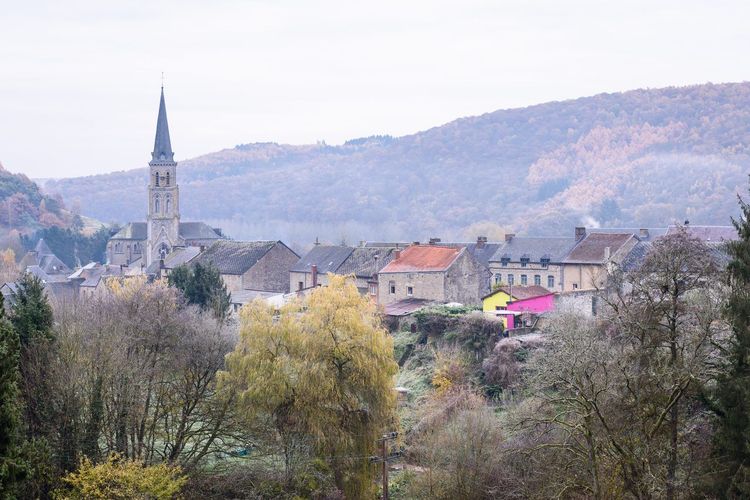
The six villages presented in this guide are not the only ones worth a detour. Wasigny, in the southern Ardennes, has a pastoral character that the great Meuse valleys do not: its half-timbered and sandstone houses, its ponds and preserved pastures make it a rare example of an agricultural village of the chalky Ardennes, very different from the schist and slate villages of the northern department.
Givet, at the northern tip of the French department, forms a salient deeply encircled by Belgium and keeps watch over the Fort de Charlemont (Avenue de la Tour, 08600 Givet, rated 4.4/5 on Google from 870 reviews), perched on its rock above the Meuse. The Belgian border passes nearby, in the middle of the river's meander, and from the fort's ramparts you can take in two countries in a single panorama.
Finally, Bouillon on the Belgian side is worth the crossing for its medieval castle, which occupies a rocky spur in a meander of the Semois. Its state of preservation and the story of Godefroid de Bouillon, who set off on the First Crusade in 1096, make it one of the most visited castles in the Ardennes. To discover other remarkable villages across France region by region, explore our Ryo guide to the villages of Dordogne, one of France's richest regions for medieval heritage.
When to Visit the Villages of the Ardennes?
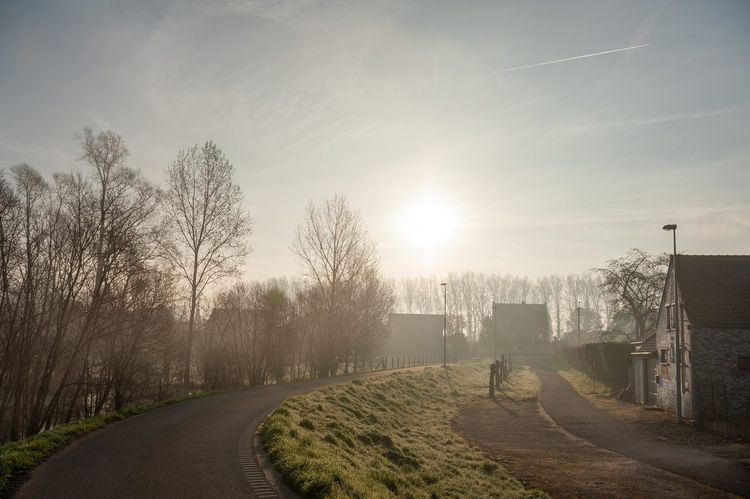
The question of season is decisive in the Ardennes. Spring (April–May) is generally the most well-balanced time: the forests are greening, the rivers are high and lively, the villages are still uncrowded, and the northern light gives the Ardennes stones a particularly photogenic quality. It is also the season for local markets and the first open terraces.
Summer (July–August) attracts the majority of visitors, especially along the Meuse and Semois routes. Monthermé and the valley villages can be lively at weekends. The upside: all sites are open, opening hours are extended, and the Chassepierre festival takes place in August.
Autumn is a revelation for those in the know: the oak and beech forests turn gold and russet in October, transforming the ridge roads into corridors of colour. Hierges and Monthermé regularly feature in Ryo's recommendations for this period — visitor numbers drop, and so do accommodation prices. It is the favourite season for hikers and photographers.
Winter is more of an experience than a simple trip: the Ardennes under snow have an austere, silent beauty, but some accommodation closes and village roads can be tricky in icy conditions.
How to Get There and Get Around in the Ardennes
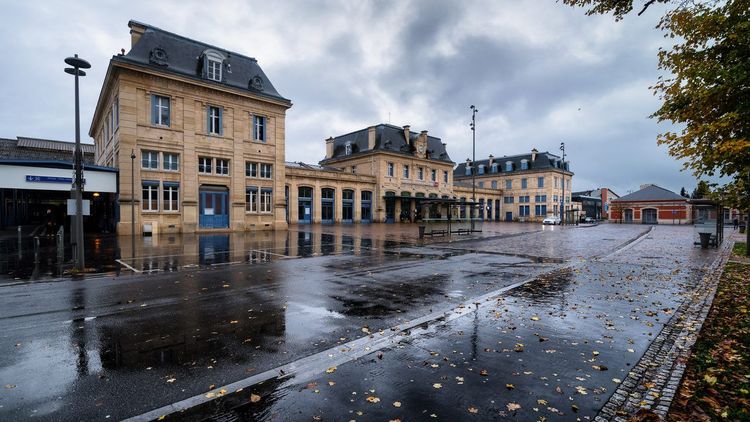
The French Ardennes are accessible by train from Paris-Est to Charleville-Mézières in 1h30 to 1h45 depending on the connection. From there, buses serve Givet, Monthermé, and Mouzon, though frequencies remain limited outside school term times.
To visit the villages comfortably — particularly Hierges, Rocroi, and the Belgian villages such as Redu and Chassepierre — a car remains essential. Distances between villages are short (20 to 50 km), and the Ardennes' secondary roads, often deserted, are a pleasure in themselves. A stay of two to three days allows you to connect the six villages presented in this guide, using Charleville-Mézières or Monthermé as a base on the first day, then crossing into Belgium on the second.
Ryo also offers guides for other regions rich in remarkable villages: discover our Ryo selection of villages around Lille if you are planning a circuit in northern France, or the villages of character in Calvados as seen by Ryo to combine the Ardennes with Normandy.
FAQ
Are the Ardennes in France or Belgium?
Both. The Ardennes department (number 08) is entirely French and belongs to the Grand Est region. But the Ardennes also form a natural and cultural region that extends beyond the border, particularly into Belgium — the province of Namur and the Belgian province of Luxembourg — and as far as the Grand Duchy of Luxembourg. This is why lists of the 'most beautiful villages in the Ardennes' often include Belgian villages such as Redu, Chassepierre, and Bouillon, which share the same identity of forest, river, and blue stone.
What is the Most Beautiful Village in the French Ardennes?
Hierges is the only Ardennes village to officially hold the 'Les Plus Beaux Villages de France' label, created in 1982 to distinguish communes of fewer than 2,000 inhabitants with remarkable heritage. Its position on a promontory above the Meuse and its medieval castle give it a unique silhouette in the department. Rocroi, although not labelled, is often cited in second place for its exceptional Vauban ramparts.
How Can I Visit the Villages of the Ardennes without a Car?
It is possible but challenging. The Paris–Charleville-Mézières train serves the centre of the department in under two hours. From Charleville, buses serve Monthermé and Givet. For Hierges, Rocroi, or the Belgian villages, local taxis or electric bike rentals can make up for the lack of direct public transport. The Trans-Ardennes greenway, which follows the Meuse for around 130 km between Charleville-Mézières and Givet, passes through Monthermé and Givet and is an excellent cycling route for linking several Ardennes villages without a car.
What is the Best Time to Visit the Ardennes?
April–May and September–October offer the best balance of weather, crowd levels, and site accessibility. Spring for swollen rivers and greening forests, autumn for the spectacular colours of the oak and beech woods. Summer is fine but busier at key sites, particularly in August around Chassepierre's street arts festival.
Is Hierges One of the Most Beautiful Villages of France?
Yes. Hierges is officially labelled as one of the 'Les Plus Beaux Villages de France'. It is one of the rare Ardennes representatives of this association, which today groups more than 170 communes across France. The label requires the village to have fewer than 2,000 inhabitants and to possess at least two sites or spaces classified or listed as Historic Monuments.
How Many Days Do You Need to Visit the Ardennes?
Two days allow you to cover the main French villages — Rocroi, Hierges, Mouzon, Monthermé — while adding a foray into the Belgian side (Redu or Chassepierre). Three days allow for a more leisurely exploration, with hikes from Monthermé and time to enjoy local markets. For a more ambitious stay, the Ardennes combine well with the Namur Meuse valley and Charleville-Mézières, Rimbaud's birthplace, whose museum traces the life and work of the poet.
Conclusion
The villages of the Ardennes share a rare quality: they do not seem aware of their own beauty. Rocroi goes on living within its ramparts, Hierges tends its stones without seeking to impress, Redu has been selling books for forty years without fancying itself a tourist destination. It is precisely this unselfconsciousness that makes the Ardennes experience so different from the polished destinations of the south.
Whether you are planning a weekend from Paris, a family circuit, or a Franco-Belgian cycling trip, these six villages deserve a place in your 2026 itinerary. Discover more Ryo selections to explore rural France: our guide to villages of character around Rennes according to Ryo or our remarkable villages around Bordeaux to extend your adventure among France's villages of character.