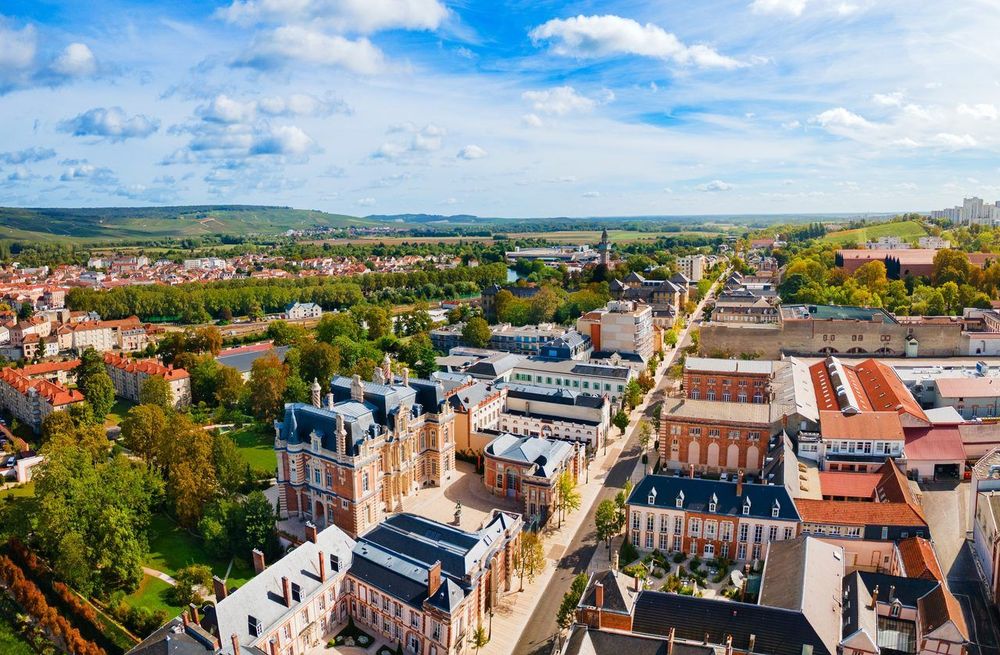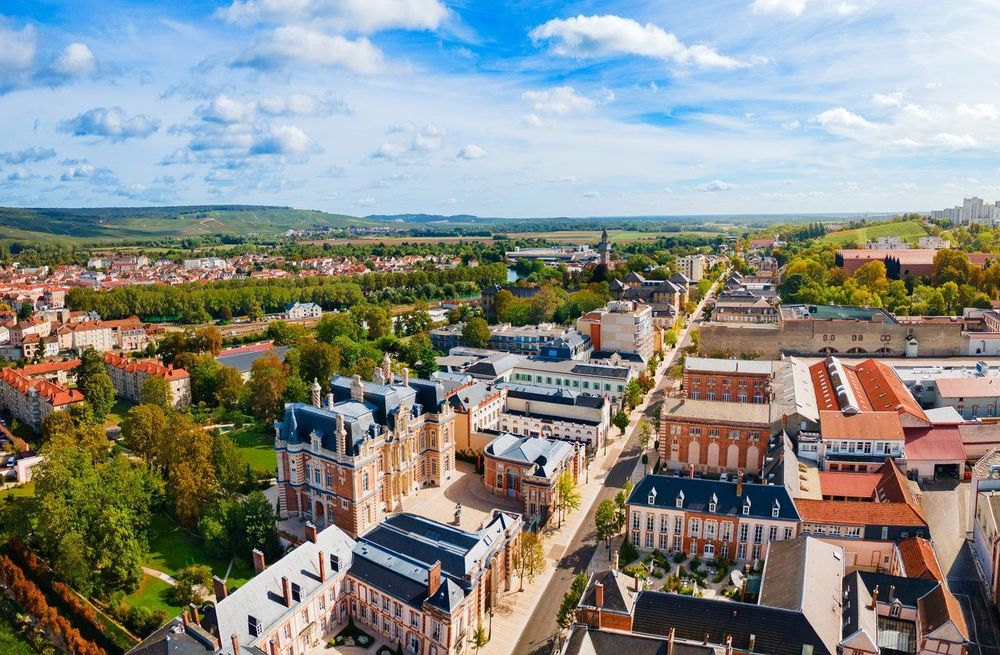
© Shutterstock
 Votre guide Ryo
Weekend in Épernay 2026: The Complete Itinerary Between Avenue de Champagne and the Vineyards
At 7 a.m., the air in Épernay smells of fermenting grapes and black coffee, a blend that sums up quite well what people planning a weekend in Épernay are after: seriousness and lightness in the same sip. Beneath Avenue de Champagne, 110 kilometres of galleries dug into the chalk shelter the reserves of the world's greatest houses, while ten minutes away by road, a Benedictine monk has rested since 1715 in a village that still carries his legend. In between, there is a UNESCO-listed vineyard, a cave of fossil shells 45 million years old and private mansions that look like châteaux. This guide follows a simple rhythm: one day for Épernay's historic heart, one day for Hautvillers and the winegrowing villages, then ideas for extending your stay as a couple, by bike or towards Reims. To get a sense of the distances before you leave, the Ryo audio-guided tour of Épernay already marks out the town centre on foot, house by house.
Day 1: Avenue de Champagne and the Heart of Épernay
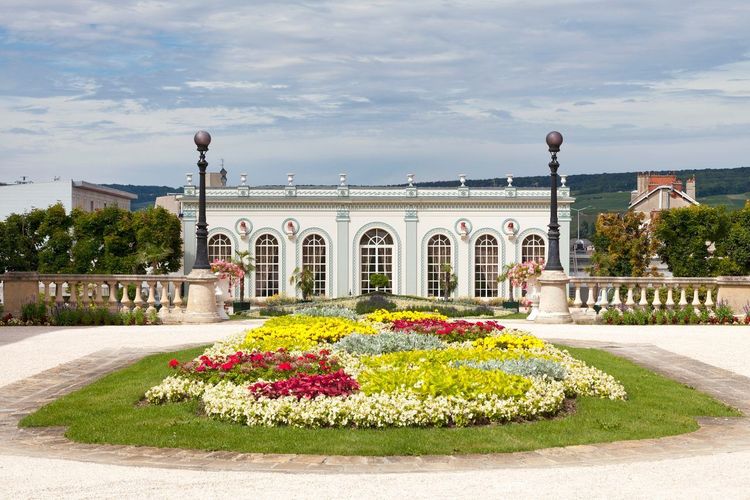
Starting with Avenue de Champagne is not just a tourist habit: it is the backbone of the town, and almost everything that matters in Épernay lies within ten minutes' walk of its cobblestones. It is best to arrive early, before the coaches drop their groups in front of the golden gates.
Avenue de Champagne and Its Great Houses
The Avenue de Champagne lines up, over a little more than a kilometre, the headquarters of the houses that built the worldwide reputation of the local sparkling wine. At Moët & Chandon, the tour goes down into kilometres of cellars where several million bottles rest; allow about 1h15 and book at least two weeks ahead in high season.
A little further along, the house of Mercier offers a ride on a small electric train through its galleries, a more playful way to approach the same subject with children or visitors in a hurry. You can also climb the 237 steps of the Tour de Castellane (57 Rue de Verdun, 51200 Épernay, rated 4.3/5 on Google from 170 reviews), which offers the best overview of Épernay's rooftops and the line of hillsides.
Of course, you have neither the time nor the budget to visit five or six houses in one morning. The advice most local sommeliers give: choose one for the cellar tour (Moët for the sheer scale, de Castellane for intimacy) and be content to admire the façades of the others as you walk, a free exercise and almost as spectacular.
Strolling and Tasting in the Historic Centre
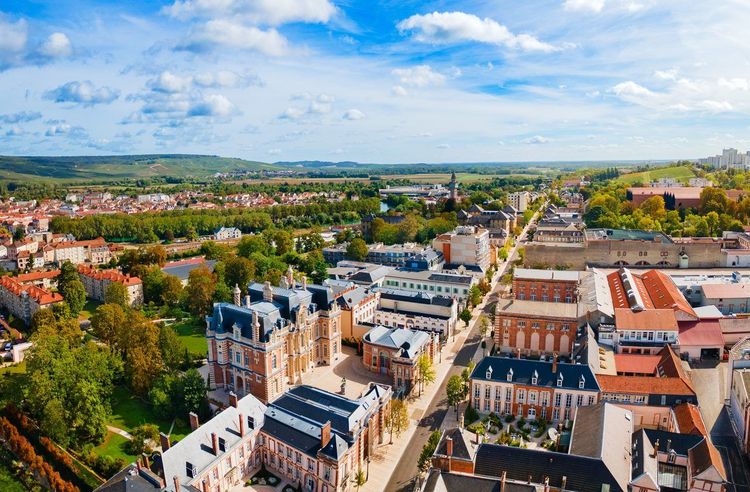
On the avenue itself, the Hôtel de Ville occupies the former Auban-Moët mansion, a merchant's residence surrounded by an English-style garden open to the public. Heading back down towards the centre, Place de la République marks the junction with the shopping streets, where you will find Champagne cheeses and Reims ham from local artisans.
It is in this triangle between the avenue and the town centre that most of the classic romantic city trip to Épernay takes place: short tastings in independent wine bars (allow €12 to €18 a glass depending on the cuvée), shops of grower-producers less well known than the big houses but often more affordable, and terraces overlooking the avenue. Regulars recommend booking at least one tasting with a small producer: that is where you will find the most personal wine tourism, with a winegrower who talks about his own plot rather than a guide reciting a script.
If you have an hour between two tastings, the Ryo audio-guided tour of Avenue de Champagne runs along the street step by step and comments on the history of each façade, from Moët to Mercier via de Castellane, with no schedule constraints or cellar booking.
A Typical Day on the Avenue, Hour by Hour
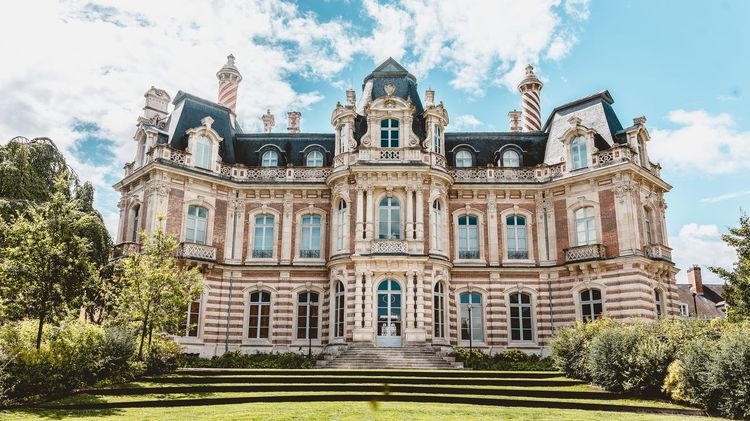
To miss nothing without rushing, here is the rhythm many visitors follow. Around 9:30, a first stroll along the façades, still quiet. At 10:30, the booked cellar visit, usually one to one and a half hours with tasting included. Around noon, a light lunch in the centre, then a climb up the Tour de Castellane in the early afternoon, when the light picks out the hillsides well. Mid-afternoon suits the Champagne Wine Museum, sheltered from the summer heat. At the end of the day, keep an hour for a tasting at an independent winegrower's, before a quiet dinner. This programme remains realistic on foot: nothing is more than fifteen minutes' walk away, and you will not need to get back in the car until the next day.
Épernay Beyond the Bubbles: Museum, Market Hall and Heritage
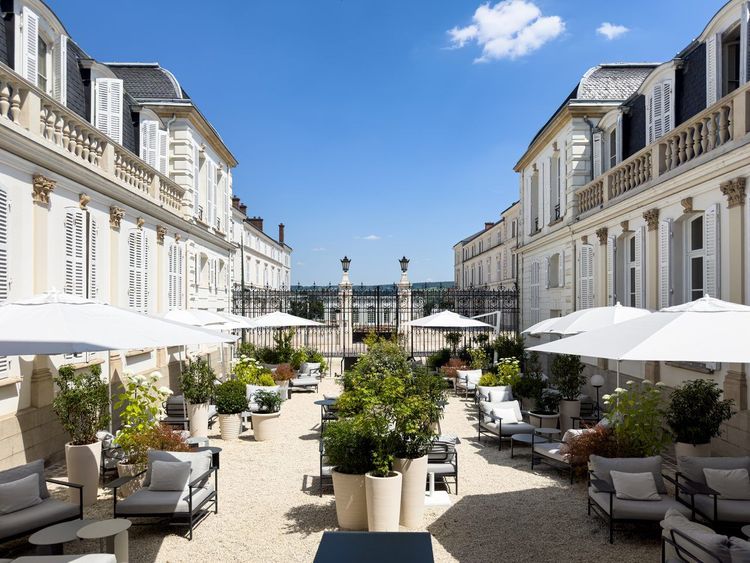
Épernay is often reduced to its cellars, which is a shame: the town hides a 19th-century heritage that tells how champagne money shaped its streets. If rain joins your stay, this section will keep you from going around in circles.
The Champagne Wine Museum at Château Perrier
In the middle of Avenue de Champagne, the Château Perrier, built in the mid-19th century for the Perrier family in a neo-Renaissance style, houses the Champagne Wine and Regional Archaeology Museum. Renovated and reopened in 2021, it traces the work of the vine and the history of the wine trade, then delves into archaeological collections you would not expect to find here. Climb up to the top-floor belvedere: the view plunges onto the avenue and the town's rooftops. It is the ideal visit to understand what you will see next in the cellars, in barely an hour.
Les Halles Saint-Thibault and Neighbourhood Life
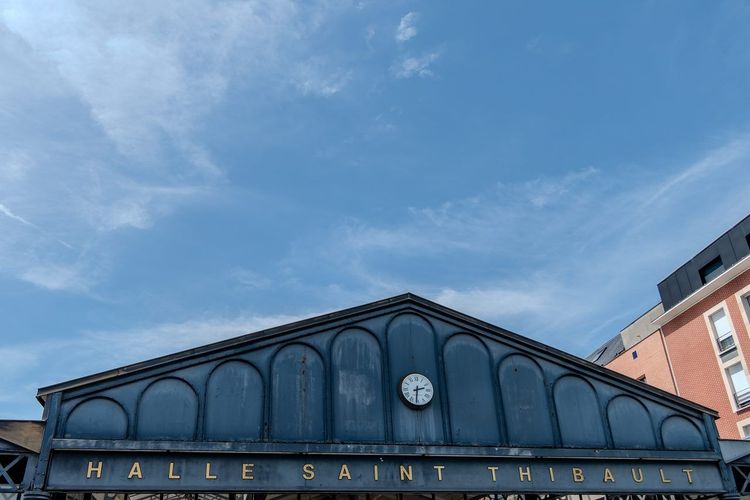
A few minutes' walk from the avenue, the Halles Saint-Thibault house the covered market: producers from the Marne, cheesemongers, charcutiers and market gardeners gather there on market mornings. You can easily put together a picnic to take into the vines the next day, Reims pink biscuits included. All around, the pedestrian streets concentrate wine merchants, chocolatiers and winegrowers' shops, with a provincial-town atmosphere far from the stuffy image of the big houses.
Day 2: Hautvillers and the Winegrowing Villages
The Ryo audio-guided tour of Épernay deliberately covers the town centre: it serves as a base before the second day's excursion, which heads towards the hillsides and two emblematic villages less than 15 minutes away by car.
Hautvillers, the Village of Dom Pérignon
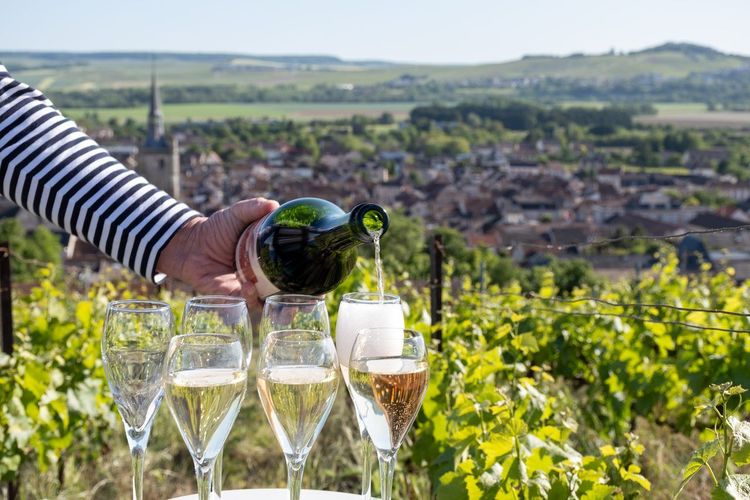
Hautvillers climbs a hill in the middle of the vines, and its silhouette is among the most photographed in Champagne. People come for the Abbaye Saint-Pierre, where the Benedictine monk Dom Pérignon, often credited (wrongly, historians say, but the legend holds firm) with inventing champagne, has rested since 1715 in the abbey church.
Cobbled lanes climb between winegrowers' houses adorned with dozens of wrought-iron signs, each illustrating a trade or a scene from the vineyard: the grafter, the cooper, the taster. Take the time to look for them; it is a game that appeals as much to children as to heritage lovers, and easily fills 45 minutes of wandering. The village offers a viewpoint over the Marne valley that is worth the detour on its own, especially in late afternoon when the light grazes the rows of vines.
On the practical side, the village is easily visited in two hours. Park in the car parks at the entrance rather than in the narrow lanes, which are very busy at weekends, and bring good shoes: the slopes are real. Several winegrowers open their cellars without appointment for a quick tasting, but a call the day before is safer off-season, when some close on Sundays.
Aÿ-Champagne: Where to Stay and Eat
About ten minutes by road, the village of Aÿ-Champagne cultivates a different identity: classified grand cru, renowned for its pinot noirs, more discreet in its tourism. This is where houses such as Bollinger and Deutz have their headquarters, proof that the local terroir has nothing to envy Épernay's.
To stay in Aÿ-Champagne, several guesthouses set in former winegrowers' houses offer value for money that is often better than the hotels in central Épernay, generally between €90 and €130 a night with breakfast. Where to eat in Aÿ-Champagne quickly comes down to a few addresses: a village bistro serving simple local cuisine (andouillette, Champagne potée), and a more gastronomic restaurant where the food and champagne pairing is designed dish by dish. Book on Friday and Saturday evenings, especially during the harvest.
Unusual Wine Experiences Not to Miss
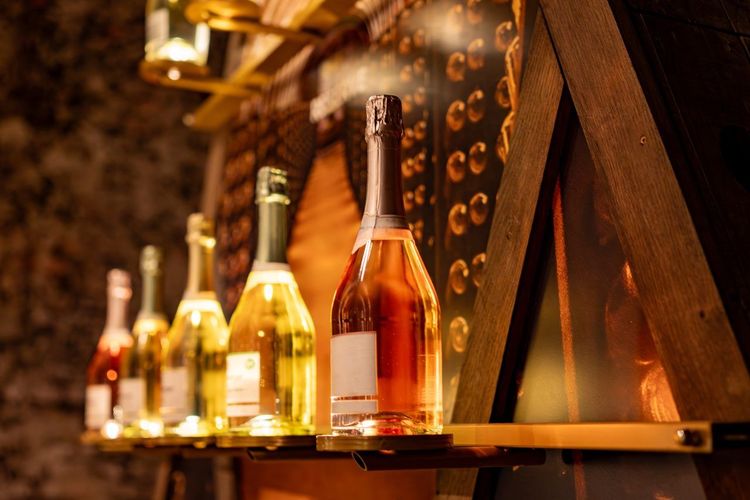
Beyond the cellars and avenues, two sites step outside the classic champagne house visit and deserve a place in the itinerary, especially if you stay three days rather than two.
Pressoria, the Sensory Champagne Experience
Located in Aÿ-Champagne, Pressoria occupies a former pressing centre transformed into an immersive, interactive journey: you observe, touch, smell, listen and taste. The place is aimed as much at newcomers who want to understand the Champagne method without drowning in jargon as at connoisseurs curious to see the process from a playful angle. Allow about 1h30 for the visit and book online on busy weekends; it combines ideally with the half-day in Aÿ.
La Cave aux Coquillages in Fleury-la-Rivière
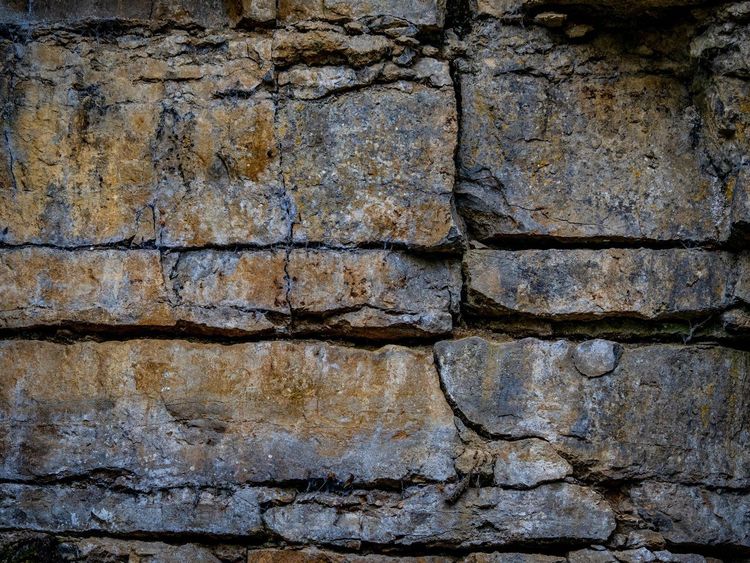
About twenty minutes from Épernay, La Cave aux Coquillages (51480 Fleury-la-Rivière, rated 4.7/5 on Google from 757 reviews) offers something unexpected on the champagne route: a geological journey of 45 million years, when the region was covered by a warm sea. Underground galleries reveal fossil shells embedded in the rock, a setting few visitors anticipate when coming for the wine.
After a morning on Avenue de Champagne, these two sites slot naturally into an afternoon and change the register from the tastings. Many visitors group them into a single half-day, one after the other, by car.
Épernay for Couples: Romance and the Good Life
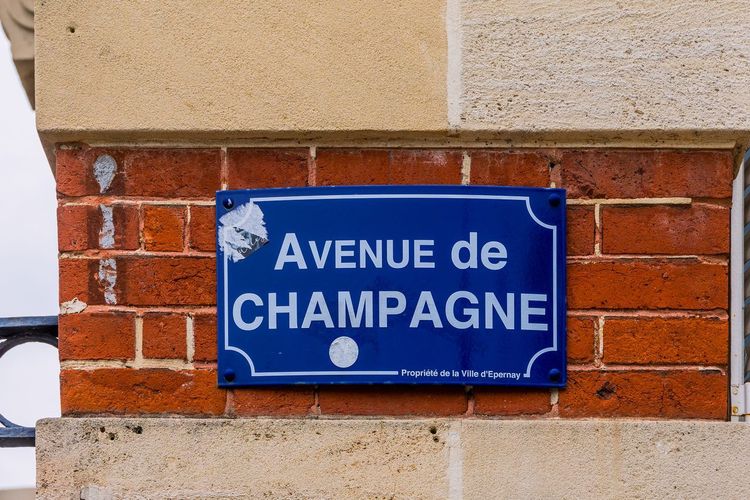
Épernay was built on discreet luxury rather than flash, which makes it a particularly effective romantic weekend destination: no need to force the setting, the avenue and the hillsides do the work.
Romantic Strolls by Day
The romantic walks in Épernay often follow the same route: a start from the Hôtel de Ville garden (7 bis Avenue de Champagne, 51200 Épernay, rated 4.8/5 on Google from 25 reviews), a leisurely hand-in-hand walk along Avenue de Champagne, then a lunch break in one of the small restaurants offering a menu paired with champagne. For an epicurean weekend, book a table with a view of the vines rather than the avenue: the addresses on the hillsides offer that extra calm which the busy town centre in high season does not always provide.
Épernay by Night, Under the Stars
Épernay by night changes its face completely: the illuminated façades of the avenue take on a golden hue, and the traffic, very light in the evening, makes the walk quiet. Following the Ryo tour audio at nightfall transforms the experience: the stories about the old cellar masters resonate differently in front of lit-up buildings. This same Ryo audio-guided tour can be picked up in the evening exactly where you left off, without starting over.
For a night devoted to love, some hotels offer a candlelit dinner, an option to book at least a month ahead for spring and autumn weekends, the most in demand.
Gastronomy and Champagne Terroir
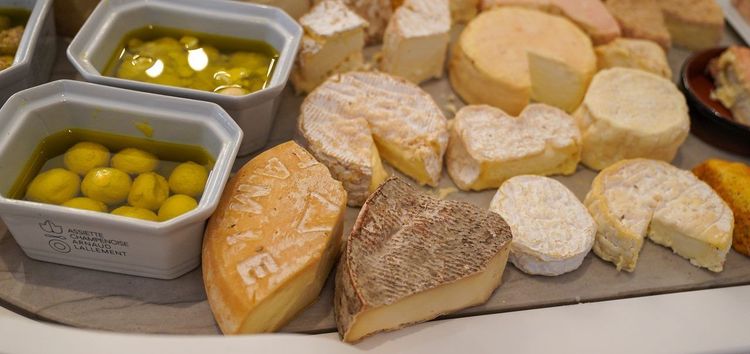
The gastronomy and culinary pleasures of Épernay rest on a few pillars: Reims ham, Champagne potée and the region's cheeses (Chaource, Langres), systematically served paired with champagne in the restaurants of the centre. Tasting menus, which cost between €45 and €75 depending on the establishment, often include three to four different glasses to accompany each course. On the sweet side, save room for the pink biscuit, to be dipped in a glass as tradition demands.
For relaxation, vinotherapy has found its place in the vineyard: the spa at Royal Champagne, perched above the vines in Champillon, ten minutes from Épernay, offers treatments based on grape extracts, a break that attracts couples and groups of friends alike. If you are travelling with family, our article on Épernay with family details tasty addresses suited to children, less focused on pure tasting.
Nature and Outdoor Activities in the Vineyard
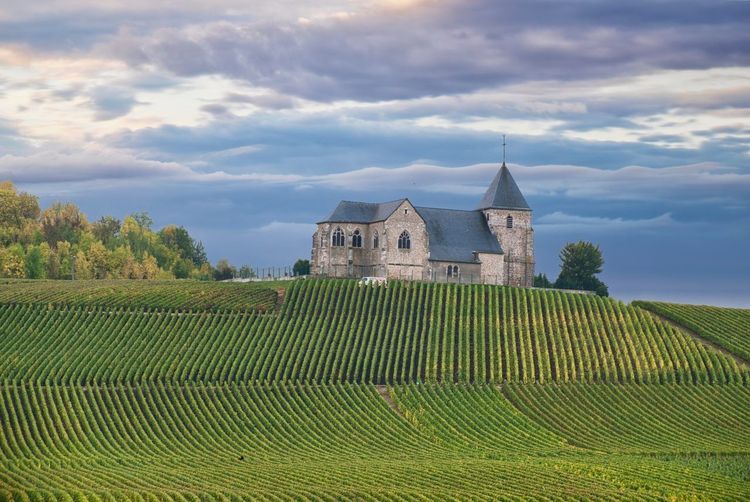
The Champagne hillsides, houses and cellars, inscribed as a UNESCO World Heritage Site since 2015, lend themselves remarkably well to active exploration, an angle few guides to Épernay develop in detail.
Cycling the Champagne Route
The Champagne route by bike links Épernay, Hautvillers and Aÿ-Champagne via small hillside roads, with electric bike rentals available in town, often around €25 to €35 a day. Allow half a day for a loop of about twenty kilometres including a tasting stop at a grower-producer. The electric assistance is no luxury: the climbs towards Hautvillers are steep. Bring water, and save the tasting for the end of the loop.
Hikes and Views over the UNESCO-Listed Hillsides
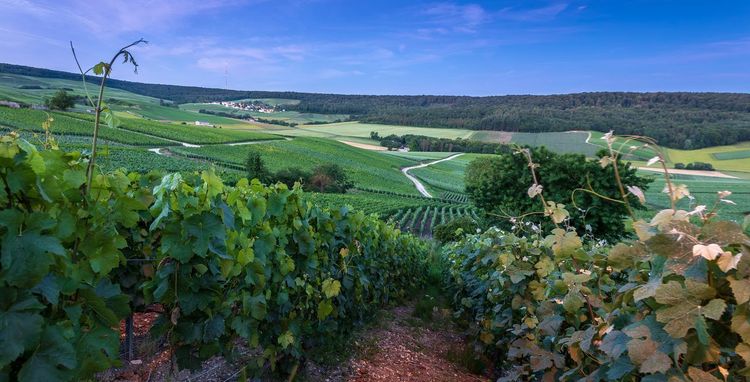
For walkers, the Mutigny winegrower's trail climbs to a viewpoint overlooking the Marne valley and the rooftops of Aÿ, probably the best panoramic photo of the weekend. Signs along the way explain the vine cycle, from pruning to harvest.
If you catch the travel bug for vineyards and heritage, our Loire Valley Châteaux tour offers an audio-guided road trip in another great French wine region.
Where to Stay in Épernay and Nearby
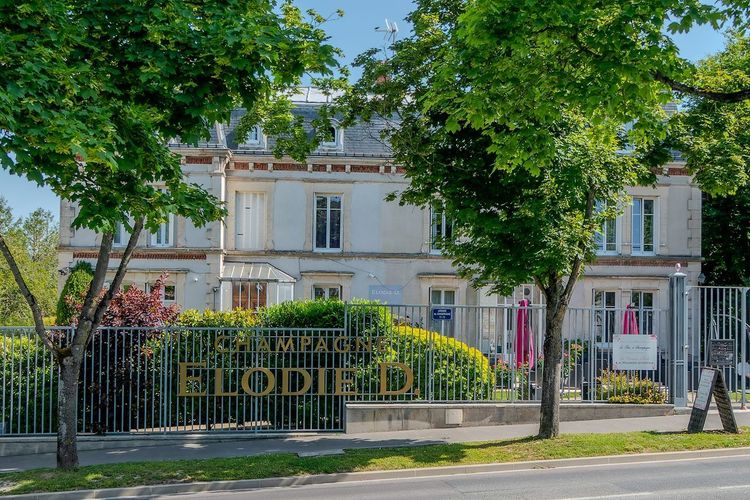
The choice of accommodation depends mostly on the pace you want: stay in the town centre to do everything on foot, or settle on the hillsides for calm and views.
Hotels and Guesthouses in Épernay
The guesthouses in Épernay set in former winegrowers' houses, often five or ten minutes' walk from the avenue, offer a comfortable compromise, generally between €100 and €160 a night. Hotels in the town centre climb in price more quickly, especially those occupying former merchants' mansions. If you arrive by train, favour an address near the station: the whole first-day programme can then be done on foot.
Unusual Accommodation and Wellness Stays
Among the unusual accommodation options in Grand Est, several cabins, caravans and gîtes set in the middle of the vines, fifteen or twenty minutes from Épernay, offer a more immersive experience than a standard hotel room. A wellness and champagne stay often combines a night in this type of accommodation with a spa treatment and a private tasting, the typical formula of a luxury weekend in Champagne. To compare with another two-day getaway, our weekend in Vannes guide follows a similar logic by the sea.
Practical Information for Your Weekend in Épernay
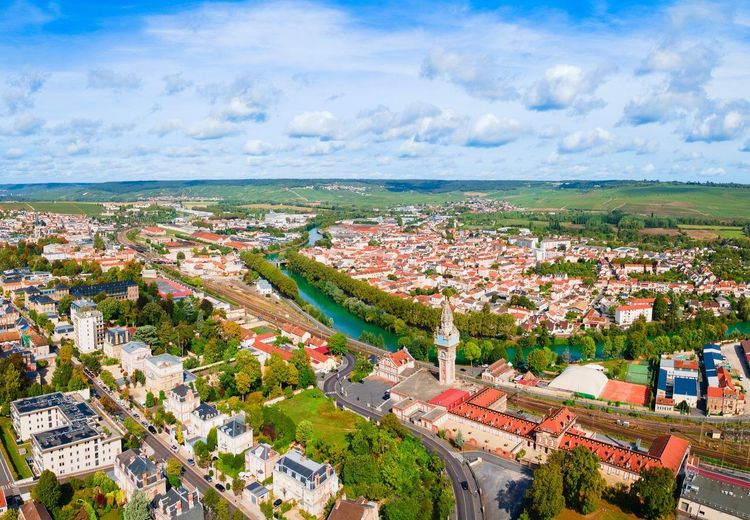
Épernay can be reached by direct train from Gare de l'Est in Paris in about 1h15 to 1h30, or in 1h45 to 2 hours by car via the A4. From Reims, allow about thirty minutes by car or TER regional train, which makes it possible to combine both towns in one stay. On site, the centre and Avenue de Champagne are covered on foot; a car or bike becomes useful for Hautvillers, Aÿ and Fleury-la-Rivière.
A reasonable budget for a weekend in Épernay is around €250 to €400 per person for two days, including guesthouse accommodation, a cellar visit and two meals; double that for a high-end format with a gourmet dinner and a spa treatment. The best time remains spring (April–June) and early autumn (September–October), when the vines change colour without the tourist density of summer. During the harvest, from late August to late September depending on the year, the atmosphere is unique but accommodation fills up quickly. Two days are enough for most of the programme, three if you want to add Reims without rushing.
One last organisational tip: book the cellar visit first, then build the rest around it, as it is the most constrained element of the programme. Bear in mind too that many grower-producers do not accept cards for small amounts, and that some restaurants close on Sunday evening or Monday. If you come by car, parking is easier away from the avenue, in the adjacent streets or the town-centre car parks, from where everything is reached in a few minutes on foot.
Nearby: Reims and the Gems of Grand Est
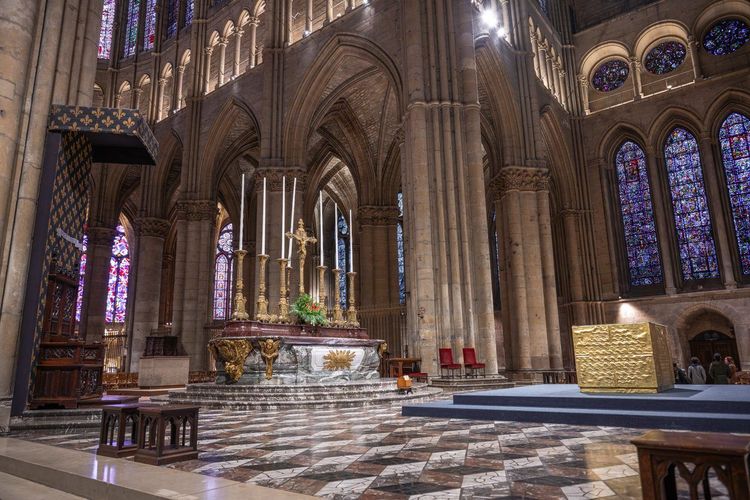
If your weekend stretches to three days, the proximity of Reims changes the game and lets you build a two-speed programme.
Reims and Its Cultural Adventures
Half an hour away by road, Reims adds a heritage dimension that Épernay lacks: the Notre-Dame Cathedral, where most of the kings of France were crowned, and the Palais du Tau right next door make up the core of the historic centre. These cultural adventures between Épernay and Reims are easily combined in a single day, the morning for the cathedral, the afternoon for the Pommery or Taittinger cellars, also dug into the chalk but with a different architectural identity.
Villages and Lesser-Known Gems of the Vineyard
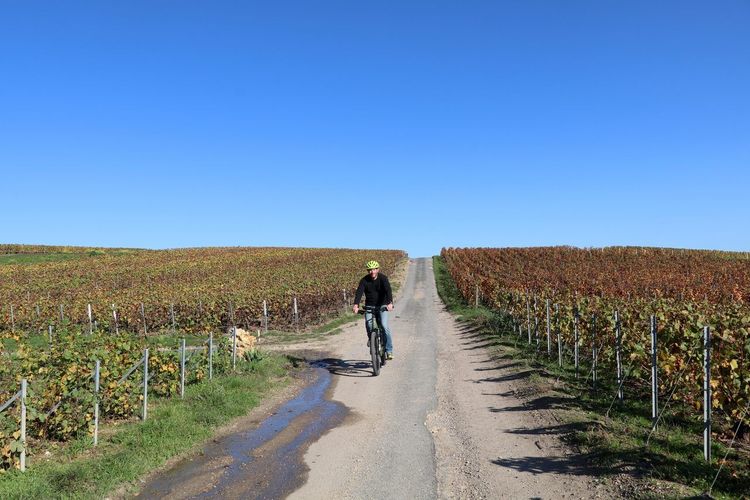
Beyond Reims, a handful of villages in Grand Est remain off the classic circuits: Cramant and its chardonnay vines on the Côte des Blancs, Verzenay and its lighthouse planted among the rows of vines, or Vertus, further south, less touristy than Hautvillers but just as photogenic. Our article on the area around Épernay details these options if you are looking to get off the beaten track.

FAQ
How many days should you plan for a weekend in Épernay?
Two days cover the essentials: Avenue de Champagne and the town centre on the first day, Hautvillers and Aÿ-Champagne on the second. Three days allow you to add Reims or a bike ride through the vineyards without rushing.
What should couples do in Épernay?
A stroll along Avenue de Champagne during the day, followed by a tasting at a small winegrower's, then the same avenue at night when the façades light up: this is the combination most often recommended for a romantic stay.
Do you need to book champagne house visits in advance?
Yes, especially for the big houses such as Moët & Chandon in high season (April to October): at least two weeks ahead, and one month for the busiest spring weekends.
Where should you stay in Épernay for a romantic or unusual weekend?
Guesthouses in the town centre suit a classic stay, while the cabins and caravans set in the vineyards, fifteen minutes from Épernay, offer a more unusual option for couples.
How do you get to Épernay from Paris or Reims?
From Paris, allow 1h15 to 1h30 by direct train from Gare de l'Est, or about 1h45 to 2 hours by car. From Reims, around thirty minutes is enough by car or TER regional train.
What budget should you plan for a champagne weekend in Épernay?
Between €250 and €400 per person for a standard two-day stay, with a cellar visit and meals included; allow more for a high-end stay with a spa treatment and gourmet dinner.
What is the best time to visit the vineyards around Épernay?
Spring (April to June) and early autumn (September–October) offer the best compromise between pleasant weather, vine colours and smaller crowds than in the height of summer.
Épernay is easily explored in two days but is best enjoyed by slowing down: fewer houses visited, more time spent walking Avenue de Champagne and chatting with a grower-producer. To structure this pace without hours of preparation, the Ryo audio-guided tour of Épernay remains the simplest starting point before heading off to Hautvillers or Reims.