© Shutterstock
 Votre guide Ryo
Weekend in Vannes: 2026 Itinerary Between the Old Town and the Gulf of Morbihan
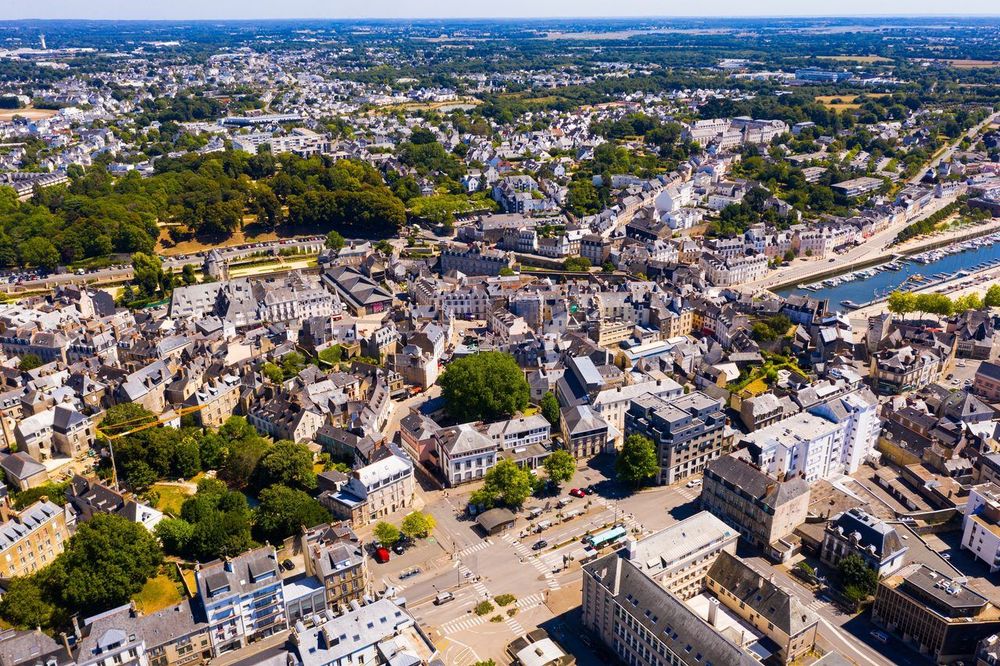
Step through any gate in the city walls and you'll understand why a weekend in Vannes never forces you to choose between stone and water. On one side, half-timbered houses five centuries old lean out over cobbled lanes; on the other, the marina opens directly onto the Gulf of Morbihan, a body of water dotted with islands that local legend puts at one per day of the year (the real count is closer to forty, but the story refuses to die). Two days are enough to honour both promises, as long as you divide your time well between the historic centre and the open water. To get your bearings from the moment you arrive, the Ryo audio guide tour of Vannes covers 3 km through the old town in 1h20, with 18 commented stops taking in the ramparts, the cathedral and the half-timbered lanes.
In two days you can just as easily stand before a menhir of more than 20 metres at Locmariaquer — today lying on its side, broken into several pieces — as wander through the Saturday market at the place des Lices where crêpe makers have been working at full pace since dawn. You can take the boat to the Île aux Moines, where cars are the exception and where the mildness of the climate surprises visitors in Brittany, or hunt down the carved couple that has been smiling at passers-by since the 16th century, on the corner of a half-timbered house on the place Valencia. This guide lays out the itinerary day by day, the extensions towards the gulf and the megaliths, the addresses for eating and sleeping, and the practical logistics so you can organise everything without wasting time.
A Brief History of Vannes: from the Veneti to the Dukes of Brittany
Vannes bore the name Darioritum in the Gallo-Roman era, as capital of the Veneti, the seafaring people that Caesar had to subdue by force after their revolt of 56 BC, recounted in The Gallic Wars. The city later grew into one of the historic capitals of the Duchy of Brittany, eventually hosting in 1532 the ratification of the union of Brittany with the Kingdom of France by the Estates of Brittany assembled within its walls. The Industrial Revolution largely bypassed Vannes, which remained an administrative and commercial city. This relative commercial decline had an unexpected effect: no one had any reason to tear down the historic centre and replace it with Haussmann-style apartment blocks. As a result, the old town today boasts one of the highest concentrations of half-timbered houses in Brittany, all clustered within a perimeter you can walk in half a day.
Another little-known episode sheds light on the richness of the façades you are about to encounter: the Parlement de Bretagne sat in Vannes on two occasions, from 1535 to 1553 and again from 1675 to 1690, when Louis XIV exiled it from Rennes following the Stamped Paper Revolt. Those fifteen years attracted magistrates, lawyers and merchants, who commissioned or renovated many of the private mansions in the centre. Keeping these dates in mind changes how you read the walk: behind every gable, there is often a notable who came to follow the court.
Day 1: The Old Town of Vannes and Its Ramparts
The old town forms an almost perfect oval, enclosed by the ramparts on one side and by the wide boulevards that replaced the filled-in moats on the other. This compact shape explains why you can string together every stop on this first day without ever straying more than ten minutes on foot from your starting point.
Saint-Pierre Cathedral, the Place Saint-Pierre and La Cohue
The Saint-Pierre Cathedral has occupied a place of worship since Gallo-Roman times, but the current building was constructed in successive layers between the 13th and 19th centuries, which explains its blend of Flamboyant Gothic and Neo-Gothic styles. The cathedral houses the tomb of Saint Vincent Ferrer, a Spanish preacher who died in Vannes in 1419 and is still venerated each spring during a pardon that brings together the parishes of the diocese. The square, massive bell tower-porch serves as a landmark visible from the heights of the gulf. The stained glass casts coloured light that shifts with the time of day, a detail best noticed by visitors who push open the door early in the morning, before the tour groups arrive.
Just in front, the place Saint-Pierre opens onto one of the finest rows of half-timbered façades in the city. This is where La Cohue stands, the former 13th-century market hall that has successively served as a courthouse, a prison and the seat of the Parlement de Bretagne before becoming the city's fine arts museum. Its name once referred in Brittany to the covered market halls and the noisy crowds that thronged them.
Today, La Cohue houses the Vannes Museum of Fine Arts, which combines permanent collections with temporary exhibitions. If you visit on a rainy day, it makes a welcome shelter in the city centre without sacrificing any heritage (we come back to this in the rainy-day section further on).
The Ramparts and the Ramparts Garden
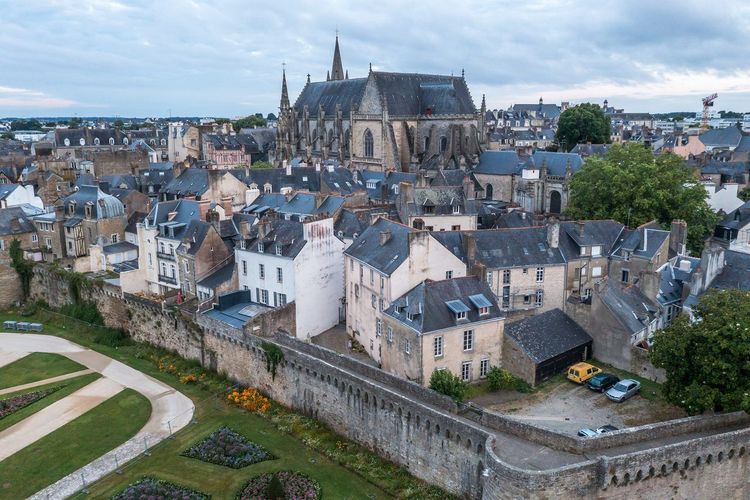
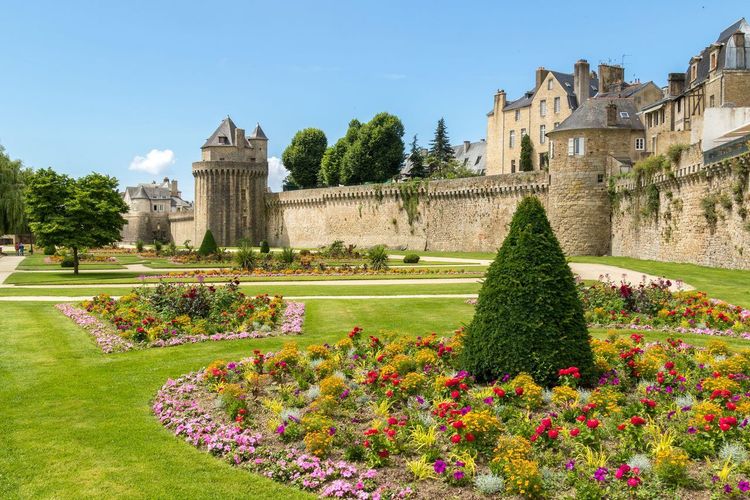
The ramparts of Vannes line the old town to the east and south and are among the best preserved in Brittany: roughly three quarters of the enclosure survives, though only a third remains fully visible. Built on the foundations of a late 3rd-century Roman castrum, they were extended and remodelled from the late 14th to the mid-17th century, with towers that punctuate the walkway and a partially accessible wall walk. Below flows the Marle, a small canalised river lined with former Garenne washhouses with slate roofs, a reminder of the days when washerwomen came to beat their linen there.
You can walk along the fortifications through the Ramparts Garden, a formal French garden laid out around 1950 at the initiative of Mayor Francis Decker to showcase the eastern wall. The view from the Garenne promenade above frames the towers, the garden and the slate rooftops of the historic centre all at once. Allow a good half hour for the full loop, longer if you stop to photograph every angle.
A practical tip: come early in the morning or at the end of the day to enjoy the ramparts without the guided tour groups that generally arrive around 11am. The low evening light, in particular, brings out the beauty of the towers and their reflections in the Marle.
Half-Timbered Lanes: rue Saint-Guenhaël, the Place Henri IV and the 'Vannes and His Wife' Bust
Heading back down towards the heart of the old town, rue Saint-Guenhaël (Rue Saint-Guenhaël, 56000 Vannes) is lined with jettied houses whose upper floors, wider than the ground floor, almost encroach upon the street. One commonly cited explanation is that this technique gained floor space without further reducing the street-level footprint. The result is façades that seem to lean towards one another, an effect heightened in places by several centuries of settling.
The street opens onto the place Henri IV, considered the most photogenic square in Vannes with its painted timber frames and pointed gables pressed tightly together. Nearby, on the corner of rue Noé and rue Pierre-René Rogue, in the south-western corner of the place Valencia, look up at Vannes and His Wife: two painted granite busts from the 16th century, a cheerful woman and man jutting from the corner of a half-timbered house. Their hands have disappeared and several legends circulate about the identity of the couple, who have become the city's smiling emblem.
Between rue Saint-Guenhaël and the place Henri IV, several craftspeople's workshops — ceramicists, framers, small galleries — have moved into the ground-floor spaces behind the timbered façades, a recent development that has breathed new life into frontages that long stood empty. It is a good excuse to slow your pace and step inside, even without any intention of buying.
From here, a five-minute walk is enough to reach the place des Lices (Place des Lices, 56000 Vannes, rated 4.4/5 on Google from 620 reviews), a former jousting ground in the Middle Ages that is now the heart of the Saturday market (covered in detail further on). It is a natural way to end the day in a loop, passing back through the market hall before choosing a crêperie for dinner. If you want to understand what these façades are really telling you, the Ryo audio guide tour of Vannes takes its 18 stops through the ramparts, the Saint-Pierre cathedral and these half-timbered lanes, with commentary on the city's ducal and Veneti history that you don't always think to look up yourself.
Day 2: The Gulf of Morbihan, the Islands and the Conleau Peninsula
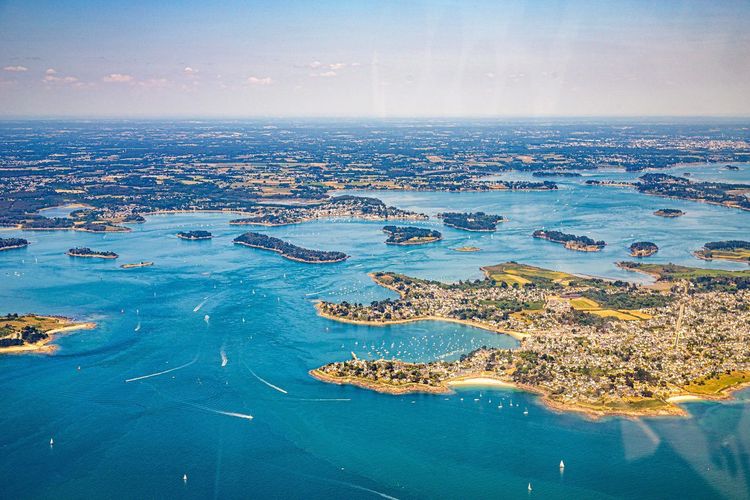
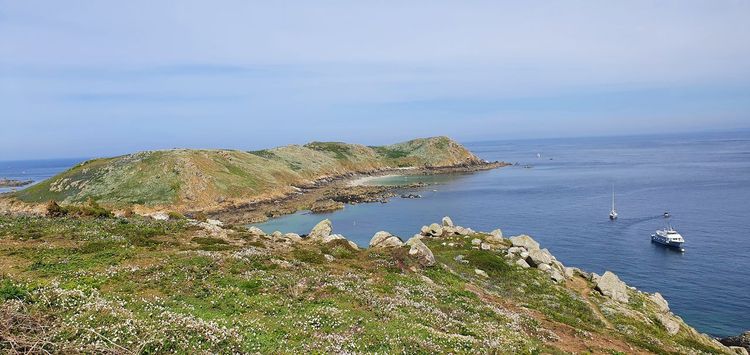
'Morbihan' in Breton literally means 'little sea', a perfectly chosen name for this almost enclosed gulf where the water reverses direction with every tide, creating some of the most powerful currents in Europe in certain channels. From Vannes and neighbouring ports, several ferry companies run regular services to the islands of the gulf, with crossings ranging from a few minutes to nearly an hour depending on the departure point. Devoting a second day to the water after the old town allows you to see Vannes from a completely different perspective — that of the sailors rather than the ramparts.
Île d'Arz and Île aux Moines: Crossing and Walk
The Île d'Arz, six kilometres south-west of Vannes, is reached by the shuttle linking Vannes (Conleau landing stage), Séné and the Béluré slipway at the northern tip of the island. With its 330 hectares and roughly 18 km of coastline, it can be explored entirely on foot or by bicycle (available to hire on the island) in a morning. The island still lives to the rhythm of oyster farming, with several oyster beds visible at low tide along the coastal path, and it is home to around 250 residents in winter, rising to more than 2,000 people in summer. The island lends itself particularly well to a picnic bought the previous day at the Vannes market, with several quiet coves accessible from the coastal path and a handful of south-facing benches for lingering over lunch.
The Île aux Moines is the most visited destination in the gulf, and for good reason: it is renowned for its mild climate and paths lined with lush vegetation. It is reached in five minutes from Port-Blanc, in Baden (accessible by car or bus from Vannes), arriving at the Lério harbour. Six kilometres long and 3.5 km wide, the island is best explored on foot or by bicycle, as cars require special authorisation. To the south of the village, the Kergonan stone circle forms a horseshoe of around twenty menhirs, one of the largest in Europe.
On a practical note, the crossing to the Île aux Moines, operated by Izenah Croisières, remains one of the least expensive in the gulf given its brevity, and runs all year round, unlike some of the less-frequented gulf routes that reduce their frequency off-season. In high season, allow extra time — the jetties are very busy on the busiest days in July and August.
Only have time for one island? Go for the Île aux Moines if you want the most accessible half-day walk, and the Île d'Arz if you prefer the quiet authenticity of a less-visited spot in high season. Combining both islands in the same day is possible but tight: allow a full morning for one and most of the afternoon for the other, factoring in waiting times at the landing stages, which are not always synchronised between operators.
The Conleau Peninsula and the Waterfront
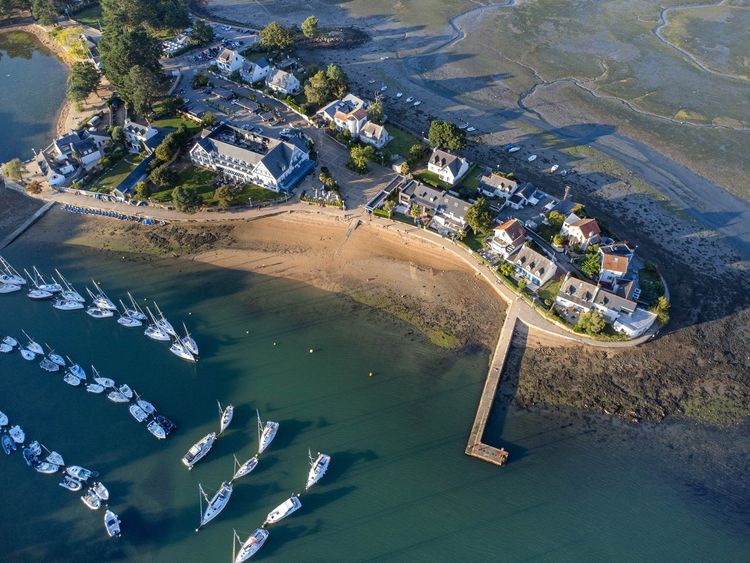
In the opposite direction from the islands, the Conleau peninsula (Presqu'île de Conleau, 56000 Vannes, rated 4.6/5 on Google from 456 reviews) can be reached on foot or by bicycle from the centre of Vannes, following the waterfront for around 4 km. This small, largely residential wooded headland retains its little harbour, its shaded pine grove and its seawater pool, where the people of Vannes come to swim in summer. It is also the departure point for the shuttles to the Île d'Arz, making it a handy starting point for combining a walk with a crossing.
The coastal path along the peninsula offers one of the finest sunset views over the gulf, with the silhouettes of the islands cutting dark shapes against the sky. Several seafood restaurants and crêperies line the Conleau waterfront with direct views over the water, making it a better choice for dinner on the second evening than always heading back into the historic centre.
Several companies (Navix, Izenah Croisières, and a few smaller operators) share the gulf routes, offering everything from a simple crossing to a fully commented cruise of several hours around the main islands. If time is short, a two-hour commented cruise from the port of Vannes gives a good overview of the gulf without having to choose between islands.
To organise the day without losing time on logistics, note that the Parc du Golfe maritime terminal, where the cruises depart, is about 25 minutes on foot from the historic centre along the harbour. The Ryo audio guide tour — 1h20 for 3 km — ends near the port: from there, simply follow the quays to board the boat to the islands.
The Vannes Market and Food Breaks
The Saturday Market at the Place des Lices
The Vannes market takes place on Saturday mornings at the place des Lices and the surrounding streets, and it is without doubt the best moment of the week to feel the pulse of the city. Traders and producers set up from early morning, with stalls selling seafood, cheese, fruit and vegetables, and clothing, in an atmosphere that mixes local shoppers with tourists who have come especially for the occasion. A smaller market also takes place on Wednesdays, a good alternative if your weekend doesn't fall on a Saturday.
The market's origins go back to the Middle Ages, when the nearby Cohue hall was the commercial hub of the city. This historic proximity between the port and the market still explains today's strong presence of fishmongers and oyster farmers among the stalls, a direct legacy of the maritime trade that made the city's fortune.
Allow an hour to walk around without rushing, longer if you stop at every tasting stall. The market winds down in the early afternoon, so it's best not to linger too long over breakfast if you want to get the best produce before it sells out.
Local Specialities and Producers
It's hard to leave Vannes without having tried a galette-saucisse or a buckwheat crêpe filled with andouille sausage and cheese, the local version of a quick meal on the go. The local producers at the market also sell far breton, freshly baked kouign-amann and oysters from the Gulf of Morbihan, renowned for their pronounced briny flavour, a direct result of the strong tidal currents that churn the water of the basin.
To wash these down, Breton cider remains the drink of choice, often served in a bowl-shaped cup in traditional crêperies. A few wine merchants in the town centre also stock selections of farmhouse ciders from the Morbihan, a good alternative if you are looking for a food souvenir that travels more easily than a tray of oysters.
For a more leisurely sweet break, several tea rooms in the historic centre serve Breton pastries — kouignettes and palets — to enjoy on a terrace in one of the small paved squares. For shopping, the streets around La Cohue and the place des Lices hold the most interesting addresses, from artisan biscuit makers and ceramic workshops to Breton oilskin coat shops, more authentic than the standard souvenir stores found near the port.
If you are looking for a quick lunch between visits, several galette bars around La Cohue serve set menus in under thirty minutes, a practical option for keeping the afternoon schedule intact.
As you wander through the market, keep an ear open — the Ryo audio guide shares an anecdote about the traditions of this weekly gathering and about the neighbourhood that grew up around La Cohue since the Middle Ages, when the hall already served as a centre of trade. For a deeper dive into the local food scene, our Ryo article on Vannes culinary specialities details the addresses you shouldn't miss.
Day Trips: Megaliths, the Gulf and the Villages of the Morbihan
The Carnac Alignments and the Megalithic Sites of Locmariaquer
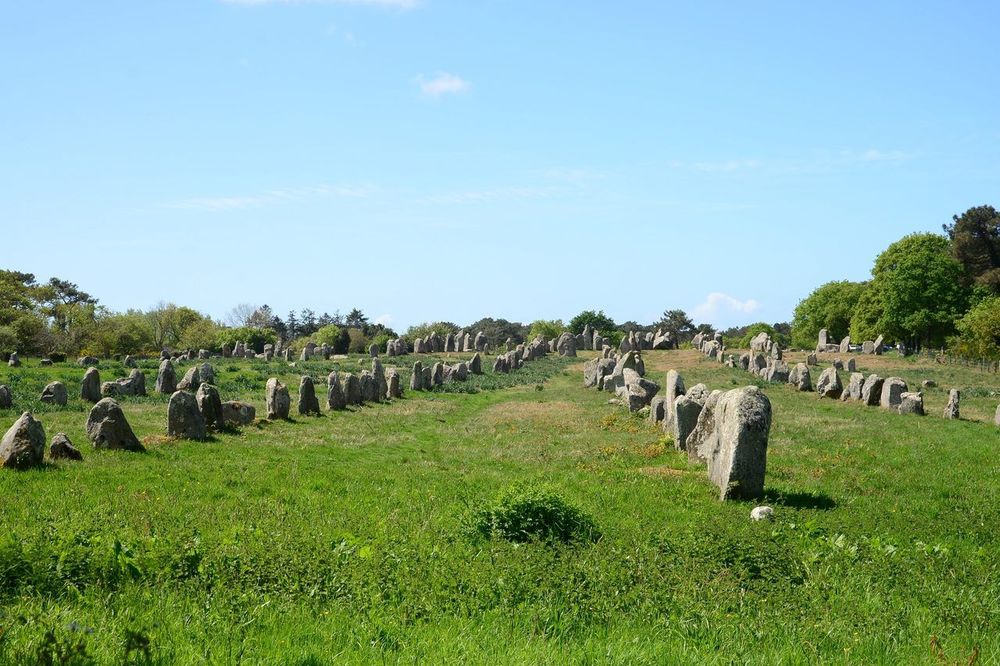
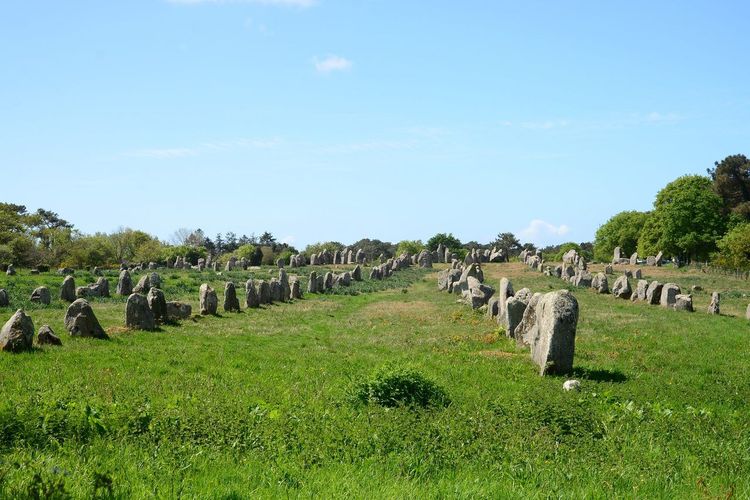
About thirty minutes' drive south-west of Vannes, the Carnac alignments bring together more than 3,000 menhirs spread over nearly 4 km, erected during the Neolithic period from the 5th millennium BC onwards, making it one of the largest megalithic complexes in the world, far predating Stonehenge. Three main sites stand out — Le Ménec, Kermario and Kerlescan, each with its own alignments — and the Maison des Mégalithes, facing Le Ménec, helps explain what archaeologists know, and above all what they still do not know, about the exact purpose of these stones.
About fifteen minutes from Carnac, the megalithic site of Locmariaquer rounds out the visit with three major monuments: the Grand Menhir Brisé, a stone of more than 20 metres and nearly 300 tonnes now lying on its side and broken into several pieces; the Table des Marchands, a chambered dolmen decorated with engravings; and the Er Grah tumulus. It is a less crowded site than Carnac in high season, making it a good option if you want to avoid the crowds while keeping the same historical depth.
Without a car, these sites remain accessible by coach from the Vannes bus station, with regular services to Carnac and Auray, though the frequency drops noticeably on Sundays. The train to Auray followed by a coach to Carnac remains the simplest option for visitors without a vehicle who want to see the alignments. For the Carnac alignments, aim for sunrise or sunset, when the raking light brings out the relief of the stones and the heat has dropped — a real advantage in the middle of summer when the menhir fields offer little shade.
Auray, Josselin and Rochefort-en-Terre
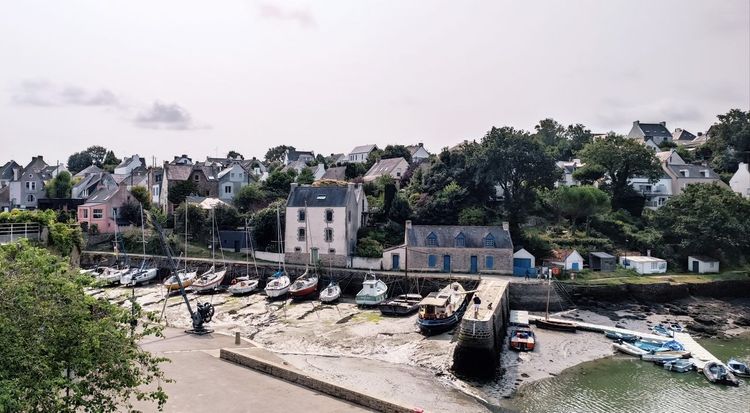
Auray, about twenty minutes from Vannes, is worth a detour for its Saint-Goustan harbour district, a cluster of old half-timbered houses that slopes down to the old stone bridge over the Auray river. It was on this quay that Benjamin Franklin landed on 3 December 1776, having come to ask Louis XVI for France's military support in the American War of Independence.
Further east, about 45 minutes by road, the château de Josselin raises its Gothic towers directly on the bank of the Oust river, a property of the de Rohan family since the 15th century and still lived in today, which limits visits to certain rooms and certain times of year. The riverside façade, with its pointed turrets reflected in the water, remains one of the most photographed images of inland Morbihan.
Finally, Rochefort-en-Terre (Rochefort-en-Terre, 56220 Rochefort-en-Terre, rated 4.7/5 on Google from 2.1K reviews), listed among the most beautiful villages in France, completes this excursion with its granite houses covered in geraniums in summer, a floral display that earned it the title of France's Favourite Village in 2016. The village, perched on a rocky spur, long attracted painter-artists, including the American Alfred Klots, who restored the château there in the early 20th century.
Josselin and Rochefort-en-Terre are about thirty minutes apart, which makes it possible to combine them in a single outing if you set off early from Vannes. Even so, allow a full day to enjoy both without rushing, between the château visit and simply strolling through the flower-lined lanes. These three stops are difficult to combine with Carnac and Locmariaquer on the same day; it is better to pick one direction — megaliths to the south, or historic villages to the east — rather than trying to squeeze everything into one outing.
These surroundings change the game entirely: it is often what turns two enjoyable days into a truly memorable stay, the possibility of coming home with images of megaliths thousands of years old alongside the half-timbered façades of the historic centre. Before heading out on a day trip, remember that the Ryo audio guide for Vannes features 18 audio stops for a 1h20 walk, enough to extend the morning in the historic centre without rushing before getting in the car. To prepare for the trip to the megaliths, our Ryo article dedicated to Carnac details the best viewpoints over the alignments.
Vannes for Every Traveller: Families, Couples and Rainy Days
With children, focus on the seawater pool and the pine grove at Conleau, then a boat trip to the Île aux Moines — short enough not to wear out the youngest visitors, with the promise of a ride or a crêpe back at the harbour. The ramparts and the garden at their base also appeal to younger children, who enjoy spotting the towers and the carved couple on the place Valencia. Be sure to check the ferry timetables before setting out with young children: some crossings to the islands are significantly reduced outside school holidays, with sometimes just one return trip in the middle of the day during low season.
For couples, the old town transforms at the end of the day, when the illuminated ramparts are reflected in the Marle and the passing tourists have drifted away from the half-timbered lanes. Dinner on a terrace at the place des Lices or facing the Conleau harbour at sunset makes for a perfect romantic weekend, as does a late afternoon crossing to the Île aux Moines, whose return journey by boat at dusk is one of the most sought-after experiences among couples who come back year after year. For dinner, try to book a table overlooking the marina in the early evening: the golden light reflecting off the masts of the sailing boats is one of the most photographed sights in the city, well before the ramparts light up as night falls.
When it rains, several options allow you to keep to your programme without getting too wet. La Cohue and its fine arts museum offer a good city-centre refuge, as does the Saint-Pierre cathedral, where you can linger over the tomb of Saint Vincent Ferrer. The covered market halls at the place des Lices also let you do your food shopping without putting up an umbrella. If the rain sets in for the whole day, driving to Auray or Josselin can be a worthwhile option: the interior of the château de Josselin is visited under cover, unlike the open-field megaliths, which lose all their charm in driving rain. Finally, several crêperies in the historic centre make a comfortable refuge, with a view of the half-timbered façades through their windows, while you wait for a break in the weather over a buckwheat galette.
A romantic weekend in Vannes benefits from including at least one activity on the water, even a short one: the crossing to the Île aux Moines at sunset is, according to regulars, the experience most often recommended for couples. Whether you are travelling as a family, as a couple or caught out by a Breton downpour, Vannes scores points for its compact size — almost everything is within twenty minutes on foot from the centre, leaving plenty of room to improvise without wasting time travelling.
Beaches and Nature Walks around Vannes
Vannes is not a seaside resort, but you don't have to go far to find the water. The closest option is Conleau, with its small beach and seawater pool, ideal for a peaceful swim at low or high tide. For wider beaches, head to the Rhuys peninsula or towards Carnac, half an hour by road, where long stretches of sand face the Bay of Quiberon.
For hiking, the coastal path (GR34) circles the gulf and lends itself to one- or two-hour sections departing from Vannes, for example towards the Arradon headland, from which the view takes in a large part of the islands. Further east, the Séné marshes nature reserve attracts fans of migratory birds: bring binoculars, especially in autumn and winter. Our Ryo article on the beaches of Vannes details the best spots according to the tide, so you can fit a swim between two visits.
Where to Stay in Vannes and the Gulf of Morbihan
Staying in the Town Centre
For a weekend centred on the old town, it is best to stay within the walls or just on their edge, between the station and the port. This means you can walk back after dinner and enjoy the illuminated ramparts without depending on a taxi. Hotels in the historic centre often occupy former merchants' houses, with rooms that sometimes have sloping ceilings under exposed beams, a charm that offsets the generally smaller floor areas compared to a modern hotel. From characterful inns in old half-timbered houses to more conventional hotels near the station, the town-centre accommodation offer broadly covers all budget ranges, with visitors tending to favour properties within ten minutes on foot of the ramparts.
Allow for a fairly wide price range depending on the season: rates rise sharply in July and August and over the major bank-holiday weekends in May, when it is better to book several weeks in advance. Outside high season, town-centre prices remain fairly reasonable compared to other Breton tourist cities of similar size such as Saint-Malo or Concarneau. A few bed and breakfasts run by local residents also offer a more personal welcome, often with walking tips that larger hotel chains simply don't provide, a good choice if you are looking for more human connection during your stay.
Sleeping on the Peninsula or on the Gulf Islands
Another option is to base yourself on the Conleau peninsula or even directly on the Île aux Moines or Île d'Arz for a more immersive experience. Sleeping on an island completely breaks away from the city's rhythm, with the last boat setting your curfew — a constraint that quickly becomes a pleasure once you have learned the shuttle timetables. On the Conleau peninsula, a few residences and hotels with views over the gulf offer an interesting compromise between peace and proximity to the centre, barely fifteen minutes on foot from the historic heart while still keeping your feet almost in the water.
A few bed and breakfasts and characterful rentals have set up in old fishermen's houses on both islands, an option to book early given the limited supply. For accommodation in the Gulf of Morbihan, it is better to go through local tourist offices or specialist platforms rather than large general booking sites, which tend to list these island addresses poorly. For a stay that combines city and nature, spending one night in the town centre and one night on one of the islands lets you enjoy both atmospheres without sacrificing practicality, as long as you carefully check the last boat times before booking your island accommodation.
Getting to Vannes and Getting Around
By Train or by Car
Vannes has a well-served TGV station, with direct connections from Paris Montparnasse in around two and a half hours, and shorter journeys from Rennes (about one hour) or Nantes (roughly 1h15 to 1h30). The station is ten minutes on foot from the historic centre, making the train particularly comfortable for a car-free weekend.
By car, Vannes is reached via the RN165, the road that runs along the south coast of Brittany between Nantes and Lorient. Allow around 460 km and 4h30 to 5 hours from Paris, or one hour fifteen from Nantes. If you are planning the excursions to Carnac, Josselin or Rochefort-en-Terre detailed above, a car remains far more practical than public transport, whose frequency drops quickly outside the Vannes–Auray–Carnac corridor.
Parking and Exploring on Foot
Once you have arrived, it is best to park the car as quickly as possible: the historic centre is entirely walkable, and navigating the narrow one-way streets is no fun at all. Several multi-storey car parks surround the old town, notably near the Garenne and the place des Lices, with hourly or all-day flat-rate prices that are far easier to manage than finding a kerbside space.
Once parked, allow around twenty minutes to walk across the historic centre from one end to the other. It is this compactness that makes it possible to see everything in a weekend without multiplying journeys. For short trips without a car or a long walk, the Kicéo urban bus network serves the whole of the Vannes agglomeration, including the Port-Blanc headland for the Île aux Moines ferry, a useful option if you are staying a little outside the historic centre.
Practical Information: When to Go, Budget and City Pass
The best time to visit Vannes runs from May to September, with a peak in visitor numbers in July and August that mainly benefits the boat crossings to the islands, which run more frequently in high season. Spring and early autumn offer a good compromise, with mild weather and noticeably less-crowded streets, particularly at the Saturday morning market on the place des Lices.
How long to allow? A two-day weekend is enough to cover the old town and a day on the gulf, choosing between the islands and the Conleau peninsula. If you want to add excursions to Carnac, Locmariaquer or the inland villages, it is better to plan for three to four days so you are not rushing from one thing to the next.
On the budget side, the Golfe du Morbihan Vannes tourist office offers a City Pass, a card that gives discounts with partner businesses (visits, activities, shops). Check the list before you go: it is good value if your itinerary overlaps with several of these partners, less so if your programme is mainly outdoor walks and the market, which are free. Note also that some monuments, such as the Saint-Pierre cathedral, are free to enter all year round, while museums, the château de Josselin and guided megalith tours are paid attractions.
Why visit Vannes rather than another Breton city for a weekend? Because it is one of the few cities in the region to combine such a dense historic centre with direct and quick access to the sea, without the crowds that Saint-Malo draws in high season or the distance from the coast that characterises Rennes. If you are undecided on dates, try to avoid the major bank-holiday weekends in May, when town-centre accommodation is fully booked weeks in advance, and opt instead for a weekend in June or September — just as sunny but with far more availability on the accommodation front. To go further after this weekend, our Ryo article on Vannes in 3 days details how to extend your stay with an extra day devoted to day trips.
FAQ
How long does it take to visit Vannes?
Two days are enough to cover the essentials of the old town and a trip out onto the Gulf of Morbihan, between the islands and the Conleau peninsula. If you want to add the megaliths of Carnac and Locmariaquer, or the villages of Josselin and Rochefort-en-Terre, it is better to allow three to four days so you are not rushing through everything. A simple weekend is more than enough to come away with a real feel for the city, as long as you plan the order of your visits around the boat schedules.
What is the best time to visit Vannes?
Spring and early autumn offer the best compromise, with mild weather, boat crossings already running to the islands, and streets noticeably less crowded than in the height of summer. July and August remain pleasant for enjoying the gulf, but come with heavier crowds, particularly on Saturdays at the place des Lices and on the ferries to the Île aux Moines. Winter stays quiet but significantly reduces maritime links to some of the islands.
How do you get to Vannes without a car?
The train is the best option, with a TGV station directly connected to Paris Montparnasse in around two and a half hours, plus shorter journeys from Rennes or Nantes. The station is ten minutes on foot from the historic centre, which means you can reach your accommodation without any additional transport. Once there, the old town is entirely walkable, and the Kicéo bus network covers trips to the Conleau peninsula or the Port-Blanc headland for the boats.
Where is the famous bust known as 'Vannes and His Wife'?
These two painted granite busts from the 16th century are located at 3 rue Pierre-René Rogue, on the corner of rue Noé, in the south-western corner of the place Valencia, a few steps from the place Henri IV and the cathedral. They depict a laughing woman and man, a sight that always amuses visitors who look up at this half-timbered façade. It is one of the most photographed details in the historic centre, despite its small size, which makes it easy to miss if you don't know where to look.
What are the most beautiful places around Vannes?
The Carnac alignments and the megalithic site of Locmariaquer rank among the most striking excursions within an hour of Vannes, as do the château de Josselin and the flower-filled village of Rochefort-en-Terre, listed among the most beautiful villages in France. The Saint-Goustan harbour district in Auray rounds out the list nicely, with its half-timbered houses from the 15th century on the waterfront. Each of these sites deserves at least half a day, and combining them all on a simple weekend is a tall order.
Is Vannes worth a weekend trip?
Yes, absolutely. Vannes combines one of the best-preserved historic centres in Brittany with direct access to the Gulf of Morbihan, which is quite rare for a city of this size. The compact town centre means you can see everything on foot without losing time to travel, while the islands and the Conleau peninsula offer a genuine breath of fresh air just a few minutes away by boat. It also makes a great base for day trips to Carnac, Josselin or Rochefort-en-Terre if you extend your stay.
Should you book the city pass in advance?
The City Pass from the Golfe du Morbihan Vannes tourist office is a discount card valid with partner businesses — check the terms with the tourist office before your trip. In high season, booking online a few days ahead is still the safer option for certain combined activities, such as a guided cruise on the gulf, where spots go faster than museum entry tickets. Compare the list of partners against your actual itinerary to find out whether it will genuinely save you money.
A weekend in Vannes delivers on its promise because the city never forces you to choose. A morning is enough to take in the ramparts, the Saint-Pierre cathedral and the half-timbered lanes of the historic centre; the afternoon is there to head out to the Gulf of Morbihan and its islands; and there is still room for the Saturday market or a trip to the megaliths of Carnac. It is this density, rare for a city of this size, that explains why so many visitors return for a second or third stay.
To make the most of your very first morning, the Ryo audio guide tour of Vannes is the easiest way to get your bearings, with its 18 commented stops that tell the story of the city's Veneti and ducal past while leading you from one point of interest to the next. All that's left is to pick a date and book the crossing to the islands.
À lire également