© Shutterstock
 Votre guide Ryo
Visit Vannes in 2 Days: the Complete Itinerary for 2026
Vannes is unlike any other Breton city. To visit Vannes in 2 days without missing any of its character, you only need to follow a fairly simple thread: from the 13th-century ramparts that plunge directly into a flower-filled garden, to the sailing boats of the Gulf of Morbihan waiting for the tide just five minutes' walk from the cathedral. It is hard to believe that a city this compact — crossable on foot in twenty minutes — was once the historic capital of the Dukes of Brittany and the home port of a seafaring people as formidable as the Veneti, the Gallic tribe who gave Julius Caesar himself a run for his money. To get a sense of this dual identity, between stone and sea, the Ryo audio-guided tour of Vannes provides a first point of reference before you set off exploring the half-timbered lanes.
In two days, you have more than enough time to tick off the essentials: the one-and-a-half kilometres of medieval ramparts still standing, La Cohue where ducal justice was once dispensed, the polychrome statue of Vannes et sa femme that has watched over rue Saint-Guenhaël for centuries, and the Marché des Lices that invades its namesake square twice a week with stalls of oysters and kouign-amann. Add to that a good stretch of the Gulf of Morbihan, its dozens of islands and islets reachable in a few dozen minutes by boat, not forgetting an excursion to the Carnac alignments less than forty minutes away by road, or to the Château des Rohan in Josselin. This guide follows a chronological itinerary, hour by hour, complemented by all the practical information (transport, accommodation, budget) to organise the stay without any nasty surprises.
Day 1 (Morning): the Ramparts and the Historic Heart of the Old Town
The morning of the first day is spent almost entirely within the ramparts, along a route you can cover at a leisurely pace in three hours. Ryo's audio-guided tour of Vannes follows roughly the same path, with audio commentary at each stop, which prevents you from missing an architectural detail by walking too fast. We begin with the rampart itself, the stone belt that long defined the city, before heading up to the cathedral and finishing on the squares where the half-timbered houses tell, in their own way, eight centuries of mercantile history.
The Ramparts and the Jardin des Remparts
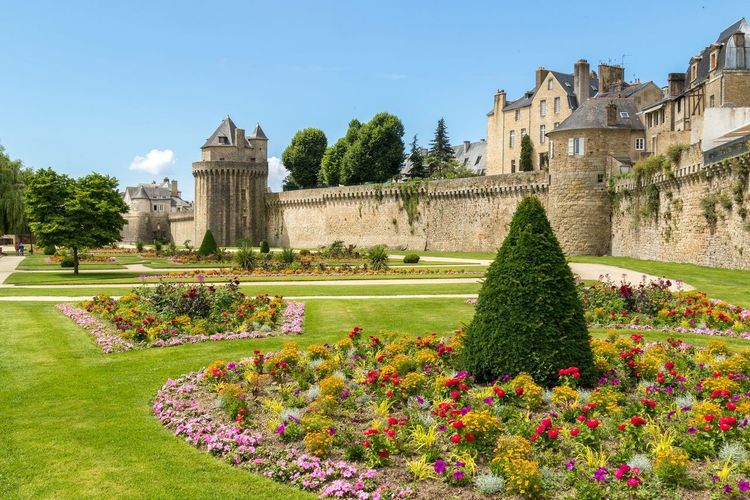
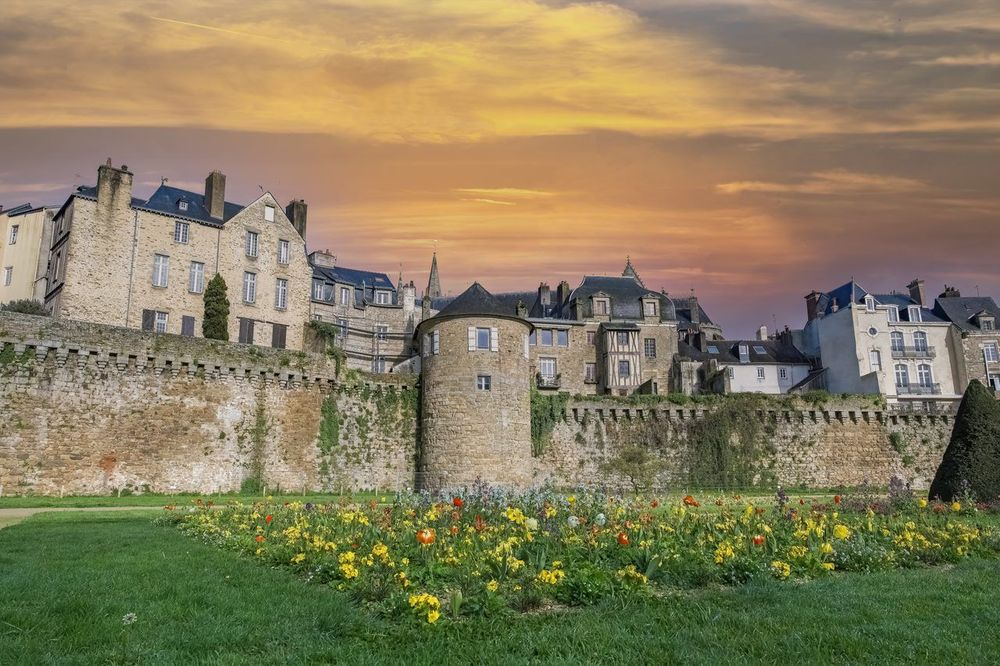
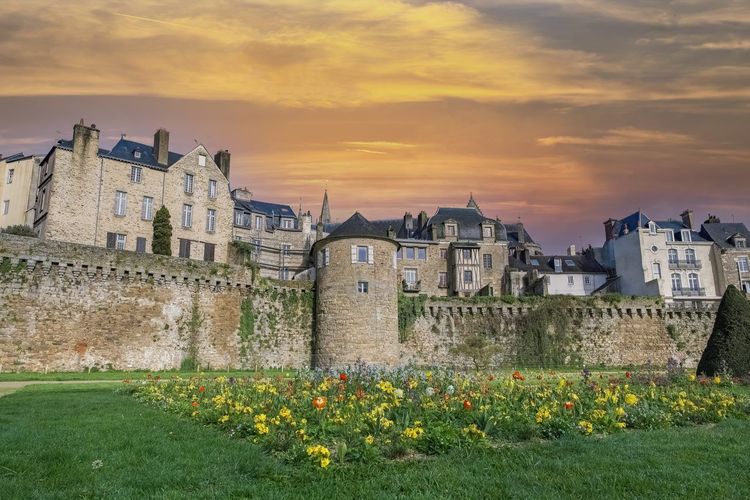
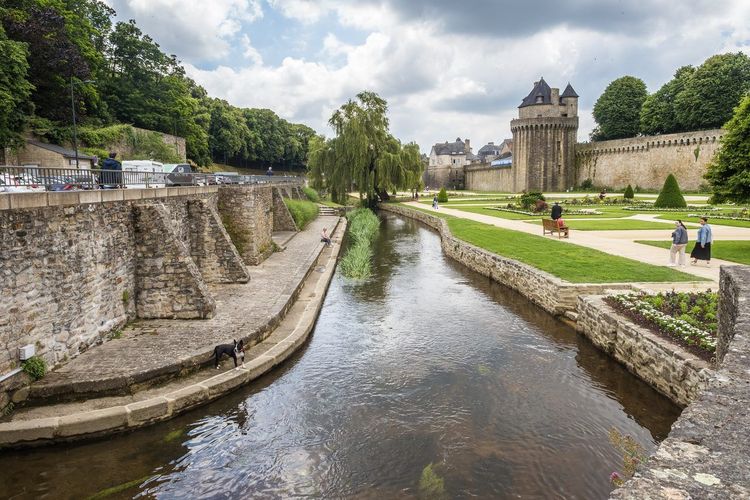
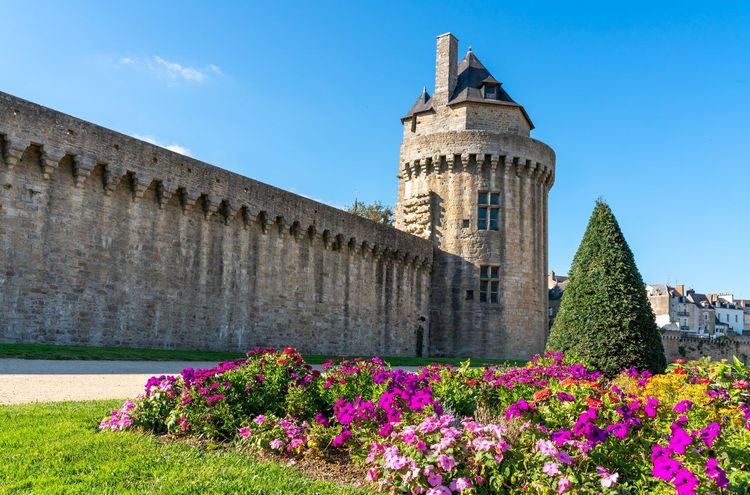
The Vannes ramparts form one of the best-preserved fortified ensembles in Brittany: approximately one and a half kilometres of walls still standing, raised for the most part between the 13th and 15th centuries. The Tour du Connétable, the most imposing on the circuit, the Tour Poudrière and the Porte Prison punctuate this stone belt that protected the city during the War of the Breton Succession in the 14th century. What strikes you most is the way the grey stone blends into the vegetation: the path that runs along the southern side of the ramparts offers a continuous view over the slate rooftops of the historic centre, with a few benches placed to take in the scene at a leisurely pace.
At the foot of these walls lies the Jardin des Remparts, a French-style garden with geometric flowerbeds laid out below the towers, with its old covered washhouses and slate roofs — without doubt the most photographed postcard view in the city. The Marle river, now canalised along this stretch, once fed the moat that encircled the city and served the tanners and washerwomen who worked just below the fortifications. This garden remains one of the few places where you can simultaneously admire the medieval towers, the steeply pitched roofs of the old houses and a small stretch of the waterway that once sustained an entire artisan quarter.
Come early, before 10 a.m. if possible: the raking morning light shows off the towers at their best and the garden is still deserted, far from the midday crowds in high season. Allow thirty to forty minutes for the full walk along the outer chemin de ronde, more if you stop to photograph the washhouses or watch the herons that sometimes come to fish in the old moat.
Saint-Pierre Cathedral and La Cohue
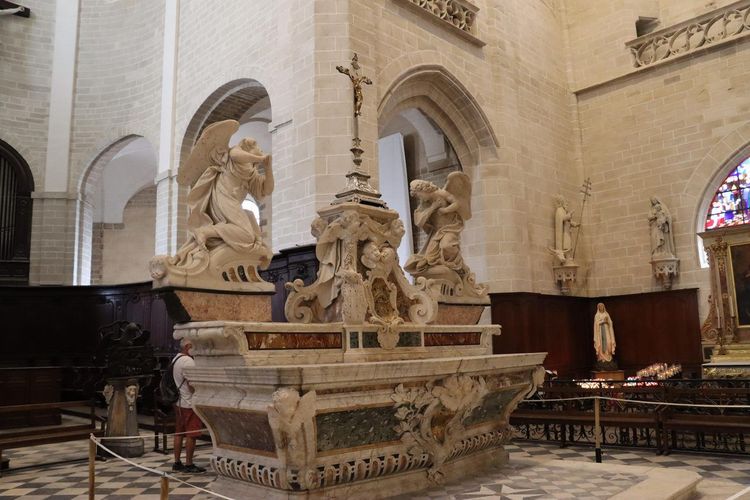
Heading back towards the centre, Vannes' Saint-Pierre cathedral dominates its namesake square with a west facade reworked in the 19th century, which conceals a far older building remodelled over nearly six hundred years. Inside, the Chapel of the Holy Sacrament, in an Italian Renaissance style rare in Brittany, houses the tomb of Saint Vincent Ferrer, a Spanish preacher who died in Vannes in 1419 and became the city's patron saint, still celebrated each spring during a pardon. Admission is free and the cool interior offers a welcome break if the morning is warm, with a set of modern stained-glass windows that deliberately contrasts with the ancient stonework.
Directly opposite stands La Cohue, a former market hall that also served as a court of justice, whose medieval building now houses the city's fine arts museum. The rooms retain the original timber frame and volumes, an unusual setting for the collections and temporary exhibitions devoted to Breton art and 19th- and 20th-century painting. The very name, la Cohue, comes from an old word for the crowd that thronged here on medieval market days, long before the place des Lices took over.
There is no official combined ticket for the cathedral and La Cohue, but the tourist office, located just a short distance away, offers guided tours of the historic centre that often include a commentary at both buildings. Allow about an hour for both visits if you take the time to read the information panels.
The Half-Timbered Houses and the Vannes et sa femme Statue
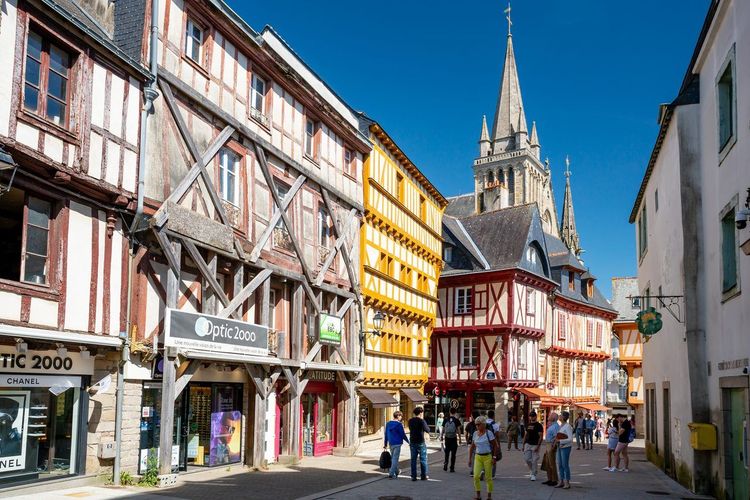
From La Cohue, just a few dozen metres are enough to reach place Henri IV, arguably the best-preserved ensemble of half-timbered houses in the city. The 16th-century jettied facades lean slightly towards one another: a deliberate technique that gained habitable floor space on the upper storey without increasing the footprint at ground level, very common in prosperous merchant towns of the period. The ground floors, now occupied by shops and cafés, have kept their original proportions, giving the square a rare architectural unity.
At the corner of rue Noë and rue Saint-Guenhaël, look up: the polychrome wooden sculpture known as Vannes et sa femme has adorned the corbelled upper floor of a house since the 16th century. The locals have grown so attached to this chubby couple that it has become the city's unofficial emblem, even though nobody knows exactly who it originally represented — wealthy merchants or allegorical figures of the city itself. Rue Saint-Guenhaël is worth strolling slowly: its uneven cobblestones and narrow facades give a fairly faithful impression of what Vannes looked like five centuries ago.
Continuing towards the old tournament grounds, you emerge onto the place des Lices, where equestrian jousting took place in the Middle Ages — hence the name. This is also where one of Brittany's most vibrant markets is held twice a week, a natural lead-in to the rest of the day. This morning alone gives a fairly complete overview of Vannes' historic centre: ramparts, cathedral and half-timbered squares follow one another within a radius of less than five hundred metres, which explains why the old town is so easily explored on foot, with no need for motorised transport at any point.
Day 1 (Afternoon): the Marché des Lices and the Saint-Patern Quarter
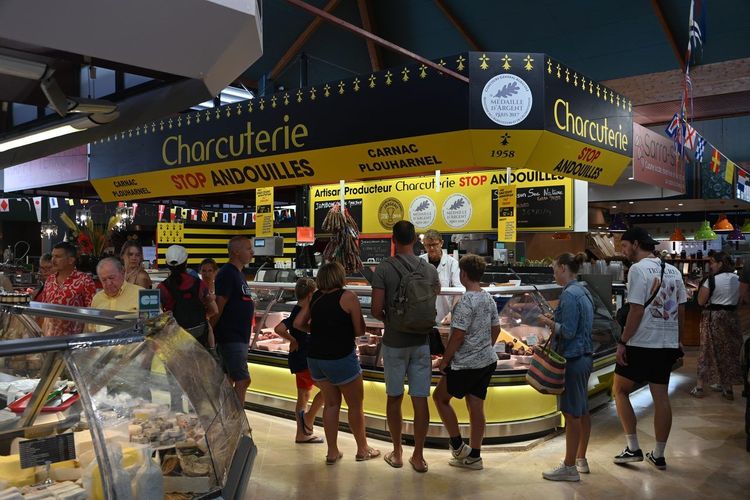
The afternoon shifts to an entirely different rhythm: less heritage-focused, more lively. Head for the market and then the Saint-Patern quarter (Rue Saint-Patern, 56000 Vannes), just outside the ramparts, where the city shows a much less touristy face than in the morning.
The Marché des Lices and its Market Halls
The Vannes market is held every Wednesday and Saturday morning on the place des Lices and the surrounding streets, spilling well into the early afternoon on Saturdays, the busiest day of the week. Around a hundred producers and traders set up here: oysters from the Gulf of Morbihan, fish caught in the bay, goat's cheeses, farm ciders and Breton treats such as kouign-amann or galettes-saucisses to eat on the go. The covered market halls in the town centre, smaller and open during the week, supplement the offering for everyday shopping when the big market is not on.
Coming on a Saturday morning completely transforms your perception of the city: the cobbled lanes fill with the smell of crêpes and conversations, sometimes in Breton, and local producers take the time to explain their products to anyone who asks a question. This local rootedness, more than the monuments themselves, gives Vannes a different identity from other fortified towns in the region, which are more focused solely on their built heritage. Our article on the culinary specialties of Vannes details the must-tries to sample on the spot, from market stalls to small fixed shops around the square.
If the market is not on during your visit, don't give up on the place des Lices: the café terraces that frame it remain pleasant all week, with a direct view of the half-timbered facades that line one side of the square.
The Saint-Patern Quarter and its Local Life
Ten minutes' walk from the market, cross symbolically through the ramparts into the Saint-Patern quarter. Long overlooked, this suburb built around its namesake church has been taken over in the past decade by artists and traders who have painted shutters and shopfronts in vivid colours, turning some streets into an open-air gallery. You will find ceramics workshops, second-hand clothing shops, independent wine merchants and a few wine bars that make this neighbourhood a haunt for locals rather than passing visitors.
The church of Saint-Patern itself, rebuilt in the 18th century on much older foundations, deliberately contrasts with the cathedral: plainer, less visited, it is worth seeing mainly for the atmosphere of the neighbourhood that surrounds it. Wander without a fixed route through the small nearby streets: that is the best way to appreciate this quarter and to stumble, around a carriage gateway, upon a mural or a workshop open to the public. Allow an hour to take it all in, more if you stop in one of the small galleries showing the work of local artists, often accessible free of charge in the late afternoon.
Day 2 (Morning): the Port of Vannes and the Gulf of Morbihan
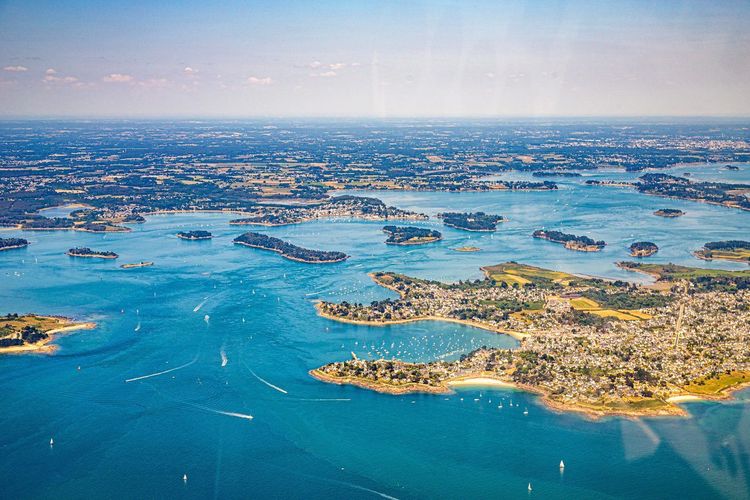
The second day brings a complete change of scenery. We leave the lanes behind for the water: the harbour, its boats, and the entrance to the Gulf of Morbihan, that small inland sea dotted with islands and islets, of which only two — the île aux Moines and the île d'Arz — form year-round inhabited communities.
The Port of Vannes and the Gulf Boats
The port of Vannes is a ten-minute walk from the historic centre, following the Marle down to its mouth. The modern marina, with its pontoons for leisure craft, coexists with an older quay where merchant vessels once docked, linking Vannes to the rest of Brittany and even to English ports, in the days when the city largely lived off maritime trade. Today the port serves mainly as the departure point for exploring the gulf: from the quays, several companies run ferries to the islands, notably the île aux Moines and the île d'Arz, in a crossing of just thirty minutes or so.
If you only have a morning, opt for a short ninety-minute cruise that skirts the first islands without landing: it gives a good overview of the Gulf of Morbihan and its low-lying landscape of maritime pines, without eating into the afternoon's programme. The on-board commentary often mentions the origin of the gulf's name, which literally means 'little sea' in Breton — a particularly apt description given the density of islands and channels you discover from the deck. For those wanting more in-depth exploration, our article on the most beautiful spots in the Gulf of Morbihan to discover lists the islands and coves not to be missed according to the time available, including some accessible by kayak from Vannes itself.
Ferry timetables vary considerably depending on the season and tidal coefficients, which directly influence the routes possible in this shallow gulf: it is better to book the day before in high season, especially in July and August, when some crossings sell out early in the morning. The fare for a ninety-minute outing generally runs to around 20 to 25 euros per adult.
The Conleau Peninsula and its Coastal Walks
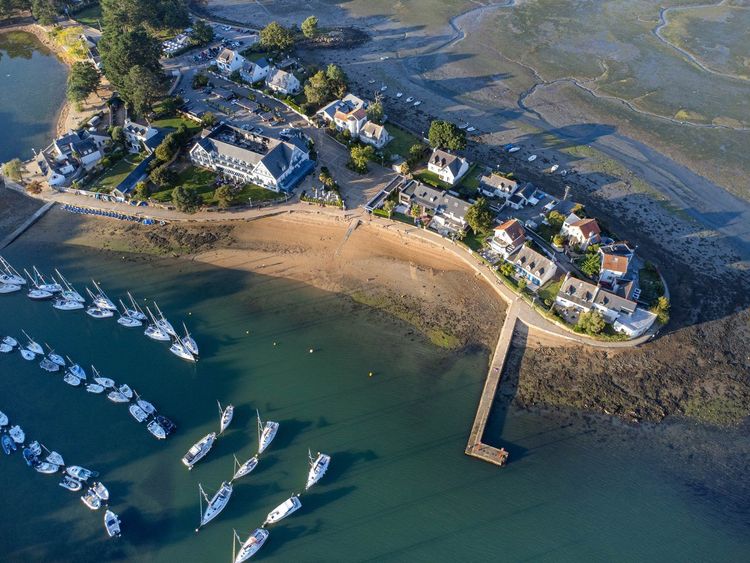
About four kilometres from the centre, the Conleau peninsula (Allée Bernard Laurent, 56000 Vannes, rated 4.6/5 on Google from 436 reviews) offers the sharpest contrast with the medieval city: a former fishing village turned sought-after residential neighbourhood, a small island connected by a pedestrian jetty and a coastal path that follows the bay for several kilometres. You can reach it on foot in forty-five minutes from the ramparts, by bike in just fifteen minutes along the quays, or by city bus in about ten minutes.
The path that starts at Conleau is part of a wider network of coastal walks that follows the entire gulf shoreline on the Vannes side, as far as the Parc du Golfe and beyond towards neighbouring communes. It is also an excellent picnic spot facing the water, with a sheltered little beach well suited to families in the late morning, when the tide uncovers a wide strip of sand and mudflat frequented by wading birds. If you have a free afternoon rather than just an hour, our article on hikes around Vannes details longer loops starting from this area, some exceeding ten kilometres for the most committed walkers.
Day 2 (Afternoon): Museums and Green Spaces in Vannes
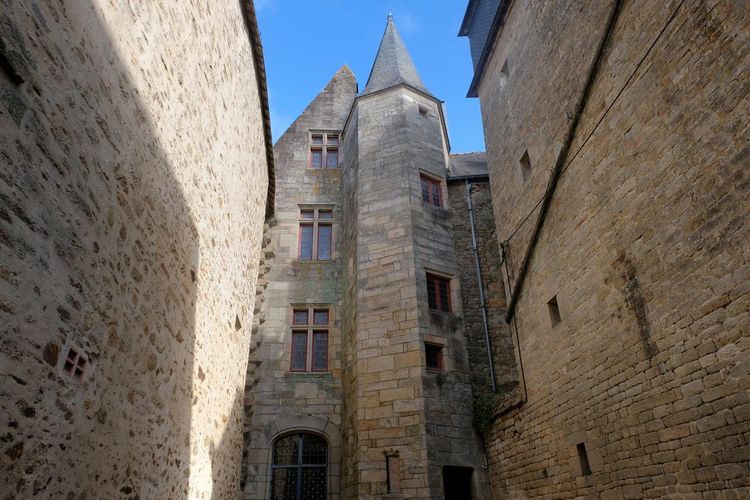
The afternoon of the second day lends itself to a more relaxed pace, combining culture and greenery, before hitting the road again or extending the stay to explore the surrounding area.
The Fine Arts Museum and the Hôtel de Limur
The Vannes Fine Arts Museum, housed in La Cohue already visited that morning, presents collections ranging from 19th-century Breton art to more contemporary temporary exhibitions. Admission prices remain modest, in the range of a few euros at full price, with free entry for under-18s and occasional free days announced by the city. Allow an hour for a full visit, more if a temporary exhibition particularly captures your attention.
A few minutes' walk away, the Hôtel de Limur (24 Boulevard de la Paix, 56000 Vannes, rated 4.7/5 on Google from 64 reviews) makes an excellent complement to this visit: this 17th-century mansion, bought by the city and surrounded by its garden, has housed since 2022 the centre for architectural and heritage interpretation, which traces the evolution of the city from the medieval walls to its contemporary neighbourhoods. In an hour you will understand what you wandered through the previous day without necessarily decoding it, and the monumental wooden staircase and original woodwork are worth a look in their own right.
The City's Gardens and Green Spaces
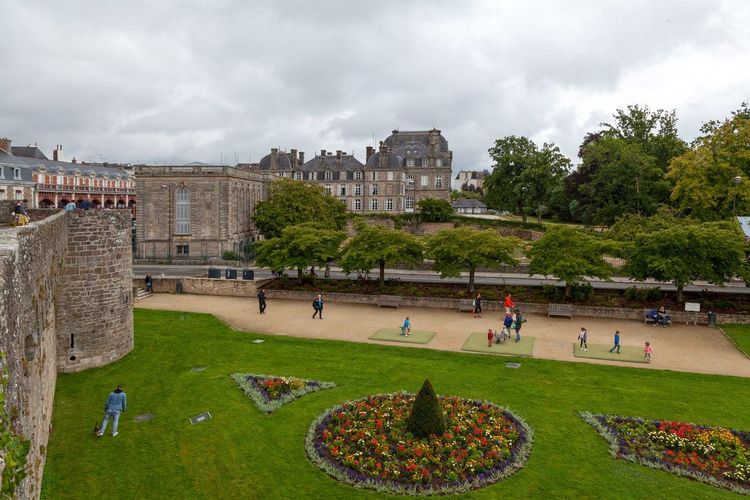
Between visits, Vannes offers several pleasant pockets of greenery. The Jardin des Remparts, already visited on the first morning, is worth a second look in the late afternoon, when the low-angled light colours the towers differently and the morning crowds have long gone. The Parc du Golfe, close to the harbour, offers lawns and benches facing the water, a favourite spot for locals to picnic after work, while the Promenade de la Garenne allows you to link several of these spaces on foot without retracing your steps.
These gardens, laid out at different periods but all conceived in direct relation to water — whether the old moat or the gulf itself — form a restful counterpoint to the density of the historic centre. This is the ideal moment to unwind before a final evening in the Saint-Patern quarter or one last lap of the Marché des Lices (Place des Lices, 56000 Vannes, rated 4.4/5 on Google from 1,950 reviews) before heading home.
What to Do in Vannes When It Rains
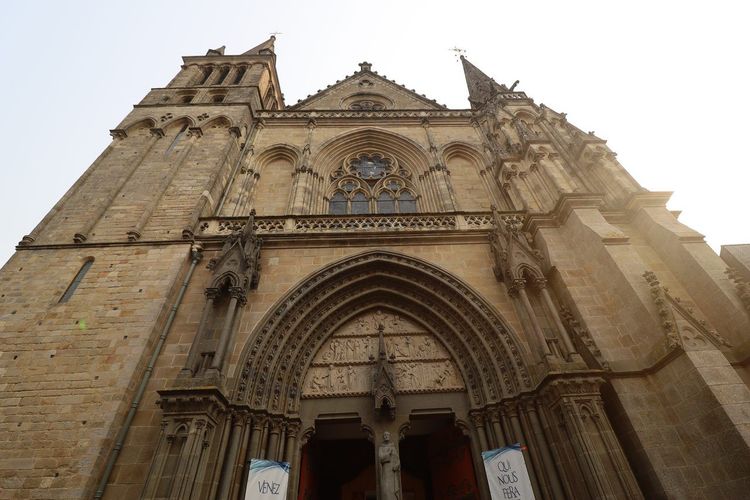
Brittany is no stranger to showers, and Vannes fortunately has several indoor options that do not significantly curtail the programme. La Cohue and its Fine Arts Museum allow you to spend a good hour and a half under cover, as does the Saint-Pierre cathedral, whose stained-glass windows take on a completely different quality under a grey sky and softer light. The covered market halls in the town centre are also open during the week, sheltered from the weather, for a relaxed browse between the stalls without worrying about the forecast — a good plan for picking up something to snack on under cover as well.
To fill the afternoon, crêperies with vaulted dining rooms in the old town and independent bookshops in the centre offer very Breton refuges, and the tourist office regularly programmes guided tours that are partly conducted under cover. With children, the town-centre cinema and the workshops offered during school holidays by the municipal museums are reliable back-up options for a drizzly day. Our selection of the best activities to do in Vannes gathers further indoor options, handy to keep in reserve when the rain sets in for the whole day.
Where to Eat in Vannes: Good Addresses and Local Specialties
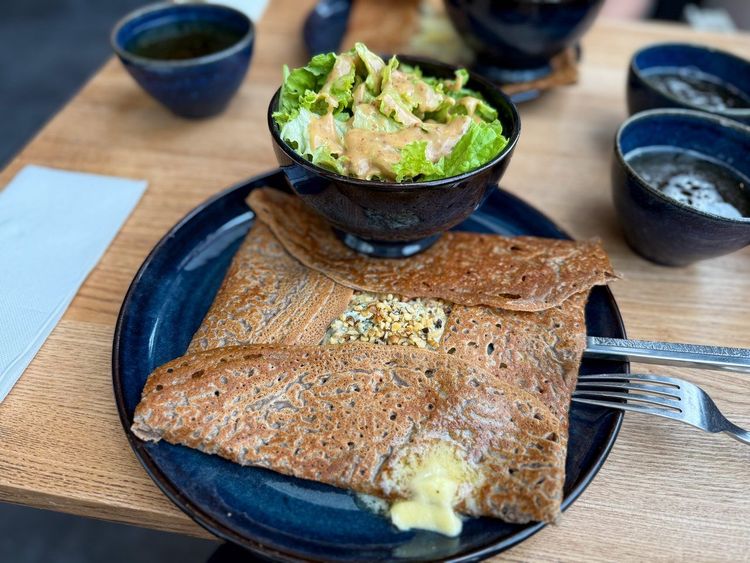
Between traditional crêperies and restaurants focused on produce from the gulf, Vannes has no shortage of addresses to fuel both days of sightseeing, whatever the budget.
Restaurants and Crêperies in the Old Town
In the cobbled lanes around the cathedral and place Henri IV, most of the city's crêperies are concentrated, offering complete galettes for around 10 to 14 euros and crêpe-cider menus available at the majority of addresses, often served in vaulted rooms that date from the Middle Ages themselves. Seafood restaurants, slightly more expensive with menus between 25 and 40 euros, focus on oysters and shellfish from the Gulf of Morbihan, caught just a few kilometres away and often listed on a blackboard according to the day's catch. For a quicker lunch between two visits, several tapas bars and cafés on the place des Lices serve set menus for under 15 euros, practical when the day's schedule is packed.
Book ahead for dinner in high season, especially at weekends: terrace tables around the cathedral fill up quickly from 7:30 p.m. between June and September, and some well-regarded addresses are fully booked a week in advance at the height of summer. Another useful reference: the harbour quays line up a second set of tables, often more contemporary in style, with views over the sailing-boat masts and a more local clientele during the week.
Local Producers and a Gourmet Break at the Market
The local producers at the Marché des Lices often sell direct, without any middleman: oysters from the Crac'h river, farm goat's cheeses, artisan ciders and lambigs made in the hinterland, or the famous far breton and kouign-amann to take away for an afternoon snack. It is also the cheapest place to put together a complete picnic before heading to Conleau or the harbour.
The culinary specialty most associated with Vannes remains without doubt the kouign-amann, that butter-and-caramelised-sugar cake born in Cornouaille but adopted throughout Brittany. The city also lays claim to its own galette-saucisse tradition and its gulf oysters, renowned for a more pronounced iodine flavour than other Breton basins, thanks to the constant tidal mixing in this near-enclosed sea. Our guide to Vannes' culinary specialties lists about ten products you should not leave without having tasted, from salted butter to locally smoked fish. Ryo's audio-guided tour of Vannes makes a pleasant appetiser before any of these stops, tracing the old town at a gentle, food-friendly pace.
Where to Stay in Vannes for a 2-Day Weekend
Hotels and Charming Accommodation in the Old Town
For a two-day weekend, staying intra-muros or just outside the ramparts makes a big difference to the experience. Charming accommodation in former half-timbered houses or bourgeois residences, often priced between 120 and 200 euros per night depending on the season, has the advantage of putting everything within walking distance: ramparts, cathedral and market in under ten minutes, with no need to get back in the car between visits.
For tighter budgets, hotels near the station, fifteen minutes' walk from the historic centre, tend to run at around 70 to 110 euros and suit a trip organised around the train, with the advantage of being able to drop off luggage before setting off to explore the city. For those wanting water views, a few guesthouses and small hotels overlooking the harbour or the Conleau peninsula offer a quieter, slightly out-of-the-way setting, best booked several weeks in advance in summer as availability is limited in this specific area.
Before choosing, a look at Ryo's audio-guided tour of Vannes helps you identify the neighbourhoods covered by the route and book close to as many first-day stops as possible, to keep unnecessary journeys with luggage to a minimum.
How to Get to Vannes and Get Around
Getting to Vannes by Train or by Car
By train, Vannes is connected to Paris-Montparnasse in approximately two and a half hours on a direct TGV, several times a day, to Rennes in just over half an hour on the fastest services, and to Nantes in about one hour fifteen by frequent regional trains. The station is fifteen to twenty minutes' walk from the historic centre, a perfectly manageable distance with light luggage, or a few minutes by city bus for heavier suitcases.
By car, Vannes is reached via the N165 expressway from Nantes in about one hour fifteen, from Rennes via the N24 in approximately one hour fifteen as well, and from Lorient along the same N165 in just under an hour. The city connects directly to this free fast road, making it a convenient stop on a broader itinerary through southern Brittany, between Lorient, Carnac and the Quiberon peninsula.
Parking, Getting Around on Foot or by Tourist Train
Where to park without wasting time? Several car parks ring the historic centre, avoiding the need to drive into the lanes: the Parking de la Rabine, along the harbour, is the largest and puts the ramparts five minutes' walk away, while the town-centre and place de la République car parks are useful for a short visit, with standard hourly rates generally around 1.50 to 2 euros. On a Saturday market day, aim to arrive before 10 a.m.: surface parking spots disappear very quickly, and driving around inside the old town — largely pedestrianised or with heavily restricted traffic — is pointless.
Visiting Vannes on foot remains by far the best option: the historic centre can be covered in full in twenty to thirty minutes of walking from one end to the other, making a car almost unnecessary once you have parked. For visitors who prefer a more guided and less tiring approach, particularly families or those with reduced mobility, a small tourist train runs in season from the town centre, with commentary on the main monuments over about forty minutes. The city also has a city bus network and bike-share scheme, both very useful for reaching Conleau or the Parc du Golfe without an hour's walk.
What to Do around Vannes: the Gulf of Morbihan and Day Trips
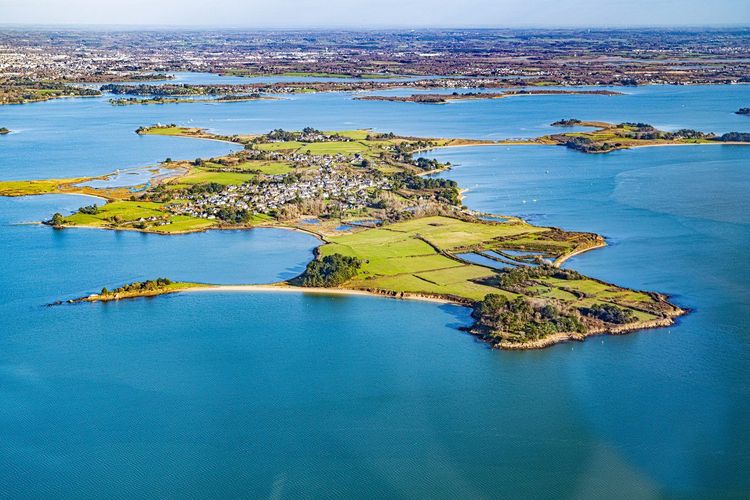
The Gulf of Morbihan, locally nicknamed the 'little sea', alone contains enough sites to justify extending your stay. But it is above all inland, towards Carnac, Auray and Josselin, that the most memorable excursions around Vannes are to be found — often skimmed over or completely ignored by standard guidebooks that stop at the city ramparts.
The Carnac Alignments and the Locmariaquer Megaliths
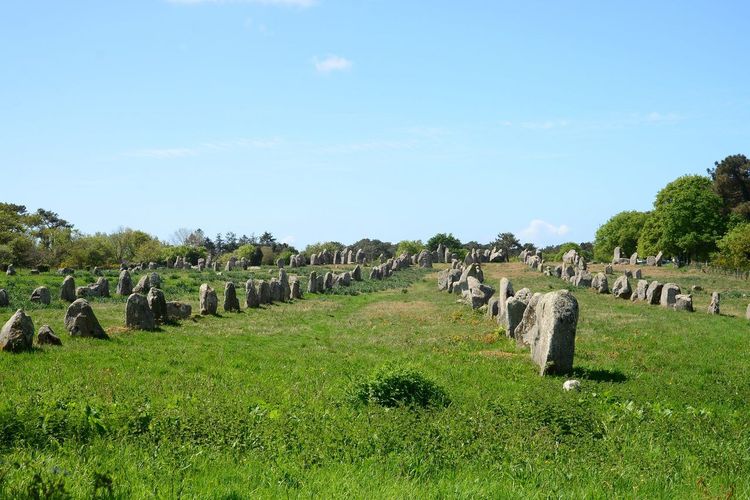
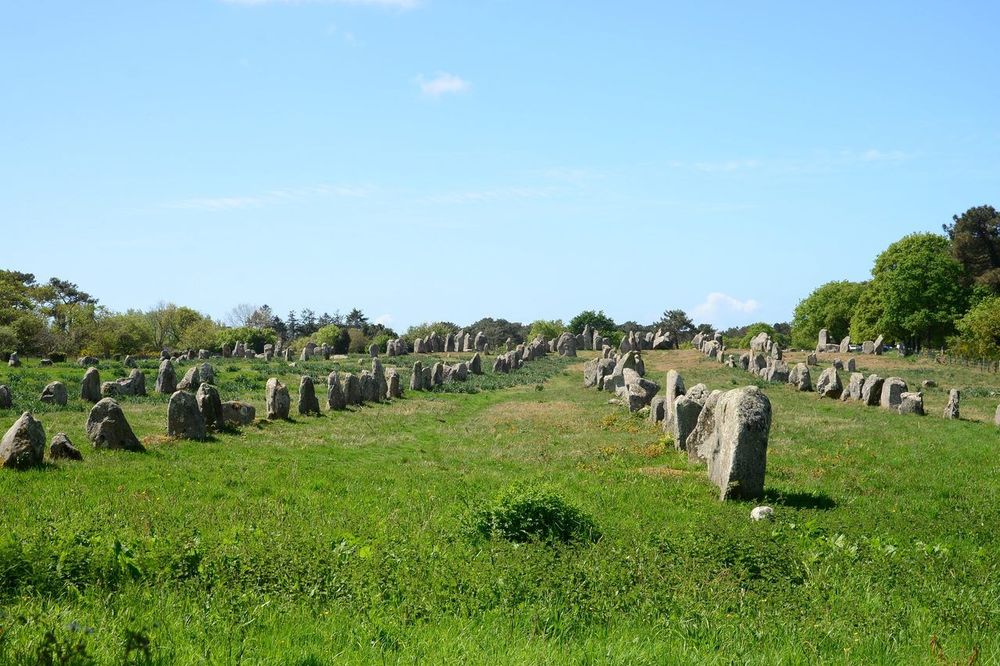
About thirty-five minutes by road, the Carnac alignments bring together nearly 3,000 standing stones spread across several sites, including the alignments of Ménec, Kermario and Kerlescan, erected some 6,000 years ago in circumstances still largely debated by archaeologists. Free access is restricted depending on the season to protect the granite blocks from accelerated erosion, but an outer path allows you to walk alongside much of the alignment year-round, supplemented in summer by guided tours that provide access to the interior of the site.
About twenty minutes from Carnac, Locmariaquer preserves three major megalithic monuments: the Grand Menhir Brisé, once more than 20 metres tall before it fell in several pieces, the Table des Marchands, a passage dolmen richly carved with symbols still not fully understood, and the Er Grah tumulus. The whole site takes about an hour to visit and perfectly complements Carnac for anyone wanting to grasp the full extent of the Morbihan megalithic culture, one of the densest in the world for such a small territory.
Auray, Josselin and Rochefort-en-Terre
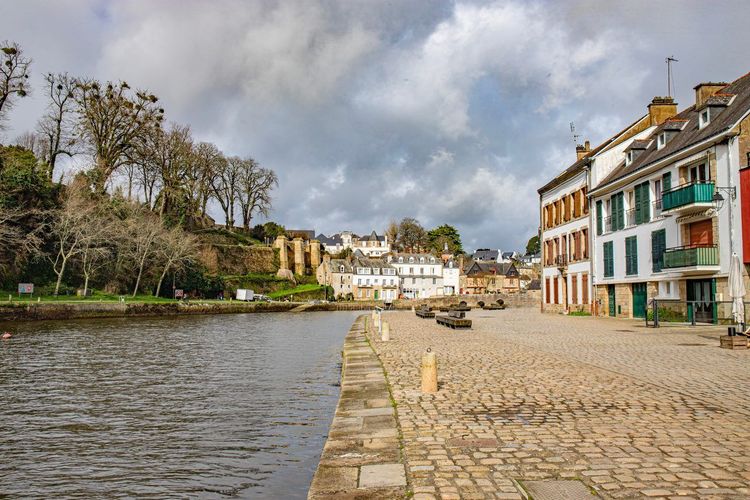
Twenty minutes from Vannes, Auray conceals one of the most beautiful harbour quarters in the region: the port of Saint-Goustan, with its cobbled quays and half-timbered houses, where Benjamin Franklin landed in December 1776, driven in by a storm, before travelling to Paris to negotiate the French alliance. You can easily spend an hour here, wandering between craft galleries set up in former merchants' houses and the terraces along the Auray river, particularly pleasant in the late afternoon.
Further afield, about forty-five minutes away, Josselin stands out for the Château des Rohan, set on the banks of the Oust with its conical towers reflected in the river — one of the finest examples of feudal and Renaissance architecture in Brittany, still owned by the Rohan family after more than six centuries. The interior visit, which is ticketed, reveals period-furnished salons, while the river-facing facade can be admired free of charge from the bridge.
Finally, Rochefort-en-Terre (Place du Puits, 56220 Rochefort-en-Terre, rated 4.7/5 on Google from 9K reviews), just under an hour away, was voted the French people's favourite village in 2016: its granite houses covered in geraniums and its château rebuilt at the start of the 20th century by American painter Alfred Klots are well worth the detour, especially in the late afternoon when the tourist coaches have already left and the golden light catches the facades. To plan these excursions in detail, our activity suggestions in the Morbihan detail combined itineraries for a half-day or a full day, depending on how many sites you want to chain together.
When to Visit Vannes and How Long to Plan For
Before settling on the length of your stay, a historical detail helps explain why Vannes packs so much heritage into such a small area. The Veneti once lived here, a Gallic seafaring people so formidable at sea that Julius Caesar had to commission an entire fleet specifically to defeat them, in 56 BC, during a naval battle that has gone down in history. The ducal revival of the 15th century did the rest: when the Dukes of Brittany established their court here and concentrated part of the duchy's political power in the city, the ramparts, cathedral and half-timbered houses all rose from the ground within a few decades of one another.
1, 2 or 3 Days: How Long to Plan For
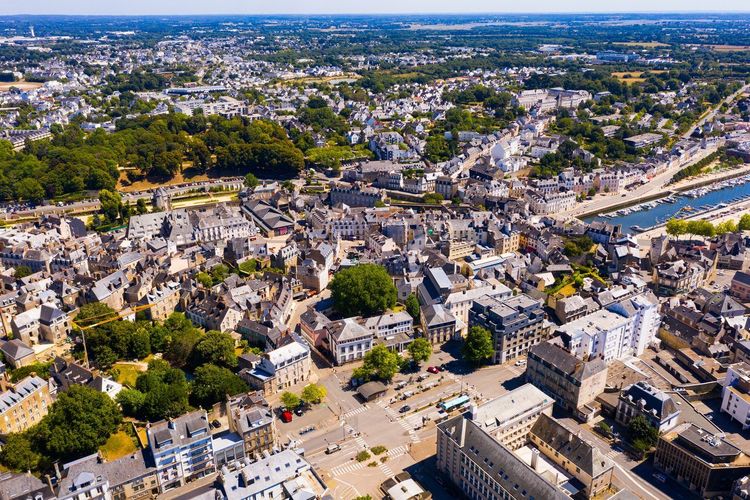
In a single day you can see the essentials of the historic centre — ramparts, cathedral and place Henri IV included — but without any margin for the Gulf of Morbihan or a proper sit-down lunch. Two days, as in this itinerary, allow you to balance the old town and the coastline, including the harbour and the Conleau peninsula, at a comfortable pace that leaves time to linger over something that catches your eye. Three days open the door to a proper excursion to Carnac, Locmariaquer or Josselin, without having to sacrifice any part of the city itself or rush from one point to the next.
On the weather front, spring and early autumn offer the best compromise between reasonable crowds and pleasant temperatures for walking all day without sweating or shivering. July and August remain the most lively months, with the Marché des Lices at its peak and a festive atmosphere throughout the town centre, but also the highest accommodation prices and possible queues for the gulf ferries.
Tailoring the Itinerary: with Family or as a Couple
With children, shift the balance towards water and the outdoors: the sheltered little beach at Conleau, a short crossing to the île aux Moines, the tourist train to spare young legs, and a tasting tour of the Marché des Lices easily fill two days, keeping the museums for rainy slots. The ramparts and their outer path are pushchair-friendly along the garden stretch, less so through the cobbled lanes of the old town.
For a romantic weekend in Vannes, the programme focuses more on the end of the day: the ramparts lit up at dusk, dinner in a vaulted room around place Henri IV, then a sunset cruise in the Gulf of Morbihan if the season allows. A guesthouse room in a half-timbered house intra-muros, rather than a hotel near the station, noticeably changes the feel of the stay, and a half-day escape to Rochefort-en-Terre at the end of the weekend makes for a fairly irresistible romantic finale.
The City Pass: a Smart Way to Visit
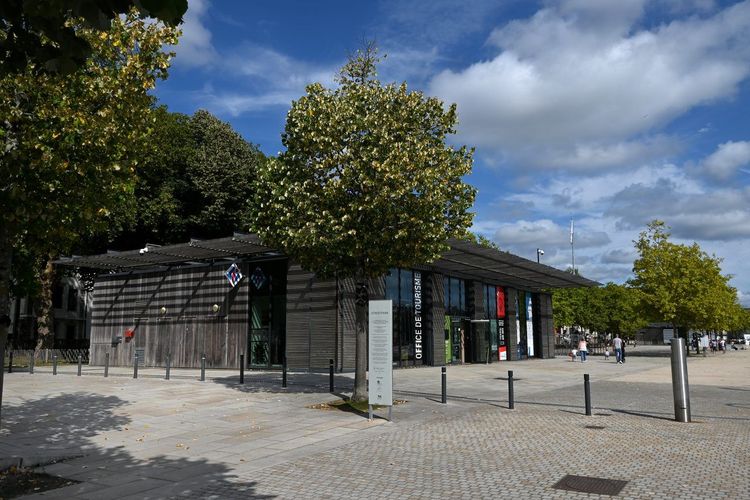
The Gulf of Morbihan tourist office offers packages and passes that bundle admission to several sites, discounts on gulf cruises and sometimes access to guided tours of the historic centre. The maths are simple: as soon as you do two paid activities in the same day, the pass becomes worthwhile. It can be picked up directly at the tourist office, located just steps from the cathedral, where the team can also tell you the day's ferry timetables — which vary considerably with the tides.
To plan this stay from top to bottom, the Ryo audio-guided tour of Vannes remains an excellent starting point: it lets you visualise the distances between each stop in advance and adjust the itinerary according to the time actually available, whether you are going for one day, two or three.
FAQ
What are the must-see sights in Vannes?
The must-sees are the ramparts and the Jardin des Remparts, the Saint-Pierre cathedral and La Cohue, the half-timbered houses on place Henri IV, the Vannes et sa femme statue, and the harbour with a boat excursion into the Gulf of Morbihan. Two days are enough to see everything at a relaxed pace.
What is the nicest neighbourhood in Vannes?
The Saint-Patern neighbourhood, just outside the ramparts, is a local favourite for its artistic atmosphere and colourful facades. The historic centre, around the cathedral and place Henri IV, is nevertheless richer in visible heritage for a first visit.
How long does it take to visit Vannes?
One day is enough to see the essentials of the historic centre. Two days balance the old town and the Gulf of Morbihan, including the harbour and the Conleau peninsula. Three days leave time to add an excursion to Carnac, Josselin or Rochefort-en-Terre without rushing.
What is the culinary specialty of Vannes?
Kouign-amann, a Breton cake made with butter and caramelised sugar, remains the specialty most associated with the city, alongside oysters from the Gulf of Morbihan and the galette-saucisse sold every week at the Marché des Lices.
What can you do in Vannes with children?
The Conleau peninsula with its sheltered little beach, a boat trip around the Gulf of Morbihan, the tourist train in season and the Marché des Lices for tasting local specialties are all particularly well suited to families with young children.
Where is the famous bust 'Vannes et sa femme'?
The polychrome wooden sculpture can be seen at the corner of rue Noë and rue Saint-Guenhaël, on the jettied upper floor of a 16th-century half-timbered house, just steps from place Henri IV and the cathedral.
Can you visit Vannes in a single day?
Yes, by focusing on the historic centre: the ramparts, the cathedral, La Cohue and the half-timbered houses can all be covered in a well-packed half-day. You will, however, have to forgo the Gulf of Morbihan and the surrounding excursions, which are best saved for a stay of two days or more.
At the end of these two days, Vannes leaves the impression of a city that fits entirely in your pocket, yet gives access to one of the most beautiful coastlines in Brittany. Between ramparts, market and the Gulf of Morbihan, it is hard to be bored, even at a leisurely pace and without a car. To extend the discovery or plan the stay in detail before setting off, the Ryo audio-guided tour of Vannes remains the most comprehensive resource for finding all these stops on a single map and leaving nothing to chance.
À lire également