© Shutterstock
 Votre guide Ryo
Lorient, What to Visit in 2026: 12 Essential Places
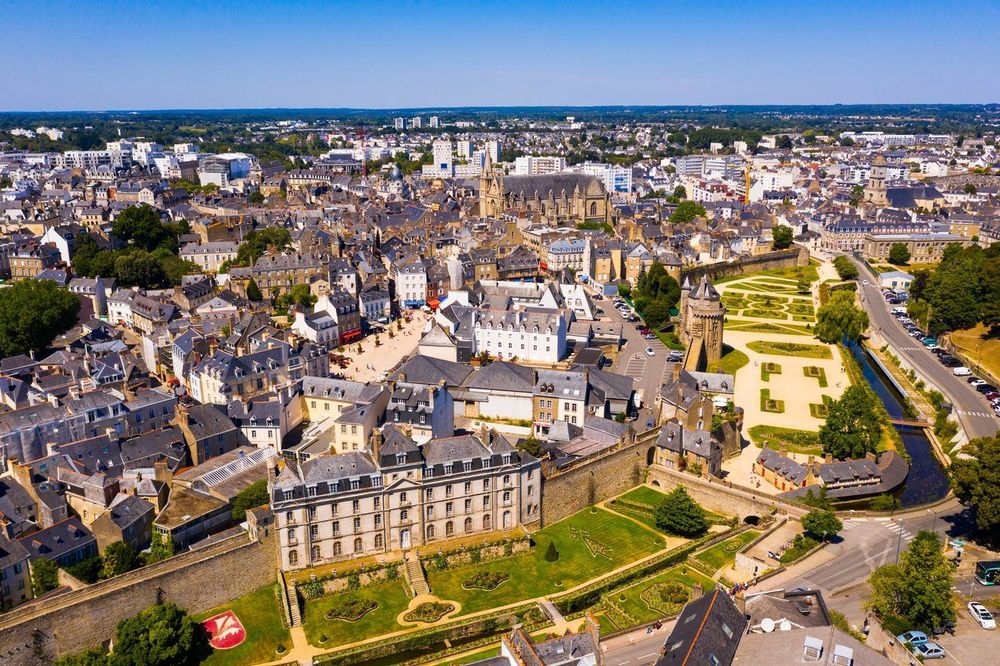
What to visit in Lorient is no simple question: the city layers identities one on top of another — one of France's leading fishing ports, a submarine base turned museum, a city rebuilt from scratch after 1945, and a gateway to a harbor that serves both the île de Groix and the citadel of Port-Louis.
In one well-organized day, you can descend into the concrete depths of K3, watch a trawler returning from a night at sea at dawn, climb aboard a full-scale replica of a racing trimaran at the Cité de la Voile, then cross the harbor by ferry to visit a museum recounting the Asian trade of the 17th century. Few Breton cities of this size pack so many different stories into such a compact area.
For those who prefer to build their own route rather than follow a fixed itinerary, the Ryo app offers an audio guide that accompanies a walking tour through the reconstructed center and down to the port — a good alternative to group tours with set departure times. The rest of this article covers twelve places, from the city center to the île de Groix, with the practical information you need to plan your visit based on the time you have available.
The Reconstructed City Center: Between Modernism and History
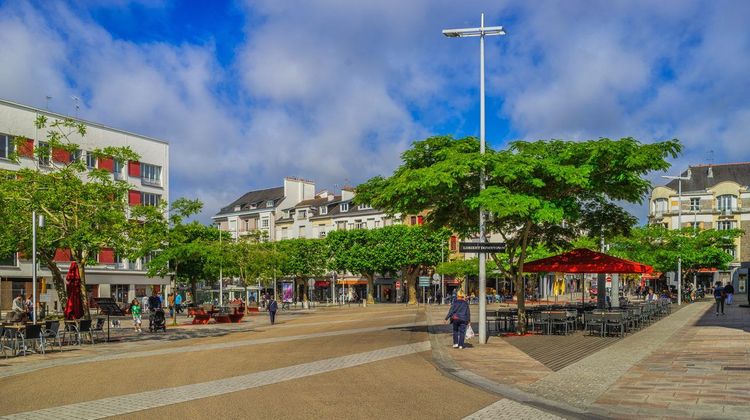
Lorient looks like no other Breton city, and the reason comes down to one date: 1943. Razed 90% by Allied bombing raids targeting the German submarine base, the city was rebuilt after the war according to a radical urban plan, with wide avenues, light-coloured concrete buildings, and a near-geometric street grid. It is this singular identity — closer in feel to Le Havre than to the rest of Morbihan — that surprises visitors who come expecting the usual half-timbered houses of Brittany.
The natural starting point is place Alsace-Lorraine (Place Alsace-Lorraine, 56100 Lorient, rated 4.3/5 on Google with 1.2K reviews), flanked by the Hôtel de Ville and its belfry, and the église Notre-Dame de Victoire, rebuilt in a heavy neo-Romanesque style that sets it apart from its neighbors. For those who want to explore Lorient on foot, allow about two hours to walk between these two landmarks, the covered market, and back down to the marina, where the moored sailboats give the city center an almost seaside-resort feel.
The Kéroman Submarine Base: Memory of the Second World War
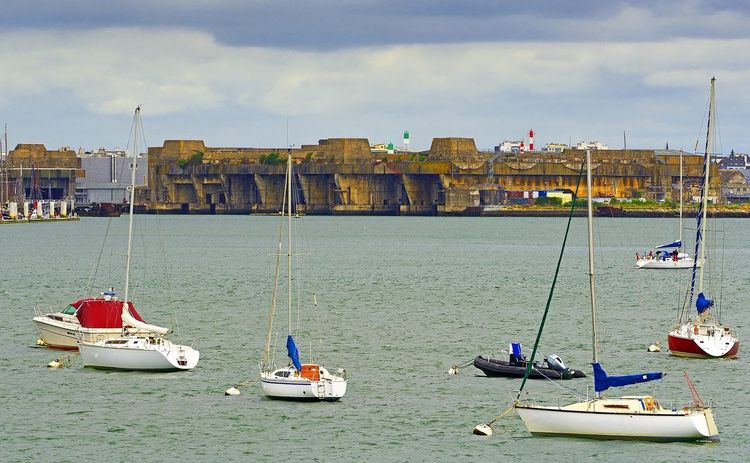
You cannot truly understand Lorient without visiting its Kéroman submarine base (Rue Alain Colas, 56100 Lorient, rated 4.5/5 on Google with 2,607 reviews) — a reinforced concrete block more than 130 metres long, built by the German occupiers between 1941 and 1943 to shelter the 2nd U-boat flotilla. Its walls, several metres thick, withstood every Allied bomb; it is this near-invulnerability that largely explains why the rest of the city paid such a heavy price. Several spaces are now open to visitors: the K3 block allows you to descend into the bunker's interior, while the submarine Flore, moored at the quay and open since 2010, can be explored with an audio guide that recounts life on board.
The visit begins at the surface, in a harsh light filtering through openings cut after the war, then moves into corridors where the humidity and smell of metal immediately evoke the site's military past. Children linger longest in front of the displayed torpedoes; adults tend to stop at the plans detailing how 400 requisitioned workers poured concrete almost without interruption, day and night, for two years.
Allow about 1h30 for the full visit of the K3 block and the Flore submarine: around 10 euros for the submarine alone, and close to 18 euros for the combined ticket including the bunker and the submarine museum. Mid-morning is the best time to visit: school groups have usually left by then, and the raking light on the harbor makes for the most photogenic shots from the rooftop terrace, accessible in summer.
This military industrial site, now listed among Brittany's leading 20th-century heritage monuments, encapsulates on its own why Lorient is a different kind of port city: here, 20th-century history takes precedence over the Middle Ages. The adjoining museum also traces the daily lives of German sailors — an angle rarely explored elsewhere on the Atlantic coast — covering rationing, boredom, and constant surveillance.
The K1 and K2 sections now host temporary exhibitions and a space dedicated to scuba diving, with a test pool open to visitors on select weekends throughout the year. A joint ticket with the nearby Cité de la Voile lets you visit both in a single half-day without returning to your car — a format many families choose during high season.
The Kéroman Fishing Port: A Spectacle at Dawn
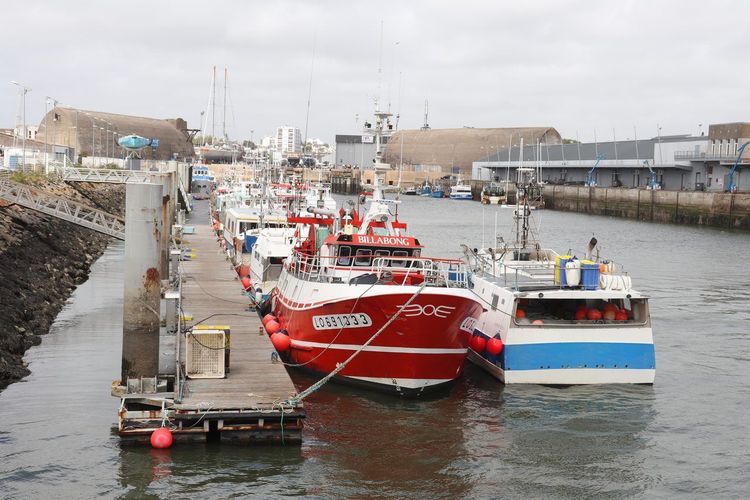
Just steps from the bunker, the Kéroman fishing port runs on a rhythm that most tourists never witness: the fish auction opens as early as 6 a.m., when trawlers return from a night at sea in the Iroise Sea or the Bay of Biscay. Lorient is France's leading fish auction by value of landed catch, ahead of Boulogne-sur-Mer, which remains first by gross tonnage — a detail that often surprises visitors who came for the sailing and military history.
To observe the auction without disrupting the work of the fish merchants, you must book a guided tour through the tourist office: allow around 10 euros and bring warm clothing, even in summer, as the refrigerated warehouses make the air noticeably cold. The fish halls are open for visits Tuesday through Friday, excluding public holidays and the summer biological rest period.
The Cité de la Voile Éric Tabarly and Lorient's Maritime Spirit
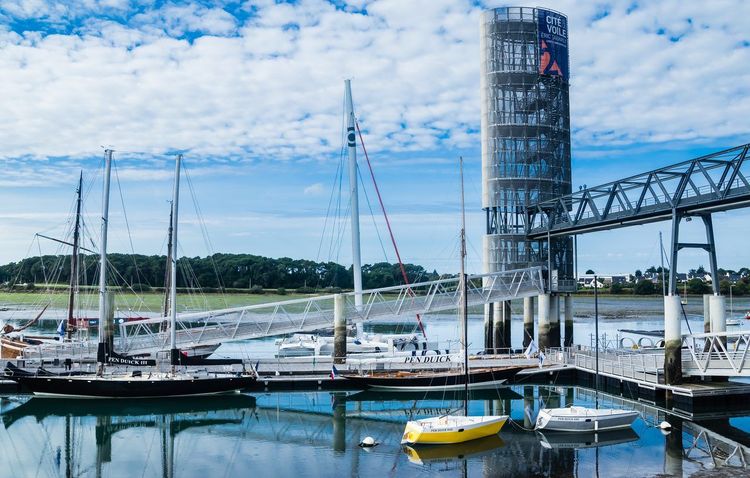
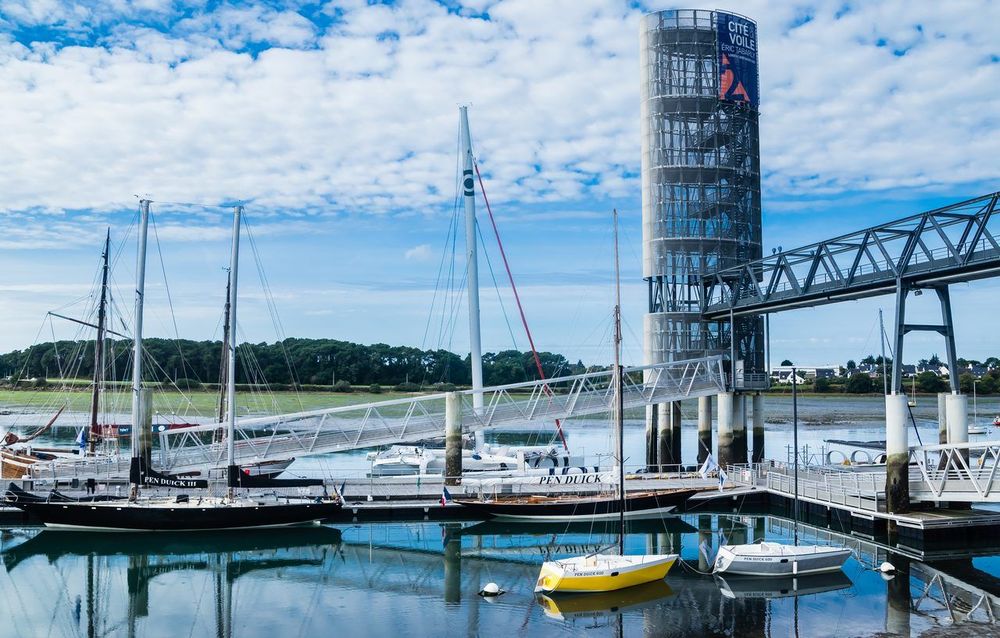
Lorient owes much of its recent fame to one man: Éric Tabarly. Housed in the former submarine base, the Cité de la Voile Éric Tabarly (Base des sous-marins de Kéroman, 56100 Lorient, rated 4.4/5 on Google with 4,153 reviews) traces fifty years of offshore racing through the very boats that shaped that history, from the Pen Duick to the giant Ultime trimarans.
The highlight of the visit is the hall of suspended scale models, where faithful replicas of the sailboats that defined successive Vendée Globes and Route du Rhum races are displayed, some at full scale. A helm simulator lets you experience the sensation of speed on a foiling multihull — an experience as popular with children as with adults who come for the nostalgia of the Pen Duick VI.
Around the building, the wet docks year-round welcome racing sailboats being prepared for competition, from Figaro singlehanders to the large trimarans that set off each autumn for the Route du Rhum. A stroll along the outer pontoons, free of charge, already offers an impressive glimpse of these machines spanning dozens of metres, long before you buy a ticket.
If you'd rather explore the Base at your own pace rather than on a classic guided tour, the Ryo audio guide offers a route that puts each hangar and basin in context, without depending on group visit schedules. Allow 1 to 1h30 for the Cité de la Voile alone; full-price tickets are around 14 euros, with a notable discount for under-18s.
Merville and the Seafront: A Residential Interlude
A few minutes' walk from the center, the atmosphere shifts completely: the Merville district lines up early-20th-century seaside villas that were spared by the bombing thanks to their outlying position. The seafront promenade, shaded by tamarisk trees, runs alongside the beach of the same name and looks directly across to the citadel of Port-Louis on the other side of the harbor.
This is where many locals come to run or walk their dogs at the end of the day, away from the bustle of the marina. The Merville market, held on Sunday mornings, pairs nicely with an early stroll before heading back to visit the city center.
The île de Groix: An Offshore Escape
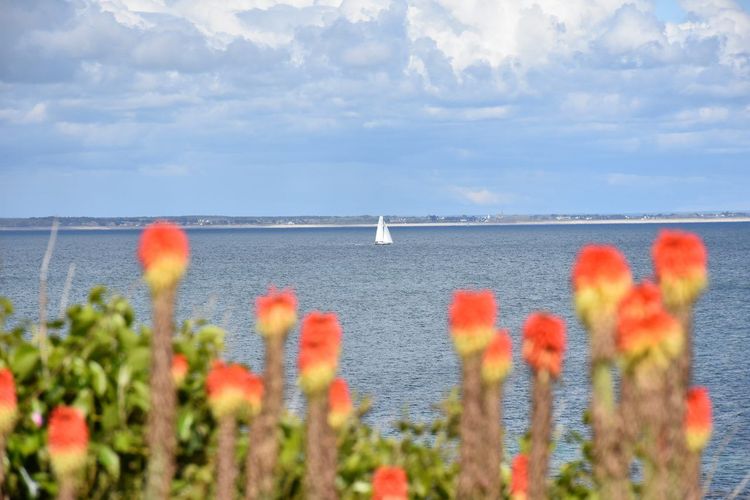
From the ferry terminal, just 45 minutes by boat separates you from the île de Groix, Brittany's second most populous island after Belle-Île. The ferry docks at Port-Tudy (Port-Tudy, 56590 Île de Groix, rated 4.6/5 on Google with 890 reviews), a tiny fishing harbor framed by colorful houses where langoustier boats have given way to pleasure yachts.
The full circuit of the island, around 25 km, is easily done by bicycle in a day, with an essential detour to the Grands Sables beach, one of the rare convex beaches in Europe, whose curved shape slowly shifts with each storm. The blue schist cliffs of the Pointe des Chats at the southern tip provide a striking contrast with the white sand of the island's northern shore.
Many visitors underestimate the time needed: factoring in the wait at the port, bike rental, and photo stops, a comfortable visit to Groix calls for a full day rather than a half-day. Take the first morning ferry, around 8 a.m. in summer, to avoid the midday crowds and catch the softest light on the cliffs.
Inland, the village of Groix is worth a stop for its church and converted canneries, while the Pen Men lighthouse at the western tip marks one of the most spectacular viewpoints on the entire Morbihan coast at sunset.
In practical terms, budget around 25 euros for a round-trip ferry ticket and 15 euros for a full-day bike rental. Ferry companies increase their sailings in July and August, but book ahead regardless: weekend tickets sell out fast, especially the last evening departure. Unlike Belle-Île, Groix remains largely spared from mass tourism outside the peak summer weeks, making it a particularly rewarding escape for those visiting Lorient and its surroundings over several days rather than on a quick day trip.
Port-Louis and Its Citadel: The Other Side of the Harbor
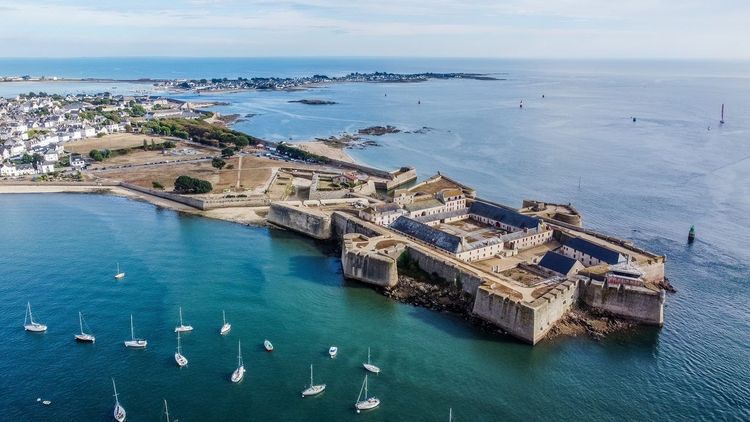
On the other side of the harbor, ten minutes by ferry from Lorient, the small fortified town of Port-Louis (Avenue du Fort de l'Aigle, 56290 Port-Louis, rated 4.5/5 on Google with 378 reviews) stands in sharp contrast to the modernism of Lorient's city center. Its citadel, begun in 1590 by the Spanish, taken over under Louis XIII and later remodelled by Vauban at the end of the 17th century, now houses two museums under one roof: the Musée national de la Marine and the Musée de la Compagnie des Indes.
This second museum traces the commercial history that gave Lorient its name: the city was founded in the 17th century to serve as home port for the ships of the French East India Company. Chinese porcelain, nautical charts, and scale models of merchant vessels tell three centuries of exchanges between Brittany and Asia — an angle that few visitors anticipate before they arrive.
The ramparts themselves can be walked freely, with views over the harbor entrance and the ferries passing to Groix. Allow half a day for the citadel and a stroll through the cobbled lanes of Port-Louis, where a few crêperies occupy former fishermen's houses.
The ferry shuttle connects Lorient to Port-Louis in about fifteen minutes, with departures roughly every half hour in high season. It is often the most memorable crossing of an entire stay, as the view of the submarine base and the sailing basins looks completely different from the water. For visitors who want to venture beyond central Lorient, Port-Louis is one of the most accessible day trips around the city, with a crossing costing under 3 euros from the marina — far quicker than the road detour by car.
The Beaches: From Larmor-Plage to Gâvres
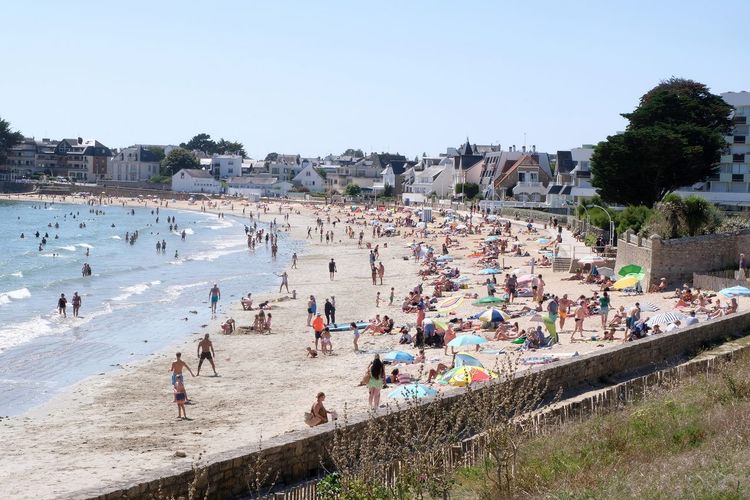
Lorient's coastal strip stretches across some fifteen kilometres of beaches, varying widely in quality and crowd levels depending on the season. At Larmor-Plage, the plage du Rohu (Boulevard du Rohu, 56260 Larmor-Plage, rated 4.5/5 on Google with 88 reviews) draws families and beginner surfers thanks to its moderate swell and a resident sailing school.
Further west, the commune of Gâvres marks the start of wild dunes that stretch all the way to Quiberon — a protected dune belt where swimming gives way to long coastal walks. Between the two, Guidel-Plages has established itself in recent years as the area's go-to surf spot, with more consistent waves than at Larmor.
In high season, it's best to arrive before 10 a.m. or after 5 p.m. to find a parking space within a ten-minute walk of the sand, especially at Rohu and Fort-Bloqué, the two beaches most popular with the locals themselves, easily combined with an afternoon on Ryo's Lorient audio-guided tour.
What to Do in Lorient When It Rains
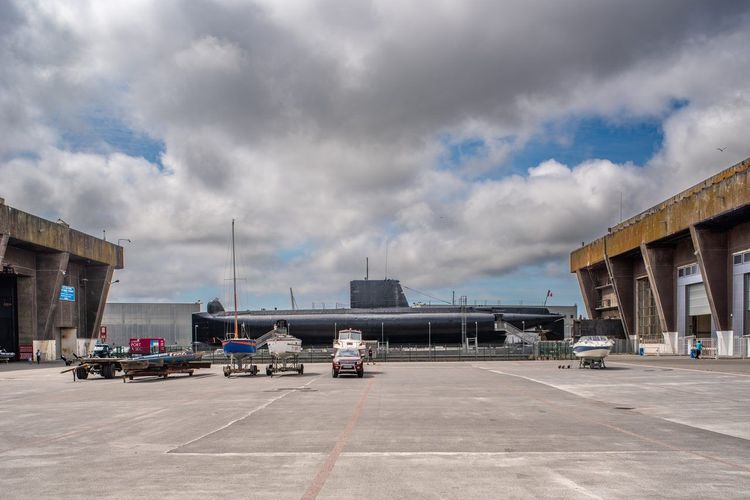
Southern Brittany is not immune to showers, and Lorient has enough to fill a day without ever opening an umbrella. The submarine base and the Cité de la Voile are almost entirely under cover, as is the Musée de la Compagnie des Indes in Port-Louis.
The city center cinema, the covered Merville market hall, and a few tea rooms around place Alsace-Lorraine round out a rainy afternoon nicely. Some locals also head to the modern and free media library near the marina, which offers views over the sailboats from its upper-floor bay windows.
Where to Eat in Lorient
Lorient benefits directly from its fish auction: seafood restaurants are plentiful and generally reliable, especially around the marina and rue du Port. Traditional crêperies remain a safe bet for a quick lunch between visits, with an average spend of around 12 to 15 euros.
For a more refined dinner, several addresses serve the catch of the day landed at Kéroman just hours earlier — a claim few coastal cities can make so literally. Kouign-amann and palets bretons are best found at the pâtisseries of the reconstructed center.
The covered market, open every morning except Monday, remains the best option for putting together a picnic to take to the beaches of Larmor or the Merville seafront — an economical choice that suits families staying for several days.
The Festival Interceltique: Two Weeks Like No Other
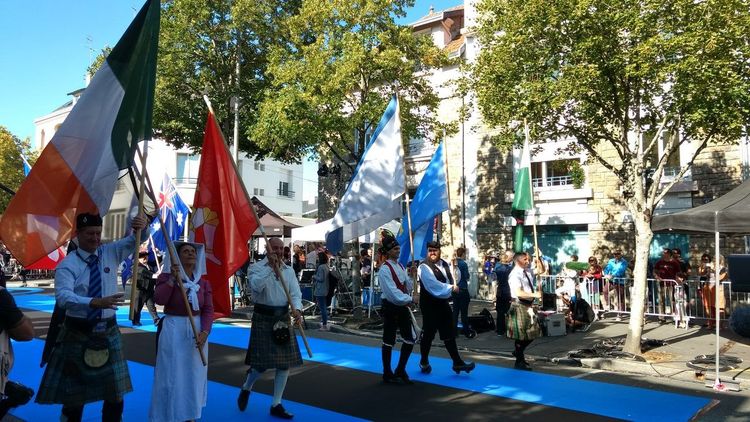
Every year in early August, Lorient transforms completely for ten days: the Festival Interceltique draws nearly 750,000 festival-goers to celebrate Celtic cultures, from Brittany to Scotland, passing through Galicia and Ireland.
If your visit coincides with this period, book accommodation and concert tickets several months in advance: the city, already busy in July and August, reaches its absolute capacity during the festival. Outside festival time, Lorient's cultural programming is more modest but continues year-round at the Grand Théâtre and a handful of live music venues.
Visiting Lorient in 1 Day: A Practical Itinerary
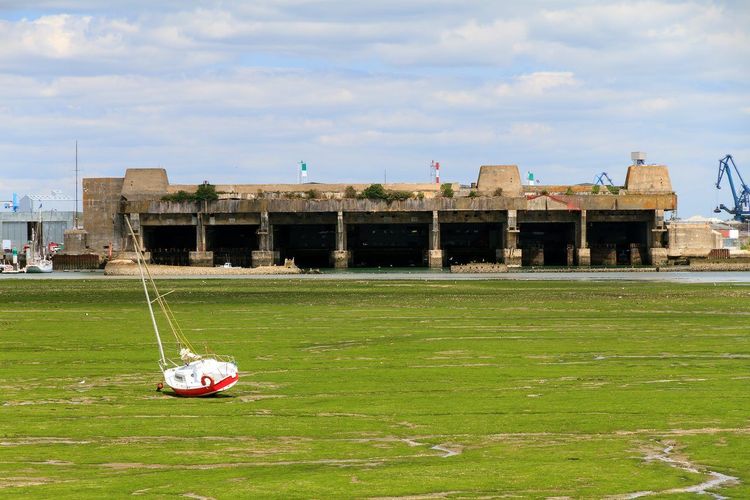
If you only have one day, it's better to give up on seeing everything and focus on a coherent thread rather than multiplying crossings. Start early in the reconstructed city center and place Alsace-Lorraine, before the streets fill up, then make your way to the Kéroman submarine base for the K3 visit, ideally in late morning.
Have lunch in the marina area, just a few minutes' walk from the Cité de la Voile Éric Tabarly, which you can visit in the afternoon if your combined ticket allows. At the end of the day, the ferry to Port-Louis makes for a short but spectacular final stop, with the view over the harbor at sunset.
Those who want to explore without a fixed schedule can rely on the Ryo app, whose audio-guided route lets you build your own walking itinerary through the reconstructed center, the port, and the Base, without depending on classic guided tours. It's a good option for families with children who don't enjoy keeping pace with a group.
If you have a second day, add the île de Groix: it's the excursion that takes the most time, but also the one that leaves the clearest memory once you're home.
Practical Info: Getting There and Budget
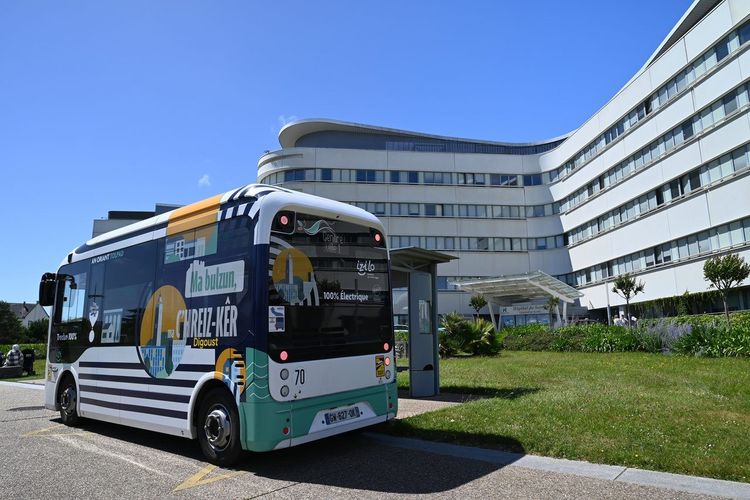
Lorient is served by direct TGV from Paris Montparnasse in just under three hours, or via Lorient Bretagne Sud airport, which has its main connections in summer. Once there, the CTRL bus network covers the main city center and coastal towns, with a single-journey ticket at around 1.50 euros.
To reach Groix or Port-Louis, the ferry shuttles depart from the marina, just a few metres from the SNCF train station, which makes organizing a car-free day very straightforward. Budget a daily average of 60 to 90 euros per person including accommodation, outside festival periods when prices rise noticeably.
The city center can be covered entirely on foot in half a day; save the car or bike for the beaches at Larmor and Gâvres, which are less well served by buses in low season.

FAQ
What should you see in Lorient in one day?
With just one day, focus on the reconstructed city center, the Kéroman submarine base, and the Cité de la Voile Éric Tabarly, all within a few minutes' walk of each other. If possible, end the day with a ferry crossing to Port-Louis to enjoy the sunset over the harbor. It's better to explore two or three sites in depth than to rush through everything.
What can you do in Lorient when it rains?
The submarine base, the Cité de la Voile, and the Musée de la Compagnie des Indes in Port-Louis are almost entirely indoors. The marina's media library and the tea rooms around the reconstructed center are also good options for a rainy afternoon without a car.
How do you explore Lorient on foot?
The reconstructed center lends itself very well to walking: allow about two hours to connect place Alsace-Lorraine, the marina, and the entrance to the submarine base. The Ryo app offers an audio-guided route along this itinerary, useful if you prefer to walk without following a human guide.
Do you need to book the ferry to the île de Groix?
Outside of July and August, crossings can usually be taken without a reservation, except during May bank holiday weekends or particularly sunny weekends. In high season, book at least the day before, especially for morning departures and the last evening ferries, which fill up quickly.
What can you do in Lorient this weekend?
A weekend gives you time to combine the city center and the submarine base on the first day, then take a trip to the île de Groix or Port-Louis on the second. If a one-off event coincides with your visit, such as a market or a regatta, it's often worth reorganizing your itinerary around that schedule rather than working around it.
Which villages are worth visiting around Lorient?
Port-Louis, Larmor-Plage, and Guidel are among the most pleasant towns to add to a stay in Lorient, each reachable in under thirty minutes from the center. Further out, the île de Groix rounds out a multi-day itinerary nicely for those who want to explore beyond the harbor.
Lorient cannot be reduced to a single monument: it is the combination of the raw concrete of Kéroman, the racing sailboats moored at the Base, the centuries-old trade recounted at Port-Louis, and the beaches stretching toward Quiberon that gives the city its distinctive character along the Morbihan coast.
Whether you have a single day or a long weekend, it's better to choose a guiding thread — the sea, or military history — rather than trying to tick every box. Knowing what to visit in Lorient ultimately depends on the time you have and what draws you most, whether that's military heritage, offshore racing, or escapes to Groix or Port-Louis. To freely organize your walking route through the reconstructed center, the Ryo app and its audio guide remain a useful resource for visiting Lorient at your own pace — a complement to this guide rather than a replacement.
À lire également