© Shutterstock
 Votre guide Ryo
Things to Do in Figeac in 2026: 22 Ideas to Explore the Town and Its Surroundings
What to do in Figeac when you have a day, a weekend, or longer? In Figeac, the streets of the historic centre bear names like Balène, Roquefeuil or Séguier, and beneath their rooflines hides a detail few visitors notice on a first pass: wide triangular openings called soleilhos, which were once used to dry hides and grain in the open air. This town of just over 9,000 inhabitants, set at the confluence of the Célé and the Lot in the Quercy, was the birthplace in 1790 of Jean-François Champollion, the man who first deciphered Egyptian hieroglyphics, and it continues to draw a strong cultural identity from that fact. The question deserves a serious answer, rather than a mere list of façades to photograph for social media. If Figeac does not yet have its own Ryo audio-guided tour, unlike other towns in the South-West, it has more than enough to fill a memorable short break.
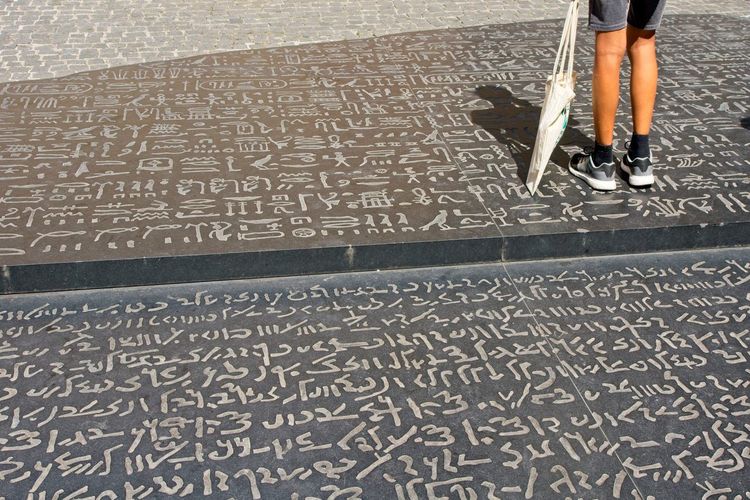
A museum that extends its exhibition through an underground tunnel opening onto a giant reproduction of the Rosetta Stone, engraved into the very paving of an entire square. An abbatial church that conceals, behind a discreet door, a group of near-life-size polychrome sculptures from the 17th century. A Saturday market that has occupied the town centre for centuries, where you can still buy farmhouse cabécous sold individually. Hilltop villages less than twenty minutes by road, where the houses seem to rest directly on the cliff face. Between old Figeac, the banks of the Célé and the surroundings of the Lot, this guide sets out 22 visit ideas — listed without any order of importance — to help you plan a stay without leaving anything to chance.
1. The Champollion Museum, Writings of the World
The Champollion Museum, Writings of the World (Place Champollion, 46100 Figeac, rated 4.4/5 on Google from 1,809 reviews) occupies the birthplace of Jean-François Champollion, the scholar born in Figeac in 1790 who became the first person to decipher Egyptian hieroglyphics, in 1822, using the Rosetta Stone as his key. Architect Alain Moatti redesigned the building in the early 2000s to open it onto a dozen rooms devoted to the history of writing systems around the world, from ancient Egypt to Chinese ideograms, by way of Mesopotamian cuneiform script and Phoenician alphabets.
The order of the visit often surprises first-time visitors. You begin in the room where Champollion grew up, a modest space above the family's former bookshop, before descending into underground galleries that trace, century by century, how humanity invented systems to fix thought onto stone, papyrus or clay. The route ends with a long glazed corridor that gradually opens to the outside air, onto the neighbouring square, in a staging conceived as a final act rather than a mere emergency exit.
The façade itself is worth pausing over before you go in: Alain Moatti clad it in a copper skin pierced with thousands of characters drawn from the major writing systems, a contemporary layer laid over the original medieval walls. By day or by night, when it is illuminated, this perforated surface sets the tone for what you are about to discover inside.
Each school year, hieroglyphic writing workshops welcome groups of children in a dedicated room — an activity also worth trying for curious adults who want to write their name in an Egyptian cartouche. The museum carries the Musée de France label, which guarantees the scholarly quality of its temporary exhibitions, held roughly twice a year and often linked to ancient Egypt or the comparative history of writing in other civilisations.
Allow 1h30 to 2 hours for a complete visit, longer if you linger over every facsimile. A reduced rate exists for visitors under 26, and entry is free for those under 18. The combined ticket with the neighbouring Place des Écritures is the most logical option, since the two sites literally extend one into the other. Check opening days before you visit: like many museums in the region, it closes on certain days outside the main season and adjusts its hours between winter and summer. If possible, avoid Saturday mornings: that is market day, and tourist footfall adds to the regular crowd of locals doing their shopping.
2. The Place des Écritures and Its Giant Rosetta Stone
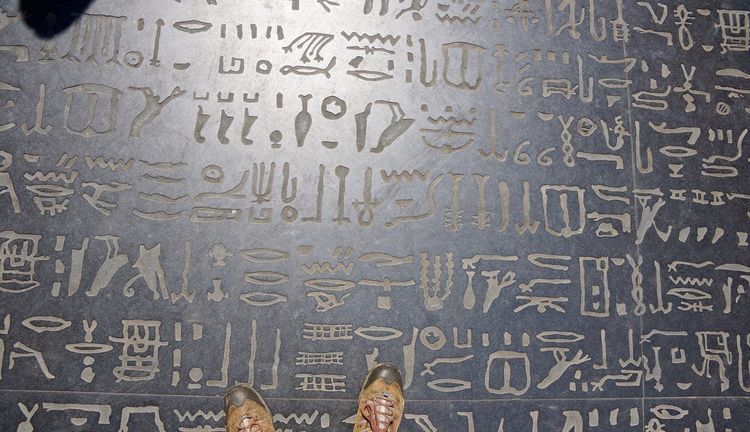
The Place des Écritures (Place des Écritures, 46100 Figeac, rated 4.5/5 on Google from 159 reviews) provides the closing act of the Champollion Museum visit with a monumental work by American artist Joseph Kosuth: a greatly enlarged reproduction of the Rosetta Stone, engraved into a slab of black granite that covers almost the entire surface of the square. The three original scripts — hieroglyphic, Demotic and Greek — are reproduced exactly, column by column.
The space is accessible at any hour, free of charge, making it an easy stop to include even in the evening or outside museum opening times. Many visitors walk across it at first without grasping its scale, before realising — once it is pointed out — that they are literally treading on one of the founding texts of modern Egyptology. Installed in the early 1990s, the work has since been regularly cited among the most significant contemporary art installations in public space in the Lot.
Take the time to climb the few steps that border the square: seen from above, the slab reads as a single whole, whereas at ground level you can only make out fragments. It is this play of scale — between the detail of the engraved signs and the dark mass of the whole — that gives the installation its full effect. A small reconstructed medieval garden laid out just beside it makes for a pleasant pause before plunging back into the lanes of old Figeac.
3. Wandering the Lanes of Old Figeac
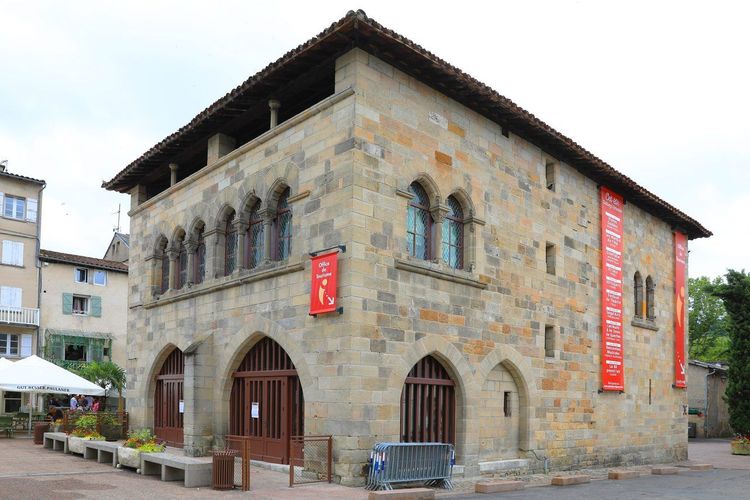
Classified as a Ville d'Art et d'Histoire, old Figeac (Rue Balène, 46100 Figeac, rated 4.6/5 on Google from 14 reviews) concentrates most of the town's medieval and Renaissance houses, largely spared by the major urban development works of the 19th and 20th centuries. The Rue Balène, Roquefeuil, Séguier and Delzhens form a dense enough network to fill a good hour's walk without a fixed itinerary.
Blonde limestone dominates the façades, but you will also spot exposed timber framing here and there, and ogee arches above carriage gates. Half-open inner courtyards are worth a discreet glance: several 14th-century townhouses still retain their original spiral staircases. Rue Balène in particular lines up some of the finest Gothic civic façades in town, including a 14th-century hôtel particulier that gave the street its name.
Old Figeac also lends itself to a gentle treasure hunt: the tourist office offers a heritage trail marked with explanatory panels that you can follow at your own pace. Look out for the remains of the Templar commandery and the many medieval shop fronts — those depressed-arch openings where merchants once set out their goods directly onto the street.
Wandering without a fixed plan remains, all the same, the best approach here. The historic centre is compact enough that you never stay lost for long, and its architectural surprises reveal themselves far more readily when you look up towards the rooflines than when you follow a preset tourist route.
4. Place Champollion, the Beating Heart of the Town
The Place Champollion (Place Champollion, 46100 Figeac) brings together cafés, terraces and shops beneath 15th-century timber-framed façades. This is where most visits to the historic centre naturally converge, between the museum that borders the square and the lanes that radiate out from it.
In the late afternoon, the low-angled light picks out the jettied upper storeys particularly well. Settle onto a terrace to watch the local life rather than crossing the square at a march: the neighbourhood rhythm is still visible here, from the regulars at the tabac to children playing after school.
The square also serves as a stage for several events during the Figeac summer season, from open-air concerts to performances at the theatre festival that marks the end of July. If your stay falls in this period, check the cultural programme: it is not unusual for a free show to be staged in the evening beneath the medieval façades, completely transforming the atmosphere of a space you will have discovered by day.
5. The Abbatial Church of Saint-Sauveur
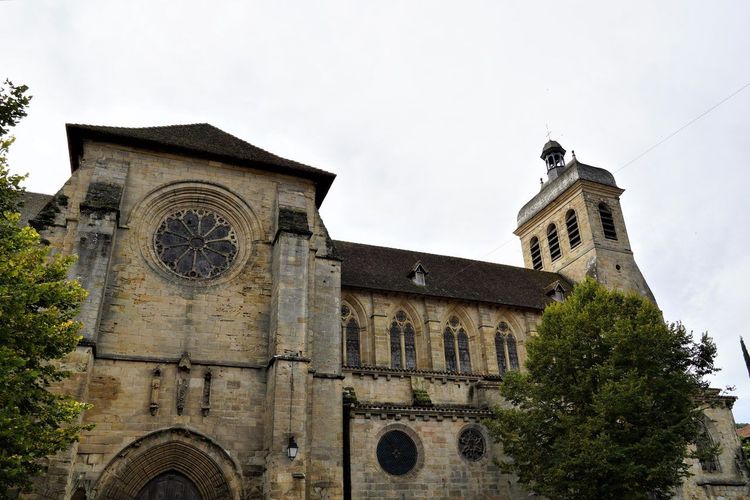
The abbatial church of Saint-Sauveur (Rue Saint-Thomas, 46100 Figeac, rated 4.6/5 on Google from 312 reviews) is the oldest surviving part of the Benedictine abbey founded in the 9th century, which was itself at the origin of the town's development. The current building, largely rebuilt after the Wars of Religion, combines a 12th-century Romanesque chancel with a Gothic nave and Baroque vaulting added in the 17th century.
The interior surprises with its scale: the imposing proportions are a reminder that this abbey once rivalled that of Conques for control of the pilgrimage routes to Compostela. The 17th-century liturgical furnishings, particularly the choir woodwork, are listed as historic monuments.
Entry is free year-round, and the church stays cool even in high summer, making it a welcome pause during a long walk through the historic centre. Opening hours vary depending on religious services: it is better to visit in the morning to be sure of access. Take the time to walk around the outside of the building: on the south side, the massive buttresses and traces of successive rebuilding tell, almost like an open book, the turbulent episodes the abbey lived through over the centuries.
6. The Chapelle Notre-Dame-de-Pitié
Adjoining the church of Saint-Sauveur, the Chapelle Notre-Dame-de-Pitié preserves an ensemble of polychrome wooden sculptures dating from the 17th century, depicting a life-size entombment scene. The fineness of the drapery and the expressiveness of the faces make it one of the most remarkable pieces of religious heritage in the Lot.
This former chapter house was converted into a chapel in the 17th century, and its painted decoration also deserves a look upward at the vaulting, often overlooked by visitors in a hurry. The sculptural ensemble, long remaining in relative obscurity, is today regarded as one of the major examples of Baroque statuary in the region.
Few visitors venture into this side chapel, which is often plunged in half-light — and that intimacy is part of what makes the discovery so striking. Give your eyes a few minutes to adjust to the low light before judging the details of the sculptural group: it is precisely in this semi-darkness that the realism of the faces comes into its own.
7. The Hôtel de la Monnaie
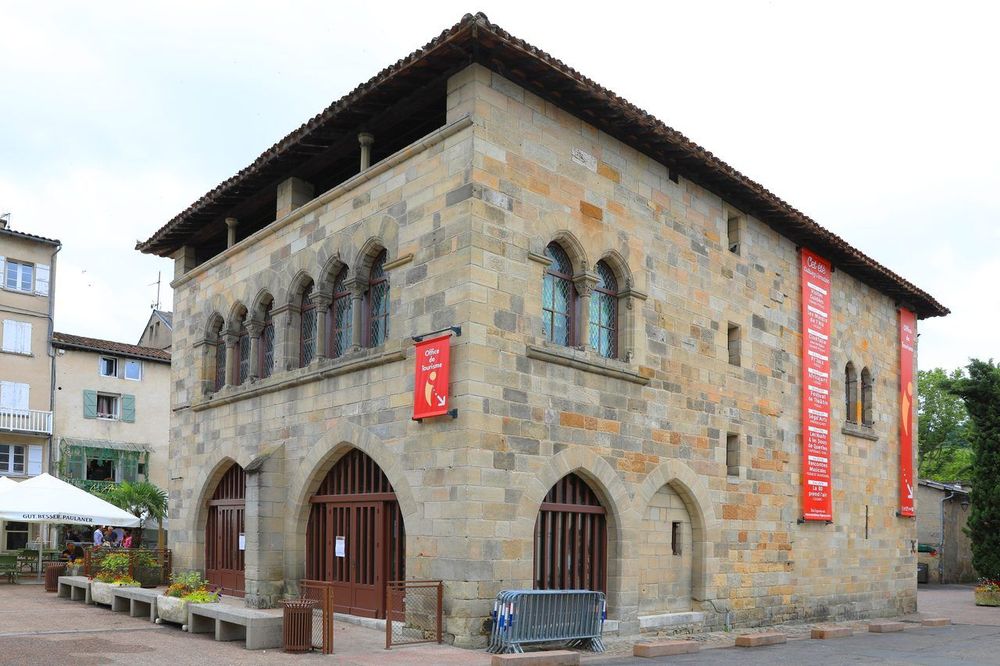
The Hôtel de la Monnaie (Rue Delzhens, 46100 Figeac, rated 3.6/5 on Google from 7 reviews), also known as the Musée du Vieux Figeac, occupies one of the oldest secular buildings in town, with a 13th-century Gothic façade pierced by paired windows. Despite its name, the building probably never served as an official mint: the designation is thought to date from a 19th-century misidentification.
Inside, a small museum traces the history of Figeac through scale models, everyday medieval objects and explanations of soleilho architecture. The visit takes about thirty minutes — an ideal complement to the Champollion Museum for anyone wanting to deepen their understanding of the local context without spending an additional half-day.
The façade, with its arcade gallery and colonnette windows, is among the most reproduced images of Figeac: it is one of the best-preserved examples of Gothic civic architecture in the South-West. The building also occasionally houses part of the town's tourist information services, making it a good starting point for picking up a map and a few tips before setting out to explore the centre.
8. The Soleilhos, an Architecture Unique in France
The soleilhos are the vast open lofts that crown the houses of old Figeac beneath round-arched arcades, originally used to dry hides, wool, grain and fruit — sheltered from the rain yet open to the breeze. Several dozen well-preserved examples can still be found, particularly around Rue Séguier.
This architecture, rare in France, is explained by the tanning and trading activity that made Figeac prosperous during the Middle Ages. The town, a commercial stopover on routes linking the Auvergne to the Toulouse region, needed these large airy drying sheds to process hides and store harvests: the soleilho is not an ornament but a concrete trace of a vanished economy.
Look up as you walk through the historic centre: these triangular openings or rows of arcades — today often glazed and converted into living spaces — remain the most characteristic architectural detail of the town. Once your eye is attuned, you will spot them everywhere, and this simple exercise in observation transforms an ordinary stroll into a genuine reading of Figeac's history.
9. The Saturday Morning Market
The Figeac market (Place Carnot, 46100 Figeac, rated 4.5/5 on Google from 321 reviews) is held every Saturday morning and spreads across much of the town centre, between producer stalls and a covered market hall. You will find foie gras, Quercy walnuts, farmhouse goat's cheeses and, in season, the black truffle from the Lot — for which several specialist markets are held in the region during winter.
Arriving before 10 a.m. remains the best advice for enjoying the market without the crowds, especially in summer when tourist footfall is added to the regular clientele. A smaller market also takes place on Tuesdays, aimed more at residents than passing visitors.
Beyond the shopping, the Saturday market functions as a social event in its own right: conversations between producers and customers, impromptu tastings, queues at the rotisserie stand. It is probably the most direct way of understanding what 'things to do in Figeac' really means to those who live here all year round, far beyond the monuments alone. Bring a shopping bag and some cash: many small producers do not accept card payments, and the best farmhouse cabécous often sell out before noon.
10. A Walk Along the Banks of the Célé
The Célé, the river that flows through Figeac before joining the Lot some twenty kilometres downstream, offers several kilometres of paved riverside walkways, particularly around the Pont Gambetta (Pont Gambetta, 46100 Figeac). The riverbanks alternate between shaded lawns and small fishing spots.
In the late afternoon, the light on the water and the reflections of the old façades create a very different atmosphere from that of the historic centre. It is also an excellent starting point for reaching the greenway on foot, further north, without having to get back in the car.
This walk is particularly well suited to a family outing: the riverbanks are flat, easily accessible with a pushchair, and dotted with benches. Bring something to nibble on from the morning market, settle down facing the water, and you will have one of the simplest and most pleasant picnics of your stay in Figeac.
11. Canoeing, Kayaking and Swimming on the Célé
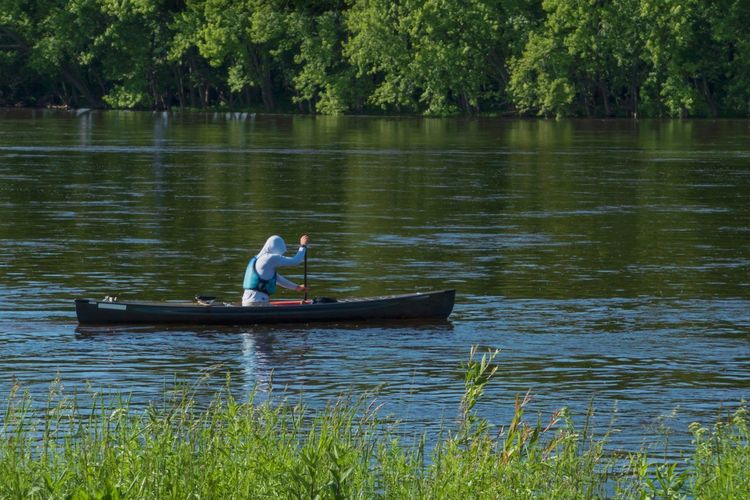
A water sports centre located on the Quai Bessières (Quai Bessières, 46100 Figeac) offers canoe and kayak hire for paddling the Célé over several kilometres, between low cliffs and small rapids that require no technical skill. Routes typically start upstream of the town for a one-to-two-hour descent.
The activity suits families as well as groups of friends, with no prior experience required. In peak season, it is worth booking the day before: morning slots, which are cooler, tend to go first. Most hire operators provide a shuttle to the put-in point and collect the boats at the finish, sparing you any complicated logistics.
If you are travelling with children, note that the Célé is also suitable for swimming on certain supervised stretches in summer, with shallow water and a moderate current. Check with the water sports centre for the permitted zones: these vary depending on the river level, which is generally lower and calmer in July and August.
12. Cycling the Greenway
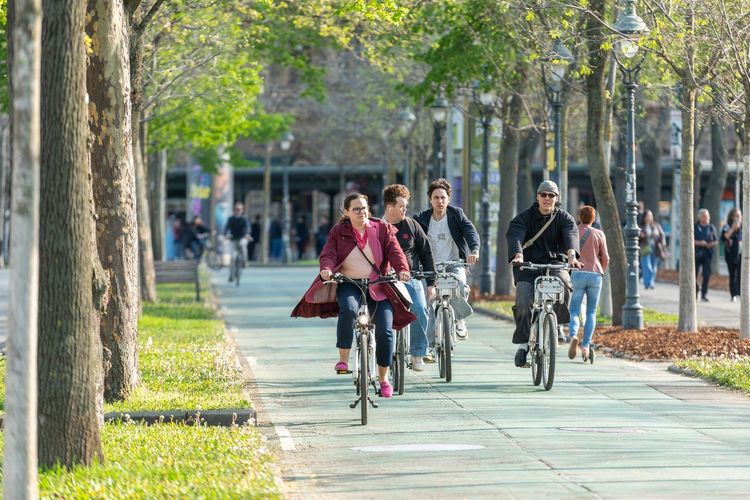
Built along the route of a former railway line, the Voie Verte du Haut-Quercy connects Figeac to several neighbouring communes on a flat, car-free surface. The most practical starting point is near Figeac station (Gare de Figeac, 46100 Figeac, rated 3.5/5 on Google from 46 reviews), where several hire shops offer standard and electric-assist bicycles.
The route suits all fitness levels, including families with children, and passes through bocage landscapes typical of the Quercy. Allow half a day for a relaxed return trip, with a picnic stop at the halfway point.
The absence of significant gradients and motor traffic makes this greenway one of the most restful outings in the area: you can ride side by side, chat, stop at viewpoints over the countryside whenever you like, without ever having to watch out for traffic. To extend the day, some sections connect to longer cycling routes that descend towards the Lot valley — enough to turn a family ride into a genuine two-day cycling escape.
13. On the Camino de Santiago
Figeac is a recognised stop on the GR65, the variant of the Puy-en-Velay route leading to Compostela, which explains the regular presence of pilgrims recognisable by their walking staff and the scallop shell sewn onto their rucksack. The town has several dedicated accommodations, from association-run gîtes to standard hotels.
Even without any intention of walking all the way to Spain, following the red-and-white waymarking for a few kilometres out of town offers a different perspective on Figeac, seen from the surrounding heights. The path first crosses the historic centre before climbing into the hills: within an hour's walking you already reach open viewpoints over the rooftops and the Célé valley — an excellent taster if you are unsure about venturing further.
Ryo is developing audio-guided tours in several towns across the greater South-West; Figeac does not yet feature among them, but its status as a historic stop on a thousand-year-old pilgrimage route ticks every box needed to qualify one day. In the meantime, the audio-guided tour in nearby Rodez offers a comparable experience for lovers of old stone streets.
14. Cardaillac, Village of Medieval Towers
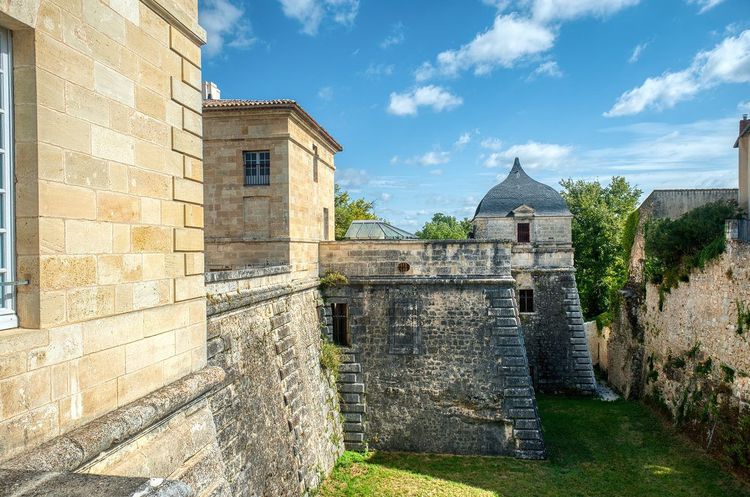
About fifteen minutes by car, Cardaillac (Le Bourg, 46100 Cardaillac, rated 4.6/5 on Google from 180 reviews), listed among the Plus Beaux Villages de France, retains three 12th-century watchtowers that once dominated a vast network of fortifications now largely gone. The village, perched on a rocky spur, can be explored in about an hour's walk through cobbled lanes and remnants of ramparts.
A small museum of folk arts and traditions, housed in a former fortified manor, rounds off the visit with a collection of 19th-century agricultural and craft tools. The village remains quiet even in summer, making it a restful alternative to the better-known sites of the Lot valley.
Cardaillac is also distinguished by its culinary tradition: several producers keep alive the culture of the chestnut, long a staple food of the Quercy, and a festival dedicated to it is held in autumn. If your visit coincides with one of these events, you may get to taste chestnuts roasted on the spot — a flavourful way to close your discovery of the village.
15. Capdenac-le-Haut, the Hilltop Village
Capdenac-le-Haut (Le Bourg, 46100 Capdenac, rated 4.6/5 on Google from 206 reviews), about ten minutes from Figeac, sits on a rocky promontory encircled on three sides by a meander of the Lot. Local legend associates the site with Uxellodunum, the last Gallic stronghold against Caesar's troops, though archaeologists remain divided on this identification.
The belvedere laid out above the village offers one of the finest panoramas in the valley, with the Lot tracing an almost complete loop far below. A medieval underground refuge, the Fontaine des Anglais and a 13th-century fortified gateway round out a visit that takes about an hour and a half.
Like Cardaillac, Capdenac-le-Haut is listed among the Plus Beaux Villages de France, and its peaceful atmosphere contrasts sharply with the crowds at Saint-Cirq-Lapopie. Take the time to sit on a terrace on the central square: the village moves at a slow pace, and it is precisely that tranquillity — just ten minutes after leaving Figeac — that makes it an ideal late-afternoon escape.
16. The Pech Merle Cave
About thirty minutes by road, the Pech Merle cave (Le Combel, 46330 Cabrerets, rated 4.7/5 on Google from 3,357 reviews) houses one of the most complete prehistoric cave art ensembles in Europe, with paintings of dappled horses estimated to be around 25,000 years old. The cave is further distinguished by spectacular natural formations — calcite discs and stalactite shapes — that rival the painted works visually.
Visits are conducted in accompanied groups only, with a limited daily capacity to protect the site: booking several days in advance in high season is not excessive. An adjacent interpretation museum traces the archaeological context of the discovery, made in 1922 by a group of teenage boys from the village.
Beyond the spotted horses, look for the negative hand prints and, above all, the fossilised footprints of a prehistoric teenager preserved in the clay for millennia: few decorated caves offer such direct contact with the gestures of our ancestors. This is what sets Pech Merle apart from reconstructed sites like Lascaux — here you walk through the real cave, beneath the real paintings.
Allow 1 hour to 1h15 for the underground guided tour, at a constant temperature of around 13 degrees Celsius year-round — something to bear in mind when dressing, even in the middle of summer.
17. Saint-Cirq-Lapopie
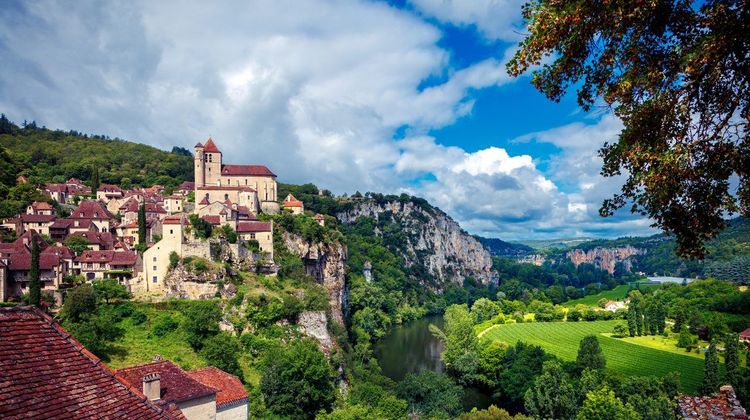
Frequently cited among the most beautiful villages in France, Saint-Cirq-Lapopie (Le Bourg, 46330 Saint-Cirq-Lapopie, rated 4.8/5 on Google from 9,500 reviews) clings to a cliff face towering some hundred metres above the Lot, just under an hour's drive from Figeac. André Breton owned a house here from the 1950s onwards, won over by the peace of a place he considered preferable to anywhere else in the country.
The cobbled lanes, reserved for pedestrians in the historic core, climb between half-timbered houses and craft workshops — a tradition inherited from the wood-turners who made the village's reputation as far back as the Middle Ages. The view from the ruins of the castle at the very top is worth the effort of the climb: the river winds below for several kilometres, all visible in a single glance.
To extend the visit, descend to the towpath cut into the cliff face below the village: this passage carved through the rock in the 19th century runs along the Lot and provides a spectacular perspective looking up at the houses above you. The walk, flat and shaded, makes a pleasant contrast with the steep climb to the castle.
Avoid midday in July and August, when tourist coaches saturate the main car park. Arriving in late morning or late afternoon allows you to enjoy the village in considerably more comfortable conditions.
18. Marcilhac-sur-Célé and Its Abbey
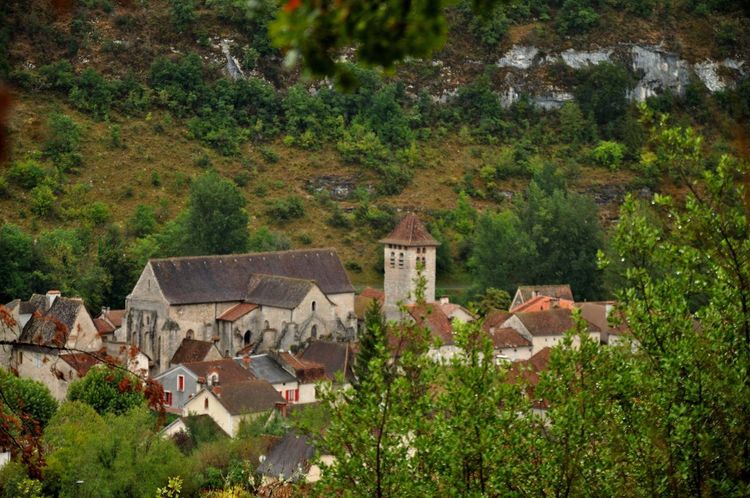
About twenty minutes along the Célé valley, Marcilhac-sur-Célé (Le Bourg, 46160 Marcilhac-sur-Célé) retains the romantic ruins of a Benedictine abbey founded early in the Middle Ages, which long rivalled that of Rocamadour for control of local relics and pilgrimage routes.
The Romanesque chapter house, still roofed, contrasts with the nave that has been open to the sky since the destructions of the Wars of Religion. The village itself, nestled against the cliff, retains a far more rural atmosphere than Saint-Cirq-Lapopie, with much lower visitor numbers.
The countryside around Marcilhac ranks among the most beautiful landscapes in the Célé valley, with limestone cliffs pockmarked with caves and walking paths that climb towards the causse plateaux. If you have a little time, push on to the viewpoints above the village: the mosaic of lauze rooftops and abbey ruins, seen from above, encapsulates in a single image the unspoilt charm of this valley.
19. Cajarc, Between the Lot and Contemporary Art
Cajarc (Le Bourg, 46160 Cajarc, rated 4.5/5 on Google from 230 reviews), about thirty minutes from Figeac along the Lot, owes part of its reputation to the writer Françoise Sagan, who was born here in 1935, and to the Maison des Arts Georges Pompidou, a contemporary art centre in the heart of the village. The venue, named after the former President of the Republic whose family originated from the region, organises several temporary exhibitions each year and is one of the most active contemporary art spaces in the Lot.
The Saturday morning market — more modest than the one in Figeac — and the medieval arcaded houses of the old town complete a stop that pairs well with a canoe descent of this stretch of the Lot. The village also retains the remains of an ancient castle and a remodelled Romanesque church, to discover on a free-form stroll.
Cajarc also offers an interesting contrast with the purely heritage-focused villages nearby: here, contemporary creation enters into dialogue with old stone, and it is not unusual to stumble upon an art installation in an unexpected setting. Even if modern art normally leaves you cold, give it a chance: the programme, demanding yet accessible, often yields pleasant surprises.
20. The Château de Larroque-Toirac
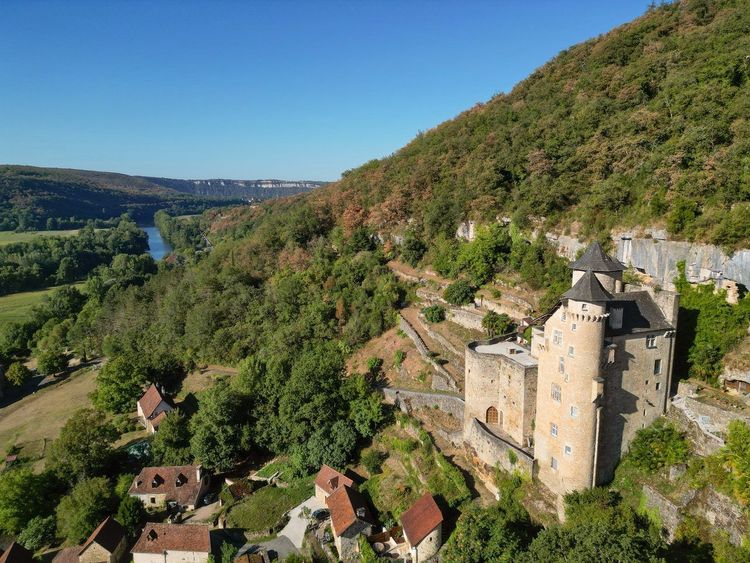
The Château de Larroque-Toirac (Le Bourg, 46160 Larroque-Toirac, rated 4.5/5 on Google from 332 reviews) overlooks the Lot from a rocky spur, with construction elements spanning from the 11th to the 17th century. Its towers and curtain walls bear witness to the many modifications brought about by the Anglo-French wars and subsequently the Wars of Religion.
The guided tour, available in high season only, gives access to furnished rooms still inhabited by the owning family, lending the place a livelier character than most châteaux open to the public in the region.
Clinging to the rock face, the castle seems to be an extension of the cliff itself: from the road running alongside the Lot, the silhouette of its square keep forms one of the most striking images in the valley. Allow about an hour for the guided visit, and check opening days before making the trip, as the calendar is most often limited to the summer months.
21. Faycelles, the Village That Looks Out over the Valley
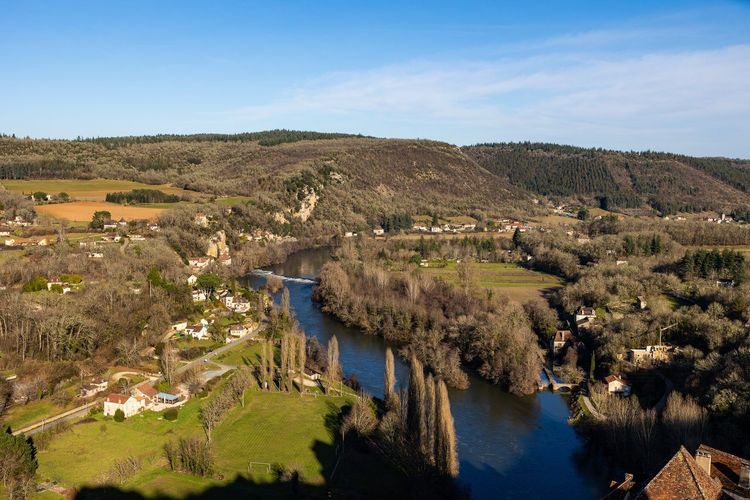
Perched on a promontory about fifteen minutes from Figeac, Faycelles (Le Bourg, 46100 Faycelles, rated 4.6/5 on Google from 70 reviews) offers an unobstructed view over the Lot valley and, on clear days, the first foothills of the Massif Central. The village, which has remained modest in size, can be walked through in about twenty minutes.
The 14th-century fortified church and a handful of old houses make up most of the built heritage, but it is above all the panorama from the orientation table that justifies the detour, particularly at sunset.
Faycelles also lies on the GR65 route: pilgrims to Compostela stop here after leaving Figeac, and the village retains that stopover vocation with a few accommodation options and a peaceful atmosphere. If you are looking for a quiet afternoon walk just a few minutes from town, it is one of the most reliable addresses in the area.
22. The Gastronomy of the Quercy in Figeac
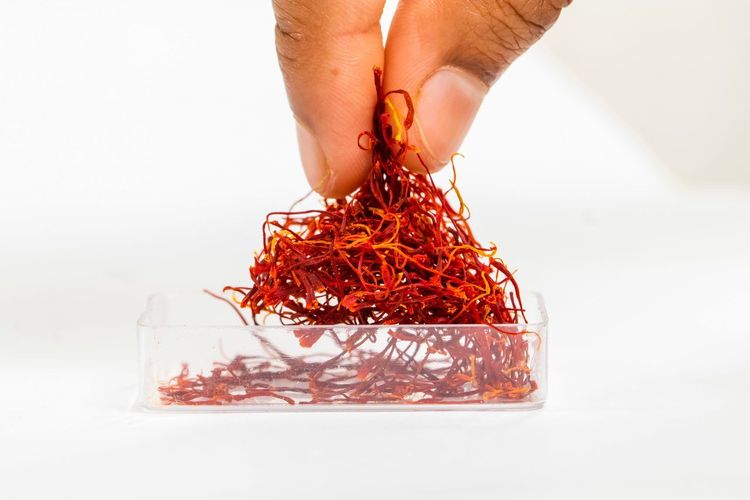
Between foie gras, walnuts, prunes and Quercy saffron — grown by a handful of local producers for about ten years — the food scene in Figeac draws on products that are well known far beyond the département. The gâteau à la broche, a speciality slowly cooked while turning in front of a wood fire, remains a curiosity that several pâtisseries in town still make using the traditional method.
Several restaurants in the historic centre offer menus built around these local products, often served in vaulted rooms dating from the 15th century. Book for Friday and Saturday evenings during the tourist season: the best addresses fill up from early afternoon. For a quicker meal, the Saturday market stalls let you assemble a picnic to take away to the banks of the Célé — a simple and affordable option.
Do not leave without trying the cabécou, the small aged goat's cheese typical of the Quercy, or the wines of the Lot valley, including the famous Cahors — a deep, structured red produced less than an hour's drive away. Many producers offer tastings, and several wine merchants in the town centre will be happy to guide you according to your tastes: a pleasurable way of prolonging, once you are home, the memory of your time in Figeac.
Planning Your Visit to Figeac
Figeac is easy to reach by train: the station, on the line linking Toulouse to Brive, puts the town about two and a half hours from the regional capital and connects it to the main rail network. By car, allow roughly two hours from Toulouse and slightly less from Rodez or Cahors. Once there, most of the historic centre's sites can be visited on foot: the medieval core is pedestrianised or has very restricted traffic, and car parks are concentrated just on the outskirts, particularly along the Célé.
Which season to choose? Spring and early autumn offer the best balance: soft light on the blonde stone, pleasant terraces, surrounding villages still quiet. Summer concentrates the events — festivals, night markets — but also the crowds, particularly at Saint-Cirq-Lapopie and the Pech Merle cave, where booking becomes essential. Winter, quieter and more intimate, lends itself to truffle markets and museum visits out of the weather.
For a first visit, one day is enough to cover old Figeac, the Champollion Museum and the Place des Écritures. Two to three days will give you time to add a canoe descent of the Célé, a cycling outing on the greenway and two or three hilltop villages. Bear in mind that everything here lies within a thirty-minute drive: you can base yourself in Figeac and explore in all directions without ever retracing the same route.
FAQ
What can you do in Figeac today?
The historic centre, the Champollion Museum and the Place des Écritures can be visited year-round without mandatory booking. For a spontaneous outing, a stroll through old Figeac followed by a break on a terrace at Place Champollion remains the simplest option, rounded off if time allows with a walk along the banks of the Célé.
What can you do in Figeac this weekend?
A weekend allows you to combine the historic centre on Saturday morning — market day — with a trip to Saint-Cirq-Lapopie or Capdenac-le-Haut on Sunday. Prehistory enthusiasts would do better to book ahead for the Pech Merle cave, whose slots fill up quickly in season.
What can you do in Figeac when it rains?
The Champollion Museum, the Hôtel de la Monnaie and the abbatial church of Saint-Sauveur offer several hours of indoor visiting. The Pech Merle cave, at a constant temperature year-round, is also a pertinent option in bad weather, as are the restaurants in the historic centre for an extended lunch break.
How much time should you allow to visit Figeac?
One day is enough to cover the essentials of the historic centre, the Champollion Museum and the Place des Écritures. Allow two to three days to include the surrounding villages — such as Cardaillac, Capdenac-le-Haut or Saint-Cirq-Lapopie — without rushing.
What day is the Figeac market held?
The main market is held every Saturday morning on Place Carnot and in the adjacent streets of the historic centre. A smaller market, more frequented by locals, also takes place on Tuesday mornings.
What can you do in Figeac and its surroundings in one day?
Morning in old Figeac and at the Champollion Museum, lunch near Place Champollion, then an afternoon devoted to a nearby village such as Cardaillac or Capdenac-le-Haut depending on the time available and mode of transport.
Is Figeac a stop on the Camino de Santiago?
Yes, Figeac is a recognised stop on the GR65, a variant of the Puy-en-Velay route. The town has several dedicated pilgrim accommodations and the waymarking passes directly through the historic centre before heading down into the Célé valley.
Figeac cannot be reduced to a single highlight: it is the accumulation of details — the soleilhos glimpsed by looking up, the Rosetta Stone engraved underfoot, the Saturday market restoring its centuries-old rhythm to Place Carnot — that builds the interest of a stay here. The surrounding villages, from Cardaillac to Saint-Cirq-Lapopie, naturally extend this exploration without ever requiring you to travel more than half an hour by road.
Until a dedicated Ryo audio-guided tour of the town eventually arrives, keep this list to hand on your next stop in Figeac: between the historic centre, the banks of the Célé and the Lot valley, there is more than enough to fill several days without ever revisiting the same place twice.