© Shutterstock
 Votre guide Ryo
The 15 Most Beautiful Villages in the Hautes-Alpes to Discover in 2026
The most beautiful villages in the Hautes-Alpes often escape standard itineraries. Department 05 is one of the least populated in France, yet it concentrates along 160 kilometres a density of heritage that few alpine territories can rival: villages perched above 2,000 metres, UNESCO-listed fortified towns, and Provençal hamlets bathed in lavender. To explore the region from the north, the Ryo audio guide of Grenoble, with 19 audio stops over 5.8 km, lays the alpine historical groundwork before you head south.
This selection of 15 villages covers the entire department: from the Queyras, where Saint-Véran exceeds 2,040 metres and lines up its three-century-old larch-wood houses, to the lavender hills of Rosans on the Provençal border. In between: a Vauban citadel inscribed on the World Heritage List in Briançon, a high-mountain glacier reachable by cable car from La Grave, and the turquoise waters of the Clarée valley at Névache, a torrent that hikers have only been discovering for a few summers.
1. Saint-Véran, the Highest Permanently Inhabited Village in Europe
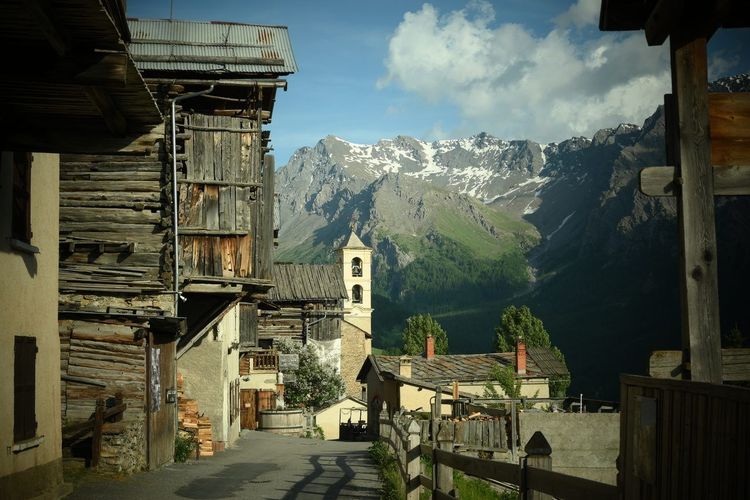
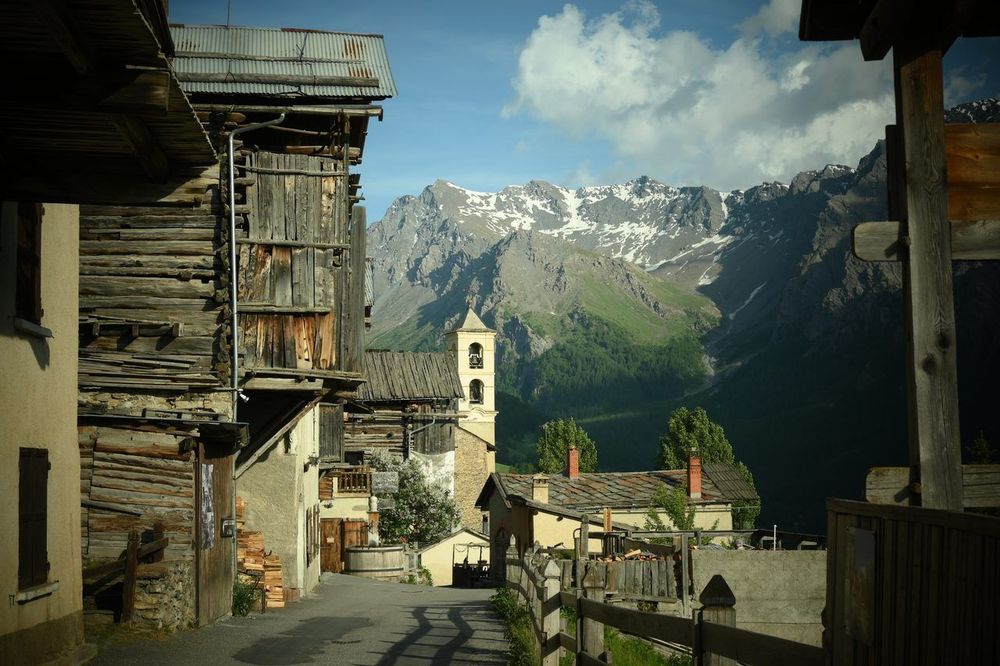
Saint-Véran (Route du Queyras, 05350 Saint-Véran, rated 4.7/5 on Google from 1,200 reviews) has to be earned. At 2,042 metres above sea level in the Queyras, this village is officially the highest permanently inhabited village in Europe — a title recognised by geographers since the early twentieth century. The air is thin, the sky of exceptional photometric purity, and the starry nights allow the Milky Way to be seen with the naked eye from the main street. The Observatoire Astronomique de Saint-Véran, installed on the Pic de Château Renard at 2,930 metres, is one of the rare public observatories in Europe at this altitude.
The village's architecture follows a strict vernacular logic, refined over centuries to withstand winters reaching minus 30°C: a dry-stone ground floor for animals, a larch-wood upper floor for the inhabitants. This wood, blackened by sunlight and high-altitude UV rays, is the hallmark of the Queyras. Naturally resistant to fungi and insects, it lasts several centuries without treatment. Some of the beams in today's houses date from the 17th century. Around fifteen sundials engraved on façades are scattered throughout the village, a legacy of the Queyras's long sunny days — the area claims 300 days of sunshine per year, more than Nice.
For hikers, the trails around Saint-Véran open onto high pastures with grazing flocks in July and August. The path to the Col de Saint-Véran (2,844 m) takes around 3 hours return from the village, with a panorama over the Italian Alps in clear weather. In winter, the Molines-Saint-Véran Nordic ski area offers 25 km of marked trails. Prefer a visit outside July and August: in June and September, the village lanes are almost empty and the raking dawn light on the larch trees offers photographic conditions impossible to find in peak season.
2. Briançon, Vauban Citadel and Highest Town in France
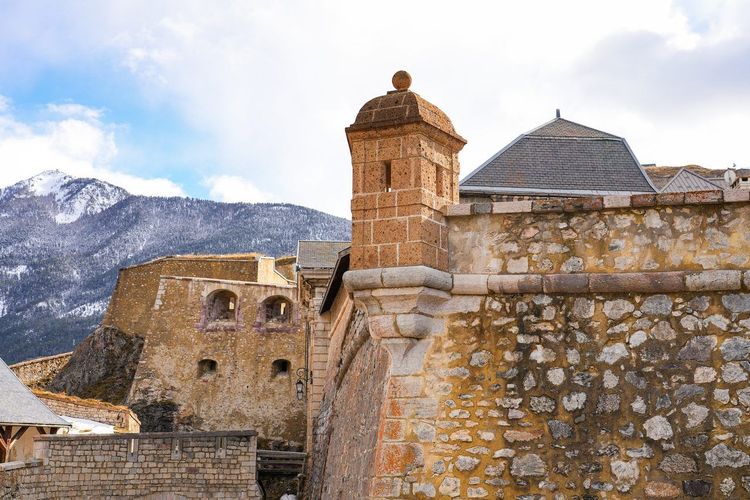
Briançon is the highest town in France, at 1,326 metres above sea level — a record often cited without fully appreciating what it means in terms of urban planning. The Old Town crowns a rocky spur from which views extend over four converging alpine valleys, and its fortifications have been listed as a UNESCO World Heritage Site since 2008, as part of the transnational Vauban Fortifications site.
Military architect Sébastien Le Prestre de Vauban designed the defensive system from 1692 onwards, after Louis XIV decided to secure the route to Italy via the Col de Montgenèvre. The system comprises the citadel, the Fort des Salettes, the Fort du Randouillet and the Redoute des Salettes — four works that defend one another from their spur positions. For a visitor with an hour to spare, the walk along the ramparts from the Porte Pignerol to the Porte d'Embrun offers the finest views over the surrounding ridges. The Grande Gargouille, the main street of the Old Town, descends steeply over 300 metres, lined with medieval houses and a running-water channel — a functioning irrigation system dating from the 15th century.
Do not miss the Collégiale Notre-Dame-et-Saint-Nicolas, whose baroque façade contrasts sharply with the military austerity of the ramparts. Briançon is also a versatile summer base: the Parc Naturel Régional du Queyras opens up 20 km to the south-east, and the Serre-Chevalier ski area — one of the largest in the French Alps with 250 km of pistes — begins virtually at the town's gates. For accommodation, the historic centre has several characterful hotels housed in former 18th-century buildings. Book several weeks in advance for July and August.
3. La Grave, between Glacier and Unspoilt Rural Architecture
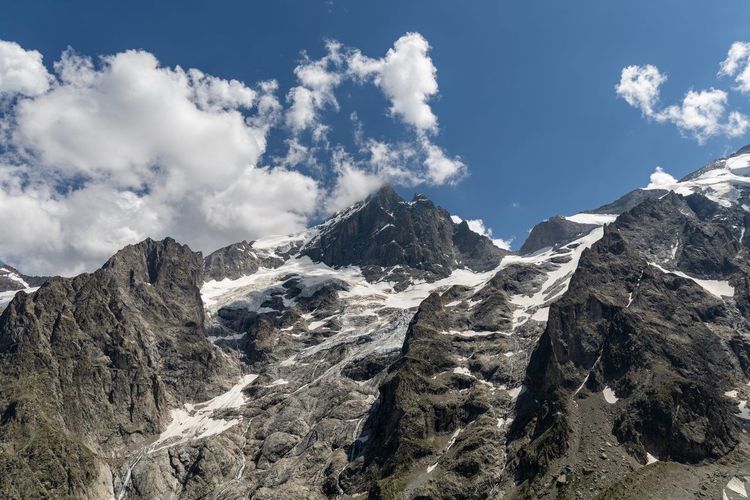
At the entrance to the Parc National des Écrins, La Grave immediately strikes visitors with its topography. From the village at 1,526 metres, the north face of La Meije — at 3,984 metres one of the most technically demanding summits in the French Alps — rises less than 4 kilometres away as the crow flies. This immediacy between village and high mountain is almost intimidating. It is precisely what has made La Grave a reference destination for mountaineering since the first ascent of La Meije by Emmanuel Boileau de Castelnau in 1877.
The La Grave cable car, commissioned in 1976, climbs to 3,200 metres in two stages and gives access to one of the most demanding high-mountain ski areas in the Alps. This is not a conventional groomed ski area: no marked pistes, no grooming — only glacier couloirs for experienced skiers accompanied by a certified mountain guide. In summer, the cable car remains open for hikers and glacier observers who wish to approach the Glacier de la Girose without mountaineering equipment. The village itself retains authentic rural architecture: grey stone houses, running-water fountains, and a 12th-century church topped by a bulbous alpine-influenced bell tower. The atmosphere remains the very opposite of the big resorts. Several family-run guesthouses and hotels perpetuate a tradition of mountain hospitality dating back to the Belle Époque of the English alpinists.
4. Névache, the Jewel of the Clarée Valley
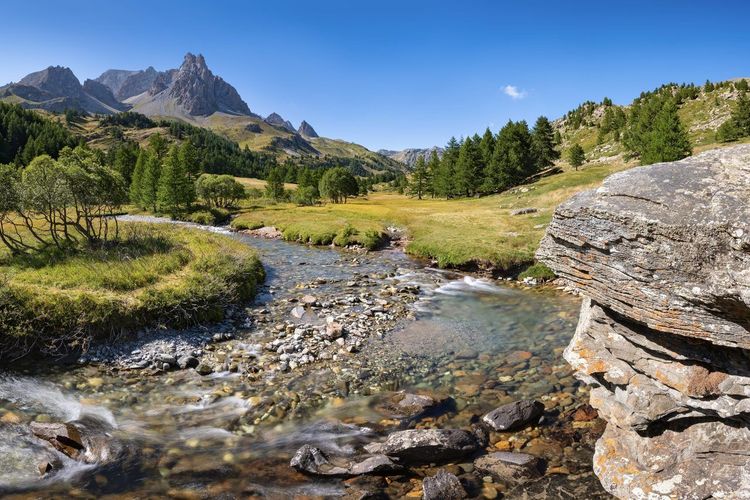
Névache (Route de la Clarée, 05100 Névache, rated 4.7/5 on Google from 206 reviews) has to be earned twice: first by the road that follows the Clarée valley from Briançon over 25 km, sometimes closed in winter between December and March, and then by the slow pace you must impose on yourself to truly see what the village has to offer. For Névache does not reveal itself at first glance.
The Clarée valley is classified as a Natura 2000 special protection area. The river of the same name gives the village its dominant colour: an intense turquoise-green in June, when snowmelt swells the flow of the lateral torrents. Some of the chalets in the hamlet of Névache-le-Haut date from the 17th century and rank among the best-preserved rural ensembles in the southern Alps. The baroque church of Saint-Marcellin, with its trompe-l'œil painted bell tower and 18th-century interior frescoes, is one of the most complete examples of alpine baroque art in the department.
The valley offers walks for all levels. The botanical trail running alongside the Clarée (10 km return, PR) crosses meadows where more than thirty species of alpine flowers bloom from June to August. For experienced walkers, the Col des Thures (2,194 m) is reached in around 3 hours from Névache and opens onto a sweeping view over the upper Durance. Note: car access to the upper hamlet is subject to a mandatory shuttle service in July and August — check the details before you set off.
5. Mont-Dauphin, Vauban's Pink Fortress Village
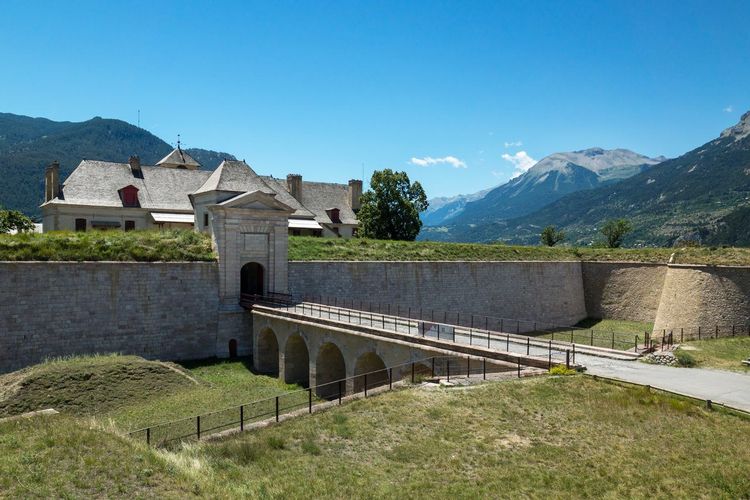
Mont-Dauphin (Cité de Mont-Dauphin, 05600 Mont-Dauphin, rated 4.5/5 on Google from 920 reviews) is one of the least-visited Vauban sites in the Hautes-Alpes, and arguably one of the most fascinating. This fortress village, set on a rocky spur at the confluence of the Guil and the Durance, was built from scratch from 1693 on the orders of Louis XIV, following Vauban's plans, to control the entrance to the Queyras from the lower valley.
Listed as a UNESCO World Heritage Site since 2008 as part of the same ensemble as Briançon, the village is surrounded by ramparts built in Guillestre pink stone — a warm and singular hue, sourced from local quarries, that contrasts sharply with the grey typically associated with military fortresses. Inside the walls, the ensemble is remarkably intact: 18th-century barracks, an arsenal, a powder magazine and a garrison church coexist with around a hundred permanent residents who still live within the walls. The guided tour offered by the Centre des Monuments Nationaux from June to September lasts around 1h30 and gives access to buildings that are normally closed. From the ramparts, the view over the confluence of the Guil and the Durance is among the most spectacular in the department. Mont-Dauphin is easily visited from Guillestre, 4 km away, where shops and accommodation can be found.
6. Le Monêtier-les-Bains, Thermal Springs at the Foot of the Glaciers
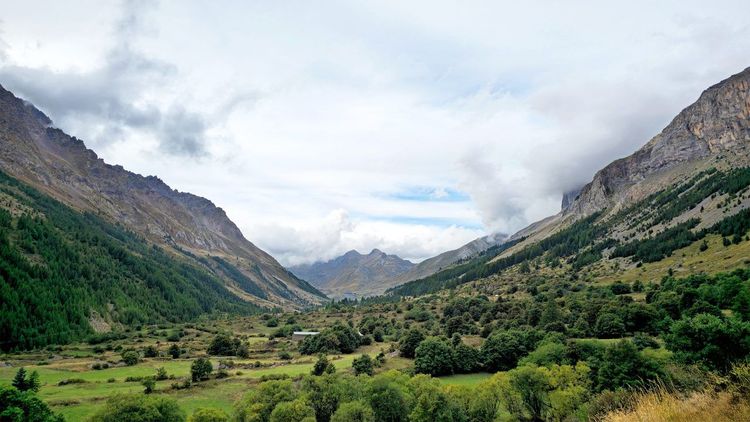
Le Monêtier-les-Bains (Route de Grenoble, 05220 Le Monêtier-les-Bains, rated 4.4/5 on Google from 640 reviews) is administratively part of the commune of Serre-Chevalier, without resembling it in the slightest. While neighbouring resorts display their upmarket residences and ski lifts, Le Monêtier has retained the look of a traditional alpine village: an arcaded main street, a baroque church, stone fountains and houses with painted shutters.
The thermal springs of Le Monêtier have been exploited since Roman antiquity. Les Grands Bains du Monêtier offer outdoor pools at 35°C, a particularly striking experience in winter, surrounded by snow beneath a high-altitude sky. The establishment also has indoor bathing areas, steam baths and family pools, open all year round. The village is also one of the gateways to the glaciers in the northern sector of Serre-Chevalier. In summer, the road to the Col du Lautaret, open at 2,058 metres and one of the most beautiful in the French Alps, starts here. The Jardin Botanique Alpin du Lautaret, 10 km away, is home to more than 2,000 species of mountain plants from around the world — a detour not to be missed between June and August.
7. Embrun, Medieval City on Lac de Serre-Ponçon
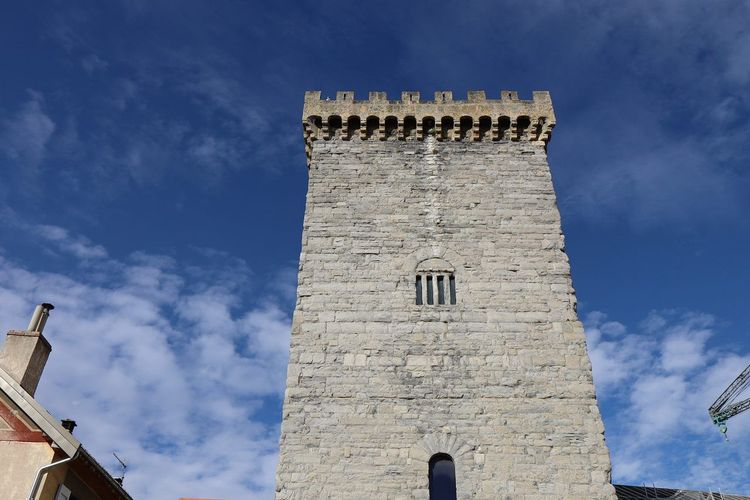
Embrun (Rue de la Liberté, 05200 Embrun, rated 4.4/5 on Google from 1,500 reviews) is not simply a village: it is a former religious capital that, in the Middle Ages, was the seat of one of the most influential archbishoprics in the Alps. Built on a limestone rock overlooking Lac de Serre-Ponçon, the town offers an exceptional panorama over one of the largest mountain lakes in Western Europe.
The cathédrale Notre-Dame-du-Réal, built between the 12th and 13th centuries, is a masterpiece of Lombard Romanesque art. Its north porch, known as the 'Porche du Réal', rests on two pink marble columns supported by sculpted lions — an Italian-influenced motif extremely rare in the French Alps. The interior preserves historiated capitals and a 17th-century carved wooden pulpit. Lac de Serre-Ponçon, created by the dam inaugurated in 1960, has transformed Embrun into an alpine beach destination. In July, the beaches laid out at the foot of the rock welcome swimmers, kayakers and windsurfers, with water temperatures reaching up to 22°C. For cyclists, the Col d'Izoard (2,360 m), reached from the nearby Queyras valley, is one of the mythical climbs of the Tour de France, first tackled by the Grande Boucle in 1922.
8. Vallouise, Gateway to the Parc National des Écrins
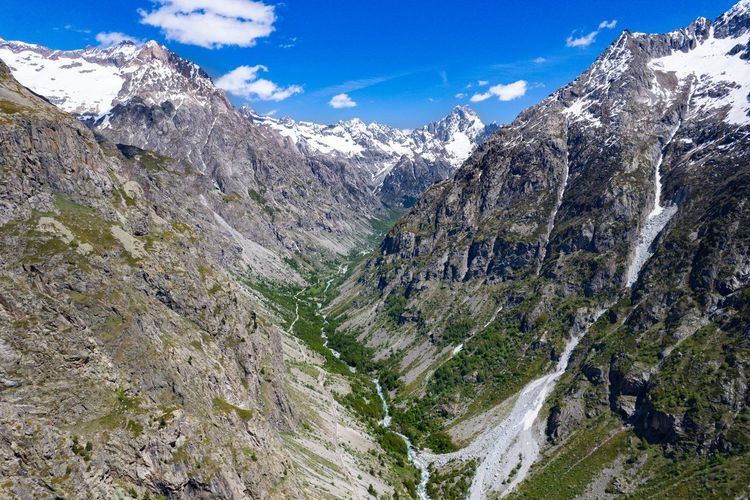
Vallouise (Rue Centrale, 05290 Vallouise, rated 4.4/5 on Google from 69 reviews) is the preferred starting point for exploring the heart of the Parc National des Écrins, the second-largest national park in France by area with nearly 92,000 hectares of protected nature. Perched at 1,165 metres at the confluence of the Gyronde and the Onde, the village combines a well-preserved historic centre with a strategic position for high-mountain enthusiasts.
The church of Saint-Laurent, dating from the 15th century, houses a Romanesque tympanum and partially preserved medieval wall paintings that most visitors overlook. From Vallouise, the GR54 — known as the 'Tour de l'Oisans et des Écrins' — sets off into the glacial valleys of the park and runs along the flanks of the Barre des Écrins, the highest point at 4,102 metres. In summer, the torrents of the Onde valley offer natural swimming spots appreciated by families. The hamlet of l'Ailefroide, 8 km upstream along a dead-end road, has been the traditional base camp for mountaineers tackling the great routes of the Écrins for more than a century.
9. Orpierre, Medieval Village at the Foot of the Cliffs
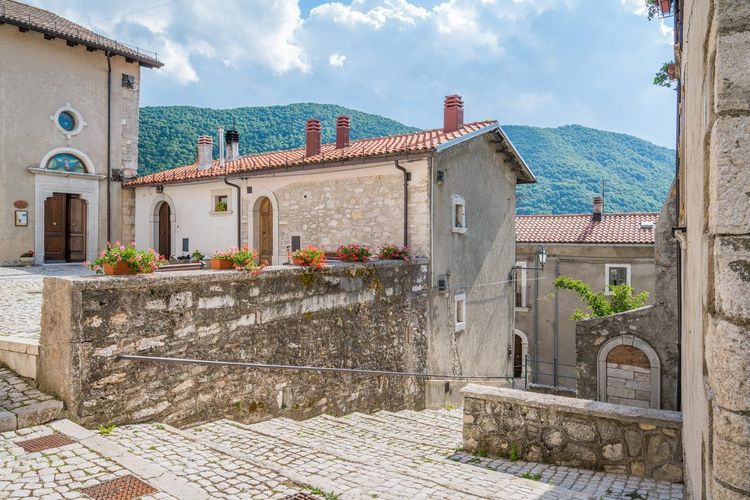
On the border between the Hautes-Alpes and the Alpes-de-Haute-Provence, Orpierre (Rue des Beffrois, 05700 Orpierre, rated 4.6/5 on Google from 28 reviews) has established itself as one of the most sought-after sport climbing destinations in Europe. The limestone cliffs encircling the village, up to 400 metres high, have been equipped with more than 450 routes covering every level of difficulty, from family introductory climbs to expert lines reserved for confirmed climbers.
But Orpierre is more than just climbing. The medieval historic centre is one of the best preserved in the region: pebbled lanes, Renaissance houses adorned with sculpted coats of arms above doorways, a 15th-century belfry and a viewpoint from the Charente ridge over the Provençal Baronnies. The village benefits from a mild microclimate — lavender grows at the foot of the cliffs — and winters are noticeably less harsh than in Briançon or the Queyras. The best climbing season runs from March to June and from September to November; in summer, south-facing walls can exceed 40°C. If you wish to discover other hidden gems of the alpine region before heading south, the most beautiful villages around Grenoble make an ideal complementary selection.
10. Ceillac, the Authentic Heart of the Queyras
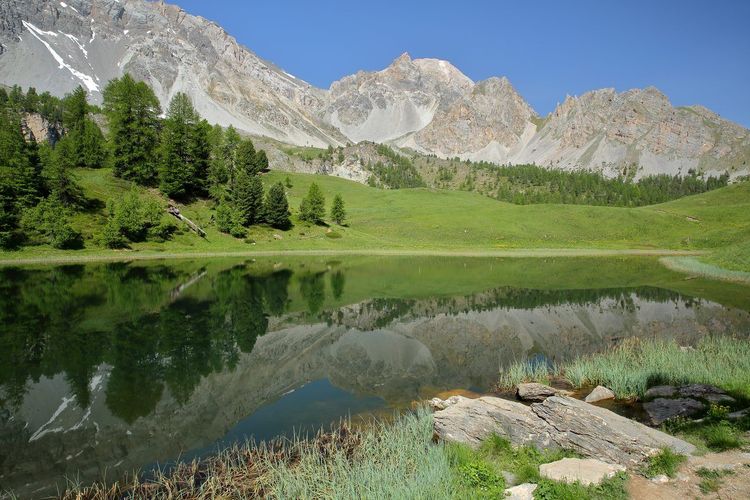
Ceillac (Route du Village, 05600 Ceillac, rated 4.7/5 on Google from 520 reviews) is one of those villages one hesitates to recommend too widely, for fear of it losing precisely what sets it apart: a preserved authenticity at the heart of the Parc Naturel Régional du Queyras. At 1,640 metres, the village is made up of around ten hamlets clustered around a 17th-century baroque church, with no tourist residence or recent architecture to break the harmony of the built environment. The petrifying fountain of Ceillac, whose calcium carbonate-rich waters slowly coat submerged objects with a mineral crust, is a local geological curiosity. In summer, the Lac Miroir (2,214 m), reachable in under 2 hours on foot from the village, reflects the Queyras peaks in its calm waters — an image that has become iconic among alpine landscape photographers. In winter, the Ceillac ski area offers 24 km of pistes and a Nordic area appreciated by families seeking an alternative to the large resorts.
11. Aiguilles, the Lively Capital of the Queyras
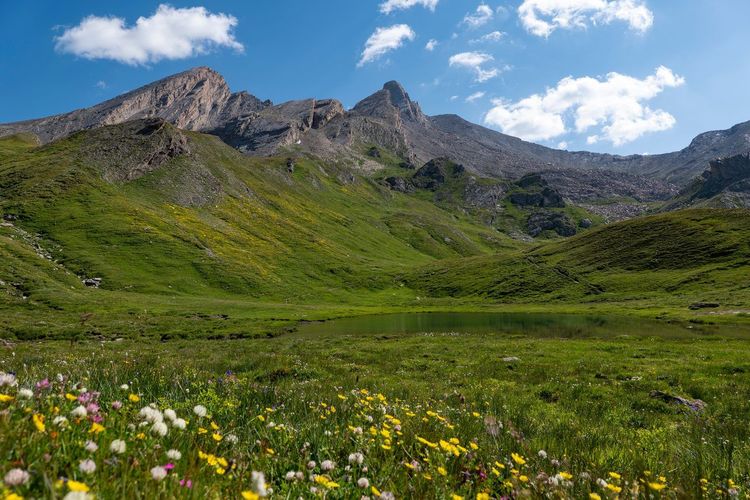
Aiguilles is the most lively town in the Queyras, at 1,473 metres. Markets, outdoor shops, restaurants and accommodation make it the natural logistical base for exploring the regional park. The Musée en Terre du Queyras, housed in a restored old building, traces the history of the territory through collections of agricultural tools, costumes and traditional furniture — a worthwhile visit for understanding the culture of the Queyras before heading out to the surrounding villages. The Col Agnel, the frontier pass with Italy at 2,744 m, is reached from Aiguilles via a spectacular road open from June to October, with views over the high Queyras summits that are worth the detour in themselves.
If you wish to continue discovering the Alps heading north, the Ryo audio tour of Annecy, La Venise des Alpes offers 20 audio stops over 2.6 km to explore the medieval city and the lake shores in around an hour.
12. Château-Queyras, beneath the Ramparts of a Sheer Fortress
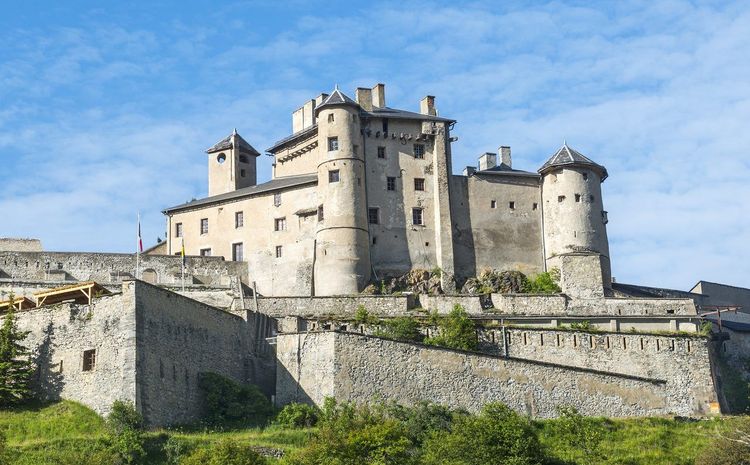
Château-Queyras (Route Principale, 05350 Château-Queyras, rated 4.4/5 on Google from 1,557 reviews) is dominated by a medieval castle perched on a sheer limestone pinnacle above the main road through the Queyras — a setting that few alpine fortresses can match for sheer drama. The structure, reinforced by Vauban in the 17th century, is visible from several kilometres away and is one of the most photographed panoramas in the department. A museum on the military history of the Queyras is accessible inside from May to September. The village below, with its timber houses and narrow lanes, is one of the best-preserved in the regional park. Its position at the junction of the roads leading to Saint-Véran, Aiguilles and Molines-en-Queyras makes it a natural stopping point for anyone exploring the Queyras by car.
13. Guillestre, Gateway to the Queyras
Guillestre (Place Joseph Font, 05600 Guillestre, rated 4.3/5 on Google from 756 reviews) marks the entrance to the Queyras: it is here, at 1,000 metres above sea level, that the main road forks towards the regional natural park and the Guil valley replaces the Durance in the landscape. The village offers a convenient base for exploring the department. The church of Notre-Dame-de-Consolation deserves a stop before moving on: its 16th-century Renaissance porch in Guillestre pink marble is one of the most elaborate examples of this architectural style in the French Alps. This local pink marble, quarried in the Queyras valley, was used to build the ramparts of Mont-Dauphin and several monuments in the region. The Friday morning market is one of the most well-stocked in the valley — ideal for stocking up before heading into the park.
14. Serres, between Lavender and Medieval Towers
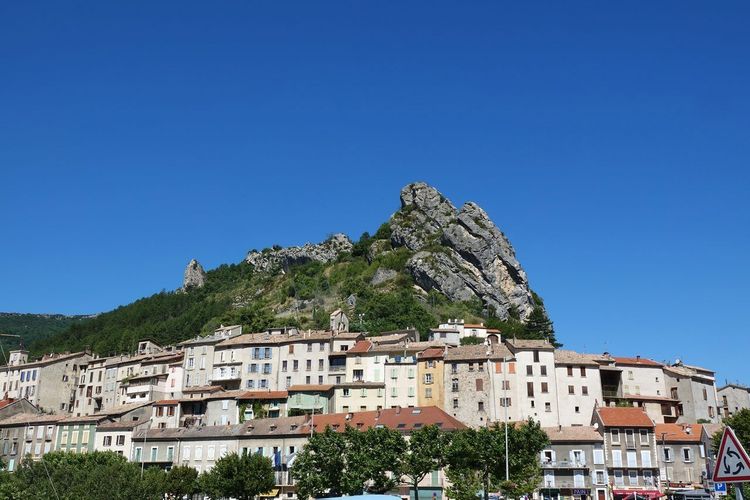
Serres (Place du Général de Gaulle, 05700 Serres, rated 4.3/5 on Google from 140 reviews) marks the border between the Hautes-Alpes and Provence. At 670 metres above sea level, this medieval town crowned with towers and terraced lanes enjoys a Provençal climate, and its surroundings are covered with flowering lavender fields from mid-June to mid-July. The old town, clinging to a limestone cliff, can be explored on foot in half an hour: the Escalier des Comtes, the 15th-century clock tower and the former ramparts form a compact loop. From the panoramic platform at the top, the view extends over the Provençal Baronnies to the south-west and the alpine foothills to the north — a dual geographical identity visible in a single glance.
Serres sits at the crossroads of the Route Napoléon (RN75) and the road through the Drôme provençale, making it a logical stopover for travellers crossing the southern Alps. To continue discovering alpine towns heading north-west, the Ryo audio tour of Aix-les-Bains, La Riviera des Alpes offers 14 audio stops along the shores of Lac du Bourget, less than 3 hours away by road.
15. Rosans, the Forgotten Provençal Village of the Southern Hautes-Alpes
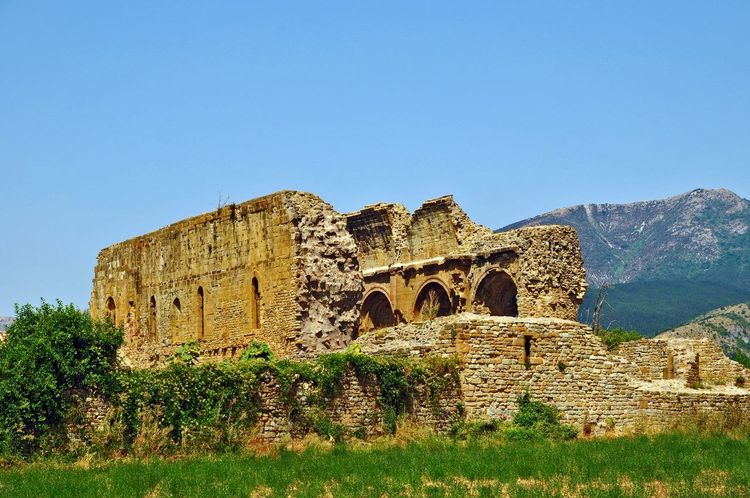
Rosans (Village de Rosans, 05150 Rosans, rated 4.4/5 on Google from 210 reviews), officially Saint-André-de-Rosans, is the most southerly village in this selection and the most unexpected in an alpine department. Perched at 700 metres on a sun-drenched plateau framed by vines and olive trees, it resembles the Luberon far more than the Alps. In May and June, the surrounding lavender fields complete the geographical disorientation. The Cluniac priory of Saint-André-de-Rosans, founded in the 11th century, is currently being restored after several decades of abandonment. Only the apse and a few cloister columns remain, but the ensemble — listed as a Historic Monument — retains a commanding presence amid the surrounding garrigue.
The orientation table at the top of the village allows visitors to identify, in clear weather, the massifs of the Ventoux, the Baronnies and the Écrins — a panorama that sums up in a single glance the pivotal position of the Hautes-Alpes between the alpine world and Provence. Rosans remains one of the least-visited villages in the department, which is at once its weakness and its strength: on a weekday in May or September, you can wander through a setting scented with rosemary and resin without encountering more than a handful of people.
FAQ
Which is the highest village in the Hautes-Alpes?
Saint-Véran, in the Queyras, is the highest permanently inhabited village in Europe, at 2,042 metres above sea level. This title has been officially recognised by European geographers since the early twentieth century. Briançon, often cited as the highest town in France, stands at 1,326 metres — a considerable elevation for an urban area of its size, but well below Saint-Véran.
What is the best time to visit the villages of the Hautes-Alpes?
The ideal window runs from mid-June to mid-September for high-altitude villages such as Saint-Véran, Névache or Ceillac, where mountain roads are open and alpine flora is in full bloom. For lower- and mid-altitude villages — Serres, Rosans, Embrun — May and September offer magnificent light with far fewer crowds. In winter, Briançon and Le Monêtier-les-Bains are the ideal bases for combining skiing with thermal bathing.
Can you visit the Hautes-Alpes without a car?
A car remains almost essential for the Queyras (Saint-Véran, Ceillac, Aiguilles, Château-Queyras). However, Briançon has a railway station connected to Paris by an overnight Intercités train (around 12 hours) or by a TGV combination with a connection (around 6 hours), and seasonal shuttles link the station to the main hamlets of the Clarée valley. Embrun and Serres are accessible via the regional Marseille–Gap–Briançon line. Beyond these routes, carpooling and park shuttles are the best summer alternatives.
Which villages in the Hautes-Alpes are UNESCO-listed?
Briançon and Mont-Dauphin are both part of the 'Vauban Fortifications' site, inscribed on the UNESCO World Heritage List in 2008. This site brings together 12 defensive works designed by Sébastien Le Prestre de Vauban for Louis XIV between 1667 and 1707, spread across several regions of France. Briançon represents the urban defensive system; Mont-Dauphin, the model of a town created from scratch for military purposes.
Which village in the Hautes-Alpes is best for hiking?
Névache (Clarée valley) and Vallouise (Écrins) are the two best bases depending on the level sought. Névache favours botanical trails and valley-floor walks accessible to families; Vallouise gives access to the demanding itineraries of the GR54 and the glacial high mountains of the Écrins. Ceillac suits families looking for high-altitude loops without technical terrain, with the Lac Miroir as a reward.
With so many riches concentrated in a single department, the Hautes-Alpes deserve far more than a weekend: at least a week to alternate between the military architecture of Briançon and Mont-Dauphin, the high pastures of the Queyras, the gorges of the Guil and the lavender hills of the Buëch. Each village on this list tells a distinct facet of a territory that sits literally between two worlds — that of the Alps and that of Provence.
To plan your itinerary and explore the ultimate alpine capital before heading south, the Ryo audio tour of Grenoble offers 19 audio stops to journey through the city's history in 2 hours 20 minutes, from the Bastille fortifications to the city-centre museums and the historic neighbourhoods at the foot of the massifs.