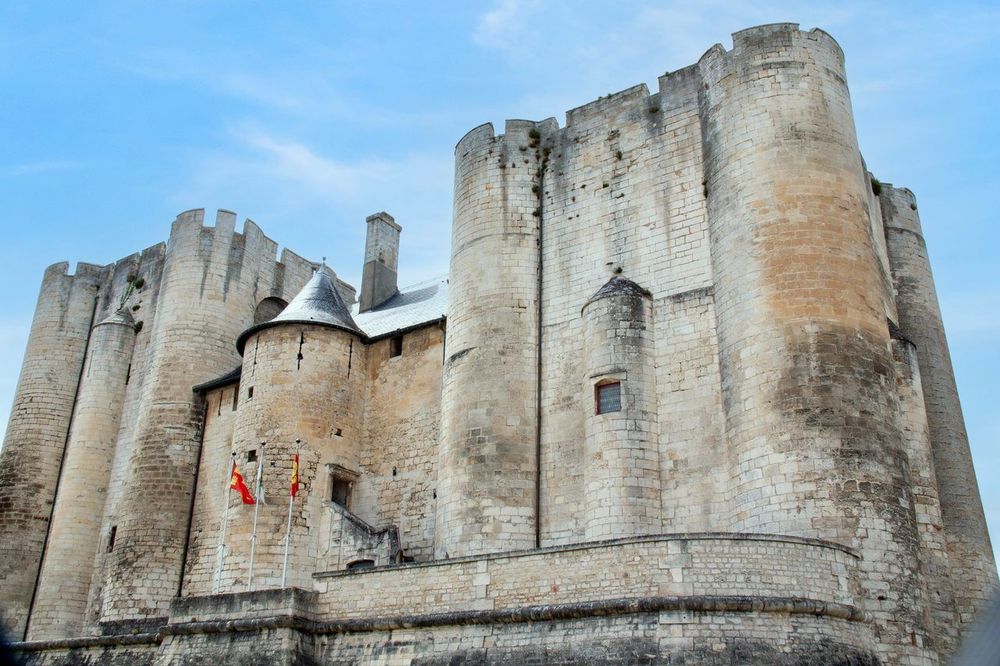
© Shutterstock
 Votre guide Ryo
13 Villages Around La Rochelle You Absolutely Must Visit in 2026
La Rochelle draws the eye, but the villages surrounding it capture the soul. Within a two-hour drive — sometimes much less — Charente-Maritime and its outlying areas offer scenery that few French regions can match: a village perched on an estuary cliff, an island of white-washed lanes, a fortified town abandoned to silence since the 17th century, canals dark with flat-bottomed boats. The most beautiful villages around La Rochelle bear no resemblance to one another, which is precisely what makes this selection so hard to keep short. To explore La Rochelle itself before or after your trip, the Ryo audio guide for La Rochelle covers 26 points of interest over 6.1 km in 2h30. This guide, meanwhile, takes you beyond the ramparts of the White City, towards thirteen destinations that are well worth the journey — sometimes for half a day, sometimes for a full night.
Talmont-sur-Gironde, the Village Suspended Above the Estuary
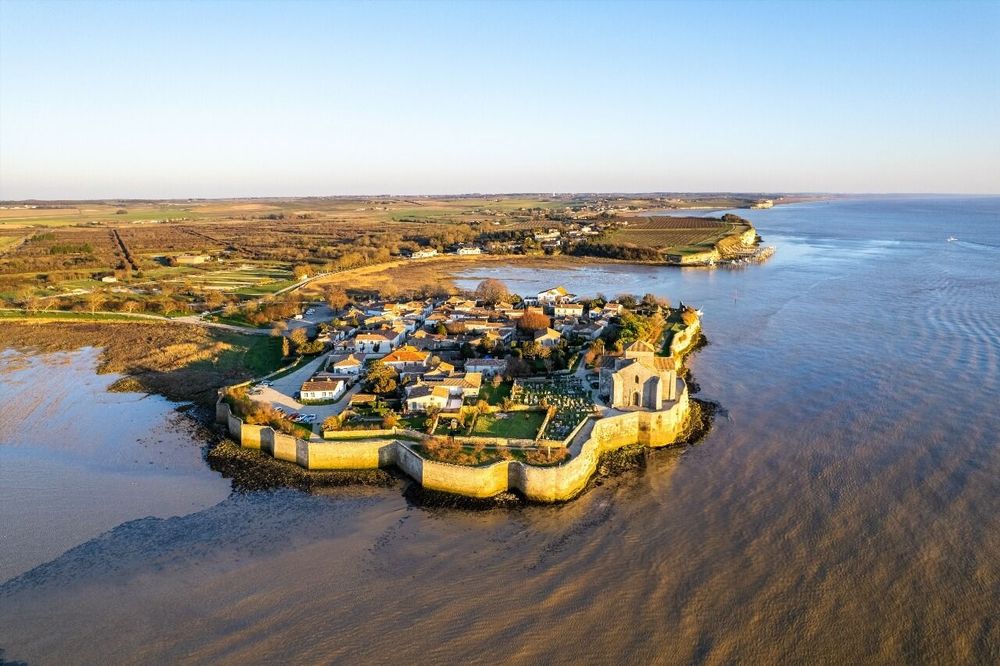
Talmont-sur-Gironde (Talmont-sur-Gironde, 17120 Talmont-sur-Gironde, rated 4.7/5 on Google with 2.8K reviews) is one of those places that forces you to stop before you have even parked the car. The village sits on a limestone spur jutting out at the tip of a peninsula, 17 km south of Royan, with the Gironde estuary spreading out on three sides like a gently blurred mirror. Estuary light is different from coastal light: softer, almost still, with ochre reflections towards the end of the day.
The village has around 80 year-round residents, yet its Romanesque church, Sainte-Radegonde, is one of the most photographed on the entire Atlantic coast. It dates from the 12th century and juts out over the cliff as though it might topple into the Gironde. Around it, the lanes are lined with low houses covered in hollyhocks in summer, which climb to improbable heights against the white walls. It is the image found on every postcard from the region.
Practically speaking, Talmont-sur-Gironde can be walked in full in under an hour. Come on a weekday or outside July–August if you want to recapture the village's silence: it is an official member of the Most Beautiful Villages of France association, and summer crowds can turn the lanes into a corridor. Paid car parks are located at the entrance, which keeps the centre free of traffic. Allow around 45 minutes by road from La Rochelle via Royan, or an hour via Saintes. If you combine the visit with Mornac-sur-Seudre (30 km to the north), you have a lovely full day along the estuary without rushing.
One thing to know: the cliff is eroding. Certain viewpoints are closed depending on the season. Check access before visiting, especially after a period of heavy rain.
Ars-en-Ré, the Village of White Houses and Black Shutters
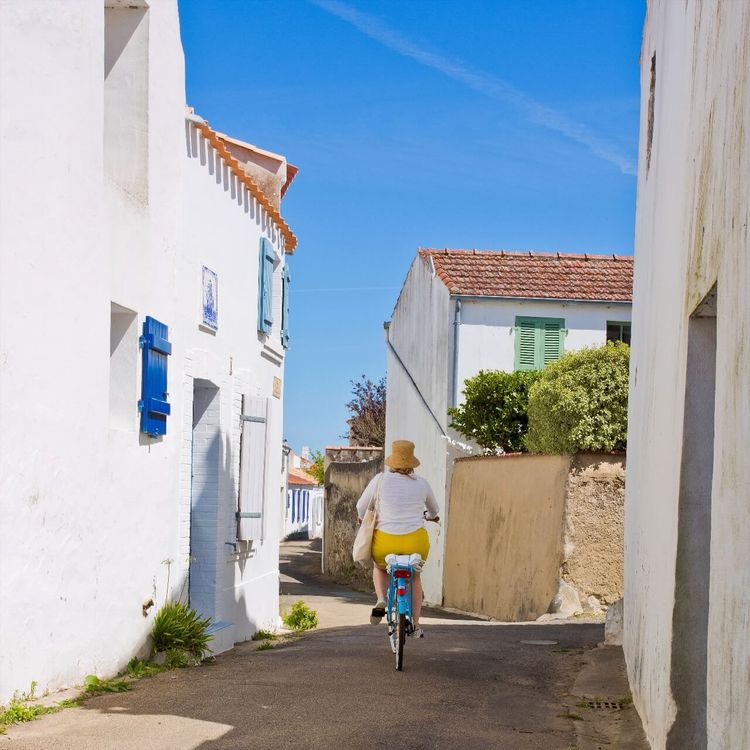
The Île de Ré is not short of villages. But Ars-en-Ré (Place Carnot, 17590 Ars-en-Ré, rated 4.6/5 on Google with 3.1K reviews) has something the others do not quite possess: absolute visual coherence. The houses are white, the shutters are black or dark green, the lanes are narrow and winding, and the church steeple — painted black and white to serve as a landmark for sailors — can be seen from afar across the salt marshes.
Ars-en-Ré is also a listed village, an official distinction that reflects both the preservation of its architectural heritage and the care given to its public spaces. The village grew up around the salt and oyster-farming economies, two activities that remain very much alive today. The salt marshes surrounding it are among the most active in the region: in summer, you will see salt workers harvesting fleur de sel, the island's emblematic product.
The centre rewards a slow exploration. Rue du Commerce is home to delicatessens, cheese shops, and salt boutiques. Place Carnot is the lively heart of the village, with terrace cafés shaded by plane trees. But the adjacent lanes — sometimes so narrow that two bicycles cannot pass each other — give the truest sense of the place: vernacular architecture that has remained coherent across several centuries, with no jarring modern intrusions.
Ars-en-Ré is 38 km from La Rochelle, across the Île de Ré bridge (toll depending on the season). The bicycle is the ideal mode of transport on the island: cycle paths connect every commune, and Ars-en-Ré is integrated into the island's cycle route network. Allow at least half a day, a full day if you want to explore the salt marshes and follow the wild northern coastline.
For food lovers, the salt cooperatives offer tastings. Fleur de sel from Ars is sold directly by the salt workers at prices considerably lower than those found in Parisian delicatessens. If you visit in autumn, the low-angle light over the marshes at sunset is one of the finest spectacles the region has to offer.
La Flotte-en-Ré, the Island's Medieval Port
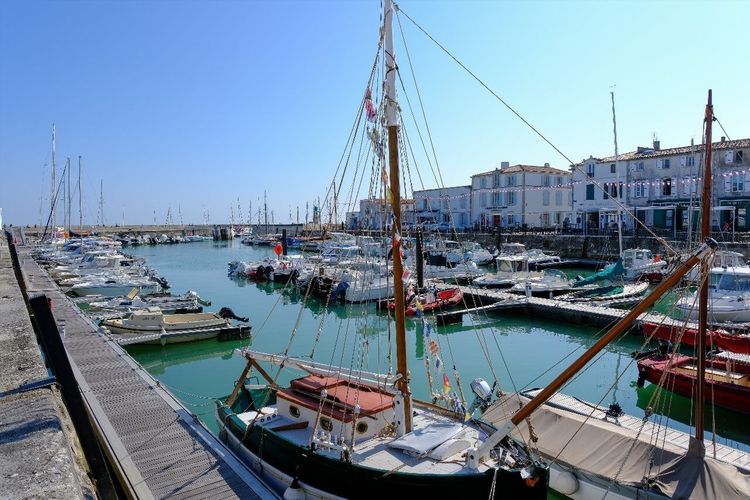
Just 18 km from La Rochelle, La Flotte-en-Ré (Port de La Flotte, 17630 La Flotte-en-Ré, rated 4.6/5 on Google with 4,226 reviews) is often described as the 'most beautiful village on the Île de Ré', and the claim holds up. Its natural harbour, sheltered by a grey stone jetty, still welcomes working fishing boats and a handful of pleasure craft. The contrast between the trawlers and the whitewashed fishermen's cottages creates a visually cohesive scene that few French ports can rival.
Like Ars-en-Ré, La Flotte is one of the island's listed communes. The village is organised around its harbour and its medieval market, which runs each morning during the high season. The Manoir de La Flotte, a 17th-century manor house converted into a hotel, is one of the most sought-after places to stay on the island. If you would rather spend a night on-site than return to La Rochelle, this is the place.
On the sightseeing front, the Musée Ernest Cognacq traces the history of the Île de Ré and is worth an hour of your time. But the real point is simply to wander: walking along the port early in the morning before the tourists arrive, buying fish directly from the fishermen, sitting on the jetty rocks. La Flotte works best when you take it at its own pace.
Practical tips: La Flotte is only 18 km from La Rochelle, making it the easiest excursion on this list. In summer, take the bus (Île de Ré Bus network, line to La Flotte) or hire a bike in La Rochelle — the cycle path is unbroken and very well maintained. By car, factor in the bridge toll (which varies by season).
Mornac-sur-Seudre, Oysters and Atlantic Light
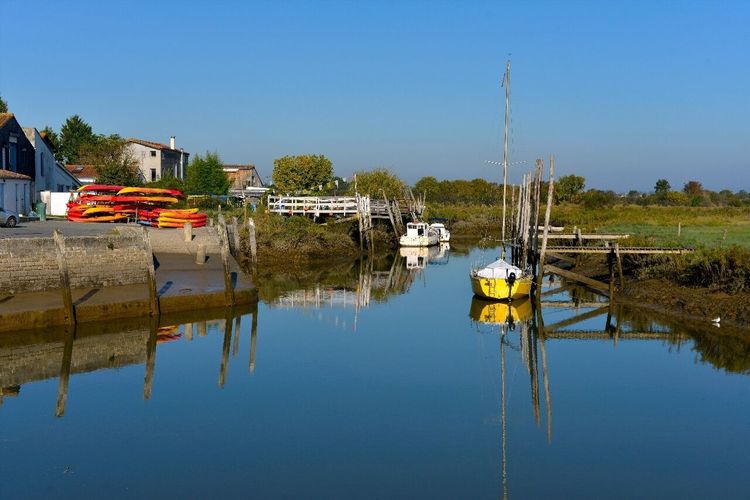
Mornac-sur-Seudre (Mornac-sur-Seudre, 17113 Mornac-sur-Seudre, rated 4.7/5 on Google with 1.9K reviews) is a village of around 800 inhabitants perched on a hillock above the Seudre marshes, an hour's drive from La Rochelle towards Royan. Also a listed village, it owes its reputation to two things: its perfectly preserved golden limestone architecture and its oyster beds, visible from the lanes below.
The village is tiny — allow twenty minutes for a full circuit — but remarkably rich in heritage. The 12th-century Romanesque church, Saint-Pierre, dominates the hillock. The lanes sloping down towards the harbour are lined with fishermen's and craftsmen's houses: ceramicists, potters, and painters have moved into the former outbuildings, giving Mornac the feel of a gallery village without detracting from its authenticity.
The harbour itself is the main attraction. The oyster tables descend into the water at high tide, and several shacks offer tastings on the spot — oysters, mussels, estuary prawns. This is an experience not to be missed if you are passing through the area. Prices are reasonable compared to restaurants in Royan or La Rochelle.
Mornac-sur-Seudre pairs naturally with Talmont-sur-Gironde for a day trip: the two villages are 30 km apart and share the same estuary light, the same limestone hues, and the same unhurried pace that forces you to unwind.
Brouage, the Ghost Town with Intact Ramparts
Brouage is a special case in this selection. It is not quite a living village — it is a 17th-century fortified town that history left behind, whose bastioned ramparts have remained virtually intact since they were rebuilt under Richelieu around 1630. At the time, Brouage was one of the busiest ports in France, specialising in the salt trade. Then the marshes silted up the sea routes, ships could no longer enter, and the town was progressively abandoned in favour of Rochefort.
Today, walking along the ramparts of Brouage (Rue du Château, 17320 Hiers-Brouage, rated 4.6/5 on Google with 2,838 reviews) gives you a 360° view over the marshes and meadows that replaced the sea. The bastioned enclosure — seven bastions and a complete wall walk — is a listed historic monument and can be walked in its entirety on foot. The view over the marshes in the late afternoon, when the golden light grazes the tall grasses, is of an almost unreal beauty.
Inside the enclosure, the small town counts a few dozen inhabitants, a 17th-century church preserved with its original pulpit and decorations, and several low houses that have withstood the centuries. A small museum traces the history of the salt works and the port. Brouage is also associated with a legendary love story: Samuel de Champlain, founder of Quebec, is said to have been born here, and Marie Mancini, the great love of Louis XIV's youth, was exiled here.
Brouage is 35 km from La Rochelle, near Marennes. Allow at least an hour and a half, two hours if you walk the ramparts and visit the museum. Access to the ramparts is free. The site can be visited in any season, but spring and autumn offer the best light and the fewest visitors.
Coulon, the Green Venice of the Marais poitevin
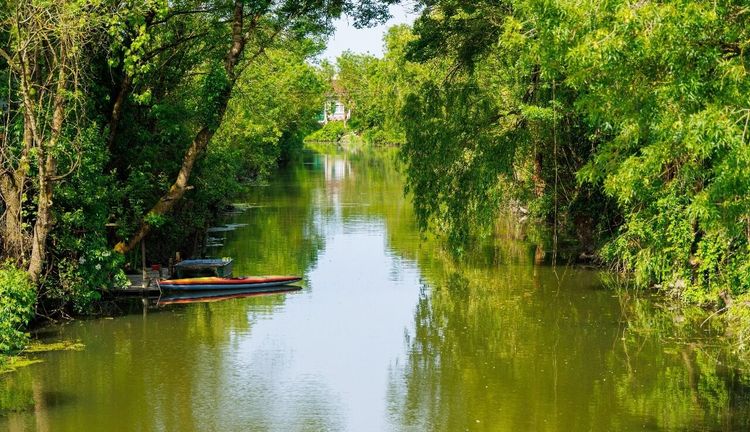
Coulon is the most unusual village on this list: it is not coastal, not limestone, and not medieval in the conventional sense. It is the heart of the Marais poitevin, France's second-largest wetland after the Camargue, and its canals are so dense that the village can really only be explored by boat. Visitors who have never set foot in the Marais poitevin sometimes picture something dark and stagnant. The reality is the opposite: the canals of the Marais mouillé are a vivid green in summer, blanketed with duckweed and lined with ash and poplar trees that form leafy tunnels overhead.
From the port of Coulon (Rue du Porteau, 79510 Coulon, rated 4.4/5 on Google with 480 reviews), several boat and punt hire operators offer outings by the hour or half-day. You can row yourself or opt for a guided flat-bottomed boat with a local boatman who explains the history of the marsh, its wildlife (grey herons, otters, coypu), and its vegetation. Children love it, and the canal network is calm and safe.
The village itself is worth a stroll before or after your boat trip. Rue Nationale is home to restaurants specialising in marsh cuisine: mogettes (white beans), smoked eel, beurre blanc. The Maison du Marais poitevin has a permanent exhibition on the history and ecology of the wetland. The Sunday morning market is one of the liveliest in the Deux-Sèvres.
Coulon is 75 km from La Rochelle, roughly an hour by road. It is the furthest point on this list, but the experience justifies the journey. The Ryo audio guide for La Rochelle can give you a good feel for the region before heading out to the marsh.
Vouvant, the Medieval Village in the Mervent Forest
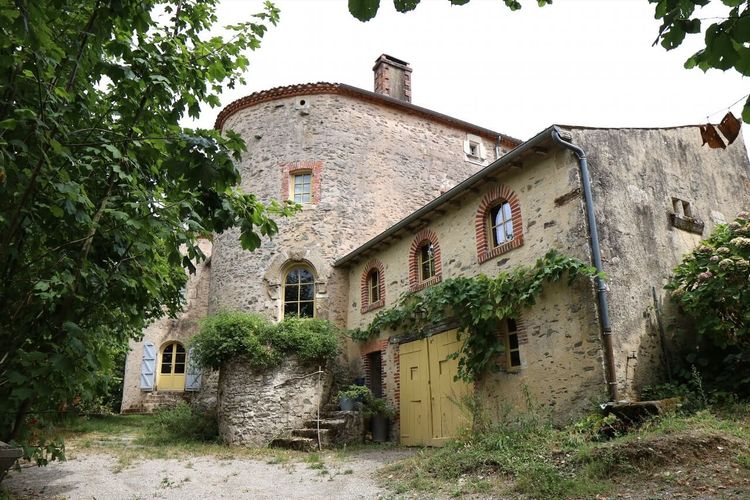
Vouvant (Vouvant, 85120 Vouvant, rated 4.6/5 on Google with 1.2K reviews) looks like the setting of a medieval novel, and not by accident: perched on a promontory overlooking the Mère valley, surrounded by partially preserved ramparts and the Mervent-Vouvant forest, the village has retained a medieval silhouette that even the passing centuries have failed to alter. It is also a member of the Most Beautiful Villages of France, but on the Vendée side.
The main attraction is the Tour Mélusine, a remnant of a medieval castle linked to the legend of the fairy Mélusine. The tower can be visited for a small entrance fee and offers a panoramic view over the valley and the surrounding forest. At its foot, cobbled lanes descend towards the ramparts, where a few half-timbered houses have survived modern renovation.
The church of Notre-Dame is the other highlight: its carved Romanesque doorway dates from the 12th century and ranks among the finest in the Vendée. The nave is plain, but the doorway alone is worth a ten-minute stop. The village has a handful of craftspeople and a few small shops, but it remains essentially residential, which adds to its authenticity.
Vouvant is approximately 90 km from La Rochelle, about an hour and a quarter by road towards Fontenay-le-Comte. Combine the visit with a walk in the Mervent forest or with Fontenay-le-Comte for a full day in southern Vendée.
Saint-Savinien, Cliff-Side Houses Above the Charente
Saint-Savinien (Saint-Savinien, 17350 Saint-Savinien, rated 4.4/5 on Google with 390 reviews) is one of the most discreet villages in Charente-Maritime, and yet one of the most photogenic. Clinging to a white limestone cliff above the Charente, 40 km north-east of La Rochelle, it offers a view over the river and its bordering meadows that few visitors know about.
Some of the houses are built directly into the cliff face — dwellings gradually carved from the rock, some still inhabited, others converted into cellars or workshops. The Romanesque church, whose white bell tower stands out against the limestone, is the village's visual landmark from the river. The riverside port below still welcomes a few barges and pleasure boats.
Saint-Savinien is not a listed village, but it has the charm of a less touristy discovery: restaurants are few but good, prices are reasonable, and you can walk its lanes on a Sunday morning without encountering a tour bus. The towpath along the Charente, suitable for cycling, connects Saint-Savinien to Saintes in around forty minutes — a pleasant option if you have the time. And if you head back through La Rochelle, our audio walking tour of the White City fills two and a half hours, a fitting way to close the day.
Mortagne-sur-Gironde, the Little-Known Troglodyte Port
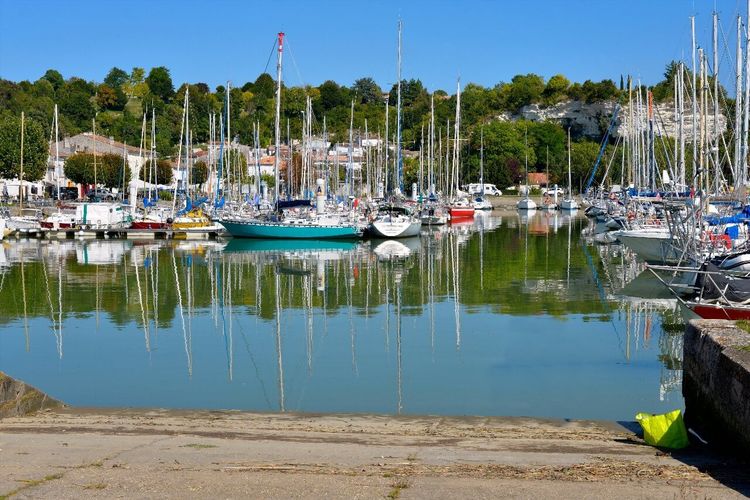
An hour from La Rochelle in the direction of the estuary, Mortagne-sur-Gironde (Mortagne-sur-Gironde, 17120 Mortagne-sur-Gironde, rated 4.3/5 on Google with 520 reviews) is perhaps the least well-known village on this list, and one of the most surprising. The village sits on a limestone cliff above the Gironde estuary, and its troglodyte dwellings — homes and storehouses carved directly into the rock — are accessible via a path that descends to the river.
The caves of Mortagne (or troglodyte dwellings) extend across several levels within the cliff and were used as warehouses for the wine and salt trade. Some can be visited freely, while others are open for guided tours in season. The viewpoint from the cliff over the estuary — several kilometres wide at this point — is one of the most impressive on the coast. The hermitage of Saint-Martial, hollowed out of the cliff above the port, completes the visit.
The village has a Saturday morning market and a few food shops. Mortagne-sur-Gironde pairs well with Talmont-sur-Gironde (about twelve kilometres away) for a half-day or full-day estuary loop.
Saint-Trojan-les-Bains, Oléron's Pine Forest Side
Saint-Trojan-les-Bains is the southern gateway to the Île d'Oléron, reachable from La Rochelle in about an hour (free bridge). The village is known for its fine sandy beaches exposed to the Atlantic, its maritime pine forest that stretches down to the dunes, and its small tourist train — a family favourite — that winds through the forest towards the Pointe de Gatseau.
Unlike the other villages on this list, Saint-Trojan is a fully fledged seaside resort, with hotels and an organised tourist infrastructure. What sets it apart is the quality of its coastline: the Grande Plage and Plage de Gatseau (Pointe de Gatseau, 17370 Saint-Trojan-les-Bains, rated 4.5/5 on Google with 2,395 reviews), on the Atlantic side, rank among the finest on Oléron, with proper surf breaks and preserved natural spaces within the dune forest. Out of season, Saint-Trojan reverts to the calm of an oyster-farming and maritime village.
The commune also offers bicycle hire for exploring the Île d'Oléron, whose cycle path network is one of the most comprehensive on the Atlantic coast.
Esnandes, the Fortified Church and Mussel Beds
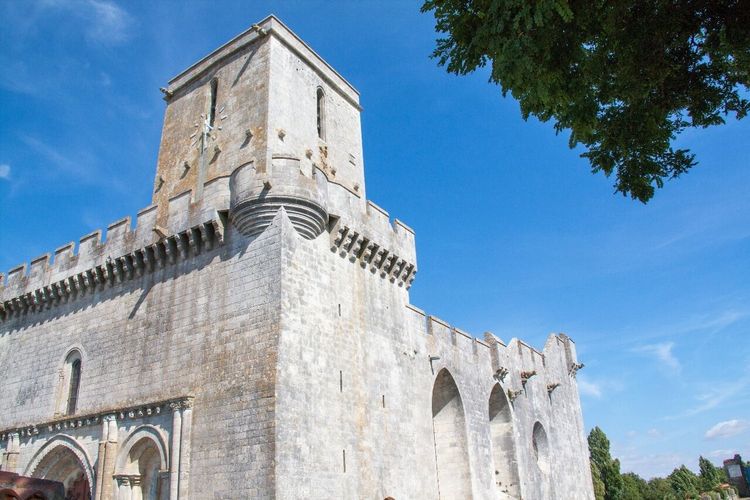
Esnandes (Place de l'Église, 17137 Esnandes, rated 4.5/5 on Google with 4 reviews) is arguably the closest village on this list: barely ten kilometres north of La Rochelle, sitting at the edge of the Marais poitevin, facing the Baie de l'Aiguillon. It is also one of the few that can be reached without a car — by bus or by bicycle along the coastal cycle path — making it a straightforward half-day outing.
The heart of the village is its remarkable fortified church of Saint-Martin, a listed historic monument since 1840. Rebuilt in the 14th century, it received defensive modifications towards the end of that century that give it the appearance of a small fortress: thickened walls, blocked openings, a machicolated wall walk with battlements. You can climb onto the parapet and take in the bay and the mussel beds below — a rare vantage point for a village church.
Esnandes is the historic capital of mussel farming: this is where mussels have been cultivated for centuries on wooden stakes planted in the mud of the Baie de l'Aiguillon. The Maison de la Baie du Marais poitevin tells the story of this tradition and of the celebrated Charron mussels from the area. Round off your visit with a mussel tasting at the harbour or a walk along the coastal path at low tide, facing the mussel stakes, and you will understand why this discreet little village is well worth the detour from La Rochelle.
Marans, the Canals of the Charentais River Port
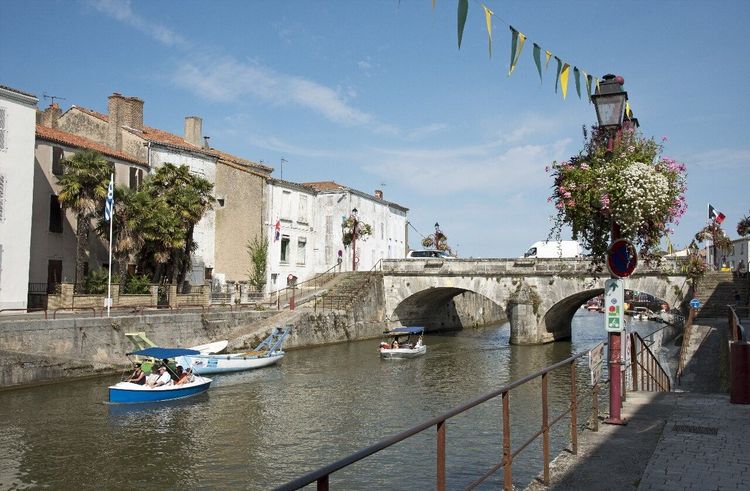
Marans (Marans, 17230 Marans, rated 4.2/5 on Google with 640 reviews) is often described as the 'little Venice of Charente', a flattering comparison that does justice to the canals running through this town of around 4,500 inhabitants, 25 km north of La Rochelle. The town is accessible by regional train from La Rochelle in about twenty minutes, making it a straightforward excursion for car-free travellers.
The river port of Marans is the heart of the village: boats travel up from the Pertuis Breton via the Marans–La Rochelle canal, and the quayside, lively in summer, is lined with cafés and restaurants. The Saturday morning market is renowned throughout the region for its produce stalls and local poultry farmers. Marans is also known for its local chicken breed, the Marans hen, which enjoys an international reputation among poultry enthusiasts.
Beyond the port, the canals criss-crossing the surrounding marshes are ideal for cycling or kayaking. Hire is available on-site during the season.
Châtelaillon-Plage, Belle Époque Architecture 15 km Away
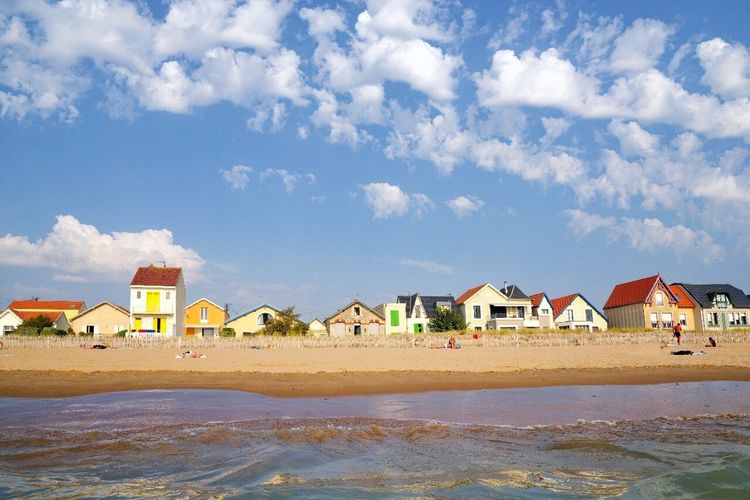
Châtelaillon-Plage (Châtelaillon-Plage, 17340 Châtelaillon-Plage, rated 4.4/5 on Google with 1.5K reviews) is not a village in the strict sense — it is a small seaside town of around 5,500 inhabitants — but it earns its place on this list for one specific reason: its Belle Époque architectural heritage, concentrated along the seafront, is one of the best preserved on the Charente coast. Villas, hotels, and a casino were all built between 1900 and 1930, giving the waterfront a distinctly old-world air.
Just 15 km from La Rochelle, Châtelaillon is accessible by regional train in about ten minutes or by bicycle in 45 minutes along the coastal cycle path. The beach is one of the longest in the region — nearly 3 km of fine sand — and the sea is sheltered by the pertuis, making it calmer than open Atlantic waters. A pleasant stop for rounding off a day exploring the Charente coast.
How to Organise Your Escape from La Rochelle
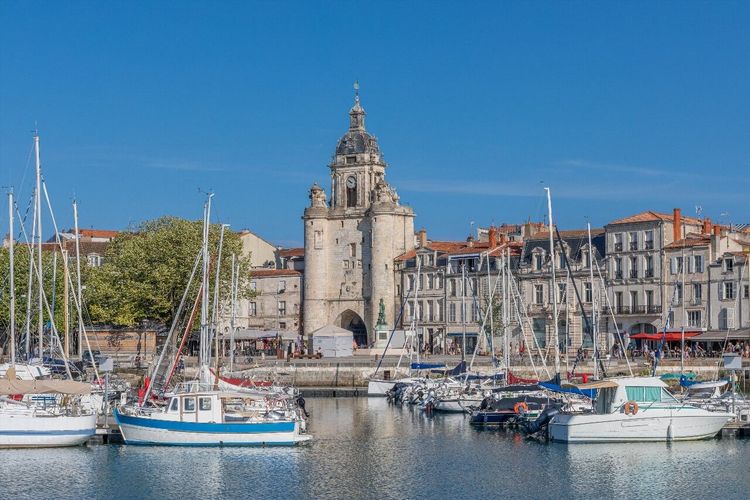
La Rochelle is an ideal starting point. Before heading out, begin by discovering the city itself: the audio-guided tour of La Rochelle guides you in 2h30 through 27 points of interest, from the old harbour towers to the lanes of the Enclos — a good warm-up before tackling the surrounding communes.
To plan your days, here are a few useful geographical logics:
Île de Ré (day trip or weekend): La Flotte-en-Ré and Ars-en-Ré link up easily by bike from La Rochelle. Allow a full day for both stops with a lunch break in Saint-Martin-de-Ré. In summer, take the bus or hire a bike in La Rochelle — avoid driving on the island in July and August.
Estuary circuit (full day): Talmont-sur-Gironde and Mortagne-sur-Gironde to the south, Mornac-sur-Seudre along the way — a 120 km loop from La Rochelle via Royan and along the Gironde. Allow 7 to 8 hours.
Fortified town and marshes (half-day + option): Brouage at 35 km, combined with Marennes and its oyster beds. If you want to extend the trip, Mornac-sur-Seudre is an additional 20 km.
Marsh and medieval (weekend): Coulon for the Marais poitevin and Vouvant for medieval Vendée — the two stops are 30 km apart, about 1h to 1h30 from La Rochelle. This circuit warrants at least one overnight stay.
Close to home (car-free half-day): Esnandes and Châtelaillon-Plage can be reached by bike along the coastal path, and Marans by regional train. Three easy escapes if you want to stay close to La Rochelle.
For visitors without a car, regional train services run directly to Marans and Châtelaillon-Plage from La Rochelle, and buses reach Esnandes and the Île de Ré. The other villages require a vehicle or a carpooling arrangement. If you are planning several stops over several days, La Rochelle offers a wide range of accommodation and good road links in every direction. Also check out our article on things to do around La Rochelle to round out your itinerary with ideas for activities in the city.
One last practical note: Charente-Maritime benefits from one of the highest sunshine rates in France. The visiting season runs from mid-April to mid-October, peaking in July and August for the beaches, with an ideal window in May–June and September for the villages: fewer crowds, more accessible prices, and light that is often superior to that of midsummer.

FAQ
Which is the most beautiful village around La Rochelle?
The answer depends on what you're looking for. For an immediate visual wow factor, Talmont-sur-Gironde is most often cited first: its Romanesque church perched on an estuary cliff, its hollyhocks, and its limestone lanes form a unique tableau on the Atlantic coast. For a more complete experience with activities and dining, Ars-en-Ré or La Flotte-en-Ré are more versatile. And for something truly off the beaten path, Coulon in the Marais poitevin offers a rural French experience that is hard to find elsewhere.
Which villages around La Rochelle are listed among the Most Beautiful Villages of France?
Four communes in Charente-Maritime are members of the official Most Beautiful Villages of France association: Talmont-sur-Gironde, Ars-en-Ré, La Flotte and Mornac-sur-Seudre. Nearby, Vouvant carries the same label but in the Vendée. Brouage, though exceptional, is not listed: it is classified as a historic monument for its fortifications.
Can you visit these villages without a car from La Rochelle?
For some, yes. Châtelaillon-Plage and Marans are accessible by regional train (about ten minutes for the first, twenty for the second). Esnandes, La Flotte-en-Ré and Ars-en-Ré are reachable by bus and by bike from La Rochelle (via the Île de Ré bridge for the last two). However, Talmont-sur-Gironde, Brouage, Coulon, Vouvant, and Mortagne-sur-Gironde require a vehicle or an organised tour with a local operator. Car and electric vehicle rentals are available in La Rochelle.
What is the best time of year to visit the villages of Charente-Maritime?
May–June and September offer the best conditions: high sunshine levels, mild temperatures (18–25°C), moderate tourist numbers, and lower prices than in July–August. Summer remains beautiful, but listed villages such as Ars-en-Ré or Talmont-sur-Gironde become very busy in July and August. The shoulder season (October) is particularly lovely for the low-angle light over the marshes and estuaries.
Is Brouage really worth the detour?
Absolutely. Brouage is one of the most singular sites in the region — a 17th-century fortified town whose ramparts remain intact and are surrounded by marshland, freely accessible at any hour. It is not a destination for spending a full day (there are few restaurants and shops inside the walls), but it is an unmissable stop on the road to Marennes or Rochefort. Allow 1h30 to 2h.
Île de Ré or Île d'Oléron for villages?
For picturesque villages and architectural heritage, the Île de Ré wins clearly: Ars-en-Ré, La Flotte, Saint-Martin-de-Ré, and Les Portes-en-Ré form a coherent ensemble of rare quality. The Île d'Oléron is larger, wilder, and its communes (Saint-Trojan, Le Château-d'Oléron) are more oriented towards nature and beaches. If you only have one day, choose the Île de Ré for the villages; choose Oléron if you prioritise open space and the sea.
Charente-Maritime ranks among the richest territories in France for this kind of village escape. To round out your itinerary with an exploration of La Rochelle itself, the Ryo audio guide for La Rochelle takes you through 26 points of interest in the White City, from the old towers of the Vieux-Port to the lanes of the Saint-Nicolas district — a great way to combine city and villages in a single stay.
À lire également