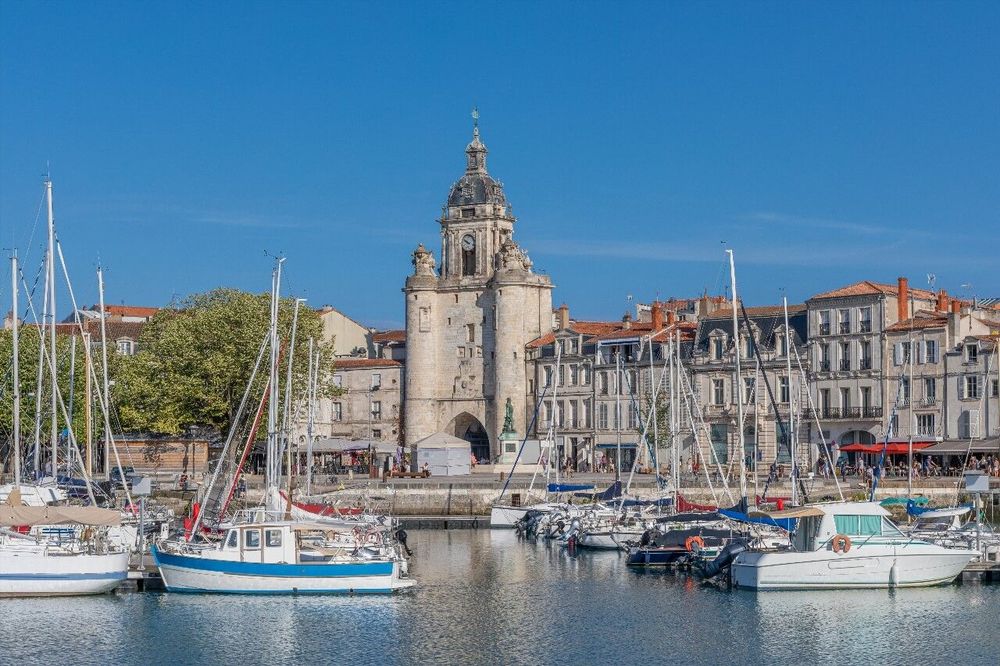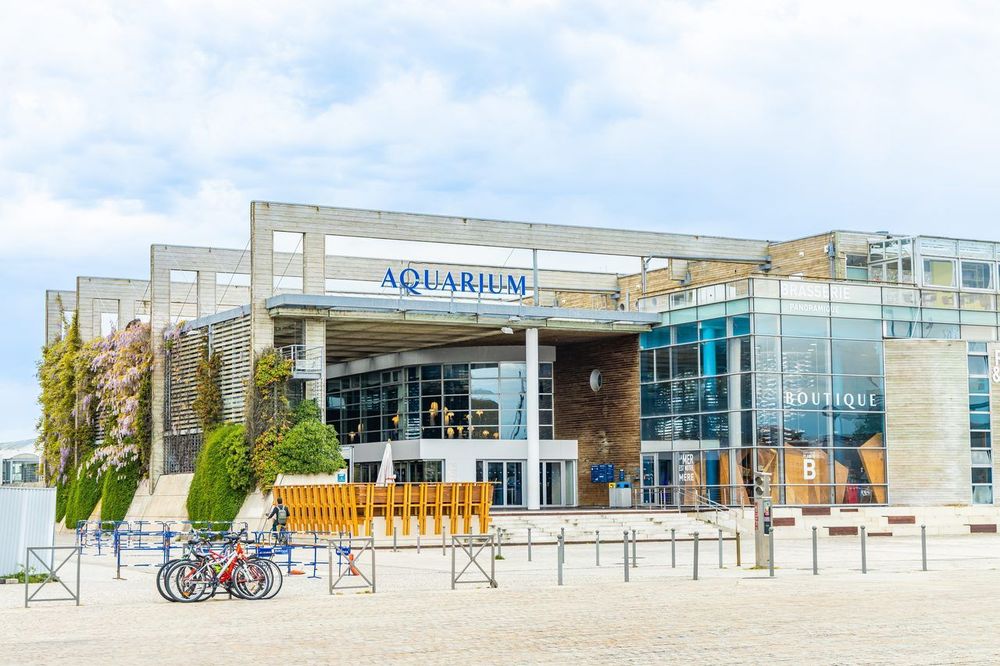
© Shutterstock
 Votre guide Ryo
La Rochelle Aquarium: Everything You Need to Know Before You Dive In (2026)
Some tourist sites you visit out of family duty, and others leave you changed. The La Rochelle Aquarium belongs to the second category. With its 12,000 animals, its 600 marine species, and its roughly 8,000 m² of exhibition space spread across the North Atlantic, the Mediterranean, and tropical seas, it regularly ranks among the three most visited aquariums in France, welcoming nearly 800,000 visitors per year. For those discovering the city for the first time, it is often the first great surprise: La Rochelle actually has an attraction that holds its own against the largest aquariums in Europe. Our Ryo audio-guided tour of La Rochelle will give you a taste of what awaits from the quays of the Vieux-Port.
This guide answers all the practical questions — 2026 prices, opening hours, how to get there, when to visit to avoid the crowds — and gives you the keys to a visit that goes beyond a simple parade of tanks. From the 2026 new features to marine conservation programmes, and the activities to enjoy in the neighbourhood after your visit, everything you need is here before you step through the doors.
What the La Rochelle Aquarium Is Really Hiding
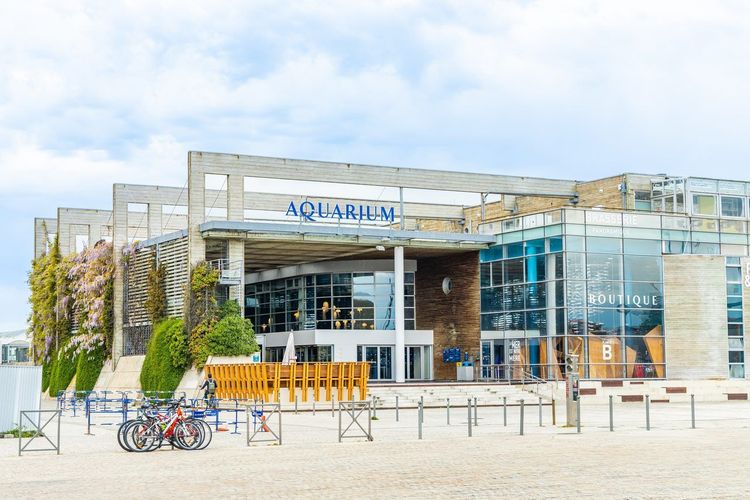
The aquarium is not a simple collection of fish in tanks. It is organised around large thematic spaces that guide visitors across the world's oceans, from the Charente coastline to the abyssal depths. The result is a route that takes time and leaves a mark — very different from a mid-sized aquarium.
The circuit opens with the temperate waters of the North Atlantic: spotted rays, conger eels, sea bass, and sea bream glide through panoramic tanks, the largest of which exceeds 1,000 m³. With dimmed lighting and the recorded sounds of the ocean playing in the background, you are plunged into the heart of the experience from the very first minutes. The shapes sliding behind the glass have something hypnotic about them, even for adults who thought they were just accompanying their children.
The Mediterranean section completely shifts the atmosphere: groupers, moray eels, seahorses, and octopuses share carefully reconstructed artificial rocks. The seahorses, in particular, keep visitors of all ages standing in front of their tank for far longer than they had mentally allowed themselves.
The highlight of the route remains the large shark tank, one of the most impressive ever built in Europe: grey sharks, rays, and schools of fish move behind vast panoramic glass panels, in a silence that contrasts with the usual bustle of a popular tourist site. Further along, the jellyfish gallery and its tunnel bathed in coloured lights immerse visitors in an almost surreal atmosphere. Few spaces are capable of taking the breath away of teenagers used to screens — these two are among them.
Further on, the tropical waters bring a radical change of atmosphere: reconstructed mangroves, clownfish, sea turtles, zebra sharks. The colours are intense, almost unreal for anyone arriving from an Atlantic sky. This section is generally the most photographed of the entire route.
The aquarium also features a zone dedicated to Pacific species and the deep sea, often underestimated, but holding a few notable surprises: creatures little known to the general public, explanations of bioluminescence, and a sober educational approach that does not take the easy route.
In total, more than 600 species represented across more than eight thousand square metres. The minimum visiting time to see everything without rushing: two hours. Allow two and a half to three hours if you are coming with curious children or if you read the information panels.
A Brief History: A Family Adventure
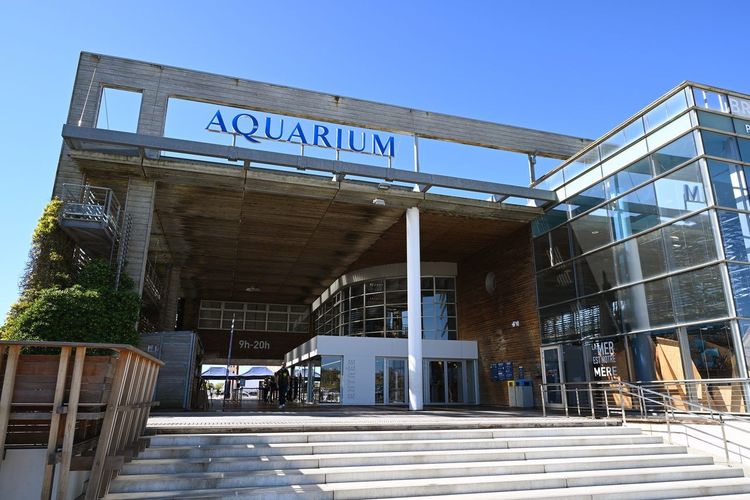
The La Rochelle Aquarium was not born out of a major institutional project, but from one family's passion. In 1970, René Coutant, an aquarium manufacturer, presented his collection to the public for the first time. His children, Roselyne and Pascal, continued the venture and opened the first large aquarium in the Minimes district in 1988. Given its success, the establishment moved in 2001 to its current site, facing the Vieux-Port. More than fifty years after René Coutant's beginnings, the aquarium remains a family-owned and independent business — a rare distinction for an attraction of this scale in France.
The 2026 Highlights You Should Not Miss
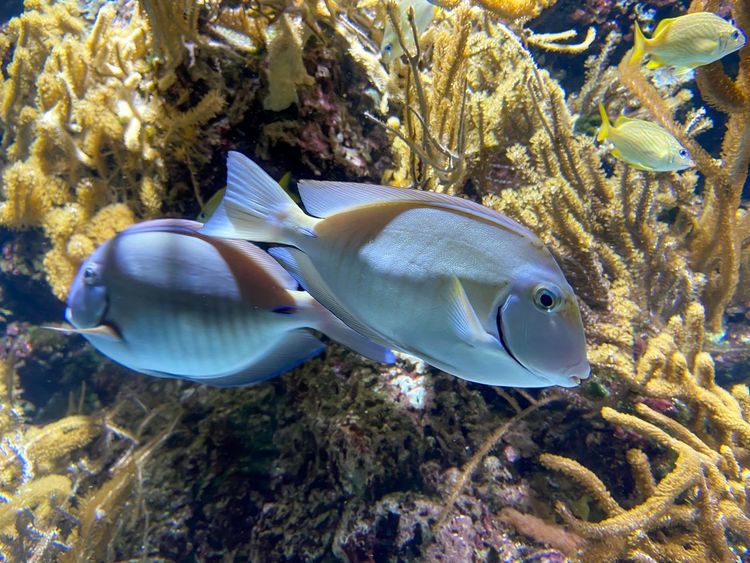
Each season, the aquarium enriches its route. In 2026, the main efforts have focused on two areas: the introduction of new species in the tropical section, including reef sharks larger than those previously on display, and a complete overhaul of the educational content around microplastics and marine pollution.
The new panels have been designed for a mixed adult-and-child audience. The scientific data is there — precise and sourced — but made accessible through a layout that does not drown the message in figures. Children over eight can read the same material as their parents without losing interest, which is not the norm in this type of establishment.
Particular attention has been paid to the Mediterranean zone: redesigned lighting, a revised reconstruction of rocky seabeds, and a new tank dedicated to invasive species of the Mediterranean basin — lionfish and dusky grouper — with a direct awareness message on the effects of climate change in the Mediterranean.
The visit app, available free on iOS and Android, has offered enhanced augmented reality content for a selection of tanks since 2026. Not essential for a great visit, but a welcome addition for families with children between ten and fifteen who need a digital support to sustain their attention.
Tickets and Pricing in 2026
The La Rochelle Aquarium applies a pricing policy consistent with a site of this scale. In 2026, the indicative prices are as follows:
- Adult (18 and over): approximately €18.50
- Junior (13 to 17 years old): approximately €14.50
- Child (3 to 12 years old): approximately €12.50
- Under 3 years old: free entry
A reduced rate (a discount of around €2 per ticket) applies in particular to adult students, people with disabilities, and large families. The documents required are specified at the ticket office — it is best to have them on hand on the day of your visit.
Group rates (from twenty people) benefit from a specific discount; contact the aquarium directly for the conditions. School groups have access to packages that include educational workshops linked to natural science curricula, making it a particularly well-calibrated school trip.
Online booking is strongly recommended during peak season (July–August), not to save money on the ticket price, but to secure a time slot. Daily capacity is limited, and some Wednesdays or Saturdays in August sell out by the following morning. Buying tickets the day before or several days in advance avoids this inconvenience.
Combined packages and stay passes occasionally exist with other sites along the Charente coast, around Royan or La Palmyre. The offering changes from one season to the next — the reflex to adopt is to check the online ticket office when booking, especially for a multi-day family stay.
Opening Hours and Visiting Periods
The La Rochelle Aquarium is open every day of the year, including public holidays, without interruption — a significant advantage over other major attractions that close for several weeks in winter for technical maintenance.
Opening hours vary by season:
- July–August: up to 8:30 am–11:00 pm during peak season, with evening sessions
- Spring and early autumn (April–June / September): 9:00 am–8:00 pm
- Winter (October–March): 10:00 am–7:00 pm
The last admission is accepted 1 hour 30 minutes before closing. It is worth bearing this rule in mind, especially at the end of a winter's day when it is easy to lose track of time in the darker sections.
If you have flexibility with your schedule, late afternoon in summer is almost ideal: most families with young children have already left, as have school groups, and the tanks regain a welcome calm. During French school holidays, the peak footfall is concentrated between 10:30 am and 2:00 pm. The Easter weekend is among the busiest days of the year.
How to Get to the Aquarium
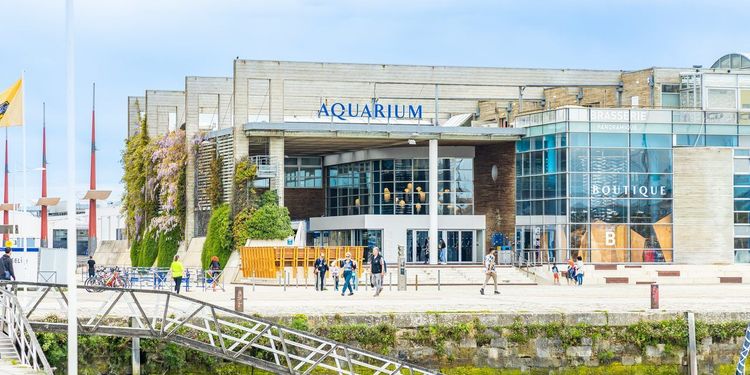
The aquarium is located just steps from the Vieux-Port de La Rochelle, a few minutes' walk from the medieval towers. Its central location makes it accessible from every point in the city centre without a vehicle.
On foot: from the Tour de la Chaîne or the Tour Saint-Nicolas, allow five minutes walking north along the quay.
By car: the most convenient car park is the Gabut car park (4 Rue de la Gabut, 17000 La Rochelle, rated 4.6/5 on Google from 31 reviews), directly adjacent to the aquarium. During peak season it often fills up before 10:30 am — plan to arrive early or fall back on the city-centre car parks (Parking de la Ville-en-Bois, Parking Delmas), a ten-minute walk away.
By train: La Rochelle's SNCF station is approximately twenty minutes on foot from the aquarium, or seven to eight minutes by bus. Line 3 of the Yélo network provides a direct link from the station.
By bike: La Rochelle is one of the best-equipped cities in France for urban cycling. Cycle paths connect the station and the main hotel areas directly to the aquarium. Secure bicycle parking is available in front of the entrance. On foot, the same route follows the Vieux-Port, where our audio-guided tour of the White City begins.
Tips to Make the Most of Your Visit
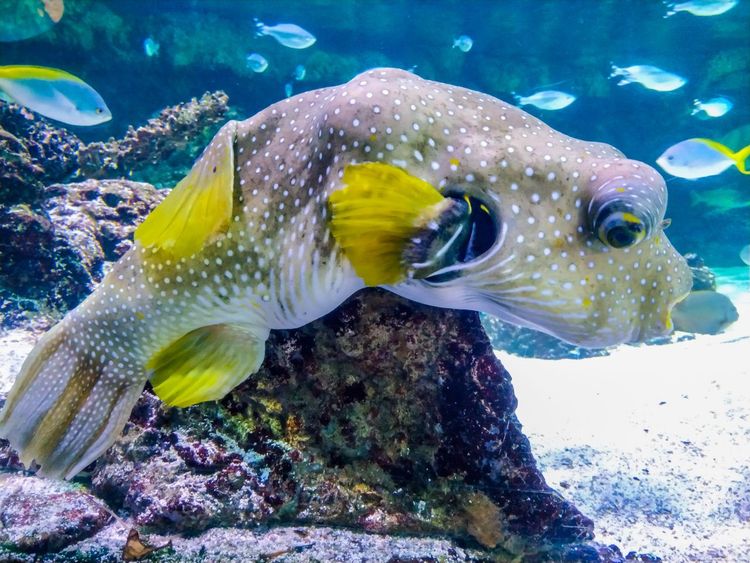
Arrive early or very late. The aquarium opens early in the morning and the first hours are consistently quieter. The peak footfall falls between 10:30 am and 2:00 pm. If you cannot arrive early, come in the late afternoon: most school groups and families with young children will already have left.
Visit on a rainy day. Counter-intuitive for a seaside stay? Not at all: the aquarium is entirely indoors. On bad-weather days, when the beach loses its appeal, visitors do head there in greater numbers — but in far fewer numbers than on a fine August Saturday. The trick works particularly well in June and September.
Prepare the youngest visitors. The darker sections — the jellyfish gallery and the deep-sea zone — can startle children under five. The design of the spaces has clearly taken this into account, but a word of preparation beforehand can turn surprise into discovery rather than fright.
Read the panels. Many visitors walk past the information boards without stopping. The aquarium has invested in serious scientific mediation: facts about each species, data on ecological threats, unexpected biological anecdotes. Allow a third more time if you tend to read everything — it is well worth it.
Don't overlook the shop. At the end of the route, it is worth a look beyond the classic souvenirs. The selection of books on marine biology, identification guides for Mediterranean and Atlantic species, and the aquarium's own-brand products make for a thoughtful shop — free of the pointless gadgets you often find in this type of establishment.
Book your ticket online. Even if it seems unnecessary out of season, the process takes two minutes and guarantees access to your preferred time slot. In July and August, it is simply essential.
Visiting the Aquarium with Children
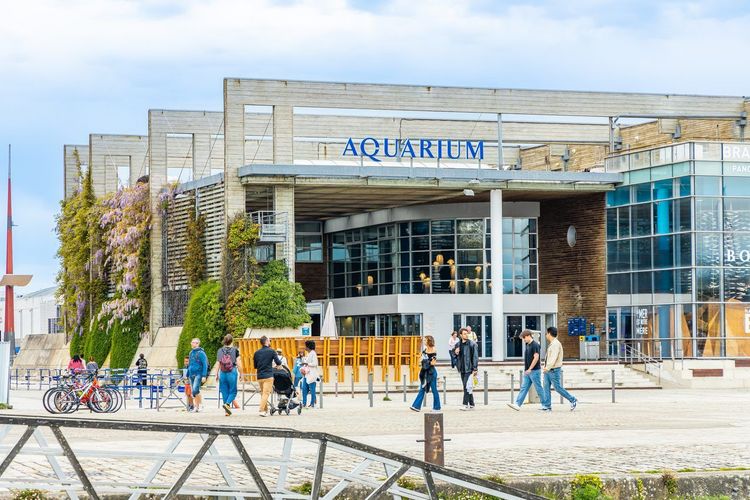
This is undoubtedly the primary motivation for many families, and the aquarium does not disappoint on this front. The route is fully pushchair-friendly, accessible step-free or by lift, and designed to hold the attention of younger visitors from start to finish. The tanks where you can observe certain coastal species up close are among the most memorable moments for children aged 4 to 8.
A few precautions nonetheless. The darker spaces — such as the deep-sea zone or the jellyfish gallery — can overwhelm very young children: a brief explanation before entering is usually enough to turn apprehension into wonder. Also pack a snack, as two hours of visiting quickly works up an appetite in the youngest visitors.
For children over eight, the visit app with its augmented reality content turns the route into a treasure hunt. And the exit shop, rich in identification books and marine species soft toys, rounds off the visit on a playful note without descending into gimmickry.
The La Rochelle Aquarium and Ocean Conservation
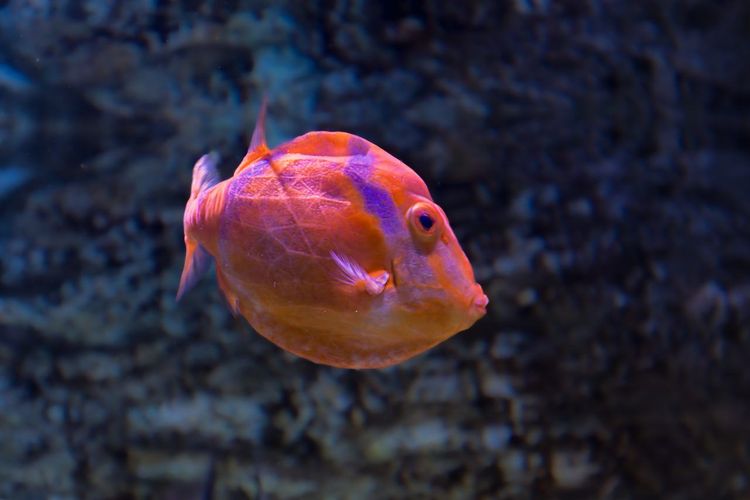
The La Rochelle Aquarium has progressively established itself as a committed player in marine conservation, far beyond its role as a tourist attraction. It co-funds several research programmes on Atlantic wildlife in partnership with French universities and oceanographic institutes: monitoring of shark populations in the Eastern Atlantic, studies on the impact of endocrine disruptors on coastal species, and surveillance of seahorses along the Charente coastline.
This commitment is reflected in the visit itself. Information about endangered species is presented without unnecessary alarm, but with a precision that leaves little doubt about the true state of marine ecosystems. Children leave with practical fact sheets, concrete actions to try at home, and often questions that go well beyond the scope of the visit.
The aquarium also supports marine litter clean-up operations along the Charente coastline, involving both internal teams and the general public through events open to all. An opportunity to see the teams outside the context of the visit, and to understand concretely what "acting for the ocean" means at a local level.
This is what sets this establishment apart from a simple attraction: the visit leaves a mark. Not an anxiety-inducing message, but a new awareness of what the ocean represents and what its impoverishment truly means.
What to Do Around the Aquarium
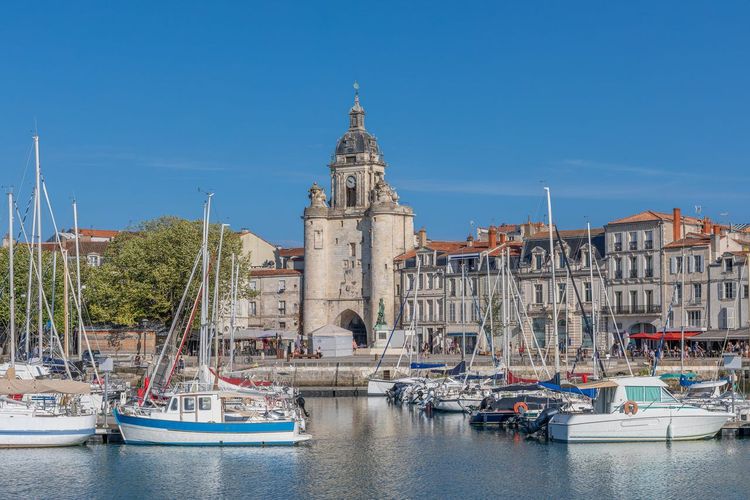
The aquarium is ideally placed to follow up with a discovery of La Rochelle's historic heart. Five minutes' walk away, the Vieux-Port offers a panorama of the medieval towers and pleasure boats that make this city one of the most photographed on the Atlantic coast.
The Tour Saint-Nicolas and Tour de la Chaîne can be visited independently or with a combined ticket including the Tour de la Lanterne. These three monuments tell eight centuries of port history, from the Crusades to the Wars of Religion. The Tour de la Lanterne preserves graffiti carved by prisoners over the centuries — one of the most striking curiosities in the city, and largely unknown to visitors who do not venture inside.
The Musée Maritime de La Rochelle (Place Bernard Moitessier, 17000 La Rochelle, rated 4.6/5 on Google from 3,819 reviews), a few hundred metres away, naturally complements the aquarium visit with a dive into the history of navigation. The boats moored at the dock, which can be visited, provide a wonderful playground for children and a fascinating space for adults with a passion for maritime history.
For those who wish to explore the city at their own pace after the visit, the Ryo audio guide of La Rochelle offers 27 listening stops over 6.1 km. It covers the Gabut neighbourhood, just steps from the aquarium, through to the hidden alleyways and arcades of the White City — a way to make what you have just seen in the tanks resonate with the city's maritime history.
For a stay of several days, the article on things to do in La Rochelle and the surrounding area lists the best options within an hour's radius, from the marshes of the Poitevin to the islands of Ré and Oléron.



FAQ
How much time should you plan to visit the La Rochelle Aquarium?
Allow a minimum of two hours to explore all the areas without rushing. If you are coming as a family with curious children, or if you tend to read the information panels, plan for two and a half to three hours. School groups are generally given two supervised hours, but adults with a passion for marine biology could easily spend an entire morning there without getting bored.
What are the admission prices at the La Rochelle Aquarium in 2026?
In 2026, the indicative prices are approximately €18.50 for an adult (18 and over), €14.50 for a junior (13 to 17 years old), €12.50 for a child (3 to 12 years old), and free for children under 3. A reduced rate (a discount of around €2 per ticket) applies to adult students, people with disabilities, and large families. Group rates are also available on request.
Is the La Rochelle Aquarium open all year round?
Yes, the La Rochelle Aquarium is open every day of the year, continuously and including public holidays. Opening hours vary by season: up to 8:30 am–11:00 pm in the height of summer with evening sessions, and 10:00 am–7:00 pm in winter. The last admission is consistently accepted 1 hour 30 minutes before closing, regardless of the time of year.
How do you get to the La Rochelle Aquarium from the city centre?
The aquarium is a five-minute walk from the Vieux-Port. From La Rochelle's SNCF station, allow twenty minutes on foot or seven to eight minutes by bus (line 3 of the Yélo network). By car, the Gabut car park, directly adjacent to the aquarium, is the most convenient, but it fills up quickly during peak season — arriving before 10:00 am or planning an alternative car park is recommended.
Is there a restaurant or cafeteria at the Aquarium?
The aquarium has an on-site dining area, ideal for a break during or at the end of your visit. The offering is typical of a tourist attraction — sandwiches, salads, hot and cold drinks — without any gastronomic pretensions. For a more substantial meal, the Vieux-Port is packed with seafood restaurants just five minutes away on foot, with a view of the harbour to boot.
Is the La Rochelle Aquarium accessible to people with reduced mobility?
The aquarium is fully accessible to wheelchair users: lifts, ramps, and corridor widths suited to motorised wheelchairs. Reserved parking spaces are available in the adjacent car park. It is advisable to contact the aquarium in advance if specific needs must be anticipated in order to prepare the appropriate welcome conditions.
The La Rochelle Aquarium is one of the rare tourist sites in the city that deserves a second visit. Temporary exhibitions evolve, new species are added every year, and children who return two years later have a radically different experience. For adults too, coming back with fresh eyes completely changes what you notice behind the glass.
Before or after your visit, the Ryo audio guide of La Rochelle offers 26 audio stops through the White City — a way to extend the day without any time constraints, at your own pace, over 2h30 of walking across 6.1 km.
À lire également