© Shutterstock
 Votre guide Ryo
Things to Do in Niort in 2026: 16 Experiences Between a Medieval Keep and the Marais Poitevin
What is there to do in Niort when the city still has a reputation as a mere stopover between La Rochelle and Poitiers? The prefecture of Deux-Sèvres is well worth spending a full day in, or even a complete weekend. Its city centre retains a Plantagenet keep nine centuries old, a covered market dating from the 19th century that is still busy every morning, and a network of canals redeveloped along the Sèvre Niortaise. Less than twenty minutes away by car begins the Marais Poitevin, nicknamed the Venise Verte, where visitors still travel by flat-bottomed boat between pollarded ash trees.
Here, two life-size dragons watch over the quays, a pop-up beach with deck chairs and an open-air bar appears every summer by the river, and the century-old market halls feed an entire city every morning except Monday. This guide details sixteen experiences to build a complete stay in Niort, from medieval heritage to the best local restaurants, taking in gardens, the Marais Poitevin, and a possible day trip to Poitiers. Since Poitou is rarely explored in a single visit, the Ryo audio guide for Poitiers extends this guide northward through the region, with sixteen audio tracks to listen to while walking. Open the Ryo app before you set off: several historic neighbourhoods are narrated in audio, letting you wander without your nose buried in a map, even on a quick first visit.
1. The Donjon de Niort, the Essential Medieval Fortress
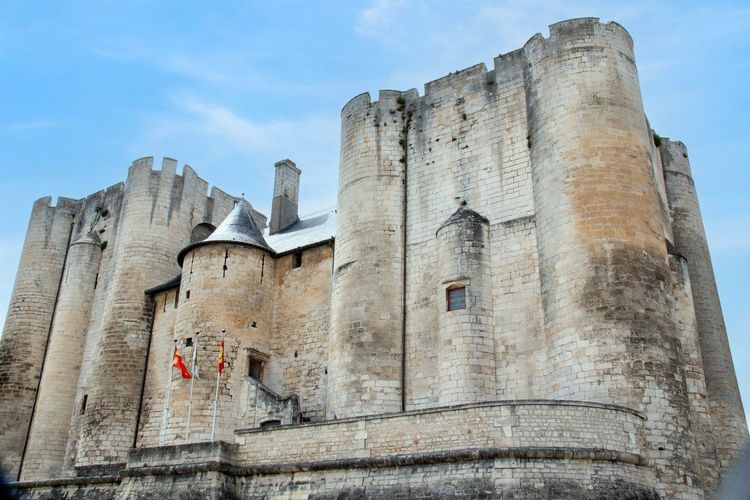
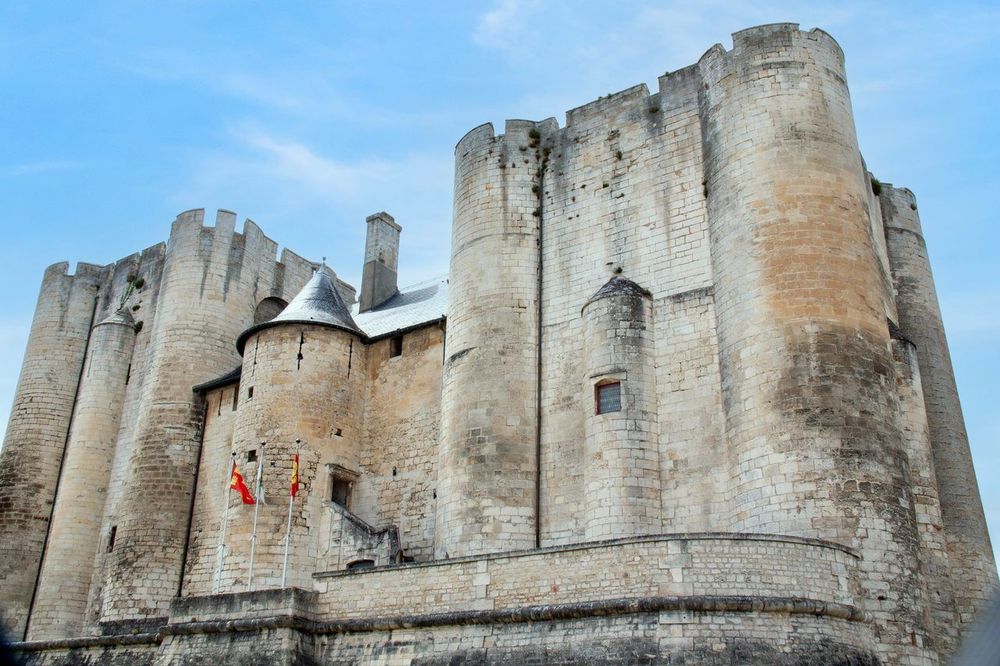
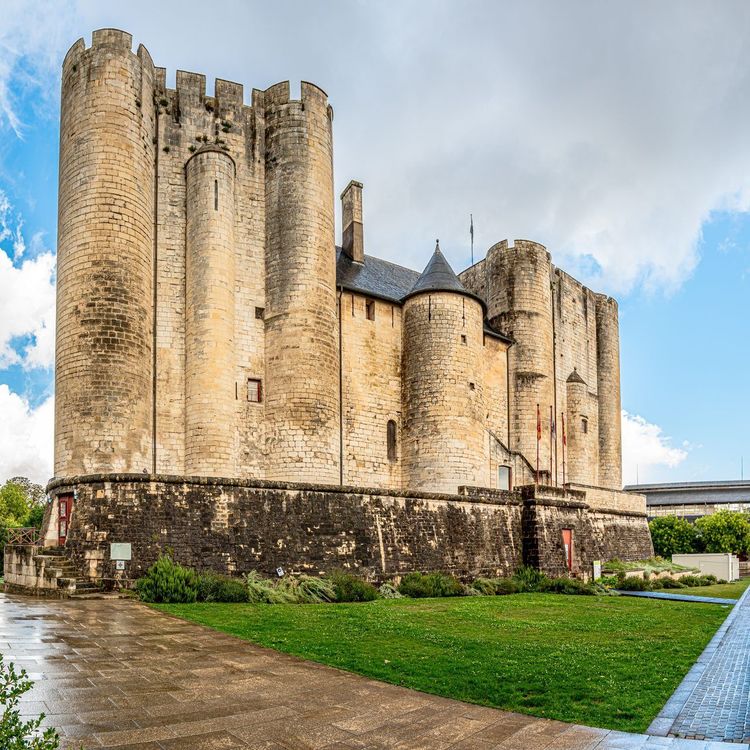
The Donjon de Niort (Place du Donjon, 79000 Niort, rated 4.3/5 on Google with 1,312 reviews) has dominated the Sèvre Niortaise since the 12th century. Two square towers linked by a central residential block are what remains of the fortress conceived by Henry II Plantagenet and completed under the reign of Richard the Lionheart. The building has survived nine centuries without losing much of its defensive silhouette, with walls more than two metres thick at the base.
The history of the keep is inseparable from that of Eleanor of Aquitaine. Following her marriage to Henry II Plantagenet in 1152, Niort became a strategic stronghold within the vast Angevin empire that stretched from Scotland to the Pyrenees. Richard the Lionheart stayed here on several occasions before ordering the existing defences to be reinforced. This Anglo-Angevin chapter explains why the Niort keep resembles the fortresses of the Loire Valley more than the later castles of Poitou, built once the duchy had been absorbed into the kingdom of France.
Look closely at the two towers from the opposite bank: they are not twins. One has retained more of its original defensive features, the other was modified over the centuries, and the residential block linking them is the result of a later building campaign. This discrepancy explains the slightly lopsided silhouette of the monument, which visitors often notice before they even know its history.
The interior traces this long and eventful history: the guardroom, spiral staircases, and above all the marks left by prisoners — the building served as a prison for several centuries before being converted into a museum. The audio commentary in the Ryo app covers this lesser-known period of incarceration, less famous with the general public than the Plantagenet era but equally revealing of the building's history. The keep today houses collections of ethnography and local history, with Poitevin headdresses and everyday objects at the forefront, telling the story of Niort before industrialisation.
The rooftop terrace offers the best possible view over the rooftops of Niort and the winding course of the river. Allow around 45 minutes for a full visit, a little longer if you climb to the top via the narrow staircase, which is not recommended for those prone to vertigo. Admission is charged at a modest fee for adults and is free for younger visitors, and the keep has one weekly closing day as well as certain public holidays: check opening times with the tourist office before you visit, as they change between low and high season. Book your slot in summer, as groups often fill the morning sessions.
A tip for photographers: the raking light of late afternoon, between April and September, is magnificent on the limestone of the keep when viewed from the banks of the Sèvre. This is also the angle from which most postcards of Niort have been composed for over a century. Families will appreciate the ground floor, accessible without tackling the steepest stairs, and children quickly spot the arrow slits and latrines set into the thickness of the walls — details that often speak louder than any information panel.
2. The Halles de Niort, Between a Covered Market and Local Life
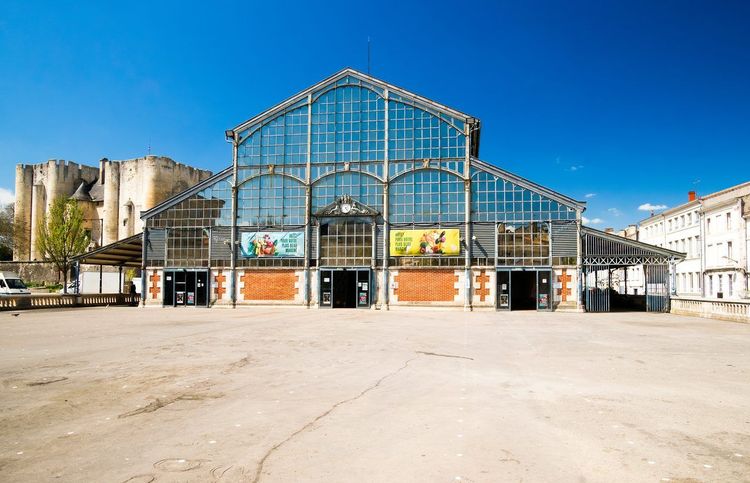
The Halles de Niort (Place du Marché, 79000 Niort, rated 4.5/5 on Google with 3,413 reviews) have occupied the heart of the city since the second half of the 19th century. Their metal framework, typical of the Baltard style then fashionable throughout France, shelters dozens of food stalls every morning: market gardeners, fishmongers, cheesemongers, and greengrocers from across the Deux-Sèvres département.
The market runs several mornings a week, including Sunday, with peak footfall on Saturday around 10am and a day off on Monday. To avoid the crowds while still enjoying the full range of producers' stalls, aim to arrive around 8:30am on a weekday. You will find candied angelica, an emblematic local speciality, AOP Charentes-Poitou butter, and mogettes — the white beans that traditionally accompany grilled ham.
This building also tells the economic story of the city. Niort long relied on river trade: goods were brought up the Sèvre from the ocean to the wharves of the city centre, and the Halles were built to concentrate in one place a trade previously scattered across several squares. The market hall escaped the demolitions of the 1960s and 1970s that wiped out so many metal covered markets elsewhere in France, and was then restored to recover its original transparency. The tall glazed roof panels explain the quality of light that often surprises visitors on their first visit.
Beyond stocking up, the Halles function as a social hub: several stalls offer food to eat on the spot, oysters and white wine above all, particularly at weekends. Wandering between the stalls remains one of the most vivid ways to take the pulse of the city before setting off to explore the rest of the historic centre. In the evening, the square surrounding the building comes alive differently, with a few bars and restaurants keeping the atmosphere going until late, especially on Fridays.
3. The Musée Bernard d'Agesci, Fine Arts and Natural Sciences
Housed in the city's former girls' high school, the musée Bernard d'Agesci (24 Avenue Bujault, 79000 Niort, rated 4.5/5 on Google with 366 reviews) brings together under one roof collections that elsewhere would fill several separate institutions.
The route combines painting — with canvases from the 17th to the 20th century including several portraits by regional artists — local archaeology, and natural history, a section particularly popular with children for its display cases of taxidermied birds and minerals. One room is also dedicated to musical instruments and the history of the conservatoire, which pleasantly sets the visit apart from the standard fine arts museum experience.
Allow an hour and a half for a full visit, two hours if you linger over the temporary exhibitions, which are generally renewed two or three times a year and often build a dialogue between the historic collections and contemporary creation. Ask about free admission slots, which are common in Niort's municipal museums, particularly during major national heritage events. This is also an excellent fallback option when the weather turns, as the entire route is covered and indoors.
4. The CACP Villa Pérochon, Centre for Contemporary Photography
Less well known than the musée Bernard d'Agesci, the Villa Pérochon houses the Centre d'Art Contemporain Photographique, one of the most active photography venues in the Nouvelle-Aquitaine region.
The programme changes several times a year and focuses on emerging or mid-career photographers, with carefully hung exhibitions inside a bourgeois manor house surrounded by a garden. Admission is free, making it an easy cultural pause to slot in between two visits to the historic centre, just a few minutes' walk from the Donjon.
Few mainstream travel guides linger here, which leaves the rooms surprisingly quiet even at the height of the season. Enthusiasts of contemporary photography will find a different perspective on current creative work, far removed from the classic heritage collections on display elsewhere in the city. A catalogue usually accompanies each exhibition, available to purchase at the reception for those who wish to continue their discovery once home.
5. The Église Saint-André and the Historic City Centre Heritage
With its two neo-Gothic spires visible from almost every point in the city centre, the église Saint-André serves as a natural landmark the moment you look up. Rebuilt in the 19th century after the ruin of the previous building, it contrasts with the neighbouring medieval monuments through the verticality of its architecture and its stained-glass windows, restored during successive campaigns.
Niort organises its historic centre around four clearly identifiable areas: the Donjon quarter around the Plantagenet fortress, the Halles quarter centred on commercial life and the daily market, the Saint-André quarter around the church of the same name, and the port sector towards the Sèvre Niortaise. Knowing these four zones makes it much easier to plan a walking visit, as each is connected to the others by pedestrian streets within ten minutes at most. This neighbourhood-by-neighbourhood layout, inherited from the medieval street plan, remains clearly legible today despite the urban expansion of the 19th and 20th centuries.
The Pilori, a Renaissance former town hall set in the middle of its own small square, completes this heritage trail. Its polygonal plan, turrets, and belfry make it one of the most photographed civic buildings in the centre, today used as an exhibition space. Walk all the way around it: the facade changes completely depending on which street you approach from, and few Niort monuments can be observed from every angle in quite the same way.
Between these monuments, the commercial city centre rewards aimless wandering. Rue Ricard, the main pedestrian street, concentrates independent shops and national chains. The narrower streets that branch off it retain more historic facades and food shops — bakeries and wine merchants above all. You will come across timber-framed houses squeezed between more recent buildings, evidence of the successive reconstructions the city has undergone through fires and wars.
For a first introduction to the historic centre, allow a good half-day including the church, the shopping streets, and a stop at the Halles. Architecture enthusiasts will take their time looking up: several historic facades, particularly around the place de la Brèche, have kept their original ironwork — balconies and door knockers included — discreet but perfectly visible to anyone who takes the time to look.
6. The Dragons de Niort, the City's Artistic Curiosity
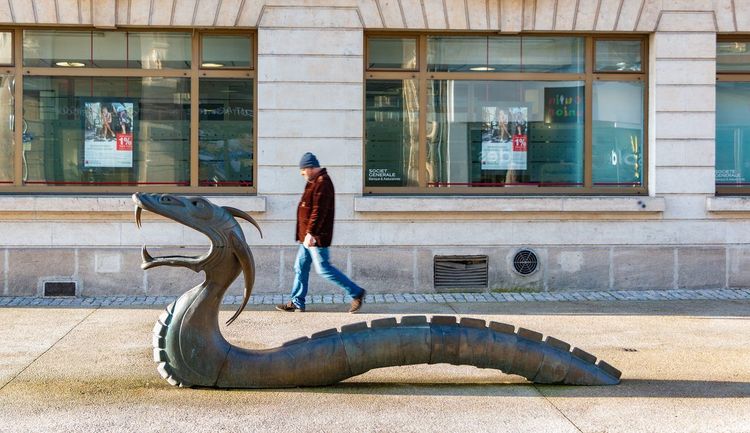
Two monumental dragon sculptures watch over the banks of the Sèvre Niortaise, a stone's throw from the city centre quays. These Dragons de Niort (Quai Maurice Métayer, 79000 Niort, rated 4.5/5 on Google with 15 reviews) have established themselves within a few years as one of the city's most shared photo spots on social media, to the point of becoming a local meeting place for residents.
Their presence is part of a wider effort to enhance the riverbanks, undertaken alongside the redevelopment of the Sèvre's edges. Unlike the religious or military monuments that dominate the rest of Niort's heritage, the dragons have neither a historical function nor a religious meaning: they are purely contemporary urban art, designed to surprise walkers as they turn a corner along the towpath.
The visit takes only a few minutes, but fits perfectly into a riverside stroll. Come in the late afternoon if you can: the evening light accentuates the relief of the sculpted scales and the flow of school groups, which are numerous in the morning on this busy stretch, has eased off.
7. Niort's Gardens and Parks: Jardins de la Brèche, Jardin des Plantes, and Parc Pré-Leroy
Niort has several green spaces each worth a detour, starting with the Jardins de la Brèche (Place de la Brèche, 79000 Niort, rated 4.3/5 on Google with 974 reviews), laid out on the vast esplanade separating the old town from the outer districts. This formally designed garden, with its geometric flowerbeds and basins, serves as the green lung at the heart of the city centre and regularly hosts Christmas markets or funfairs depending on the season.
A few minutes' walk away, the jardin des Plantes occupies a more intimate valley, planted with remarkable species since the 19th century, including several century-old trees. Its uneven terrain, quite unusual for an urban botanical garden, creates surprising viewpoints over the surrounding rooftops. It is a popular spot for families thanks to its play area and for joggers thanks to its shaded paths, which are particularly busy on summer evenings from the first warm days of spring.
The Parc Pré-Leroy, beside the Sèvre, completes this offer with open lawns, play areas, and direct access to the riverbanks. This is where weekend picnics tend to concentrate, particularly in spring when the flower beds are at their best. A few outdoor fitness stations round out the offering for visitors who want to stretch their legs before heading back into the city centre.
These three spaces connect easily on foot in a loop of about an hour and a half without counting stops, making them an ideal option for a quiet morning between two heritage visits. Bring water in summer: the shade is uneven depending on the zone, particularly around the open lawns of Pré-Leroy.
8. The Coulée Verte and Port Boinot, a Walk Along the Sèvre Niortaise
The Coulée Verte runs along the Sèvre Niortaise for several kilometres, from the city centre to the outskirts of Saint-Liguaire. This route, developed for both pedestrians and cyclists, passes through former industrial sites converted into walking areas and skirts reed beds where grey herons and kingfishers nest, best spotted early in the morning if you stop for a few minutes.
The most logical starting point is Port Boinot (Rue du Pont, 79000 Niort, rated 4.6/5 on Google with 902 reviews), a former chamois leather and tanning works transformed into a large public park and cultural venue in the late 2010s. The brick chimneys, preserved during the renovation, bear witness to Niort's industrial past: the city was long one of France's leading centres for leather working and chamois skin, an industry that still employed thousands of people at the start of the 20th century.
The site is worth the detour even without any intention of walking far: gently sloping lawns down to the river, a footbridge, water features that children love in summer, and a direct view of the keep. This is the best place in Niort to take in at a single glance how the city was shaped by its river, its industry, and its fortress. In season, events and concerts are regularly held here in the late afternoon.
Renting a bicycle or a boat to travel along the river is one of the most enjoyable ways to discover Niort beyond the streets of the centre. Several operators offer rentals directly from around Port Boinot, at hourly or half-day rates. Allow around two hours for a return cycling trip to the hamlets downstream, with a possible stop at Pré-Leroy mentioned above. More experienced cyclists can continue to the first villages of the Marais Poitevin, as the Coulée Verte gradually merges with the canal network described later in this guide.
9. Niort Plage and the Essential Summer Events
Every summer, the city sets up Niort Plage (Quai Maurice Métayer, 79000 Niort, rated 4.6/5 on Google with 28 reviews) on the banks of the Sèvre: sand, deck chairs, inflatable rides for children, and a pop-up bar make up the scene for several weeks, generally from July to late August.
Entry is free and the atmosphere is very family-friendly, with a programme of activities that varies each week: dance classes, pétanque tournaments, children's shows in the late afternoon. It is often the first thing Niort residents think of on a sunny Sunday, in the absence of a natural beach close to the city.
The Apéros du Mardi, another well-established summer fixture, transforms a different part of the city each week into a giant terrace with food and free concerts; gardens, squares, and quays take turns on the calendar, which keeps many regulars following the programme from one week to the next. The Festival Marché Gourmand brings together local producers and restaurateurs for outdoor tastings, often set up just a few steps from the Halles mentioned earlier. If you are wondering what to do in Niort today or over a weekend in high season, check the tourist office's calendar before even locking in your heritage visits: the programme changes from year to year and a well-timed evening out can be worth as much as an extra monument.
10. A Trip to the Marais Poitevin, the Venise Verte
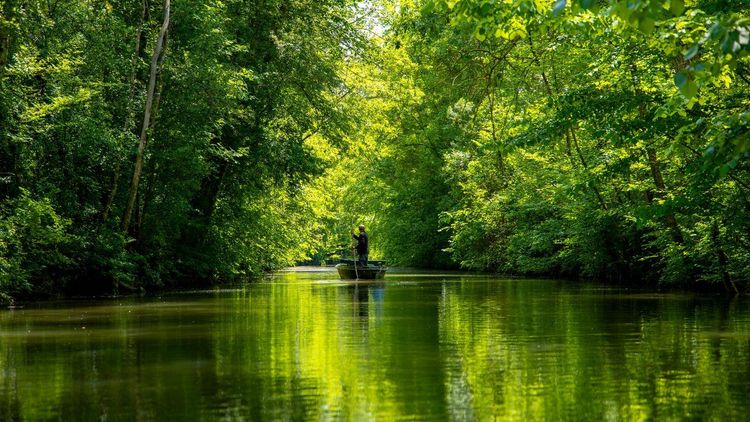
Less than twenty minutes from the centre of Niort by car, the Marais Poitevin begins — one of the largest wetlands in France. The Marais Mouillé sector, nicknamed the Venise Verte, is traditionally explored by flat-bottomed punt, propelled with a paddle by a boatman or independently by visitors who prefer to row themselves.
The village of Coulon, about ten kilometres from Niort, is the historic hub for exploring the marshes and likes to present itself as their capital. Its white houses with coloured shutters, lined up along the Sèvre, make it the most photographed village in the area. Several landing stages offer trips lasting one to one and a half hours through canals lined with pollarded ash trees — trees pruned for generations to provide wood without being felled, an agricultural technique that has shaped the entire marsh landscape for centuries.
Coulon is not the only departure point. The landing stages at Arçais, La Garette, and Magné offer comparable trips with noticeably fewer visitors in July and August, and easier parking. Prices vary depending on the option chosen — guided boat with boatman or self-guided rental — and are most often paid on the spot at the time of boarding.
One detail that always amuses visitors: in certain waterways, the boatman holds a flame to the mud disturbed by his pole, and the methane released ignites at the surface. This fire on the water, spectacular and entirely natural, has been part of local folklore ever since guides first brought curious visitors into the marshes. The boatmen's commentary is also well worth the price of the trip: many are the sons or grandsons of marshland farmers and speak of the marsh as a workplace, not merely as a backdrop.
The best time to visit is spring, between April and June, when the vegetation is at its fullest and water levels allow easy navigation through all the canals. In summer, particularly in August, some of the narrower waterways can become difficult to access during prolonged drought, a phenomenon that has become increasingly common in recent years. Autumn, however, offers particularly photogenic light on the yellowing foliage, with noticeably lower visitor numbers and sometimes more competitive rental rates.
Beyond the boat, the marshes also lend themselves to hiking and cycling, with several waymarked routes running alongside the canals without any need for a boat, some of which connect directly to the Coulée Verte in Niort mentioned earlier. For families, some operators offer electric boats that are easier to handle than a traditional paddle, as well as one-hour guided tours focused on local wildlife — herons, coypu, and dragonflies above all. Book your slot in advance in July and August: morning departures, cooler and less crowded, tend to go first.
11. Poitiers and the Futuroscope, a Day Trip from Niort
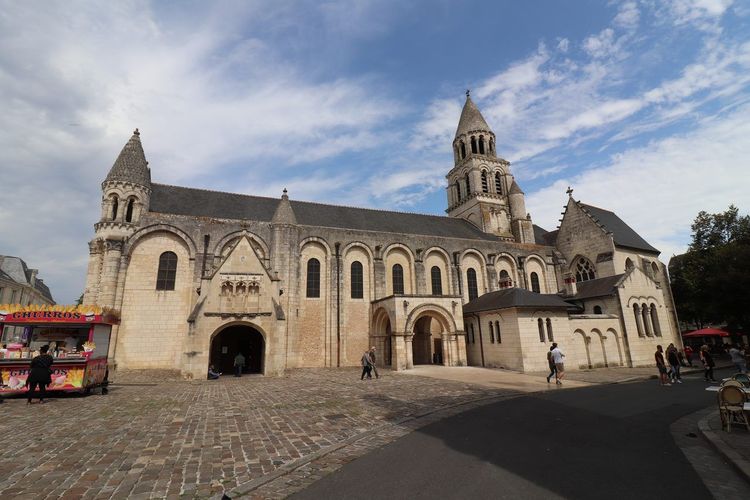
Just under an hour's drive to the north-east, Poitiers naturally complements a stay in Niort, particularly if you are spending several days in the region. The city, the former capital of Poitou, retains a dense historic centre, with the église Notre-Dame-la-Grande and its sculpted Romanesque facade among the most visited in the region, as well as a network of pedestrian streets perfect for an evening stroll.
To prepare for this stage, the Ryo audio guide for Poitiers offers a self-guided tour of 16 audio tracks and around two hours through the historic centre — a great way not to miss the architectural details least visible from the street. Our Ryo article on the best things to do in Poitiers usefully supplements this first overview for those with a full day to spend there, with suggestions that go beyond the historic centre alone.
North of Poitiers, the Futuroscope attracts more than a million and a half visitors every year with its technology-driven attractions and evening shows. It is a worthwhile option for extending a Niort visit by an extra day, particularly with children or teenagers, as the park regularly refreshes a portion of its headline attractions.
Before you go, the Ryo audio guide dedicated to the Futuroscope details tips for avoiding queues and organising your day efficiently — invaluable advice given how much there is to fit into a single visit.
12. Things to Do in Niort with the Family
With children, several of the places already mentioned take on an added dimension. The musée Bernard d'Agesci easily fills an hour thanks to its natural sciences section, while the ground floor of the Donjon can be visited without tackling the steepest staircases.
For outdoor time, the jardin des Plantes with its play area and the Parc Pré-Leroy with its open lawns give younger children plenty of space to run around safely. In summer, Niort Plage remains the easiest option for filling an entire afternoon without spending a penny, between inflatable rides and weekly organised activities, with enough shaded areas for the youngest children.
Families looking for variety will enjoy an electric boat trip in the Marais Poitevin, easier to handle than a traditional punt and suitable for children from age 4 or 5 with a life jacket. Allow a good full day if you combine the time on the water with lunch in Coulon, where several restaurants offer children's menus and shaded riverside terraces.
Finally, for days when energy is overflowing, the Dragons de Niort make for a fun and quick walking destination, perfect as a complement to a more leisurely visit to the historic centre. Younger children generally enjoy spotting the sculpted details on the scales more than listening to the historical explanations of the nearby monuments, making it a welcome break between two visits that demand more of their attention.
13. Things to Do in Niort When It Rains: Indoor Activities
What is there to do in Niort when the rain arrives? The city has several covered options that can save a stay from being wasted. The musée Bernard d'Agesci tops the list, with two to three hours of possible visiting between painting, archaeology, and natural sciences — more than enough to fill a rainy morning without ever having to step outside.
The CACP Villa Pérochon (6 Rue de l'Abreuvoir, 79000 Niort, rated 4.7/5 on Google with 36 reviews) is a second cultural option, shorter but equally comfortable, with its fully covered exhibition rooms. The Halles de Niort, despite being partly open to the outside, remain perfectly usable in a shower since most of the structure is sheltered by the metal roof, with a few adjacent cafés where you can wait out the rain in the dry.
For a more relaxing break, several wellness centres in the city centre, detailed below, can turn a rainy day into a spa retreat. In winter, between November and February, the top indoor activities to prioritise remain the two museums and the Halles, supplemented by the many cafés and tea rooms in the historic centre where you can sit comfortably while waiting for a break in the clouds — not forgetting the city-centre cinemas for an impromptu screening at the end of the day.
14. Where to Eat and Taste Local Specialities in Niort
Niort's cuisine draws heavily on the resources of the Marais Poitevin and Deux-Sèvres. Angelica, a plant that has been candied for several centuries, is available as sweets, liqueurs, and pastries in several shops in the city centre, particularly near the Halles. It is one of the rare candied products in France still prepared largely by hand, the plant being harvested within a very limited radius around Niort.
Mogettes, white beans grown in the region, traditionally accompany grilled ham cooked over vine shoots, a dish that appears on many menus in the historic centre. Chabichou du Poitou, an AOP goat's cheese in the shape of a small truncated cylinder, often completes local cheeseboard selections and is worth seeking out at one of the cheesemongers in the Halles, several of whom offer tastings before purchase. Tourteau fromager, a cake with a black crust made from goat's cheese, slips easily into a backpack for an afternoon snack.
For a quick lunch between visits, several addresses around rue Ricard and the place de la Brèche offer accessible lunchtime menus, often built around produce sold that same morning at the market. In the evening, restaurants along the Sèvre and near Port Boinot offer a more relaxed setting, with river views from the terrace tables, particularly sought after between May and September. Two useful habits: book by Thursday for a weekend dinner in summer, and check closing days — often Sunday evening and Monday in the centre.
In Coulon, on the edge of the Marais Poitevin, several restaurants specialising in mogettes with ham and eels — a local tradition tied to fishing in the canals — usefully round off a day trip. Book ahead at weekends: capacity is limited in this village of a few thousand inhabitants, and the best tables are often full from Friday evening in season.
15. Relaxation: Wellness Centres and Spas in Niort
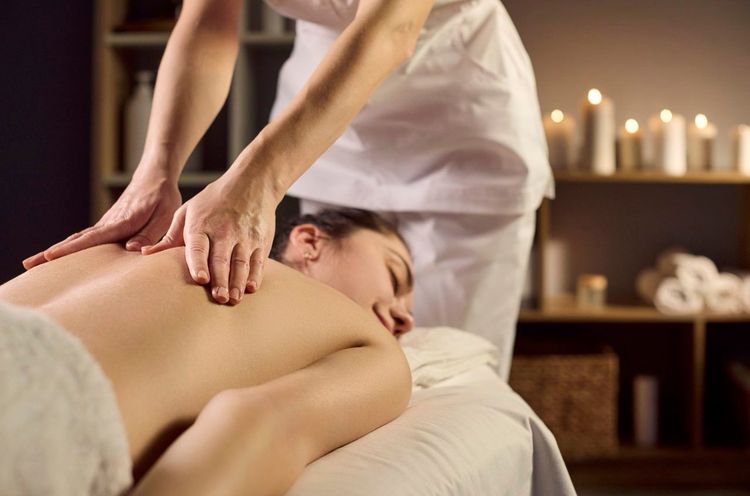
After a day's walking between the Donjon, the Halles, and the gardens, several wellness centres in the city centre and on the outskirts offer massages and body treatments by appointment. Some hotels also have their own spa facilities, sometimes accessible to non-residents during allocated slots.
This relaxing break is particularly well suited to the end of a stay, before heading back to Poitiers or La Rochelle, or as a comfortable alternative on the rainy days mentioned above. Expect to pay between 50 and 90 euros for a one-hour treatment, with noticeable variation depending on the establishment and the season.
16. Where to Stay in Niort, Getting Around, and When to Go
Niort concentrates most of its accommodation in three areas: the historic city centre, within walking distance of all the monuments mentioned above; the area around the train station, convenient for visitors without a car; and the nearby outskirts of the agglomeration, where most chain hotels with free parking are found.
The city centre remains the most comfortable choice for exploring Niort on foot: the Donjon, the Halles, the église Saint-André, and the jardins de la Brèche are all within fifteen minutes' walk of each other. For a multi-day stay combining Niort and Poitiers, the Ryo guide for Poitiers also offers accommodation leads in a larger city with a wider range of establishments in high season, particularly around the Futuroscope for families. Bed and breakfasts in the villages of the marshes — Coulon, Magné, or Sansais — offer a third option that is often more immersive, provided you are happy with ten to twenty minutes of driving morning and evening. Campsites and motorhome areas on the edge of the marshes round out the summer offer, often just a few hundred metres from a landing stage.
For transport, Niort is served by a TGV station that puts it just over two hours from Paris Montparnasse on the line continuing to La Rochelle, and by the A83 motorway linking it to Nantes to the north and connecting with the A10 towards Bordeaux to the south. A car is nevertheless recommended for reaching the Marais Poitevin, which is poorly served by public transport from the city centre. Within the city, the agglomeration's bus network and several bike-hire stations are more than adequate for getting between the main sites: several free car parks ring the centre, including those below the place de la Brèche, saving you from circling in search of a space on market days.
As for the best time to go, spring — April to June — remains the best compromise: the marshes are in full vegetation, terraces are open, and visitor numbers are still manageable. Summer suits families who want to make the most of Niort Plage and the Apéros du Mardi, at the cost of higher visitor numbers and sometimes sweltering temperatures in early August. Winter, quieter, naturally favours museum visits and short walks, with generally more competitive accommodation rates than in high season and noticeably fewer people in the city centre streets.
For a first visit, spending one day in Niort is already enough to cover the historic centre (Donjon, Halles, église Saint-André, gardens) and fit in a short boat trip. A full weekend leaves time to add the Marais Poitevin without rushing, a wellness break, and possibly a day trip to Poitiers, adjusting the pace to suit the season and the weather.

FAQ
What are the must-see attractions in Niort?
The Donjon de Niort, the 19th-century covered market halls, and the église Saint-André form the heritage backbone of the city centre, complemented by the Pilori, Port Boinot, and its Coulée Verte along the Sèvre. Add to that the Dragons de Niort, an artistic curiosity installed by the riverbank, and a trip into the Marais Poitevin less than twenty minutes away by car, often cited as the highlight of any stay in the region.
What can you do in Niort when it rains?
The musée Bernard d'Agesci and the Villa Pérochon (CACP) offer several hours of indoor visiting, with collections varied enough to fill an entire morning. The Halles remain perfectly usable in a downpour thanks to their metal framework, and several wellness centres in the city centre can turn the day into a relaxing retreat.
What can you do in Niort and the surrounding area?
Beyond the city centre, the Marais Poitevin, 20 minutes away by car, and the village of Coulon naturally round out a visit. Poitiers, less than an hour away, adds a dense historic centre and access to the Futuroscope for an extra day trip, easily combined with a stay in Niort.
How much time should you allow to visit Niort?
A full day is enough for the historic centre and a short boat trip. A weekend allows you to add the Marais Poitevin at a leisurely pace, a wellness break, and possibly a day trip to Poitiers or the Futuroscope, depending on available time.
What can families with children do in Niort?
The musée Bernard d'Agesci, the jardin des Plantes, and the Parc Pré-Leroy are all well suited to children thanks to their play areas and shaded spaces. In summer, Niort Plage is the simplest option, while an electric boat trip in the Marais Poitevin is suitable for children from age 4–5 with a life jacket.
Can you visit Niort on foot?
Yes, the historic centre can be explored entirely on foot: the Donjon, the Halles, the église Saint-André, the jardins de la Brèche, and the Coulée Verte are all within fifteen minutes' walk of each other. Only the Marais Poitevin requires a car or bicycle from the city centre.
What can you do in Niort over a weekend?
A weekend allows you to combine the historic centre, a boat trip in the Marais Poitevin, and in summer, the Apéros du Mardi or the Festival Marché Gourmand depending on the schedule. It is best to book boat slots in advance during high season to avoid disappointment.
With its Plantagenet keep, century-old market halls, and the entrance to the wetland marshes right on its doorstep, Niort has enough heritage and nature to fill a multi-day stay without ever running out of things to do. The Dragons de Niort and Niort Plage are a reminder that a provincial city can reinvent itself without denying its history, provided you take the time to venture beyond the well-trodden paths of the centre.
If your itinerary then takes you north into Poitou, the Ryo audio guide for Poitiers naturally extends your exploration of the region, neighbourhood by neighbourhood, all the way to the gates of the Futuroscope.
À lire également