© Shutterstock
 Votre guide Ryo
Activities in La Rochelle and Surroundings: the 2026 Guide
Activities in La Rochelle and its surroundings hold many surprises. They extend far beyond what the city's reputation might suggest: yes, there is a Vieux-Port with terrace cafés and medieval towers, but there is also a nature reserve just two kilometres from the centre, one of Europe's largest aquariums, and an Atlantic coastline that opens onto two islands, labyrinthine marshes, and an arsenal city built on the orders of Colbert. La Ville Blanche truly lives up to its name: light bounces off the limestone with an intensity found nowhere else in France.
Above all, it is its geographical position that makes La Rochelle an exceptional travel base. Thirty minutes away, the Île de Ré unrolls 110 kilometres of cycle paths between vineyards and salt marshes. Less than an hour away, the Corderie Royale in Rochefort tells three centuries of naval history. At 1h30, the Marais Poitevin offers its green canals that look painted rather than real. To start exploring from the moment you arrive, the Ryo audio guide of La Rochelle takes you from the Vieux-Port to the outlying neighbourhoods: 26 audio stops, 2h30 of walking over 6 kilometres.
The Vieux-Port and the Three Medieval Towers
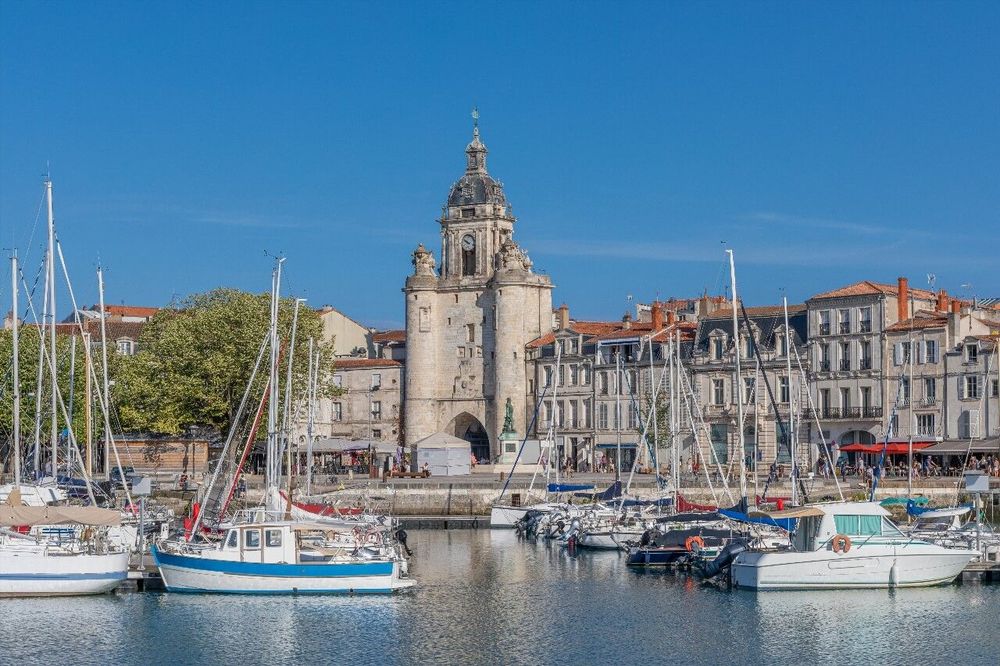
This is where everything begins in La Rochelle, and for many visitors, where everything ends too — sitting at a waterfront terrace. The Vieux-Port remains the epicentre of the city, lined with restaurants and pleasure boats, with the three towers that have given the city its international reputation as a backdrop.
The Tour Saint-Nicolas (14th century) is the most imposing on the southern side. Its 42 metres conceal a labyrinthine interior layout, designed to disorient potential invaders: the main staircase changes direction several times before reaching the panoramic terrace (the tower may occasionally close for works — check opening times before visiting). Opposite stands the Tour de la Chaîne, so named because an iron chain was stretched between it and Tour Saint-Nicolas every night to block the entrance to the harbour. Entry costs €6 for a single tower, or €9 for a combined ticket giving access to all three towers.
A ten-minute walk south, the Tour de la Lanterne rises along the coastal rampart. At 55 metres, it is the tallest of the three and the only tower in France to have served as a prison for English, Spanish, and Dutch sailors. Their graffiti still covers the interior walls: drawings of ships, initials, and dates carved into the soft stone. From the top terrace on a clear day, you can make out the Île de Ré to the west and the Vendée coast to the north.
Between the three towers, the quai Duperré and its arcades extend the promenade towards the rue du Palais. The people of La Rochelle use them 365 days a year to stroll sheltered from sun or rain — an architectural tradition dating back to the 12th century.
The La Rochelle Aquarium
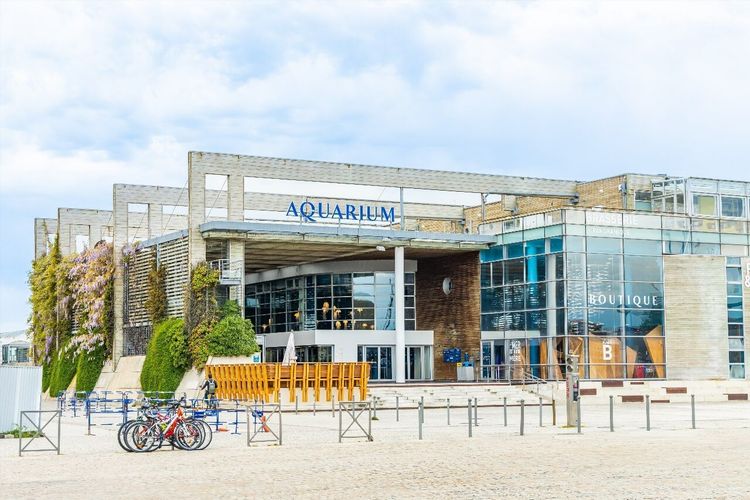
Allow at least two hours, three with children. The La Rochelle Aquarium is one of the largest private aquariums in Europe, with 12,000 animals spread across three levels and 70 tanks. What sets it apart from its competitors is a thematic progression by geographical zone (Atlantic, Mediterranean, Tropics, Arctic) that gives it an educational coherence rarely achieved at this type of venue.
The shark tank and the 14-metre underwater tunnel are the highlights. Less well known but equally striking is the jellyfish tank, bathed in blue light that makes it an almost meditative space. Adult admission: €18.50 (discounts for families and under-17s). Online booking is strongly advised in July and August, as queues can exceed an hour on rainy days.
For more detail, our La Rochelle Aquarium guide covers temporary exhibitions, up-to-date pricing, and practical visiting tips.
The Museums of La Rochelle
The city has a remarkable network of municipal museums, and several are free. The Musée du Nouveau Monde (10 Rue Fleuriau, 17000 La Rochelle, rated 4.3/5 on Google from 698 reviews), housed in the 18th-century Hôtel Fleuriau, traces the ties between La Rochelle and the Americas: from the spice trade to the slave trade. It is one of the few French museums to address this history directly, with period documents and pre-Columbian art collections.
The Musée Maritime warrants a half-day on its own: two vessels moored at the quay — a 1958 submarine and a lightship — can be visited from the inside. The space inside a submarine of that era gives a very concrete sense of the living conditions on board. More playful in spirit, the Musée des Automates brings together several hundred animated automata in an offbeat setting, enjoyed by adults and children alike.
The Beaches of La Rochelle
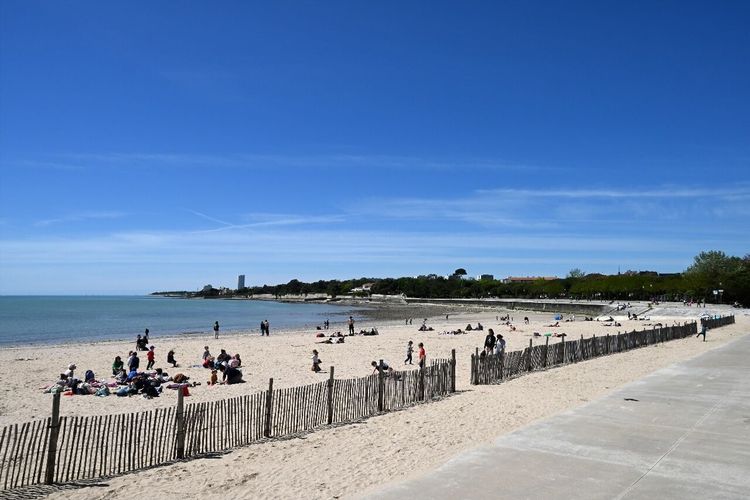
La Rochelle is not a seaside resort in the strict sense, but its beaches have a quiet charm. The Plage de la Concurrence (300 metres of fine sand) is a ten-minute walk from the historic centre, flanked by a public garden that separates it from the nearest streets. Ideal for a quick swim between sightseeing stops.
The Plage des Minimes (Avenue de la Plage des Minimes, 17000 La Rochelle, rated 4.3/5 on Google from 1,981 reviews), to the south, is larger and busier: it is also the departure point for water shuttles to the Île de Ré. Both beaches are reachable by bike from the centre via marked cycle lanes, or by bus number 10. If you are looking for wilder beaches, head to the Île de Ré or to Châtelaillon-Plage, 15 km to the south, where the sand stretches for several uninterrupted kilometres.
The Marais de Tasdon
Less than two kilometres from the city centre, the Marais de Tasdon (Chemin du Marais de Tasdon, 17000 La Rochelle, rated 4.4/5 on Google from 106 reviews) is a 70-hectare nature reserve in the middle of the urban area. It is a precious geographical anomaly: reed beds, wet meadows and canals shelter more than 200 species of migratory and resident birds. The grey heron is omnipresent; in autumn, migrations make the site a favourite stop for amateur ornithologists.
Access is free. The main trail covers around 3 km with no technical difficulty: wear suitable footwear if you visit after rain. The best observation window is from dawn until 9am, before the heat drives birds into shaded areas. An unexpected nature break, just ten minutes on foot from the arcades of the city centre.
Architecture and Streets of La Rochelle
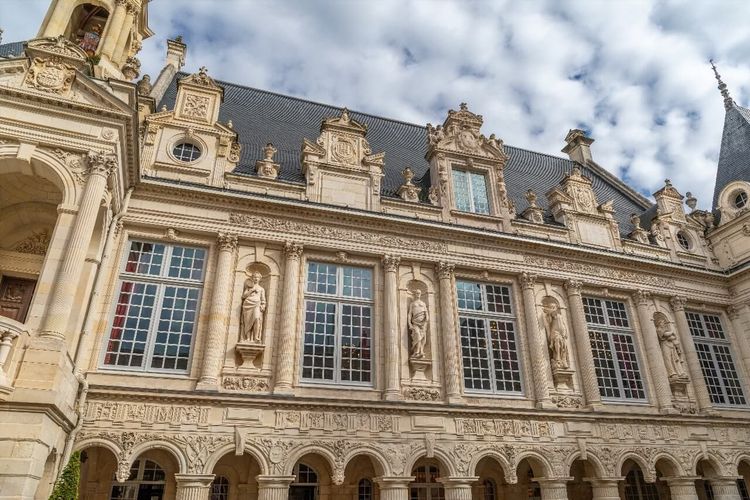
La Rochelle has preserved a medieval centre of rare coherence. Its kilometres of covered arcades, known as the "couverts", allow you to cross the heart of the city without encountering rain or sun. This 12th-century architectural feature was originally functional: to protect goods and buyers during weekly markets.
The Hôtel de Ville (late 16th century) is one of the finest in France: a flamboyant Gothic façade sheltered behind a Renaissance enclosure with colonnaded loggias. Guided tours are organised regularly during the season — enquire at the Tourist Office. Nearby, the Rue du Palais and the Rue Chaudrier are home to independent shops, bookshops, and galleries housed in 17th-century half-timbered buildings.
The La Rochelle audio-guided tour, accessible via the Ryo app, covers these historic neighbourhoods with 27 audio stops over 6 kilometres — an effective way to ensure you never walk past a remarkable façade without knowing its story.
Markets and Gastronomic Specialities
The Marché Central of La Rochelle takes place every morning in the covered market hall at the heart of the city. Oysters from Marennes-Oléron, mussels from the Baie de l'Aiguillon, fresh pink shrimps from local fishing boats: the fishmongers' stalls give a vivid sense of the region's maritime richness. The market is particularly lively on Saturday mornings, with producers coming from across the department.
The quintessential local speciality is the chaudrée, a broth of white fish, mussels, and eels cooked in Charentais white wine. It can be found in most brasseries around the Vieux-Port. Pineau des Charentes (a blend of grape juice and cognac) is the unavoidable local aperitif. As for the cagouille, the Charentais word for snail, it is prepared in many variations in restaurants across the city centre.
Our article on the culinary specialities of La Rochelle lists the best addresses in the city, neighbourhood by neighbourhood.
The Île de Ré, the Essential Day Trip
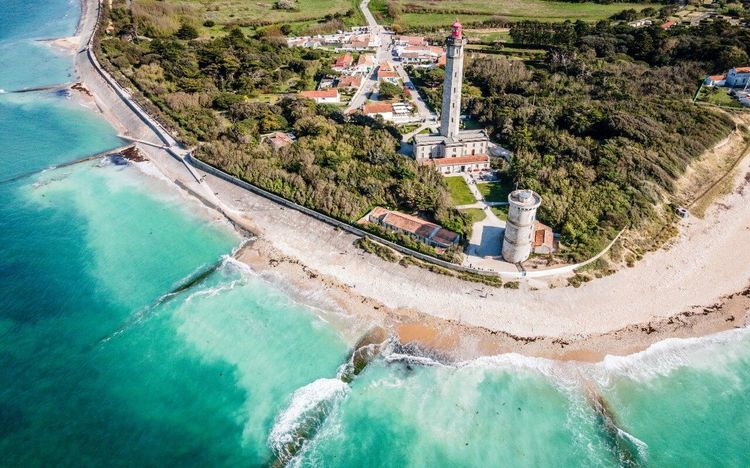
Just 30 minutes from La Rochelle via the Île de Ré bridge (car toll: around €16 in high season), the Île de Ré is another world entirely. Flat, luminous, dotted with white-stone villages with green shutters: this landscape cannot be confused with anything else in France.
The smartest option is the bike. 110 km of cycle paths criss-cross the island from end to end, and dozens of rental shops welcome visitors right off the bridge. Families with children particularly appreciate the sections running alongside the northern beaches, safely away from traffic.
Saint-Martin-de-Ré is the island's main town, listed among Vauban's fortified cities on the UNESCO World Heritage List. Its semicircular harbour, intact ramparts, and cobbled lanes are an excellent reason to cross the bridge — and the oyster bars will do the rest. Exploring the ramparts is free.
La Flotte is the island's most photographed village: flower-lined houses, a morning market, and an active fishing harbour. At the western tip, the Phare des Baleines (Route du Phare, 17590 Saint-Clément-des-Baleines, rated 4.5/5 on Google from 24,114 reviews) (57 metres, 257 steps) offers the widest panorama on the entire Charentais coast. On a clear day, you can make out the Île d'Oléron to the south and the Vendée coast to the north.
Before leaving the island, stop at the salt marshes: the island still produces salt using traditional methods, and some salt marshes organise guided tours in July and August. Fleur de sel from Ré is sold at twice the price in Parisian delicatessens compared to buying directly from the producers. To complete your exploration of the region, our article lists the 13 most beautiful villages around La Rochelle to discover on a day trip.
The Île d'Oléron and the Marais Poitevin
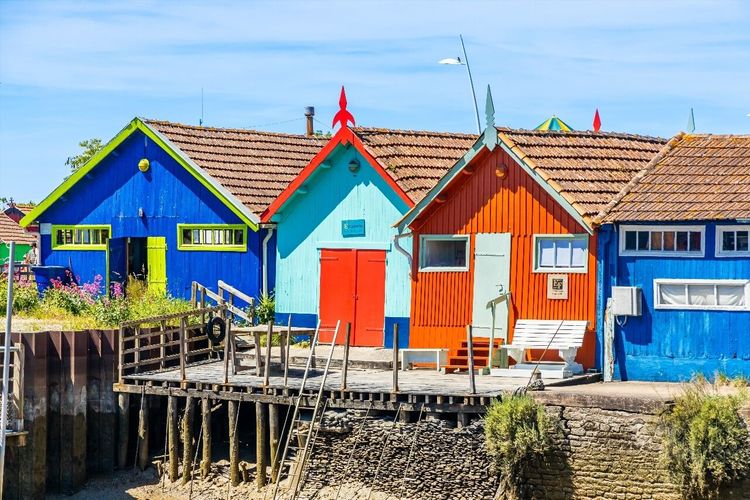
The Île d'Oléron is the largest French island in metropolitan France after Corsica: 174 km² connected to the mainland by an entirely free bridge. Its character is wilder than that of the Île de Ré. Pine forests cover the interior, the west-facing beaches front the open ocean with waves that attract surfers, and oyster farming dominates the entire eastern coast. The citadel of Le Château-d'Oléron, a Vauban construction from the 17th century, is the island's main historic site.
About 1h30 north of La Rochelle, the Marais Poitevin (Port de Coulon, 79510 Coulon, rated 4.6/5 on Google from 1,176 reviews) is a landscape of striking otherworldliness. Nicknamed "la Venise Verte" (the Green Venice), this network of canals lined with ash and poplar trees covers 100,000 hectares between the Vendée and Charente-Maritime. The main gateway is the village of Coulon, where rental operators offer rowing boats by the day (€15 to €20 per boat). Drifting through these canals beneath a tunnel of dense vegetation on a spring morning is an experience difficult to forget.
The drive from La Rochelle takes around 1h15. Coulon is the best starting point: the village deserves a half-hour stroll on foot before you set out on the canals. Back in town, our audio walking tour covers the White City in 27 stops.
Rochefort and the Corderie Royale
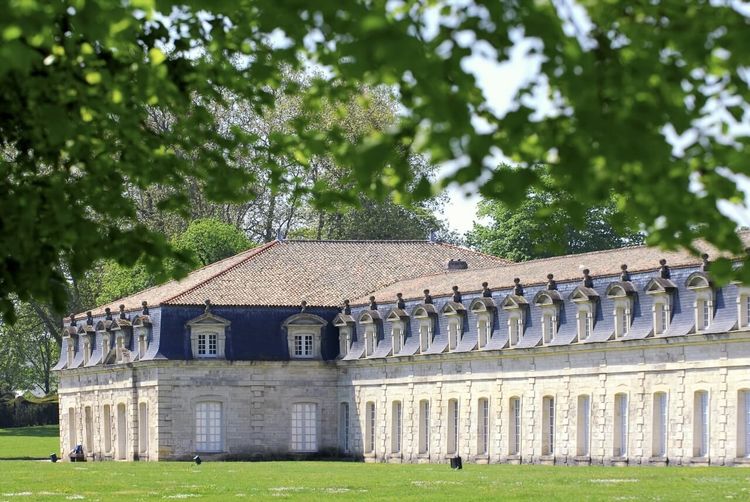
Just 30 km from La Rochelle, Rochefort is a city built from scratch by Colbert in 1666 to house the royal naval arsenal. Its strict grid plan, aligned ashlar buildings, and maritime museums make it an ideal complementary destination for a day trip.
The Corderie Royale is its crown jewel: at 374 metres long, it is the largest civil building from the reign of Louis XIV. For two centuries it produced all the rigging for the French navy. Now a museum, it stands beside the former shipyard where l'Hermione, the frigate that carried Lafayette to America in 1780, was reconstructed as an exact replica. Admission: from €10 (€11 in high season).
The Pont Transbordeur de Rochefort (Allée du Bac, 17300 Rochefort, rated 4.7/5 on Google from 3,635 reviews) is one of the region's most unusual industrial curiosities: the only transporter bridge in France and one of the few still in operation worldwide. Its suspended gondola crosses the Charente in four minutes from €7 (reduced rates available) — a crossing that is as much about its quirky novelty as the view over the river.
Villages and Sites to Discover Around La Rochelle
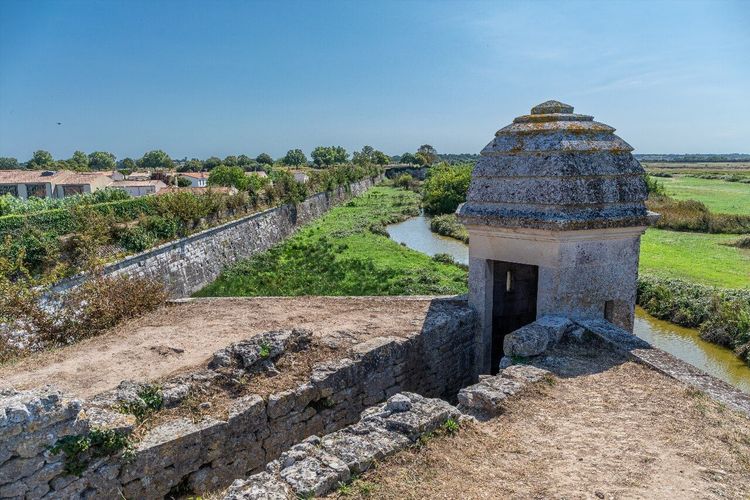
Activities in La Rochelle and its surroundings do not stop at the city gates: the region is dotted with villages each worth a visit. Brouage (Place de la République, 17320 Brouage, rated 4.6/5 on Google from 2,847 reviews), 45 km to the south, is a 17th-century royal citadel progressively swallowed by the surrounding marshes. Its intact ramparts rise from a landscape of salt marshes inhabited by only a few dozen people. A detail often overlooked: Samuel de Champlain, the founder of Quebec, was born here.
Saintes (45 km), the former Roman capital of southern Gaul, has preserved a triumphal arch and a Roman amphitheatre still standing in the heart of the city. The amphitheatre held 15,000 spectators in the 2nd century and can be visited freely. The Basilique Saint-Eutrope, a stop on the pilgrimage route to Compostela, adds a medieval dimension to the day.
Talmont-sur-Gironde, 70 km to the south, is listed among the most beautiful villages in France: perched on a rocky promontory overlooking the Gironde estuary, with its small 12th-century Romanesque church that appears to stand in the water at high tide. Allow two hours on site.
Water Sports and Outdoor Activities
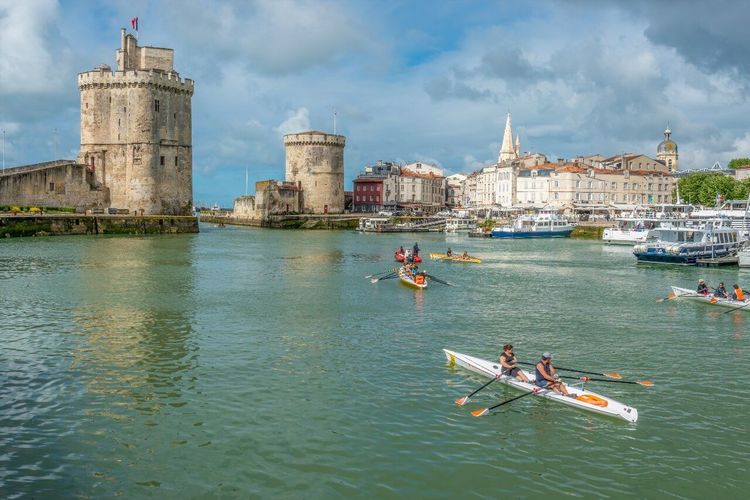
The Atlantic coastline is a playground for outdoor sports. Sea kayaking is the star activity: several schools offer guided outings from les Minimes or the Vieux-Port, with routes heading towards the Îles Madame or the Pertuis Charentais. Expect to pay €40 to €60 for a half-day with an instructor.
Sailing is almost a religion in La Rochelle, a city that hosts major transatlantic races every autumn. Two-hour introductory sailing sessions are organised throughout the season for beginners, at around €35 per person. Cycling also works extremely well: La Rochelle is one of the most cycle-friendly cities in France, with the Yélo bike-share network and a 10-km coastal path between Châtelaillon and the port des Minimes.
For summer days, the L'Estacade water shuttles serve the Île de Ré, the Île d'Aix, and Fouras from the Vieux-Port: a pleasant alternative to the road bridge for those travelling without a car.
Events and Calendar
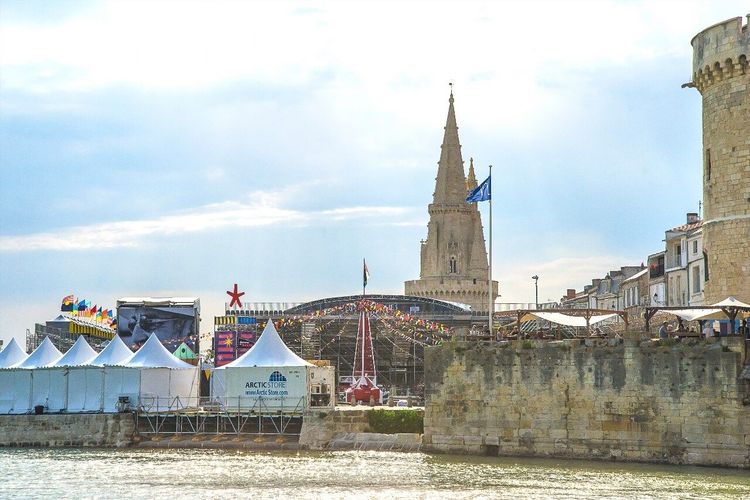
La Rochelle is lively year-round, with two events that stand out on the national calendar. The Francofolies (early July) has brought together French-language music artists across several stages around the city since 1985, over five days, drawing up to 150,000 spectators. The Festival International du Film de La Rochelle (late June) is one of the oldest non-competitive film festivals in France, entirely dedicated to discovering world cinema.
In autumn, the Fête du Livre marks the cultural start of the season. In summer, a local producers' market occupies the Vieux-Port every weekend from July to September. Find full dates and programmes in our La Rochelle events calendar.
Practical Information
When to visit? La Rochelle is pleasant from May to September. July and August are the busiest months, Francofolies included. September offers the best conditions: the sea is still warm, crowds are smaller, and hotel prices drop noticeably.
How to get there? The station is connected to Paris-Montparnasse in 2h30 by TGV (frequent direct trains). By car from Paris: 4h45 via the A10. La Rochelle - Île de Ré Airport offers domestic flights and European connections in summer.
Getting around? The Yélo bus network covers the city and its immediate surroundings. The bike remains the most practical mode of transport around the city and to the beaches. The Vieux-Port, towers, and city-centre museums can all be visited entirely on foot.
FAQ
What are the must-see activities in La Rochelle and its surroundings?
Visiting the three medieval towers of the Vieux-Port, the La Rochelle Aquarium, a day trip to the Île de Ré, and the Corderie Royale in Rochefort are the essential highlights. Nature lovers will also enjoy the Marais Poitevin and the Marais de Tasdon right in the heart of the city, rounding out a wonderfully varied itinerary.
Do you need a car to explore the area around La Rochelle?
A car is useful for reaching the Marais Poitevin, Saintes, Brouage, or Talmont-sur-Gironde. For the Île de Ré, bus line 50 connects La Rochelle to Saint-Martin-de-Ré. For Rochefort, the train works well from La Rochelle (20 minutes, with frequent services throughout the day).
How many days should you plan to visit La Rochelle?
Two days cover the city's highlights: the Vieux-Port, towers, museums, and markets. Add a third day for the Île de Ré, and a fourth if you want to include Rochefort or the Marais Poitevin in your itinerary.
Are there free activities in La Rochelle?
Yes: the Marais de Tasdon, the walk along the ramparts of Saint-Martin-de-Ré, the historic arcades, and the beaches of la Concurrence and les Minimes are all free to access. Several municipal museums are also free on the first Sunday of the month.
When does the Francofolies festival take place in La Rochelle?
The Francofolies is held every year in early July, typically over five days. It is the city's most lively period: book accommodation and transport several months in advance if you plan to attend.
Conclusion
Activities in La Rochelle and its surroundings form a discovery space of exceptional richness within a manageable area. Two days in the city are enough to grasp its historical and maritime layers without feeling rushed. Two additional days allow you to venture out to the Île de Ré, Rochefort, and the surrounding marshes: together, they make up one of the most complete journeys the French Atlantic coast has to offer.
To begin your exploration from the moment you arrive, the Ryo audio guide of La Rochelle takes you through the Vieux-Port, the medieval towers, and the historic neighbourhoods in 26 narrated stops — a sure way to miss nothing of what La Ville Blanche has to tell.
À lire également