© Shutterstock
 Votre guide Ryo
Visit La Rochelle in 2 Days: The Complete 2026 Itinerary
Visit La Rochelle in 2 days and you will breathe in the salt air of the Vieux-Port the moment you step off the train, before the white city with green shutters even comes into view. The city cannot be summarised in a single morning, but a well-planned forty-eight hours is enough to grasp its essence: the three towers guarding the harbour entrance, one of France's most visited aquariums, arcaded lanes where you walk in the shade even in the height of summer, and a coastline stretching towards the île de Ré that you can explore without a car. The Ryo audio tour of La Rochelle acts as a thread running through this kind of short break: it flags in your ear what the eye sometimes takes time to notice.
In forty-eight hours, you can climb to the top of the tour de la Lanterne, catch the smells of the fish auction drifting through the central market, cycle along the coastal path at Chef de Baie where the oyster shacks still carry the scent of low tide, and end the second evening on a terrace in the Saint-Nicolas district. This guide breaks down the programme hour by hour across day 1 and day 2, highlights the must-sees worth slotting in as optional extras, and also covers the car-free surroundings — île de Ré, île d'Oléron, oyster villages — for those curious enough to stretch the trip to three days rather than two. The Ryo audio-guided tour follows a similar route, from the tour de la Lanterne to the Saint-Nicolas district.
Why La Rochelle Is Perfect for a 48-Hour Visit
La Rochelle did not wait for any 'sustainable city' label to invent the bike-sharing scheme: its famous yellow bicycles have been rolling here since 1976, long before any other French city thought of it. That head start is felt throughout the whole city: the historic centre is largely pedestrianised, the 17th-century ramparts encircle an urban core where the car is secondary, and residents themselves move around on foot or by bike from one end of the centre to the other rather than by car.
Forty-eight hours are enough because La Rochelle is built to a human scale: the Vieux-Port, the old town, and the nearest beaches all sit within a twenty-minute walking radius. This short format packs in the essentials — maritime heritage, seafood gastronomy, fresh air — without any dilution, unlike other Atlantic destinations that demand a full week to be properly understood. This point comes up repeatedly among visitors arriving by train from Paris or Bordeaux: the city is quick to 'read', without any sense of having missed the essential when you leave.
The city is also alive year-round, not just in summer: the Francofolies turn the city centre into a vast outdoor stage in mid-July, but the rest of the calendar stays packed with markets, exhibitions and nautical outings — a point covered in more detail later in this guide. A pioneer in urban ecology and committed to preserving its coastline, La Rochelle has built its contemporary identity on the meeting point between an ancient heritage and a forward-looking vision. It is this tension between museum-city and urban laboratory that makes a stay here so rich in just two days, and explains why so many visitors return for a third or even a fourth trip.
Day 1: Heritage, the Old Port, and Fresh Air
The first day traces a logical arc around the harbour: fortified heritage in the morning, a gourmet lunch at midday, fresh air in the afternoon, and the sea at dinner. A loop of around 6 kilometres on foot, also doable by bike to save time. A great companion for this first day: the Ryo audio guide, which tells the story of the towers while you are actually looking at them rather than later in a book.
Morning: the Vieux-Port and the Historic Towers
A La Rochelle morning inevitably begins at the Vieux-Port, where three medieval towers have stood guard for seven centuries.
The tour Saint-Nicolas takes centre stage: this keep of more than 40 metres, set on wooden piles, conceals a labyrinth of staircases and corridors within the thickness of its walls, leading up to a wall-walk from which you can take in the marina, the slate rooftops of the city centre, and on a clear day, the silhouette of the île de Ré in the distance.
Opposite, the tour de la Chaîne takes its name from the heavy chain that used to close the harbour entrance every evening, preventing enemy vessels from slipping in under cover of darkness. Today it houses the permanent exhibition dedicated to the French departure to New France — the thousands of emigrants who set sail from La Rochelle for Canada in the 17th and 18th centuries — a twenty-minute detour that puts the rest of the walk into its proper context.
Allow about an hour for the two, longer if you also climb the tour de la Lanterne, a little further along the waterfront: once a lighthouse and then a prison for English, Dutch and Spanish sailors, its walls still bear hundreds of graffiti carved by prisoners, including ships and inscriptions. The combined ticket for all three towers, managed by the Centre des monuments nationaux, is the simplest way to visit everything without queuing three times.
If the sky looks threatening, bear in mind that all three towers visit just as well in the rain as in sunshine — unlike the coastal path in the afternoon, they impose no weather constraints, making them an ideal fallback if an unexpected Charentais shower rolls in.
Midday: a Gourmet Break in the Saint-Nicolas District
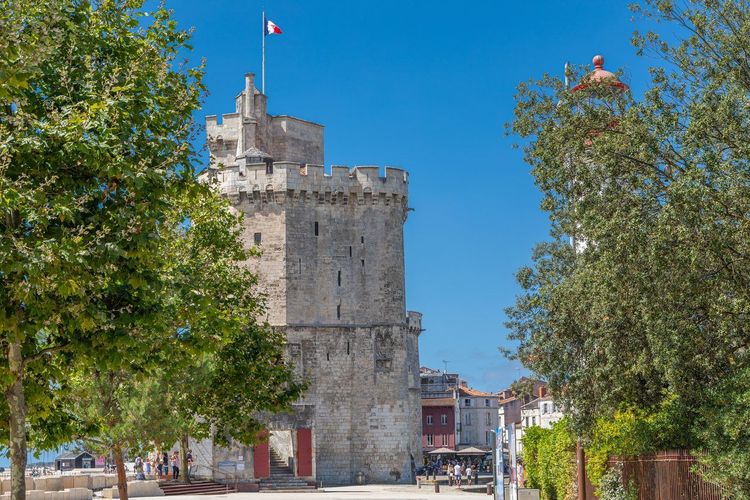
Coming down from the ramparts, the Saint-Nicolas district stretches between the rue du Palais and the place de Verdun, its arcades offering shelter from summer downpours and August heat alike.
Restaurants are packed closely together here, often with no reservation possible for an impromptu lunch: moules-frites served in iron pots, Marennes-Oléron oysters by the dozen, or simply a seafood salad eaten on a terrace. Budget between €15 and €20 for a decent lunch in this area, more if you give in to a seafood platter facing the harbour. Food lovers curious about local specialities — mouclade, Charentais jonchée, or cagouilles — will quickly track down the best spots by following the scents of butter and garlic drifting out of the open-plan kitchens.
Afternoon: the Coastal Path at Chef de Baie
The afternoon shifts pace: head north of the harbour towards the coastal path at Chef de Baie (Chef de Baie, 17000 La Rochelle, rated 5/5 on Google from 2 reviews), a coastal trail of more than 2 kilometres running alongside old oyster shacks and small waterside guinguettes.
You can walk or cycle it — La Rochelle's yellow bikes are well suited — along the oyster beds where you can still watch producers sorting their mesh bags at low tide. The air here is different from the city centre: saltier, sharper, carrying the persistent smell of seaweed drying on the claire beds.
The path also runs along the Chef de Baie breakwater, a vantage point appreciated by shore fishermen and photographers in the late afternoon, when the low-angled light turns the carrelet fishing huts golden along the coast. Allow about an hour and a half there and back for the most interesting stretch, as far as the fishing port, without rushing. This wilder setting, barely fifteen minutes by bike from the Vieux-Port, makes for a deliberate contrast with the heritage density of the morning — a necessary breath of fresh air before the second half of the stay.
Evening: Dinner by the Sea
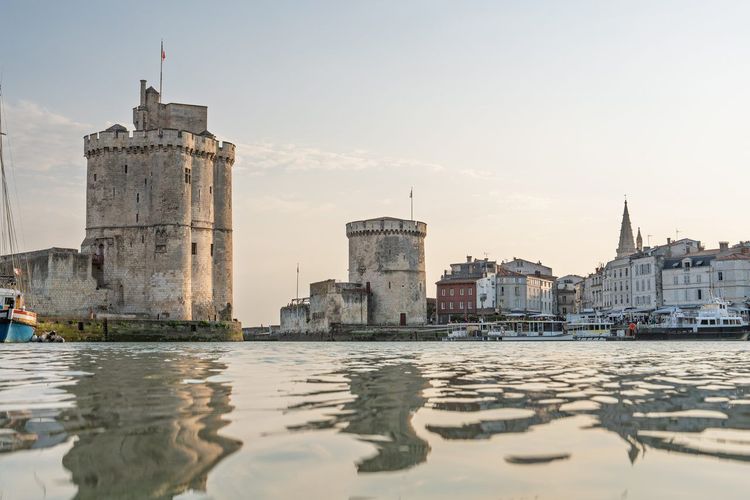
The first evening ends naturally with your feet almost in the water, on one of the quays of the Vieux-Port or over towards Les Minimes, where several restaurants serve grilled fish with an unbeatable view of the illuminated towers.
After dark, the tour Saint-Nicolas and the tour de la Chaîne are bathed in a warm golden light that completely transforms the atmosphere of the harbour: less touristy, more intimate. It is the right moment to wander without a set route, stop for a last drink on a terrace and let the tide set the rhythm of the evening before a well-earned night's sleep.
Day 2: Market, Museums, and a Trip Out to Sea
The second day tilts towards the authentic and the briny: a morning market, the natural history museum, a sea trip in the afternoon, and an easy evening to close the stay on a lighter note than the day before.
Morning: Market and Museum
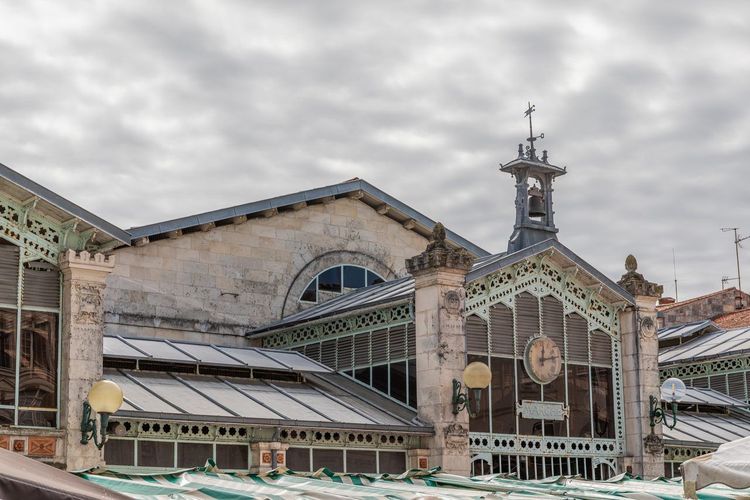
The day starts at the Halles de La Rochelle, a 19th-century covered market where fishmongers, greengrocers and local producers set up their stalls from early morning. On weekdays you will find more locals than tourists here, making it a reliable barometer of everyday life in La Rochelle.
Allow thirty to forty minutes to take it all in, taste an apple turnover, or leave with a few oysters to enjoy later in the day. The seafood stalls in particular are worth a detour simply to watch the shucking done at speed.
Ten minutes on foot away, the Muséum d'Histoire Naturelle de La Rochelle occupies an 18th-century mansion and is one of the oldest natural history museums in France still in operation. Its collections blend 19th-century taxidermy, cabinets of curiosities and displays devoted to the biodiversity of the Charentais coastline — content that resonates particularly well with families and anyone curious about natural science.
Allow an hour for the visit, a little longer if you linger in front of the stuffed giraffe presented to Charles X — the first giraffe ever to arrive in France in the 19th century and a true mascot of the museum. Opening hours vary noticeably between high and low season: better to check the evening before than to arrive at a closed door.
Late Morning: Healthy Brunch

Between the market and lunch, several spots in the city centre now offer a healthy brunch, driven by a La Rochelle food scene that has evolved considerably in recent years: açaï bowls, poached eggs, freshly pressed juices and sourdough bread rather than the traditional pastries.
It is a practical option for anyone who indulged the evening before and wants a lighter break before the active afternoon ahead. Terraces near the Halles are the most convenient, just a few steps from the stalls where you can also put together your own brunch from market produce.
Afternoon: Catamaran and a Coastal Walk Towards Angoulins-sur-Mer
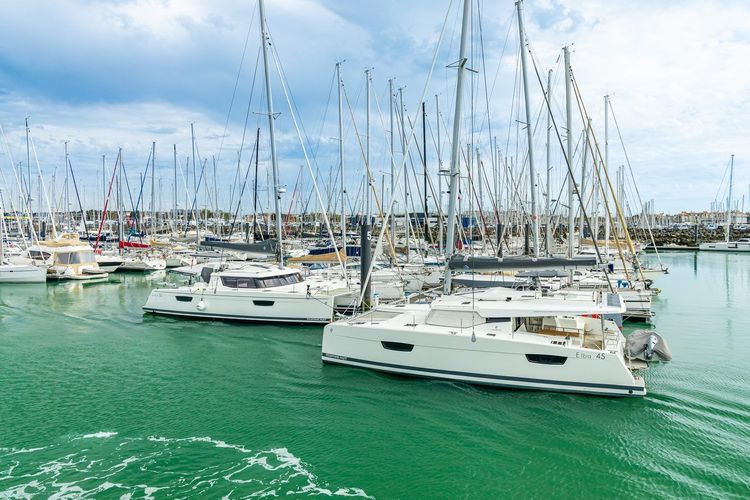
The second afternoon heads out to sea: several nautical operators based at the port des Minimes, one of Europe's largest marinas, offer two-to-three-hour catamaran trips along the coast, with views of the towers, the île de Ré bridge, and sometimes dolphins in summer.
No prior experience is needed: the supervised 'sensation' or 'leisure' trips cater to beginners and regulars alike. Budget between €35 and €60 depending on the package and duration; booking the evening before is advisable in high season, as spots fill quickly whenever the forecast looks good.
If you would rather keep your feet on dry land, the coastal walk towards Angoulins-sur-Mer (17690 Angoulins-sur-Mer), about ten kilometres south, follows the coastal footpath with views over the Anse d'Angoulins, its rocks exposed at low tide and its oyster beds.
The village still has an active oyster industry and a few shacks sell their produce directly in the late afternoon — a simple way to extend the briny mood of the morning without getting back in the car, by bus or TER from the city centre. Do check the return timetables in advance, as services are less frequent in the evening than during the day.
Evening: Wandering and La Rochelle Nightlife
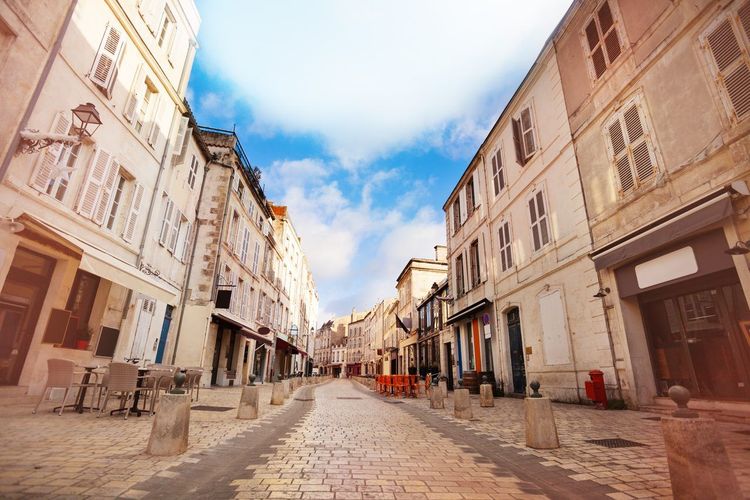
The last evening lends itself to watch-free wandering: lanes of the historic centre, lively terraces along the rue Saint-Jean-du-Pérot, wine bars set up in former town houses. La Rochelle has a surprisingly vibrant nightlife for its size, driven by a large student population and a young tourism scene that keeps the streets animated well after the shops have closed.
It is also the moment to pass by the illuminated Vieux-Port one last time, quieter after 10 pm, for a gentle finale before heading back on the road or catching the train the following morning.
The Must-See Sights in La Rochelle
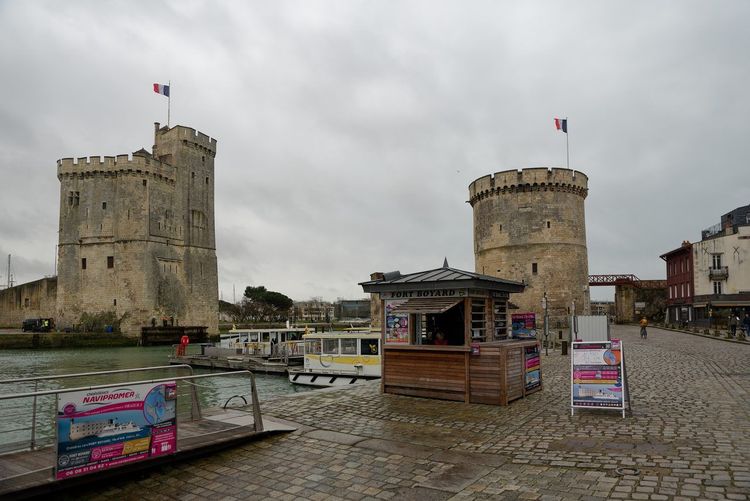
If you are short on time for the full itinerary, or want to put together your own route, here is a tight selection of La Rochelle's must-sees: the towers headline the bill, the aquarium comes right behind, and the old town forms the backdrop to everything.
The Towers of La Rochelle (Saint-Nicolas, Chaîne, Lanterne)
If there is one thread to follow throughout the stay, it is these: the tours Saint-Nicolas, de la Chaîne and de la Lanterne, managed by the Centre des monuments nationaux, can be visited with a single ticket valid for all three sites — more economical than buying three separate entries. The combined ticket costs around €12 at full price, a single tower just over €7, with free entry for under-26s from European Union member states.
They are generally closed on Mondays out of season and open every day in July and August, with last entry about 45 minutes before closing. If time only allows for one, the tour de la Lanterne is the most distinctive thanks to its prisoner graffiti, while the tour Saint-Nicolas offers the most complete panorama of the city. The Ryo La Rochelle audio tour also includes a full focus on all three monuments, with the historical context narrated step by step.
The Aquarium and the Natural History Museum
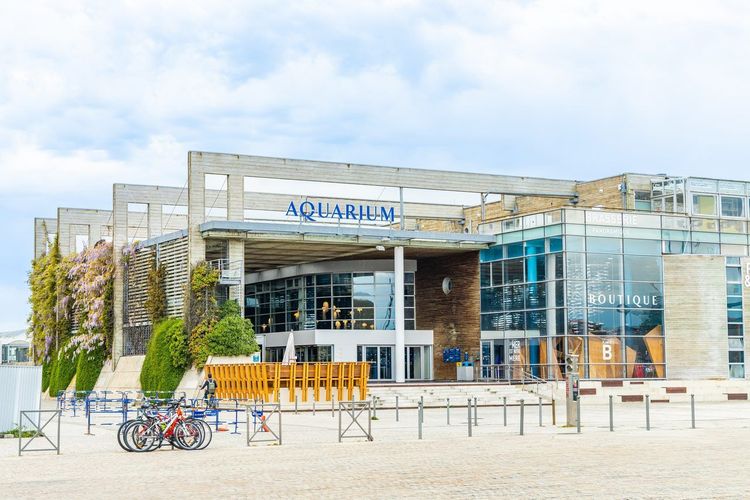
The Aquarium de La Rochelle welcomes nearly 800,000 visitors a year, making it one of the most visited private aquariums in France. Twelve thousand marine animals are spread across a 3,000 m² route: sharks gliding through a large tank crossed by a glass tunnel, jellyfish lit in deep blue, sea turtles nursed back to health after injury, and multicoloured tropical fish in the section devoted to warm seas.
Allow a good two hours for the visit, more with children who will want to linger at every tank. Booking tickets online avoids queuing in high season, when lines can exceed thirty minutes in the peak of summer. Adult entry is around €20, with reduced rates for children and an attractive combined pass with other La Rochelle sites. For more detail, our dedicated article covers the behind-the-scenes story and the secrets of the Aquarium de La Rochelle, useful for planning a family visit without wasting time on the day.
The Muséum d'Histoire Naturelle, already visited on the morning of day two, pairs perfectly with it: less spectacular than the aquarium but denser in scientific content, with a noticeably more affordable entry — around €7 and free for under-18s. The two sites work well together in a single day if you plan carefully, with the aquarium in the morning when crowds are thinner and the museum in the afternoon.
The Old Town, Its Arcades, and Its Beaches
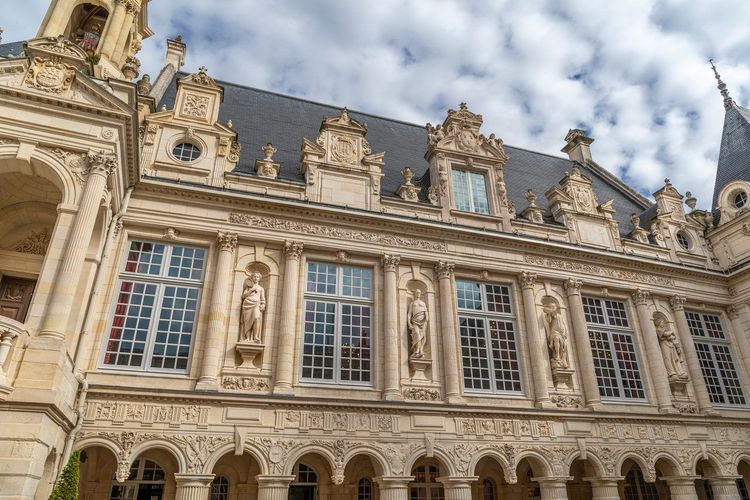
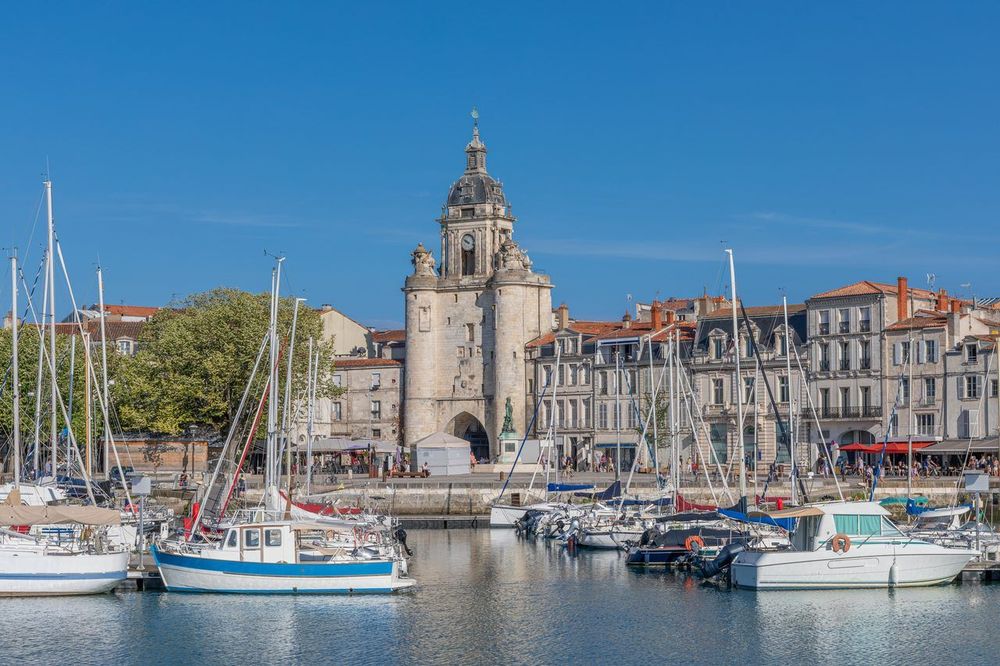
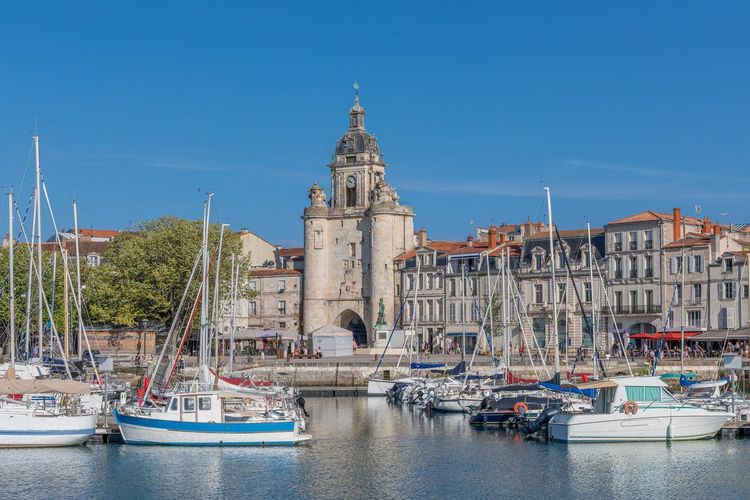
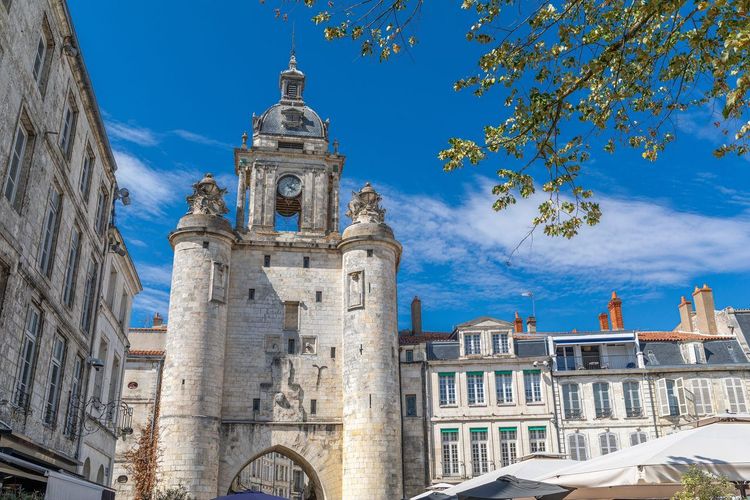
Beyond the paid monuments, wandering through the old town remains the most quintessentially La Rochelle activity of all: the arcades of the rue du Palais and the rue Chaudrier have been sheltering shop fronts for centuries, the Renaissance town hall is worth a glance even without going inside, and the half-timbered houses of the centre speak of a merchant prosperity four centuries old. La grosse horloge, the monumental gateway between the harbour and the old town, serves as a landmark for anyone who loses their bearings in the maze of lanes.
On the beach side, the plage des Minimes, closest to the marina, is the most popular in summer, with fine sand and lifeguards in season. The plage de la Concurrence, right in the city centre, is better suited to a quick dip between visits than a full day of sunbathing.
Neither matches the beaches of the nearby île de Ré, but their walkability from the centre makes them a natural complement after a morning of sightseeing, with no time lost in transit. The Ryo audio-guided tour weaves past the Town Hall in the Old Town.
Activities and Sea Trips in La Rochelle
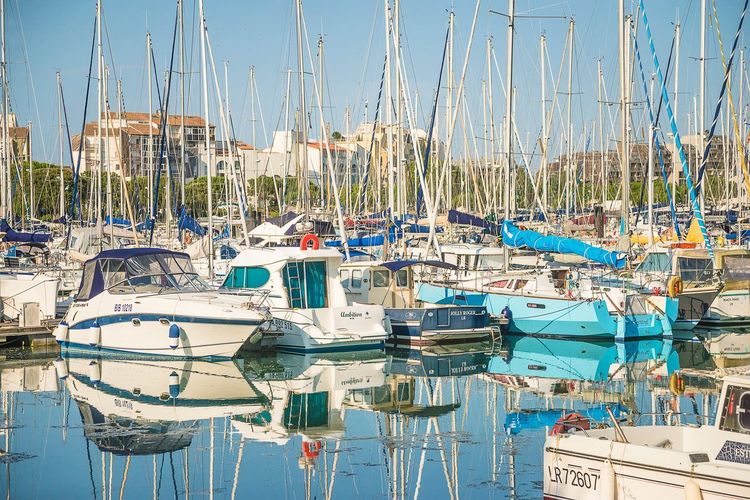
Between monument visits, La Rochelle is also discovered through its activities: the sea here is something you do as much as look at, and local daily life is more legible in its neighbourhood markets than in its museums.
Water Sports: Jet-Ski, Catamaran, Kayak
Beyond the catamaran trip on day 2, La Rochelle offers plenty of other ways to get out on the water. Jet-skiing is available through several operators at the port des Minimes, with sessions of around one hour — no boating licence required for accompanied packages. Budget between €90 and €130 for a solo or duo session.
Sea kayaking offers a gentler approach, especially heading north towards Esnandes and the Baie de l'Aiguillon, where you paddle between mussel poles on the rising tide — an activity that appeals equally to families and to those simply seeking silence. Allow a half-day for a properly guided trip, bearing in mind that the tidal coefficient strongly determines the best departure times.
For a more relaxed pace, dinghies and paddleboards can be hired easily at Les Minimes without advance booking outside high season. All of these water activities share one thing in common: they are heavily dependent on weather and tides, which should be checked the evening before rather than on the morning itself. For a comprehensive overview, our dedicated article on activities in and around La Rochelle lists the most reliable operators and packages.
The Family Market at La Pallice and Local Good Living
Less well known than the central Halles, the La Pallice market (Avenue du Docteur Schweitzer, 17000 La Rochelle, rated 4.4/5 on Google from 3,539 reviews), in the harbour district of the same name, keeps a decidedly more local and family feel: producers from the île de Ré, fishmongers from the nearby fishing port, a few Charentais farm stalls. Here you feel the La Rochelle rhythm well away from the tourist flow of the Vieux-Port.
This district, historically linked to maritime trade and the deepwater port, embodies what locals call the good life in La Rochelle: a pace oriented towards the sea, prices still reasonable compared to other popular coastal cities, and an identity that remains rooted in everyday life despite the city's growing tourist appeal.
The Île de Ré, the Île d'Oléron, and Villages Around La Rochelle Without a Car
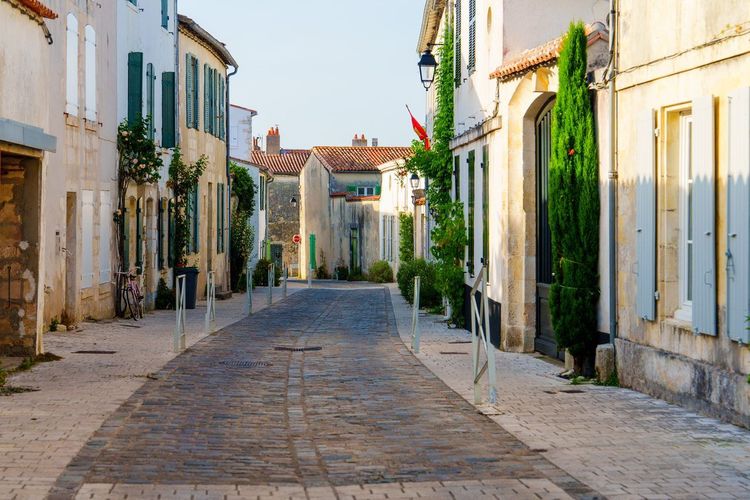
Forty-eight hours are enough for the city centre, but La Rochelle also opens onto a maritime hinterland accessible without a vehicle, spanning iconic islands and human-scale oyster villages.
The Île de Ré and the Île d'Oléron as a Day Trip
If the itinerary stretches to three days rather than two, the île de Ré imposes itself almost naturally: connected to La Rochelle by a bridge of nearly 3 kilometres, it can also be reached by bus from the city centre without a car. Villages with green shutters, salt marshes, fine sandy beaches on the ocean side: the island packs a large part of what makes Charente-Maritime famous as a destination into a single day. Saint-Martin-de-Ré and its UNESCO-listed Vauban fortifications, the harbour at Ars-en-Ré and the salt marshes of Loix are among the most popular stops, but the island also lends itself very well to cycling, with more than 100 kilometres of marked cycle paths.
The île d'Oléron (Bourcefranc-le-Chapus, 17560 Bourcefranc-le-Chapus), the largest French island after Corsica, requires more planning from La Rochelle — about an hour by road or bus via Rochefort — but rewards with wilder scenery: pine forests running down to the beach, colourful oyster shacks at Château-d'Oléron, and the Chassiron lighthouse at the northern tip. Without a car, you have to work around less frequent bus connections than on Ré, making it an option best kept for a stay of three days or more.
Between the two, the île de Ré remains the most realistic choice for a car-free day trip from La Rochelle, thanks to its proximity and regular bus links, while the île d'Oléron requires sacrificing much of the day to travel alone.
The Most Beautiful Car-Free Villages to Discover (Esnandes, Angoulins...)
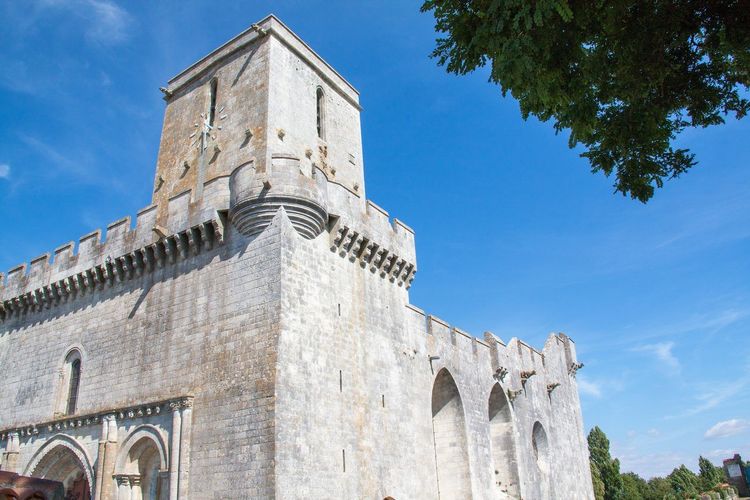
Around La Rochelle, several villages can be reached by regional bus or TER without a car, which changes things considerably for visitors who arrived by train. Esnandes (17137 Esnandes), to the north, still lives from mussel farming on bouchots — the technique of growing mussels on stakes driven into the bay, visible at low tide from the village dyke — and its medieval fortified church, with its wall-walk and battlements, is worth the trip on its own.
Angoulins-sur-Mer, already encountered during the second-day walk, rounds out the picture with its coastal path and former salt pans. Further south, those drawn to more off-the-beaten-track islands can push on to the île Madame, accessible on foot at low tide from Port-des-Barques via the Passe aux Bœufs, or the île d'Aix, car-free by nature since vehicles are banned there: tiny, marked by Napoleon's passage before his exile, and crossed only by bike, on foot or by horse-drawn carriage.
These villages and islands, less documented than the La Rochelle city centre, make for a real point of difference for anyone wanting to venture off the beaten track without hiring a vehicle: our dedicated articles cover the 13 most beautiful villages around La Rochelle, the île Madame and the île d'Aix respectively. Best combined with bus timetables checked the evening before, as frequencies drop significantly outside the summer season.
Where to Stay in La Rochelle
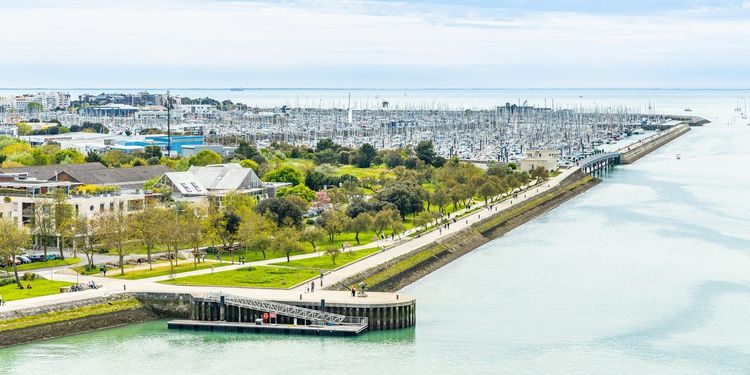
The choice of accommodation comes down to one key factor: staying within walking distance of everything, or accepting a few minutes by bus in exchange for a quieter and often more affordable setting.
Staying in the City Centre to Do Everything on Foot
For a two-day stay built around the day 1 / day 2 programme in this guide, staying in the city centre is the most practical choice: the Saint-Nicolas district, the area around the Vieux-Port, and the town hall neighbourhood all put you within walking distance of virtually every site covered above, towers included.
Prices rise sharply in July and August, during the Francofolies and the peak tourist season; booking several weeks in advance becomes almost essential for the best-located properties. Outside the season, the centre remains accessible at more reasonable rates, with the added bonus of considerably quieter streets in the evening.
Staying in La Rochelle and the Surrounding Area Without a Car
For longer stays including the île de Ré or the car-free villages mentioned above, staying slightly out of the centre can make sense: the Les Minimes district, close to the marina and connected to the centre by the sea bus — the Yélo network's water shuttle that crosses the channel in about ten minutes — offers a good balance between tranquillity and accessibility.
The immediate surroundings of La Rochelle — such as Angoulins-sur-Mer or the approaches to the île de Ré bridge — are reachable by regional bus, making it possible to arrange more affordable accommodation without giving up the mobility that underpins this guide. One thing worth checking: evening bus frequencies in those areas are more limited than in the city centre, a detail that matters quickly when you are getting back late from dinner. The Ryo audio-guided tour itself stays within easy reach of the Town Hall and the Saint-Nicolas district, wherever you end up staying.
Where to Eat and Go Out in La Rochelle
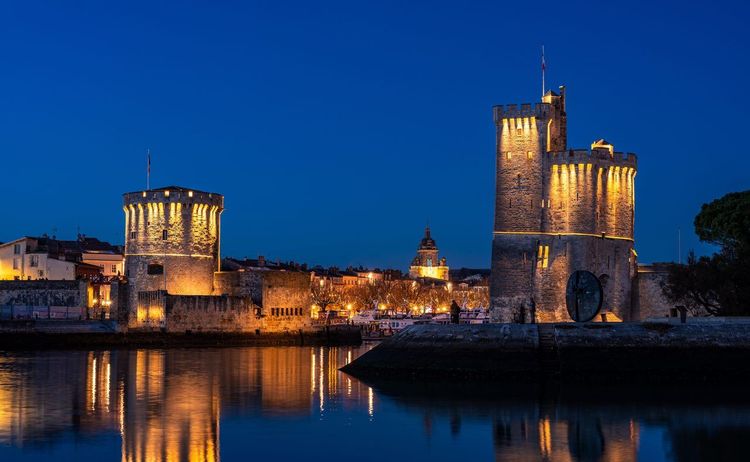
Once night falls, La Rochelle changes its face. The Saint-Nicolas district and the lanes around the rue Saint-Jean-du-Pérot are home to wine bars, pubs and small live-music venues, driven by a large student population that keeps the city alive well beyond the tourist season. The terraces of the Vieux-Port remain a safe bet for a last drink with a view of the illuminated towers, even if you pay a little more than you would on a side street.
On the food side, the city fully owns its maritime identity: grilled fish, seafood platters, and Marennes-Oléron oysters served almost everywhere in the centre. The Charentais specialities are worth seeking out for anyone who wants to go beyond the standard tourist menu — mouclade with curry and cream, Charentais jonchée for dessert, or simply a glass of pineau des Charentes as an aperitif. Our dedicated article on the culinary specialities of La Rochelle covers the best addresses and the dishes not to miss.
What to do in La Rochelle as a couple on an evening out? The answer usually comes down to a walk along the illuminated ramparts followed by a leisurely dinner on a terrace facing the harbour: that is precisely the kind of moment this guide's compact format deliberately leaves room for, rather than filling every hour with scheduled activities.
Practical Info: Getting Around, Budget, and Tips
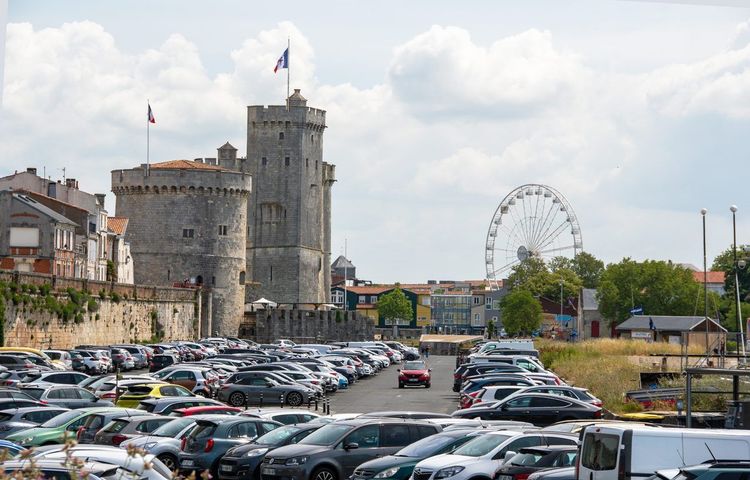
Between parking, public transport and tourist passes, a few reference points make organising a 48-hour stay in La Rochelle considerably simpler.
Getting Around: Parking, Bus, Bike, and Tourist Train
Getting around La Rochelle does not require a car — and that is almost the entire argument of this guide: the historic centre can be covered on foot in about twenty minutes end to end, complemented by the Yélo bus network, which serves Les Minimes, La Pallice and nearby towns such as Esnandes and Angoulins-sur-Mer.
The yellow bikes, available on a self-service basis since 1976, remain the most La Rochelle way to get around: numerous stations in the city centre and along the seafront let you reach Chef de Baie or Les Minimes in fifteen minutes, effortlessly. For visitors arriving by train, coming without a car is absolutely no handicap here, unlike many other French coastal destinations.
The tourist train offers a pleasant alternative for seeing La Rochelle without walking, with a narrated circuit of around 40 minutes linking the main monuments of the historic centre — an option appreciated by families with young children or visitors with limited mobility. Departures generally operate from the Vieux-Port at regular intervals in high season, less frequently the rest of the year.
On the parking front, several covered car parks ring the pedestrian centre; it is far better to park once on arrival than to try driving through the narrow streets of the historic centre, which are largely closed to traffic in season.
Budget and the La Rochelle Océan Pass
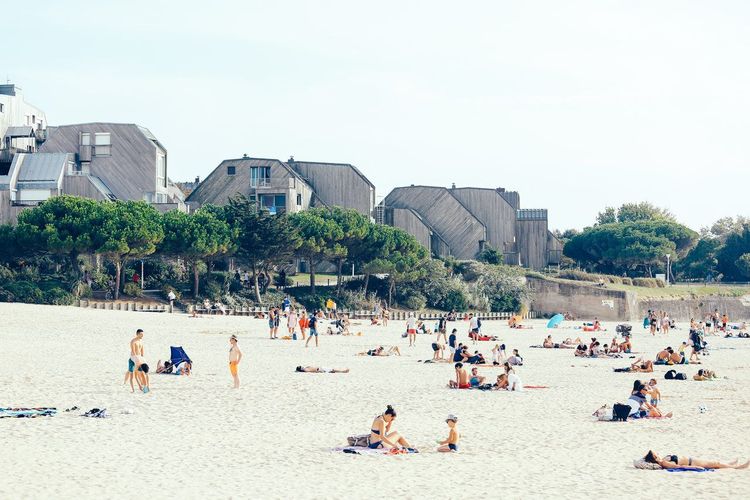
For a full weekend, budget an average of €60 to €100 per person per day excluding accommodation, factoring in one paid site per day (towers or aquarium), lunch and dinner, and a few bus journeys. This rises noticeably if you add a catamaran or jet-ski trip, or if you visit during the Francofolies, when restaurant prices tend to follow demand.
The La Rochelle Océan Pass, offered by the tourist office, bundles access to several major sites — historic towers, aquarium, municipal museums, sometimes cruises and bike hire — at a reduced rate compared to buying tickets individually. It comes in several formats depending on the length of your stay, making it worth checking before buying tickets one by one, especially if you are visiting two or three paid sites in the same day.
For visitors on a tight budget, free options still abound: wandering through the old town and its arcades, walking the Chef de Baie coastal path, enjoying the beaches, or simply watching the comings and goings of one of Europe's largest marinas never costs a thing.
Only have one day? Keep the morning of day 1 (towers and Vieux-Port), have lunch in the Saint-Nicolas district, then shift to the old town and the aquarium in the late afternoon, leaving Chef de Baie for another time. Conversely, a third day fills itself effortlessly: a full day on the île de Ré by bus, a bike loop towards Esnandes and the Baie de l'Aiguillon, or a boat trip to the île d'Aix are all enough to balance the stay without stretching the transport budget.
Best Time to Visit and Events in La Rochelle
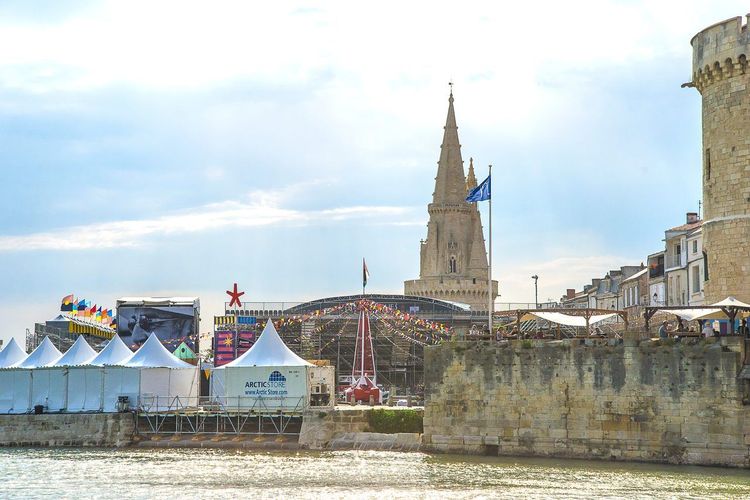
While summer logically concentrates the best weather and the bulk of the activity, La Rochelle is not a one-season city. The Francofolies de La Rochelle, in mid-July, turn the city centre into a vast stage for five days, with ticketed indoor concerts and numerous free events in the streets — a period to book well in advance if you plan to attend, given the surge in visitor numbers on those specific dates. Le Grand Pavois, the floating boat show held at Les Minimes in late September, has the same effect on accommodation, as does the Festival de la Fiction in September.
Spring, between April and June, is arguably the best compromise for a 48-hour break: pleasant temperatures, towers and aquarium without queues, terraces already open, and a particularly flattering light on the white facades of the centre. Autumn, even quieter, suits a short format focused on heritage rather than swimming.
In winter, the city slows down on the tourism front but keeps its character: the towers close earlier, some restaurants reduce their hours, but the Vieux-Port in the rain has a different charm — almost more authentic. It is a city that hums year-round, quite unlike the seaside resort image sometimes projected from a distance, and our article on events in La Rochelle lists the full calendar, festival by festival, season by season.
FAQ
How Many Days Do You Need to Visit La Rochelle?
Two days cover the essentials described in this guide: historic towers, the aquarium or natural history museum, the old town, and a trip out to sea. A single day forces you to choose between heritage and fresh air, while three days allow you to add the île de Ré or nearby villages without a car, and take a more relaxed pace throughout the itinerary.
Can You Explore La Rochelle on Foot or Without a Car?
Yes, easily: the historic centre can be covered entirely on foot in about twenty minutes, complemented by the Yélo bus network, the sea bus, and bike-share schemes for longer distances such as Chef de Baie or Les Minimes. Many visitors arrive by train and never need a vehicle at any point during their stay.
What Can You Do in La Rochelle for Free?
Strolling through the old town and its arcaded streets, walking or cycling the coastal path at Chef de Baie, enjoying the central beaches, watching the marina, or attending the free events held on the fringes of the Francofolies: a zero-budget visit is entirely viable on a short trip, provided you are happy to skip the paid monuments.
What Can Couples Do in La Rochelle?
A walk along the ramparts at sunset, dinner on a terrace facing the illuminated Vieux-Port, or a catamaran trip for two are more than enough: the deliberately unhurried pace of this compact format leaves exactly the kind of room needed for those unplanned moments.
How Do You Visit La Rochelle by Tourist Train?
The tourist train generally departs from the Vieux-Port for a narrated circuit of around 40 minutes through the historic centre — a comfortable option for families or visitors who prefer not to walk too much between monuments, best combined with the Ryo audio guide to catch all the historical context once you step back off.
What Is the Best Time to Visit La Rochelle?
Spring, between April and June, combines mild weather with low crowds. Summer remains unmissable for the atmosphere and the Francofolies in mid-July, at the cost of significantly higher visitor numbers and elevated prices for accommodation and dining.
Two days in La Rochelle leave a surprisingly complete impression for such a short format: the towers of the Vieux-Port etched in memory, the salt of Chef de Baie still on your skin, and an already growing desire to return for the île de Ré or the oyster villages left behind for lack of time. That is precisely what this concentrated format delivers, without ever leaving you feeling like you have been racing through a checklist.
To extend the experience once you are there, the Ryo audio tour of La Rochelle covers the key sites mentioned in this guide, towers included, with historical context in your ear at every step — a simple way to turn a stroll into a guided visit, with no booking required and no set timetable. The perfect way to leave La Rochelle with more than just a postcard.
À lire également