Créé par Emilie, le 17 nov. 2026
Votre guide Ryo
Poitiers, France
The wonders of Poitou
Parcours audioguidé pour visiter Poitiers en 1 jour
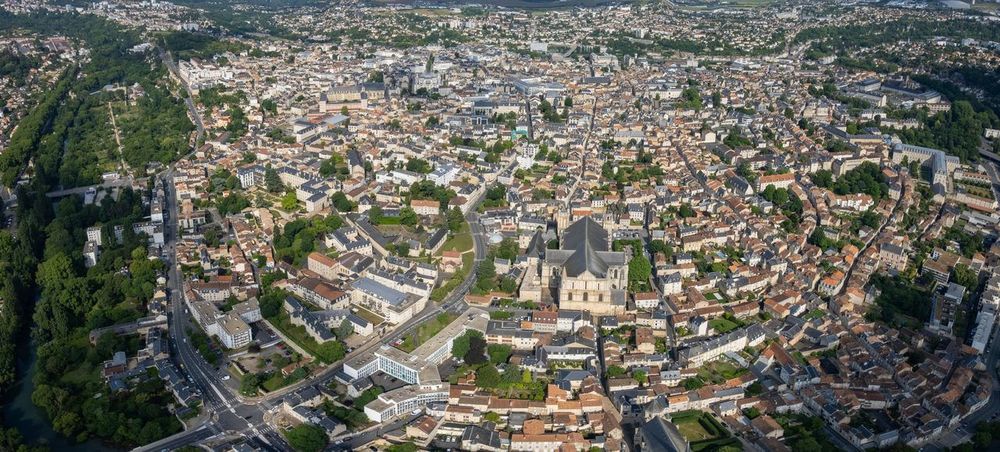
This tour of Poitiers invites you into the heart of a thousand-year-old city set high on its promontory. Take a moment to admire the intricately sculpted façade of Notre-Dame la Grande, a masterpiece of stonework, before wandering through winding streets lined with half-timbered houses. Between the legacy of Eleanor of Aquitaine and the lively energy of its bustling squares, the city reveals a heritage of remarkable refinement. It’s a walk that weaves through terraced gardens and medieval palaces, offering a cultural stop at the crossroads of history.
Quand partir à Poitiers ?
Jan.
5°
11
Feb.
6°
9
March
9°
9
April
11°
10
May
15°
10
June
19°
8
July
21°
7
Aug.
21°
7
Sept.
18°
8
Oct.
14°
10
Nov.
9°
11
Dec.
6°
12
Poitiers enjoys a modified oceanic climate, offering pleasant and relatively warm summers with averages around 26°C and cool winters ranging between 2°C and 9°C. The most favorable periods to visit the medieval city and the nearby Futuroscope run from May to September, months during which the sunshine is generous enough to stroll through the city center’s narrow streets or enjoy the parks along the banks of the Clain. The month of June is particularly pleasant for its long daylight hours, while the late season in September allows you to discover the city's rich Romanesque heritage under a soft light and in a more peaceful atmosphere after the summer bustle.
Départ conseillé
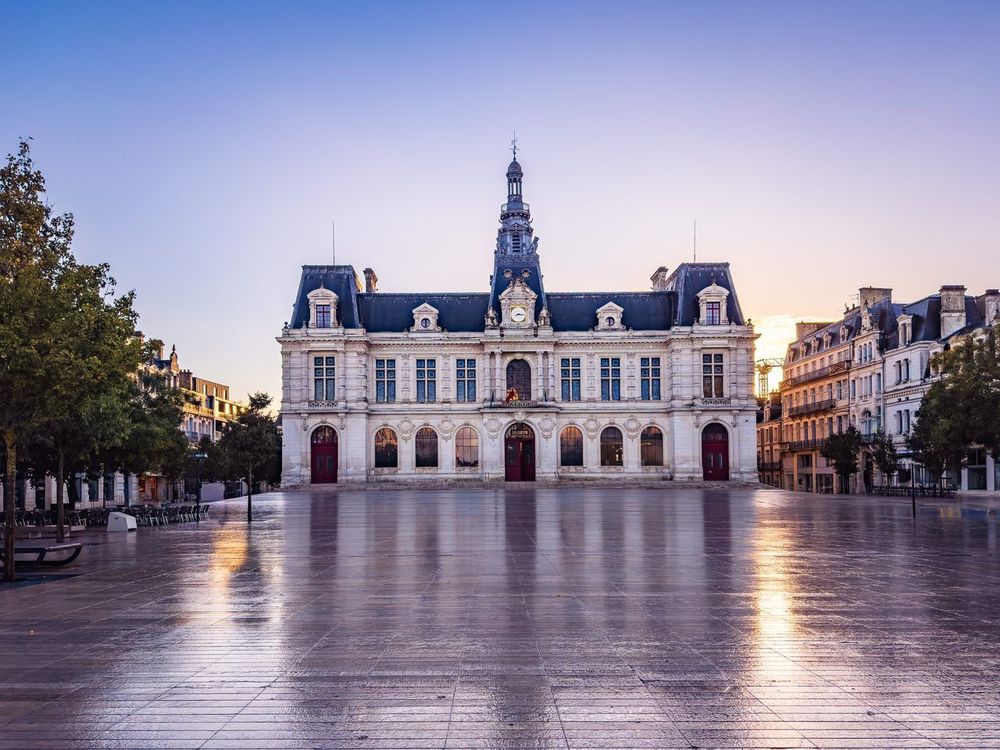
No need to worry about where to begin! Our tours are designed as a loop, so you can jump in where ever you are. The navigation system and audio-guide will automatically adjust to your location. However, if you happen to be nearby, we do have a prefered starting pont: Place du Maréchal Leclerc (Hôtel de Ville)
Parking à proximité
Cordeliers Q-Park parking facility: 4 Bis Rue Henri Oudin
In Poitiers, parking can be expensive and hard to find. There are 8 different on-street parking zones. Rates and maximum parking times vary accordingly. Be careful where you find a space!
If you don't want to drive into the city centre, you can opt for a more relaxed and economical solution: the Park & Ride sites (P+R), which are spread throughout Grand Poitiers. They offer free parking spaces served by a direct bus route to the city centre.
Découvrez 17 lieux d'intérêt pour visiter Poitiers







What to see in Poitiers on your 2h tour?
This 5 km loop takes about 2 hours and links 16 sights. From Place du Maréchal-Leclerc, it reaches the Counts of Poitiers Palace and Rue des Vieilles-Boucheries, passes the covered market and Notre-Dame-la-Grande church, climbs to Saint-Pierre Cathedral and the Saint-Jean Baptistery, then crosses the Clain towards the Dunes Belvedere before following the riverbanks. With the Ryo app in your ears, every statue, façade and legend tells the city's story.
Information checked in November 2026 and subject to change.
1 - Maréchal Leclerc Square
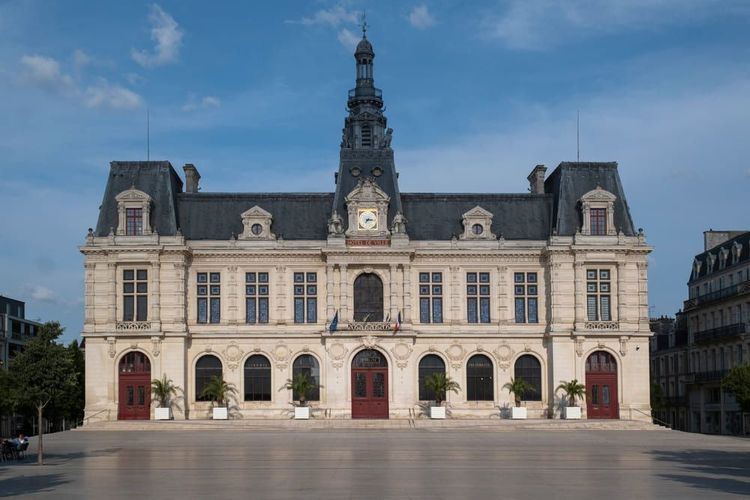
First recorded in 1058 under the Latin name for old forum, this square has carried many names over the centuries: a medieval marketplace, a royal square under the Renaissance, a national square in the days of the Revolution. 19th-century digs uncovered ancient remains here, now on display at the Sainte-Croix museum. Facing it stands the neo-Renaissance town hall, whose façade, roof and grand staircase are all listed historic monuments.
Free entry
2 - Joan of Arc Statue

Right here, tradition has it, Joan of Arc underwent the humiliating examination meant to verify her purity, before going on to meet Charles VII. The bronze statue, nicknamed the Angel of Peace, was raised in 1928 for the 500th anniversary of her passage: she is shown in armour beneath her dress, a branch in one hand, a flag in the other. Beatified in 1909, the heroine was canonised eleven years later.
Free entry
3 - Counts of Poitiers Palace
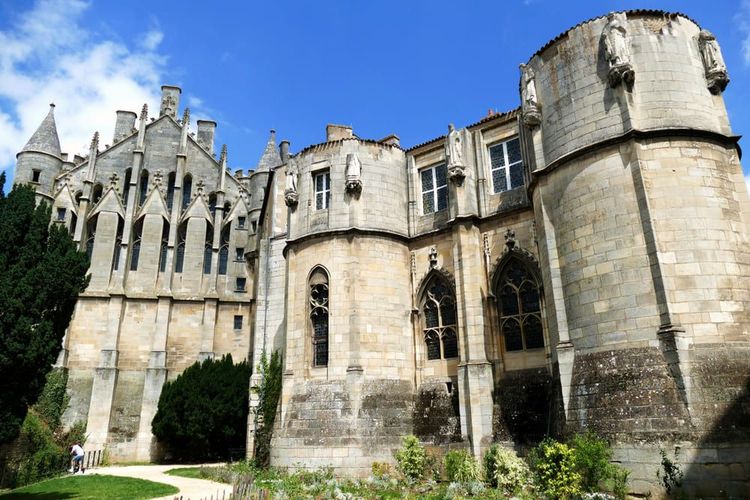
This vast medieval complex was first built in the 9th century for Charlemagne's son, before becoming, over the centuries, the seat of Poitou's rulers, among them the famous Eleanor, future queen of France and then England. She had the great hall built, likely the largest in Europe at the time, where the chestnut-wood frame remains exposed. A courthouse until 2019, the site also served as a film set for a movie about Joan of Arc.
Free entry
4 - The Vieilles boucheries street
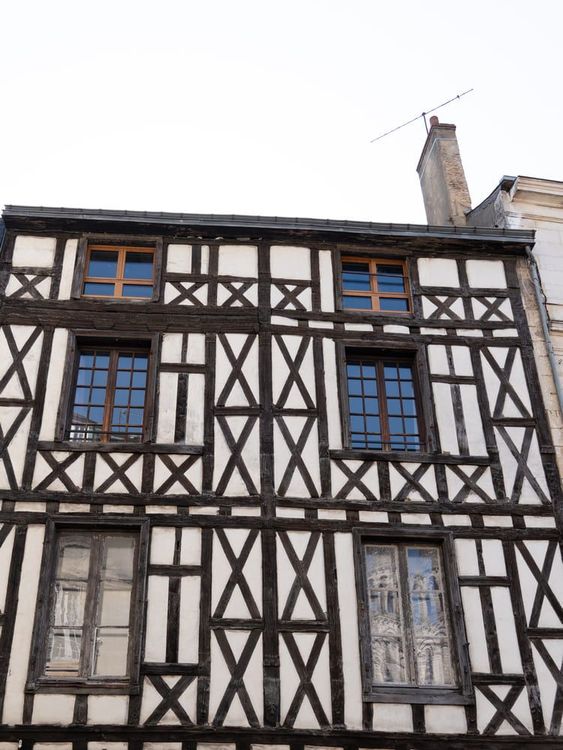
Trades were organised by neighbourhood in the Middle Ages, and this is where the butchers gathered, giving the street its name. A surprising choice, since such craftsmen usually settled near waterways to deal with blood and smells. The puzzle is solved by the discovery of seven levels of underground cellars and a well, filled in at a depth of 8 metres: a hidden but very real access to water running beneath the city.
Free entry
5 - Hôtel Fumé
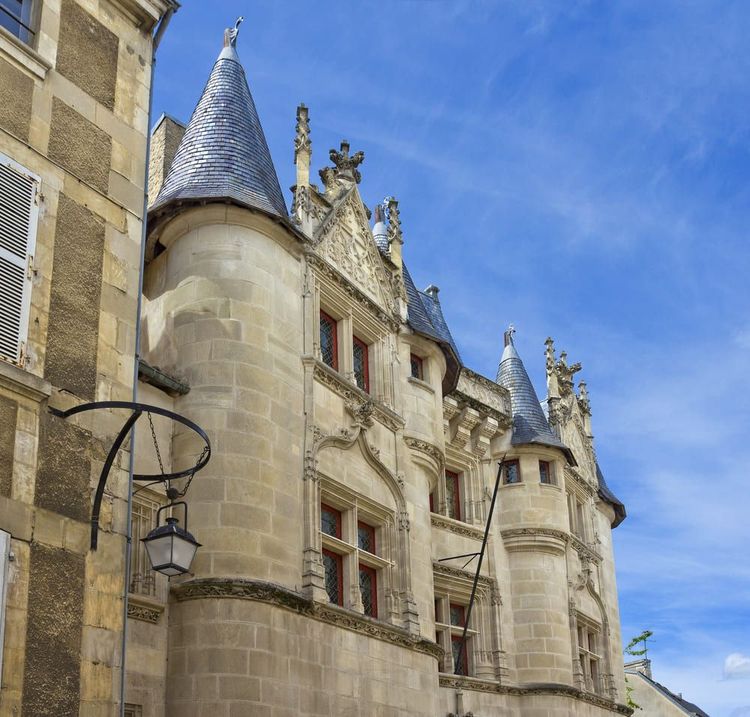
Owned by several generations of the Fumé family, many of whom served as mayor, this flamboyant Gothic mansion later passed to a religious order and then to the university, founded in 1431 and one of the very first in France. It already counted 4,000 students by the late Middle Ages and later taught the likes of Rabelais, Ronsard and Descartes. In the inner courtyard, coloured stained glass and twisted wooden columns are well worth a look.
Free to see from outside
6 - Statue of Liberty
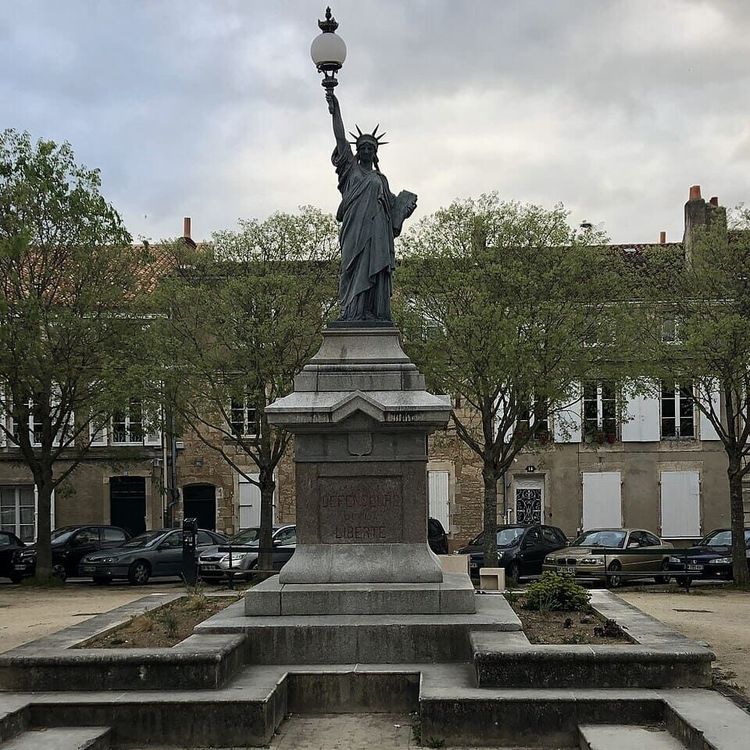
Before arriving at the final version, sculptor Bartholdi made several moulds of increasing size for his famous New York statue: this Poitiers replica is a reminder of that process. Its location is no accident: this very square once held the Revolution's pillory and guillotine. From a symbol of repression to a symbol of liberty, the contrast is history's own little joke.
Free entry
7 - Poitou specialities
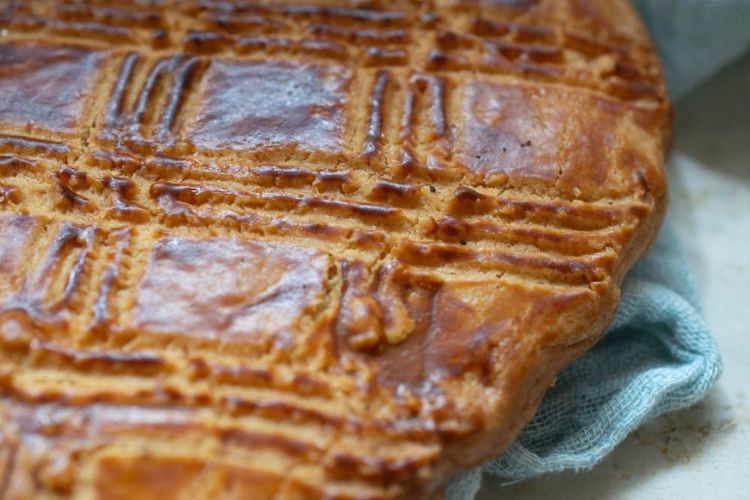
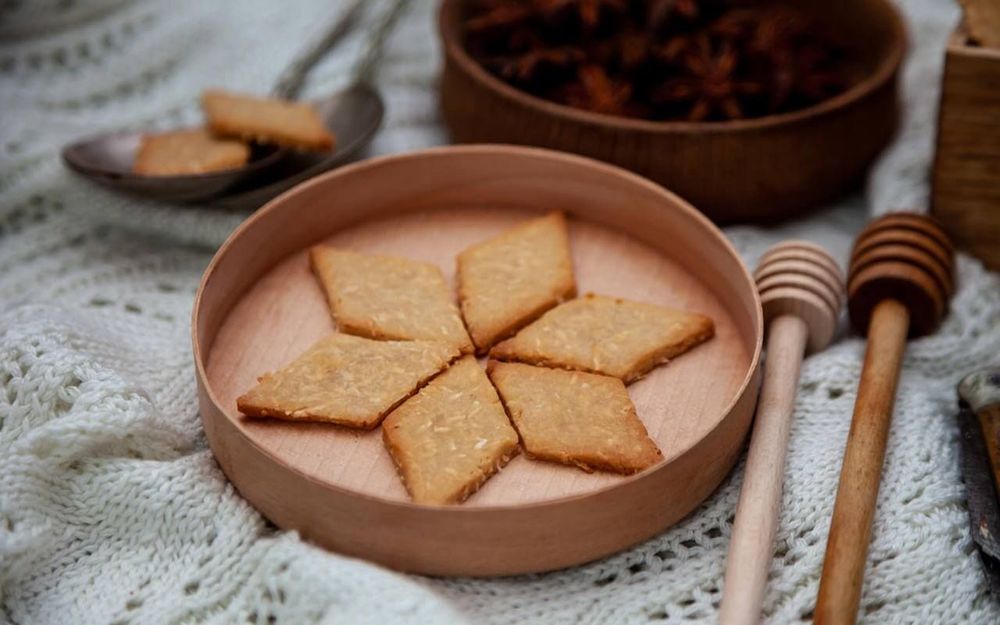
The Notre-Dame covered market holds 28 permanent stalls, joined every Saturday by a producers' market. Here you can taste farci poitevin, a kind of herb pâté made from green vegetables and meat, chabichou goat cheese, and tourteau fromager with its blackened crust. On the sweet side, there's broyé, a large shortbread cracked open with a single blow to the centre, and the almond-based macarons of Montmorillon, so different from classic macarons that they have their own museum.
Free entry · Best in the morning
8 - Notre-Dame-de-la-Grande
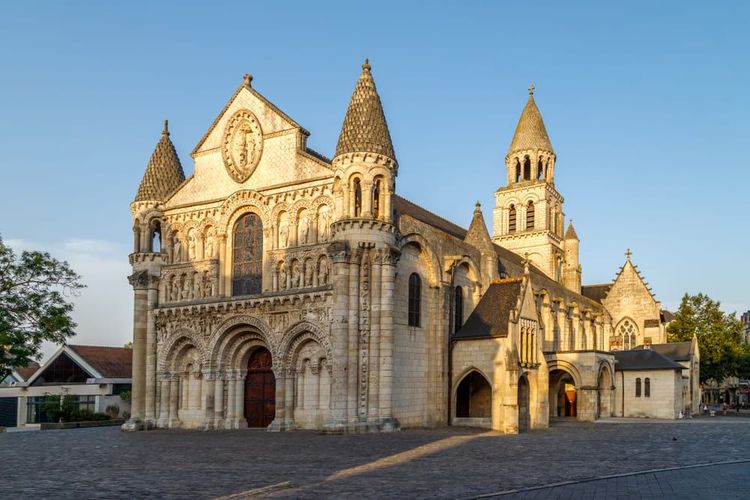
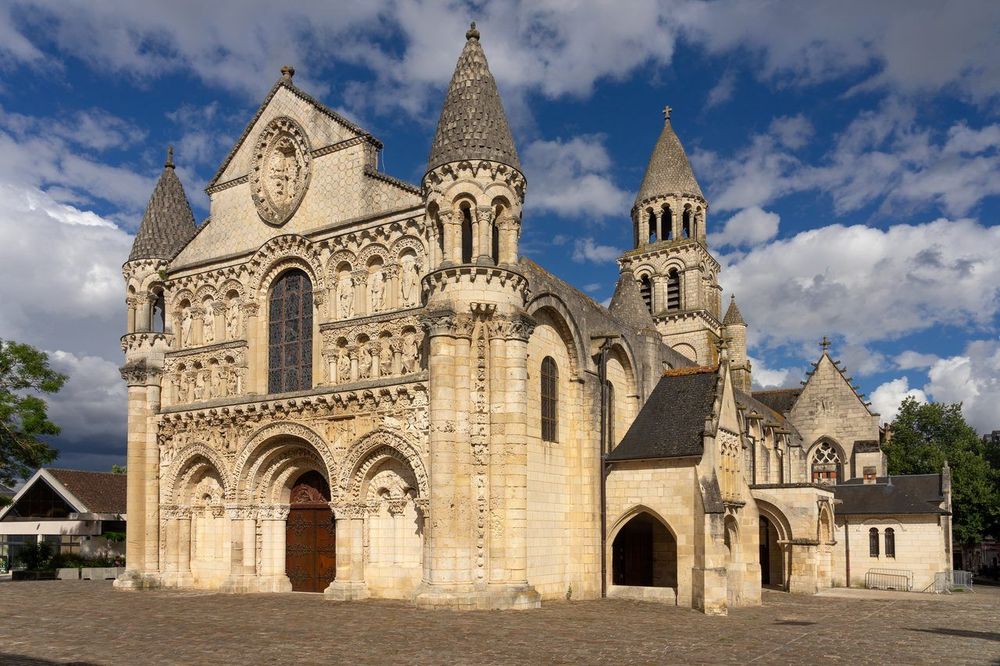
The Romanesque façade of this church, a true book of stone, depicts Christ surrounded by the symbols of the four evangelists, fourteen carved figures and a frieze of biblical scenes. First recorded in the 10th century, it was largely remodelled two centuries later, then plundered by the Huguenots in 1562, who beheaded most of the statues. The interior, repainted in 1850 in bright colours, is a reminder that the façade itself was originally painted too.
Free entry · Best in the evening
9 - Saint-Pierre and Saint-Paul Cathedral
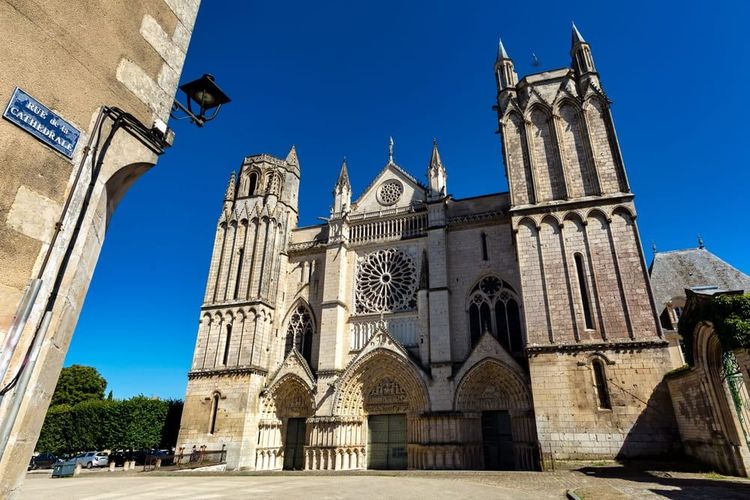
Built over two centuries on the ruins of an 11th-century building, this cathedral follows the rare hall-church plan, where the nave and side aisles reach the same height. Inside stands one of the oldest Crucifixion stained-glass windows in the Christian world, Europe's oldest Gothic choir stalls, and an 18th-century Clicquot organ, one of the rare ones still intact. 13th-century wall paintings, hidden under whitewash for centuries, have only recently been rediscovered in the south transept.
Free entry
10 - Saint-Jean Baptistery
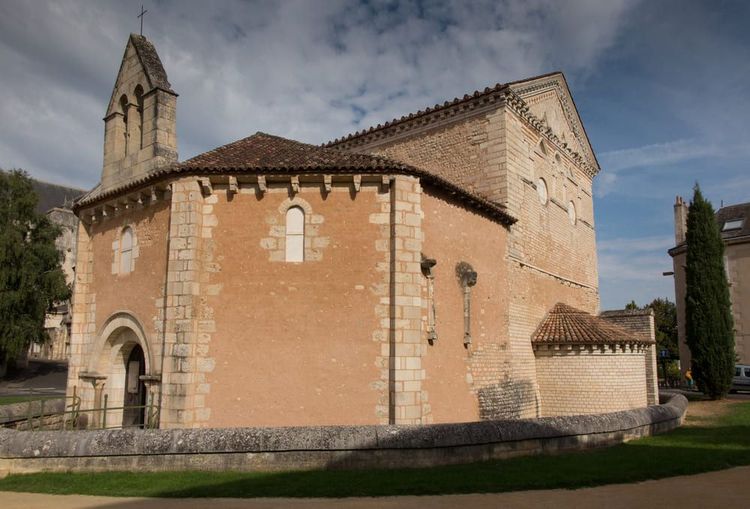
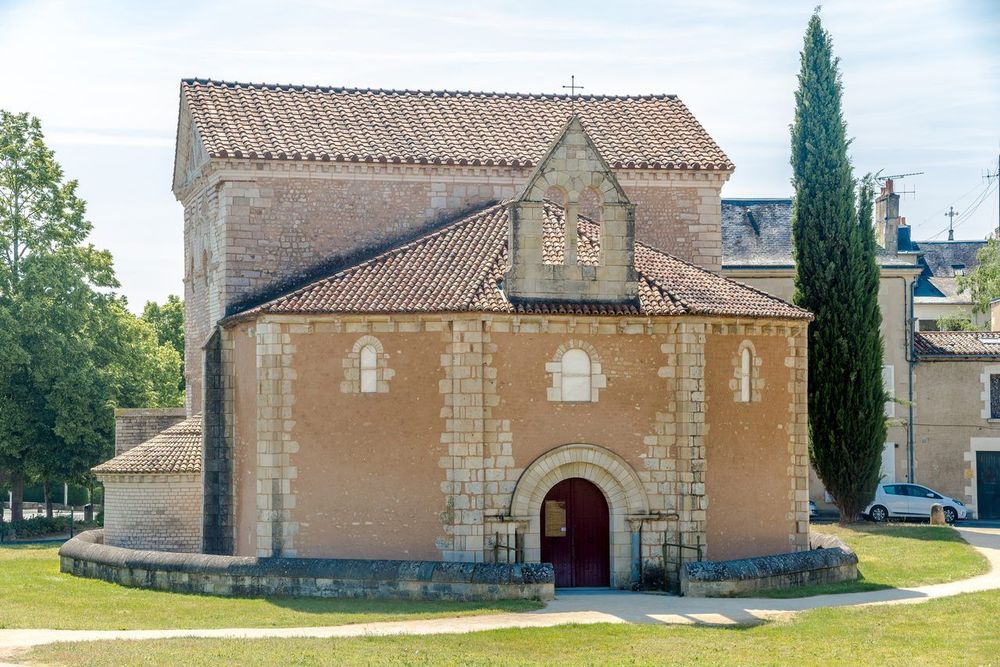
Dating from the 4th century, this rare witness to the early days of Christianity in France narrowly escaped destruction in 1835, threatened by a road project, before being bought back by the State and listed in 1846. Its octagonal 5th-century baptismal pool was used for full immersion, a practice kept up until the 8th century. Visitors can also see frescoes from several overlapping periods and a collection of Merovingian sarcophagi.
Paid entry (about €4) · Best in the afternoon
11 - Sainte-Radegonde church
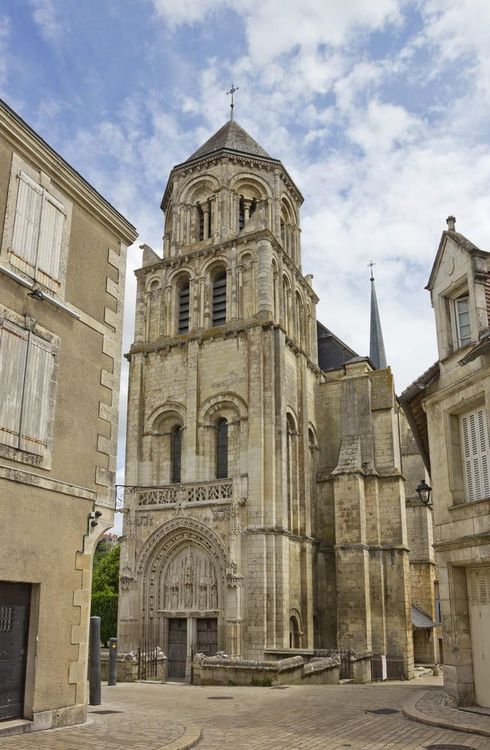
Before becoming a saint, Radegonde was the reluctant wife of Merovingian king Clotaire I, who preferred prayer and charity to the splendour of the court. She founded the Sainte-Croix abbey, retiring there until her death, and is still credited with numerous miracles and legends, including driving a fearsome dragon from the monastery's cellars. Never canonised by Rome, it was the people who made her the patron saint of Poitiers.
Free entry
12 - Dunes Belvedere
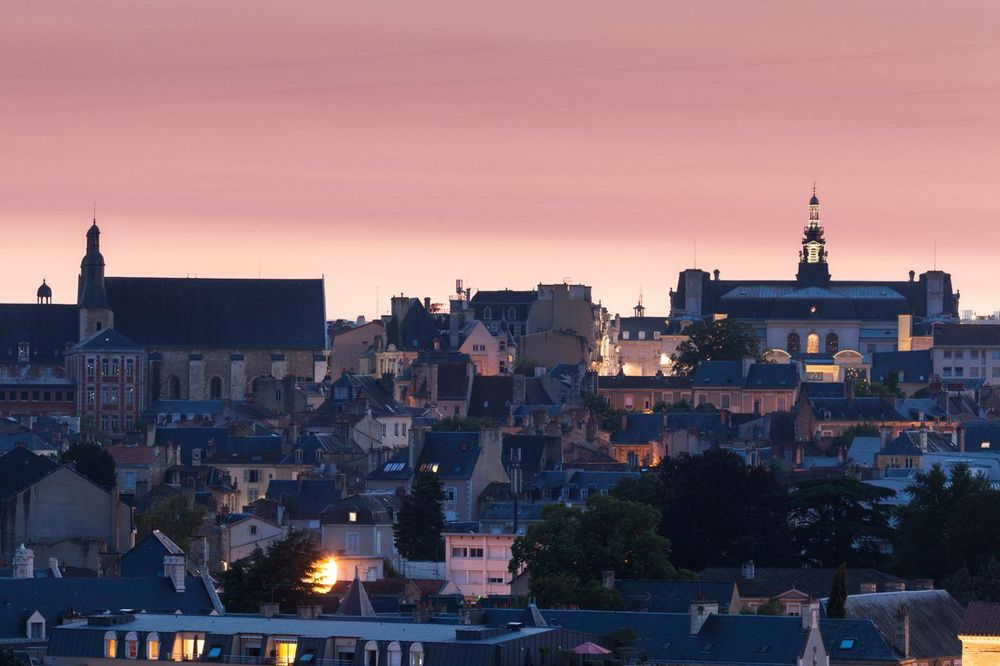
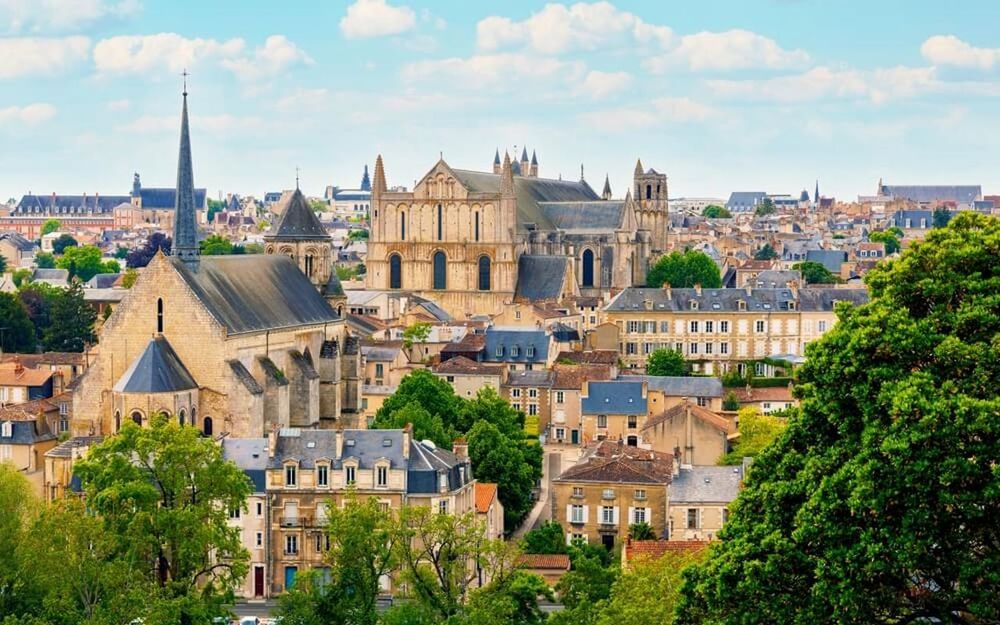
At the top of a short flight of steps, this viewpoint offers what is probably the finest panorama over the old town, its slate and tile roofs punctuated by church spires and the cathedral's towers. Particularly popular at sunset, the spot lets you take in Poitiers' perched silhouette and the richness of its heritage in a single glance.
Free entry · Best late in the day
13 - Notre-Dame des Dunes Statue
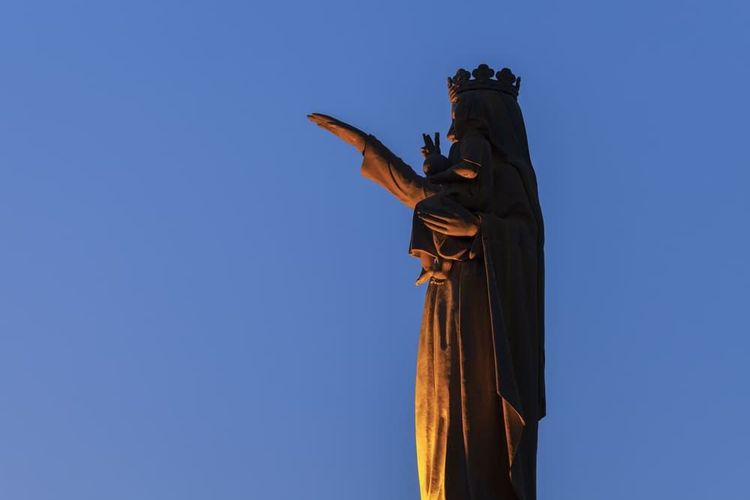
Raised at Cardinal Pie's initiative during the troubled years that followed the fall of the Second Empire, this gilded copper statue blesses the city while pointedly aiming its arm toward the town hall, symbol of the fledgling Republic. In response to this gesture, the city council had the nearby replica of the Statue of Liberty installed, which you may have already come across.
Free entry
14 - Promenade Pasteur
This walkway follows the Clain between two bridges, the Pont Neuf and, further along, the Pont Saint-Cyprien. At its far end hides the Jardin des Sens, 7,000 square metres dreamed up by landscapers Gilles Clément and Marie-Cécile Allard, designed to stir each of the five senses. Here you'll find a small open-air theatre, a pond, a wild meadow and a mini bamboo forest, among shaded paths.
Free entry
15 - The banks of the Clain
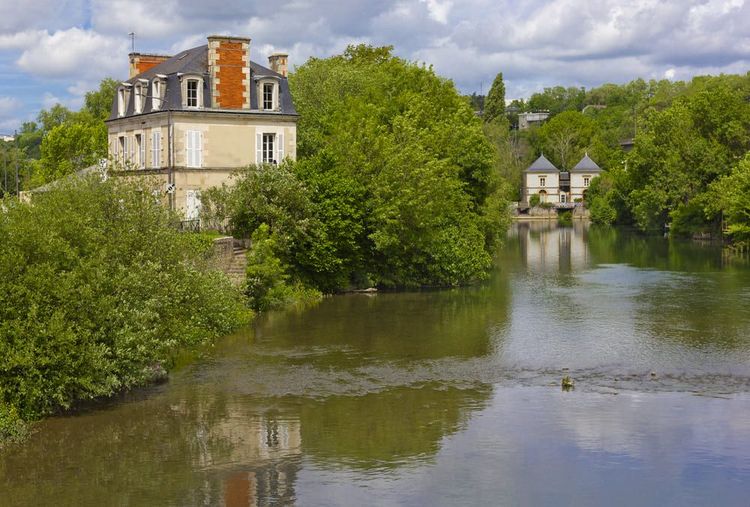
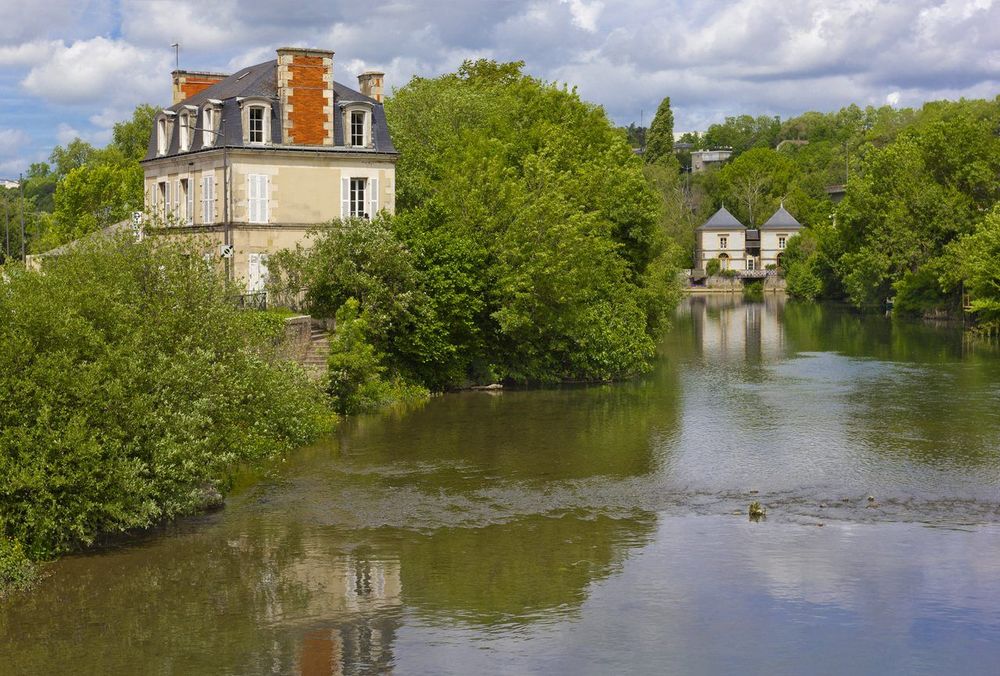
Two rivers, the Clain and the Boivre, cut the city into three parts and offer genuine nature breaks right in the centre. The Chemin des Oreillères leads, via a floating footbridge, to Île Tison, a former industrial wasteland now turned into a guinguette and orchard. The more energetic can push on to the Calvin cave, a few kilometres further, where the reformer is said to have hidden.
Free entry
16 - Jean Beaucé mansion
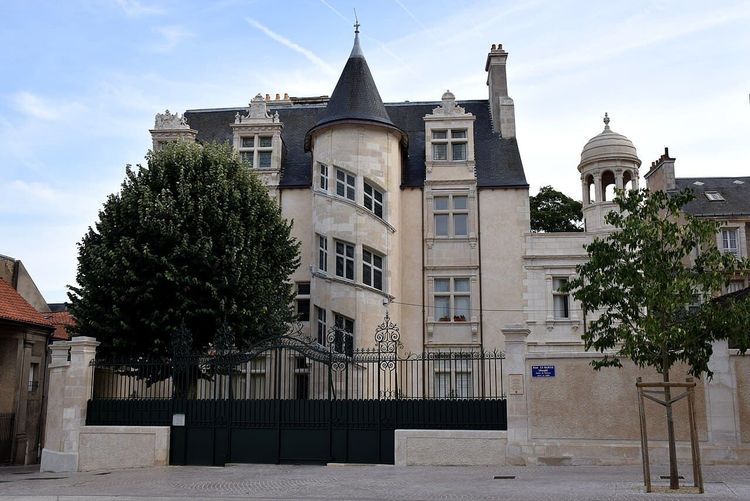
Built in 1554 for financier Jean Beaucé, this Renaissance mansion hosted in 1558 the founding colloquium of France's reformed churches, then a second national synod a few years later, key moments in the history of French Protestantism. Its stair tower with slanted windows dates from the original construction, while the domed tower visible on the right was added in the 19th century.
Free to see from outside
What to do in Poitiers in 2 or 3 days?
This loop covers 5 km and links 16 stops in about 2 hours, from Place du Maréchal-Leclerc to the banks of the Clain. With 2 or 3 days on hand, Poitiers rewards a slower pace, between a medieval palace, museums and gardens.
The next day, head to the Sainte-Croix Museum, which brings together regional archaeology and sculptures by Camille Claudel, then on to Blossac Park, an 18th-century French formal garden whose lime-tree avenues lead out onto the old ramparts and the Clain valley.
If you stay a third day, the Futuroscope theme park, a 20-minute drive north, deserves a full day. The three-day breakdown, addresses included, is in our full weekend itinerary for Poitiers.
Which neighbourhoods does the tour cross?
Walking in a loop, the route links the grand squares of the historic centre, a quarter of Renaissance mansions, the cathedral quarter and the banks of the Clain, which close the walk.
It starts at Place du Maréchal-Leclerc, passes the Counts' Palace and its statue of Joan of Arc, then climbs Rue des Vieilles-Boucheries toward the Hôtel Fumé and the Statue of Liberty (stops 1 to 6).
The route then drops back down to the covered market and the Romanesque façade of Notre-Dame-la-Grande, before heading on to the cathedral quarter: Saint-Pierre-and-Saint-Paul Cathedral, the early Christian Saint-Jean Baptistery and Sainte-Radegonde Church follow one another within a few steps (stops 7 to 11).
The last stretch reaches the Dunes Belvedere and its statue, which overlook most of the old town, then comes back down via Promenade Pasteur and the banks of the Clain to the Jean Beaucé Mansion, close to the starting point (stops 12 to 16). For other routes through the centre, our walking guide to Poitiers covers several variations.
How much does it cost to visit Poitiers?
Of the 16 stops on the route, 13 can be visited freely: squares, churches and riverbanks ask for no ticket. Two mansion façades, the Hôtel Fumé and the Jean Beaucé Mansion, are seen from the street only.
Only Saint-Jean Baptistery charges an entry fee, at €4. To round out the day, our top 6 things to do in Poitiers offers more ideas.
Information checked in November 2026 and subject to change.
Where to stop for a bite along the tour?
The route stops right by the Notre-Dame covered market (stop 7), whose 28 permanent stalls are joined on Saturdays by a large market of local producers.
Try the farci poitevin, a terrine of greens and meat, or chabichou, the region's well-known goat cheese. For something sweet, tourteau fromagé shows off its blackened crust, and broyé du Poitou is broken by hand before it is eaten. Our top 10 culinary specialties in Poitiers rounds up the other classics worth tasting.
What to do in Poitiers with children?
The historic centre, largely pedestrian, suits a family outing well, with no queues and short distances between stops.
Right across from the Counts' Palace (stop 3), The Escape League runs two scenarios built for children, including “Le trésor d'Aliénor”, built around Eleanor of Aquitaine, while the free Terra Aventura app turns the walk into a geolocated treasure hunt, with a collectible badge at the end. Our guide to visiting Poitiers with family lists more ideas, from parks to the Sainte-Croix Museum.
What should you know before visiting Poitiers?
Two stops on the route keep their own opening hours, worth bearing in mind if you pass by in the afternoon or out of season.
The Counts' Palace (stop 3), currently under renovation, only opens its Great Hall, closed on Tuesdays; its Maubergeon Tower can only be seen on a guided tour, on Wednesday afternoons, at weekends and during school holidays. Saint-Jean Baptistery (stop 10), meanwhile, opens only from 2 pm to 4 pm, Tuesday to Sunday, between October and April, and takes cash only.
What to see around Poitiers?
Poitiers makes a good base, between medieval villages nearby and neighbouring towns that also have their own audio-guided route.
To the east, Chauvigny rises above the Vienne river on its own rocky spur, with 5 ruined castles packed onto the same ridge, and one of them hosts a flight display of birds of prey. The Marais Poitevin is explored by flat-bottomed boat, without an engine, along canals carpeted with duckweed, and the Vallée des Singes keeps some 450 primates in semi-freedom, with no cages or fences between them and visitors.
Several neighbouring towns also have their own audio-guided route: Saumur, 82 km away, pairs a château overlooking the Loire with the equestrian tradition of the Cadre Noir; Tours, 94 km away, contrasts a Gothic cathedral with the half-timbered Place Plumereau; Limoges, 109 km away, the capital of porcelain, is split between the episcopal quarter and the medieval Château district.
What's on in Poitiers right now?
Toward the end of the year, Poitiers' calendar fills up with things to do, from cinema to the sound and light show at Notre-Dame-la-Grande.
Several events follow one another over the coming weeks:
- from 27 November to 4 December, the Poitiers Film Festival gathers previews, student short films and masterclasses around cinema;
- on 28 November, the Inframuros art trail takes over several venues across town, the Sainte-Croix Museum included;
- from 30 November to 6 January, the Romanesque façade of Notre-Dame-la-Grande (stop 8) lights up every evening from 6 pm to 10 pm for the Révélation show;
- on 5 and 6 December, a makers' Christmas market sets up at the Fourmilière de Montmidi;
- on 9 December, winter tales are told at the Trois Cités library.
Information checked in November 2026 and subject to change.
Le plein d'inspirations
Explorez le monde en totale liberté, à pied au cœur des villes ou au fil des routes. Nos guides audios transforment chaque destination en une découverte culturelle immersive et unique.










FAQ for visiting Poitiers
When is the best time to visit Poitiers?
The ideal time to explore Poitiers runs from May to September, when the temperate oceanic climate offers pleasant conditions with summer temperatures approaching 26°C. June proves especially delightful thanks to its long sunny days, perfect for strolling through the medieval lanes and enjoying the green spaces along the Clain. If you prefer a quieter atmosphere and soft light to admire the Romanesque heritage, September makes an excellent alternative after the summer crowds. Winters remain cool but still visitable, with temperatures ranging between 2°C and 9°C, ideal for a more intimate discovery of the city.
How long do you need to visit Poitiers?
To fully appreciate the riches of this thousand-year-old city, ideally plan for two full days. A well-filled day will let you discover the must-sees of the historic centre: the sculpted façade of Notre-Dame-la-Grande, the medieval lanes and their half-timbered houses, as well as the main monuments. A stay of two or three days offers more flexibility to explore the hanging gardens, visit a few museums and soak up the atmosphere of the lively squares. If you also wish to discover the nearby Futuroscope, allow an extra day. The Ryo audioguide accompanies you efficiently to optimise your route through the city's major sites.
How do you get to Poitiers from Paris?
The train is the most convenient way to reach Poitiers from the capital. The TGV line connects Paris Montparnasse to Poitiers in generally less than two hours, with several direct daily services. By car, allow around three and a half hours via the A10 motorway, depending on traffic conditions. Bus companies also offer regular services, often cheaper but requiring more time, generally between four and five hours. Once you arrive at Poitiers station, located close to the town centre, you can easily reach your accommodation on foot or by public transport.
Where should you stay in Poitiers?
The historic centre is the ideal district to stay in, letting you easily explore the main monuments on foot and enjoy the buzz of the squares. There you'll find charming hotels set in former mansions, as well as more modern establishments. The station district offers a practical alternative with a varied range of accommodation and easy connections to the centre. For a more authentic stay, the guesthouses in the traditional houses of old Poitiers immerse you in the local atmosphere. Travellers on a limited budget will appreciate the youth hostel and the apartment rentals available in various districts.
What are the must-see monuments in Poitiers?
Notre-Dame-la-Grande immediately fascinates with its sculpted Romanesque façade, a true stone lacework that recounts biblical scenes. The Baptistery of Saint-Jean, one of the oldest Christian monuments in France, absolutely deserves your visit. Don't miss the Palace of the Counts of Poitou and Dukes of Aquitaine, a witness to the city's glorious past linked to Eleanor of Aquitaine. The church of Saint-Hilaire-le-Grand, a UNESCO World Heritage Site, impresses with its Romanesque architecture. The medieval lanes lined with half-timbered houses create a unique atmosphere to explore. The Ryo audioguide guides you through these architectural marvels, revealing their secrets and historical anecdotes.
Is Poitiers a good city for families with children?
Poitiers proves particularly welcoming for families. The Futuroscope, located in the immediate vicinity, is of course the flagship attraction for young and old alike. In the city itself, children generally enjoy discovering the historic centre with its mysterious lanes and medieval legends. The green spaces along the Clain offer playgrounds and opportunities for relaxing walks. Several museums offer educational activities suited to young visitors. The relatively short distances in the centre allow children to take part in the sightseeing without getting too tired. Many restaurants have children's menus and suitable facilities to welcome families in good conditions.
Can you visit Poitiers on foot?
Poitiers lends itself wonderfully to discovery on foot. Perched on its promontory, the historic city concentrates its main monuments within a walkable perimeter. The winding lanes of the medieval centre naturally invite you to stroll, revealing at every turn glimpses of half-timbered houses or charming little squares. Be prepared, however, for a few climbs, as the hilly terrain is part of the city's charm. The hanging gardens offer welcome breaks with their panoramic views. The Ryo app offers just such a narrated audio route designed especially for exploring Poitiers on foot, guiding you efficiently between the major sites while sharing the fascinating history of this thousand-year-old city.
What is there to see around Poitiers?
The surroundings of Poitiers are brimming with remarkable sites. The Futuroscope, a futuristic theme park unique in Europe, stands out as the must-see visit just a few kilometres away. The Abbey of Saint-Savin-sur-Gartempe, nicknamed the "Romanesque Sistine Chapel" for its exceptional frescoes, is well worth the detour. The châteaux of Dissay and Touffou offer fine examples of medieval and Renaissance architecture. The Vienne valley invites you to bucolic walks and water activities. Nature lovers will appreciate the Pinail nature reserve with its heathland landscapes and pools. Chauvigny, a perched medieval town, charms with its preserved heritage and birds-of-prey shows. These excursions perfectly round off your discovery of the Poitou region.
Why is Poitiers known as a capital of Romanesque art?
Poitiers has preserved a group of religious buildings of a density that is rare for a city of its size, a legacy of the days when it was the capital of the county of Poitou and a major pilgrimage crossroads. The façade of Notre-Dame-la-Grande, carved from top to bottom like a page of images, is the most famous example, but the church of Saint-Hilaire-le-Grand with its rows of columns, the church of Sainte-Radegonde and the Saint-Jean baptistery, among the oldest Christian buildings in France, round out the picture. The capitals, frescoes and vaults once told biblical scenes to an audience that could not read. The Ryo audio guide offers a dedicated Poitiers route that links these buildings and decodes their carved details.
Which local specialities should you try in Poitiers?
Cooking in Poitiers stays close to its local produce. You will often come across farci poitevin, a sort of loaf of green vegetables and herbs served warm or cold, tourteau fromager, a goat's cheese cake with a deliberately blackened crust that takes newcomers by surprise, and broyé du Poitou, a large shortbread that tradition says you should break with a punch to the middle. The region's goat cheeses, chabichou first among them, work well on a sharing board, while the macarons from nearby Montmorillon play the sweet card. The covered market of Notre-Dame, at the foot of the church, remains a good starting point for tasting all of this, generally at its liveliest in the morning and at weekends.
From farci poitevin to broyé, which local recipes should you discover in Poitiers?
Poitiers cooking is all about local produce. Farci poitevin, once known as the poor man's dish, is a terrine of bacon and greens (spinach, cabbage, sorrel, chard) cooked in water scented with thyme and bay. Sorrel soup is still very popular, as are little goat's cheeses, eaten at breakfast or in a salad.
For something sweet, try tourteau fromagé with its blackened crust, broyé du Poitou, broken by hand before eating, the almond macarons of Montmorillon, whose recipe is a closely kept secret, and the 19th-century nougatine du Poitou, not forgetting Poitou-Charentes AOP butter.
All ten are waiting in our guide to the culinary specialities of Poitiers.
Which activities should you prioritise on a first trip to Poitiers?
Start with Notre-Dame-la-Grande on Place Charles-de-Gaulle, whose sculpted frieze tells the Bible story like a picture book. Saint-Pierre Cathedral, begun around 1160, houses the Crucifixion window, one of the oldest in France, the great Clicquot organ and Gothic choir stalls.
For fresh air, the Parc de Blossac spreads nearly 9 hectares of gardens down to the banks of the Clain. Thrill-seekers can head to Futuroscope, around twenty minutes away by car, while walkers will find some twenty hiking, cycling and mountain-bike routes around the city.
See the full selection in our top things to do in Poitiers.
Where can you go hiking around Poitiers, between forest, rivers and abbeys?
The Moulière forest, twenty minutes to the east, covers some 6,800 hectares: from the Maison de la Forêt in Montamisé, waymarked loops of 5 to 14 kilometres wind through oak and pine on flat ground that suits families.
Without a car, the Clain riverside path leaves from the Parc de Blossac and heads to Ligugé, about an hour and a half on foot, on a surface that also works for bikes and pushchairs. Further south, Nouaillé-Maupertuis combines the Abbey of Saint-Junien with the site of the Battle of Poitiers, fought in 1356.
All twelve routes are described in our guide to hiking around Poitiers.
Which unusual, little-known places can you discover in Poitiers?
Squeezed between two buildings, the Baptistery of Saint-Jean, built as early as the 4th century, is one of the oldest Christian buildings in France (entry 3 euros). On the Dunes plateau, the Hypogeum of the Dunes, a 7th- and 8th-century burial chamber, opens only for guided tours in July and August and during Heritage Days.
Nearby, the Pierre Levée, a dolmen some five thousand years old made famous by Rabelais, is freely accessible. In the evening, from late June to late September, a light show restores the original colours of Notre-Dame-la-Grande's facade.
All eleven spots are gathered in our guide to offbeat Poitiers.
Which route should you follow for a walk through central Poitiers?
Start on Place Charles-de-Gaulle, in front of the more than 200 sculpted figures of Notre-Dame-la-Grande, then head to Saint-Pierre Cathedral and the Baptistery of Saint-Jean on Rue Jean-Jaurès. The covered market, the Grand'Rue and the Palace of the Dukes of Aquitaine, with its Salle des Pas Perdus, complete a half-day loop, or two hours if you stay outside.
The Parc de Blossac, where peacocks roam freely, then overlooks the Clain, whose banks you can follow on foot below. The GR 364 and GR 655 long-distance trails also cross the city.
Every route is detailed in our guide to walks in Poitiers.
What activities can you plan with children during a stay in Poitiers?
The centre is easy to explore on foot and comes alive with history-themed escape games, such as the quest to free Eleanor of Aquitaine (10 euros per adult, 5 euros for ages 7 to 15). The free Tèrra Aventura app turns walks into treasure hunts.
For nature, the Parc de Blossac has playgrounds and a small zoo, the Îlot Tison offers canoes, paddleboards and an open-air café by the Clain, and the Bois de Saint-Pierre spans over 200 hectares of forest. At the Musée Sainte-Croix, the legendary Grand'Goule dragon delights little ones, before a day at Futuroscope or the Vallée des Singes.
Plan your trip with our family guide to Poitiers.
How should you plan a two-day weekend in Poitiers?
On day one, explore the Romanesque heart: the facade of Notre-Dame-la-Grande in the morning light, the covered market, the 4th-century Baptistery of Saint-Jean and Saint-Pierre Cathedral, whose Clicquot organ was completed in 1791. End the day at the Îlot Tison, a former mill opened to the public in 2018.
On day two, visit the Palace of the Dukes of Aquitaine, where Eleanor spent part of her youth, then the Musée Sainte-Croix and its works by Camille Claudel, free on the first Sunday of the month, before the Parc de Blossac and the banks of the Clain. A third day opens up Futuroscope or Chauvigny.
Follow the full plan in our weekend itinerary for Poitiers.
Is Poitiers a good destination for solo travelers who want to explore at their own pace?
Yes, Poitiers works very well for solo travel: its compact, pedestrian-friendly historic center can be explored in half a day. You can link the Romanesque façade of Notre-Dame-la-Grande, Saint-Pierre Cathedral, the 4th-century Saint-Jean Baptistery and the Sainte-Croix Museum, which reopened in September 2026.
To unwind, the Île Tison, Blossac Park and the Dunes viewpoint are ideal. As for meals, the Notre-Dame market and restaurants like La Serrurerie welcome solo diners without any fuss.
Cathedrals, parks, market and good addresses: read our guide to visiting Poitiers solo.
Vos commentaires, idées et suggestions
Aucun avis pour le moment