© Shutterstock
 Votre guide Ryo
Walking in Poitiers: Routes and Itineraries on Foot for 2026
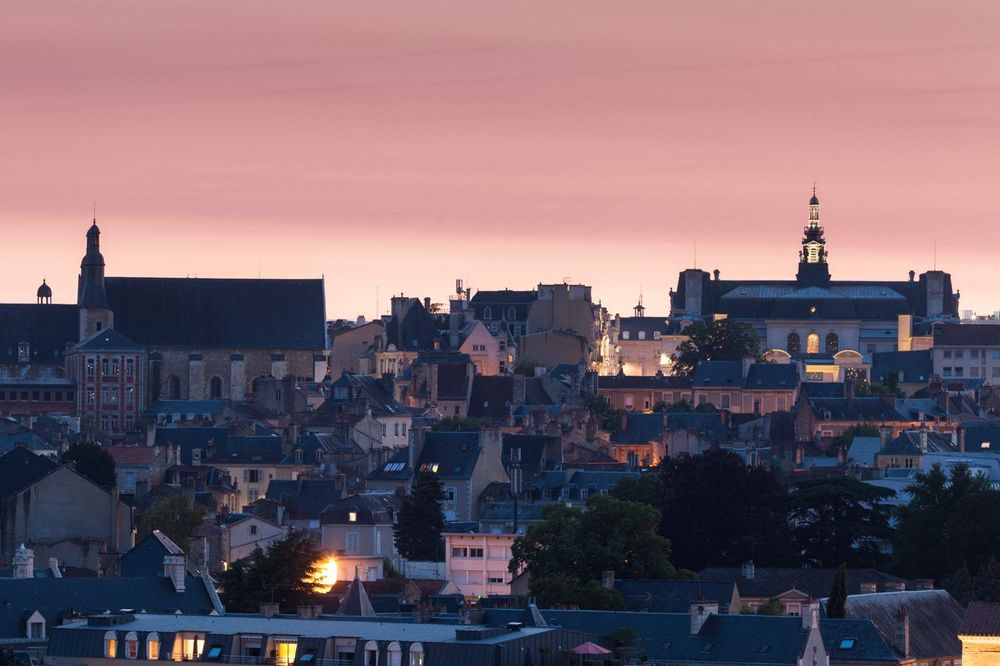
Searching “walk Poitiers” online leads you to a city that always begins with a story about elevation changes. Built on a rocky spur enclosed by the Clain and the Boivre, Poitiers layers its Romanesque churches, medieval lanes and 18th-century park across a relief that forces you to slow your pace — which is exactly what a good walk requires. The Ryo audio-guided tour of Poitiers follows this relief rather than fighting it, connecting the heights of the city centre to the low riverbanks below.
In just a few hours on foot, you will encounter a 4th-century baptistery that ranks among the oldest Christian buildings preserved in France, a Romanesque façade carved with more than 200 figures, and a park where peacocks roam freely beneath lime trees planted since the reign of Louis XV. Add a towpath walkable by bike or on foot along the Clain, two long-distance hiking routes that pass directly through the city (the GR 364 and the GR 655, along the road to Compostela), and direct access to the Futuroscope for families looking for a bigger day out. Enough to put together several walks in Poitiers, from a one-hour express loop to a full hiking weekend.
This walking guide to Poitiers lays out the itineraries one by one, from the historic centre to the surrounding circuits, with a suggested duration, difficulty level and a clear picture of what you will actually see along each one. Feel free to combine them or pick and choose depending on the time you have and the energy of your walking companions.
The Historic Centre, Between Romanesque and Gothic
Everything generally starts at the place Charles de Gaulle, in front of the façade of Notre-Dame-la-Grande. Carved in the 12th century, it lines up more than 200 figures and animals across three registers — an Annunciation, a Nativity and a Christ in Majesty — that were once painted in vivid colours, as recalled by a light projection show staged on certain summer evenings.
Take the time to walk all the way around the building: the façade captures all the attention, but the chevet with its radiating apsidioles and the scale-tiled bell tower are equally worth looking up at. The daily market that sets up on the adjacent square gives this starting point an energy that historic centres frozen in time often lack, and a good excuse to time the walk for late morning.
Continuing eastward, the cathédrale Saint-Pierre shifts to an entirely different register. A Gothic construction begun in the 12th century and completed four centuries later, it preserves 13th-century carved wooden choir stalls among the oldest in France, and a Crucifixion window still in place behind the chancel. The nave, unusually wide for the so-called Angevin Gothic style, gives a sense of space that surprises after the Romanesque exuberance of Notre-Dame-la-Grande — a contrast that gives every walk in Poitiers its distinctive flavour.
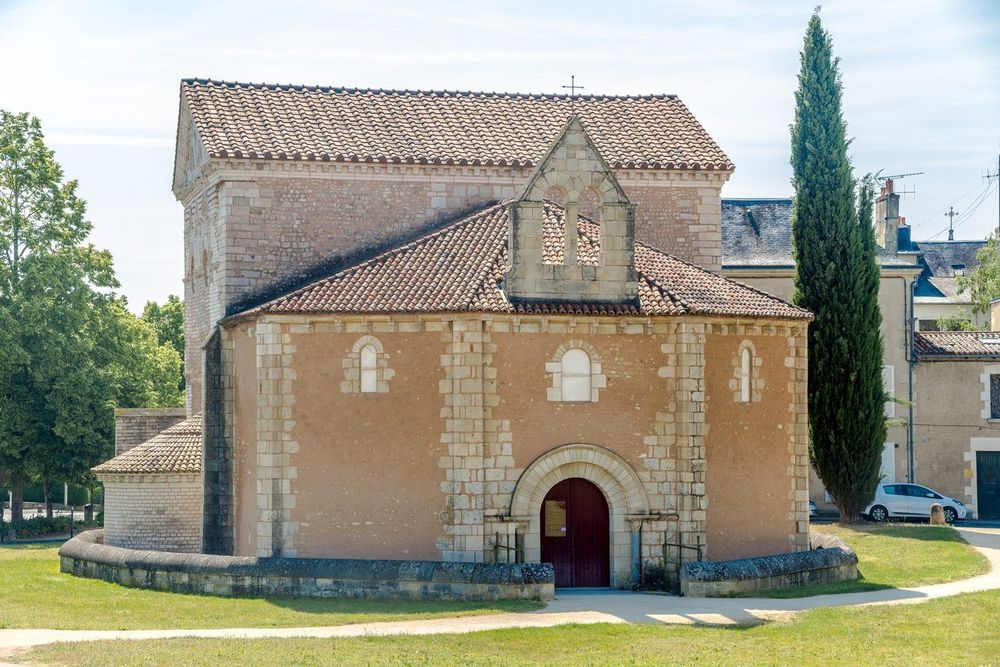
Just behind, tucked between two buildings on the rue Jean-Jaurès, lies the rarest curiosity of the whole route: the baptîstère Saint-Jean. Built in the 4th century over former Gallo-Roman baths, it is considered one of the oldest Christian buildings still standing in France. Inside, 12th-century frescoes depicting Constantine on horseback stand alongside a hexagonal baptismal font used well into the early Middle Ages. Entry is paid but modest, and the visit wraps up in about twenty minutes — ideal for catching your breath between two uphill stretches.
If you are walking through Poitiers on a market day, a detour to the Halles de Poitiers is a must before resuming the walk: the 19th-century iron market hall still sells Poitou goat's cheese and broyé du Poitou, two products you will come across again at lunchtime. The pedestrian streets radiating outward — the Grand'Rue and the rue de la Regratterie chief among them — line up timber-framed façades and concentrate most of the city-centre shops.
Ten minutes' walk away, the palais des Ducs d'Aquitaine (Place Alphonse Lepetit, 86000 Poitiers, rated 4.6/5 on Google based on 336 reviews) (now the law courts) closes the historic-centre loop. Its Salle des Pas Perdus, with its monumental fireplace and inverted ship's-keel vaulted ceiling, is open for free visits on certain afternoons. The Tour Maubergeon, the former keep of the counts of Poitou integrated into the palace, rounds off this rare example of medieval civic architecture in France. To explore this section of the route in more depth, our Ryo top 6 things to do in Poitiers details the opening hours of each monument, which is handy before setting out early in the morning.
Allow a good half day for this loop of the centre if you go inside the monuments, barely two hours if you stick to the exteriors. This is the most densely packed section of any walk in Poitiers, and undoubtedly the one to start with if you only have a morning to spare.
The Parc de Blossac, the City Centre's Green Pause
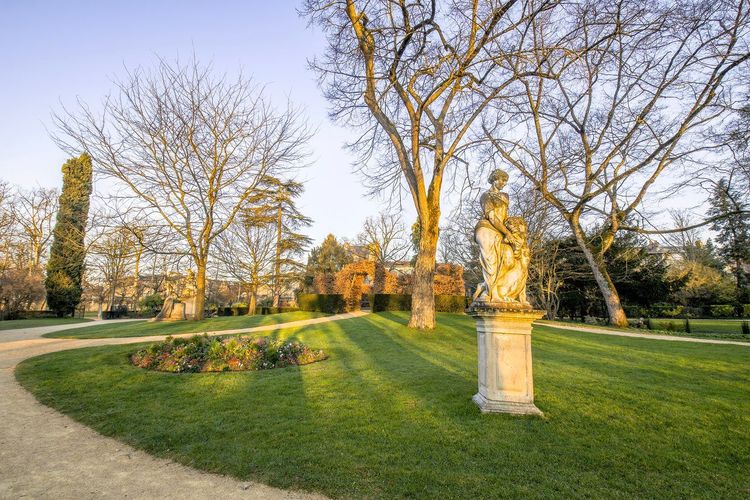
Five minutes' walk from the cathedral, the parc de Blossac (Rue du Parc de Blossac, 86000 Poitiers, rated 4.5/5 on Google based on 4,126 reviews) has occupied the city's former southern rampart since 1750. Designed for the intendant of the same name, it overlooks the Clain valley by about twenty metres, with a viewpoint that stretches to the slopes of Saint-Benoît on a clear day.
An unmissable stop on any city-centre walk in Poitiers, the park reads in two distinct parts: on one side a rigorous French formal garden of straight avenues and clipped parterres inherited from the 18th century, on the other a more informal English landscape garden laid out in the 19th century, with specimen trees and rolling lawns. Peacocks have lived here freely for several generations, as have a few deer visible in an enclosure near the entrance. The lime trees lining the central avenues date in part from the reign of Louis XV, making this one of the oldest tree-lined promenades in the department.
If your city-centre walk in Poitiers includes children, set aside an extra half hour here: the play areas and picnic tables make it a natural stop before or after visiting the historic centre, with no transport needed. From the upper terrace, walk along the low wall bordering the old rampart — this is where the view plunges most dramatically down to the Clain, a framing that local photographers favour in the late afternoon.
The Val Vert du Clain, the Riverside Walk
From Blossac, a staircase leads directly down to the banks of the Clain, where one of the most sought-after itineraries among visitors searching for a riverside walk along the Clain in Poitiers begins. This is the definitive riverside walk along the Clain in Poitiers: the path follows the river for several kilometres, alternating between towpath and suspended footbridges over oxbow channels.
The pont Joubert (Pont Joubert, 86000 Poitiers), one of the oldest crossings of the Clain, marks a natural stopping point: its structure rests on ancient piers still visible beneath the arches modified over the centuries. From here, the view looks back up towards the rooftops of the historic centre and the silhouette of Sainte-Radegonde — one of the finest viewpoints over the upper city from the riverbanks.
Further south, the île de Rochereuil (Île de Rochereuil, 86000 Poitiers, rated 5/5 on Google based on 2 reviews) forms a preserved wetland where grey herons and kingfishers can sometimes be spotted in the late afternoon. This is also where the Val Vert du Clain — a cycling and walking route linking Poitiers to several neighbouring towns — truly comes into its own: around twelve kilometres of flat, shaded, virtually level path, suitable for families and solo walkers alike.
In summer, several rental outlets offer canoes and paddleboards for exploring the river from the water. Allow a good hour of gentle paddling to reach the southern outskirts — a format that makes for a welcome change from a standard walking hike in Poitiers. It is also the best way to appreciate just how much the city turns its back on its river when seen from the upper town: from the water, the relief takes on an entirely different dimension.
Local runners often use this route for a Sunday jog: the compacted surface and absence of traffic make it one of the few axes in the city where you can run five kilometres without crossing a single road. If you are looking for a walk in Poitiers that is accessible by pushchair or wheelchair, this is by far the most suitable stretch in the guide.
Sainte-Radegonde and the Forgotten Underground
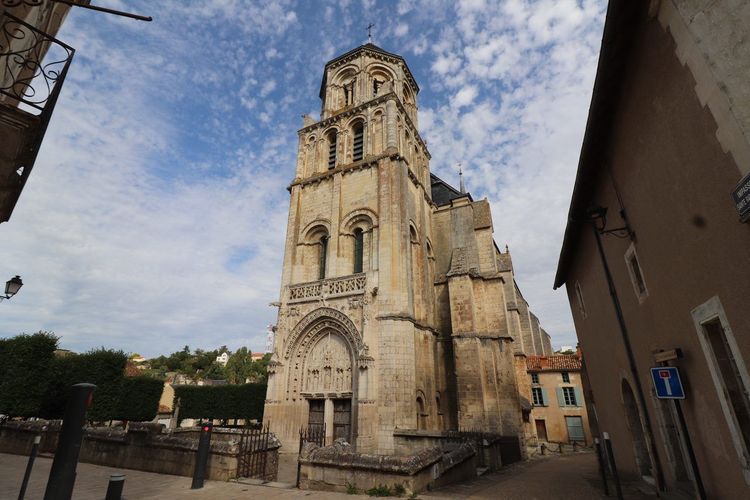
On the other side of the centre, the église Sainte-Radegonde houses in its crypt the tomb of the Merovingian queen of the same name, who died in 587. The crypt is open to free visits during the church's opening hours and preserves a footprint that tradition attributes to Christ appearing to the saint.
Just steps away, beneath a modest slab laid in the late 20th century, lies the hypogée des Dunes (Rue de la Pierre Levée, 86000 Poitiers, rated 4.4/5 on Google based on 40 reviews), a 7th-century Merovingian funerary crypt. It preserves some of the oldest known Christian mural paintings in France, with Latin inscriptions and biblical scenes whose original colours remain partially visible. Visits are by reservation only through the tourist office, in small groups, with subdued lighting to protect the pigments. Book several days in advance in high season: time slots are rare and fill up quickly.
This neighbourhood, less visited than the city centre, deserves time on a slightly longer walk in Poitiers: the lanes descending towards the Clain from Sainte-Radegonde pass through former tanners' quarters, with a few timber-framed façades still visible on the rue du Puygarreau. Nearby, the dolmen de la Pierre Levée — a megalith that Rabelais was already writing about in the 16th century — adds a prehistoric layer to this journey through the city's long history.
Montierneuf, the Abbey That Witnessed Guillaume le Troubadour
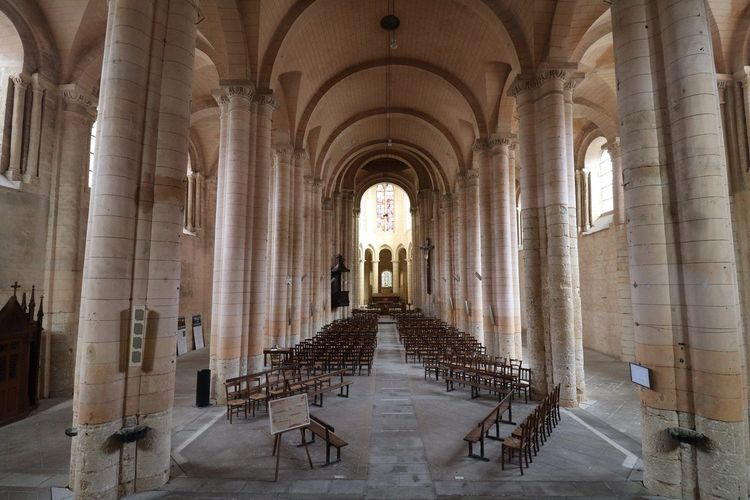
To the north of the centre, the abbaye de Montierneuf (Place Montierneuf, 86000 Poitiers, rated 4.5/5 on Google based on 74 reviews) occupies a site founded around 1069 by Guillaume VIII, count of Poitou and duke of Aquitaine. Its abbey church, restored after Revolutionary-era destruction, preserves the founder's tomb — a rarity for a Cluniac abbey of this scale. It was here that his son, Guillaume IX, known as the Troubadour, grew up; he is regarded as the first known poet to write in the langue d'oc.
The surrounding neighbourhood, residential and little-visited by tourists, offers a welcome breathing space after the density of the historic centre, and extends an already full walk in Poitiers very naturally. The remnants of the cloister, now incorporated into a public garden, provide a shaded resting spot before heading back towards the centre or down to the banks of the Clain.
Two options present themselves from here: head back down to the pont Joubert to join the Val Vert du Clain, or return towards the place Leclerc for a food stop at one of the bakeries in the Saint-Porchaire neighbourhood. This last street, one of the oldest in the city, also preserves some of the finest half-timbered houses in Poitiers — a five-minute detour well worth the slight diversion.
The GR 364 and GR 655, Hiking Trails That Start in the City Centre
What few visitors realise is that two long-distance hiking trails pass directly through Poitiers. The GR 364 links the city to Lusignan by following in turn the Boivre valley and the limestone plateaux of the Haut-Poitou, covering around 25 kilometres that can be done in a long day or spread over two more leisurely stages.
The GR 655, a variant of the Camino de Compostela passing through Tours, also crosses Poitiers before heading towards Lusignan and then Saint-Sauvant. The two routes partially overlap on the southern outskirts of the city, which makes it possible to arrange a one-way trip by train or carpooling to avoid retracing your steps. If you are walking towards Compostela, Poitiers makes a logical stage between Tours and Saint-Jean-d'Angély, with accommodation and supplies easy to find.
For a shorter hiking circuit around Poitiers, the Boivre valley concentrates most of the scenic interest: limestone cliffs, abandoned mills and ford crossings follow one after another over about twelve kilometres between Poitiers and Vouneuil-sous-Biard. The path is waymarked in yellow and red for the local sections and white and red for the GR proper — a distinction that saves many an unnecessary detour.
Further south-east, the château de Touffou (Le Bourg, 86300 Bonnes, rated 3.8/5 on Google based on 10 reviews), a 13th- and 15th-century fortress overlooking the Vienne at Bonnes, makes a worthwhile full-day hiking destination for those with a vehicle for the return journey. The castle gardens, open to the public in season, complement a visit to the exterior of the fortress.
In terms of kit, these itineraries require nothing specific beyond closed-toe shoes: the terrain remains moderate, with elevation changes that rarely exceed a few dozen metres across the entire circuit around Poitiers. Do bring water, though, as supply points become scarce once you leave the outskirts.
For planning these outings, IGN maps at 1:25,000 covering the south of the Vienne remain the reference, supplemented by the GPX tracks shared by local hiking clubs. Waymarking on the ground is generally well maintained, but a few junctions in the Boivre forest are worth a careful look at the map, especially after a storm that may have knocked over signposts. Finally, note that the regional train serves Lusignan from Poitiers in about fifteen minutes — the simplest solution for walking the GR 364 in one direction without worrying about the return.
A Family Walk in Poitiers
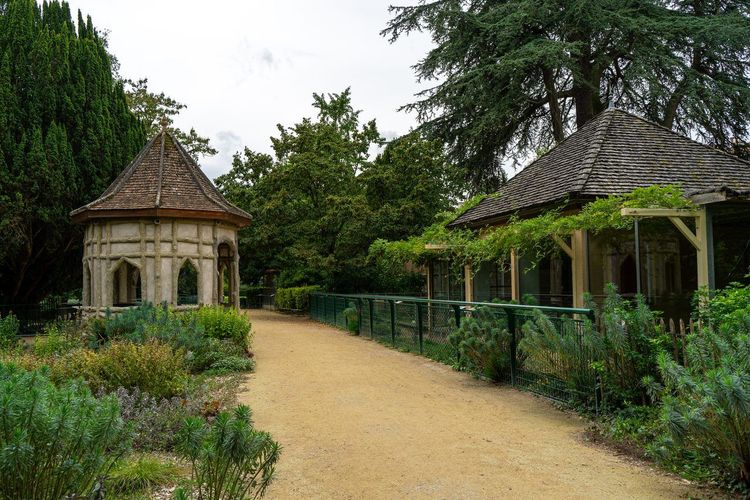
For an outing with children, the parc de Blossac and the Val Vert du Clain are more than enough to fill a morning without excessive fatigue: flat paths, play areas, free-roaming animals and the freedom to stop at any moment. The park's peacocks — often in full display in spring — are alone worth the trip for the youngest visitors.
If you are looking for a more ambitious outing, the Futuroscope, less than 20 minutes from the city centre by car or bus, naturally extends an urban walk into a thrill-filled day. Our Ryo article on the Futuroscope details which attractions to prioritise based on children's ages and the least crowded time slots.
For very young children who tire quickly, it is better to split the walk: historic centre in the morning, a nap or a rest at the hotel, then the parc de Blossac in the late afternoon when the heat has dropped. Pushchairs navigate most of the pavements in the centre without difficulty, with the exception of a few cobbled lanes around the cathedral. A simple scavenger hunt — spotting the animals carved on the façade of Notre-Dame-la-Grande — easily turns the visit into a treasure hunt for reluctant little ones.
Street Art and an Offbeat Walk in the Trois Cités Neighbourhood

Less well known in conventional travel guides, the quartier des Trois Cités, south of the centre, has been covered in large-format murals over recent years, driven by urban renewal projects bringing together local and international artists.
This walk follows no fixed route: you wander from street to street spotting painted façades, an exercise that is a radical departure from the heritage trail of the historic centre. Allow about an hour and a half to cover the main part of the neighbourhood on foot, without rushing — this is undoubtedly the most unconventional walk in Poitiers in the guide. It is the kind of detour that will win over teenagers who tire quickly of Romanesque churches, and a chance to see a more contemporary side of Poitiers.
Other unusual traces survive around the city: the remains of the Gallo-Roman amphitheatre, now woven into the urban fabric of the centre, and the medieval cellars running beneath several buildings, some of which open to visitors during the Journées du Patrimoine heritage days. Look out too for the plaques and medallions set into the ground across the historic centre: they mark out thematic trails that can be followed as you walk.
What Is the Best Season for Walking in Poitiers
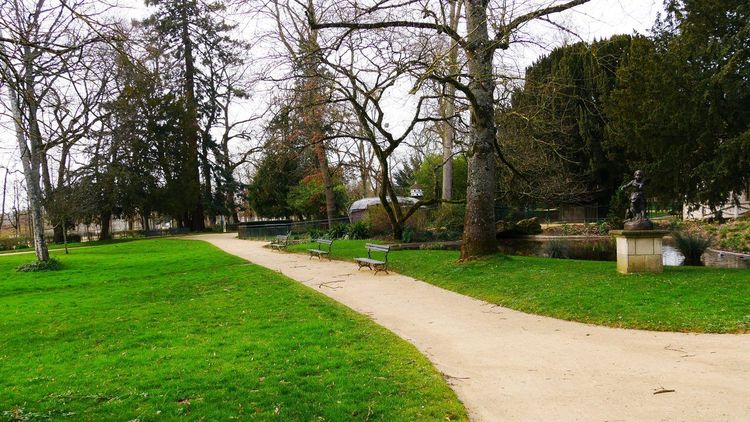
Spring (April to June) remains the most comfortable time for walking: mild temperatures, the parc de Blossac in full bloom and the banks of the Clain less crowded than in the height of summer.
Autumn works almost as well for a walk in Poitiers, with particularly flattering light on the Romanesque façades in the late afternoon and the colours of the Blossac lime trees. Summer remains perfectly manageable but calls for an early start: the historic centre, with little shade, heats up quickly once past 10 a.m. in July and August. Winter, finally, has its fans: monuments can be visited in peace, and the winter light show at Notre-Dame-la-Grande during the year-end illuminations provides an extra reason to wrap up warm and head out. Whatever the season, Poitiers's audio-guided tour is an easy way to shape the walk around the weather of the day.
How to Get There and Where to Park for This Walk

Poitiers is connected to Paris in just under an hour and a half by TGV, making a walk in Poitiers a day-trip getaway within reach from the Île-de-France. The station is fifteen minutes' walk from the historic centre, an uphill stretch that can serve as a warm-up before the walk itself, or be shortened by the mechanical walkways connecting the lower town to the upper town.
By car, several underground car parks serve the city centre (Notre-Dame, Blossac, Toumaï), with hourly rates that are reasonable compared to cities of similar size. As the historic centre is largely pedestrianised, it is best to park once and cover the sights on foot rather than moving the car between stops. The bus network also efficiently connects the Futuroscope and the towns along the Val Vert du Clain — a good alternative for walkers doing a one-way route.
Circuits Around Poitiers to Extend the Walk
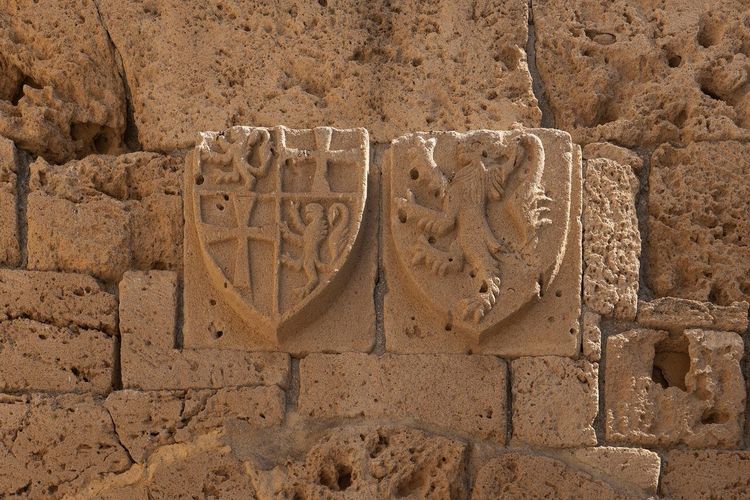
About twenty minutes to the south, Lusignan is worth the detour for its history steeped in legend: medieval tradition holds that the town was founded by the fairy Mélusine herself. The remains of the feudal castle, now reduced to earthworks, still dominate the Vonne valley. Our Ryo article on Lusignan details the viewpoints not to be missed on the site.
To the north, Chasseneuil-du-Poitou extends the Val Vert du Clain towards the Ensoulesse valley, a wilder area where the path winds between water meadows and poplar groves, far from the bustle of the city centre.
To the west, the surroundings of Béruges feature several small private châteaux visible from public footpaths — an itinerary appreciated more for its tranquillity than for any single monument. These circuits, less documented than those in the city centre, often require some advance route-planning with an IGN map, as local waymarking can be more discreet than that of the GR.
There is no true waterfall within the city limits, but the rapids at the Moulin de Chitré, on the Vienne at Bonnes, give the impression of one after heavy rainfall: the water tumbles over several metres of drop between the remnants of an old watermill, about half an hour's drive from Poitiers. An offbeat destination for those who have already covered the classic walks in the centre.
These excursions have another merit: they reveal a rural Poitou that the city centre alone does not hint at — bocage landscapes, limestone farmhouses and narrow enclosed valleys. About half an hour away, the abbaye de Nouaillé-Maupertuis and its fortified enclosure add a major heritage landmark, on the presumed site of the 1356 Battle of Poitiers. Enough to turn a simple urban walk into a genuine exploration of the Grand Poitiers, to be dosed according to how much time you have and how willing you are to drive a little before walking.
A Night Walk: Poitiers After Sunset
After dark, the façade of Notre-Dame-la-Grande takes on a new face: several evenings a week during the summer season, a light show projects the colours that probably adorned the Romanesque sculptures originally — a technique that brings to life details invisible in daylight. The show is free and lasts a few minutes; watch it from the square, drink in hand at a café terrace.
A walk in Poitiers does not have to end at sunset: the rest of the historic centre remains lit in a more traditional but equally pleasant way. The cobbled lanes around the cathedral, emptied of visitors, take on a completely different character once the shops have closed.
For a different experience, several regulars recommend ending an evening with a visit to the parc de Blossac just before closing time, when the low evening light illuminates the Clain valley from the park's upper terrace. Check the closing times by season: the gates shut early in winter.
Where to Eat and Take a Break During the Walk
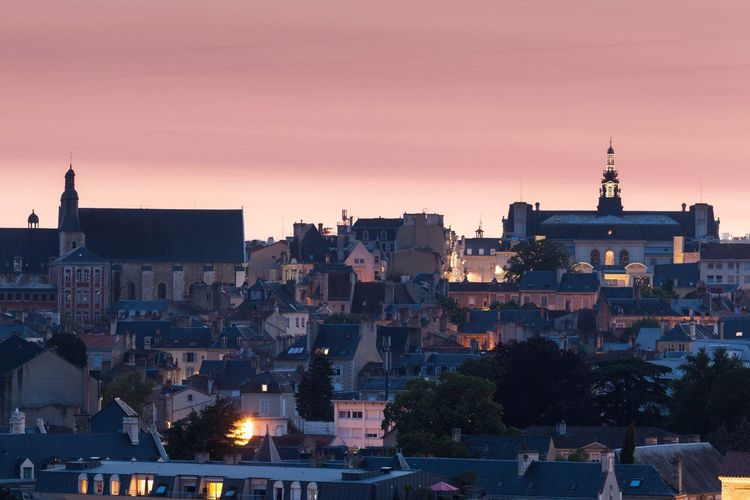
The broyé du Poitou, a shortbread biscuit traditionally broken with a single punch of the fist before being shared, is available at most bakeries in the centre, particularly around the Halles. The farci poitevin, a mixture of green vegetables and herbs cooked into a ball, often rounds out a quick lunch grabbed between visits.
For a more complete overview of local specialities, our Ryo selection of culinary specialities in Poitiers lists the addresses most recommended by locals rather than by conventional tourist guides.
For outdoor seating, the area around the place du Maréchal-Leclerc concentrates most of the options, with several cafés that open early for those starting their walk in Poitiers at first light. If you are planning a picnic, the parc de Blossac and the banks of the Clain offer the best shaded resting spots, with picnic tables available in the park.
Equipment and Practical Tips for Walking Comfortably

Closed-toe shoes are more than sufficient for walking in Poitiers in the city: the historic centre and the Val Vert du Clain require no special equipment. However, do wear proper walking shoes for the GR sections around the Boivre valley, where the ground becomes uneven after rain.
A water bottle is useful year-round: public fountains are scarce outside the parc de Blossac. In summer, a hat makes a real difference on the least shaded stretches of the historic centre. Also take note of the mechanical walkways between the lower and upper town: they spare tired legs a few climbs at the end of the day.
Finally, keep your phone charged if you are following an audio-guided itinerary: the Poitiers audio-guided tour works in offline mode once downloaded, which avoids unpleasant surprises in the lanes where mobile coverage can be unreliable.
A Typical One-Day Itinerary in Poitiers
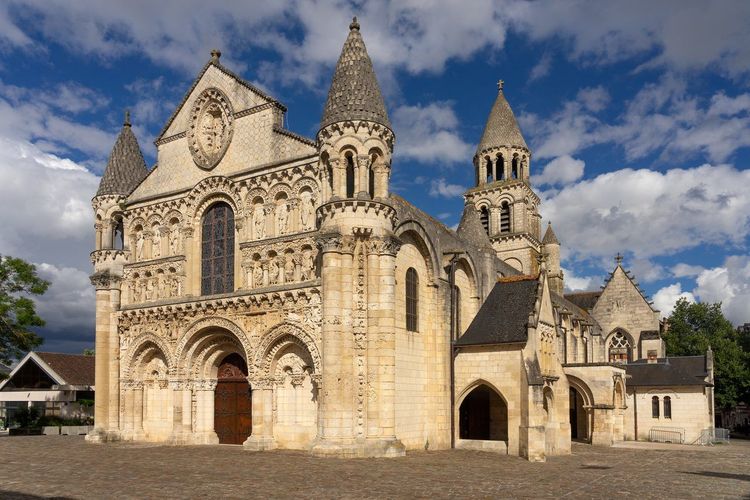
If you could only follow one programme, here is the typical day that most locals recommend for a first walk in Poitiers. Start around 9 a.m. at the place Charles de Gaulle, in front of Notre-Dame-la-Grande, before the tour groups arrive. Move on to the cathédrale Saint-Pierre and then the baptîstère Saint-Jean — three major monuments linked by less than a kilometre of pedestrian lanes. Around 11 a.m., push on to the palais des Ducs d'Aquitaine, then make your way back down the Grand'Rue towards the Halles to pick up a picnic.
The lunch break falls naturally in the parc de Blossac, five minutes away, among free-roaming peacocks and views over the Clain valley. In the afternoon, the park's staircase deposits you on the riverbanks: follow the Val Vert du Clain as far as the pont Joubert, then head back up towards the église Sainte-Radegonde and its Merovingian crypt. Including monument visits and a proper break, this loop fills a full day at a comfortable pace, covering around ten kilometres in total. Those with a second day can add the abbaye de Montierneuf in the morning and a circuit around Poitiers in the afternoon, heading towards Lusignan or the Boivre valley.
This plan is by no means compulsory: the whole point of a walk in Poitiers is precisely that it can be shortened or stretched according to your energy levels, without ever straying more than two kilometres from the historic core.


FAQ
What is the most beautiful walk in Poitiers?
For a first walk in Poitiers, the combination of the historic centre and the parc de Blossac remains the go-to choice: less than two kilometres on foot between the three major monuments (Notre-Dame-la-Grande, cathédrale Saint-Pierre, baptîstère Saint-Jean) and a panoramic park as a fitting conclusion.
How long does it take to visit Poitiers on foot?
Allow half a day for the historic centre and the parc de Blossac, a full day by adding the Val Vert du Clain and the Sainte-Radegonde neighbourhood, and two days to include a circuit around Poitiers such as Lusignan.
Where can you walk for free in Poitiers?
The historic centre, the parc de Blossac and the Val Vert du Clain can all be explored for free year-round. Only certain monuments such as the baptîstère Saint-Jean or the hypogée des Dunes require a paid entry or reservation.
Which hike should I do this weekend near Poitiers?
The Boivre valley, between Poitiers and Vouneuil-sous-Biard, offers around twelve kilometres of waymarked trails walkable in half a day, with limestone cliffs and old mills as points of interest.
Can you cycle along the Clain in Poitiers?
Yes, the Val Vert du Clain connects Poitiers to several neighbouring towns along a flat, safe route, suitable for both walking and cycling over about twelve kilometres.
Is there a waterfall near Poitiers?
Not strictly within the city limits, but the rapids at the Moulin de Chitré, on the Vienne at Bonnes, offer the equivalent after heavy rainfall, about half an hour's drive from the city centre.
Is Poitiers a good city for walking?
Yes, and that is what makes walking in Poitiers so enjoyable: the terrain remains moderate despite the elevation changes in the historic centre, and most points of interest are concentrated within a two-kilometre radius of the place Charles de Gaulle.
A walk in Poitiers can ultimately be tailored to your preferences: a quick loop around the three major monuments in the centre, a full day adding the banks of the Clain and the Sainte-Radegonde neighbourhood, or a hiking weekend extending to Lusignan and the Boivre valley. For those who prefer a ready-made route rather than improvising with a map, the Poitiers audio-guided tour, lasting two hours, covers the essentials of the historic centre, complete with commentary and local anecdotes.