© Shutterstock
 Votre guide Ryo
Visiting Poitiers Solo in 2026: Cathedrals, Parks and Great Spots at Your Own Pace
Visiting Poitiers solo means enjoying a city where you can drop your bag without having booked a table or told anyone. You eat alone without a waiter insisting on setting two places, you climb a cobbled lane without waiting for the group to catch up, and you change route halfway because a façade suddenly makes you want to linger longer than planned. The historic centre can be explored in half a day, and the rest of the Vienne can be discovered by coach, car or bike, without ever depending on a group timetable.
Here, a Romanesque façade carved with biblical scenes stands alongside a 4th-century baptistery, one of the oldest Christian buildings preserved in France, while a few minutes' walk away, the Clain winds along the îlot Tison, a former industrial wasteland converted into a quiet riverside retreat. Add a museum reopened in September 2026 where nobody rushes you past the Merovingian sarcophagi, a craft umbrella workshop founded in 1882, and surroundings (Chauvigny, Lusignan, Sanxay) that deserve far more than a single line in a general guidebook. The Ryo audio-guided tour of Poitiers already covers a good part of this route, headphones on, at your own pace and without depending on anyone.
The Historic Heart of Poitiers, a Medieval Immersion at Your Own Pace
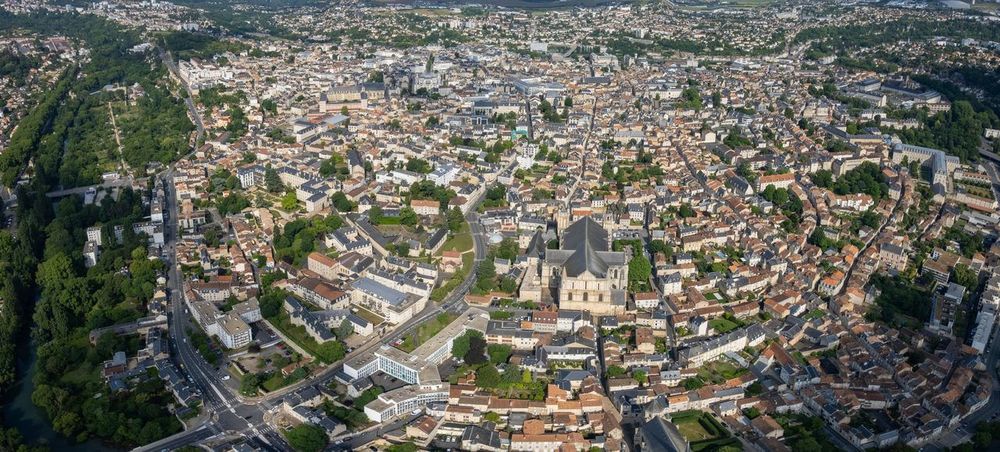
The historic centre of Poitiers nestles on a rocky promontory encircled by the Clain and the Boivre, a landscape that explains why the city grew upwards rather than outwards. For you as a solo traveller, this compact geography is a boon: within an hour's walk, you cross fifteen centuries of architecture without ever leaving the same pedestrian district.
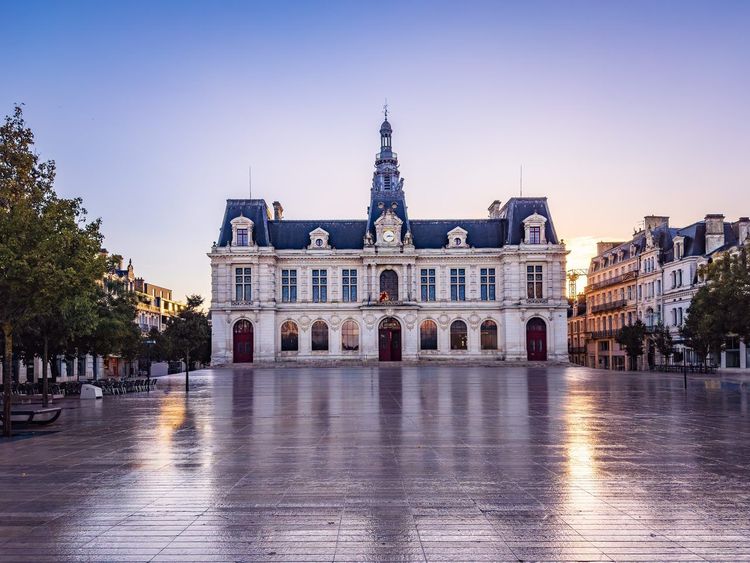
Start with the Hôtel de Ville de Poitiers, a neo-Renaissance building completed in the 1870s whose campanile towers over the place du Maréchal-Leclerc. Its façade, laden with allegorical sculptures, reads like a small manifesto of Second Empire civic pride, and the interior, open during the European Heritage Days, is worth a visit for its ceremonial salons with painted ceilings.
Five minutes' walk away, the Palais des Comtes de Poitou-Ducs d'Aquitaine (Place Alphonse Lepetit, 86000 Poitiers, rated 4.6/5 on Google from 356 reviews) long housed the law courts. Since the court moved out, its Salle des Pas Perdus, about 50 metres long, works like a covered public square: access is free every day except Tuesday, from 11am to 7pm. Look up at the monumental fireplace and its triple stone hearth, commissioned by Jean de Berry in the late 14th century, then glance at the neighbouring Maubergeon tower. It's information few guides keep up to date, and it makes all the difference when you have nobody to check the opening times for you.
Travelling solo, the real luxury of this district is being able to stop wherever you like. Take your time walking up rue de la Chaîne or the Grand'Rue, lined with half-timbered houses, with no pressure to cram in sights. The Ryo audio-guided tour starts precisely in this historic centre, with commentary dedicated to the Hôtel de Ville and the Palais: handy for linking the two sites without going in circles or reopening a map at every crossroads.
Notre-Dame-la-Grande Church, a Masterpiece of Romanesque Art

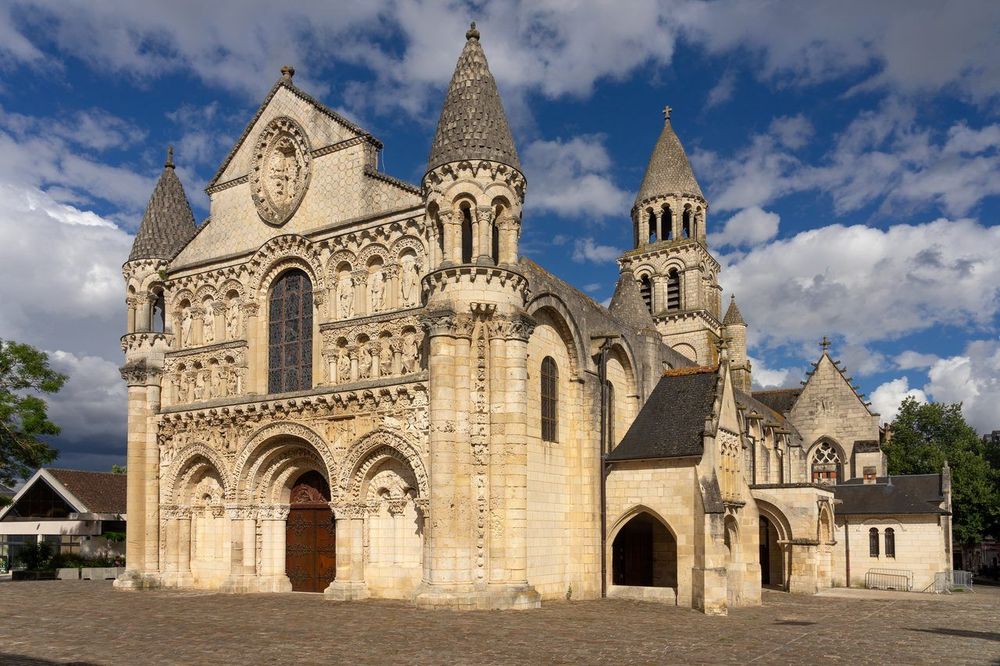
The façade of Notre-Dame-la-Grande church (Place Charles de Gaulle, 86000 Poitiers, rated 4.6/5 on Google from 2,484 reviews) is probably the most reproduced image of Poitiers, and for good reason: this 12th-century sculpted wall tells the Old and New Testaments through dozens of figures, from the prophet Isaiah to the Annunciation, without a single word being needed to follow the thread.
The church is open every day and admission is free. Travelling alone here has a concrete advantage: you can sit on a bench in the square for twenty minutes watching the light change on the stone, without a travel companion growing impatient. In summer, the Polychromies, a night-time light show, restore the façade's original colours, now faded by time: a free event well worth a solo evening.
The interior, more sober, deserves a stop for its Romanesque capitals and painted pillars. Fifteen to twenty minutes is enough.
A tip for solo travellers: come back to the square at two different times. In the morning, the west-facing façade stays in shadow and is easy to read, without glare; in the late afternoon, the low light brings out every relief of the arcades. In between, the market halls just behind offer a ready-made coffee break.
Saint-Pierre Cathedral and the Saint-Jean Baptistery
Just a short walk away, Saint-Pierre Cathedral impresses less by its height than by its width: its three almost equal naves give an unusual sense of openness if you are used to more vertical cathedrals. Begun in the 12th century under the impetus of Eleanor of Aquitaine and Henry II Plantagenet, it preserves, at the chevet, the Crucifixion stained-glass window, among the oldest in France, and carved wooden stalls from the 13th century that deserve a lingering look with nobody hurrying you towards the exit.
A little further down, the Saint-Jean Baptistery changes register completely. Dating from the 4th century, it is one of the oldest Christian buildings preserved in France, built for baptisms by immersion, which explains the octagonal basin sunk into the centre. On the walls, Romanesque paintings from the 12th century and Gothic ones from the 14th depict the Ascension, peacocks symbolising eternity and the Emperor Constantine on horseback; on the floor, a series of Merovingian sarcophagi recalls the nearby ancient cemetery.
Admission costs 3 euros. Watch the opening hours: the baptistery closes at midday, opens only in the afternoon from October to March, and stays closed on Tuesdays in spring and in September. Its small size makes it an ideal stop when travelling solo. The cathedral and the baptistery are both stops on the Ryo audio-guided tour of Poitiers, with an audio anecdote about these wall paintings that you might easily miss if nobody pointed them out.
The Sainte-Croix Museum, to Understand 2,000 Years of Poitou History
The Sainte-Croix museum (3bis Rue Jean Jaurès, 86000 Poitiers, rated 4.6/5 on Google from 840 reviews) brings together the city's archaeological collections and fine arts under one roof, from prehistory to the 20th century. You will come across the Minerva of Poitiers, a 1st-century marble statue discovered in 1902 beneath the city, and sculptures by Camille Claudel that always surprise visitors who didn't expect to find them here.
After a period of closure, the museum reopened on 22 September 2026, Tuesday to Friday from 10am to 6pm and at weekends from 1pm to 6pm. The full-price ticket is 5 euros, and admission is free every Tuesday as well as on the first Sunday of the month: if your schedule is flexible, plan your visit for those days.
A museum remains one of the most comfortable activities to do alone: you move at the pace of your curiosity, reread the label of an intriguing work twice, skip an entire room without having to justify yourself. Allow an hour and a half, two hours if Gallo-Roman archaeology holds your attention. It's also the best fallback in case of rain.
The Îlot Tison and the Banks of the Clain, a Solo Nature Break
Heading down towards the river from the historic centre, you come across the îlot Tison (Rue du Moulin de Chasseigne, 86000 Poitiers, rated 4.4/5 on Google from 1,551 reviews), a former industrial site now turned into a green space: lawns, landscaped banks and shaded paths along the Clain. The spot long housed mills and craft activities linked to the river, before the city redeveloped it into a promenade open to all.
In fine weather, a guinguette sets up there with concerts and evening events, but during the day it is mainly a quiet photo spot and a welcome break if you've been walking since morning. The banks form a short loop, shaded in summer, where you meet more local joggers than tourists.
One stop on the Ryo tour runs along the Clain to this very islet: the audio commentary on its industrial past gives a different dimension to a walk you might have thought unremarkable.
If you arrive late in the day, stay for the sunset over the river before climbing back up to the plateau via the steps and lanes of the Saint-Saturnin district. Bring a torch or use your phone's: some passages are poorly lit.
Blossac Park, the Rose Garden and the Dunes Panorama
The Blossac park, the largest in the city, occupies part of the old southern ramparts. It was laid out in the 18th century on the initiative of the intendant Paul Esprit Marie de La Bourdonnaye, Count of Blossac, whose name it bears. There you will find a small free animal enclosure, neatly trimmed avenues of lime trees, an English garden and a sweeping view over the Clain valley from the rampart terrace.
Further out, on the edge of the exhibition centre, the Roseraie floral park brings together more than 6,000 plants over 3.5 hectares, including around 400 varieties of roses, in a design entirely reworked in 2017. The display peaks in June. Entry is free, from 8am to 8pm, and the place, far less crowded than Blossac, offers a real moment of calm. The bus drops you at the nearby Jean Moulin stop.
Not to be missed: the Dunes panorama (Rue de la Pierre Levée, 86000 Poitiers, rated 4.5/5 on Google from 45 reviews), on the right bank of the Clain, at the foot of the statue of Notre-Dame des Dunes. The view takes in the river's meanders and the rooftops of the old town, with Notre-Dame-la-Grande and the cathedral clearly visible. Go up in the late afternoon, at sunset.
On the Ryo audio tour, Blossac is also a popular stop for catching your breath in peace before heading back up to the historic centre.
The Notre-Dame Market and Places to Eat Alone Without Self-Consciousness
Eating alone remains, for many solo travellers, the most dreaded moment of the trip. In Poitiers, the simplest solution starts at the Notre-Dame market (Place Charles de Gaulle, 86000 Poitiers, rated 4.2/5 on Google from 1,264 reviews), the covered market halls just behind Notre-Dame-la-Grande church, open in the mornings from Tuesday to Sunday, with a particularly lively Saturday. You can put together a picnic of chabichou, local charcuterie and seasonal fruit without having to sit facing an empty chair.
The specialities to savour around Poitiers are worth a real detour: the farci poitevin, a large pâté of leafy greens and bacon cooked in broth, the chabichou du Poitou PDO, or the broyé du Poitou, a shortbread biscuit that you break with a punch in the centre rather than cutting. Our Ryo article on culinary specialities in Poitiers details where to find them.
For a proper sit-down meal, two addresses stand out. La Serrurerie, a bistro set in a former locksmith's workshop, offers a generous counter where eating alone is nothing unusual: relaxed atmosphere, staff used to solo diners.
For a more gourmet evening, Les Archives occupies a former chapel that long housed the departmental archives, with refined cuisine based on local produce and a setting that welcomes tables for one very naturally. Book a few days ahead, even alone: it is one of the most sought-after tables in the city.
Artisan Shops and Fun Activities to Keep You Busy Solo
At 137 Grand'Rue, the Fabrique de parapluies François has been making umbrellas and parasols by hand since 1882, across five generations. Around 4,000 canopies are assembled there each year, and the house holds the Living Heritage Company label. Push open the door even with no intention of buying: seeing the workshop is worth the visit, and a Poitou umbrella that can be repaired for life makes a more original souvenir than a magnet. Ceramists based in the lanes of the centre, meanwhile, offer occasional workshops you can sign up for alone.
On the games side, Les Enquêtes de l'Agent R turn the historic centre into an espionage playground: equipped with a secret agent belt (binoculars, voice recorder, UV torch), you solve an investigation of about 1h30 while discovering the heritage. The only drawback for solo travellers is that the game is played from two people upwards: a chance to propose the adventure to a traveller met at the hostel.
The same goes for escape games: some rooms accept solo players, others require a minimum of two or three people. Call before heading out. Our Ryo article on things to do in Poitiers lists more ideas.
A Day at Futuroscope Park from Poitiers
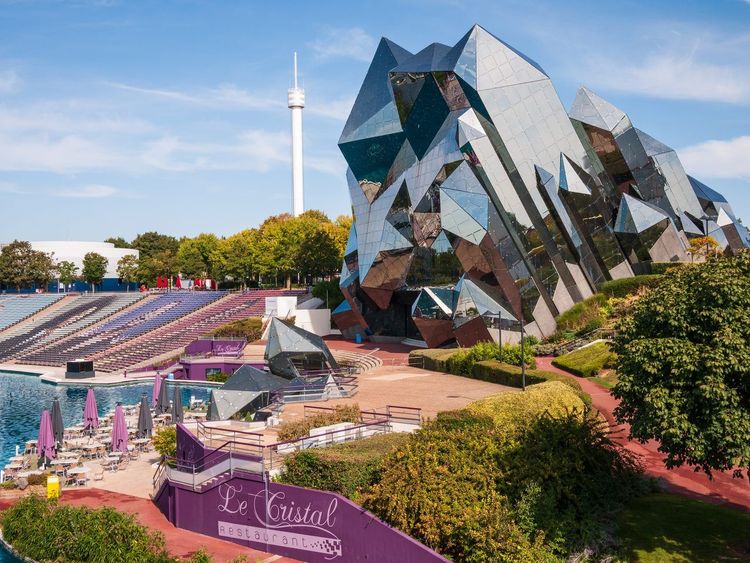
The Futuroscope park (Avenue René Monory, 86360 Chasseneuil-du-Poitou, rated 4.3/5 on Google from 88,445 reviews), about ten kilometres north of Poitiers, remains the most requested excursion among visitors passing through, families and solo travellers alike. Recognisable by its futuristic architecture, the park offers a succession of thrill rides, immersive films and night-time shows.
A day at Futuroscope solo works very well: the attractions can be enjoyed individually, and the "single rider" queues on some rides noticeably shorten the wait for one person. The dated 1-day ticket costs from 47 to 59 euros depending on the season (65 euros open-date), with an evening ticket at 29 euros from 5pm if you only want to see the closing show.
How do you get to Poitiers from Futuroscope? Vitalis buses link Poitiers station to the park in 25 to 30 minutes, with several departures a day. By car, allow a quarter of an hour. Plan for a full day: the park is hard to visit in under six hours.
Excursions Around Poitiers: Chauvigny, Lusignan and the Gallo-Roman Site of Sanxay
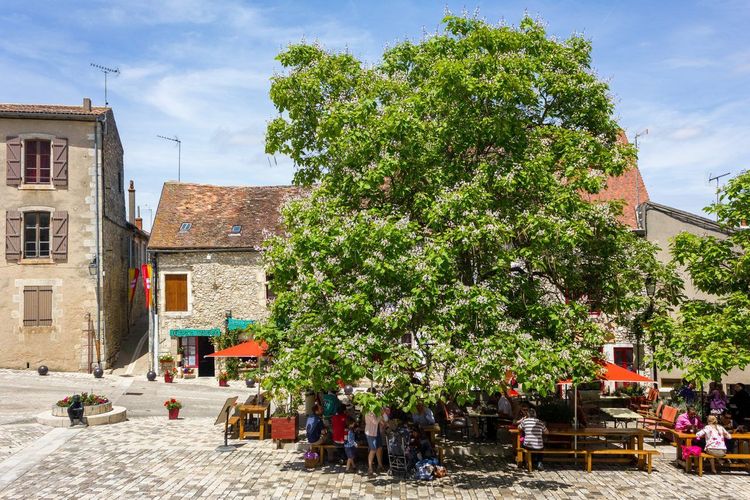
General guidebooks often stop at the city gates. A pity: 25 minutes east by car, the medieval city of Chauvigny overlooks the Vienne valley with five castles perched on a rocky spur. With no passenger railway station, you can get there by regional coach or by car.
Further south-west, the medieval city of Lusignan owes its fame to the legend of Mélusine, the fairy who built the vanished castle. Only remains of the fortifications survive, but the village, with its sloping lanes and its Blossac promenade above the Vonne, lends itself to a relaxed stroll of an hour or two.
The Gallo-Roman site of Sanxay (Le Gué de Sciaux, 86600 Sanxay, rated 4.4/5 on Google from 359 reviews), finally, brings together the remains of an exceptional ancient sanctuary: temple, theatre and baths, uncovered in the late 19th century and listed as a historic monument. The theatre, built against the slope above the Vonne, could hold several thousand spectators. With no practical public transport, the excursion is done by car, about thirty-five minutes south-west of Poitiers; combine it with nearby Lusignan.
Have an extra day? Combining Chauvigny in the morning and Lusignan in the afternoon works well with a rental car. Our Ryo article on the surroundings of Poitiers details complete itineraries.
Poitiers on Foot or by Bike: Routes and Loops to Explore Solo
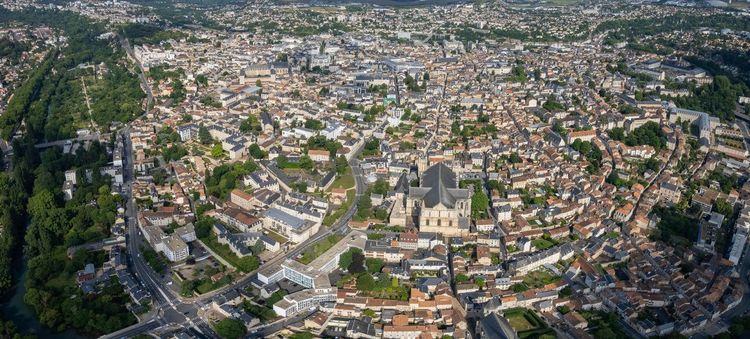
How do you visit Poitiers on foot? It's the most practical question when travelling alone: no car to park, no route to negotiate. Here are two formats that cover most wishes.
The first option is to visit the centre of Poitiers on foot in a compact loop: start at the Hôtel de Ville, pass by the Palais, Notre-Dame-la-Grande, the cathedral and the baptistery, then return via the market. Allow two to three hours without rushing, coffee breaks included.
If you have an extra half-day, a longer loop links the centre to the banks of the Clain, as far as the îlot Tison and the Dunes panorama, then heads south along the river towards Saint-Benoît on shaded paths. This variant, about ten kilometres round trip, can be done on foot or by bike. Our Ryo article on walks in Poitiers suggests other loops.
Be careful with opening times: the baptistery closes at midday and the Palais closes on Tuesdays. Bring water and good shoes, as the centre is perched and the streets climb steeply from the river.
With its 16 audio tracks, 2 hours of listening and roughly 5 km, the Ryo audio tour of Poitiers lets you compose your own itinerary, stop by stop: you pause when a shop catches your eye, and resume whenever you like.
Travelling Solo in Poitiers: Safety, Meeting People and Good Tips
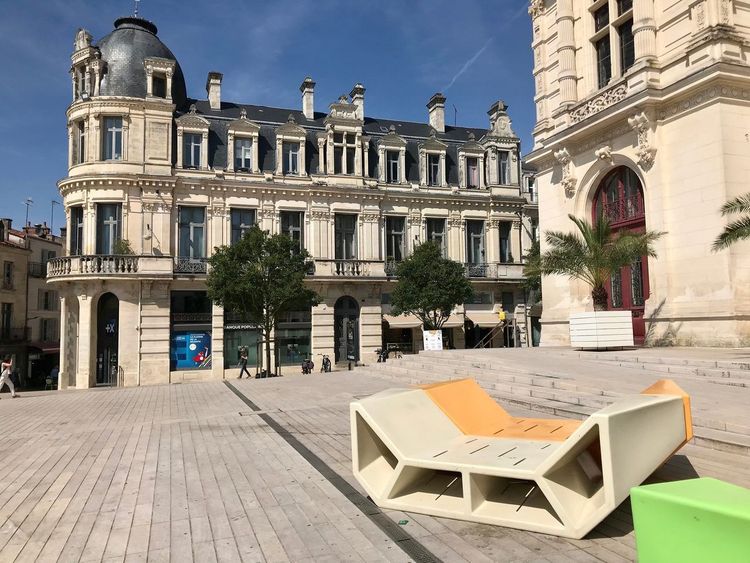
Before heading off alone somewhere, the real question is often this: will I feel at ease there? Poitiers is a mid-sized student city, generally safe including in the evening in the centre and around the place du Maréchal-Leclerc, lively all year round thanks to its student population.
A few habits hold true everywhere: avoid poorly lit outlying areas after midnight, keep a digital copy of your documents, and choose accommodation in the historic centre to limit night-time journeys.
To meet other travellers, friendly hostels and guesthouses remain the best entry point: shared breakfast tables naturally encourage conversation. The terraces around the place du Maréchal-Leclerc and rue de la Cathédrale also make it easy to strike up a conversation without forcing it.
In summer, the municipal programme "Poitiers l'été" lines up concerts, open-air cinema and free light shows, a good way to meet people without actively seeking company. The tourist office's agenda and the city's events page are the most reliable sources. Our Ryo article on unusual visits in Poitiers also offers off-the-beaten-track ideas.
How to Get to Poitiers and Where to Stay Alone
Where is Poitiers? Halfway between Paris and Bordeaux, on the north-south axis that made its historic fortune as a staging-post town. Coming from Paris is no trouble: the direct TGV from Montparnasse takes about 1h20, with frequent departures. From Bordeaux, allow a little under two hours by train. By car, the A10 serves the city directly. The station lies below the plateau: allow ten to fifteen minutes' uphill walk to reach the centre.
As for accommodation, a hotel in Poitiers like the Mercure Poitiers Centre offers a good compromise if you're travelling alone: a location within walking distance of the cathedral, classic no-surprise service, and breakfast served in a shared dining room.
For a warmer atmosphere, a guesthouse in the historic centre will give you a personalised welcome: hosts often take the time to advise a passing visitor on their city, a real plus when travelling without a companion. Single rooms are rare, but many establishments apply a reduced rate for one person: ask for it when booking.
Our Ryo article on a weekend in Poitiers details other accommodation options depending on your budget.
When to Go and How Long to Allow to Visit Poitiers Solo
How much time should you allow? One full day covers the historic centre: the Palais, Notre-Dame-la-Grande, the cathedral, the baptistery, the Sainte-Croix museum and a break at the market. Two days leave room for the parks, the Dunes panorama and an excursion to Futuroscope or Chauvigny. With three days, you can add Sanxay or Lusignan and keep a few hours with no particular goal.
Spring and early autumn remain the best seasons: pleasant temperatures for walking all day, the rose garden in bloom in June. Summer brings more events, including the Polychromies on Notre-Dame-la-Grande, but also heat peaks that make the climbs up from the Clain gruelling in the middle of the day. Winter, quieter, suits museums and warm restaurant tables.



FAQ
How many days do you need to visit Poitiers solo?
One day is enough for the essential monuments of the city centre. Allow two to three days to add the parks, an excursion to Futuroscope and a detour to Chauvigny or Sanxay without rushing.
How do you get to Poitiers from Paris or Futuroscope?
The direct TGV from Paris Montparnasse takes about 1h20. Between Poitiers station and the Futuroscope park, Vitalis buses take 25 to 30 minutes; by car, allow a quarter of an hour.
Is it safe to visit Poitiers alone, including in the evening?
Yes, the historic city centre and its surroundings are generally safe, kept lively by a large student population. As in any mid-sized city, simply avoid poorly lit areas after midnight and choose central accommodation.
Is it better to visit Poitiers on foot or by bike?
On foot for the historic centre, which is compact and pedestrianised across most of its area. By bike for the longer loops along the Clain towards Saint-Benoît, where distances easily exceed five kilometres.
Where can you eat alone in Poitiers without feeling uncomfortable?
The Notre-Dame market for a no-fuss picnic, La Serrurerie for a relaxed lunch at the counter, or Les Archives for a more gourmet dinner where tables for one are perfectly natural.
What budget should you plan for a solo stay in Poitiers?
Allow roughly 70 to 100 euros per day, including a guesthouse or mid-range hotel, two meals and admission to the baptistery (3 euros) or the Sainte-Croix museum (5 euros, free on Tuesdays), excluding Futuroscope.
What can you do around Poitiers if you have more time?
Chauvigny and its five castles, Lusignan and the legend of Mélusine, or the Gallo-Roman site of Sanxay are ideal additions to a stay of more than two days, each less than forty minutes away by road.
Conclusion
Visiting Poitiers solo ultimately has less to do with a list of monuments than with a way of linking them together: no imposed schedule, no route negotiation, with the freedom to stay twice as long in front of a Romanesque façade or to skip a museum room. Between the historic centre, the parks, the welcoming restaurants and the excursions to Chauvigny or Sanxay, the city offers enough material for two to three days unlike any other. To put yours together without hours of preparation, the Ryo audio-guided tour of Poitiers remains the simplest starting point: headphones on, the city tells its own story, at your own pace.
À lire également