© Shutterstock
 Votre guide Ryo
Lyon Fête des Lumières 2026: Program, Route, and Everything You Need to Know
Four nights, over two million visitors, zero tickets to buy. Every early December, Lyon transforms into something quite difficult to describe in ordinary words: building facades that come alive, bridges ablaze with a thousand colors, streets filled with a silent crowd, eyes wide open. The Lyon Fête des Lumières 2026 promises to be one of the highlights of the Lyon winter. The Fête des Lumières de Lyon is one of the world's largest light festivals, and it remains, despite its international fame, entirely accessible to all — no ticket, no reservation required.
But experiencing it well takes preparation. The Presqu'île is closed to cars from 6 PM, certain intersections concentrate 80,000 people at the same time, and city-center hotels are fully booked as early as August. This guide gives you everything you need not just to endure the festival but to truly live it: the 2026 dates and times, the historical origins of the event, the major installations by neighborhood, recommended routes to suit your pace, the famous couscous tradition, and the practical tips that only regulars pass on. To explore Lyon even further — before, during, or after the festival — the Ryo audio-guided tour of Lyon covers 26 points of interest in 3.5 hours through the city's historic neighborhoods.
The Origins of the Fête des Lumières: From the Échevins' Vow to a World Festival
The story begins in 1643, in a city gripped by terror. The plague had been ravaging Lyon for weeks, and the échevins — the city magistrates — made a solemn vow to the Virgin Mary: if Lyon were spared, they would climb in procession each year to the hill of Fourvière to pay homage. The city was saved. The vow was kept, and the ceremony became a fixture in Lyon's calendar for centuries.
December 8 has since remained a date deeply embedded in the city's collective memory. But it was in 1852 that a weather incident transformed this act of devotion into a popular spectacle. That day, the inauguration of the gilded statue of the Virgin at the top of the Basilique Notre-Dame de Fourvière was postponed due to a storm. That evening, residents spontaneously placed candles on their windowsills to celebrate nonetheless. An improvised, popular illumination that swept through every neighborhood within hours — thousands of small flames turning Lyon into a living tableau in the December night.
That image was etched into memory. The tradition of "lumignons" — colored candles placed on windowsills — continued throughout the 20th century. Every December 8, Lyon's residents would light their candles, often in colored glasses, and the entire city would glow with a soft, intimate light.
In 1999, the City of Lyon decided to build on this popular heritage and created a true international festival: the modern Fête des Lumières. French and foreign artists took over the streets, squares, and monuments with large-scale light installations. In less than a decade, the event became one of the most attended cultural gatherings in Europe.
Today, the festival brings together more than 2 million visitors over four nights each year, mobilizes dozens of installations spread across the entire city, and generates substantial production budgets. Yet the magic may lie less in those figures than in this very Lyon-like paradox: a festival born from a vow of faith, turned into a secular, popular event, that remains entirely free in a city that rarely does things by halves.
The significance of the Fête des Lumières is therefore twofold. On one hand, a historical and spiritual grounding around December 8 and Marian devotion — a promise made in 1643 and kept without interruption ever since. On the other, a contemporary assertion of Lyon as the world capital of light, a city that has managed to transform a popular tradition into an international artistic event without ever severing the thread that connects it to its origins.
Lyon Fête des Lumières 2026: Dates, Times, and What We Know About the Program
The Fête des Lumières takes place every year over the four evenings surrounding December 8, the Feast of the Immaculate Conception and the anniversary of the spontaneous illumination of 1852. For the 2026 edition, the City of Lyon has confirmed the dates: from Saturday, December 5 to Tuesday, December 8, 2026. December 8 — a traditional public holiday in Lyon — closes the event. The full program is usually published in October, accompanied by an interactive map released a few days before opening.
Opening Hours
The light installations switch on at nightfall, around 7–8 PM in December, and generally shine until 11 PM. Hours vary slightly by evening: in 2025, the works were open from 7 PM to 11 PM on December 5, 6, and 8, and from 6 PM to 10 PM on Sunday, December 7. Certain high-demand sites, such as Place Bellecour and the Parc de la Tête d'Or, open one to two hours before the rest of the city to spread visitor flows.
The City of Lyon may adjust these hours depending on weather conditions or security requirements, so it is best to check the official program as the event approaches.
What to Expect Every Year
The official 2026 program has not yet been published. But certain elements are consistent enough from one edition to the next to help guide your planning:
- The Basilique Notre-Dame de Fourvière always receives a spectacular light treatment, often entrusted to a different studio each year — it is the highlight of the program
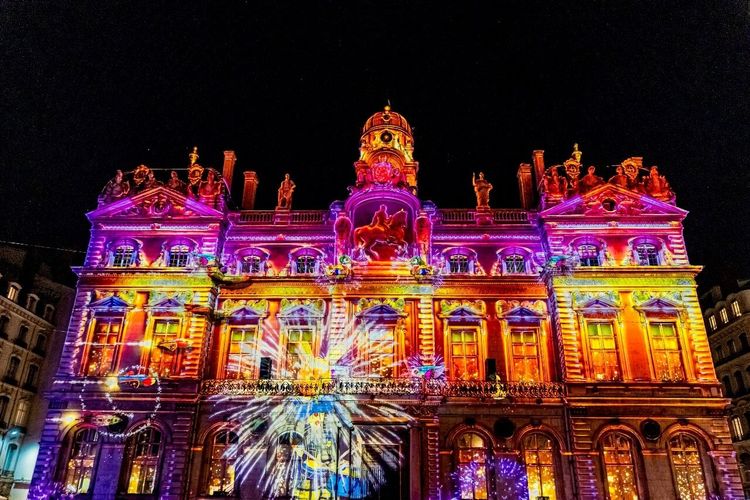
- The Place des Terreaux and the façade of the Hôtel de Ville host a large-scale installation, often narrative or choreographed
- The Cathédrale Saint-Jean and the lanes of Vieux-Lyon offer pedestrian routes with intimate installations along two to three main axes
- The Confluence neighborhood and the banks of the Rhône have taken on an increasingly prominent role in recent editions
What the 2025 Edition Showed
The 2025 edition (December 5–8) brought together more than 2 million visitors over four evenings, with 23 works spread across around twenty locations throughout the city. The highlight of this edition: the very first show featuring 500 drones in the Lyon sky — a first in the festival's history — which complemented the traditional monumental projections on the major facades of the city center.
The 2026 edition follows in the footsteps of this ambition, with particular attention paid to energy sustainability. For several years, organizers have been working to reduce the electricity consumption of installations while maintaining their visual impact — a constraint that often pushes artists toward more inventive technical solutions.
To follow official announcements, the website fetedeslumieres.lyon.fr publishes updates as soon as they are available. An interactive map is released a few days before opening.
Must-See Installations at the Lyon Fête des Lumières
The official map features around twenty points of interest every year across four nights. Here is how to prioritize: what you absolutely must see, what is worth the detour depending on your pace, and the sites best visited based on crowd density.
Basilique Notre-Dame de Fourvière
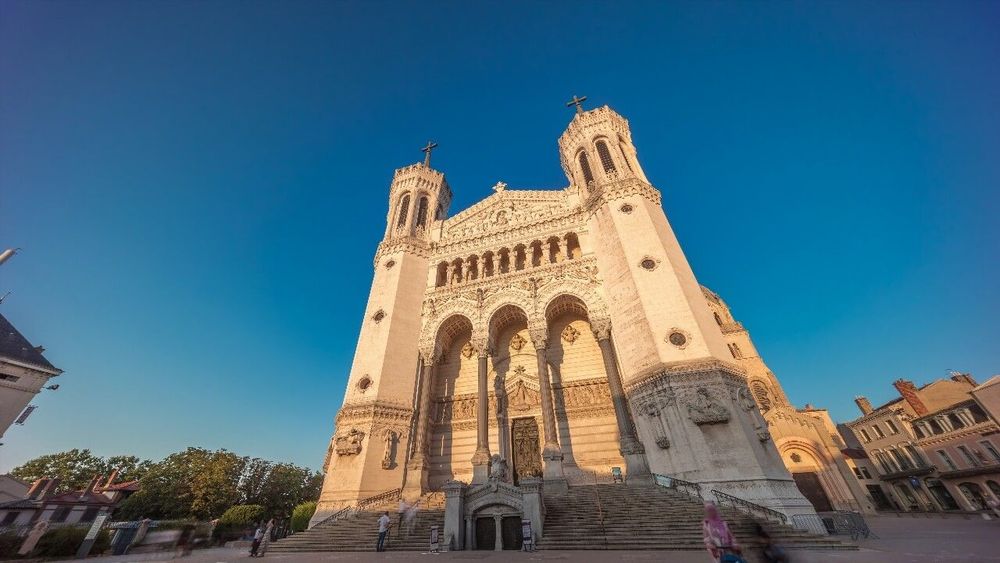
There are places where you arrive and stop talking. The Basilique Notre-Dame de Fourvière, perched on its hill more than 100 meters above the Saône, is the symbolic starting point of the entire festival. This is where it all began in 1852. And this is where video artists and set designers always seem to push their own limits.
Every year, the basilica's facade receives a different monumental projection — 3D mapping, narrative animations, colored light shows that follow the contours of the stone. It is one of the most photographed installations of the festival, the one you see on posters and in news reports. You can reach it on foot from Vieux-Lyon (15 minutes up the slopes and through the traboules) or via the funicular from Vieux Lyon station (line F2).
Arrive early in the evening to witness the lighting from the place de Fourvière. It is a collective moment that regulars consider the true start of the festival — the silence that falls over the crowd at the first flash of light is quite remarkable.
Place des Terreaux and the Hôtel de Ville
At the heart of the Presqu'île, the Place des Terreaux hosts one of the most spectacular installations of each edition. The façade of the Hôtel de Ville de Lyon — a 17th-century building with typically sober architecture — is transformed into a giant screen for projections lasting between 10 and 20 minutes, repeated every half hour.
The square is often the most crowded in the city between 9 PM and 10:30 PM. If you arrive and cannot find a good spot, come back after 10:30 PM: some visitors will have moved on to other installations, and you can enjoy the show with more room and fewer elbows.
Cathédrale Saint-Jean and Vieux-Lyon
Vieux-Lyon — the Renaissance neighborhood listed as a UNESCO World Heritage Site — completely changes its face during the festival. The cobbled lanes between the Cathédrale Saint-Jean-Baptiste and the banks of the Saône host more intimate, sometimes interactive installations that play with the existing medieval architecture.
It is often in these lanes that you find the most creative installations: projections on curved walls, lights threading through the arches of the traboules, mirror effects between facades on either side of a three-meter-wide alley. The scale is more human, less monumental, creating a completely different relationship with the artwork.
Place Bellecour
Place Bellecour — one of the largest pedestrian squares in Europe at 62,000 m² — consistently hosts an installation to match its scale. The space allows for devices that exist nowhere else: forests of light, luminous ground-level carpets, backlit inflatable structures, circular projections that envelop the visitor.
It is also the natural meeting point for families with children. The square's installations are generally accessible to all and often interactive — children can be part of them, not just spectators.
Opéra de Lyon
The façade of the Opéra de Lyon — combining a 19th-century building with a glass canopy by Jean Nouvel added during the 1990s renovation — offers a particularly interesting canvas for light artists. The contrast between classical stone and contemporary glass produces effects impossible to achieve on any other building.
The Opéra is two minutes' walk from Place des Terreaux: the two flow naturally into each other at the start or end of an evening.
The Confluence Neighborhood and the Riverbanks
The Musée des Confluences (86 Quai Perrache, 69002 Lyon, rated 4.5/5 on Google based on 25,953 reviews), with its deconstructivist steel-and-glass architecture, has become one of the sites most embraced by contemporary artists in recent editions. Its crumpled-metal silhouette produces light effects impossible to replicate on a classical façade.
The tip of the Presqu'île and the banks of the Rhône on the Confluence side offer unobstructed views of installations that are sometimes floating or projected onto port structures. This area is less crowded than the city center — a good option if you need to breathe between two high-density sites. In daylight, our short Lyon audio tour takes in Place Bellecour and the Saône quays.
Lyon's Neighborhoods During the Fête des Lumières: Atmospheres and Characters
The festival is not confined to a single perimeter. Each Lyon neighborhood has its own atmosphere during these four nights, and understanding their differences will help you build an itinerary that suits you.
Vieux-Lyon and Fourvière: The Historical Soul of the Festival
This is where the festival has its roots, and it is often here that you feel something that goes beyond a mere visual spectacle. Vieux-Lyon — the 5th arrondissement on the Saône side — is the most emotionally charged neighborhood during the festival. The traboules, those covered passageways that run through buildings from courtyard to courtyard, take on an entirely different dimension when threaded with light.
The climb to Fourvière from Vieux-Lyon is an experience in itself: steep streets lit by lumignons placed on windowsills by residents, a silent procession of visitors converging on the basilica. A practical tip: walk down from Fourvière to Vieux-Lyon rather than climbing up. The ascent is physically demanding and the crowd can make it grueling mid-evening. Take the funicular up and walk down.
The Presqu'île: The Tourist Epicenter
The Presqu'île — Lyon's commercial and cultural heart, between the Rhône and the Saône — concentrates the majority of the major installations. Place des Terreaux, Place Bellecour, Rue de la République, the banks of the Saône: the entire city center is pedestrianized in the evenings during the festival.
This is the densest, most lively, and inevitably most chaotic area during peak hours. If you are visiting as a family with young children, head to the Presqu'île early in the evening (8–9 PM) before the crowds reach their peak. To explore the geography of this neighborhood beyond the festival, our article on the Presqu'île de Lyon details the different sectors and their character.
Croix-Rousse: The Village Spirit
The Croix-Rousse neighborhood — former home of the silk weavers on the northern hill — has its own version of the festival. More residential, more village-like, less touristy: the installations here tend to be more experimental, created by local artists or emerging collectives who take over the neighborhood's working-class facades.
The boulevard de la Croix-Rousse and the central square are the two main axes. The atmosphere is that of a neighborhood celebration rather than an international event — residents come out, stop, chat. Regulars return every year for this spirit that you simply cannot find on the Presqu'île.
To understand the soul of Croix-Rousse beyond the festival, the Croix-Rousse neighborhood guide — and especially the Ryo audio-guided tour À la rencontre des Canuts — bring to life the history of the weavers who shaped this neighborhood over two centuries.
Part-Dieu and the Eastern Arrondissements
The Part-Dieu neighborhood (3rd arrondissement) and Lyon's eastern arrondissements have been hosting a growing number of installations in recent years — a deliberate choice by the city to decentralize the festival and draw visitors away from the historic center. Installations on the Guillotière side tend to appeal to a younger audience, with artistic approaches that are often more contemporary and sometimes more experimental.
Confluence: Modernity and Space
Located at the southern tip of the Presqu'île, Confluence is the newest and least crowded neighborhood during the festival. Its open quays and contemporary architecture offer light artists unprecedented perspectives. By day, our short Lyon audio tour heads down Rue de la République towards the banks of the Saône. Our article on the Confluence neighborhood in Lyon gives an overview of this rapidly transforming area, well worth a visit beyond the festival period.
Routes and Itineraries for the Lyon Fête des Lumières
The official website publishes a numbered map of all sites. That is useful, but not enough to plan your evening well: queues, enforced one-way flows, and crowd density can radically change the experience depending on what time you arrive and which direction you choose.
The Classic Itinerary (One Evening, 3–3.5 Hours)
For a first-time visit or for those with only one evening available, here is the sequence that maximizes the highlights without getting caught in human gridlock.
7:30 PM – Start at Fourvière. Take the funicular from Vieux Lyon station before the official opening to position yourself in front of the basilica. The early-evening lighting is a memorable collective moment.
8:15 PM – Walk down to Vieux-Lyon. Head down on foot through the streets of Vieux-Lyon (Saint-Jean, Saint-Paul), taking time to explore the alleyway installations. Allow 45 minutes for this stretch.
9:00 PM – Place Bellecour. Cross the Saône via Pont Bonaparte (Pont Bonaparte, 69002 Lyon, rated 4.4/5 on Google based on 2K reviews) and head up to Place Bellecour.
The main installation on the square is clearly visible from any position — there is no need to fight for a specific angle.
9:45 PM – Rue de la République and Place des Terreaux. Head north, stopping at the intermediate installations. Aim to reach Place des Terreaux around 10 PM for the projection on the Hôtel de Ville façade.
10:30 PM – End of the evening near the Opéra. Finish near the Opéra and Place de la Comédie, then walk or take the metro back (Hôtel de Ville station, line A).
Total: approximately 6–7 km on foot, 3 to 3.5 hours of walking and contemplation.
The "Avoid the Crowds" Itinerary (Two Evenings)
If you have two nights available, split them like this: first evening at Fourvière and Vieux-Lyon, arriving at 7:30 PM and leaving before 9:30 PM when the crowds start building up. Second evening on the Presqu'île, starting late — arrive at 10 PM, when a portion of visitors have already left.
This approach is counterintuitive but effective. The installations do not all close at the same time, and there is always something to see late in the evening. Saturday night crowds are incomparably denser than other evenings — if you can choose, opt for weeknights or the last night.
The Family Itinerary
Head to Place Bellecour and its surroundings as soon as the festival opens — the installations there are generally child-friendly and the space is large enough to avoid panic. Then move on to Place Saint-Jean in Vieux-Lyon for the cathedral projections, which are calmer than the Presqu'île. Head back before 10 PM to avoid peak density and fatigue.
Avoid Croix-Rousse on your first evening if you are coming from the city center: the climb is long with children, and the neighborhood is better appreciated during the day or without a stroller.
How Many Evenings Should You Plan?
Regulars recommend a minimum of two nights to see all the installations without having to rush. A single evening forces you to make choices and accept missing part of the program. With three nights, you can see everything, revisit your favorites, and use the daytime to explore Lyon with the Ryo audio guide, from Place Bellecour up through Vieux-Lyon, before seeing the same monuments illuminated at night.
Couscous, Bouchons, and Gastronomy: Eating During the Fête des Lumières
The festival has its own culinary traditions, and the main one always surprises visitors who do not know Lyon.
Why Couscous?
The tradition of eating couscous during the Fête des Lumières is one of the most distinctly Lyonnais quirks of the event. Its exact origin remains unclear: some attribute it to the large North African community that has been established in Lyon since the 1960s; others point to a purely practical reason — couscous is hot, filling, inexpensive, and easy to prepare in large quantities for restaurants suddenly overwhelmed with customers. Most likely, both explanations reinforce each other.
Whatever the case, the reality is undeniable. During the festival, couscous restaurants are fully booked by 7 PM, and dozens of street vendors improvise stalls in the working-class neighborhoods. It is one of those moments when a city reveals something true about itself — a tradition not listed in any official program, yet recognized by everyone.
Lyon's Bouchons During the Festival
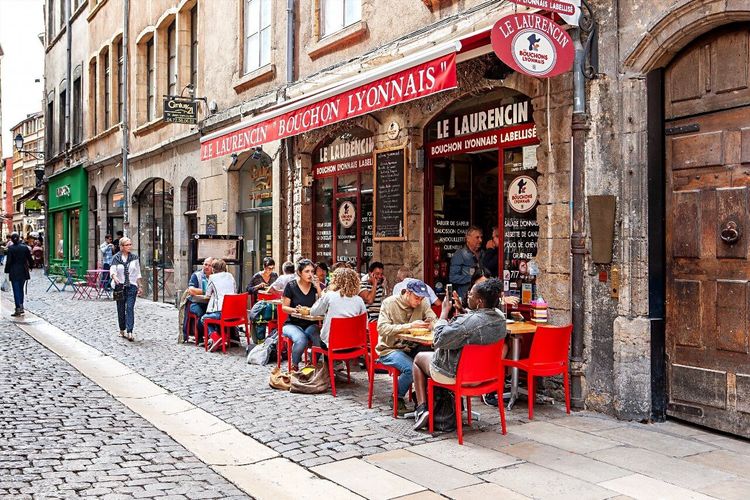
Beyond couscous, the period is a wonderful opportunity to discover the bouchons — traditional restaurants serving Lyon's culinary specialties in an intimate setting. Booking is essential: the best tables are fully booked several weeks before the festival. Quenelle au gratin, tablier de sapeur, salade lyonnaise with bacon and poached egg — the specialties are detailed in our article on Lyon's culinary specialties.
Eating Hot on the Go
For long evenings outside in December — expect 4 to 8°C, often damp — plan for hot snacks along the way: roasted chestnuts, mulled wine, takeaway soups. The Halles de Lyon Paul Bocuse (open during the day) are a great place to stock up on charcuterie and cheese before the illuminations begin.
Getting Around Lyon During the Fête des Lumières
The festival profoundly transforms traffic in Lyon. The good news: this is an event best experienced on foot, and public transport covers the rest.
Cars: Avoid the City Center
A large part of the city center is closed to traffic from 6 PM throughout the four nights of the festival. Physical barriers block access to the Presqu'île, Vieux-Lyon, and the approaches to Croix-Rousse. The few city-center parking lots fill up well before 8 PM, and traffic diversions create jams all the way to the outskirts.
Come without a car, or park far out and use public transport.
TCL: Reinforced Metro, Tram, and Funicular
The TCL (Lyon's public transport network) boosts its services for the entire duration of the festival. Metro and tram lines run extended hours in the evening, and special shuttles connect park-and-ride facilities on the outskirts to the city center. The funicular to Fourvière runs at increased frequency until the installations close.
Buy your tickets in advance — at station machines or via the TCL app — to avoid queuing at the ticket office in the middle of a busy evening.
Park-and-Ride Facilities (P+R)
If you are driving from outside Lyon, park-and-ride facilities are the solution: free or low-cost parking on the outskirts, connected to the TCL network. The closest to the festival: Porte des Alpes (metro D), Laurent Bonnevay (metro A), Vénissieux (tram T2). The City of Lyon's website publishes available capacity during the festival.
Coming by Train
Both Lyon-Perrache and Lyon-Part-Dieu are connected to the metro and tram network. From Paris, the TGV takes approximately 2 hours. Trains to Lyon during festival week often sell out — book several weeks in advance.
On Foot: The Best Option
The bulk of the festival route is covered on foot. The Presqu'île is a natural pedestrian zone for nearly 3 km, and the main sites flow into one another without crossing major roads. Bring comfortable shoes (at least 6–7 km of walking on cobblestones) and warm clothing — December in Lyon is damp, and you only realize it after two hours of standing still.
Accommodation in Lyon During the Fête des Lumières: When to Book and Where to Stay
This is probably the point that catches visitors most off guard. City-center hotels in Lyon are fully booked for the Fête des Lumières as early as July or August. By October, well-located properties are often already gone.
Booking Early: What It Actually Changes
A hotel priced at €180 per night in September can cost significantly more in November for the same dates. Booking platforms apply heavy surcharges during the festival — sometimes several times the standard rate for city-center hotels. Booking as soon as the official dates are confirmed gives you access to more reasonable prices and a wider choice of location.
Where to Stay Based on Your Priorities
To be at the heart of the action (Presqu'île, 1st and 2nd arrondissements): expect a high budget during the festival for a decent hotel. The benefit is real: you walk back and avoid public transport on a busy evening.
For better value for money: hotels in the 3rd and 6th arrondissements (Part-Dieu, Brotteaux) are more reasonably priced and connected to the center by metro in under 10 minutes. This is often the best compromise.
To avoid festival pricing: neighboring towns — Villeurbanne, Vaulx-en-Velin, Caluire — offer accommodation at normal rates and are linked to Lyon by the TCL network.
Alternatives to Hotels
Short-term rental apartments often offer better comfort for groups or families, but here too, prices spike and the best properties go fast. Be aware: some landlords require a minimum stay of 3 nights during the festival. Youth hostels in Lyon are a viable option for solo travelers, provided you book 3 to 4 months in advance — dorms fill up well before the event.
Practical Tips for Making the Most of the Lyon Fête des Lumières
Some things appear in no official guide. Here is what festival regulars pass on to first-timers.
Dress Warm — Really
Lyon in December means 4 to 8°C in the evening, often damp and sometimes rainy. You will be outside for three to four hours with no shelter between installations. People who underestimate the cold spend half their evening looking for an open café rather than watching the lights.
Minimum preparation: a puffer jacket or warm coat, hat, gloves, thermal socks, waterproof shoes. If you have children, double up the layers. Rain never leads to cancellation — the installations are designed to operate in all weather.
Managing the Crowds
The festival can bring together several hundred thousand people in a single evening (Saturday is generally the densest). A few rules that regulars follow:
- Avoid Place des Terreaux between 9 PM and 10:30 PM if you dislike being jostled — that is peak density
- Croix-Rousse and Confluence are consistently less crowded than the Presqu'île
- Arriving early (at the very start of the evening) or late (after 10:30 PM) allows you to experience the festival in far better conditions
- If you can choose which evening to attend, avoid Saturday: the difference in attendance compared to other evenings is significant
Practical Organization and Safety
The festival is a very well-signposted and secure event, with thousands of staff and volunteers managing crowd flows. Paper maps are distributed at the entrances to main sites. A few simple precautions will help avoid any issues:
- Fully charge your phone before you leave — power outlets are scarce on the streets
- Bring some cash — some stalls do not accept card payments
- Agree on a physical meeting point with your group at the start of the evening: mobile networks can be overloaded and calls may not go through
- Keep your belongings in a closed bag — large gatherings attract pickpockets
The Festival with Children
The Fête des Lumières is accessible to all ages. Children are often captivated — the interactive installations engage them just as much as adults. Opt for weeknight evenings, start with Fourvière or Vieux-Lyon before tackling the density of the Presqu'île, and set a clearly visible meeting point at the start of the evening.
For strollers: Vieux-Lyon is cobbled and hilly, which makes maneuvering difficult. A baby carrier or an all-terrain stroller is preferable.
Weather and Plan B
Organizers never cancel due to rain or wind. However, certain installations — particularly open-air projections on exterior surfaces — may be temporarily interrupted by gusts. Stay flexible and follow the official social media channels in real time if the weather turns bad.
What to Do in Lyon Before and After the Fête des Lumières
The festival lasts four nights, but if you are coming from afar, you can easily turn the trip into a full Lyon experience. Lyon is well worth 3 to 5 days, with or without the light installations.
Exploring Lyon During the Day
During the festival days, the city center streets are still quiet in the morning. It is the best time to explore Vieux-Lyon without crowds: the medieval traboules, inner courtyards, and cathedral can be visited in a calm you will not find at night. If you want to understand what you will see illuminated after dark, a daytime visit makes perfect sense.
The Musée des Beaux-Arts de Lyon on Place des Terreaux is one of the richest in France: collections ranging from Antiquity to the Impressionists, often near-empty on weekday mornings in December.
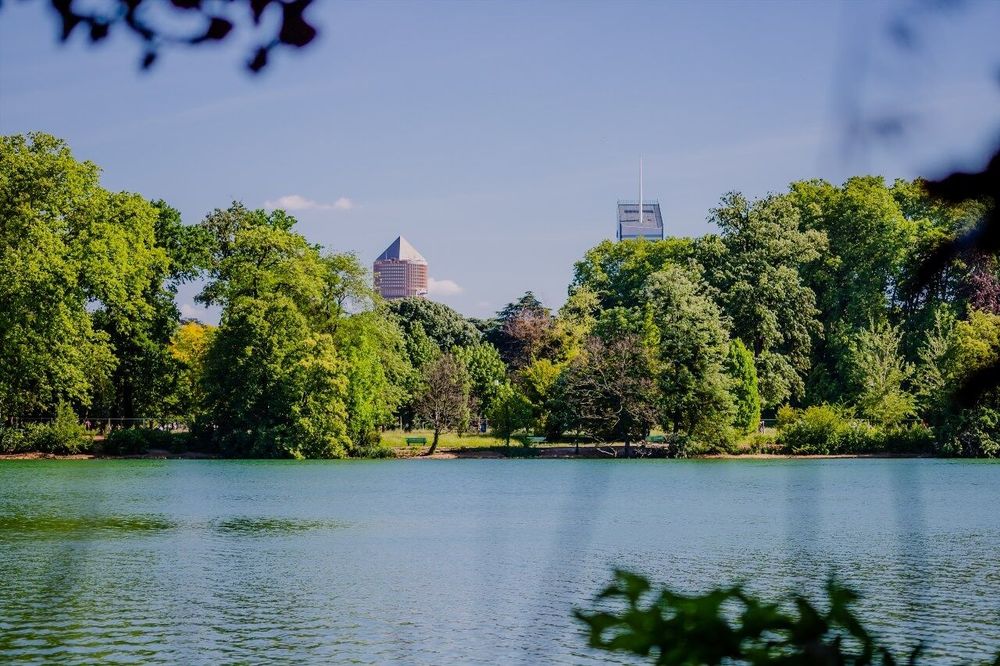
The Parc de la Tête d'Or (Boulevard des Belges, 69006 Lyon, rated 4.6/5 on Google based on 60,501 reviews) offers a green escape even in winter — the zoo and tropical greenhouses are open year-round, and park entry is free.
Vieux-Lyon and Fourvière During the Day
Vieux-Lyon during the day is an entirely different world from the festival evenings. The traboules can be explored at a leisurely pace, craft shops are open, and walking up to Fourvière allows you to understand the city's geography before seeing it lit up. The Basilique Notre-Dame de Fourvière is freely accessible — its interior, with its mosaics and crypt, is just as impressive as the illuminated façade at night. The same monument, two completely different readings.
Croix-Rousse: The Real Lyon
Spend a day in Croix-Rousse. The atmosphere is that of a village within the city: a daily morning market on the boulevard, artists' studios, neighborhood cafés frequented by residents rather than tourists. This is where Lyon actually lives — not where it puts on a show.
To understand the history of the Canuts and the textile culture that built Lyon's global reputation, the Ryo audio-guided tour À la rencontre des Canuts offers 16 historical stops over 2 hours, from the foot of the hill to the last silk workshops still in operation.
Visiting Lyon Over Several Days
For a complete stay built around the festival, our guide Visiting Lyon in 3 Days offers a neighborhood-by-neighborhood itinerary covering museums and must-sees that are valid at any time of year. Our Lyon audio walking tour, with its 27 points of interest and 3.5-hour route, can be followed on foot at your own pace, headphones in.
FAQ
When Does the Lyon Fête des Lumières Take Place in 2026?
The Lyon Fête des Lumières 2026 will be held from Saturday, December 5 to Tuesday, December 8, 2026. The event takes place every year over the four evenings surrounding December 8, the Feast of the Immaculate Conception, which traditionally closes the festival. The full program is published in October on the official website fetedeslumieres.lyon.fr. Opening hours are approximately 7–8 PM to 11 PM, with some evenings slightly shorter (6–10 PM). For reference, the 2025 edition was held from December 5 to 8.
Is the Lyon Fête des Lumières Free?
Yes, the Lyon Fête des Lumières is entirely free. All light installations in the streets, on squares, and on monuments are accessible without a ticket, reservation, or pass. There are no paid zones, no entry checkpoints. It is one of Europe's great free cultural events, and one of the reasons it attracts more than two million visitors every year. Only certain side events organized in parallel (indoor concerts, private gala dinners) may be ticketed, but these are entirely separate from the main light festival.
What Is the Significance of the Lyon Fête des Lumières?
The significance of the festival is both historical and popular. It dates back to the Échevins' vow of 1643: Lyon's city magistrates promised to honor the Virgin Mary every December 8 if the city were spared from the plague. That vow was kept for centuries in the form of a procession to Fourvière. In 1852, during the inauguration of the gilded statue of the Virgin, a storm postponed the ceremony, and residents spontaneously lit candles on their windowsills to celebrate nonetheless. This tradition of "lumignons" continued until the end of the 20th century. In 1999, the City of Lyon transformed it into an international light art festival while preserving its roots in December 8.
Why Do People Eat Couscous During the Lyon Fête des Lumières?
The tradition of eating couscous during the Fête des Lumières is very real, even if its exact origin remains debated. The most widespread explanation is practical: couscous is a hot, filling, inexpensive dish that is easy to prepare in large quantities for restaurants suddenly overwhelmed with customers. Others attribute this tradition to Lyon's North African community, historically established in the city's working-class neighborhoods since the 1960s. Most likely, both explanations reinforce each other. In any case, the reality is undeniable: during the festival, couscous restaurants are part of the scenery, queues start early, and many Lyon families have made it their evening ritual.
What Is the Best Route for the Lyon Fête des Lumières?
The program changes every year, but the classic sequence remains: Fourvière at the start of the evening (arrive for the lighting), walk down to Vieux-Lyon for the alleyway installations, cross to the Presqu'île via Pont Bonaparte, visit Place Bellecour, then head up to Place des Terreaux. This route covers 6 to 7 km in 3 hours. For two evenings: reserve the first for Fourvière, Vieux-Lyon, and Croix-Rousse, and the second for the Presqu'île and Confluence. Arrive early or late (after 10:30 PM) to avoid peak crowd density.
How Do You Get Around Lyon During the Fête des Lumières?
The fundamental rule: do not drive into central Lyon. Central neighborhoods are closed to traffic from 6 PM onward, and city-center parking lots fill up well before the installations open. The solution: come by train (Lyon-Part-Dieu and Lyon-Perrache are connected to the metro and tram), use park-and-ride facilities on the outskirts with TCL connections, or stay in a hotel within walking distance of the sites. The TCL network reinforces its services with extended evening hours. The funicular to Fourvière runs at increased frequency throughout the evening.
How Long Does It Take to See the Lyon Fête des Lumières?
One evening allows you to cover the main sites of the Presqu'île and Vieux-Lyon in 3 to 4 hours. But to see all the neighborhoods without having to rush, two nights are recommended. With three nights, you can see the entire program at your own pace, revisit the installations that stood out to you, and use the daytime to explore Lyon beyond the festival. Most visitors coming from afar opt for a full weekend, starting their evenings at different times to vary the crowd experience.
Lyon is unlike anywhere else in December. Four nights a year, the city recaptures something of the emotion of 1852 — lights in the night, a silent crowd, and the certainty that some traditions are worth keeping. The Fête des Lumières is one of the rare events that fully justifies a trip in the middle of winter.
For those who want to continue exploring Lyon beyond these four nights, the Ryo audio-guided tour of Lyon covers 26 points of interest through the city's historic neighborhoods — a way to make sense of what you saw illuminated by understanding the history behind the facades. Our Ryo app is available to follow the route at your own pace, whether you are in Lyon for the festival or at any other time.
À lire également