© Shutterstock
 Votre guide Ryo
Activities in Nantes and Surroundings: 30 Ideas to Explore Loire-Atlantique in 2026
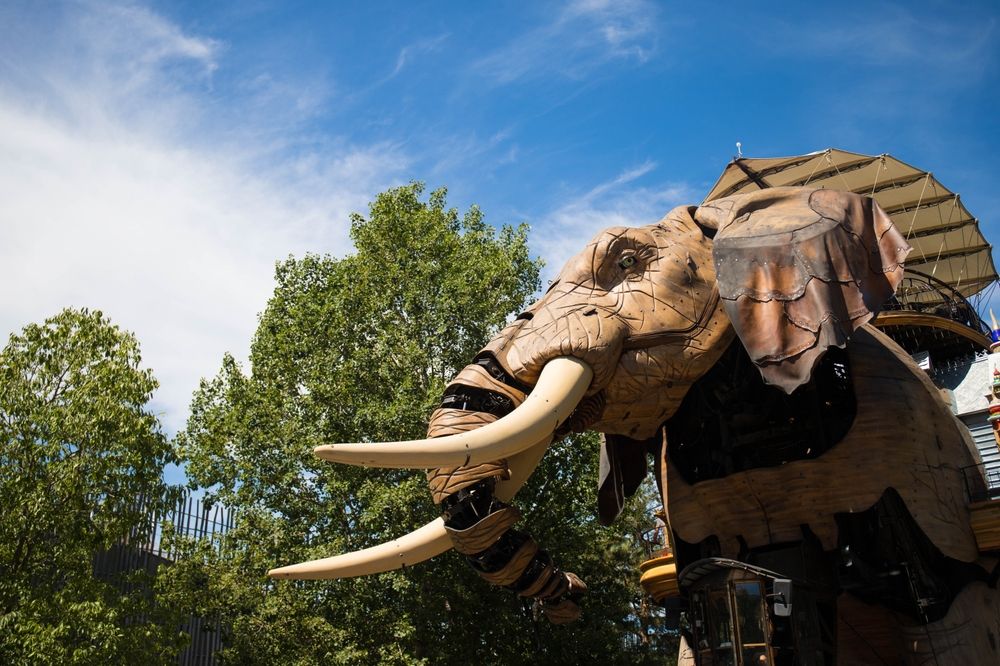
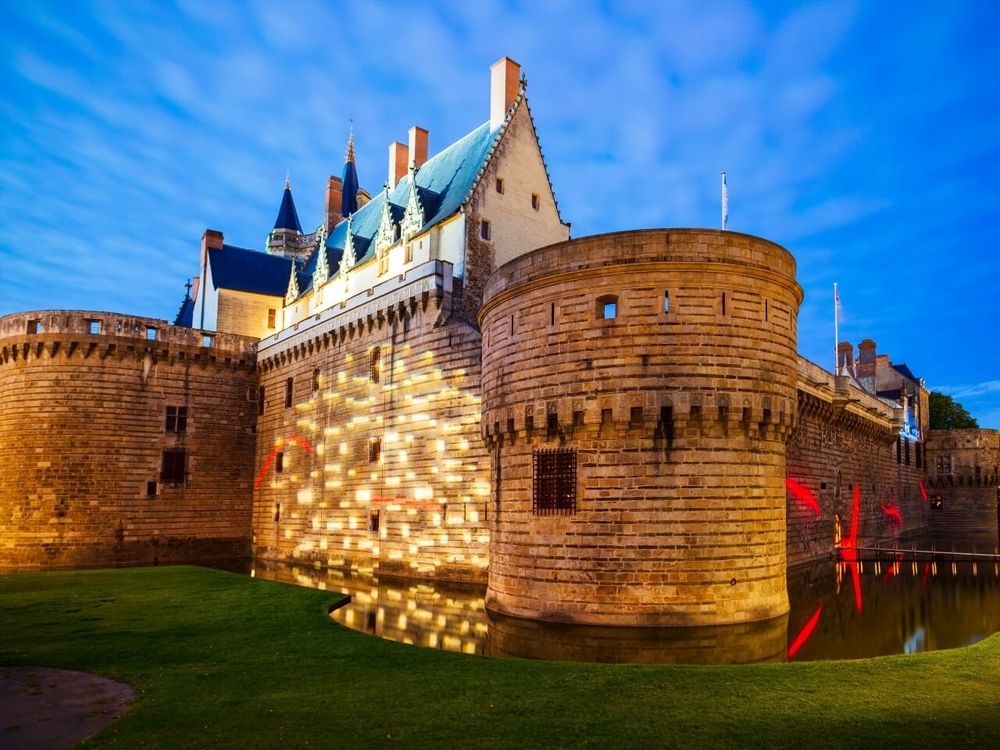
The Loire arrives in Nantes carrying a thousand kilometers of history, and the city does not let it pass in silence. Along the river, the Château des Ducs de Bretagne flanks its golden towers against the western sky, while just a few hundred meters away, a twelve-meter mechanical elephant strolls through the streets as if it were the most natural thing in the world. Nantes confounds expectations, and that is precisely what makes activities in Nantes and its surroundings so varied and so unpredictable.
But the curiosity does not stop at the ramparts. Less than an hour away, the salt marshes of Guérande produce their salt using thousand-year-old techniques, the medieval city of Clisson looks like a Tuscan village that lost its way in Loire-Atlantique, and the bay of La Baule stretches its nine kilometers of fine sand along the Atlantic. There is also the submarine base of Saint-Nazaire, the Grande Brière marshes, the Muscadet vineyards, and a dozen villages perched above the Loire that most guidebooks consistently overlook.
This guide brings together the best activities in Nantes and its surroundings, both in the city and beyond: urban must-sees, nature escapes, industrial curiosities, and gastronomic stopovers. To start at the heart of the city before branching out into the surrounding area, the Ryo audio-guided tour of Nantes covers 30 points of interest in 2h30 over 6.4 km — an audio journey through the Great Dukes and the river before setting out to explore Loire-Atlantique.
Nantes City Center: Castle, Cathedral, and Passage Pommeraye
It is impossible to leave Nantes without setting eyes on the Château des Ducs de Bretagne. Built from 1466 onwards by Duke François II, it dominates the heart of the city with a nonchalance that barely conceals its historical importance: it was within these walls that Anne of Brittany was born in 1477, and where Henri IV signed the Edict of Nantes in 1598, bringing the Wars of Religion to an end. The moat has been transformed into a free public promenade, and the museum inside traces eleven centuries of Breton history with remarkable clarity.
The Cathédrale Saint-Pierre-et-Saint-Paul stands just steps away, and it is one of Nantes' surprises: its nave soars to 37.5 meters — higher than that of Notre-Dame de Paris. Begun in 1434 and completed in 1891, it houses the tomb of François II, a masterpiece of Flamboyant Gothic sculpture by Michel Colombe. The light filtering through the contemporary stained-glass windows by Jean Le Moal gives the interior an almost otherworldly quality, especially in late morning when the angle of incidence makes the blues and reds vibrate.
The Passage Pommeraye is also well worth a visit. Inaugurated in 1843, this three-level covered shopping arcade connected by a monumental staircase is one of the most beautiful in France. It has survived modernity while retaining its independent boutiques, period lampposts, and allegorical sculptures. You will find local Nantes residents going about their daily lives alongside visitors discovering it for the first time, mouths agape, from the first-floor landing.
The Bouffay district surrounds all of this with a web of cobbled streets, pavement-café terraces, and half-timbered facades that survived the 1943 bombings. In the evenings, it is the beating heart of Nantes: pedestrian streets, seafood restaurants, century-old brasseries. To explore this area on foot with the historical context it deserves, the Ryo audio-guided tour of Nantes includes this district in its central itinerary.
Around the castle, do not overlook the Jardin des Plantes: one of the richest in France with over 10,000 plant species across 7 hectares, and entirely free to enter. Nantes locals lunch on the grass, children run around the ponds, and the rose gardens rival those of the most renowned English gardens. It is also one of the rare places in France where a Magnolia grandiflora planted in the early 19th century grows — classified as a remarkable tree.
The Machines de l'Île: France's Strangest Attraction
It is hard to describe the Machines de l'Île to someone who has never seen them. Imagine a gallery of giant mechanical creatures, conceived by artist François Delarozière drawing inspiration from Jules Verne, Leonardo da Vinci, and the industrial history of Nantes' former shipyards. The result: an elephant measuring 12 meters tall and weighing 47 tonnes that roams the streets carrying up to 49 passengers on its back, a Grande Halle populated by articulated sea creatures, and a Galerie des Machines where prototypes in progress sit alongside completed works.
The Grand Éléphant goes out several times a day according to a schedule published in advance. The ride lasts 45 minutes; booking is strongly recommended in high season. The Carrousel des Mondes Marins, another highlight of the park, stacks three floors of half-animal, half-mechanical creatures, some of which can be operated by visitors: giant crabs, luminous anemones, articulated octopuses. The venue works for all ages — unlike most attractions billed as "for children," the Machines de l'Île (Boulevard Léon Bureau, 44200 Nantes, rated 4.6/5 on Google from 42,163 reviews) captivates adults just as much as younger visitors.
Allow between 2 and 4 hours depending on your program. The venue is located on the Île de Nantes, which makes it easy to combine this visit with a walk through the neighboring redeveloped district. To make sure you don't miss any opening times or the quietest slots, the Ryo article on the Machines de l'Île details prices and the best times to visit by season.
The Île de Nantes and the Voyage à Nantes
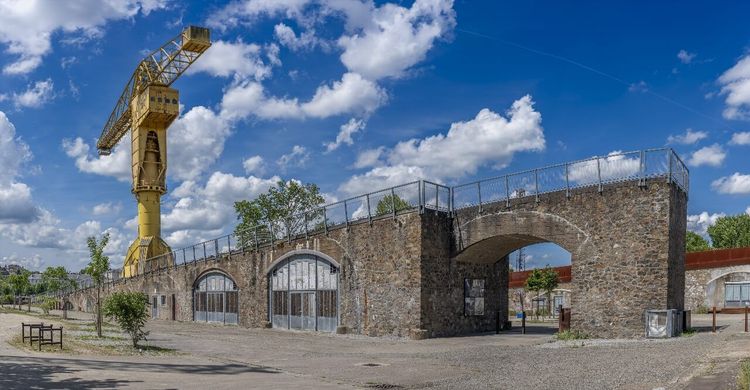
The Île de Nantes is one of the great urban regeneration projects of the past twenty years. The former shipyards, left abandoned after the maritime construction crisis of the 1980s, have been gradually transformed into a creative district: architects, designers, art galleries, unconventional restaurants, and cultural spaces have all set up here. The architecture is deliberately hybrid — preserved industrial wastelands, bold contemporary buildings, and artworks in public spaces.
Every summer, from early July to late August, the Voyage à Nantes transforms the entire city into a contemporary art trail. A green line painted on the ground guides visitors from one work to the next — ephemeral installations, permanent sculptures, architectural interventions — through the districts and all the way down to the banks of the Loire. This event draws several hundred thousand visitors each year and is reason enough on its own to plan a summer visit.
The Hangar à Bananes runs along the Loire at the western tip of the island. A former port infrastructure converted into a social hub, it brings together bars, restaurants, and open spaces with a direct view over the river. In the evenings, the terraces fill with Nantes locals seeking fresh air, and the light on the Loire takes on particularly photogenic tones. To explore the district in detail, the Ryo article on the Île de Nantes district offers a walking circuit with the essential stops.
Trentemoult: the Loire-Side Village
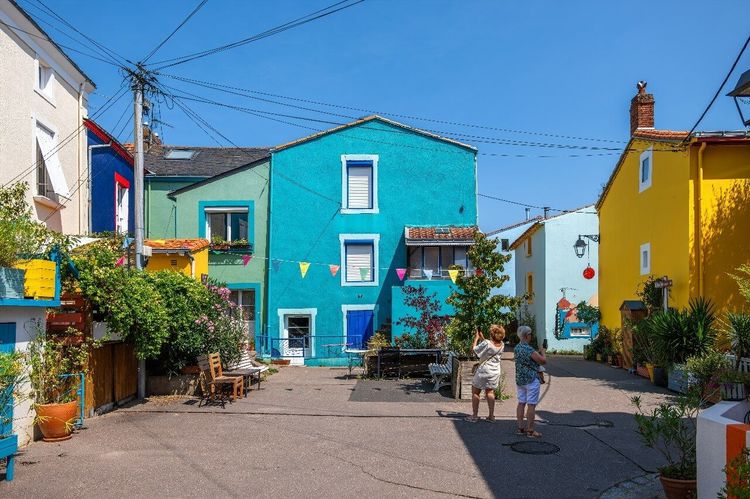
Four kilometers from the center of Nantes, accessible by river shuttle from the Quai de la Fosse, Trentemoult is one of the most photogenic spots in the region. This fishing village of colorful houses has kept its character almost entirely intact despite its proximity to the metropolis. Its lanes are too narrow for cars, geraniums spill from the windows, and every façade seems to be competing for the most vivid color.
The Navibus river shuttle connects the Quai de la Fosse to Trentemoult in about ten minutes — a crossing worth making in its own right for the view of the Nantes skyline from the river. Once there, head up to the upper street for a panorama over the Loire with the city as a backdrop. The restaurants facing the river serve the classics of Loire cuisine, with pike-perch and pike leading the menu. The Ryo article dedicated to Trentemoult provides all the practical details for organizing this half-day excursion.
The Vallée des Korrigans and the Sèvre Nantaise
Less well known than the previous attractions, the Vallée des Korrigans (Route de la Vallée, 44120 Vertou, rated 4.5/5 on Google from 1,078 reviews) runs along the Sèvre Nantaise a few kilometers south of Nantes, between Vertou and Mouzillon. This natural corridor of oak forests, limestone cliffs, and wet meadows can be explored on foot or by bike along waymarked trails that are accessible year-round.
The river carves its meanders here through an unusual landscape: mossy rocks, wooden footbridges, restored watermills, and riverside guinguettes set on terraces over the water. The guinguettes of Vertou, open from April to September, offer an authentic local experience far from the standard tourist circuit. The Sèvre Nantaise is classified as a Natura 2000 zone; its remarkable aquatic wildlife makes it one of the most unspoiled waterways in the department. Allow 2 to 3 hours for a full walk from Vertou to the first meanders of Mouzillon.
Clisson: the Medieval City with a Tuscan Feel
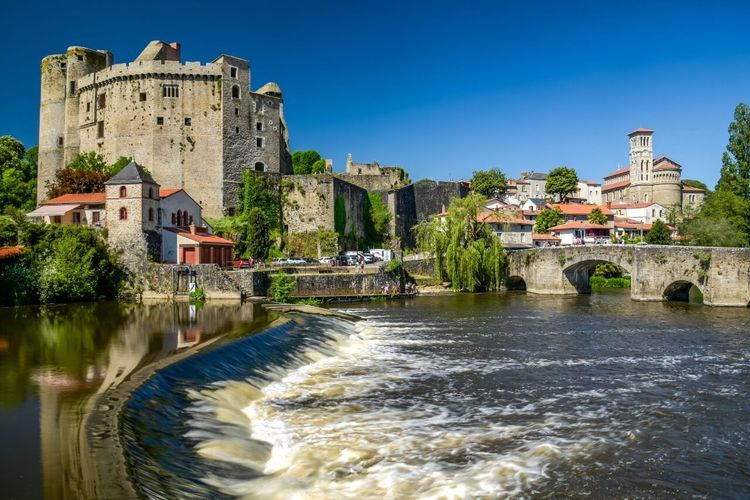
No guide to activities around Nantes is complete without Clisson. Thirty kilometers to the southeast, this medieval city is one of Loire-Atlantique's most beautiful surprises. What strikes you immediately is the architectural style: Roman roof tiles, loggias, bell towers, and arcaded halls in pink brick. You could almost be in Tuscany, and that is no accident.
After the destruction of the War in the Vendée, two artists — François Cacault and his friend the sculptor Pierre-Marie Lemot — rebuilt the town in a neo-Tuscan style in the early 19th century, inspired by their extended stays in Italy. The result is unique in France: an entire town that looks like a Lombard village transplanted into the Pays de la Loire. The château de Clisson, perched on its promontory at the confluence of the Moine and the Sèvre Nantaise, offers a perfectly preserved romantic ruin with sweeping views over both rivers.
The Garenne Lemot (Route de la Garenne, 44190 Gétigné, rated 4.6/5 on Google from 1,422 reviews), a 25-hectare park classified as a historic monument, rounds out the visit. Designed in the English garden tradition with Greek temples, artificial grottos, and statues scattered through the vegetation, it is one of the most unusual walks in the region. Entry is free, and the paths leading down to the Sèvre Nantaise allow for riverside stops.
Clisson is also the capital of Muscadet de Sèvre-et-Maine: the vineyards surrounding the town produce some of the appellation's finest Muscadet, a dry white that pairs perfectly with the seafood of the Atlantic coast. The Fête Médiévale de Clisson, held every summer, transforms the town into a full-scale theater with equestrian shows, period craftspeople, and historical activities. Allow at least a half-day for the town and its surroundings, a full day if you want to walk through the Garenne and have lunch on a riverside terrace.
Guérande and Its Salt Marshes
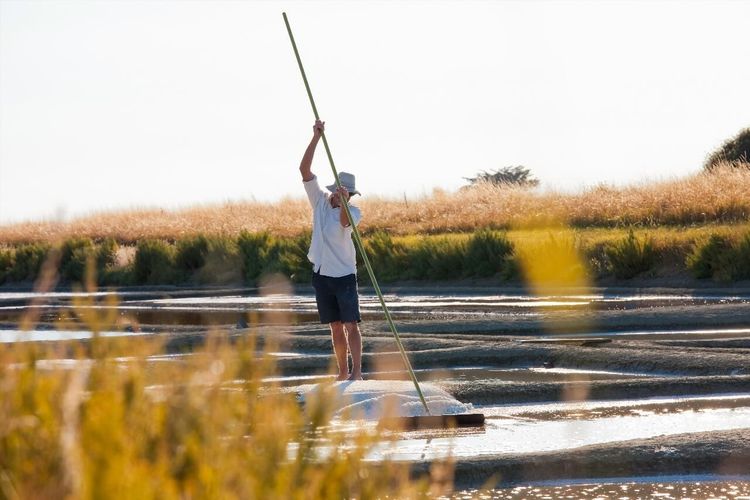
There is something hypnotic about the salt marshes of Guérande. These shallow checkerboard basins, separated by narrow earthen banks called bossis, cover 2,000 hectares across the Guérande peninsula — one of the largest salt marshes in France still worked by hand. The paludiers (salt workers) labor here from June to September using tools identical to those their medieval ancestors used.
The fleur de sel, harvested from the surface using a lousse (a specialist rake), only appears for a few hours a day when weather conditions are just right. It forms a delicate crust on the surface of the salt pans, and a single paludier produces on average just 500 grams per day. This luxury salt graces the tables of France's finest restaurants, and can be found in Guérande's shops at far more accessible prices than in Paris.
The medieval town of Guérande itself deserves several hours. Its intact 15th-century ramparts, four fortified gateways, and half-timbered streets make it one of the best-preserved medieval ensembles in Loire-Atlantique. The Collégiale Saint-Aubin, at the heart of the old town, is a Romanesque-Gothic building whose sculpted capitals depict scenes from the Old and New Testament with remarkable precision.
To understand the marsh ecosystem before exploring it, the Musée des Marais Salants (17 Rue Pasteur, 44740 Batz-sur-Mer, rated 4.5/5 on Google from 869 reviews) in Batz-sur-Mer offers a clear introduction to ancestral techniques, marsh wildlife, and the economic history of salt. Allow at least a half-day for the town and the basins, a full day if you want to cycle along the trails. Guérande is 75 km from Nantes (about 1h15 by car), easily combined with La Baule in a single excursion.
La Baule and Pornic: Two Faces of the Atlantic Coast
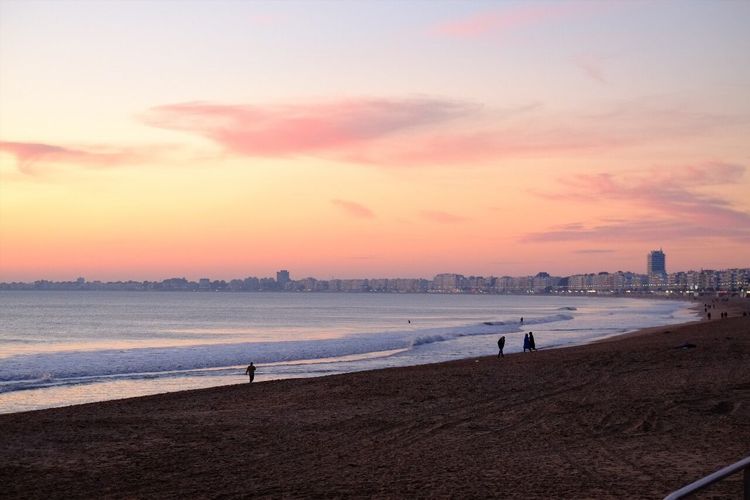
The bay of La Baule is Loire-Atlantique's most famous beach, and for good reason: its 9 kilometers of fine sand in a sweeping arc rank among the most beautiful beaches in Europe. The back of the beach is lined with a boulevard of Belle Époque villas, some dating to 1900, which welcomed wealthy Parisian families for an entire century. Today, this blend of historic architecture and open sea draws both vacationing families and thalassotherapy enthusiasts alike.
Watersports activities abound between May and September: sailing, land yachting, kitesurfing, sea kayaking. La Baule is also one of the best-equipped resorts for dinghy sailing, with schools welcoming beginners from age 6. Away from the beach, the Bois de La Baule behind the resort offers 150 hectares of maritime pine forest to explore on foot or by bike, far from the seaside bustle.
Pornic, 50 km west of Nantes, has an entirely different character. The town has kept its historic center perched above a lively marina, dominated by the medieval castle that has crowned the cliff since the 12th century. The rocky coves along the coast, the GR de Pays footpaths, and the views over the estuary offer a wild experience that La Baule, smoother and more glamorous, simply does not provide. In July and August, sailors fill the harbor and the seafood restaurants are fully booked by midday.
La Baule is 75 km from Nantes via the motorway, Pornic is 55 km away. Regional TER trains also connect Nantes to La Baule-Escoublac in about 50 minutes. If you only have one day for the coast, combine a morning in Guérande among the ramparts with an afternoon on La Baule beach (Esplanade du Casino, 44500 La Baule-Escoublac, rated 4.5/5 on Google from 958 reviews) — it is the classic formula and it remains hard to beat.
Saint-Nazaire: Submarines, Airbus, and the Memory of the Atlantic
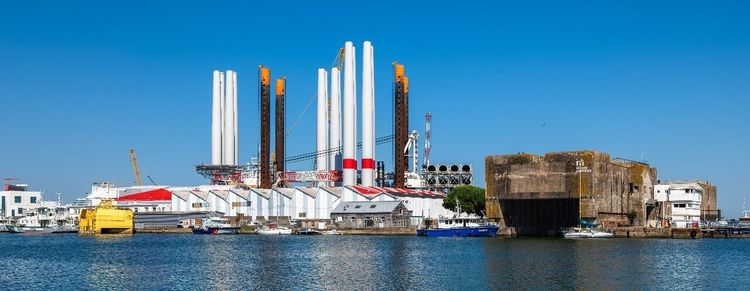
Sixty kilometers from Nantes, Saint-Nazaire does not have the tourist reputation of its coastal neighbors, and that is precisely what makes it such a fascinating stop. The city was one of Europe's greatest military and civilian ports in the 20th century, and its traces are visible throughout the urban fabric.
The submarine base (Boulevard de la Légion d'Honneur, 44600 Saint-Nazaire, rated 4.4/5 on Google from 3,439 reviews) is the centerpiece. Built by the German occupiers between 1941 and 1943, this reinforced concrete fortress measuring 300 meters long with walls 8 meters thick could shelter up to 20 submarines of the Atlantik Wall. Allied bombing raids never managed to destroy it. Today, it houses several cultural spaces, exhibitions on the Battle of the Atlantic, and events for the whole city.
In the same port area, the commemoration of Operation Chariot recalls one of the most audacious commando raids of the Second World War: in March 1942, a British destroyer packed with explosives deliberately rammed the port's main dry dock gate to put it out of action. The dry dock (the basin in question) is still visible today and constitutes a sober yet striking memorial.
A few kilometers from the docks, the Airbus factories in Saint-Nazaire offer guided tours of the assembly lines: Saint-Nazaire is one of the main production sites for fuselages and wing sections for the A320 family. It is a large-scale industrial spectacle that few cities in Europe can offer. Guided tours must be booked several weeks in advance during high season. Back in Nantes, our audio-guided tour of the ducal city runs to 31 stops.
Grande Brière: the Secret Marsh
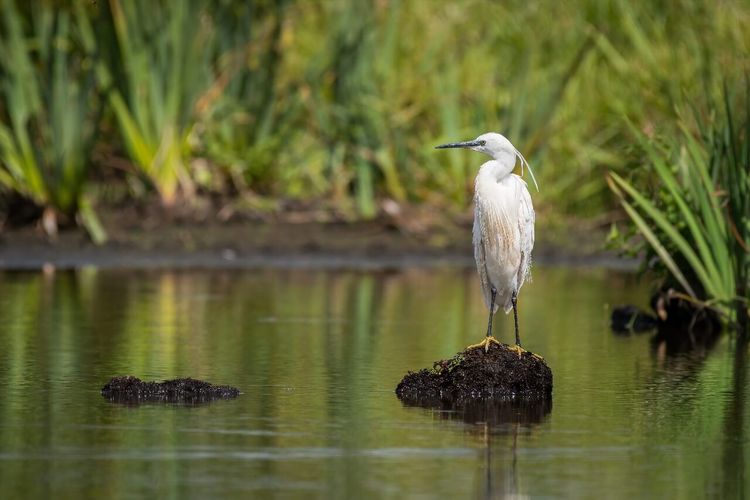
Between Guérande and Saint-Nazaire lies the Parc naturel régional de Grande Brière, the second largest marsh in France after the Camargue. These 40,000 hectares of peat bogs, canals, wet meadows, and reed beds form a distinct ecosystem, inhabited since the Neolithic period and designated a regional natural park since 1970.
The most emblematic visit remains the flat-bottomed boat tour along the canals. These flat-bottomed punts, steered by local boatmen, glide silently beneath the alders and reeds, bringing you face to face with the grey herons, egrets, and otters that inhabit the marsh. Departures are organized from the village of Fédrun, the main inhabited island of the Brière, especially between May and September.
The village of Kerhinet, restored to its traditional interwar appearance, brings together around twenty thatched cottages typical of the region. Entry is free, local craftspeople keep shops here, and the peaceful atmosphere contrasts sharply with the nearby coastal bustle. In autumn, when the reeds turn yellow and morning mists erase the banks, Grande Brière takes on an almost melancholic beauty.
The Nantes Vineyard and Muscadet
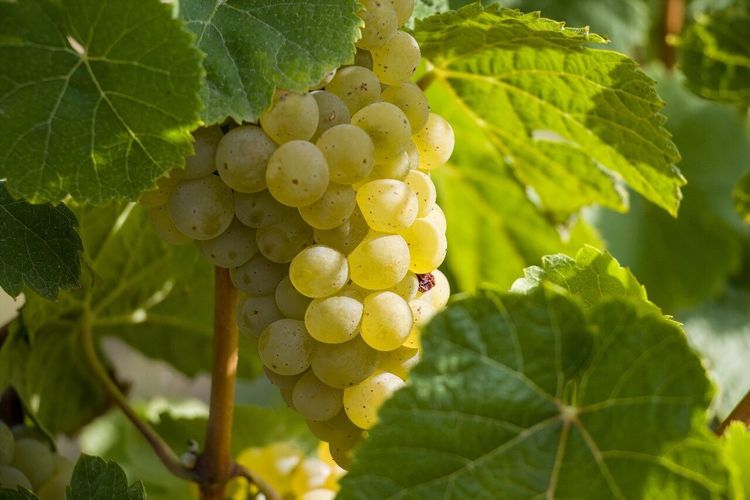
The Nantes vineyard (Route du Vignoble, 44690 La Haie-Fouassière, rated 4/5 on Google from 2 reviews) is one of the oldest in France, planted as far back as Roman times. It covers approximately 14,000 hectares to the south and east of Nantes, mostly devoted to Muscadet, a dry white wine produced from the Melon de Bourgogne grape. The Muscadet Sèvre-et-Maine sur lie designation refers to wines that have spent at least one winter resting on their lees (yeast deposits), giving them a texture and complexity that connoisseurs recognize immediately.
Wine tourism circuits depart from Vallet, the capital of Muscadet, and allow you to visit cellars and wine stores while combining tastings with cycling between the vine rows. The official Route des Vins covers around thirty communes and some forty estates open for visits. The happiest food-and-wine pairings remain the local classics: coastal oysters, mussel-rope mussels, grilled sardines. To go further on the typical flavors of the region, the Ryo article on the culinary specialties of Nantes offers a comprehensive tour of the products and addresses you need to know.
Oudon, Champtoceaux, and the Villages Perched Above the Loire
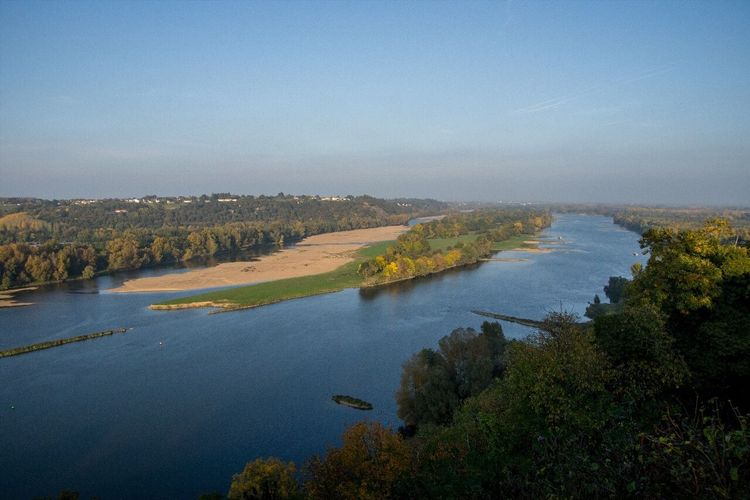
The Loire between Nantes and Angers is dotted with villages perched on hillsides from which you look down over the river twenty to thirty meters below. Oudon (30 km from Nantes) and Champtoceaux (40 km) are among the most accessible and most spectacular.
The Tour d'Oudon, a 15th-century polygonal tower, is a listed historic monument. The panorama from the top takes in the Loire for several kilometers, with vineyards and hillsides gently sloping down to the river in the background.
In Champtoceaux, the Promenade de Champalud (Champtoceaux, 49270 Champtoceaux, rated 4.7/5 on Google from 677 reviews) follows the cliff above the Loire along a vertiginous ridge: on a clear day, the view stretches as far as Ancenis. The village itself, with its lanes and hanging gardens, is among the most beautiful in the region. For a curated selection of villages by season, the Ryo article on the most beautiful villages around Nantes offers a ready-made circuit. If you want to continue towards the valley's châteaux, the road trip Les Châteaux de la Loire covers this stretch with audio-guided stages between Nantes and Saumur.
Outdoor Activities: Loire à Vélo, Kayaking, and Hiking
Loire-Atlantique is one of the most cycle-friendly territories in France. The EuroVelo 6, also known as the Loire à Vélo, connects Nantes to the sea (Saint-Brevin-les-Pins) in under 60 km on a fully safe dedicated route, and in the other direction heads upstream towards Angers, Tours, and Blois over hundreds of kilometers. The Nantes section follows the river along greenways and dedicated cycling paths, passing through Trentemoult, La Prairie de Mauves, and the banks of Bouguenais.
For kayaking, the Loire is well suited to leisurely outings between Mauves-sur-Loire and Nantes. The current is moderate and natural banks are plentiful. Several providers offer day rentals or guided descents of 20 to 45 km with stops in riverside villages. In summer, sandbanks emerge and allow for picnics in the middle of the river — an experience that is hard to find anywhere else in France.
Hikers are spoilt for choice. The GR3 follows the Loire from Nantes towards Maine-et-Loire along stretches of viewpoints and hillsides. Grande Brière alone has over 400 km of waymarked trails passing through different marsh landscapes. In the Nantes vineyard, the paths between Vallet and Le Pallet offer views over the vines and the meanders of the Sèvre Nantaise that change dramatically in color with the seasons.
The Canal de Nantes à Brest (Écluse de Quiheix, 44130 Blain, rated 4.6/5 on Google from 600 reviews), integrated into the Vélodyssée since its rehabilitation, allows you to cycle from Nantes into inland Brittany along a completely flat towpath. The first stage to Blain (40 km) passes in front of the medieval castle that towers over the canal at the halfway point — a particularly satisfying combination of culture and sport.
Things to Do with Families in Nantes and the Surrounding Area
Nantes is particularly well suited to family outings. Beyond the Machines de l'Île (unmissable for all ages), the city offers several options that go off the beaten track.
The Planétarium de Nantes (8 Rue des Acadiens, 44000 Nantes, rated 4.6/5 on Google from 300 reviews), free with booking for metropolitan residents and reduced-price for visitors, offers dome projection shows suitable from age 6. The Muséum d'Histoire Naturelle, recently renovated, has a dedicated children's section with interactive experiences exploring local and global biodiversity.
For excursions, the Brière marshes by flat-bottomed boat particularly captivate children aged 6 to 12 (wildlife, silence, gliding on the water). Clisson, with its ruined castle and romantic gardens, suits history-curious teenagers. In summer, La Baule's beaches offer the classic pleasures of seaside childhood on especially safe sand (gently sloping, organized supervision). And for children aged 8 to 14, visiting the submarine base in Saint-Nazaire generally leaves a lasting impression — the sheer scale of the concrete combined with the story of the Battle of the Atlantic works very well with this age group.
Practical Information and Transport
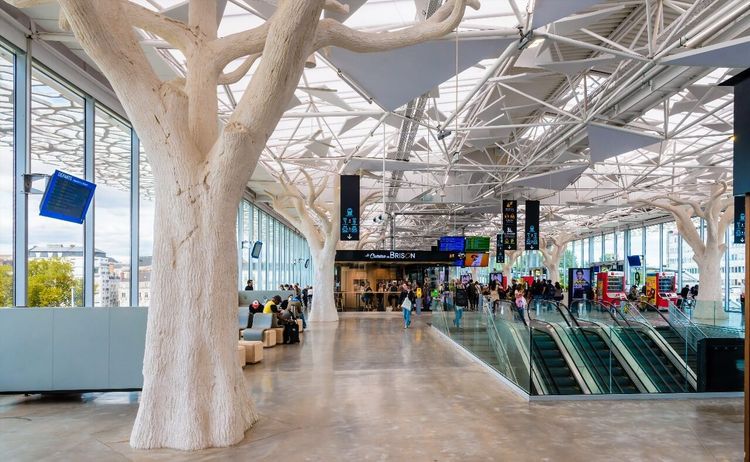
Nantes is well served from Paris (TGV in 2h05 from Montparnasse) and from the main cities of western France. By car, the A11 (Paris–Nantes) and A83 (Nantes–Bordeaux) motorways converge on the Nantes ring road.
By car, it is the most flexible way to explore the surrounding area. Guérande and La Baule are 1h10 away, Clisson 35 minutes, Saint-Nazaire 50 minutes, Pornic 55 minutes.
By TER train, regular services connect Nantes to Saint-Nazaire (40 min), La Baule (55 min), and Pornic (50 min). Clisson is accessible by train from Nantes in 25 minutes on the Nantes–Cholet line.
By bike, the Loire à Vélo and the department's greenways make it possible to plan 1- to 5-day itineraries in full autonomy, with listed cycle-friendly accommodation. Electric bike rental is available from several providers in Nantes.
The Pass Nantes (24h, 48h, or 72h) covers public transport and gives access to most paid museums — a worthwhile investment if you are staying several days in the city. To keep track of events throughout the year, the Ryo article on events in Nantes lists festivals, markets, and exhibitions not to be missed.
FAQ
What is there to do in Nantes when it rains?
Nantes keeps its visitors well covered in bad weather. The Château des Ducs de Bretagne and its museum offer several hours of indoor exploration. The Musée d'Arts de Nantes, recently expanded with a new contemporary wing, houses a collection ranging from medieval art to contemporary art, with works by Rubens, Ingres, and Kandinsky. The Passage Pommeraye, fully covered, invites you to stroll among its boutiques sheltered from the rain, and the Machines de l'Île operate in light rain. The city also has several arthouse cinemas and many literary cafés that invite you to linger. In case of prolonged rain, the Muséum d'Histoire Naturelle and the Lieu Unique (a national performance venue housed in the former LU factory) offer regular programs.
What are the best day trips from Nantes?
Three must-sees within less than an hour: Clisson to the southeast (30 km, neo-Tuscan style, ruined castle, vineyards), Guérande to the west (75 km, intact medieval ramparts, salt marshes), and Saint-Nazaire to the northwest (60 km, submarine base, Loire estuary). If you have a full day, combining Guérande in the morning with La Baule in the afternoon is a classic and very satisfying formula. For a more original excursion, cycling through Grande Brière between the villages of the Guérande peninsula covers two very different natural landscapes in a single day.
How do you get around from Nantes to the surrounding area?
A car offers maximum flexibility for destinations that are less well served (vineyards, Brière, Champtoceaux). By train, TER Pays de la Loire services connect Nantes to Clisson (25 min), Saint-Nazaire (40 min), La Baule (55 min), and Pornic (50 min). Guérande is not directly served by train: you need to get off at La Baule and then take a bus or taxi (about 20 min). Electric bike rental is recommended for routes through the vineyards and around the Brière, where distances remain manageable and the terrain is flat.
What is there to do in Nantes and its surroundings with children?
The Machines de l'Île first and foremost — the 12-meter mechanical elephant is an experience children still talk about years later. For half-days in the city: the Jardin des Plantes (free, perfect for running and picnicking) and the Muséum d'Histoire Naturelle with its interactive section. On excursions: the Brière marshes by flat-bottomed boat fascinate children aged 6–12, Clisson with its ruined castle suits history-curious teenagers, and La Baule's beaches offer the safe seaside experience of supervised, gently sloping sandy shores. The tour of Saint-Nazaire's submarine base, with its colossal concrete and wartime history, leaves a lasting impression on children aged 8 and up.
What is the best season to visit Loire-Atlantique?
June and September are the ideal months: the coast is accessible without the crowds of August, the salt marshes are in full operation (salt harvesting takes place from June to September), and temperatures remain pleasant for outdoor activities. July–August allow you to enjoy the beaches, the Voyage à Nantes festival, and summer events, but accommodation and popular sites book up several weeks in advance. May and October are perfectly suited for city visits and nature outings — the autumn light on the Loire and the Muscadet vineyards is particularly beautiful and much photographed.
How long do you need to visit Nantes?
Allow 2 to 3 days to do justice to Nantes within the city: one day for the historic center (castle, cathedral, Bouffay, Passage Pommeraye), one day for the Machines de l'Île and the Île de Nantes district, and a half-day for Trentemoult by river shuttle. Add 1 to 2 days if you want to venture out to Clisson or the coast. A full week will comfortably allow you to cover Nantes, Clisson, Guérande, La Baule, and Saint-Nazaire, while still leaving time for a half-day in the Brière or the vineyards.
Conclusion
Loire-Atlantique is one of France's most varied regions within such a small area: a creative and historic capital, a coastline of many faces, marshes of remarkable biodiversity, ancient vineyards, and hilltop villages that seem to belong to another era. Nantes is its natural gateway — a city that surprises at every visit, whether you are discovering it for the first time or coming back again.
To begin your exploration with the best historical and cultural context, the Ryo audio-guided tour of Nantes offers a 31-stage walk covering the Breton Grand Dukes, industrial revolutions, and the artists who shaped the city — available without booking, at your own pace, from the Ryo app.