© Shutterstock
 Votre guide Ryo
What to Do in Clisson in 2026: 15 Ideas Between Italy, Vineyards, and River
On the map of Loire-Atlantique, Clisson stands out. Its ochre facades, Roman-tiled roofs, and white marble colonnades have nothing Breton or Vendéen about them, and yet they tell a typically French story. After the fire that devastated the town during the Wars of the Vendée, sculptor Frédéric Lemot did not rebuild a Norman village: he imported Tuscany stone by stone, right down to the layout of the gardens. What is there to do in Clisson today, more than two centuries after this Italian renaissance? The question is worth spending an entire day on, or even a full weekend.
Between the two gutted towers of the château de Clisson, which overlook the Sèvre Nantaise from their 3 hectares of walkable ruins, and the 21 hectares of hills of the domaine de la Garenne Lemot, planted with cypress trees and antique statues, the town is full of surprises. You can paddle down the river by canoe beneath the ramparts, sample a muscadet in a nearby cellar, and once a year, in June, the cobbled lanes give way to 200,000 metal fans arriving for the Hellfest. Enough to build a packed tourist itinerary without ever straying more than ten kilometres. The audio-guided tour of Clisson also allows you to connect all these sites on foot, at your own pace.
1. The Château de Clisson, Romantic Ruins by the Water
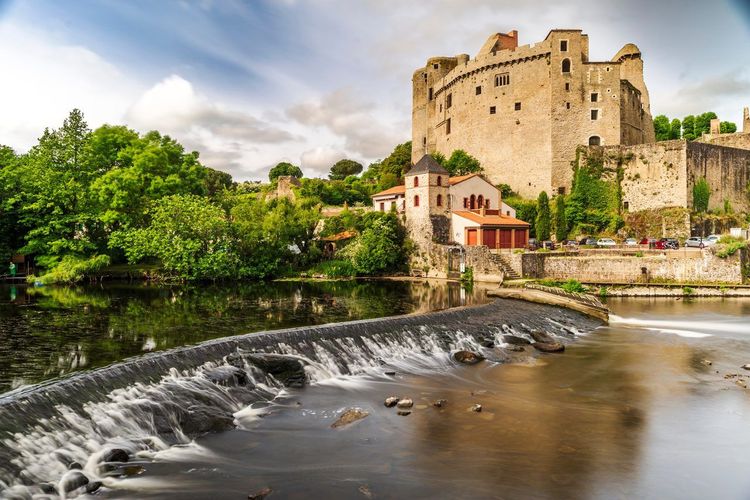
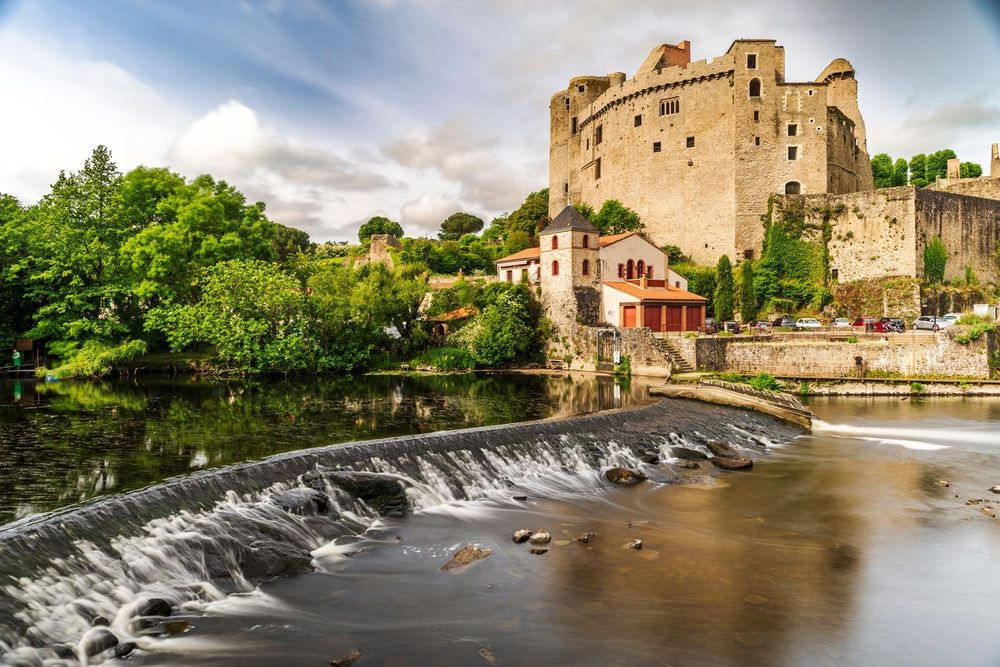
The château de Clisson (2 Rue des Chateigniers, 44190 Clisson, rated 4.5/5 on Google based on 4,222 reviews) has occupied a rocky promontory since the 13th century. Enlarged by constable Olivier de Clisson at the end of the 14th century, it became one of the most powerful strongholds in the western kingdom before being set ablaze by the infernal columns during the War of the Vendée in 1794.
It was precisely these ruins that captivated Frédéric Lemot a few years later: rather than razing the remains, he incorporated them into his vision of an Italian-style landscape, transforming the collapsed towers into a picturesque backdrop worthy of a painting. The site, now classified as a "Grand Heritage Site of Loire-Atlantique", can be visited in just under an hour. You climb the walkway to look out over the town and its orange rooftops, then descend to the main courtyard where a chapel and a well still stand.
Admission is around 7 euros, with a reduced rate for under-18s. Opening hours vary considerably by season: aim for a late-morning visit, when the raking light on the grey stone is particularly photogenic. A paper audio guide is available at the entrance to place each tower within the site's chronology.
2. The Domaine de la Garenne Lemot, Italy in Loire-Atlantique
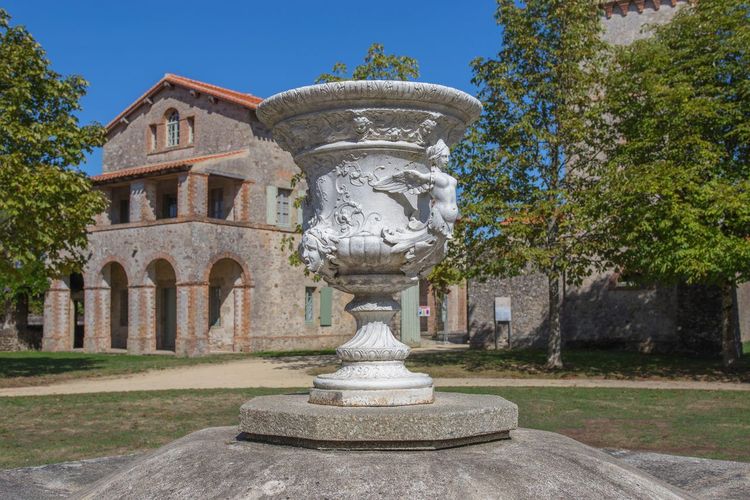
Located just across from the château, on the other side of the Sèvre, the domaine de la Garenne Lemot (Chemin de la Garenne, 44190 Gétigné, rated 4.6/5 on Google based on 1,427 reviews) is a 21-hectare landscaped park conceived at the beginning of the 19th century by sculptor François-Frédéric Lemot, who was fascinated by his years spent in Italy.
Lemot installed a neoclassical villa inspired by Tuscan residences, a temple dedicated to Vesta, an artificial grotto, and dozens of antique or neoclassical statues scattered among the foliage. The path follows a deliberately irregular route, designed to open up viewpoints over the château, the river, and the vineyard hills. Allow an hour and a half for a full circuit without stopping, double that if you enter the villa during a temporary exhibition.
Access to the park is free year-round, making it a logical stop after the paid château visit. Families often picnic on the lawns near the temple, while photography enthusiasts prefer late afternoon, when the raking sun lights up the south facade of the villa. A path connects the park directly to the old bridge, allowing you to visit both sites back to back without returning to your car.
The more curious will extend their visit to the gardener's house, converted into a small interpretation centre, where a few panels trace the genesis of the estate and the life of Lemot. It is also one of the rare spots in Clisson where, from a single vantage point, you can see the medieval town, its ruins, and its Italian setting layered together without transition.
3. The Old Bridge and the Banks of the Sèvre Nantaise
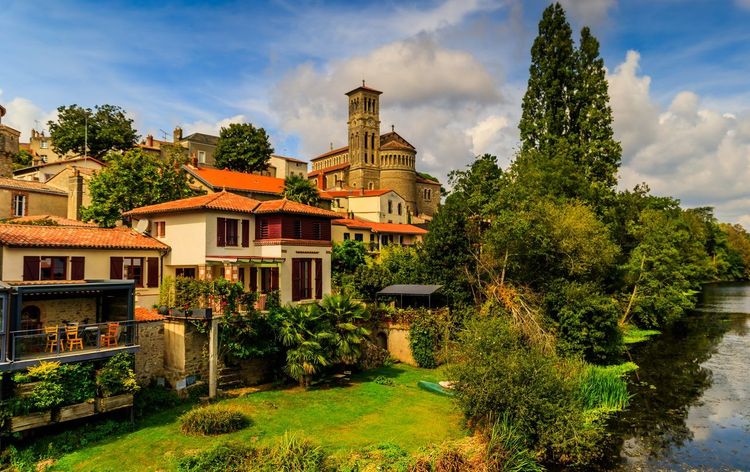
The pont Saint-Antoine (Pont Saint-Antoine, 44190 Clisson), rebuilt after the revolutionary destruction, offers one of the most photographed viewpoints in town looking onto the château and its ruins suspended above the water.
From the stone deck, you can see at once the gutted towers, the Italianate facades of the village, and the green reflections of the Sèvre Nantaise, often dotted with canoes in summer. A small staircase leads down to a shaded riverside path, ideal for a break away from the bustle of the centre. If you are looking to extend the walk beyond the footpath, the Ryo audio-guided tour follows the river upstream, explaining the history of the town's reconstruction viewpoint by viewpoint. The best time to photograph the whole scene is late in the day, when the golden light catches the limestone of the château.
4. The Italianate Alleyways of the Historic Centre
The centre of Clisson concentrates the essence of the setting envisioned by Lemot: ochre and terracotta facades, arcades, Roman-tiled roofs, and sculpted cornices — an architectural vocabulary completely foreign to the rest of the département.
Walking up from the bridge towards the place du Minage, you pass several houses built in the early 19th century by owners seduced by the Tuscan style of the villa Lemot. Certain streets, such as the rue de la Vallée, have retained their original paving and their narrow vistas onto the church steeple. The best way to appreciate this architecture is to compare, just a few dozen metres apart, a typically Breton 18th-century house and an Italianate 19th-century facade: the contrast is immediately striking, even without any particular knowledge of art history.
Take time to look up at the details: layered genoese cornices beneath the rooflines, basket-handle window frames, pigmented render imitating Italian stone. This streetscape is not an isolated whim but the result of a genuine urban programme, encouraged in the early 19th century by the Cacault brothers and by Lemot, who dreamed of turning Clisson into a small artists' colony in the image of Rome. You will come across, as you wander the lanes, several studios and galleries that still carry on this creative vocation today.
5. The Halles de Clisson and Their Friday Market
The Halles de Clisson (Place du Minage, 44190 Clisson, rated 4.6/5 on Google based on 23 reviews), a 19th-century timber-framed structure resting on stone pillars, hosts a local producers' market every Friday morning.
Market gardeners, cheesemakers, and winemakers from the Vignoble Nantais set up from 8 a.m., and the atmosphere remains decidedly more local than touristic. Arrive before 10 a.m. to still find the best seasonal fruit stalls and avoid the mid-morning rush. Under the timber frame, a few benches let you taste on the spot a piece of Nantes cheese or a Vendée brioche bought two stalls along, before heading off to explore the centre.
6. The Chapelle du Sacré-Cœur, a Viewpoint over the Town
Clinging to the hillside that overlooks the château, the chapelle du Sacré-Cœur (Rue de la Vallée, 44190 Clisson) offers an open viewpoint over the tiled rooftops and the meander of the Sèvre.
The climb from the centre takes about ten minutes on foot along a path that can be steep, but is rarely busy even in high season. From the top, you take in at a glance the logic of the site: the château on its promontory, the villa Lemot directly opposite, and the Sèvre that separates as much as it connects the two banks. Bring a water bottle, as no water points are provided along the route. This makes a quietly rewarding complement to the château visit, best done early in the morning or at the end of the day.
7. Paddling Down the Sèvre Nantaise by Canoe-Kayak
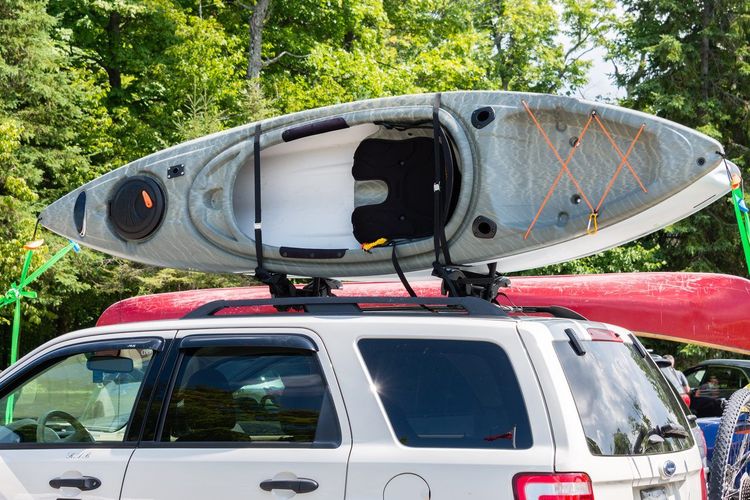
A few hundred metres from the bridge, the Gétigné Canoë Kayak base (Base nautique, 44190 Gétigné, rated 4.4/5 on Google based on 127 reviews) rents boats to paddle upstream or downstream along the river beneath the château walls.
The classic route lasts between one hour and one and a half hours depending on the direction of the current, and requires no prior experience: the rapids are virtually non-existent and the flow remains calm for most of the year. You paddle under the arches of the old bridge, along the gardens of the Garenne Lemot, and then upstream towards a small weir where it is possible to stop for a swim in summer.
It is best to hire in the morning: the light is softer for observing the ruins from the water, and school or family groups generally arrive after midday. Expect to pay between 15 and 20 euros per person for a free one-hour hire, slightly more if you opt for a guided outing with commentary on the river's wildlife.
This activity remains one of the rare ways to see the château from an angle that most visitors never experience: from the river, the two main towers seem to float above the water, an effect heightened early in the morning when mist still lingers over the Sèvre.
8. Tasting a Muscadet in a Local Wine Cellar

Clisson sits at the heart of the Muscadet Sèvre-et-Maine appellation, and several wine estates open their cellars for tasting just a few minutes' walk from the historic centre.
The Cave Granit (8 Rue de la Loire, 44190 Clisson, rated 4.8/5 on Google based on 141 reviews) offers guided tastings of the melon de Bourgogne grape variety, with an explanation of the sur lie ageing that characterises the local muscadet.
A tasting of three to four wines generally lasts around thirty minutes and rarely costs more than 10 euros, or nothing at all if you leave with a few bottles. Book the day before in high season, as most of these estates operate on a family welcome basis with limited opening hours.
9. Strolling Through the Bois de la Garenne and Parc Henri IV
A wooded extension of the domaine Lemot, the Bois de la Garenne (Chemin de la Garenne, 44190 Clisson, rated 4.6/5 on Google based on 1,427 reviews) offers shaded paths away from the sculptures and the neoclassical villa.
You encounter fewer visitors here than in the main park, making it a good choice for a quiet picnic or a midday nap in the shade in the height of summer. The parc Henri IV, nearby, rounds off the area with a few benches facing the river: a simple, unpretentious spot, but one where the silence offers a pleasant contrast to the bustle of the town centre during the tourist season. Back in Nantes, the city's own audio-guided tour makes a fitting complement to this quieter interlude.
10. Walking Along the Towpath
The towpath running alongside the Sèvre Nantaise offers a flat, shaded walk, accessible to pushchairs and people with reduced mobility on the section closest to the centre.
Allow around 45 minutes for a return walk to the first mill upstream of the bridge. The route passes through several former industrial sites linked to weaving, an activity that made Clisson prosperous before the Revolution, now simply marked by a few discreet information panels. Along the way, you pass former spinning mills that have been converted, and several millraces still visible today, remnants of the era when the force of the river powered mills and workshops. For the more energetic, the path continues to the outskirts of Gétigné, around a good extra hour of walking there and back, entirely in the shade of the tree canopy.
11. The Place de la Trève and the View over the Bridge
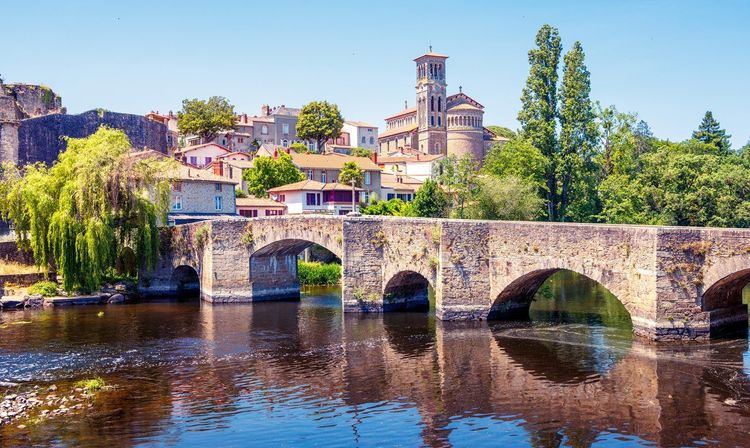
On the left bank, the place de la Trève (Place de la Trève, 44190 Clisson, rated 4.3/5 on Google based on 84 reviews) brings together several half-timbered houses and offers one of the best angles looking onto the pont Saint-Antoine with the château in the background.
A few café terraces line the square, handy for a mid-visit break. If you are following the audio-guided tour of Clisson, this is generally one of the recommended stopping points for taking in the whole site before crossing the river: the commentary here explains how Lemot orchestrated, from this bank, the staging of the ruined château.
12. Clisson's Metal Side: The Hellfest Site
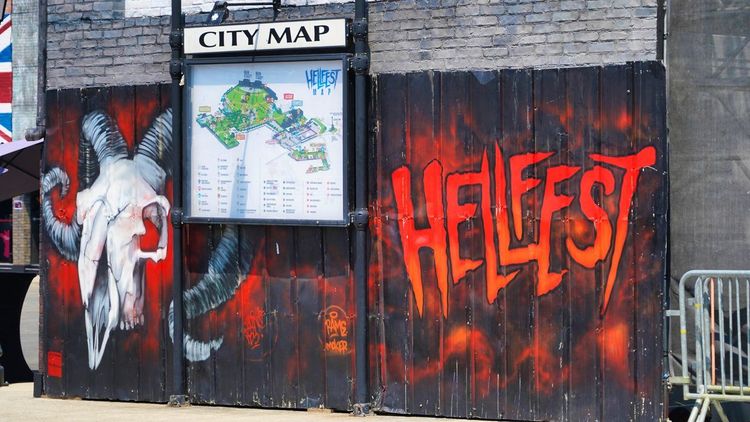
Every year since 2006, in late June, the Hellfest site (Route de Saint-Crespin, 44190 Clisson, rated 4.8/5 on Google based on 5,690 reviews) welcomes around 60,000 festival-goers per day over four days, totalling nearly 200,000 cumulative entries, for one of the world's largest metal festivals.
Outside the festival period, the grounds revert to agricultural use and are not open to visitors, but the Hellfest's imprint remains visible year-round in the town's identity: shops, murals, and bars frequently display nods to the event. If your visit coincides with the festival dates, be aware that accommodation books up several months in advance and that traffic around the centre is severely disrupted.
13. Where to Eat in Clisson: Some Good Tables
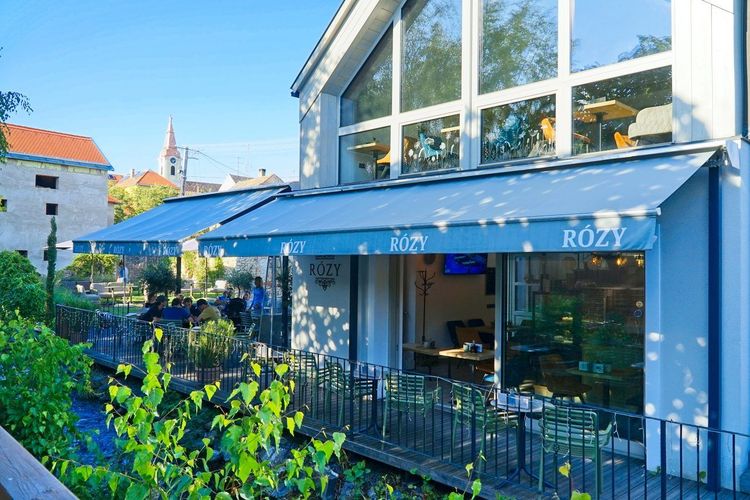
Between sightseeing, Clisson has no shortage of addresses to recharge, from the neighbourhood bistro to the more gastronomic restaurant set facing the river.
The restaurant La Cascade (Rue de la Sèvre, 44190 Clisson, rated 4.5/5 on Google based on 1,767 reviews), frequently mentioned by visitors spending the day, serves seasonal cuisine with a view over the water, ideal after a morning of walking between the château and the domaine Lemot.
For a quicker lunch, several crêperies and cafés line the place du Minage and the place de la Trève, with terraces that are highly sought after from the first warm days. Book ahead if you are aiming for a weekend lunch in high season: tables with a river view go fast, particularly from May to September. Lovers of local produce will prefer a picnic put together at the Friday market, to be enjoyed on the lawns of the Bois de la Garenne or along the banks of the Sèvre.
14. A Walk Through the Vignoble Nantais Around Clisson

Beyond the historic centre, Clisson acts as a natural gateway to the Vignoble Nantais, whose vine-covered hills begin literally on the edge of town.
By bike or by car, several waymarked routes link wine-producing hamlets, isolated chapels, and small family estates open for tasting without a reservation. The road between Clisson and Gorges, for example, winds through a hillside landscape dotted with restored windmills, remnants of an agricultural activity now largely devoted to viticulture.
This outing lends itself particularly well to a half-day in addition to visiting the château and the domaine Lemot: you leave the Italianate architecture behind for a more classic rural landscape, before returning to town for dinner. Allow around two hours for a cycling route of about twenty kilometres, manageable without any particular training given the moderate elevation changes.
If you are travelling without a bike, several rental shops in the town centre offer electric bikes by the day, a comfortable option for tackling the few climbs between hamlets. It is also an opportunity to understand why Loire-Atlantique remains, even today, one of the rare historic Breton départements to produce wine in significant quantities.
15. Extending the Excursion to Vallet and Tiffauges
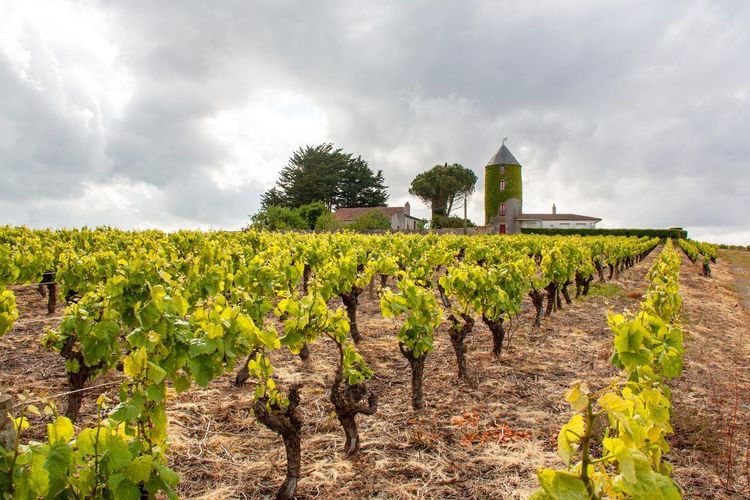
About fifteen minutes away by car, Vallet (Place Charles de Gaulle, 44330 Vallet) is often described as the capital of muscadet, with a wine museum and an even greater concentration of wine estates than Clisson.
The town regularly organises wine markets and open-cellar days at the winemakers, particularly around the harvest in September. It is a logical stop if you enjoyed the tasting at Cave Granit and want to compare several muscadet styles in a single afternoon.
Further south, in the Vendée, the château de Tiffauges (Rue du Château, 85130 Tiffauges, rated 4.6/5 on Google based on 4,768 reviews) rounds off the picture with a medieval fortress associated with the dark figure of Gilles de Rais, companion-in-arms of Joan of Arc who became, in popular legend, a source of inspiration for the tale of Bluebeard.
Allow around 45 minutes by car from Clisson one way. This detour is particularly suited to families travelling with children curious about medieval history, as the site regularly offers activities and costumed demonstrations during the summer season. If your stay is limited to a single day, it is better to save this detour for a second trip to the region rather than combining it with all the Clisson sights.


FAQ
How long does it take to visit Clisson?
A full day is enough to see the essentials: the château, the domaine de la Garenne Lemot, the historic centre, and a tasting break. To add canoeing or a trip to Vallet, plan for a two-day weekend instead.
What is there to do in Clisson on a Sunday?
The château and the domaine de la Garenne Lemot remain open most Sundays depending on the season. However, the Halles market takes place on Fridays: opt instead for a stroll along the Sèvre or a wine cellar tasting, often accessible without a reservation on that day.
Is visiting Clisson in 1 day realistic?
Yes, provided you prioritise. The château in the morning, the domaine de la Garenne Lemot late morning, lunch in the town centre, then canoeing or a walk through the vineyards in the afternoon make for a realistic itinerary without excessive rushing.
Is Clisson linked to the Hellfest?
Yes, the Hellfest site is located in the commune of Clisson and has hosted the festival every year in late June since 2006. Outside festival dates, the grounds are not open to visitors.
Is the château de Clisson free to visit?
No, access to the ruins is paid, around 7 euros at full price, with a reduction for young visitors. However, the domaine de la Garenne Lemot and the streets of the historic centre can be visited freely.
What is there to do in Clisson with children?
Canoeing on the Sèvre, the sweeping lawns of the domaine de la Garenne Lemot, and the fairy-tale atmosphere of the château generally delight families. The detour to the château de Tiffauges rounds off the day nicely for children passionate about medieval history.
Clisson rewards visitors who take the time to venture beyond the historic centre alone: between the château ruins, the Italian-style hills of the domaine Lemot, and the first vines of the Vignoble Nantais, the town packs a density of landscapes into a small area rarely matched elsewhere in the département. To explore at your own pace, the Ryo app offers an audio-guided tour of Clisson that connects these different sites on foot, explaining step by step how a Breton market town ended up looking like Tuscany. The Ryo audio guide triggers automatically at each point of interest, leaving you free to wander without keeping your eyes glued to a map.
Whether you come for a day between château and river or for a longer weekend stretching into the vineyards, Clisson lends itself equally well to a rushed visit and a more contemplative stay. The best way to discover it is still to walk, from bridge to hilltop, letting the chance of its Italianate alleyways guide part of your itinerary.