© Shutterstock
 Votre guide Ryo
Discover the 8 best thermal spas in France to relax
France has more than a hundred thermal spas spread across the country, offering cures and treatments recognized for their therapeutic virtues. Between mountains and seaside, these wellness destinations attract thousands of spa-goers each year seeking relief for their ailments or simply relaxation. Here is our selection of the 8 best thermal spas in France, true havens of peace where natural mineral water and exceptional heritage combine for your greatest well-being.
1. Vichy: the queen of spa towns
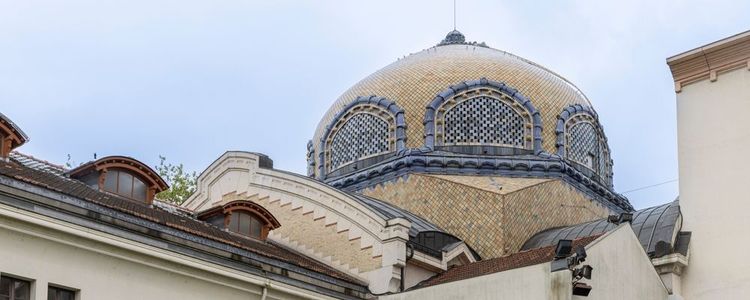
French capital of thermalism, Vichy in Allier embodies French thermal lifestyle art. Inscribed on UNESCO's World Heritage List as a "Great Spa Town of Europe", this exceptional destination has attracted prestigious clientele for centuries who came to benefit from its beneficial springs. Napoleon III himself contributed to the city's influence by staying there regularly.
The Vichy Thermal Baths today consist of two establishments: the Callou Thermal Baths and the Dômes Thermal Baths. Open Monday to Saturday, they offer conventional thermal cures for rheumatology, digestive disorders and metabolic diseases. Vichy thermal water, among the most mineralized in France, springs naturally at temperatures between 15 and 74°C depending on the sources.
Download the audio-guided circuit to discover Vichy on foot and independently
To complete your thermal stay, don't hesitate to visit Vichy by following our audio-guided itinerary. Discover the 27 places of interest in this Belle Époque city, from the majestic Hall des Sources to the Palace of Congresses-Opera, passing through the splendid villas of the "Golden Triangle". The exceptional architecture of the city, the Allier Parks and the lake will charm you as much as its beneficial waters. Let yourself be guided through the fascinating history of this emblematic thermal city that has welcomed the greatest personalities.
2. Dax: France's premier thermal spa
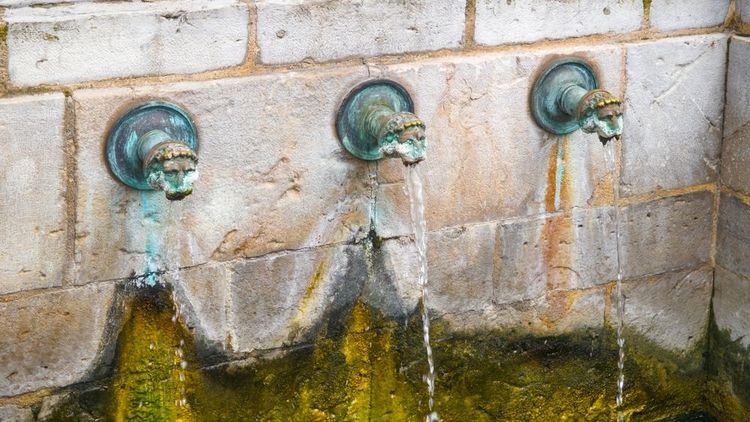
In the Landes department, Dax and Saint-Paul-lès-Dax constitute the largest concentration of thermal establishments in France with no less than 16 centers. This thermal destination in the Landes welcomes more than 60,000 spa-goers each year, attracted by its famous unique thermal mud, the "peloid".
Dax's particularity lies in its thermal peloid, a mud obtained after a maturation process of several months in thermal waters rich in minerals. Applied as hot poultices, this mud has exceptional anti-inflammatory and analgesic properties, particularly effective for relieving rheumatic disorders, arthritis and chronic pain. Dax thermal waters, naturally hot and hyperthermal (60°C at emergence), are also used in phlebology.
Among the most renowned establishments, we find the Adour Thermal Baths, the Christus Thermal Baths, the Borda Thermal Baths or the Bérot Thermal Baths. Each offers modern infrastructure and treatment protocols adapted to different pathologies.
3. La Roche-Posay: the reference in thermal dermatology
Located in Vienne, in the Nouvelle-Aquitaine region, La Roche-Posay has established itself as the reference dermatological thermal spa in France. For more than five centuries, its thermal waters with unique soothing properties have been used to treat skin conditions.
The La Roche-Posay Thermal Center is exclusively specialized in dermatology. Its thermal water, weakly mineralized but rich in selenium and silicates, has exceptional healing, soothing and anti-inflammatory virtues. It is particularly effective for treating eczema, psoriasis, burn sequelae, skin cancer treatment aftercare, as well as many other dermatological conditions.
The thermal establishment welcomes nearly 10,000 spa-goers each year and offers treatment protocols adapted to each pathology: sprays, filiform showers, baths, local applications or pool treatments. The La Roche-Posay cosmetic brand, developed from thermal water, also allows extending the benefits of the cure at home. The village of La Roche-Posay, with its medieval castle and picturesque streets, offers a pleasant setting for a restorative thermal stay.
4. Balaruc-les-Bains: the Mediterranean thermal pearl
The only thermal spa located on the Mediterranean coast, Balaruc-les-Bains in Hérault benefits from a privileged location on the shores of the Thau lagoon, facing Sète. Ranked as France's premier thermal spa in terms of accommodation capacity, it receives nearly 50,000 spa-goers each year.
The thermal establishment of Balaruc-les-Bains, ultramodern with its 15,000 m² of technical facilities, specializes in the treatment of rheumatology and phlebology. Its thermal waters, among the hottest and most mineralized in Occitania, emerge at 49°C and contain a high concentration of trace elements. This exceptional mineral richness makes it particularly suitable for osteo-articular and venous pathologies.
The Mediterranean setting offers a sunny climate year-round, ideal for fully enjoying your thermal cure. The facilities include five collective treatment pools of 1,000 m², seven individualized hydrotherapy sectors, as well as a relaxation and wellness area. The proximity to the sea and the Thau basin also allows discovering local gastronomic treasures, particularly Bouzigues oysters.
5. Évian-les-Bains: the thermal spa of Lake Geneva
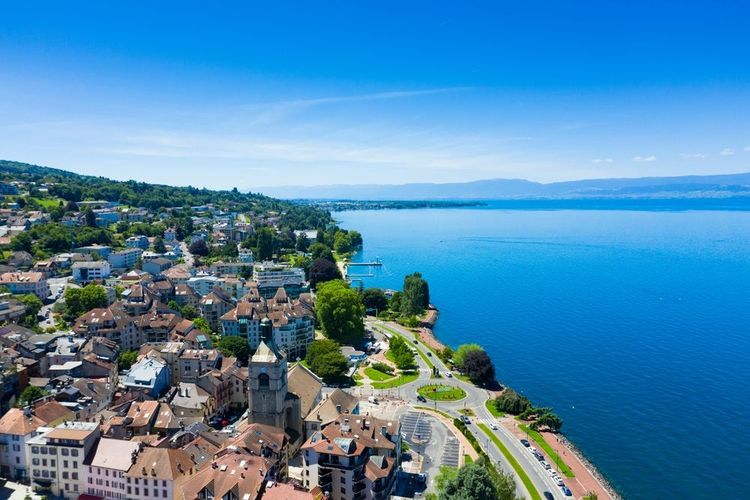
Worldwide known for its bottled mineral water, Évian-les-Bains in Haute-Savoie is much more than a simple brand: it's a true prestigious thermal spa, nestled on the shores of Lake Geneva facing the Swiss Alps. Since 1827, the city has exploited the therapeutic virtues of its natural mineral water.
The Évian Thermal Baths offer conventional thermal cures for rheumatology, urinary disorders and metabolic diseases. Évian mineral water, of bicarbonated calcic and magnesic type, is recognized for its exceptional purity and balanced mineral composition. It is particularly indicated for digestive disorders, kidney conditions and joint problems.
The enchanting setting of Évian-les-Bains, with its Belle Époque palaces, luxuriant gardens and breathtaking view of Lake Geneva and the mountains, makes it a high-end thermal destination. The city also offers many cultural and sports activities: casino, golf, water sports, hiking or boat excursions on the lake. If your spa stay begins or ends in Paris, our 23-stop audio-guided walk from the Louvre to Notre-Dame makes a gentle bridge between city and lake.
6. Amélie-les-Bains: the thermal jewel of the Catalan Pyrenees
In the heart of Vallespir, in the Pyrénées-Orientales, Amélie-les-Bains-Palalda is a charming thermal spa that combines therapeutic effectiveness with Mediterranean gentleness. Located 45 minutes from Perpignan and near the Spanish border, this destination benefits from a privileged climate and preserved natural setting.
The Amélie-les-Bains Thermal Baths, with their magnificent Roman-style buildings over 7,000 m², specialize in rheumatology and respiratory tract treatments. The thermal waters, of sulfurous bicarbonated chlorinated sodic type, emerge between 35 and 55°C. They are particularly effective for treating arthritis, inflammatory rheumatism, as well as ENT and bronchial conditions.
The exceptional architecture of the Roman Thermal Baths, with their majestic vaults and columns, creates a unique atmosphere conducive to relaxation. Spa-goers can also enjoy the Thermal Spa for complementary wellness treatments. The surrounding region offers beautiful discovery opportunities: perched villages of Vallespir, Saint-Martin-du-Canigou abbey, or hiking in the Canigou massif.
7. Cauterets: thermalism in the heart of the Pyrenees National Park
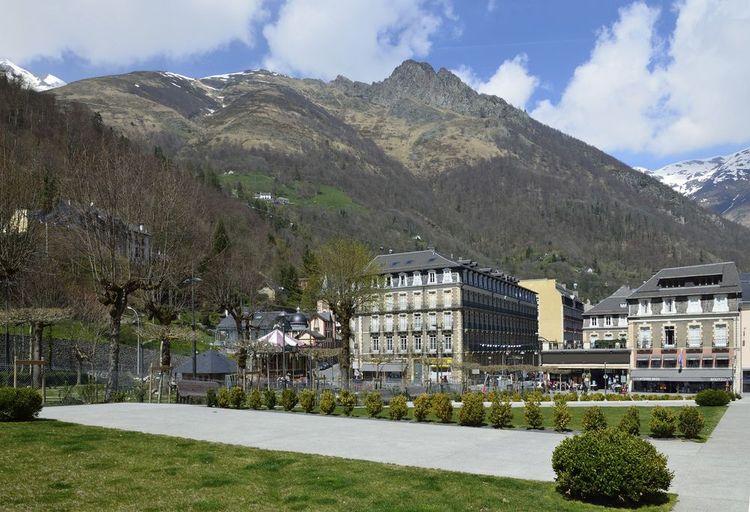
Perched at 950 meters altitude in the Hautes-Pyrénées, in the heart of the Pyrenees National Park, Cauterets is an exceptional mountain thermal spa. This unique destination combines ancestral thermalism with mountain activities, summer and winter.
Cauterets has two thermal establishments: the César Thermal Baths and the Children's Pavilion, specially dedicated to young spa-goers. The resort specializes in rheumatology and respiratory tract treatments. Its sulfurous sodic thermal waters, alkaline and of deep origin, naturally spring between 55 and 60°C and have exceptional mineralization particularly adapted to chronic ENT and bronchial conditions.
The exceptional mountain environment of Cauterets offers pure and invigorating air, ideal for respiratory cures. In addition to treatments, spa-goers can enjoy the Les Bains du Rocher thermoludic center, with its indoor and outdoor thermal water pools. The resort also allows practicing numerous activities: hiking to Lake Gaube or Pont d'Espagne, skiing in winter, or discovering surrounding waterfalls and glacial cirques.
8. Aix-les-Bains: the Alpine Riviera
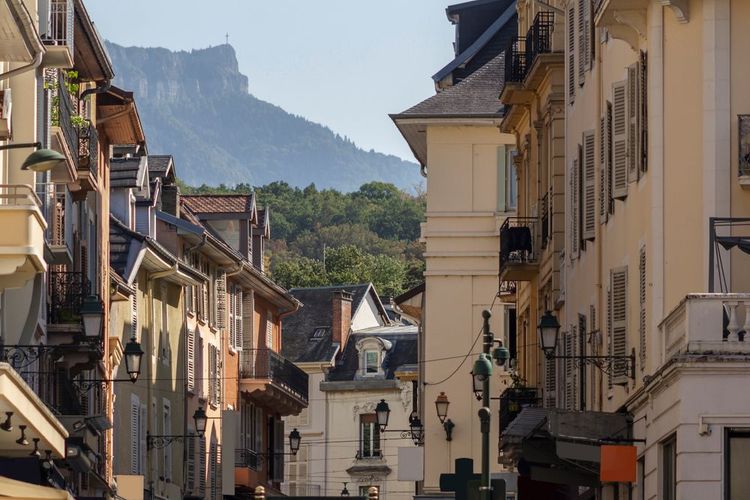
Nestled in Savoie, on the shores of Lake Bourget and at the foot of the mountains, Aix-les-Bains ranks among the oldest and most prized thermal spas in the French Alps. Its thermal history dates back to Roman antiquity, as evidenced by the remains of ancient thermal baths still visible today.
The city has two major thermal establishments: the Chevalley Thermal Baths and the Marlioz Thermal Baths. These centers offer cures in rheumatology, phlebology and respiratory tract treatments. Aix-les-Bains thermal waters, of sulfurous calcic type, naturally spring at 45°C and are particularly effective for relieving joint pain, circulatory problems and respiratory conditions.
The exceptional setting of Aix-les-Bains, between lake and mountains, offers many complementary activity possibilities: walks on the shores of Lake Bourget, hiking in the Bauges massif, or discovering the city's Belle Époque architectural heritage. To discover this Savoyard destination, follow our itinerary to visit Aix-les-Bains and its heritage treasures.
In conclusion, French thermal spas offer much more than simple medicalized cures: they provide true wellness breaks in exceptional settings, from seaside to alpine peaks. Whether you seek relief for your rheumatic pain, improvement of your venous circulation, dermatological treatment or simply a relaxing break, these eight thermal destinations will meet your expectations. Don't hesitate to consult your doctor to determine which thermal spa and orientation best correspond to your needs. To extend your discovery of French thermal heritage, also explore our Vichy audio-guided circuit, a true jewel of Belle Époque thermal architecture.
FAQ
What is the duration of a thermal cure in France?
A conventional thermal cure lasts obligatorily 18 days of treatments (3 weeks), Monday to Saturday. This duration has been defined by Social Security to guarantee the therapeutic effectiveness of treatments. There are also free mini-cures of 5, 6 or 12 days for those who wish to discover thermalism without medical prescription.
What is the cost of a conventional thermal cure?
For an 18-day conventional thermal cure, Social Security covers 65% of medical and thermal fees (thermal doctor's fees and thermal package). The remaining patient contribution is approximately 150 to 200 euros depending on orientations. Accommodation and meals are not covered, except in case of ALD (Long Duration Illness) where a flat-rate participation may be granted.
What is the best period for a thermal cure?
Most thermal spas are open from February-March to November-December. High season is generally between April and October. To avoid crowds and benefit from more advantageous accommodation rates, favor mid-season periods (April-May or September-October). Some mountain resorts like Cauterets also allow combining thermal cure with winter activities.
Can you do a thermal cure without medical prescription?
Yes, it is possible to do a free thermal cure (or mini-cure) without medical prescription. These short-duration cures (generally 5, 6 or 12 days) are not covered by Social Security but allow discovering the benefits of thermalism and recharging. However, for an 18-day conventional thermal cure with coverage, a medical prescription from your treating physician is mandatory.
What are the contraindications to thermal cures?
The main contraindications to thermal cures are: evolving or acute phase conditions (inflammatory flare-up, ongoing infection), decompensated cardiac, renal or hepatic insufficiencies, contagious infectious diseases, certain evolving cancers, and pregnancy for certain orientations. Your treating physician will evaluate your health condition before prescribing a thermal cure and determine the orientation most adapted to your pathology.
À lire également