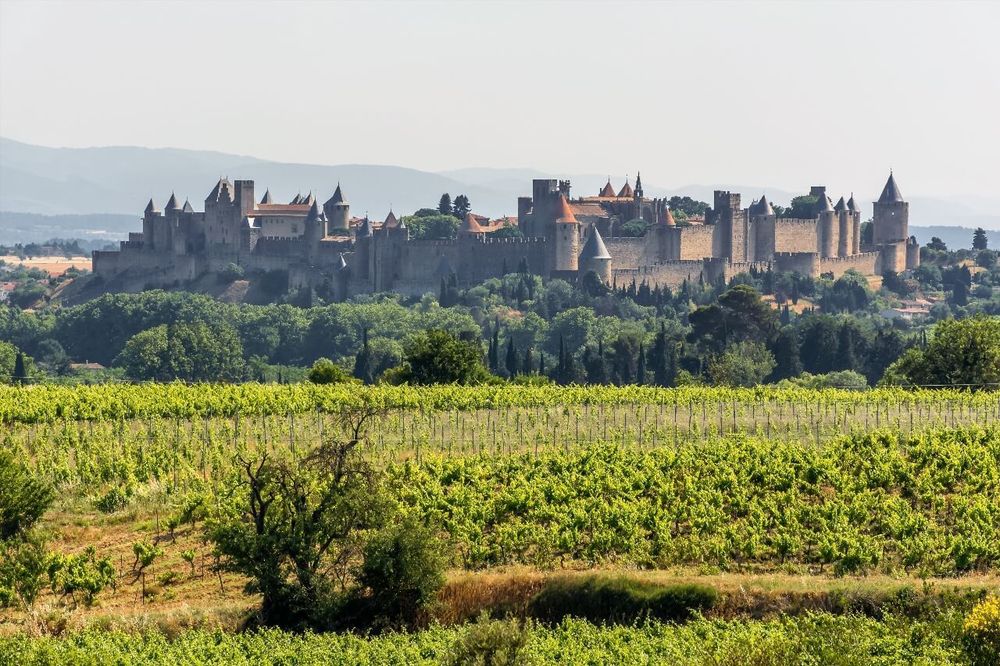
© Shutterstock
 Votre guide Ryo
Things to Do Around Paris: 20 Must-See Day Trips in 2026
There's something ironic about looking for things to do around Paris when millions of visitors do the opposite every year: they arrive in the capital and never leave. Yet, 45 minutes from Boulevard Haussmann, a château made Louis XIV so jealous that he immediately commissioned Versailles to outshine it. An hour away by train, Claude Monet planted his water lilies and then painted them for twenty-seven years without ever tiring of them. Less than two hours north, cellars carved into chalk house 300 million bottles of champagne ageing quietly in the dark. Paris remains the natural starting point for all these escapes — the Ryo Paris audio guide, with its 18 stops and 3 hours 40 minutes of discovery, is a great way to fully anchor your time in the capital before heading out to explore the surrounding region.
These twenty day trips cover very different distances: Versailles at 40 minutes, Reims at 1 hour 20 by TGV, Le Touquet at 2 hours 30 on the motorway. Some can be done in half a day — Senlis, the Chevreuse Valley, Saint-Germain-en-Laye. Others call for an overnight stay, or even two. Expect a cathedral illuminated by 176 medieval stained-glass windows whose blue remains impossible to replicate, falconry tournaments in the open air in a UNESCO-listed city, sandstone boulders in the forest where modern bouldering was born over a century ago, and a troglodyte village built into a chalk cliff above the Seine. The Paris region conceals far more than it lets on.
1. Versailles, the Palace of the Sun King
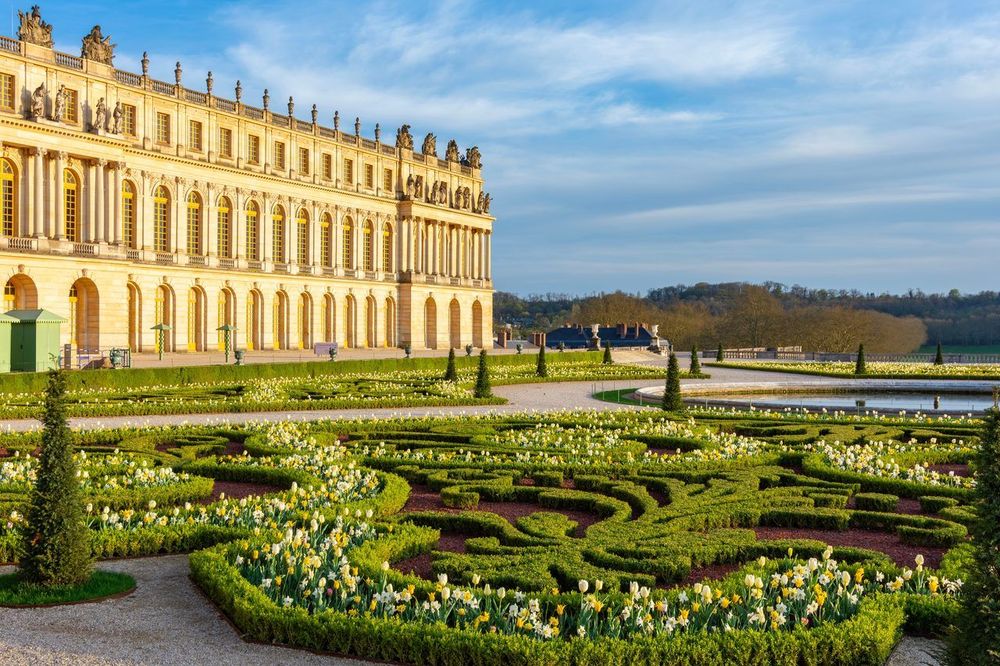
The Palace of Versailles (Place d'Armes, 78000 Versailles, rated 4.6/5 on Google based on 168,297 reviews) remains the most visited destination outside Paris, and the most frequently approached the wrong way. Most tour groups arrive around 10am, wait at the ticket counters, rush through the Grand Apartments in thirty minutes flat, and leave without ever setting foot in the Domaine de Marie-Antoinette. A few adjustments can radically transform the experience.
Built from 1661 on the orders of Louis XIV, Versailles was originally a modest hunting lodge of brick and cut stone. Over sixty years of successive construction — Le Vau and then Hardouin-Mansart for the architecture, Le Nôtre for the gardens, Le Brun for the interior décor — the Sun King turned it into the largest palace in Europe: 700 rooms, 2,000 windows, 67 hectares of formal gardens. The Hall of Mirrors, stretching 73 metres and lined with 357 mirrors reflecting the light of 20,000 original candles, is the palace's most famous space. It is also the easiest to rush through if you're not paying attention.
Plan at least 6 hours for the highlights: the King's and Queen's Grand Apartments, the Hall of Mirrors, the full grounds, and the Grandes Eaux Musicales on weekends (April to October, Saturdays and Sundays). These orchestrated fountain displays set to baroque music across the park's basins are among the most spectacular experiences in the Île-de-France region.
From Paris, the journey is straightforward: take the RER C line to Versailles-Château-Rive Gauche, a journey of 35 to 40 minutes. By car, allow 45 minutes to an hour on weekdays via the A13 and then the N10. The gardens are free on non-Grandes Eaux days — a little-known fact that makes for a budget-friendly stroll. Online booking is essential in high season: physical ticket windows can have waits of up to 2 hours in July and August.
The visit everyone skips and everyone underestimates: the Petit Trianon and the Domaine de Marie-Antoinette, located 2.5 km from the main palace across the park. These areas, far less crowded than the royal wing, include the famous Hameau de la Reine — a cluster of rustic thatched cottages and an artificial lake that the queen had built as a retreat from court protocol. The contrast with the grandeur of the main palace is striking.
Little-known bonus: visitors under 18 get free entry to the palace, as do European Union residents under 26. This information appears discreetly on entrance signs and can make the difference of a day in your budget.
2. Fontainebleau, a Royal Residence of Eight Centuries
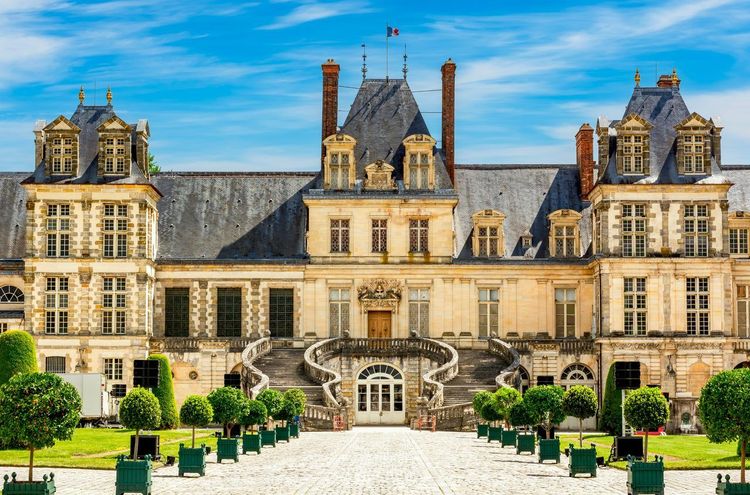
The Château de Fontainebleau (Place du Général de Gaulle, 77300 Fontainebleau, rated 4.6/5 on Google based on 30,131 reviews) suffers from a chronic injustice: located 60 km south-east of Paris, it attracts ten times fewer visitors than Versailles while spanning 800 years of continuous royal history, from Philippe Auguste to Napoléon III. It is the only château in France that every sovereign since the 12th century has occupied, extended, or profoundly remodelled.
The interior is dazzlingly rich. The Galerie François Ier, built between 1528 and 1540, is the first example of Mannerist decoration in France — stucco, paintings, and gilded woodwork intertwine in a profusion that inspired generations of European artists. The ballroom, 30 metres long and 15 metres high, remains one of the most impressive reception halls in France. The Chapelle de la Sainte-Trinité, with its marble columns and entirely painted ceiling, rounds out the list of spaces not to rush through.
Napoléon I abdicated in this château in April 1814 before his exile to the island of Elba. The Escalier du Cheval-Blanc, renamed the Escalier des Adieux, where he bade farewell to his guard, still carries the weight of that moment. The Musée Napoléon, set up in the Empress's apartments, preserves furniture and personal mementos of the imperial family.
By train, the Transilien R from Gare de Lyon connects Paris to Fontainebleau-Avon in 40 minutes (frequent trains throughout the day). By car, the A6 (Autoroute du Soleil) is direct — 50 minutes without traffic. The château and the adjacent forest justify a full day. The national museum pass applies here: if you plan to visit several national museums during the week, check whether an annual pass is worth the investment.
3. Giverny, Claude Monet's Gardens
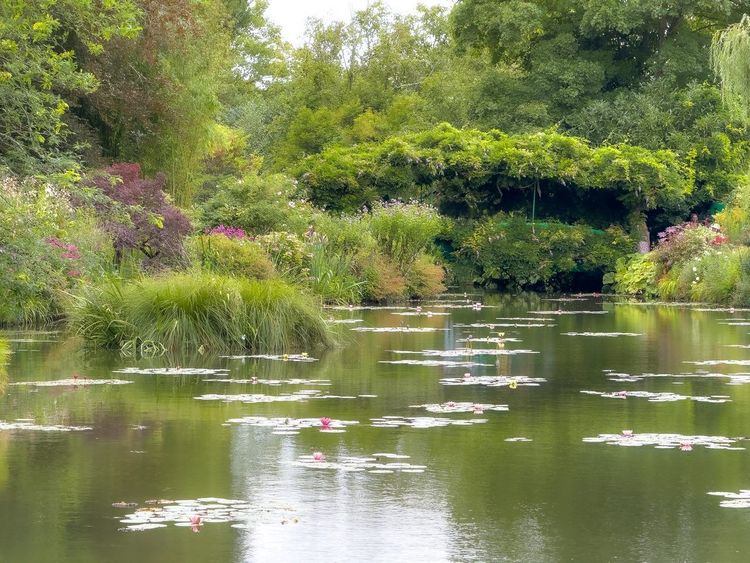
Giverny is not just a village — it is a full-scale painting. Claude Monet settled here in 1883, at the age of 42, after catching a glimpse of the hamlet from a train window on the way to Rouen. He stayed until his death in 1926 — forty-three years spent shaping his garden into the primary subject of his late work.
The estate comprises two distinct areas. The Clos Normand, in front of the pink house, features flower beds arranged according to the logic of a painter's palette: colours flow from one to the next so that every angle offers a potential composition. The water garden, reached via an underpass beneath the road, is home to the famous arched Japanese bridge draped in wisteria, the weeping willows, and the water lilies that have floated on the pond since autumn 1893. It is here that Monet painted his series of 250 Water Lilies paintings between 1896 and 1926, including the large compositions now displayed at the Orangerie in Paris.
Giverny is 80 km north-west of Paris. By car, allow 1 hour 30 via the A13. By public transport, the journey requires a connection: train from Gare Saint-Lazare to Vernon (1 hour 05), then a shuttle or bicycle for 5 km along the Seine. Bikes are available to rent at Vernon station for around fifteen euros a day; the route follows the river along a shaded path that's worth the journey in itself.
The house itself, painted pink and green, is open to visitors: blue-and-yellow kitchen with hand-painted tiles, a personal collection of Japanese prints (Hiroshige, Hokusai) hung floor to ceiling in the stairwell. Queues to enter can exceed 45 minutes in July and August — buy tickets online and arrive at opening time (9:30am) to have the garden to yourself. The gardens are open from late March to early November.
Allow at least half a day. A full day if you add the Musée des Impressionnismes in Giverny (500 metres from Monet's house), which displays works from the Giverny school and American artists who settled in the village during the same period.
4. Provins, a UNESCO Medieval City
Provins has been on the UNESCO World Heritage List since 2001, yet this town in Seine-et-Marne remains one of the least known among the general public. It is one of the happiest paradoxes in the region: an exceptionally well-preserved medieval city 80 km east of Paris, reachable in 1 hour 25 from Gare de l'Est.
The upper town of Provins retains its medieval layout almost entirely intact. The Tour César (Place du Châtel, 77160 Provins, rated 4.5/5 on Google based on 4,535 reviews), a 12th-century keep standing 44 metres tall, dominates the skyline and offers a panoramic view over the Brie plain from its battlements. The underground tunnels — over 800 metres of accessible galleries — bear witness to the town's commercial importance in the Middle Ages: Provins was one of the main venues for the Champagne Fairs, which drew merchants and bankers from across medieval Europe.
What sets Provins apart from other medieval towns is the programme of live events held throughout the season. The falconry show "L'Aigle Royal" features birds of prey flying freely above the ramparts. Knights' tournaments on horseback recreate jousting and combat with impressive historical accuracy. These shows run in spring and summer — check the official calendar before booking your day, as some are held on weekends only.
The medieval ramparts, stretching 1,200 metres, can be partly walked on foot with varied viewpoints over the lower town. The lower town is home to the 12th-century Église Saint-Quiriace and lanes of half-timbered houses that tourist crowds have yet to overrun. Ideal programme: upper town in the morning, medieval show after lunch, lower town and artisan markets in the late afternoon.
5. Chantilly, the Estate of the Princes of Condé
Chantilly brings together in a single estate everything 17th-century French nobility could dream of accumulating: a château rebuilt in the 19th century on the ruins of its predecessor, the Grandes Écuries — a listed historic monument designed to house 240 horses — a park laid out by Le Nôtre, and one of the most important painting collections in France after the Louvre.
The Musée Condé, housed within the château, holds works by Raphael, Fra Angelico, Ingres, and Delacroix, as well as 40 portrait miniatures by Jean Fouquet — an exceptional concentration in a setting that even regular Parisians tend to overlook. A particular feature of the bequest left by the Duc d'Aumale, who donated the estate to the Institut de France in 1897: the works can neither be lent nor moved. What you see here, you will see nowhere else in the world.
The Grandes Écuries, built in 1719 by Jean Aubert for the Prince of Condé who, according to legend, believed he would be reincarnated as a horse, are a spectacular monument in their own right. The Musée du Cheval housed within traces 4,000 years of the relationship between humans and horses. Equestrian shows are regularly staged in the great vaulted rotunda.
Chantilly is 50 km north of Paris, served by the Transilien H from Gare du Nord, a journey of 25 minutes. At weekends, trains run every hour. By bike from Paris, the route is long but feasible via the greenways of the Val-d'Oise for those with a full day to spare.
If you're extending your weekend in Paris, the Ryo Paris Montmartre audio tour offers an audio-guided exploration of the capital's most picturesque neighbourhood — a perfect way to wind down an evening after your day in Chantilly.
One last anecdote: crème Chantilly was invented here, according to tradition, by maître d'hôtel François Vatel during a grand dinner in 1671. The legend is probably embellished, but it pairs perfectly with a visit to an estate where everything seems designed to achieve an ideal of perfection.
6. Vaux-le-Vicomte, the Château That Made Louis XIV Jealous
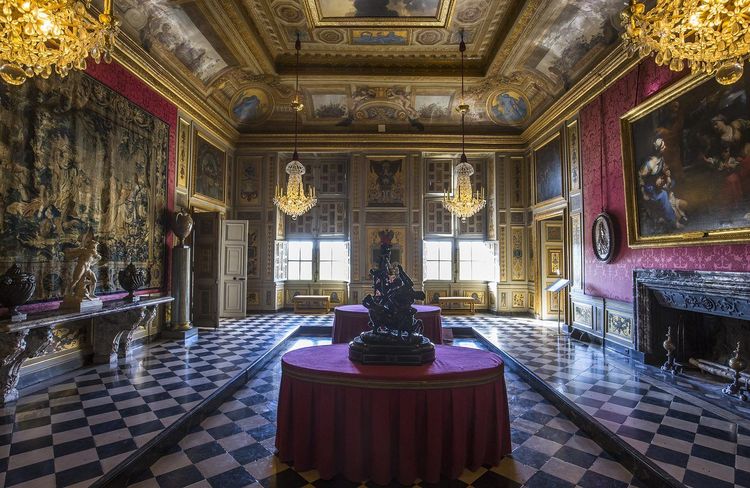
The story of the Château de Vaux-le-Vicomte (Domaine de Vaux-le-Vicomte, 77950 Maincy, rated 4.6/5 on Google based on 14,450 reviews) is one of the most romantic in France. In August 1661, Nicolas Fouquet, Louis XIV's Finance Minister, threw a lavish party to inaugurate the château he had built in five years. The reception was so dazzling — several thousand guests, fireworks, a Molière comedy written for the occasion — that the king, humiliated by a magnificence outshining the royal residences, had Fouquet arrested nineteen days later. He then seized the artists: Le Vau (architect), Le Nôtre (landscape designer), and Le Brun (interior decorator) were all commissioned to build Versailles.
The result is an intact masterpiece. Vaux-le-Vicomte was never altered after Fouquet's disgrace and retains the stylistic unity that Versailles, built in several successive phases over decades, cannot claim. The gardens extend over 33 hectares and offer breathtaking perspectives from the château's forecourt down to the Grand Canal below. The interior apartments, furnished with period pieces from the 17th century, have a rare decorative coherence.
Vaux-le-Vicomte is 55 km south-east of Paris. There is no direct public transport link: the easiest option is to take the Transilien R to Melun, then a taxi or a seasonal shuttle from the station on weekends. By car, the A6 then the D605 takes approximately 50 minutes.
The candlelit evenings (select Saturdays from May to October) are an experience in their own right: the château and its gardens are lit exclusively by candles — more than 2,000 candelabras placed along the pathways and on the façades. The light is otherworldly, the atmosphere unmatched among night-time visits in Île-de-France. These evenings sell out weeks in advance.
7. Chartres, the Cathedral of Light
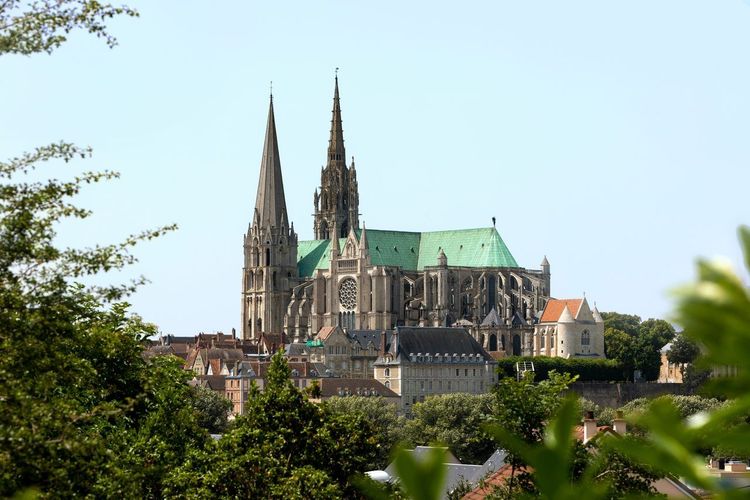
Chartres is a lesson in architectural humility. Its cathedral, rebuilt in just thirty years (1194–1220) after fire destroyed the previous one, is one of the rare Gothic buildings to have been completed with near-perfect stylistic unity — two centuries before Notre-Dame de Paris and Reims. It has been a UNESCO World Heritage Site since 1979.
What makes Chartres unique among the great French cathedrals is the near-intact preservation of its medieval stained glass: 176 windows covering more than 2,600 m², some dating from the 12th century. The Chartres blue — a colour of singular brilliance that shifts with the angle of sunlight throughout the day, whose formula remains unknown to this day — is one of the great enigmas of medieval art. Return at different times of day if you can: the cathedral is never quite the same.
The crypt, 220 metres long (one of the largest in France), descends beneath the cathedral and reveals the remains of earlier structures as well as the Puits des Saints-Forts, a site of martyrdom for the region's earliest Christians. The adjacent bishop's palace houses the Chartres Musée des Beaux-Arts, a collection of Flemish and French paintings frequently overlooked by visitors in a hurry.
Chartres is 90 km south-west of Paris, reachable in 1 hour from Gare Montparnasse (frequent direct SNCF trains). The lower town, with its medieval streets along the Eure river and the old tannery district, deserves an extra hour of wandering before catching the train back. The daily guided tours offered by the tourist office, in French and English, remain the best way to understand the iconographic programme of the windows.
8. Auvers-sur-Oise, in Van Gogh's Footsteps
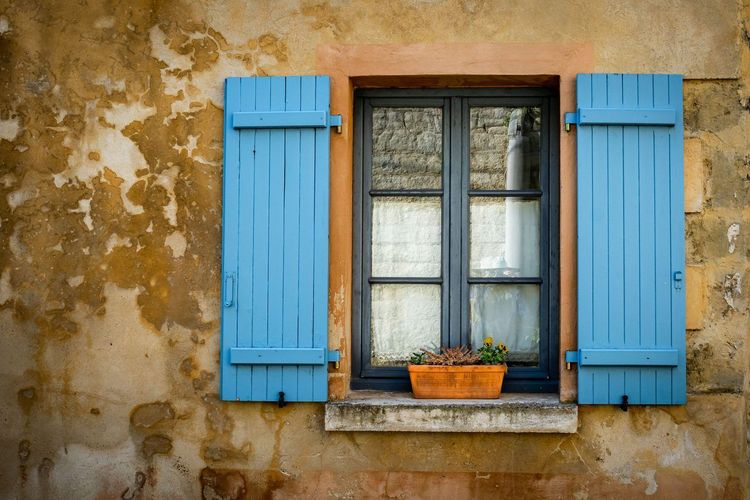
Auvers-sur-Oise is the final chapter in the life of Vincent van Gogh. He arrived here in May 1890, staying at the Auberge Ravoux (52 Rue du Général de Gaulle, 95430 Auvers-sur-Oise, rated 4.3/5 on Google based on 1,105 reviews), and painted 70 paintings in 70 days before dying of a gunshot wound in July. The village, 30 km north-west of Paris, has lived in the shadow of that brief, blazing stay ever since.
Van Gogh's room at the Auberge Ravoux has been faithfully reconstructed: 7 m² under the eaves, a single window, nothing more. This spartan space stands in stark contrast to the artist's staggering output during those seventy days — one painting a day, on average. The visit to the room lasts fifteen minutes (guided tours every 45 minutes); the Auberge also serves lunch in the period setting if you wish to extend the experience.
Van Gogh's grave — and that of his brother Theo, who died six months later of a grief he could not survive — lies in the small cemetery above the village. Two ivy-covered stones side by side, of a striking simplicity. The Église Notre-Dame d'Auvers, painted by Van Gogh in one of his most recognisable works (now at the Musée d'Orsay), is still identifiable from the same angle.
A map of the 'Van Gogh sites' is available from the tourist office, indicating the exact viewpoints from which each painting was made — a fascinating exercise in comparing the painter's vision with present-day reality. By train, the H line from Paris-Nord reaches Pontoise in 30 minutes, with a connection to Auvers (1 hour 15 in total). By car, 45 minutes via the northern ring road.
9. Reims, between Gothic Cathedral and Champagne
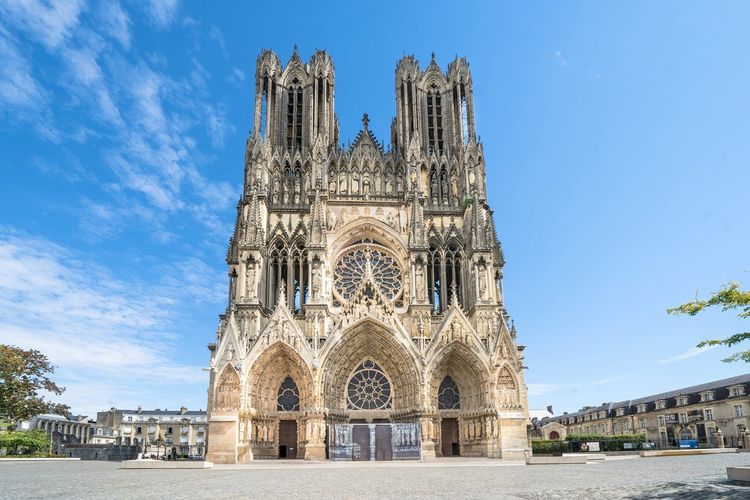
Reims offers two reasons to visit that seemingly have nothing to do with each other. The first is architectural and historical: its Gothic cathedral, the coronation site of 25 kings of France, is among the most imposing in Europe. The second is gastronomic: Reims is the logistical capital of champagne, with cellars carved into the chalk housing hundreds of millions of ageing bottles.
The Cathédrale Notre-Dame de Reims (Place du Cardinal Luçon, 51100 Reims, rated 4.8/5 on Google based on 29,245 reviews), begun in 1211, impresses first with its exterior scale: 138 metres in length, 81 metres in façade height, and more than 2,300 statues adorning the exterior. The west front, with its three deeply sculpted portals, constitutes one of the richest iconographic programmes in French Gothic architecture. Inside, the modern stained-glass windows by Marc Chagall (1974), installed in the axial chapel, enter into dialogue with 13th-century glazing — a rare exchange between medieval art and contemporary creation within a classified historic building.
The champagne cellars are the other major attraction. The Crayères of the Taittinger house, housed in a 13th-century former Cistercian abbey, descend 18 metres underground into Gallo-Roman galleries where 15 million bottles rest at a constant 12°C year-round. The Mumm and Pommery houses also offer guided tours with tastings — book online in high season.
Reims is 1 hour 20 from Paris Gare de l'Est by direct TGV (under 45 minutes on the fastest trains). An ideal destination for a generous day trip or a weekend, with the Palais du Tau (the former archbishops' palace, UNESCO-listed) adjacent to the cathedral, preserving the original statues from the façade as well as the royal coronation regalia.
To complete your exploration of the Paris region with an audio-guided walk through the capital, the Ryo Latin Quarter audio tour — Sorbonne, Panthéon, Luxembourg Gardens — is a wonderful way to round off a weekend in the region, with 23 commented stops and a little over two hours of walking.
10. Senlis, the Medieval Gem of the Oise
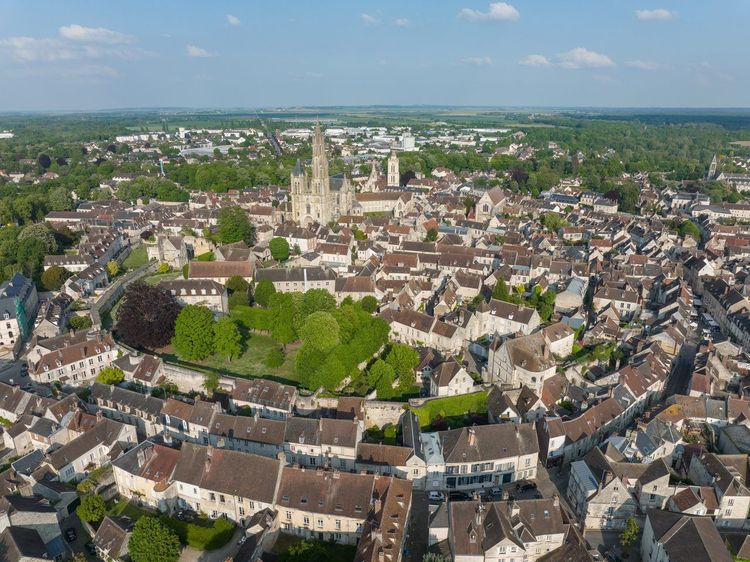
Senlis is probably the best-kept secret in Île-de-France. Just 50 km north of Paris, this town of 16,000 inhabitants preserves a medieval centre that can be explored in two hours and remembered for much longer. It is not UNESCO-listed, which means fewer organised groups and an atmosphere closer to everyday local life.
The Cathédrale Notre-Dame de Senlis (Place Notre-Dame, 60300 Senlis, rated 4.6/5 on Google based on 1,600 reviews), begun in the 12th century, is one of the oldest Gothic cathedrals in France. Its west portal depicts the Coronation of the Virgin, an iconographic programme that influenced all the major French Gothic cathedrals built after it. The 3rd-century Gallo-Roman arena, the remains of the Capetian royal castle, and the former Carmelite convent converted into a Museum of Art and Archaeology: Senlis layers its historical periods with a density rare for a town of its size.
By train from Paris-Nord (H line, direction Chantilly-Senlis), allow 35 to 45 minutes. Combining Senlis and Chantilly in a single day is perfectly feasible — the two towns are only 10 km apart, connected by taxis and, in season, a handful of bus services.
11. Disneyland Paris, the Magic 35 Minutes Away
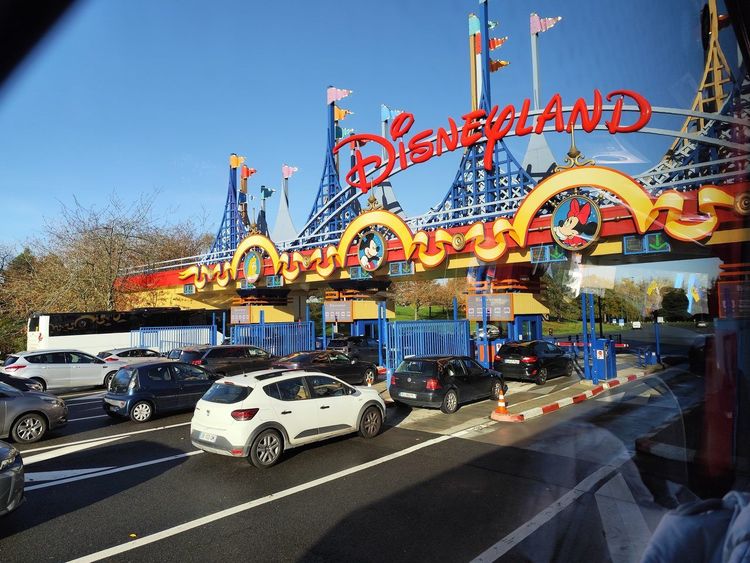
Disneyland Paris (Boulevard de Parc, 77700 Coupvray, rated 4.5/5 on Google based on 321,573 reviews) divides opinion sharply: some would never set foot inside, while others make it the heart of their Île-de-France trip. What is objective is the site's logistical efficiency. Located 32 km east of Paris and served by the RER A from Gare de Lyon (35 minutes), the resort welcomes 16 million visitors per year — Europe's top theme park.
Two distinct parks: Disneyland Park (the original park with Space Mountain, Pirates of the Caribbean, Phantom Manor) and the second park, which opened the Marvel-themed Avengers Campus in 2022 and is gradually being transformed into Disney Adventure World (new name since March 2026), with the addition of a Frozen zone and future themed worlds. A third park remains a longer-term project.
Queue times are the main obstacle. The Disneyland Paris app lets you manage Lightning Lane slot bookings and check wait times in real time. Arriving at opening — 9am for external visitors, 8am for resort hotel guests — and heading straight for the most popular attractions first remains the most effective strategy. Tuesdays and Wednesdays outside school holidays are the quietest days. Online prices range from €75 to €130 per adult depending on the period.
12. Château de Pierrefonds, the Knights' Fortress
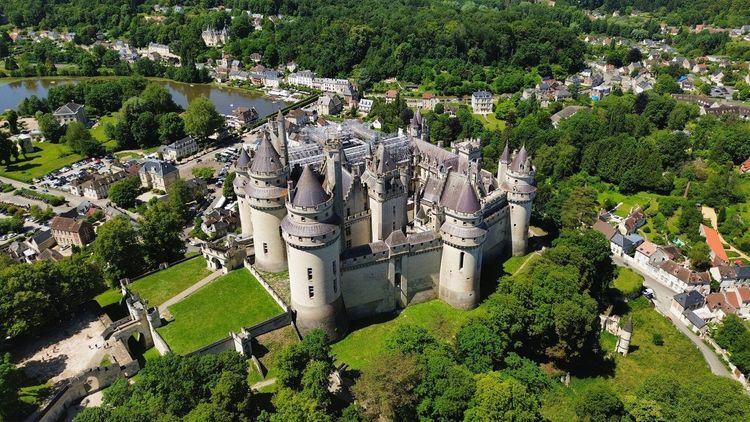
The Château de Pierrefonds (Place du Général de Gaulle, 60350 Pierrefonds, rated 4.6/5 on Google based on 15,711 reviews) captivates immediately: cylindrical towers with conical roofs, a crenellated walkway, a deep moat. It looks like a storybook knights' castle — and that impression is not entirely wrong. The building as it stands today is largely a 19th-century reconstruction commissioned by Napoléon III from the architect Eugène Viollet-le-Duc.
The original medieval fortress dated from the 14th century. Louis XIV had it dismantled in 1617 to punish its owner for seeking refuge there during a rebellion. Two centuries later, Napoléon III bought it for 2,500 francs — less than the price of a mule at the time — and tasked Viollet-le-Duc with its restoration. Viollet-le-Duc used the project to experiment with his theories on medieval reconstruction: the result is more romantic than scholarly, but visually striking in its coherence.
The interior is open to visitors: the Salle des Preux (a gallery of statues of medieval heroes), the neo-Gothic Chapelle Saint-Marc, and the unfinished imperial apartments (Napoléon III died before the work was completed). The château served as a filming location for the British series Merlin (2008–2012), giving it an unexpected international profile in English-speaking countries.
Pierrefonds is 80 km north-east of Paris, in the Compiègne forest. By car (about 1 hour 15), the route passes through dense forests and ponds. By train from Paris-Nord to Compiègne (45 minutes), then bus or taxi for 15 km.
13. La Roche-Guyon, a Troglodyte Village on the Banks of the Seine
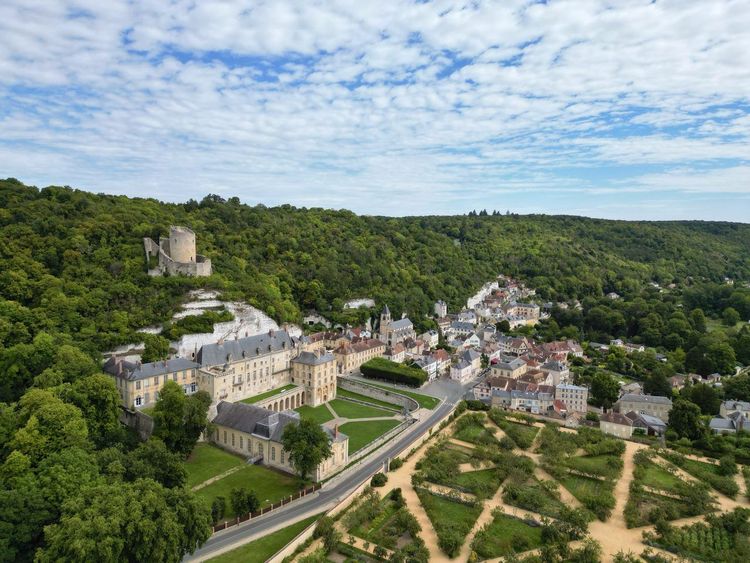
La Roche-Guyon holds the label of one of France's Most Beautiful Villages, and is probably the least well-known destination in this guide. Located 75 km west of Paris in the Vexin français, the village stretches at the foot of a chalk cliff sculpted by the Seine over millions of years.
The château is partly troglodyte: cellars, stables, and several rooms were carved directly into the cliff. A tunnel cut through the chalk connects the 12th-century medieval keep, perched at the top, to the 18th-century classical château below. The climb to the keep takes 15 minutes on foot and rewards with an absolutely exceptional view over the bend of the Seine. Difficult to reach without a car, La Roche-Guyon is best visited by car or by bike via the Véloscénie route from Paris.
14. Parc Astérix, the Gaulish Alternative
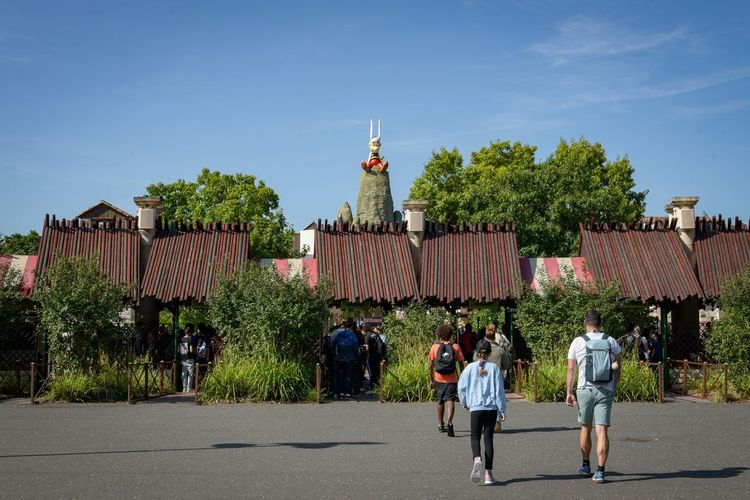
The Parc Astérix (Route Nationale 36, 60128 Plailly, rated 4.4/5 on Google based on 81,637 reviews) is the French alternative to Disneyland, with its own identity rooted in the Gaulish world of Goscinny and Uderzo. Located 35 km north of Paris and reachable in 45 minutes via the A1 motorway, it remains less crowded than Disneyland and cheaper.
The park offers around fifty attractions, including the wooden roller coaster Tonnerre de Zeus and Toutatis, the hypercoaster that opened in 2023 and reaches speeds of over 100 km/h — one of the fastest rides in France. Live shows (gladiators, dolphins, Roman circus games) round out the offer. Average price: €50 to €65 depending on the season, with frequent discounts through supermarkets and employee benefit schemes. There is no direct public transport from Paris: seasonal shuttles run from Roissy-Charles de Gaulle RER B station.
One day is enough to cover the essentials. July and August weekends are the busiest periods — opt for a weekend in June or early September for better conditions.
15. Fontainebleau Forest, the Birthplace of Bouldering
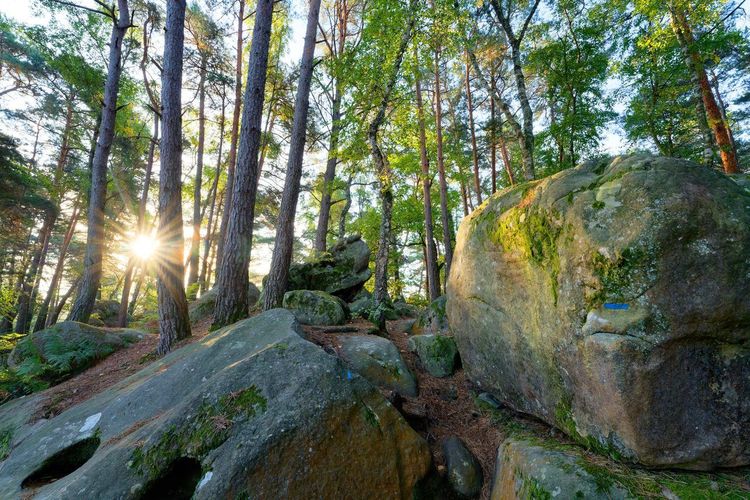
The Fontainebleau forest covers 25,000 hectares south-east of Paris and conceals a unique playground: the sandstone boulders scattered across the ground since the last ice age are the historic birthplace of bouldering. It was here, in the 1870s–1900s, that Parisian mountaineers came to train between alpine expeditions. The site is now frequented by climbers from around the world.
For non-climbers, the forest offers 600 km of waymarked trails, including the GR11 which crosses the entire massif, picnic areas, ponds for summer swimming (the Roches lake near Arbonne-la-Forêt), and mushroom-rich woodland in autumn. The Cuvier-Rempart massif and the Gorges de Franchard are the most spectacular areas for hiking. The forest's riding centre offers horse rides of one to three hours on various circuits.
By train, the same Transilien R that serves the château stops at Fontainebleau-Avon — the forest begins practically at the station exit, a ten-minute walk away. Combining the château in the morning and the forest in the afternoon makes for a full and varied day. To plan your other day trips from Paris, our weekend guide around Paris lists itineraries organised by duration and theme.
16. Chevreuse Valley, the Countryside at Paris's Doorstep
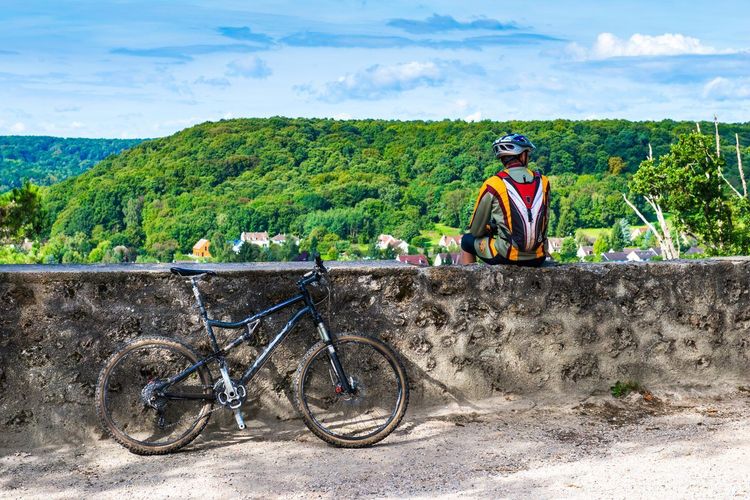
The Chevreuse Valley is the most accessible green escape from Paris. The Regional Natural Park covers 67,000 hectares of forests, ponds, manor houses, and châteaux across the Yvelines and Essonne departments, 30 to 50 km south-west of Paris, reachable from the capital via the RER B to Saint-Rémy-lès-Chevreuse.
The valley lends itself to many activities throughout the seasons. By bike, the GR de Pays de la Haute Vallée de Chevreuse links several historic villages: Chevreuse (a medieval castle), Dampierre (a 17th-century classical château by Hardouin-Mansart), and the Vaux-de-Cernay (a 12th-century former Cistercian abbey set in lush greenery). On foot, the paths wind through oak woodland and damp meadows teeming with local wildlife — deer, wild boar, birds of prey.
The Vaux-de-Cernay ponds allow unsupervised swimming in summer. An ideal destination for families with young children, or for a day of disconnection without complex logistics: the RER B terminus drops you directly at the entrance to the valley.
17. Barbizon, the Village That Invented Modern Landscape Painting
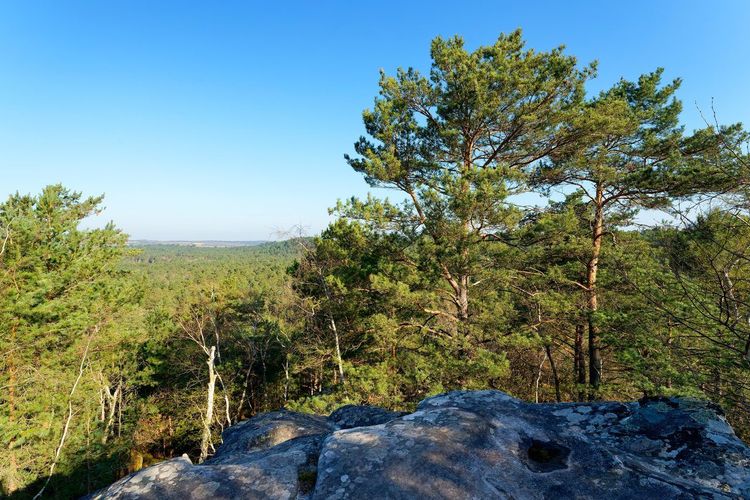
Barbizon is the village that changed the history of painting. Between 1830 and 1870, a community of artists — Jean-François Millet, Camille Corot, Théodore Rousseau — settled here to paint the edges of the Fontainebleau forest outdoors, overturning academic conventions and directly anticipating the Impressionists.
The Auberge Ganne, where the painters lodged and ate and whose walls are still covered with sketches painted directly onto the plaster and woodwork, has become the Musée de l'École de Barbizon (92 Grande Rue, 77630 Barbizon, rated 4.4/5 on Google based on 601 reviews). The studio-house of Jean-François Millet, creator of The Gleaners and The Angelus (two of the most reproduced paintings in the world), is open to visitors two hundred metres away. The village fits along a single Grande Rue — art galleries, a handful of restaurants, an atmosphere of being at the end of the world fifty kilometres from the ring road. By car, 50 km from Paris via the A6; naturally combined with the château or the Fontainebleau forest on the same day.
18. Saint-Germain-en-Laye, the Terrace over Île-de-France
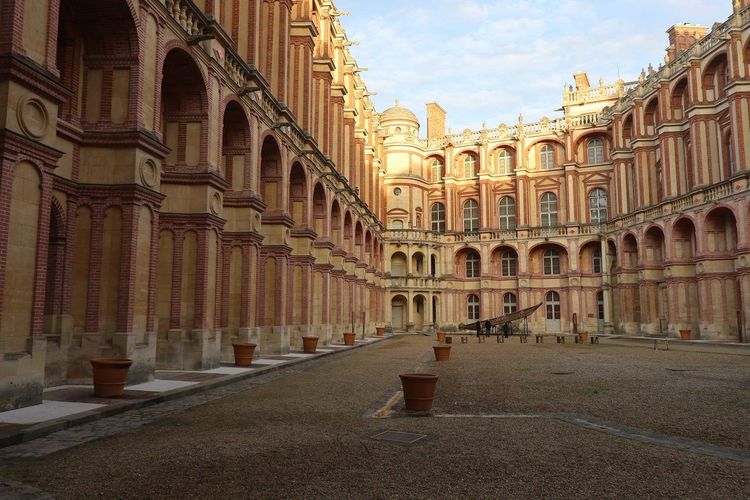
Saint-Germain-en-Laye holds several distinctions that deserve more than a fleeting visit. It is the birthplace of Louis XIV (1638), the town where Claude Debussy grew up and composed his earliest works, and the site of a royal château whose great terrace offers one of the most sweeping panoramic views in Île-de-France.
The Musée d'Archéologie Nationale, housed in the château rebuilt by Napoléon III, holds one of Europe's most important prehistoric collections, including the Venus à la corne from Laugerie-Basse, approximately 25,000 years old. The Grande Terrasse, 2,400 metres long and designed by Le Nôtre, overlooks the bend of the Seine and the plain stretching towards Paris, with unobstructed views of over 50 km on a clear day. The Saint-Germain forest (3,500 hectares), adjacent to the château, offers some thirty kilometres of waymarked trails.
Saint-Germain-en-Laye is 22 km west of Paris, the direct terminus of the RER A from Châtelet (30 minutes journey). It is the most accessible destination in this guide alongside Disneyland. The pedestrianised town centre, outdoor markets, and the 13th-century Gothic royal chapel round off the day.
19. Épernay, the Avenue of Champagne
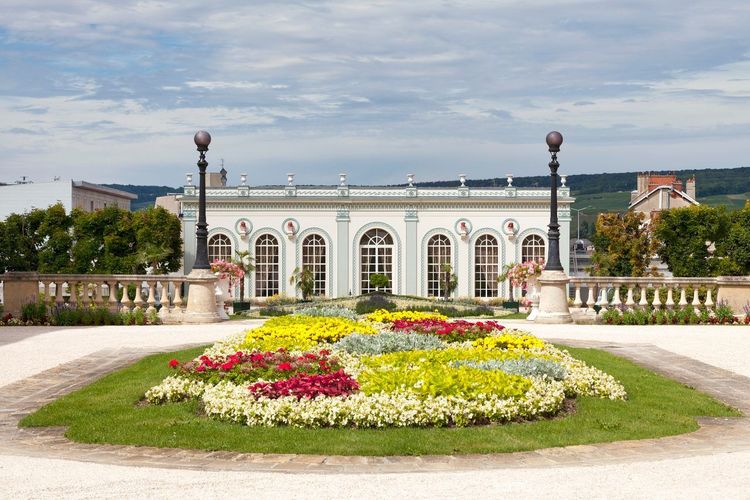
Épernay exists for one thing: champagne. And it does so with absolute consistency. The Avenue de Champagne, a wide boulevard lined with merchant houses behind classical façades, conceals beneath its pavements one of the most vertiginous underground structures in the world: 110 km of chalk-carved galleries housing 300 million bottles ageing at a constant temperature.
The major houses offer guided cellar tours of one to one and a half hours, followed by a tasting. Prices range from €25 to €60 depending on the cuvées selected. Moët & Chandon, the world's largest champagne house with 350,000 visitors per year, has 28 km of cellars on its own. Online booking is recommended from May to September. Perrier-Jouët and Pol Roger offer a more intimate setting with smaller groups.
For a different experience, the villages of the Montagne de Reims (15 km from Épernay) offer a driving or cycling route through vineyards listed as a UNESCO World Heritage Site since 2015. Family-run estates offer tastings without reservation at prices well below the major houses.
Épernay is 1 hour 30 from Paris Gare de l'Est by direct regional train. By car, take the A4 then the N3. Recommended formula: cellars in the morning, Montagne de Reims vineyards in the afternoon, return in the evening. Or stay a night to combine with Reims, 30 km to the east.
20. Le Touquet-Paris-Plage, the North's Most Elegant Beach
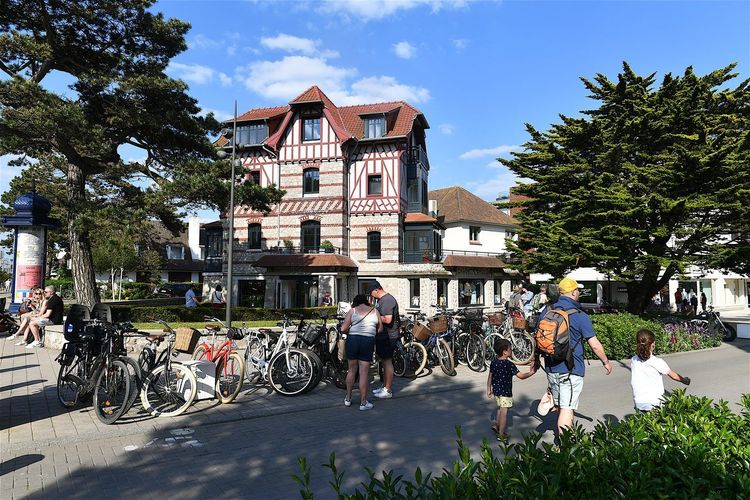
Le Touquet-Paris-Plage is the only seaside destination in this guide, and probably the most unexpected. Located 230 km north of Paris via the A16 (2 hours 30 by car), this resort founded at the end of the 19th century by Parisian bourgeois has retained its full character: Anglo-Norman villas tucked among the pines, a coastal forest, 15 km of fine sandy beach battered by Channel winds.
The resort is more sophisticated than most northern seaside destinations. The Saturday morning covered market, the art galleries, the 1930s Art Deco casino, the racecourse, and a handful of characterful hotels — including the Westminster, a listed historic monument — make for a stylish retreat. Le Touquet is renowned for kitesurfing and sand yachting on the beach at low tide — activities that regulars pursue well outside the summer season.
To explore the resort with an audio guide, the Ryo audio tour of Le Touquet-Paris-Plage — "The Pearl of the Channel" — takes you through the streets and along the seafront with stories about the resort's history and famous residents. By train, Étaples-Le Touquet station is 2 hours 40 from Paris Gare du Nord — a full weekend is recommended.
FAQ
What is the best day trip to take around Paris?
The answer depends on your interests. For royal architecture: Versailles or Vaux-le-Vicomte. For painting and gardens: Giverny between March and November. For medieval history: Provins, a UNESCO World Heritage Site, with its ramparts and live shows. For wine: Reims or Épernay. For nature: the Fontainebleau forest or the Chevreuse Valley. Each destination suits a different type of trip.
What are the best things to do around Paris within 1 hour by car?
Within this radius, you'll find Versailles (35–40 min), Chantilly (45 min), Vaux-le-Vicomte (50 min), Saint-Germain-en-Laye (30 min by car, 30 min by RER A), Disneyland Paris (35 min), Fontainebleau (50–55 min), and the Chevreuse Valley (40 min). Most are also accessible by public transport from Paris in under 45 minutes, making them ideal for last-minute day trips.
What are the most beautiful villages to visit around Paris?
La Roche-Guyon (labelled one of France's Most Beautiful Villages, with troglodyte cliffs along the Seine), Auvers-sur-Oise (Van Gogh's village), Barbizon (village of the 1830 school of painters), Senlis (a well-preserved medieval city), and the villages of the Montagne de Reims (UNESCO vineyards) are among the most remarkable. Provins, though larger, offers the architectural density of an intact medieval village.
What are the best things to do around Paris with kids this weekend?
Disneyland Paris remains the most obvious option for children aged 3 to 14, but Parc Astérix is cheaper and less crowded. For families who prefer nature: the Fontainebleau forest (boulders to climb, picnic areas), the Chevreuse Valley (cycling, swimming in the ponds), Chantilly (the Horse Museum, equestrian shows). Versailles works well from ages 8–10, with a garden visit for younger children.
What are some unusual things to visit around Paris?
The champagne cellars of Épernay (300 million bottles beneath your feet), Van Gogh's room in Auvers-sur-Oise (7 m², 70 paintings in 70 days), the troglodyte galleries of La Roche-Guyon, the candlelit evenings at Vaux-le-Vicomte (over 2,000 candles on select Saturdays in season), or the medieval underground tunnels of Provins (800 metres of galleries open to visitors) — these are a few experiences off the beaten track.
How far can you go from Paris for a day trip?
A radius of 100 km (Chartres, Reims, Provins, Giverny) is comfortable for a full day if you leave early in the morning. Up to 150 km (Épernay, Château de Pierrefonds), the day becomes tighter — aim to leave before 8am. Beyond that, such as Le Touquet at 230 km, a weekend is better suited to fully enjoy the destination without spending most of your time in the car.
Whether you have two free hours or a full weekend, the Paris region holds surprises for those willing to venture a little further from the centre. For those wishing to explore Paris itself between day trips, the Ryo audio guide From Mona Lisa to Notre-Dame offers 22 audio-guided stops over 7.3 km through the historic heart of the capital — a way to return to Paris without missing a thing. And if you're planning a full Parisian stay, our Paris in 3 Days guide helps you organise your entire trip before or after your regional escapes.