© Shutterstock
 Votre guide Ryo
Musée d'Orsay in Paris: Complete Guide to Visiting in 2026
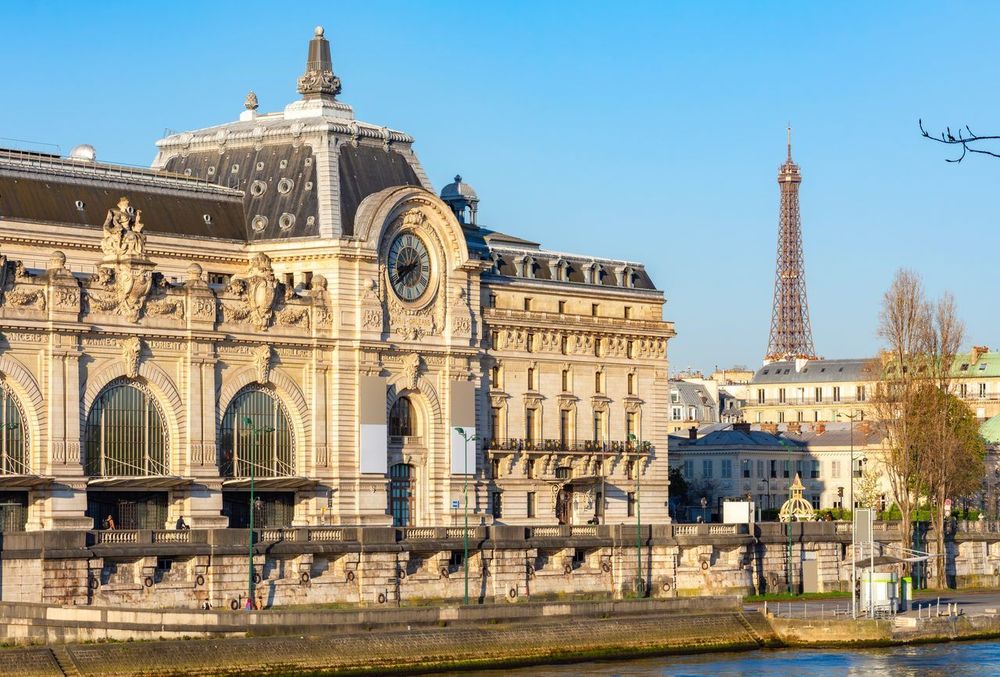
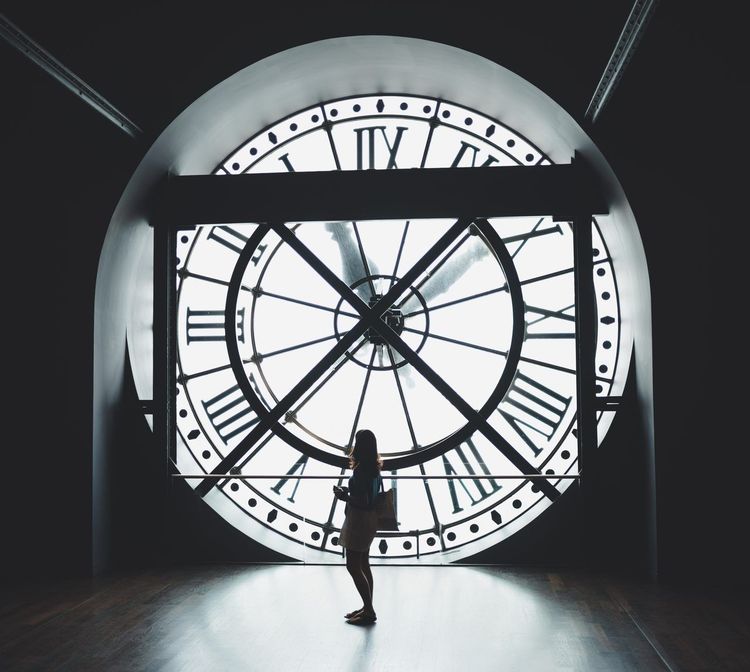
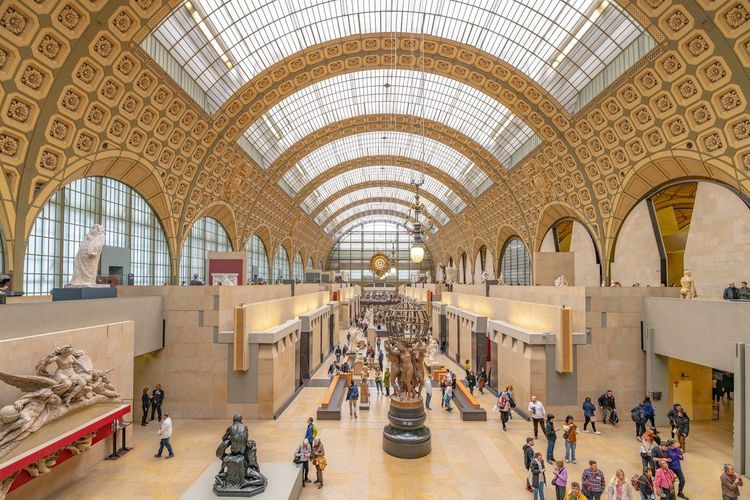
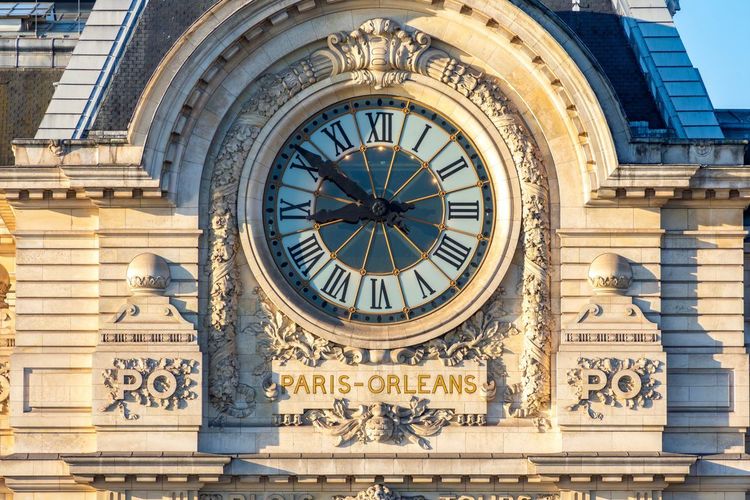
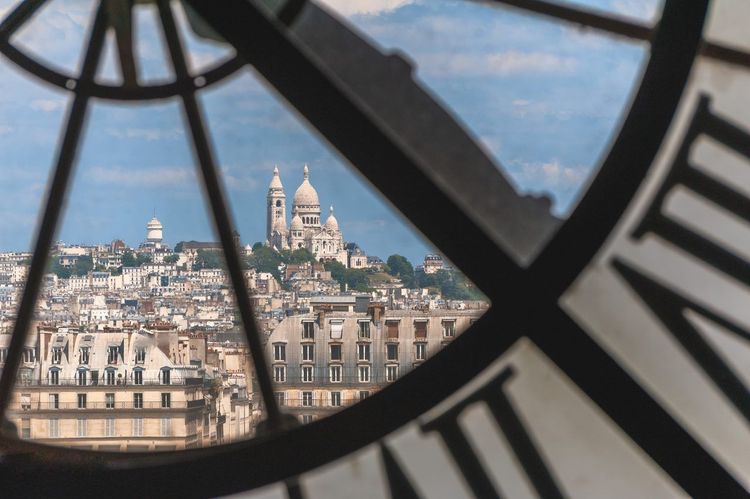
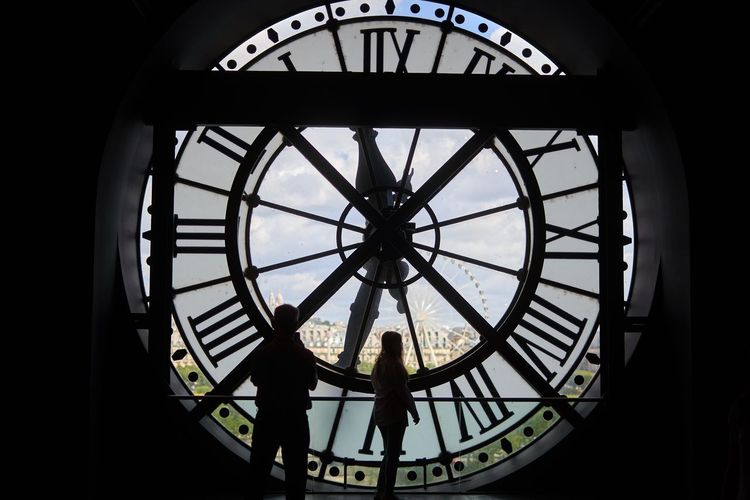
You almost always enter the Musée d'Orsay in Paris through the wrong door — the one facing the Seine — and find yourself gazing up at a giant clock suspended twenty metres overhead. The former Gare d'Orsay, built in 1900 for the World's Fair, now houses one of the densest collections of Impressionist and Post-Impressionist painting in the world. Monet, Renoir, Van Gogh, Degas, Cézanne: nearly 3,000 works accessible in a single visit, spread across five levels beneath a 138-metre glass canopy. The Ryo Paris audio guide offers 18 commented stops through the surrounding neighbourhoods, to extend your day beyond the museum.
This guide covers the essentials: which works to prioritise based on your available time, exact admission prices, free days, the best time slots to avoid queues, and addresses in the 7th arrondissement to round off the day. Three facts that often surprise visitors: admission is free for all Europeans under 26, attendance drops by half on Thursday evenings, and Courbet's "L'Origine du monde" is tucked away in a small, discreet room that most visitors miss on their first pass.
A Railway Station Turned Museum: the Architecture That Surprises
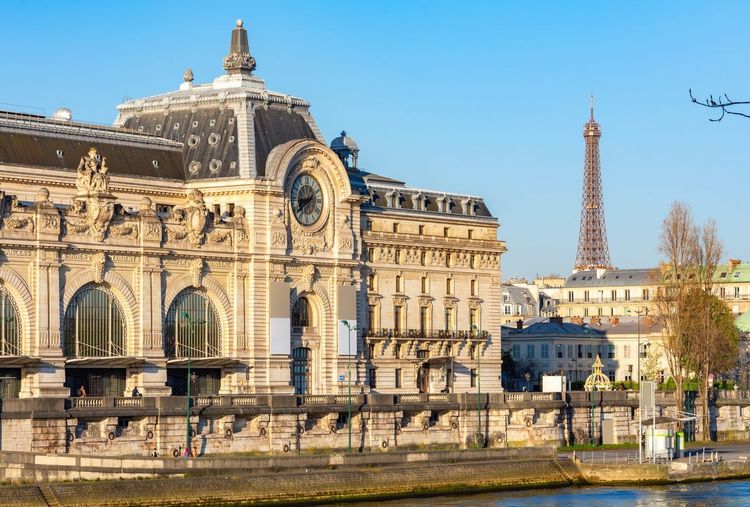
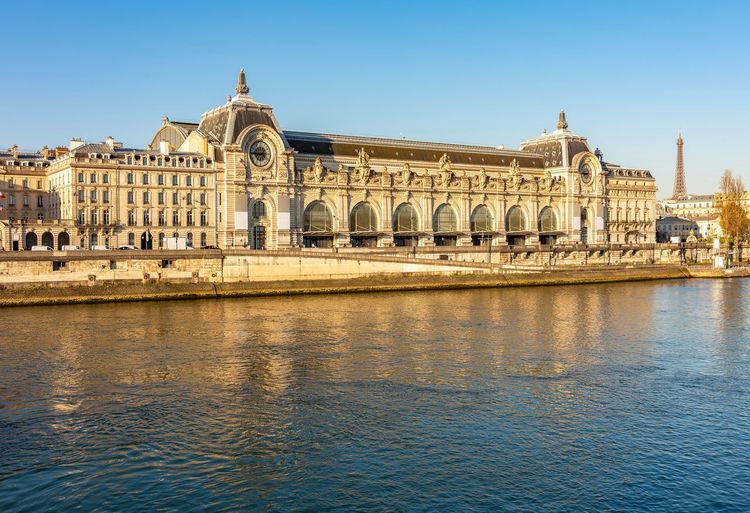
The building's history is almost as fascinating as the canvases it contains. The Gare d'Orsay was built by architect Victor Laloux between 1898 and 1900, specifically to serve the Paris World's Fair. With its white stone facades and metal glazed roofs, it was designed to blend into the Haussmann landscape of the Left Bank, with the tracks and platforms hidden beneath the building, invisible from the street.
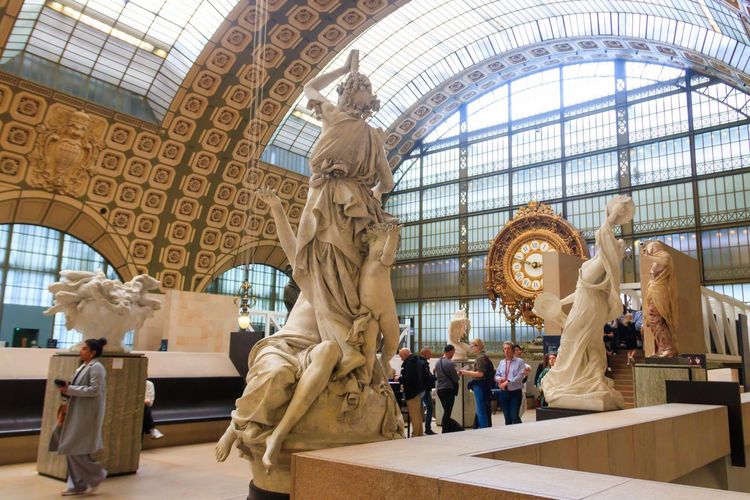
The station was quickly abandoned as a railway terminus in the 1930s, its platforms too short for modern trains. For decades it served as a film set, hosted auction houses, and came close to being demolished on several occasions. It was ultimately Valéry Giscard d'Estaing who decided in 1977 to convert it into a museum. Italian architect Gae Aulenti took charge of the interior conversion: she created the great central nave with its sculpture-lined walkways framed by cream stone blocks, in deliberate contrast to the original 19th-century metal structure.
The result is a space that plays on paradoxes. Sculptures stand alongside the industrial structures of 1900. Impressionist canvases are bathed in natural zenithal light, exactly as the artists painted them in their studios. Take a few minutes at the entrance to look up: the gilded ornaments from the railway era are still there, intact, above the visitors who have come to see the Monets.
The Masterpieces You Cannot Miss
The Musée d'Orsay (1 Rue de la Légion d'Honneur, 75007 Paris, rated 4.8/5 on Google based on 114,711 reviews) holds several of the most reproduced canvases in the history of Western art. If your time is limited, here are the must-sees organised by level.
On the ground floor, start with "Le Déjeuner sur l'herbe" (1863) by Édouard Manet, rejected by the official Salon and whose scandal preceded the Impressionist controversies by twenty years. In the same room, "Olympia" (1865) by the same Manet: a nude courtesan gazing at the viewer with unsettling directness, a revolution in the representation of the female nude. Nearby, "L'Atelier du peintre" by Gustave Courbet (1855), a monumental canvas six metres wide in which Realism asserts itself as a political manifesto as much as an artistic one.
On the upper level (the 5th, accessible by lift on the Seine side), you enter the heart of Impressionism. The Monet room unfolds its series of haystacks and poplars, including the celebrated "La Pie" (1868–1869), a snow scene of almost photographic luminosity. The Renoir room displays the "Bal du Moulin de la Galette" (1876), a monumental canvas of 131 × 175 cm capturing a dancing afternoon in Montmartre with rare lightness. Right alongside it, the canvases of Degas with his ballerinas, jockeys and women bathing — framings inspired by the nascent art of photography that give his compositions a calculated sense of spontaneity.
The Van Gogh and Cézanne rooms follow. Van Gogh's self-portraits, painted in the final years of his life, radiate an intensity that grips even visitors with little familiarity with painting. Cézanne is represented by his "Card Players" and several views of the Montagne Sainte-Victoire. Further on, Toulouse-Lautrec with his cabaret scenes and Gauguin with his early Breton canvases and Tahitian paintings.
Don't miss "L'Origine du monde" by Courbet (1866), in a small room on the intermediate level. The painting is small (46 × 55 cm) but displayed in plain sight. Yet the majority of visitors walk past without stopping, too absorbed by the signage directing them towards the Impressionists on the 5th level.
Impressionism at Its Peak: the 5th Level in Detail
The 5th level of the Musée d'Orsay is the high point of the visit, both literally and figuratively. This is where the Impressionist and Post-Impressionist collections are displayed, beneath the glass canopy that diffuses a soft light even on overcast days. Allow at least 45 minutes for this floor alone.
The rooms are organised chronologically. You begin with the precursors — the landscapes of Camille Corot and Monet's early works, still experimenting with academic conventions. You then move into the heart of the 1870s–1890s, the period during which the Impressionists exhibited outside the official Salon. Each painter developed a distinct technique, visible in the very surface of the paint: Monet's short, vibrating brushstrokes to capture the shifting light on water; the near-clinical precision of Degas's draughtsmanship as he observed bodies in motion; the luminous compositions of Berthe Morisot in her bourgeois interior scenes.
The Renoir room deserves a longer stop. "La Balançoire" (1876), displayed alongside "Bal du Moulin de la Galette", shows how Renoir treated light filtered through foliage: patches of sunlight falling on clothing and faces like a luminous punctuation. These two canvases were painted in the same year, in the same garden in Montmartre.
The transition to Post-Impressionism unfolds naturally. Seurat and Pointillism occupy an entire room: "Le Cirque" (1891), left unfinished when the painter died at 31, is displayed alongside its preparatory sketches. Works by Signac and Henri-Edmond Cross show how Pointillism evolved towards more vivid palettes. Ending with Gauguin and his scenes from Brittany and the South Seas, you begin to understand how these painters were unknowingly paving the way for the explosion of 20th-century avant-gardes.
Symbolist Art, Art Nouveau and Sculptures
The Musée d'Orsay is not limited to Impressionism, and this is where visitors in a hurry miss a significant part of the collection. The intermediate level (3rd floor) houses Symbolist art, decorative arts and Art Nouveau, in rooms that are often less crowded.
Gustave Moreau is represented here with mythological canvases of sumptuous colour, far removed from the luminous landscapes of the Impressionists. The sculptures of Camille Claudel occupy their own room: her works, including "La Valse", display a mastery of movement and emotion that her academic contemporaries rarely achieved. In the Art Nouveau galleries, furniture by Hector Guimard (the same designer behind Paris's metro entrances) sits alongside stained glass by Louis Comfort Tiffany and finely crafted jewellery by René Lalique. These are spaces where visitors routinely spend more time than they had planned.
This is the level that hurried visitors sacrifice first. It is also the one they most often bring up afterwards.
Temporary Exhibitions in 2026
Beyond the permanent collection, the Musée d'Orsay programmes several major temporary exhibitions each year. These take place in the ground-floor galleries and are included in the standard admission ticket.
The 2026 programme is available on the museum's official website. These thematic exhibitions, dedicated to a specific artist or movement, sometimes generate separate queues. Booking online will allow you to choose your time slot and plan the duration of your visit accordingly.
If your stay in Paris lasts a week or more, consider two separate visits: one for the permanent collection and one for the temporary exhibition. The collections are rich enough to fill two full days.
Opening Hours and Prices 2026
Opening hours: the museum is open Tuesday through Sunday. Tuesday–Wednesday and Friday–Sunday from 9:30 am to 6:00 pm (last entry 5:15 pm). Thursday: late night opening until 9:45 pm (last entry 9:00 pm). Closed on Mondays and May 1st.
Admission: full price €16 online (€14 at the ticket office), reduced rate €13 (ages 18–25 outside the EU, job seekers). On Thursday evenings from 6 pm, admission drops to a flat rate of €12. Free admission for visitors under 18 and for those under 26 residing in a European Union member state (ID required). The Paris Museum Pass grants access to the museum without queuing, with around forty Parisian sites included.
Online booking is strongly recommended between March and October. The queue at the ticket office can exceed 45 minutes on a Saturday morning. The official website offers slots every 30 minutes: book at least 24 hours in advance during peak season.
Free Days and Discounts
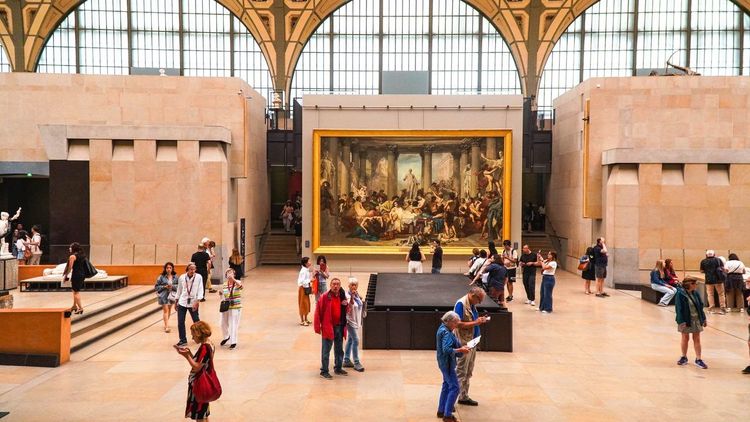
Admission is free on the first Sunday of the month, from September to June, with mandatory advance booking. This free entry naturally attracts larger crowds: arrive at opening time (9:30 am) or after 4:30 pm to avoid peak attendance. During certain school holidays, the first-Sunday free entry may be suspended. Check the conditions on the official website before making your way there.
Several categories benefit from permanent free admission: visitors under 18, those under 26 who are EU nationals (with ID), recipients of minimum social welfare benefits, ICOM members and accredited journalists. For teachers, a specific offer is available through the "Pass Éducation" card. And once back outside, our audio walking tour "From the Mona Lisa to the Notre-Dame Cathedral" links the Louvre to the Île de la Cité in 23 stops.
When to Visit: the Best Time Slots
Avoid Saturday mornings and Sundays between 10 am and 2 pm: these are the busiest slots, with queues at the entrance and high density in the Impressionist rooms on the 5th level. Tuesday and Wednesday mornings outside of school holidays are generally the quietest.
Thursday evening is the slot we recommend most often. Between 6 pm and 9:45 pm, attendance is noticeably lower than during the day, the lighting in the rooms creates a different atmosphere, and the sculptures in the great nave take on a new quality in artificial light. This evening opening remains unknown to the majority of visitors.
In summer (July–August), book online at least 48 hours in advance and arrive at opening time. In winter, outside of the Christmas holidays, weekday visits are noticeably more pleasant. Allow 2.5 to 3 hours for a complete visit, or 1.5 hours if you focus solely on the 5th level.
How to Get There
Address: 1 Rue de la Légion d'Honneur, 75007 Paris, main entrance on the Quai Anatole France, on the Seine side.
By RER C, the Musée d'Orsay station is the most direct option from the Right Bank and from CDG airport via Châtelet-Les Halles. By metro, line 12 stops at Solférino (5 minutes on foot). Several bus lines serve the quayside directly: lines 24, 63, 68, 69 and 73. By bike, Vélib' stations are plentiful along the quay. From the Île de la Cité or the Marais, the route along the Seine is one of the most pleasant rides in Paris.
What to Do in the Neighbourhood After Your Visit
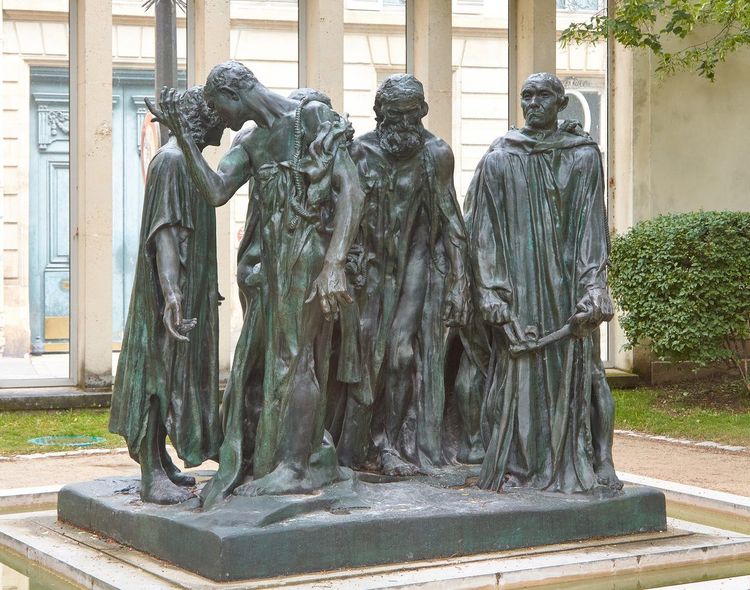
The 7th arrondissement around the Musée d'Orsay lends itself to a leisurely stroll. Ten minutes away on foot along the Rue de Varenne, the Musée Rodin is often underestimated compared to its neighbour. Its garden (accessible separately for €4) is one of the most peaceful green oases in central Paris, with "The Thinker" and "The Burghers of Calais" displayed outdoors among the rose beds.
On the other side of the Seine, in the Jardin des Tuileries, the Musée de l'Orangerie houses Monet's Nymphéas in two oval rooms built specifically for these monumental works. It is the natural complement to a visit to Orsay: allow 20 minutes on foot via the Pont de la Concorde, or 5 minutes by bus.
For lunch or dinner, the Café de Flore (172 Boulevard Saint-Germain, 75006 Paris, rated 3.9/5 on Google based on 14,260 reviews) and the Brasserie Lipp are a fifteen-minute walk away on the Boulevard Saint-Germain — two historic addresses in Paris's intellectual quarter. To continue exploring the Left Bank with an audio guide, the Ryo route From Mona Lisa to Notre-Dame covers the museum-cathedral triangle in 22 stops, from the Louvre to the Île de la Cité.
FAQ
What is the admission price for the Musée d'Orsay in 2026?
The full price is €16 online (€14 at the ticket office), and the reduced price is €13. On Thursday evenings (from 6 pm), a flat rate of €12 applies. Admission is free for visitors under 18 and for those under 26 residing in a European Union country (ID required). On the first Sunday of the month, from September to June, admission is free for all visitors.
Do I need to book my visit in advance?
Online booking is strongly recommended between March and October and during school holidays. It allows you to choose a time slot and avoid the ticket queue, which can exceed 45 minutes during peak season. Tickets are available on the museum's official website.
What are the opening hours of the Musée d'Orsay?
The museum is open Tuesday through Sunday. Tuesday–Wednesday and Friday–Sunday: 9:30 am–6:00 pm (last entry 5:15 pm). Thursday: 9:30 am–9:45 pm (last entry 9:00 pm). Closed on Mondays and May 1st.
How much time should I plan for a visit to the Musée d'Orsay?
Allow at least 1.5 hours if you focus on the 5th level (Impressionism). A full visit across all five levels, including the decorative arts and Symbolism, takes 2.5 to 3 hours. Add 45 minutes if a temporary exhibition is on.
What is the best time to visit?
Thursday evening (between 6 pm and 9:45 pm) is the least crowded time slot. During the day, Tuesday and Wednesday mornings outside of school holidays offer the best experience. Avoid Saturday mornings and Sundays between 10 am and 2 pm.
Is the Musée d'Orsay worth visiting?
If you have even the slightest interest in 19th-century painting, absolutely. And even without a particular interest in art, the architecture of the former railway station and the concentration of world-famous masterpieces under one roof make it a visual experience that few museums in the world can match.
Conclusion
The Musée d'Orsay in Paris is one of those places where high expectations are regularly exceeded by reality. The density of masterpieces on the 5th level, the light of the great nave, the architecture you discover as you make your way up through the floors: this is a visit that rewards a little preparation, and that is precisely the purpose of this guide.
Book online, choose a Thursday evening or a weekday morning outside of school holidays, and allow at least two hours. To explore Paris beyond the museum, the Paris audio walking tour is waiting for you with 19 commented stops through the historic neighbourhoods. And if you are planning a full stay, our Ryo guide to visiting Paris in 3 days will help you build your itinerary.