© Shutterstock
 Votre guide Ryo
The World's Tallest Skyscrapers: Rankings and Records in 2026
Since 2010, Burj Khalifa in Dubai has been the world's tallest skyscraper at 828 meters—more than twice the height of the Eiffel Tower. But this supremacy is being challenged: the Jeddah Tower in Saudi Arabia is targeting 1,000 meters, and several titanic projects are advancing in the offices of architects in Shanghai, Seoul, and Mumbai. In barely a century, humanity has learned to build structures that pierce the clouds.
This guide takes you behind the scenes of these extraordinary towers: how engineers solved the problem of winds at 600 meters of altitude, why Kuala Lumpur decided to outpace Paris and London in height, what the future number one will be, and where to reach the top of the world without spending a fortune. For those who want to explore in depth a city famous for its singular relationship with verticality, the Ryo audio guide From Skyscrapers to Fortune Cookies tells San Francisco's story like few guides do, from the Transamerica Pyramid to the alleyways of Chinatown.
How Is a Skyscraper Measured?
The question seems simple, but it has divided experts for decades. The Council on Tall Buildings and Urban Habitat (CTBUH), based in Chicago, is the global reference body for skyscraper rankings. It distinguishes three heights for each tower: architectural height (up to the spire or fixed antenna integrated into the design), height to the highest occupiable floor, and height to the absolute top of any antenna.
The official ranking uses architectural height. This rule has surprising consequences: One World Trade Center in New York (541 m) outranks the Willis Tower in Chicago (442 m) by including its 124-meter architectural spire, whereas it would fall behind if only occupiable rooftops were measured. The method also distinguishes skyscrapers from other vertical structures: the Eiffel Tower (330 m to the antenna) and the CN Tower in Toronto (553 m) do not appear in the skyscraper rankings, as they do not contain habitable floor space or offices throughout the majority of their height.
This criterion matters. The Burj Khalifa, the Shanghai Tower, and the Merdeka 118 are skyscrapers in the fullest sense—they house apartments, hotels, and offices across dozens of floors each. They are not pylons disguised as towers. This is precisely what sets them apart from telecommunication structures that often dominate urban skylines while remaining absent from the rankings.
The Burj Khalifa (828 m): Dubai's Indestructible Reign
Inaugurated on January 4, 2010, the Burj Khalifa has now held the top spot in the global rankings for over sixteen years—a record longevity in a field where ambitions follow one another rapidly. With its 828 meters of architectural height, the tower designed by American firm Skidmore, Owings & Merrill surpasses the current second-place building by 196 meters. To visualize that gap: it is approximately the height of the Eiffel Tower from ground to spire.
The construction site mobilized up to 12,000 workers simultaneously, from over 100 countries. In total, 330,000 m³ of concrete and 55,000 tons of steel were required. To solve the problem of extreme winds at this altitude—which subjected the structure to lateral forces capable of causing oscillations felt by occupants—engineers designed a Y-shaped cross-section at 120°, inspired by the Hymenocallis flower, a plant native to the Arabian desert. This triangular shape breaks up wind vortices and reduces vibrations dramatically.
Construction lasted six years (2004–2010), at an estimated cost of $1.5 billion. During the concrete-pouring phases of the upper floors, the structure rose at approximately one floor every three days. To pump concrete to over 600 meters of height, engineers developed a high-pressure pumping system that was itself a technical record at the time.
The tower houses 163 habitable floors, including an Armani Hotel on the first 39 floors, Armani Residences apartments, offices from the 45th to the 108th floor, and two public observation decks: 'At the Top' on the 124th floor (452 m) and 'At the Top Sky' on the 148th floor (555 m). From the 124th-floor observation deck, views extend up to 95 kilometers. On clear days, the Iranian coastline on the far side of the Persian Gulf becomes perceptible on the horizon.
A lesser-known anecdote: during construction, the concrete crews alternated between two slip-forming systems—one for the central core, another for the outer wings—advancing them simultaneously to maintain the structural balance as the building rose. An open-air logistical ballet, managed from control rooms installed right on the floors under construction.
Its nighttime illumination, reprogrammed for special occasions (national holidays, New Year's Eve), is a spectacle visible from dozens of kilometers across the flat desert surrounding Dubai. On some New Year's Eve nights, more than a million people gather at the foot of the tower to watch the fireworks launched from the facade itself.
The Merdeka 118 (678.9 m): Kuala Lumpur's Giant
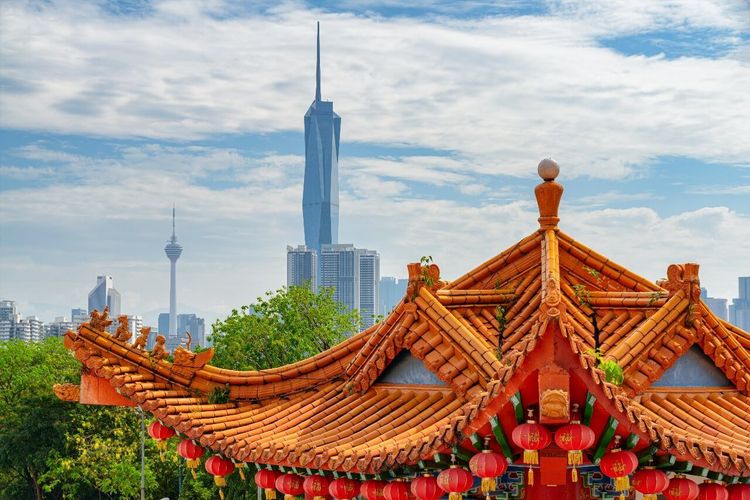
For six years, the Petronas Towers (452 m) were the world's tallest skyscrapers between 1998 and 2004, before being surpassed by Taipei 101. Then, at the end of 2023, Kuala Lumpur completed an even more ambitious tower: the Merdeka 118 (Jalan Hang Jebat, 50460 Kuala Lumpur, rated 4.6/5 on Google with 2,537 reviews), which rises to 678.9 meters and now stands as the world's second-tallest skyscraper.
The name "Merdeka" means "independence" in Malay. The tower celebrates the 118th anniversary of Malaysia's first cry of independence, proclaimed at the historic gathering of August 31, 1957, in the adjacent Merdeka Stadium—which still exists today, now framed by this monumental tower looming several hundred meters above it.
Designed by Australian firm Fender Katsalidis, the Merdeka 118 draws inspiration from traditional Malaysian Islamic decorative arts. Its facade, composed of 16 triangular facets that intersect and repeat, reflects the geometric patterns of mashrabiya (arabesque shadow lattices) and the batik fabrics of the region. This is not a generic tower: its architecture tells a cultural identity.
The structure comprises 110 habitable levels distributed among a Park Hyatt hotel on the lower floors, luxury apartments, offices, and a public observation deck at the top. Construction lasted nearly seven years (2015–2022), the structure was completed at the end of 2023, and the official inauguration took place in January 2024. The total cost exceeds $1.5 billion.
A particular technical challenge: Kuala Lumpur rests on unstable clay layers. The Merdeka 118's foundations plunge 75 meters deep, with concrete piles reaching the bedrock beneath the alluvial layers. The project required the temporary rerouting of several adjacent traffic lanes throughout the duration of the underground works—a major logistical constraint in such a dense city.
The Shanghai Tower (632 m): The Spiral That Defies the Wind
In Pudong, Shanghai's financial district, three towers face each other in a striking architectural dialogue: the Jin Mao Tower (421 m), the Shanghai World Financial Center (492 m, with its rectangular opening at the top nicknamed "the bottle opener" by Shanghainese), and the Shanghai Tower (501 Yincheng Middle Road, Pudong, Shanghai, rated 4.6/5 on Google with 3,170 reviews) (632 m), inaugurated in 2015. These three buildings coexist less than 300 meters apart—one of the most spectacular concentrations of skyscrapers in the world.
What sets the Shanghai Tower apart from every other tower in this ranking is its spiral form. The tower rotates 120° from base to top, with a glass outer facade that gradually wraps around itself. This geometry is not decorative: it reduces lateral wind forces by 24% compared to a rectangular tower of the same dimensions, generating an estimated savings of $58 million in structural materials. A financially rational decision, dressed up as aesthetics.
The tower is organized into 9 vertical zones separated by interior atriums that function as suspended micro-neighborhoods: gardens, restaurants, co-working spaces, covered walkways. The concept is that of a vertical city that replicates urban life at 200, 300, and 400 meters of height, rather than cutting its occupants off from it.
The observation deck is located on the 118th floor (546 m). The elevators that serve it reach 20.5 meters per second (73 km/h), covering the distance from the ground floor to the 118th floor in less than 60 seconds—the fastest in the world when the tower opened.
The Abraj Al-Bait Clock Tower (601 m): The Tower of Mecca
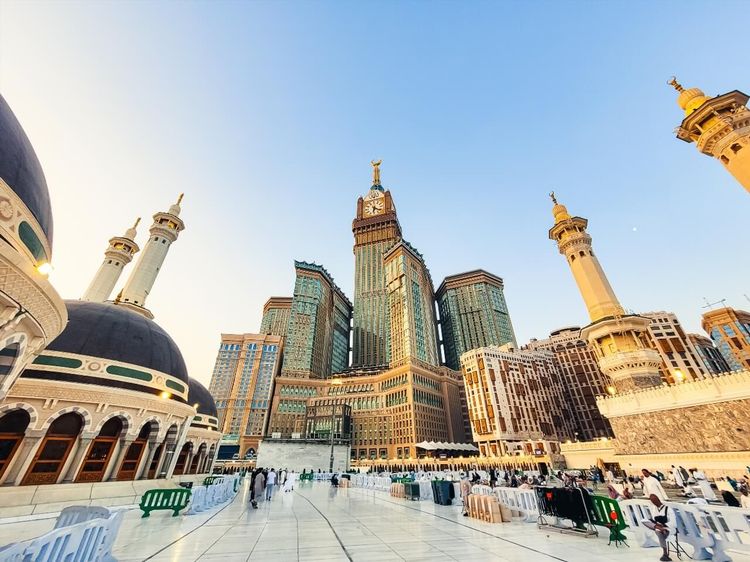
The Abraj Al-Bait Clock Tower (Ajyad Street, Mecca 24231, Saudi Arabia, rated 4.7/5 on Google with 66,665 reviews) is the least known of the top five towers in the global rankings, and certainly the most symbolically charged. Built between 2004 and 2012 in Mecca, Saudi Arabia, it rises to 601 meters and directly overlooks the Grand Mosque Al-Masjid Al-Haram.
The tower is the central building of a seven-tower hotel complex capable of accommodating more than 100,000 people simultaneously—a capacity designed to manage the flow of pilgrims during the Hajj, which attracts between 2 and 3 million worshippers each year. With a total floor area of 1.5 million square meters, it is one of the largest real estate complexes ever built.
The giant clock that crowns the tower has four faces each with a diameter of 43 meters—the world's largest clock—lit by 2 million LEDs. At the time of the five daily prayers, the tower lights up in green (the color of Islam) and an Arabic text appears on the clock faces, visible for dozens of kilometers around.
This project was controversial from the outset: construction involved the demolition of an 18th-century Ottoman fortress. Architects and historians protested this heritage loss. The tension between the development of holy cities and the preservation of their history remains intense in academic circles.
The Ping An Finance Centre (599 m): Shenzhen Against the Sky
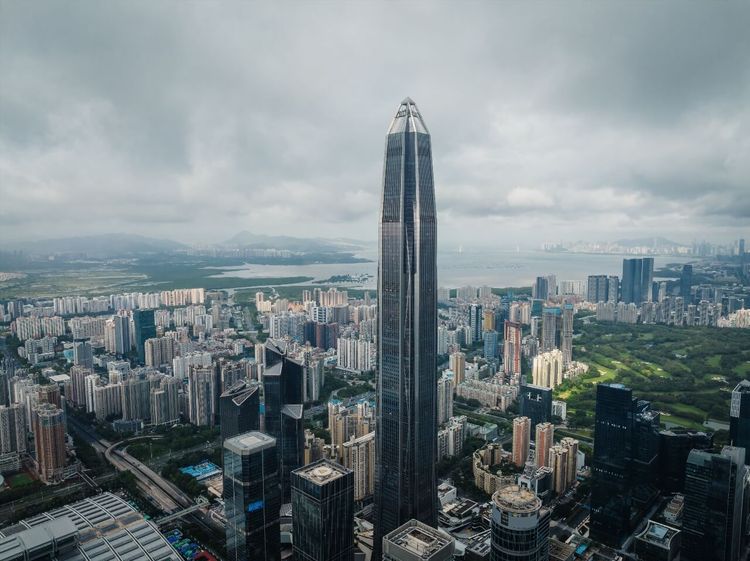
China's fourth-largest city by population, Shenzhen was still a fishing village of 30,000 inhabitants in 1979. Four decades later, it has 18 million residents and its skyline rivals those of Dubai or Singapore. The Ping An Finance Centre (Fuhua 3rd Road, Futian District, Shenzhen, rated 4.6/5 on Google with 646 reviews), inaugurated in 2017, is its most visible symbol.
At 599 meters and 115 floors, the Ping An Finance Centre is the headquarters of Ping An Insurance Group, one of the world's largest insurance companies. The tower was originally designed to reach 660 meters, but aviation authorities required flashing warning lights above 600 meters—a constraint the developer deemed incompatible with the project's aesthetic. The final height was therefore adjusted during the design phase.
Its reflective glass facade creates a striking effect in overcast weather: the upper portion disappears into the clouds, making the tower impossible to photograph in full from street level. A tower that visually plays with the limits of its own visibility.
Ranks 6 to 10 in the Global Rankings
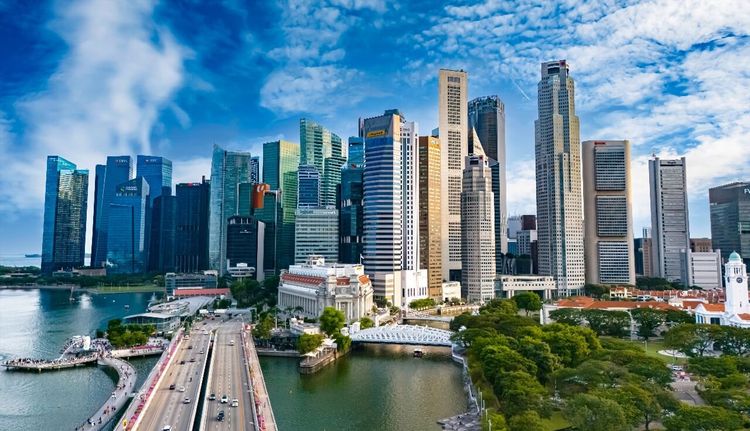
The top five towers capture most of the media attention, but ranks 6 to 10 reveal a fascinating geography: the near-total dominance of the Asia-Pacific region and the Arabian Peninsula in the race for height.
6th: Lotte World Tower (555 m), Seoul, South Korea
Inaugurated in 2017, the Lotte World Tower dominates the Jamsil district with its 123 floors. Its slender silhouette is inspired by Korean calligraphy brushes and the celadons of the Goryeo era. On the 123rd floor, the 'Seoul Sky' observation deck at 500 meters features a transparent glass floor allowing visitors to look straight down to the ground below.
The foundations presented an unusual challenge: the Lotte World Adventure amusement park is located directly beneath the building. Engineers designed an isolated foundation system to prevent vibrations from the tower—caused by wind or elevators—from being transmitted to the attractions below. A constraint that had probably never been encountered in the history of skyscraper construction.
7th: One World Trade Center (541 m), New York, United States
The One World Trade Center is the most symbolically charged skyscraper in this ranking. Built on the site of the September 11, 2001 attacks, inaugurated in 2014 after eight years of construction, it rises to 541 meters—exactly 1,776 feet, a deliberate reference to the year of the American Declaration of Independence. This height is no coincidence: it is a date inscribed in concrete and glass, a way of responding to destruction with a symbol. The construction cost reached approximately $4 billion.
8th and 9th: Guangzhou CTF (530 m) and Tianjin CTF (530 m), China
Tied at 530 meters each, the Guangzhou CTF Finance Centre (2016) and the Tianjin CTF Finance Centre (2019) are architecturally twin towers, designed by the same firm Kohn Pedersen Fox for the same developer Chow Tai Fook. The first houses a Ritz-Carlton hotel at the top; the second, a St. Regis with views over the Bohai Sea.
10th: CITIC Tower (528 m), Beijing, China (Chaoyang District, Beijing, rated 4/5 on Google with 2 reviews)
The CITIC Tower, nicknamed 'China Zun' in reference to a bronze sacrificial vessel from the Shang dynasty (17th–11th century BC), has been the tallest tower in the Chinese capital since its inauguration in 2018. Its S-shaped form, which genuinely evokes the silhouette of an ancient vase, gives it a rare visual personality in a skyscraper landscape often dominated by rectangular glass facades.
A geographic observation is in order: of these ten towers, seven are located in China or the Arabian Gulf. Europe and the Americas each appear with just one tower (The Shard/Varso Tower for Europe, One World Trade Center for the Americas). This is no coincidence—it reflects a decade of economic growth concentrated in these two regions and a desire to materialize that power in concrete.
The Jeddah Tower: Toward the First Kilometer
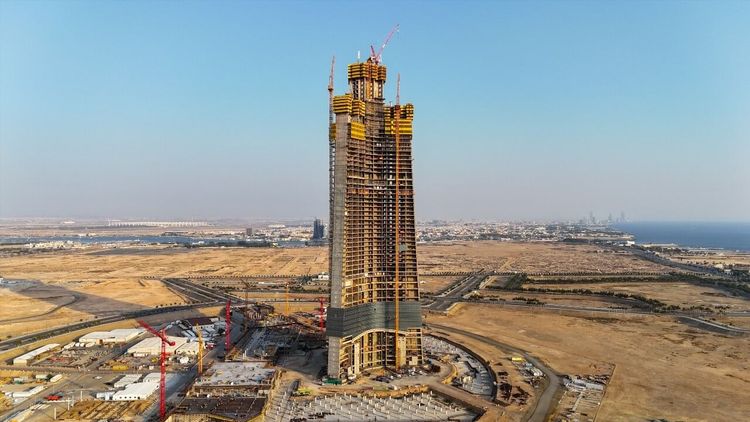
People have been talking about it for years, and its story reads like a great novel: a monumental project, delays, uncertain financing, resumed construction. The Jeddah Tower (King Abdulaziz Road, Al Maasarah, Jeddah, rated 4.5/5 on Google with 111 reviews) (formerly known as the Kingdom Tower) should, once completed, become the first building in history to surpass 1,000 meters—more precisely 1,007 meters according to official plans.
Designed by Adrian Smith, the architect who had already drawn the Burj Khalifa for Skidmore, Owings & Merrill before founding his own firm Adrian Smith + Gordon Gill Architecture, the tower was launched in 2013. Construction was halted in 2017, officially due to technical issues related to liquefiable sand layers in the subsoil, requiring a complete overhaul of the foundations. The internal political context in Saudi Arabia—notably the arrest of Prince Al-Waleed bin Talal during the 2017 anti-corruption purge—also weighed on the timeline.
Construction resumed in 2023, with completion targeted between 2028 and 2030. If this schedule holds, the Burj Khalifa will lose its title after twenty years of reign.
The technical challenges are considerable. At 1,000 meters, wind gusts can exceed 200 km/h. Atmospheric pressure at the top will be 12% lower than at the base, requiring adapted pressurization systems for the highest floors. Elevators will need to travel more than 660 meters in single-run cabins—an absolute record for load-bearing cables. And the temperature difference between the ground floor and the top can reach 7°C on a hot day.
To put these altitudes in perspective: our Ryo article on the 10 highest mountain peaks in the world reminds us that Everest peaks at 8,849 meters—eight times the height of the future Jeddah Tower. Yet building 1,000 meters of steel and concrete in an Arabian desert remains an engineering feat with no equivalent in the history of civil construction.
Other projects to watch
The Dubai Creek Tower had been announced at 928 meters, but the project has officially been on hold since 2020. In China, a 2021 government directive limited the construction of buildings over 500 meters in mid-sized cities—a reaction to the speculative excesses of the 2010s, which had seen several towers commissioned and then abandoned mid-construction. The next generation of giant skyscrapers will therefore likely be contested between Saudi Arabia and the United Arab Emirates, with a few selected Asian megacities in their wake. Far from that race, Paris is walked at street level: our From the Mona Lisa to the Notre-Dame Cathedral tour counts 23 stops.
Europe's Tallest Skyscraper
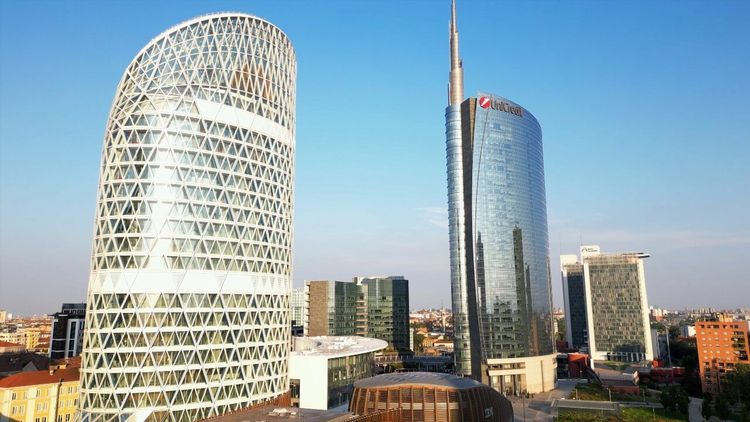
Europe does not feature in the global top 20 skyscrapers—a fact that often surprises travelers. The reason lies in a combination of factors: listed historic city centers, height restrictions to preserve heritage skylines, an architectural culture that values horizontal density, and real estate markets less inclined toward large-scale vertical speculation than China or the Gulf.
If one adopts the CTBUH geographic scope, which includes Russia within Europe, the title goes to the Lakhta Center in Saint Petersburg, the headquarters of Gazprom, with its 462 meters (118 floors). Inaugurated in 2019, it dominates the shores of the Gulf of Finland and has profoundly altered the silhouette of a city that had long preserved its neoclassical skyline.
In Moscow, the Moscow-City complex groups several towers between 240 and 374 meters. The Federation Tower East (374 m, 2017) is its highest point: 95 floors, a white-and-gold glass facade, prestigious offices, and apartments rising above the neighboring skyscrapers.
Within the European Union, it is the Varso Tower in Warsaw, inaugurated in 2022, that holds the record with 310 meters of architectural height (spire included, 230 m to the rooftop). Designed by British firm Foster + Partners, it houses offices and a hotel.
Until its inauguration, that EU title belonged to The Shard in London (309.6 m), designed by Renzo Piano and inaugurated in 2012. Its slender shard-of-glass silhouette has become one of the symbols of the British capital.
In France, the Tour Montparnasse (210 m) remains the tallest tower in Paris, despite several proposed new towers at La Défense that never came to fruition. From its observation deck, the 360° view of Paris is rivaled only by the Eiffel Tower—with one advantage: from Montparnasse, the Eiffel Tower itself appears in the panorama. For Antwerp, whose merchants have always claimed a certain grandeur long before the era of skyscrapers, the Ryo audio guide A Grandeur at the Highest Level recounts how a port city built its reputation over centuries of international trade.
The Skylines That Changed Everything
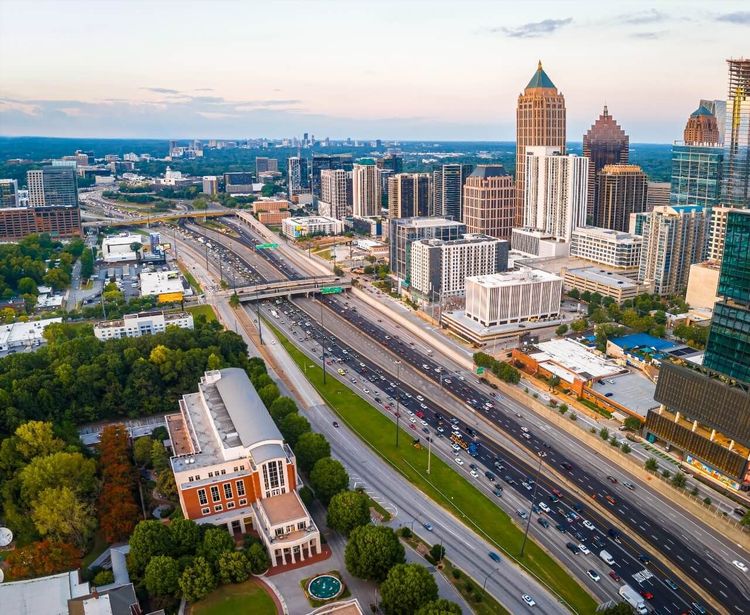
A single skyscraper does not make a skyline. What is so captivating about great urban silhouettes is the accumulation—the way dozens of towers create an entirely artificial landscape, readable from dozens of kilometers away.
Hong Kong is perhaps the world's most spectacular skyline in terms of sheer density. The city has more than 9,000 buildings over 100 meters tall—more than any other city on Earth. Its silhouette, visible from ships entering Victoria Harbour or from the heights of Kowloon, is composed of hundreds of towers pressed together on a narrow strip of land between mountains and sea. Here, verticality is not a luxury but a geographic necessity.
Manhattan, for its part, invented the very concept of the skyline. Its density stems from a geological constraint: the island of New York rests on a solid granite bedrock, ideal for anchoring deep foundations on limited land. Neighborhoods built on less stable ground never experienced the same vertical concentration. The Midtown silhouette—Empire State Building, Chrysler Building, One World Trade Center—has been reproduced on billions of postcards for a century.
San Francisco offers an entirely different lesson in vertical architecture. Constrained by seismic risk (the San Andreas Fault runs through the region), the city did not develop 800-meter towers but a collection of mid-to-high-rise skyscrapers that compose an unmistakable silhouette—Salesforce Tower (260 m), Transamerica Pyramid, 181 Fremont Street. The Ryo audio guide From Skyscrapers to Fortune Cookies explores how Chinatown survived the 1906 earthquake while the Financial District burned, and how developers rebuilt higher than ever on uncertain ground.
Hamburg offers the opposite lesson: a port city that long resisted verticality, opting instead for horizontal density and the red-brick architecture of its warehouses. The Elbphilharmonie, perched atop a converted cocoa warehouse, or the HafenCity complex show that a great metropolis can leave its mark on history without reaching for the clouds. An urban philosophy that the Ryo audio guide to Hamburg The Gateway to the World documents across 24 audio tracks and 8 kilometers of walking through the port city.
Observation Decks at the Top of the World
Ascending to the top of a skyscraper means physically understanding the city—perceiving its density, its flows, its geography at a scale impossible from street level. From 400 meters of height, cars become points of light, parks become green patches, rivers become shimmering ribbons.
Here are the main observation decks open to the public in 2026, by height:
At the Top Sky (555 m), Burj Khalifa, Dubai
The observation deck on the 148th floor of the Burj Khalifa is the highest glass floor accessible to the public in the world. The VIP package includes a personalized welcome, telescopes, and a cantilevered glass panel from which you look down to the ground 555 meters below. Price: from 300 AED (approximately €75) for the standard version, up to 500 AED for VIP. Book several weeks in advance between November and March, Dubai's peak season.
Seoul Sky (500 m), Lotte World Tower, Seoul
On the 123rd floor of the Lotte World Tower, this observation deck features a transparent glass floor allowing visitors to look straight down 500 meters below. Price: approximately 27,000 KRW (€18). The sunset, with the meanders of the Han River far below, ranks among the most photographed moments in South Korea.
Ciel de Paris (196 m), Tour Montparnasse, Paris
The rooftop terrace of the Tour Montparnasse offers a 360° view with no glass barrier—a decisive advantage for photography compared to other covered platforms. Price: €20 to €23 depending on the time slot. Open until 11 PM in summer, making it one of the best spots in Paris for the illuminated city.
The View from The Shard (244 m), The Shard, London
The 72nd-floor observation deck is the highest viewpoint accessible to the public in Great Britain. Price: £28 to £35 depending on the time slot. Beware of London mists: visibility can drop to just a few dozen meters. Morning, before heat haze sets in, is often the best time slot.
CN Tower EdgeWalk (356 m), Toronto, Canada (290 Bremner Blvd, Toronto, ON M5V 3L9, rated 4.8/5 on Google with 796 reviews)
Technically a telecommunications tower (outside the skyscraper rankings), the CN Tower offers the most adrenaline-fueled observation experience in the world: a walk on the outside of the tower at 356 meters of height, attached only by a harness, on a circular walkway that goes all the way around the structure. Price: approximately 225 CAD (€150). Advance booking required, weather conditions must be suitable.
A lesser-known but striking alternative: the Sky Bridge 138 in Kuala Lumpur, the walkway connecting the two Petronas Towers on the 41st and 42nd floors (170 m). Access is free, but spots are limited to 1,800 visitors per day and are only distributed on the morning itself on-site—arrive at opening time to be sure of getting a ticket.
Visiting the World's Tallest Towers: What You Need to Know
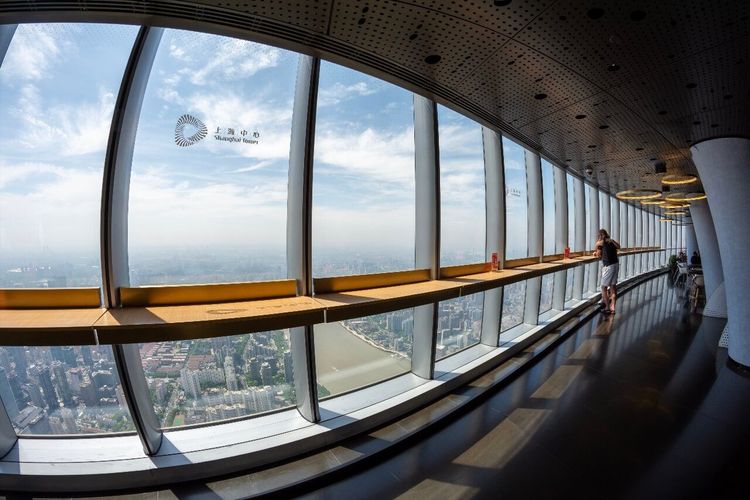
A few practical tips to factor in before planning your visit:
Book in advance. The Burj Khalifa observation deck sells out up to three weeks ahead during peak season (November–March). The Lotte World Tower fills up within days. Booking online almost always lets you skip queues and get a discounted rate—between 10 and 30% cheaper than at the door.
Choose your time. For photography, sunrise (raking light, few crowds) or the evening golden hour (sunset plus the start of nighttime illumination) offer the most interesting conditions. For a pure nighttime view, check opening hours: the Burj Khalifa is open until midnight, the Tour Montparnasse until 11 PM in summer.
Check the weather. At 400–500 meters, low cloud cover can reduce visibility to just a few meters. Check the cloud base on a local weather app before heading out. If visibility is forecast below 10 km, consider rescheduling.
Dress warmly. Even in Dubai in winter, outdoor platforms at 500 meters expose you to sustained winds. In Seoul in January, temperatures on the platforms can drop well below zero, even if the indoor spaces are heated.
FAQ
What Is the Tallest Building in the World in 2026?
In 2026, the tallest building in the world is the Burj Khalifa in Dubai, standing at 828 meters in architectural height. Inaugurated on January 4, 2010, it has held this title for over sixteen years—an exceptional longevity in a field where records change frequently. Second is the Merdeka 118 in Kuala Lumpur (678.9 m), inaugurated in November 2023. These two towers vastly outpace the rest of the rankings: the third, the Shanghai Tower, stands at 632 meters.
What Will Be the Future World's Tallest Skyscraper?
The Jeddah Tower in Saudi Arabia is the most advanced project aiming to dethrone the Burj Khalifa. Its planned height is 1,007 meters—the first building to surpass the one-kilometer mark. Construction, halted in 2017 for technical and political reasons, resumed in 2023. Completion is targeted between 2028 and 2030, with the usual uncertainties surrounding such a monumental project. Architect: Adrian Smith (Adrian Smith + Gordon Gill Architecture), who previously designed the Burj Khalifa.
What Is the Tallest Skyscraper in Europe?
It depends on the geographic scope used. If Russia is included (CTBUH scope): the Lakhta Center in Saint Petersburg, at 462 meters, is the tallest building in Europe (2019). Within the European Union, it is the Varso Tower in Warsaw (310 meters, 2022). In France, the tallest tower remains the Tour Montparnasse in Paris (210 m), despite several proposed new towers at La Défense that never broke ground.
What Are the 10 Tallest Skyscrapers in the World?
The 2026 rankings by architectural height (CTBUH method):
- Burj Khalifa, Dubai, 828 m (2010)
- Merdeka 118, Kuala Lumpur, 678.9 m (2023)
- Shanghai Tower, Shanghai, 632 m (2015)
- Abraj Al-Bait Clock Tower, Mecca, 601 m (2012)
- Ping An Finance Centre, Shenzhen, 599 m (2017)
- Lotte World Tower, Seoul, 555 m (2017)
- One World Trade Center, New York, 541 m (2014)
- Guangzhou CTF Finance Centre, Guangzhou, 530 m (2016)
- Tianjin CTF Finance Centre, Tianjin, 530 m (2019)
- CITIC Tower (China Zun), Beijing, 528 m (2018)
Can You Visit the Top of the Burj Khalifa?
Yes. The Burj Khalifa has two observation decks open to the public: 'At the Top' on the 124th floor (452 m) and 'At the Top Sky' on the 148th floor (555 m). Tickets are available online on the official website. Prices range from €50 to €75 for the 124th floor, up to €150 for the VIP version on the 148th floor. Advance booking is strongly recommended between November and March. Sunset and sunrise time slots sell out first.
Is the Eiffel Tower a Skyscraper?
No, not in the strict sense of the term. The Eiffel Tower (330 meters to the antenna) is a metal structure with no significant habitable floor space, comparable in concept to the CN Tower in Toronto. According to CTBUH criteria, it does not meet the conditions of a skyscraper, which must contain occupiable floors throughout the vast majority of its height. This is not an architectural criticism—it is simply a matter of definition. If it were included in the skyscraper rankings, it would rank 5th in Europe, behind the Lakhta Center and several towers in Moscow.
Conclusion
The world's tallest skyscrapers are more than records in a table. They reflect economic, cultural, and political ambitions: Dubai asserting itself on the world stage, Malaysia celebrating its independence by reaching for the summits, China signing its modernity tower by tower, Saudi Arabia aiming for the first kilometer. Every building in this ranking is the product of a political decision as much as an engineer's calculation.
To explore concretely the cities that built these skylines, Ryo's audio guides offer an immersion at street level, into the neighborhoods that grew around these towers, into the stories that conventional guides rarely tell. And for an entirely different perspective on verticality, the Ryo audio-guided tour of Chamonix, Where the Earth Touches the Sky reminds us that the race for height does not belong to architects alone: mountains have been playing the same game for far longer.