© Shutterstock
 Votre guide Ryo
The 20 Most Beautiful Parks and Gardens in Paris in 2026
The parks and gardens in Paris represent over 490 green spaces, covering nearly 3,300 hectares of nature distributed across the 20 arrondissements of the capital. Behind this figure lie very different experiences: a basin where children have been sailing toy boats since the 19th century, an artificial 50-meter waterfall built under Napoleon III on a former gypsum quarry, tropical greenhouses that shelter century-old palm trees under cast iron canopies, a 995-hectare park larger than all the central arrondissements combined. To explore Paris on foot between gardens, the Ryo audio-guided tour of Paris crosses the major monuments and historic districts of the capital in 3h40 over 8.9 km.
This guide lists the twenty green spaces worth visiting in 2026, from great classics to lesser-known addresses. The Bagatelle rose garden brings together 9,000 rose bushes of 1,200 varieties, in full bloom each June. The Jardin des Plantes hides three natural history museums in its walkways and Europe's oldest menagerie still in operation. The Promenade Plantée inspired New York's High Line two decades before its opening. And Belleville park, unknown to tourists, offers from 108 meters of altitude one of the most beautiful views of the rooftops of Paris.
1. Luxembourg Gardens
There exists in Paris a place where senators read their files under plane trees while children spin their toy boats in the octagonal Grand Basin. This quiet paradox is the Luxembourg Gardens, 23 hectares at the junction of the 5th and 6th arrondissements, the most frequented and yet least deserted by local residents.
Created in the 17th century for Marie de Médicis who wanted to recreate the atmosphere of the Florentine gardens of her childhood, the garden is divided between a central French-style zone, perfect symmetry, rectilinear paths, geometric flowerbeds, and freer peripheral areas. This duality gives it a different atmosphere depending on the time and season.
The Medici Fountain, nestled in a shaded alley east of the palace, deserves attention: built around 1630, it represents the cyclops Polyphemus surprising the loves of Acis and Galatea, a marble bas-relief that takes on a golden light in the late afternoon. Less photographed than the main basin, it mainly attracts those who have known the garden for a long time.
The experimental orchard section presents several hundred varieties of apple and pear trees, a vestige of a horticultural tradition dating back to the 19th century, open certain days upon request. The green metal chairs, freely distributed around the central basin, have become one of the visual icons of Paris: you can move them as you wish.
Practical: opens at 7:30 AM on weekdays, a bit later on weekends. Closes at nightfall. Free entry. In winter, the flower beds disappear and reveal the garden's geometry with unusual clarity.
The Ryo audio-guided tour of the Latin Quarter, the Sorbonne, the Pantheon and Luxembourg Gardens explores this area in 23 audio segments, with literary and political anecdotes of the neighborhood.
2. Tuileries Garden
The Tuileries extend over 28 hectares between the Louvre and Place de la Concorde, one of France's first public gardens, open since 1667. André Le Nôtre, the same landscape architect who would design Versailles a few years later, drew its main lines: two octagonal basins framed by terraces, a central avenue descending toward the Seine, rows of chestnut trees trimmed into squares.
In summer, about twenty carousels set up in the eastern part, and Parisians flee to the park's extremities. In winter, bare trees reveal contemporary sculptures scattered in the walkways, Rodin, Maillol, Giacometti, from the collections of the Orangerie and Jeu de Paume museums that border the garden.
Tip: the terrace overlooking the Seine, on the north side, offers one of the most open views of the river and Pont de la Concorde. Arrive in late afternoon for golden light on the basins.
3. Palais-Royal Garden
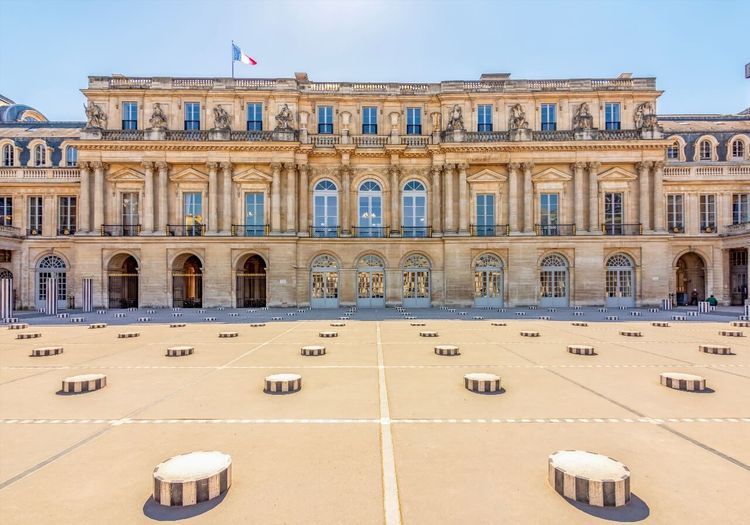
Enclosed in an 18th-century arcaded gallery, the Palais-Royal garden offers a radically different atmosphere from all other Parisian parks. This rectangle of greenery in the 1st arrondissement is cut off from the noise of the city, surrounded by classical facades and arcades where art galleries and antique shops follow one another.
The Buren columns in the courtyard of honor, the black and white striped cylinders installed in 1986 amid memorable controversy, are today a popular Instagram photography spot. Lime trees trimmed into arbors form a green hedge that isolates the garden from the noise of Rue Saint-Honoré. Two symmetrical fountains, a few residents reading on benches: the atmosphere is almost provincial for such a central location.
The garden is particularly quiet on weekday mornings, before the arcade shops open. Free entry.
4. Buttes-Chaumont Park
The Buttes-Chaumont Park (1 Rue Botzaris, 75019 Paris, rated 4.7/5 on Google for 65,000 reviews) resembles no other Parisian green space. Inaugurated in 1867 under Haussmann, its 25 hectares in the 19th arrondissement are built on a former gypsum quarry and former dump. Engineer Alphand dynamited the terrain, dug an artificial lake, and shaped a central island from which a cliff descends 50 meters above the water, a deeply uneven geography that would have nothing natural in a flat Parisian landscape.
From the top of the Temple of the Sibyl, at the island's summit, the view over Paris is one of the capital's most beautiful and least known to tourists. You can see Montmartre to the northwest, the Eiffel Tower to the southwest, and on clear days the heights of Saint-Cloud on the horizon. To reach the island, two bridges cross the lake: the brick bridge and the suspension bridge.
The park's lawns are widely open, making it a meeting place for families from northeast Paris. Two restaurants enliven the space, including Rosa Bonheur which has become a festive institution in the evening. The park stays open until midnight in peak season, a rare duration for a Parisian park.
To extend your day in northern Paris, the Ryo audio guide of Montmartre and Sacré-Cœur starts thirty minutes' walk to the northwest.
5. Monceau Park
The Monceau Park (35 Boulevard de Courcelles, 75008 Paris, rated 4.6/5 on Google for 23,370 reviews) is Paris's most preserved garden for a simple reason: nothing in the classic tourist geography naturally pushes toward the 17th arrondissement. It's this discretion that makes it one of the most pleasant.
Created in 1769 for the Duke of Chartres in the "English garden" style, it incorporates neoclassical follies typical of the 18th century: a semicircular Corinthian colonnade by the edge of a small pond, a miniature Egyptian pyramid, fake temple ruins. These fantasy constructions give the park an open-air theater atmosphere.
An Oriental plane tree classified among Paris's largest, circumference exceeding 7 meters, planted in 1830, stands at the northeast corner. In May, rhododendron beds and wisteria in secondary alleys give the park an almost rural appearance. Free entry, opens at 7 AM, closes at 10 PM in summer.
6. Bois de Boulogne
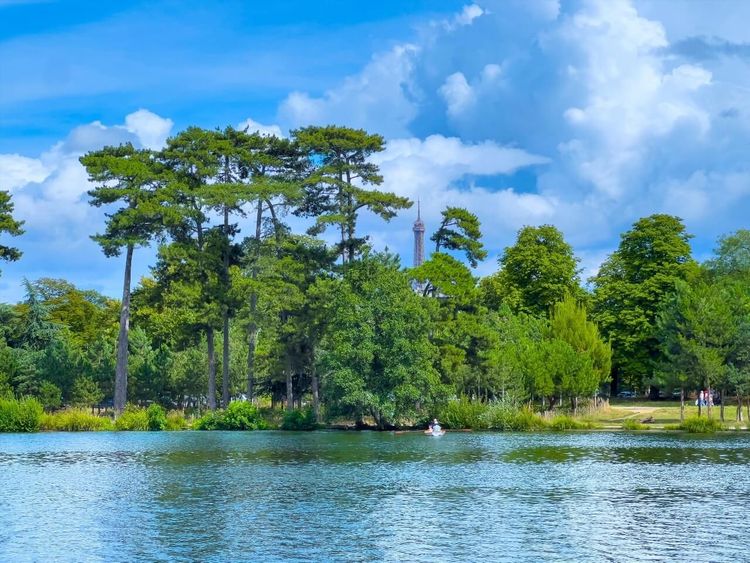
With 846 hectares, the Bois de Boulogne (Route de Sèvres, 75016 Paris, rated 4.3/5 on Google for 28,847 reviews) is Paris's largest green space. Former royal forest transformed into public promenade under Napoleon III, it constitutes a city within the city with its racecourses, lakes, botanical gardens and amusement park.
The wood has two lakes connected by a canal: the Grand Lac and Lac Inférieur. Boats have been available for rental since 1850. The two islands of the Grand Lac host the Chalet des Îles, a restaurant accessible only by boat, one of Paris's most original addresses for weekday lunch.
The Shakespeare Garden, nestled in the southern part, is a themed garden planted with all species mentioned in Shakespeare's works: mandrake, yew, holly, Damask roses. It's too often ignored while representing one of the capital's most original landscape projects. Just next door, the Louis Vuitton Foundation by Frank Gehry, inaugurated in 2014 with its glass sails, is worth the detour even without entering the exhibitions.
The 37 kilometers of marked bike paths make the wood Paris's most varied cycling route. The Longchamp and Auteuil racecourses host major horse racing events, with the Prix de l'Arc de Triomphe in October remaining the most sought-after social event in the Parisian calendar.
Access: metro Porte Maillot (line 1) or RER C, Avenue du Président Kennedy station for the southern sector.
7. Bois de Vincennes
On the eastern side of Paris, the Bois de Vincennes (Route de la Pyramide, 75012 Paris, rated 4.5/5 on Google for 41,365 reviews) surpasses the Bois de Boulogne in surface area: 995 hectares classified as a national domain, making it the largest natural space in all of Île-de-France accessible from Paris. Less frequented by foreign tourists, it's deeply rooted in the habits of residents of the 12th and 20th arrondissements.
The Vincennes Zoo was completely renovated and reopened in 2014. It offers five biozones, Madagascar, Patagonia, Sahel-Sudan, Amazonia, Europe, with species rarely visible in captivity: southern white rhinoceros, European wolves, Sumatran orangutans. The large artificial rocks from the 1930s have been preserved as architectural heritage. Allow 3 to 4 hours for a complete tour.
The Château de Vincennes, at the northern entrance of the wood, houses France's best-preserved medieval keep: 52 meters high, moats, intact battlements. The wood's four lakes, Daumesnil, des Minimes, Saint-Mandé, de Gravelle, offer boats and picnics on their shores.
This area is also covered by the Ryo audio-guided tour of Père-Lachaise, which runs along the wood's boundaries from the cemetery.
8. Parc de la Villette
The Parc de la Villette (211 Avenue Jean Jaurès, 75019 Paris, rated 4.4/5 on Google for 69,245 reviews) is not a park in the traditional sense, it's an urban laboratory of 55 hectares designed by architect Bernard Tschumi in 1984 on the site of Paris's former slaughterhouses. Here, no flower beds or round basins: meadows, canals, walkways, and 26 red steel constructions called "follies."
The Cité des Sciences et de l'Industrie, the Géode, the Paris Philharmonic and the Grande Halle border the park or integrate directly into it. Ten themed gardens divide the space into distinct sequences: mirror garden, dune garden, bamboo garden. In summer, the outdoor cinema sets up its giant screen on the great meadow, thousands of Parisians come with blankets and picnics for screenings that start at nightfall. It's a park that works better when there's programming; check the agenda before going there specifically.
Free entry to the park. Access: metro Porte de Pantin (line 5) or Porte de la Villette (line 7).
9. André-Citroën Park
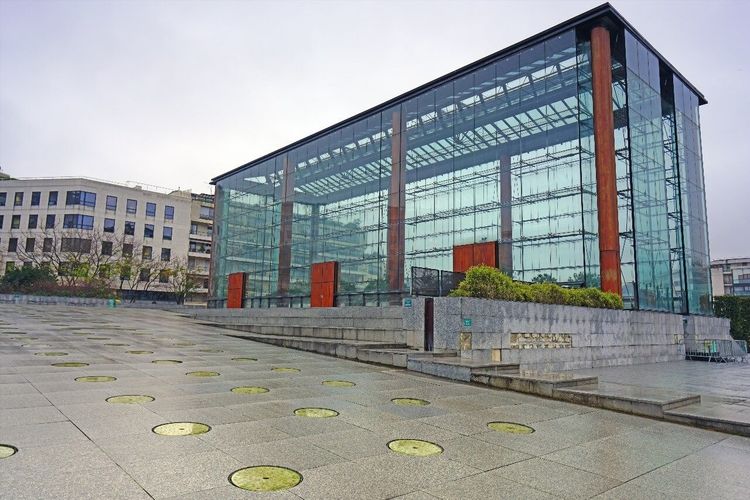
The André-Citroën Park (2 Rue Cauchy, 75015 Paris, rated 4.4/5 on Google for 10,558 reviews) was born in 1992 on the former wasteland of Citroën factories in the 15th arrondissement, designed by Gilles Clément and Alain Provost. Its concept rests on a tension between order and freedom: two large glass greenhouses frame a geometric central lawn, while six themed gardens cultivate radically different atmospheres, white garden, black garden, metal and precious stone gardens.
The main attraction remains the Generali balloon: a tethered hot air balloon of 22 meters in diameter rises to 150 meters in height for a panoramic view over Paris. The ascent lasts about ten minutes. In strong winds, the balloon doesn't go up, check the weather before making a special trip.
The park's lawns are accessible without restriction, making it a good option on summer days when the Tuileries and Luxembourg are overcrowded. Families with children are very present on weekends.
10. Montsouris Park
The Montsouris Park (2 Rue Gazan, 75014 Paris, rated 4.6/5 on Google for 17,221 reviews) is the overlooked green lung of the 14th arrondissement: 15.8 hectares of rolling lawns, an artificial lake populated with ducks and swans, and shaded alleys that invite walking without precise itinerary. Wedged between the Cité Universitaire Internationale and Boulevard Jourdan, it remains ignored by guidebooks while being among Paris's most pleasant.
Designed by Barillet-Deschamps under Haussmann, inaugurated in 1878 for the Universal Exhibition, it was victim of a memorable incident during its inauguration: the lake completely drained by accident due to a poorly closed valve. The responsible engineer committed suicide the same day according to period chronicles, an anecdote that park guards willingly pass on.
Students from the neighboring Cité Universitaire gather there from the first beautiful days. Free concerts and shows are organized there in summer by the 14th arrondissement City Hall.
11. Bagatelle Park
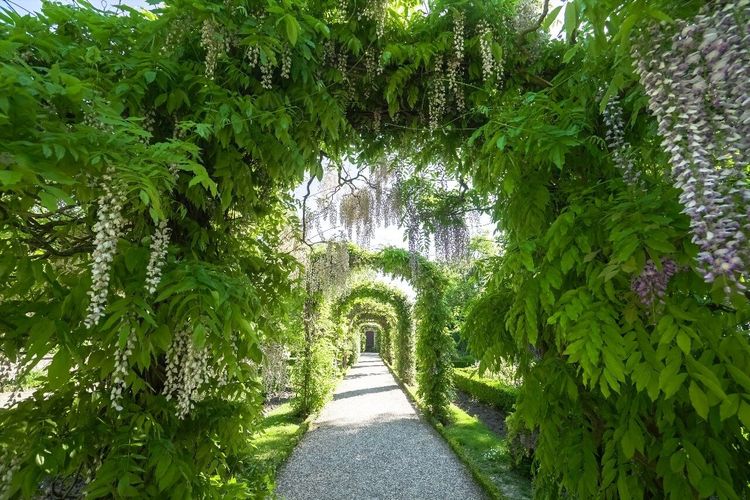
The Bagatelle Park (Route de Sèvres à Neuilly, 75016 Paris, rated 4.6/5 on Google for 5,009 reviews) deserves an entire afternoon. Enclosed in the Bois de Boulogne, this 24-hectare park houses the most important rose garden in Île-de-France: 9,000 rose bushes representing 1,200 different varieties, in full bloom in June during the international new rose competition, one of the world's most prestigious.
The Château de Bagatelle was built in 64 days in 1777, on a bet by the Count of Artois with Marie-Antoinette. The Anglo-Chinese style mixes artificial grottos, rustic bridges and Chinese kiosk. The park was redesigned by Jean-Claude Nicolas Forestier in 1905 and is listed among France's remarkable gardens.
Entry is free from October to end of March, then paid during flowering season (about €3). This billing explains the relative tranquility of the walkways compared to the major free parks, a compelling argument for June weekends.
12. Jardin des Plantes
The Jardin des Plantes is the oldest of Paris's major gardens still in operation, founded in 1626 as the royal garden for medicinal plants. Its 28 hectares in the 5th arrondissement include three museums of the National Museum of Natural History, a menagerie (Europe's oldest public zoo, opened in 1794 without interruption) and several tropical and temperate greenhouses.
The Grande Galerie de l'Évolution is worth the trip even for non-scientists: the staging of animal biodiversity, procession of giraffes, elephants, whales suspended from the ceiling, is among France's most spectacular. The large tropical greenhouses date from 1836 and count among Paris's most beautiful 19th-century metal constructions.
The hornbeam labyrinth planted in 1788, still accessible at the garden's northeast corner, constitutes Paris's oldest labyrinth. Free entry to the botanical garden; museums and menagerie are paid.
13. Auteuil Greenhouse Gardens
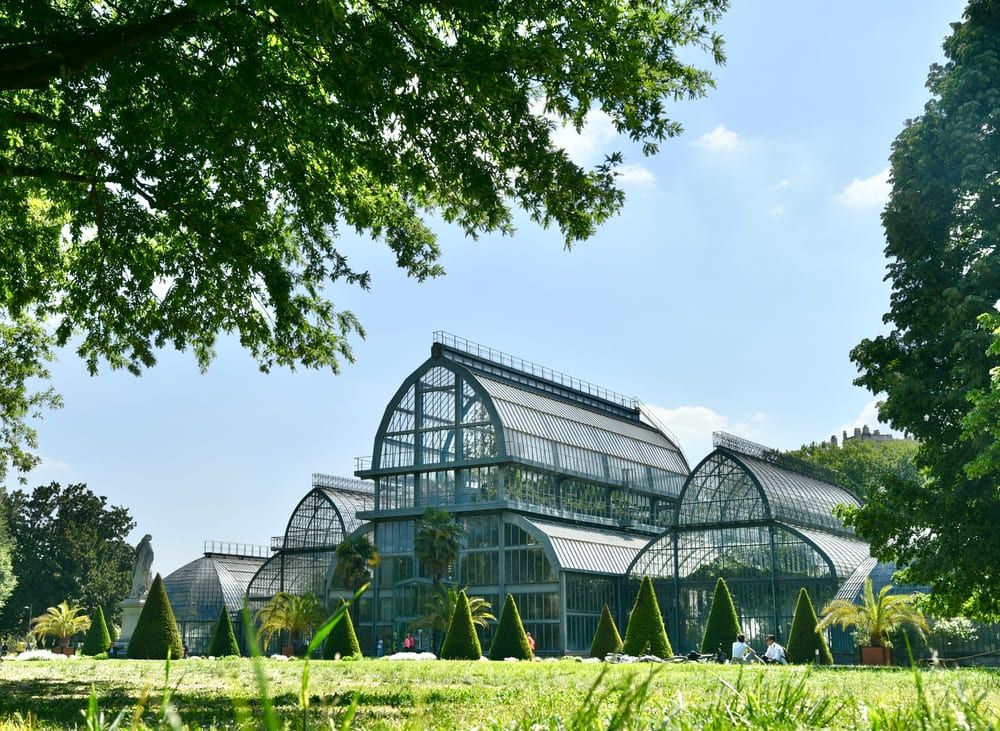
The Auteuil Greenhouse Gardens (1 Avenue Gordon-Bennett, 75016 Paris, rated 4.6/5 on Google for 3,938 reviews) is probably Paris's most beautiful public horticultural complex, and virtually confidential. Located in the 16th arrondissement two minutes from Roland-Garros stadium, it groups five monumental greenhouses built between 1895 and 1898 by architect Jean-Camille Formigé.
The large central greenhouse houses century-old palm trees that reach the glass roof at 15 meters high. The tropical and temperate greenhouses cultivate camellias, orchids and carnivorous plants. The exterior offers a rock garden and flower beds renamed each season.
Free entry. One of the only places in Paris where tropical humidity allows you to warm up in winter without paying for a coffee.
14. Bercy Park
The Bercy Park (128 Quai de Bercy, 75012 Paris, rated 4/5 on Google for 35,044 reviews) illustrates Paris's industrial transformation converted into green space. Its 14 hectares in the 12th arrondissement occupy the former storage alleys of France's largest wine warehouse, the Bercy cellars, which supplied the capital since the 19th century.
The conversion, begun in the 1990s, preserved the old vines, brick warehouses and ground rails as industrial memory. The park is divided into three distinct gardens: the romantic garden (free lawns, old trees), the vine garden with a real producing vine, and the regular parterre. Bercy Village, the commercial area in the rehabilitated old cellars, borders the park on the north side.
The Simone-de-Beauvoir footbridge connects the park to the Bibliothèque nationale de France on the left bank, a pedestrian crossing at river level particularly pleasant at dawn.
15. Clichy-Batignolles Park, Martin Luther King
The Clichy-Batignolles Park, renamed Martin Luther King Park (147 Rue Cardinet, 75017 Paris, rated 4.4/5 on Google for 6,800 reviews), represents the new generation of Parisian green spaces. Created in 2007 in the Batignolles ZAC (17th arrondissement), it focuses on urban ecology: green roofs, rainwater collection, total absence of pesticides since its creation.
Its 8.5 hectares run along the railway tracks of Gare Saint-Lazare, with a perspective on the contemporary buildings of the new Batignolles district. The artificial river that crosses the park creates micro-habitats for birds and insects, nesting boxes are installed on trees, and species observed each year are displayed on educational panels. The lawns are open without restriction, making it a very busy gathering place on weekends.
16. Promenade Plantée
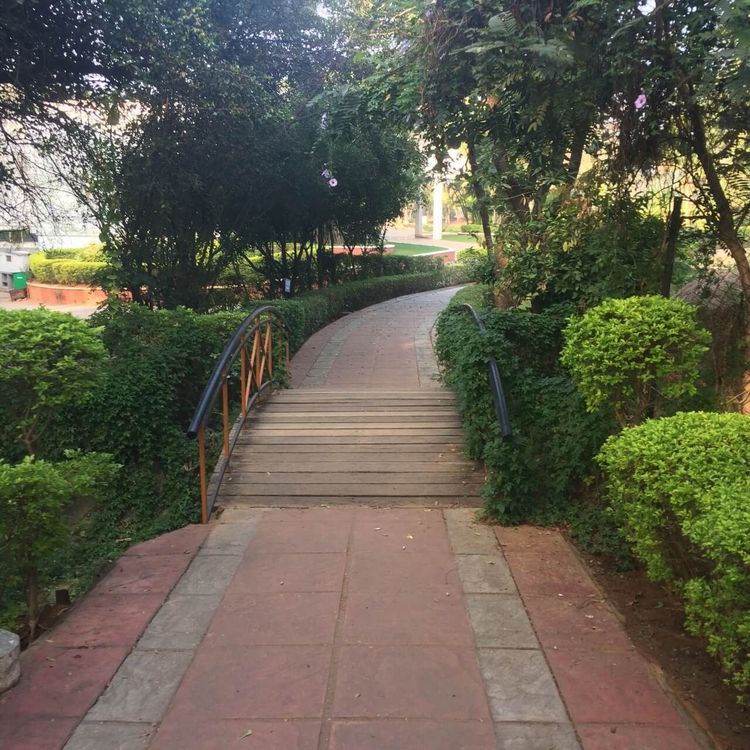
The Promenade Plantée (1 Avenue Daumesnil, 75012 Paris, rated 4.6/5 on Google for 6,841 reviews), also called Coulée Verte René-Dumont, is a former aerial railway line in the 12th arrondissement transformed into a 4.7-kilometer green corridor, the ancestor of New York's High Line, which it directly inspired with the concept in 1993, ten years before the New York project.
The promenade starts at Bastille from the Daumesnil viaduct and ends in Vincennes passing above the neighborhood rooftops at 9 meters height. Below, the viaduct arches shelter the artisan shops of the Viaduc des Arts, cabinetmakers, luthiers, fashion designers. This combination, elevated plant promenade and art crafts below, is unique in Paris.
The promenade is accessible by about ten staircases distributed along the route. Free entry.
17. Paris Floral Park
Integrated into the Bois de Vincennes, the Paris Floral Park (Route de la Pyramide, 75012 Paris, rated 4.5/5 on Google for 16,901 reviews) is the largest botanical garden in eastern Paris: 32 hectares with collections of dahlias, camellias, rhododendrons and irises that succeed each other from season to season.
What guides don't always mention: the floral park is also an open-air concert hall. For several weeks each summer, the Paris Jazz Festival and Classique au Vert organize weekend concerts on the main stage, included in the entry ticket (€2.50 approximately). One of the rare Parisian parks where dogs are tolerated on leash throughout the entire space.
18. Belleville Park
The Belleville Park (47 Rue des Couronnes, 75020 Paris, rated 4.2/5 on Google for 6,248 reviews) culminates at 108 meters altitude in the 20th arrondissement, the second highest point in Paris after Montmartre hill. Its 4.5 hectares in successive terraces offer an exceptional panorama over the rooftops of Paris from the east, a view that tourist guides mention much less than Montmartre's.
Developed in 1988 on a former unsanitary housing estate, the park preserves a vine that recalls that Belleville was once a wine-growing village separate from Paris. The cascade fountains that descend the main slope create a permanent and pleasant water sound in summer. The upper terrace, called "Belleville belvedere," is one of the best places to watch the sunset over Paris without paying monument entry fees.
To extend the walk in eastern Paris, the Ryo audio-guided tour of Père-Lachaise starts a few hundred meters away.
19. Square du Vert-Galant
The Square du Vert-Galant is the smallest on this list and perhaps the most romantic. Set into the western tip of Île de la Cité, at the level of Pont-Neuf, this triangle of greenery plunges below Seine level and offers a unique position: surrounded by water on three sides, with a direct view of barges and tour boats passing at eye level.
Its name recalls Henri IV, "le Vert-Galant" was the affectionate nickname Parisians gave their libertine king. An equestrian statue of Henri IV stands at the entrance on Place du Pont-Neuf. Open from sunrise to sunset, free entry. On weekday mornings, you can find yourself almost alone two minutes from the Louvre.
20. Georges-Brassens Park
The Georges-Brassens Park (89 Rue Brancion, 75015 Paris, rated 4.4/5 on Google for 6,733 reviews) occupies the former slaughterhouses and livestock market of Vaugirard in the 15th arrondissement, closed in 1979. Its 8.7 hectares constitute a remarkable example of industrial conversion: the cast iron pavilions, livestock marking corridors and watering basins have been entirely preserved.
A community apiary, a vine, an orchard of old varieties and an aromatic garden compose the botanical offering. The Paris City thematic library is installed there in one of the former pavilions. The old and used book market, which takes place on weekends in the livestock hall, has attracted Parisian bibliophiles for several decades, one of the most authentic addresses for finding a rare book in Paris.
Paris Parks: Hours, Closures and Practical Rules
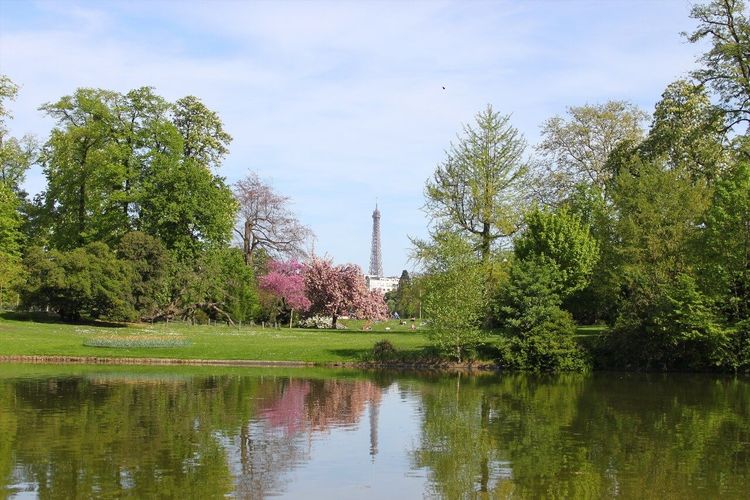
Before setting out to explore Parisian parks and gardens, some useful reference points to avoid unpleasant surprises.
The vast majority of Parisian parks are free: Luxembourg, Tuileries, Palais-Royal, Buttes-Chaumont, Monceau, André-Citroën, Bois de Boulogne, Bois de Vincennes, Promenade Plantée, Montsouris, Belleville, Bercy, Batignolles. Exceptions: Bagatelle (around €3 in season, free off-season), Parc Floral (around €2.50), Vincennes Zoo (paid), Jardin des Plantes menagerie (paid).
General hours: most City of Paris gardens open between 7:30 and 8:30 AM depending on season and close between 7:30 and 10:30 PM. The Bois de Boulogne and Vincennes remain permanently accessible. Buttes-Chaumont Park closes until midnight in peak season, making it a unique option for summer evenings.
Closures due to strong winds: since the storms of 1999 and 2010, the Paris City Hall preventively closes wooded parks as soon as gusts exceed 70 km/h. Closures are announced on paris.fr. The Bois de Boulogne and Vincennes are most often affected due to their tree density.
Common rules: dogs are prohibited in most parks except in designated dog areas. Barbecues are prohibited in all City of Paris green spaces. Bicycles are allowed in the woods; prohibited or tolerated on certain paths in central gardens.
Our Ryo app offers several audio-guided itineraries that connect the main central green spaces, from the Tuileries Garden (113 Rue de Rivoli, 75001 Paris, rated 4.6/5 on Google for 117,772 reviews) to Luxembourg crossing the Latin Quarter and its medieval streets.
FAQ
What is the largest park in Paris?
The Bois de Vincennes is the largest green space in Paris with 995 hectares, followed by the Bois de Boulogne (846 hectares). Among the urban parks developed within Paris limits (excluding woods), Parc de la Villette is the largest with 55 hectares, ahead of the Tuileries (28 ha) and Jardin des Plantes (28 ha).
Are the parks and gardens of Paris free?
The vast majority of Parisian parks are free and open access. Exceptions include Parc de Bagatelle (around €3 during flowering season, free from October to March), Parc Floral de Paris (around €2.50), Vincennes Zoo and the Jardin des Plantes menagerie (paid). All other spaces mentioned in this article are free.
Why do Paris parks close during strong winds?
Paris wooded parks close preventively during strong wind episodes, gusts exceeding 70 km/h, to prevent accidents related to falling branches or trees. Closure is announced on paris.fr and mainly concerns the Bois de Boulogne and Vincennes, as well as the most densely wooded parks like Buttes-Chaumont.
Can you lie on lawns in Parisian parks?
It depends on the park. Lawns are completely free at Buttes-Chaumont park, la Villette, André-Citroën park, Martin Luther King park and in both woods. At Luxembourg Gardens, only part of the lawns is accessible according to season, indicated by signs. At the Tuileries, regulations vary by sector.
What season is best for visiting Paris parks?
Spring (April-June) is the best time for botanical gardens: tulips at the Tuileries and Luxembourg, iris and rose garden at Bagatelle in June, rhododendrons at the floral park in May. Summer offers lively lawns and outdoor concerts. Autumn colors the woodland paths in rust and yellow. Winter is finally the season ### Which park offers the best view of Paris?
The Belleville Park (108 m altitude) offers a panorama over Paris rooftops from the east, less frequented than Montmartre's view. The Temple of the Sibyl at the top of Buttes-Chaumont offers a 360° view over northern Paris. For an aerial view, the tethered balloon at André-Citroën park rises to 150 meters altitude, the highest option without booking long in advance.
Are Parisian parks accessible by public transport?
Yes, all major parks are served by metro or RER without significant walking. Luxembourg Gardens is two minutes from Luxembourg station (RER B). Buttes-Chaumont park is five minutes from Buttes-Chaumont station (line 7bis). La Villette park is directly accessible from Porte de la Villette (line 7). Bois de Vincennes from Château de Vincennes (line 1).
Paris has over 3,000 hectares of public green spaces, an area that exceeds that of many entire French cities. Each park, each of these Parisian gardens has its own rules, history and atmosphere: some are open-air bourgeois salons, others unceremonious urban prairies, still others ecological laboratories or converted industrial memories. Choose according to your mood and the season.
To complete your exploration of the capital, the Ryo audio walking tour of Paris covers 8.9 km across the historic districts of the center, a natural complement to park walks for those who want to understand Paris differently than through paper guides.
À lire également