© Shutterstock
 Votre guide Ryo
Discovering the Sculpted Rocks of Rothéneuf
When visiting Saint-Malo, it would really be a shame not to visit the amazing Sculpted Rocks of Rothéneuf!
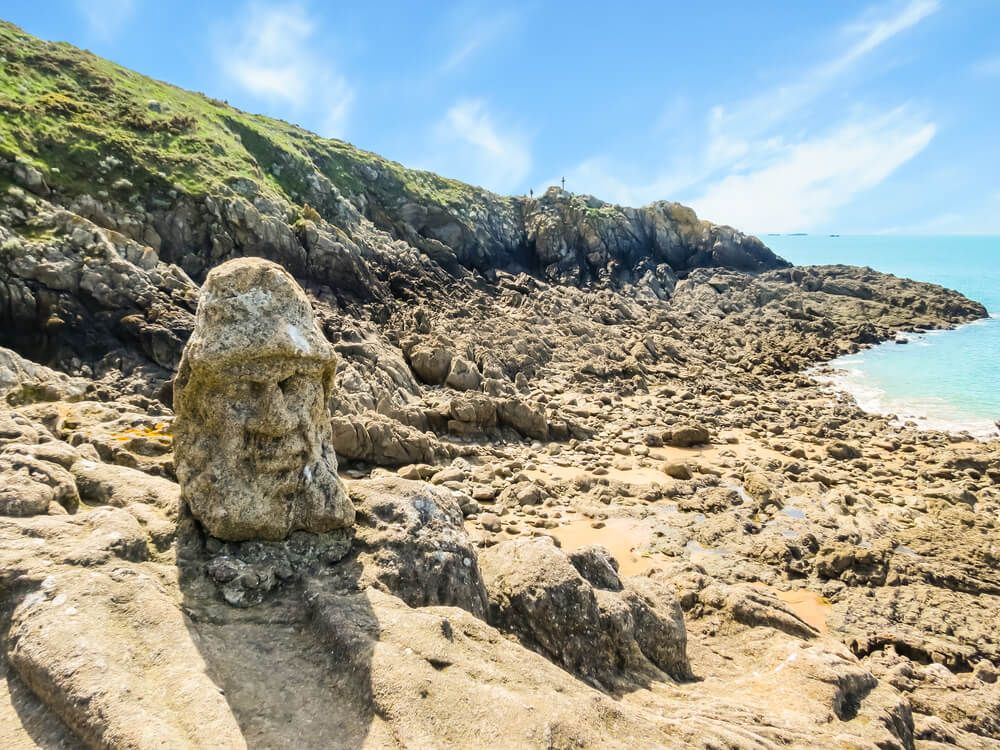
A true attraction for young and old, you'll be truly surprised to discover these faces sculpted directly into the rock over more than 500 m2. This piece of raw art is one of the most renowned in Brittany.
What makes up this sculpted rock fresco?
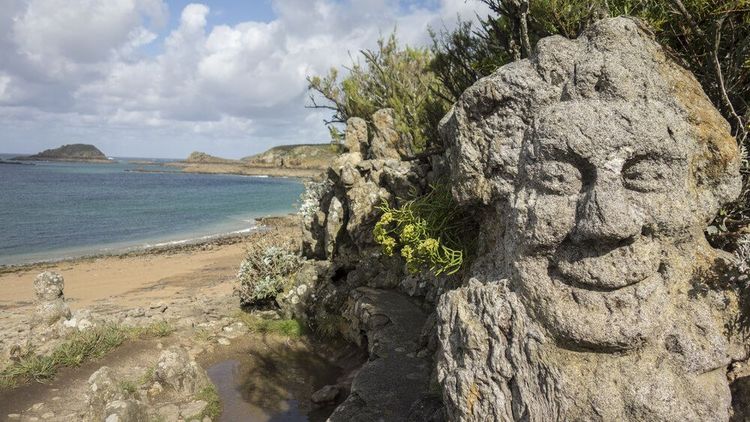
The immense granite fresco reveals faces, silhouettes, bas-reliefs, monuments and statues.
More than 300 figures that were related to the news of the time, famous personalities, but also characters from Breton legends and local saints. Among the best known, you might spot the famous Breton explorer Jacques Cartier or Saint-Budoc, a saint well known to Bretons.
Once colored with lime and tar, time has gradually erased these touches of color. The tides and rock erosion don't help with preservation either, just like the footsteps of careless visitors.
Who sculpted the Rocks of Rothéneuf?
Abbé Fouré (Adolphe Julien Fouéré 1839-1910) is the creator of these sculptures. Originally from the region, he settled in Rothéneuf in 1894 following a stroke that left him deaf and mute, which left him no choice but to abandon his ministry.
A man of faith and determination, he embarked on this new quest equipped only with a hammer and chisel, and at the already advanced age of 54 for that time. It took him no less than 14 years to achieve this result, until paralysis forced him to stop in 1907. He died 3 years later.
Deprived of speech and plunged into a world of silence, sculpture had become his only mode of expression in the face of disability. "The hermit of Rothéneuf" unwittingly became an attraction for tourists from the seaside resorts of Saint-Malo and Dinard, as well as for locals. Beyond Rothéneuf, the walled city unfolds across thirty audio-guided stops, from the castle to Chateaubriand's birthplace.
The legend of the Rothéneuf, a family of wreckers from Saint-Malo
Abbé Fouré wanted to immortalize this legend that supposedly took place in the 16th century. The Rothéneuf family lived near the point of the emerald coast. Hunting, fishing, theft and smuggling were supposedly part of their daily life. They used fast ships to catch up with vessels offshore to plunder them.
We don't know if they were corsairs or pirates, but in any case, these actions supposedly allowed the Rothéneuf to amass a real fortune and establish themselves in the region until the revolution, when, having sided with the Chouans, they were then massacred by locals.
Abbé Fouré represented them in the truculent features of a Gargantua and his henchmen, as well as their end in the features of a sea monster that devours them. The site to the north represents the abyss of paradise with the chapel of Saint Budoc, then comes the abyss of hell and its staircase that descends to the cliffs, and finally, monsieur de Rothéneuf whom we recognize by the sea monsters slumbering at his feet.
This titanic work earned him the nickname of the "Breton Facteur Cheval".
À lire également