© Shutterstock
 Votre guide Ryo
Solidor Tower, a symbolic landmark to visit in Saint-Malo
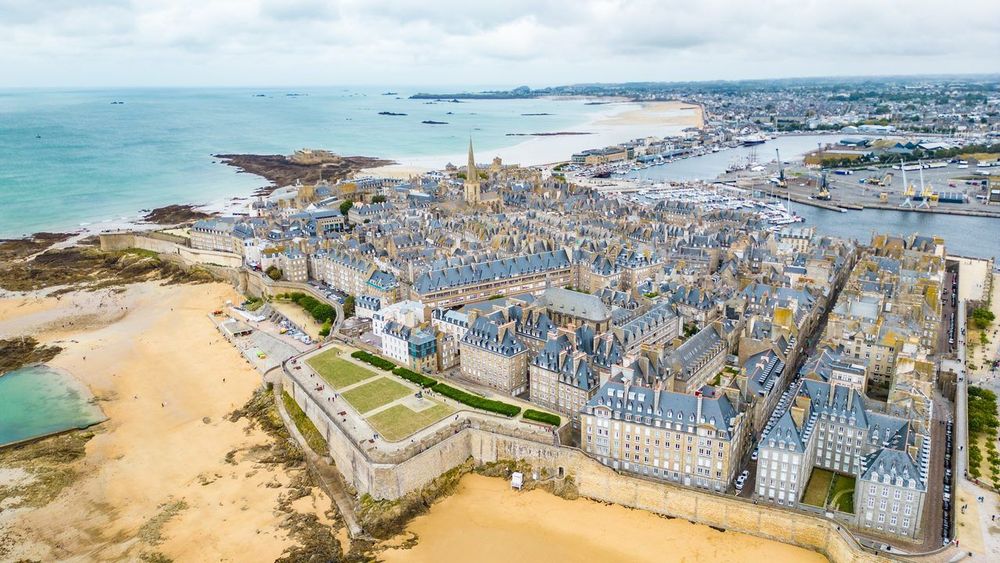
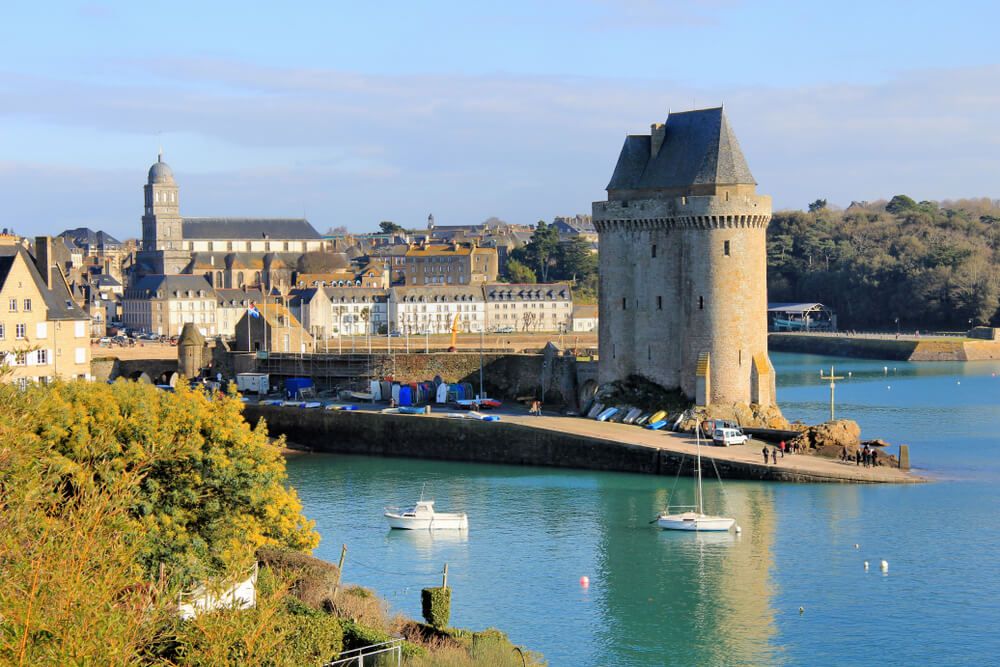
If you're visiting the corsair city of Saint-Malo, don't just stay within the walls and don't hesitate to visit Solidor Tower. Located in the Saint Servan district near the Cité d'Alet, this tower overlooks the mouth of the Rance by the sea.
In medieval defensive style, Solidor Tower consists of towers flanked by machicolations, a fixed bridge resting on 2 arches and a drawbridge. Medieval fortification enthusiasts will absolutely love it!
Photography lovers won't be left out either. Indeed, a magnificent panorama of the Rance estuary and the bay of Saint-Malo awaits them at the top of the tower by taking the walkway around. A lovely view of the Saint Malo region and its surroundings.
What was Solidor Tower used for?
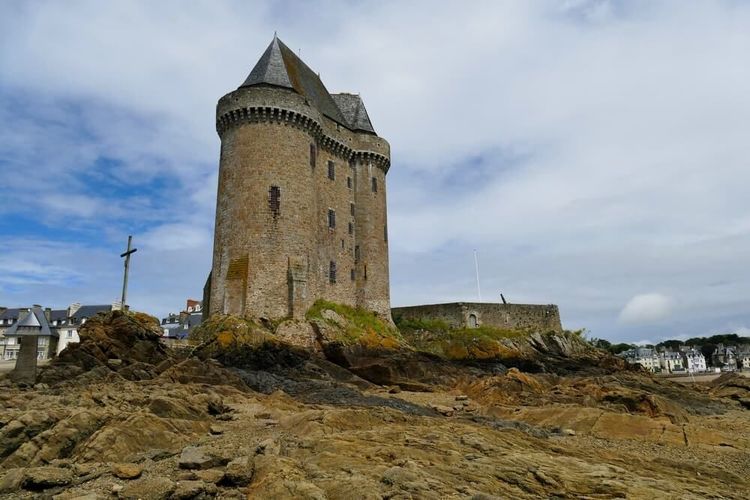
Solidor Tower was built in the 14th century on the orders of Duke Jean IV of Bretagne to maintain control over the city of Saint-Malo and the entrances at the Rance level. Perched on its rocky islet, its name would translate from Breton as Gate of the River. It is therefore indeed a surveillance site.
What is Solidor Tower composed of?
By visiting Solidor Tower, you will discover 3 floors in the three round and slender towers, a combination of these three towers actually forms the tower surrounded by water, itself marked by the entrance gatehouse, to which a courtyard is added.
A tall construction was necessary to be able to control access to Saint-Malo with a view over Alet and the surroundings. To reach the top of the tower, you will have to climb the 104 steps which are said to be easily manageable.
The cross was erected at the foot of the tower in 1985 on the same rock where French navigator and explorer Jacques Cartier cast off the moorings to leave for the discovery of Canada in the year 1534.
The different uses and activities of Solidor Tower throughout the centuries...
Initially designed to play the role of a watchtower, it was later used as a prison during the revolution, where priests, nuns and military personnel were imprisoned, then as a warehouse under the Empire.
From the 1970s, a new page opened, it became until recently a museum, that of the Long Course - Cap Horniers which was full of objects and onboard instruments that had belonged to sailors, travelers, but also, marine navigation charts from the 19th and 20th centuries, models, onboard instruments. This place allowed you to discover the history of sailing navigators and crew members who sailed around the world via Cape Horn during their long voyages. All this has ended and these treasures have been transferred to the maritime history museum in Saint-Malo. That same seafaring past runs through our audio-guided tour of the walled city, thirty stops in all.
History of Solidor Tower
- The Gallo-Romans at the beginning of the 4th century had already used this rock due to its situation to build a small fort there to protect the port of Alet. It is still possible today to see some of these Roman stones that are part of the tower's foundations.
- The tour d'Oreigle or Tour d'Aiquin, a fortified site built on the ruins of the Gallo-Roman fort, was destroyed in the 13th century by soldiers from Saint-Malo.
- In the 14th century, Jean IV de Bretagne had the keep built on the ruins of the tour d'Oreigle, in order to maintain control over the Rance and the commune of Saint-Malo whose inhabitants were rebellious, and disputed his authority.
- The drawbridge was replaced by a stone bridge in 1756.
- The large roof that can currently be seen is not original, it was modified in the 19th century by architect Albert Ballu.
During the Gallo-Roman period, the sea was 8 meters lower, so if you find yourself near Solidor Tower at low tide, you might be lucky enough to see the stone causeway that led to the Gallo-Roman port...
Practical information
- Address: 9 Cale Saint-Père, 35400 Saint-Malo
- Phone : 02.99.40.71.16 no website
- Opening hours: Open from 10am to 12:30pm and from 2pm to 6pm daily from April to September (except May 1st) – From October to March, open Tuesday to Sunday from 10am to 12pm and from 2pm to 6pm (except public holidays).
- 2022 Prices:
Adult: entry €6 + free City History Museum
Child 8 to 18 years: entry €3
Large family rate (2 parents + 2 children or more): entry €17
À lire également