
Créé par Emilie, le 16 mai 2026
Votre guide Ryo
© Shutterstock
Naples doesn't ease you in gently. From the moment you step off the train at Napoli Centrale, the city hits you with noise, colour, and the smell of frying dough drifting from a street-corner friggitoria. This is southern Italy at its most unfiltered, chaotic, generous, and utterly compelling, and the list of fun things to do in Naples runs far deeper than any guidebook lets on. If you want to explore it properly, the Ryo audio guide for Naples covers 18 stops across 3.8 km and takes about an hour and a half on foot, which is a solid foundation for any first visit.
What follows are 30 experiences that go well beyond the usual postcard hits. You'll find a Greek tunnel system buried 40 metres below the city streets, a world-class archaeology museum whose erotic collection is kept behind a locked door, a market where vendors sell fish so fresh they're still twitching, and a viewpoint from Posillipo where, on a clear evening, Vesuvius appears to float above the sea. Naples rewards the curious, and this list is built for exactly that kind of traveller.
1. Walk the Spaccanapoli
The name means « it splits Naples », and that is exactly what this dead-straight street does, cutting through the historic centre from east to west along the axis laid out by the ancient Greek city of Neápolis. Spaccanapoli (Via Benedetto Croce, 80134 Naples, rated 4.4/5 on Google (539 avis)) is not a single road but a succession of them: Via Benedetto Croce, Via San Biagio dei Librai, Via Vicaria Vecchia. Walk the whole length and you pass presepe workshops where artisans carve nativity figures year-round, second-hand bookshops piled floor to ceiling, and street shrines lit by LED candles. Give yourself at least two hours. The best light for photography falls in the late morning, before the alleyways fill with shadow.
2. Explore the Naples Underground (Napoli Sotterranea)
Below the streets of the historic centre lies a parallel city that most visitors never see. Napoli Sotterranea (Piazza San Gaetano 68, 80138 Naples, rated 4.5/5 on Google (30 927 avis)), the Naples Underground, is a network of tunnels, cisterns, and caverns carved from the volcanic tuff rock, some of which date back to the Greek settlement of the 5th century BC. The Romans expanded the system into a vast aqueduct; it supplied the city's water until the 1885 cholera epidemic, after which the tunnels were sealed and gradually forgotten.
Guided tours depart from Piazza San Gaetano roughly every hour and last about 80 minutes. You descend 40 metres below street level and walk through passages as narrow as 50 cm in places, holding a candle at the tightest sections. The deeper chambers open into large Greek cisterns, raw rock walls, pools of still water, and the faint echo of the city above. During World War II the tunnels served as one of the largest air-raid shelters in Europe, and the guides do not gloss over this chapter. The original family bunkers, the children's drawings scratched into the walls, and the belongings left behind when the all-clear finally sounded in 1944 make the wartime section genuinely affecting.
Tickets cost around €15 for adults. Book ahead on weekends; the Saturday evening tour sells out days in advance. Wear closed shoes and something warm, the underground stays at a constant 14°C regardless of the heat above.
3. Visit the National Archaeological Museum (MANN)
The Museo Archeologico Nazionale di Napoli (Via Miano 2, 80131 Naples, rated 4.6/5 on Google (28 240 avis)) (Piazza Museo 19, 80135 Naples, rated 4.6/5 on Google (36 512 avis)), almost universally abbreviated to MANN, holds one of the most important collections of ancient artefacts on the planet. This is not a hyperbolic claim. When Pompeii and Herculaneum were excavated from the 18th century onwards, the Bourbon kings of Naples decreed that the finest objects would come here. The result is a museum where room after room contains things that should not, by any reasonable measure, have survived two thousand years.
Start in the Farnese Collection on the ground floor. The Farnese Hercules, a Roman copy of a Greek original, standing at 3.17 metres, is so muscular it looks almost satirical. Nearby, the Farnese Bull is the largest ancient sculptural group ever discovered, carved from a single block of marble. Both were found in the Baths of Caracalla in Rome in the 16th century and are the kind of objects that make you stop and recalibrate your sense of scale.
Upstairs, the Pompeii rooms are where most visitors linger longest. The floor mosaics, particularly the Alexander Mosaic, depicting Alexander the Great's victory over Darius at the Battle of Issus, are staggering in their detail. The tessellated figures, each piece no larger than a fingernail, cover 5.13 square metres and were created around 100 BC.
The Gabinetto Segreto (Secret Cabinet) requires a separate ticket and houses erotic objects from Pompeii that were considered too explicit for the general public when the museum opened. The room was actually locked shut for long periods in the 19th century and only permanently reopened in 2000. It is genuinely interesting as a window onto Roman domestic and commercial culture, and the context-rich labelling makes it far more than a curiosity.
Plan at least three hours. The museum café on the upper floor has decent espresso and a terrace that looks onto the courtyard. Closed on Tuesdays.
4. Climb to Castel Sant'Elmo
Castel Sant'Elmo (Via Tito Angelini 20, 80129 Naples, rated 4.6/5 on Google (35 266 avis)) crowns the Vomero hill at 329 metres above sea level, and from its star-shaped ramparts you get the panorama that every Naples photograph is trying to capture: the bay curving south toward Sorrento, Vesuvius rising behind the port, the islands of Capri and Ischia floating in the haze. The fortress was built in 1329 under the Angevin kings and later reinforced by the Spanish into the six-pointed star plan you see today.
The climb is worthwhile, either on foot through the Pedamentina stairway (a 414-step descent from Vomero to the historic centre that most people walk upward in reverse) or via the Funicolare Centrale. Admission to the castle is around €5. Inside, the former prison cells house rotating contemporary art exhibitions. Budget about 90 minutes for the castle and views combined.

5. Eat a Real Margherita Pizza
The pizza Margherita was invented in Naples in 1889, when pizzaiolo Raffaele Esposito made a pizza with tomato, mozzarella, and basil to honour Queen Margherita of Savoy. Whether or not you believe the story, there is no better city on earth to eat one. Neapolitan pizza has its own EU-protected designation (STG, Specialità Tradizionale Garantita), and the rules are strict: «00» flour, San Marzano tomatoes, fior di latte or buffalo mozzarella, cooked in a wood-fired oven at 485°C for no longer than 90 seconds.
The result is a pizza with a charred, blistered crust (the cornicione) that has genuine chew, a centre that is wet rather than crisp, and a flavour that does not survive the flight home. Eat it at the counter if you can. The best-known addresses, L'Antica Pizzeria da Michele (Via Cesare Sersale 1, 80139 Naples, rated 4.3/5 on Google (52 379 avis)), Sorbillo, Di Matteo, have queues that stretch into the street by lunchtime. Arrive at 11:45 or go after 14:30. A margherita rarely costs more than €6.
6. Wander Quartieri Spagnoli
The Quartieri Spagnoli (Via Toledo, 80132 Naples, rated 4.6/5 on Google (6.4K reviews)) (Spanish Quarters) were laid out in the 16th century as a military barracks district for the Spanish troops occupying Naples. Today they are one of the city's most photogenic and authentically local neighbourhoods: a tight grid of narrow alleys, drying laundry strung between balconies three storeys up, votive shrines to Diego Maradona (treated here with the full reverence of a saint), and bars where the espresso costs 80 cents and no one asks for your name.
It is not a neighbourhood to rush. Pick a direction and walk. The alleys have a rhythm, a fishmonger at this corner, a pizza al portafoglio vendor at the next (a folded, carry-in-hand pizza that costs €1.50 and is the real fast food of Naples). The area is most alive in the late afternoon and early evening, when residents pull chairs into doorways and children play football in the wider intersections.
7. Tour Pompeii for a Day
Pompeii is about 25 kilometres south of Naples, 35 minutes by Circumvesuviana train from Napoli Centrale, and it remains one of the most astonishing archaeological sites in the world. When Vesuvius erupted on 24 August 79 AD, it buried the city under 4 to 6 metres of volcanic ash and pumice, killing an estimated 2,000 people and preserving, in extraordinary detail, the fabric of a prosperous Roman town at the moment of its destruction.
The site covers 66 hectares and contains temples, a forum, two theatres, a gladiatorial barracks, bakeries with stone millstones still in place, brothels with painted menus above the doors, and the haunting plaster casts of victims caught in their final positions. The casts are made by pouring plaster into the voids left by decomposed bodies in the ash, a technique developed in the 1860s by archaeologist Giuseppe Fiorelli. Seeing them is not prurient; it is a direct encounter with mortality at its most unexpected.
A few practical points. Buy your ticket online at pompeiiinpark.it before you go, the queues at the gate can be an hour long on summer mornings. Bring water and sun protection; there is almost no shade once you're inside the main excavation area. The site is too large to cover properly in less than three hours. Prioritise the Villa of the Mysteries (extraordinary frescoes on the western edge of the site), the House of the Faun (site of the Alexander Mosaic, now in MANN), and the Forum with its view of Vesuvius.
Hire an audio guide at the entrance (€8) or book a guided tour in advance. Going without any interpretation leaves the context paper-thin. For those who want to go deeper into the history of the bay before visiting, the Ryo audio tour of Naples covers the Greco-Roman layers of the city that Pompeii so vividly illustrates.
8. Visit Castel dell'Ovo
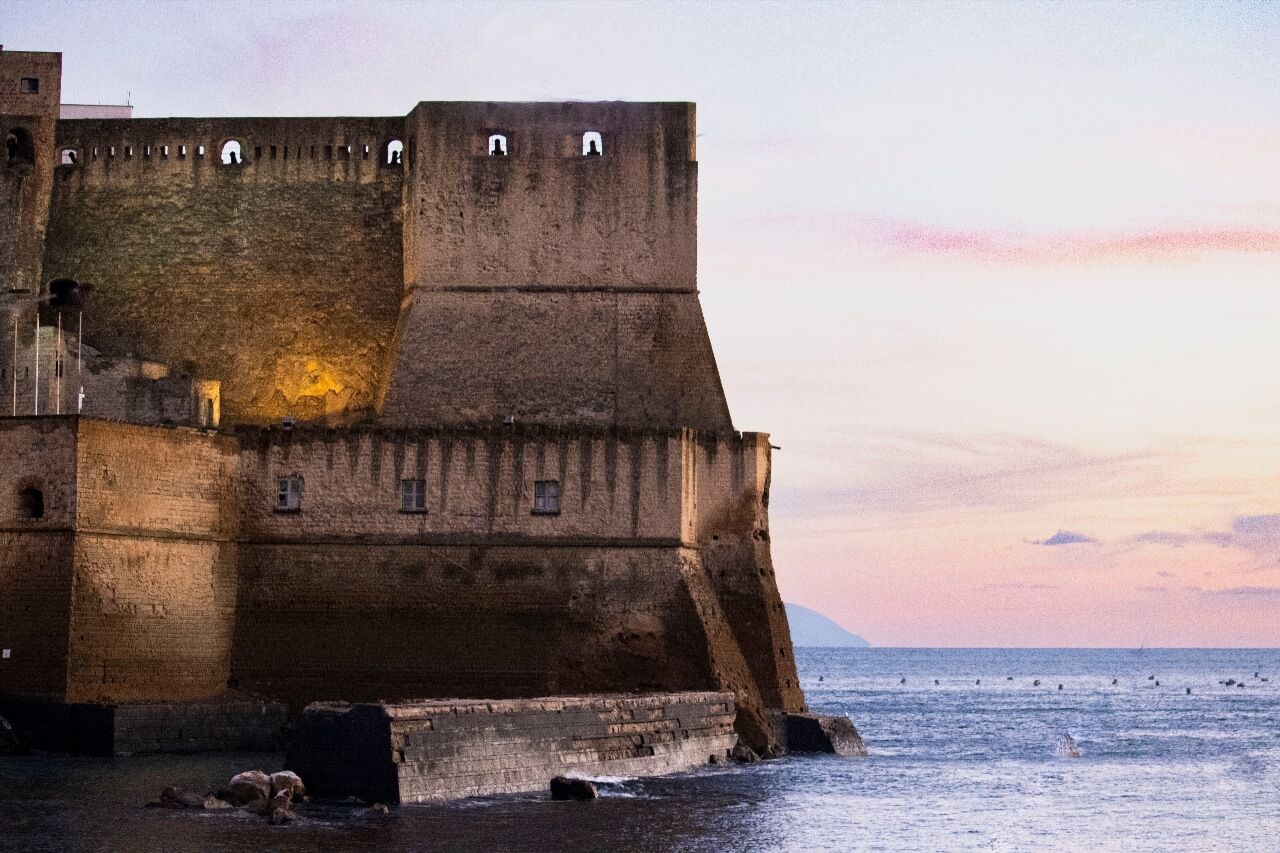
Castel dell'Ovo, the Castle of the Egg, sits on the tiny island of Megaride, connected to the Lungomare by a short causeway. It is the oldest standing fortification in Naples, built on the site of a Roman villa that once belonged to Lucullus, the general famous for his extravagant banquets. The medieval name comes from a legend attributed to the poet Virgil, who was said to have hidden a magical egg in the castle's foundations: as long as the egg remained intact, the city would stand.
Entrance is normally free, and the views from the upper battlements over the bay are among the best in Naples. Heads-up for 2026 : the castle has been closed to the public for restoration work, so check the official Comune di Napoli page before you go. Even when the interior is shut, the causeway and the surrounding Borgo Marinaro, a cluster of seafood restaurants on the water, stay open and make a logical lunch stop with the castle walls towering above you. Avoid the busiest weekend hours (noon to 14:00) when the causeway fills with groups.
9. Take the Ferry to Capri
Capri sits 32 kilometres off the tip of the Sorrento Peninsula and is reachable by high-speed hydrofoil from the Molo Beverello ferry terminal (Via Cristoforo Colombo, 80133 Naples, rated 4.2/5 on Google (318 avis)) in Naples in about 50 minutes. The island is undeniably popular, in July and August, the main piazzetta fills with enough designer sunglasses to supply a small country, but it absorbs visitors better than its reputation suggests, particularly if you push beyond the centre of Capri town.
The Blue Grotto (Grotta Azzurra) is the classic set piece: a sea cave on the northwest coast where light enters through an underwater opening and refracts to create an intense cobalt blue. You enter by rowing boat through a gap so low you have to lie flat, which is either thrilling or alarming depending on your relationship with confined spaces. The light effect is best between 10:00 and 13:00. Access closes when the sea is too rough, which happens more often than the brochures admit.
Ana Capri, the upper village, reached by chairlift from Capri town, is quieter and offers the Monte Solaro summit at 589 metres. The 13-minute chairlift ride delivers the best aerial view of the Faraglioni rock stacks and the bay. Walk back down via the path to the Villa San Michele at Anacapri, whose gardens and loggia contain an odd and absorbing collection of Roman sculpture assembled by Swedish physician Axel Munthe at the turn of the 20th century.
Ferry tickets from Naples run around €25 one-way. Book in advance on summer weekends. Take the first boat of the day (usually 07:15 or 07:45) to get two to three hours ahead of the main crowds.
10. Explore the Catacombs of San Gennaro
The Catacombs of San Gennaro are the largest underground burial complex in southern Italy and one of the most important early Christian sites in Europe. Carved into the tuff hillside beneath the Rione Sanità neighbourhood, the catacombs developed from the 2nd century AD onwards and contain some of the earliest Christian fresco cycles in the world, portraits of bishops, scenes from the Old Testament, and decorative schemes that fuse Roman and Christian symbolism in ways that hadn't quite settled into orthodoxy yet.
Guided tours run regularly and last about 45 minutes. The guides from the Cooperativa La Paranza, a social enterprise founded by local young people, are notably good at bringing the history to life. Admission is €9. Combine the visit with a walk through the Rione Sanità neighbourhood above (see section 27).
11. Stroll the Lungomare Caracciolo
Naples' seafront promenade runs for 2.8 kilometres along the bay from Castel dell'Ovo to the Mergellina harbour. On Sunday mornings the road is closed to traffic, and the entire city appears to come out for a walk: families with strollers, teenagers on bikes, elderly couples moving slowly through the sea air. The view across to Capri, with Vesuvius to the right and the bay curving ahead, is the one that has been painted, photographed, and marvelled at for three centuries without becoming less effective.
12. Visit the Royal Palace of Naples
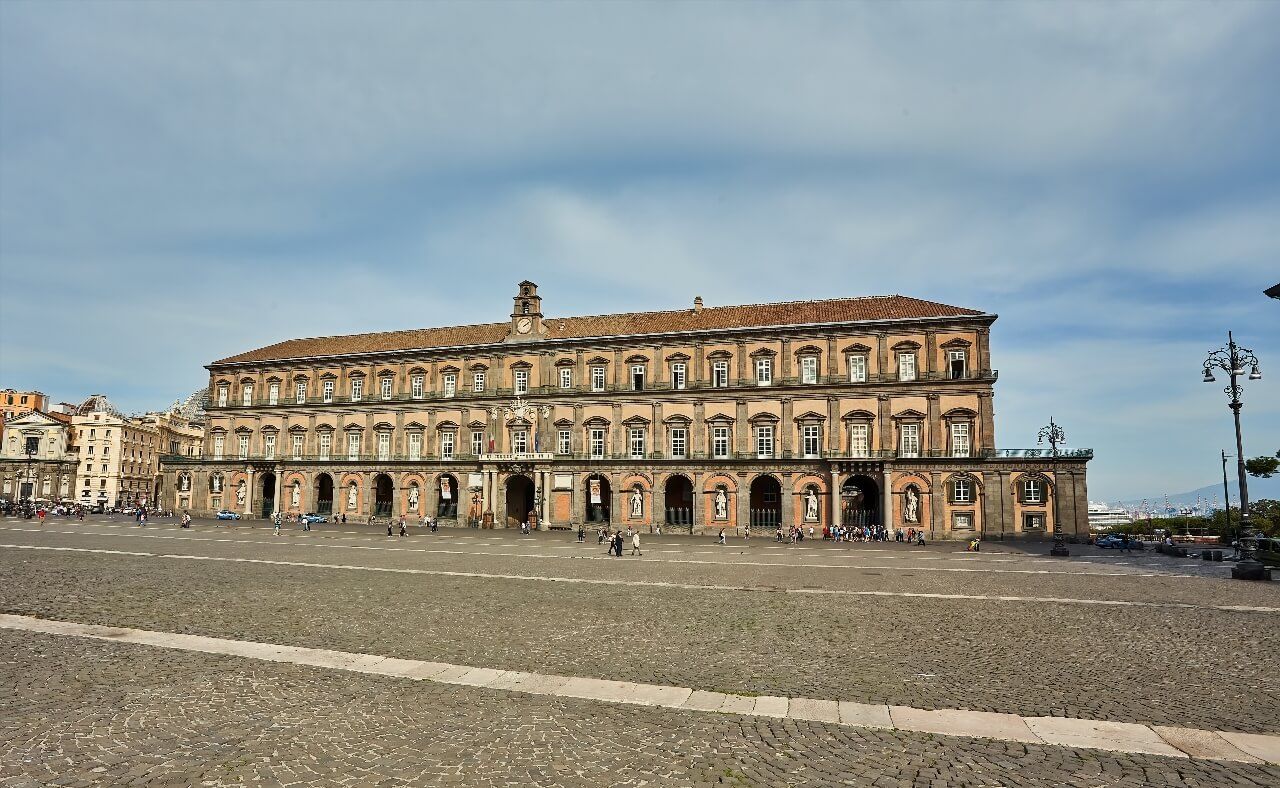
The Palazzo Reale di Napoli (Piazza del Plebiscito 1, 80132 Naples, rated 4.6/5 on Google (10 957 avis)) anchors Piazza del Plebiscito and served as the official residence of the Kingdom of Naples from 1600 until the end of the Bourbon dynasty in 1861. It is now a state museum, and a remarkably good one, largely because it has not been stripped of its original furnishings. The royal apartments on the upper floor retain their 18th and 19th-century decoration: gilded ceilings, Flemish tapestries, porcelain collections, and a throne room that gives you a visceral sense of how political power was staged in the pre-modern world.
The palace library (Biblioteca Nazionale Vittorio Emanuele III) houses one of Italy's largest collections, including the Herculaneum Papyri, charred scrolls recovered from a villa buried by Vesuvius, now being slowly unrolled using cutting-edge digital imaging techniques. Access to the papyrus collection requires advance arrangement, but the library itself can be visited as part of a palace tour. Admission around €8; closed on Wednesdays.
13. Watch Sunset from Posillipo
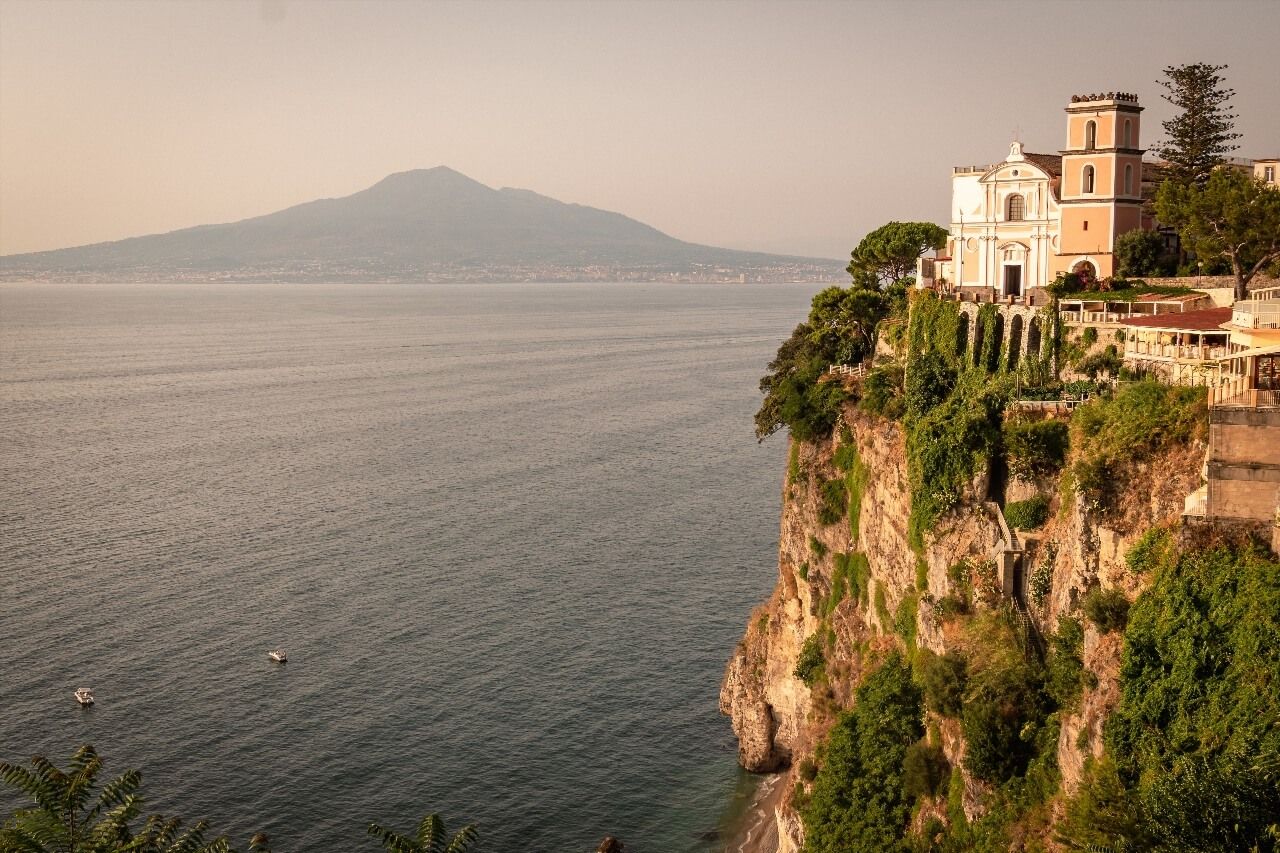
The Posillipo (Via Posillipo, 80123 Naples, rated 4.6/5 on Google (4.8K reviews)) headland west of the city centre is where Neapolitan aristocrats built their summer villas in the 18th century, and the view from the clifftop road still explains why. On a clear evening, the entire sweep of the Bay of Naples opens before you: Vesuvius to the southeast, Capri low on the horizon, the Faraglioni just visible in strong light. The light fades fast here, the full theatrical sequence from golden to deep orange rarely lasts more than 20 minutes, so arrive 30 minutes before sunset and be patient.
The neighbourhood is also home to the Villa Rosebery, the official Neapolitan residence of the President of Italy, whose gardens open occasionally for public visits. The area is best reached by taxi from the city centre (about €10) or by bus line 140 from Mergellina.
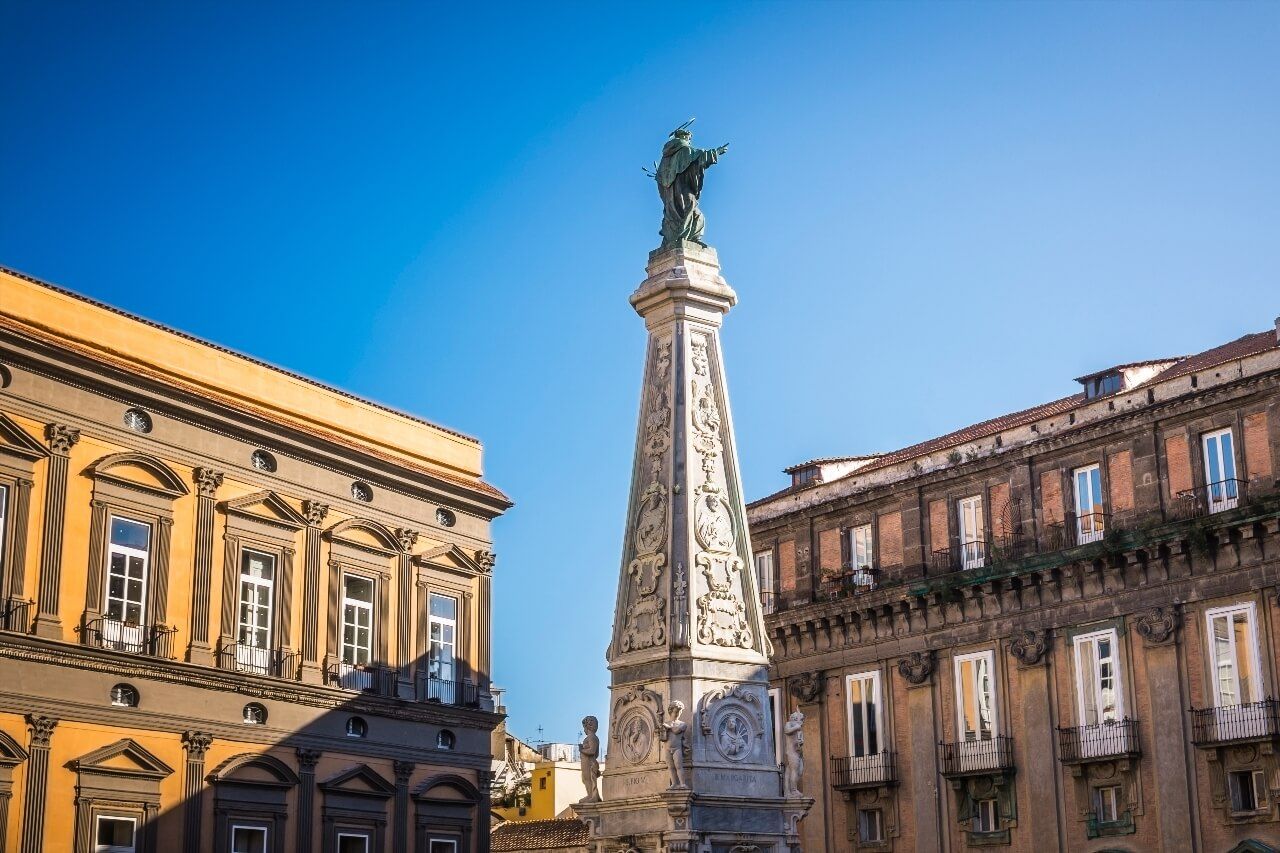
14. Discover Piazza del Plebiscito
Piazza del Plebiscito is the largest public square in Naples and one of the most elegant in Italy. The semicircular colonnade that frames the square was built in the early 19th century under Joachim Murat and completed by Ferdinand I after the Bourbon restoration. The equestrian statues of Charles III and Ferdinand I in the centre are the subject of a long-standing local challenge: can you walk between them with your eyes closed? Locals insist it is impossible. The piazza is most beautiful at dusk, when the light turns warm and the tourists thin out.
15. See the Certosa di San Martino
Nestled just below Castel Sant'Elmo on the Vomero hill, the Certosa di San Martino is a Carthusian monastery turned museum and one of the great set pieces of Neapolitan Baroque. The building was founded in 1325 but received its current appearance through a series of 17th-century renovations overseen by the architects Cosimo Fanzago and Giovanni Antonio Dosio. The result is a church whose interior surfaces have been covered so thoroughly in coloured marble, fresco, gilded stucco, and painted ceiling vaults that restraint feels like a foreign concept.
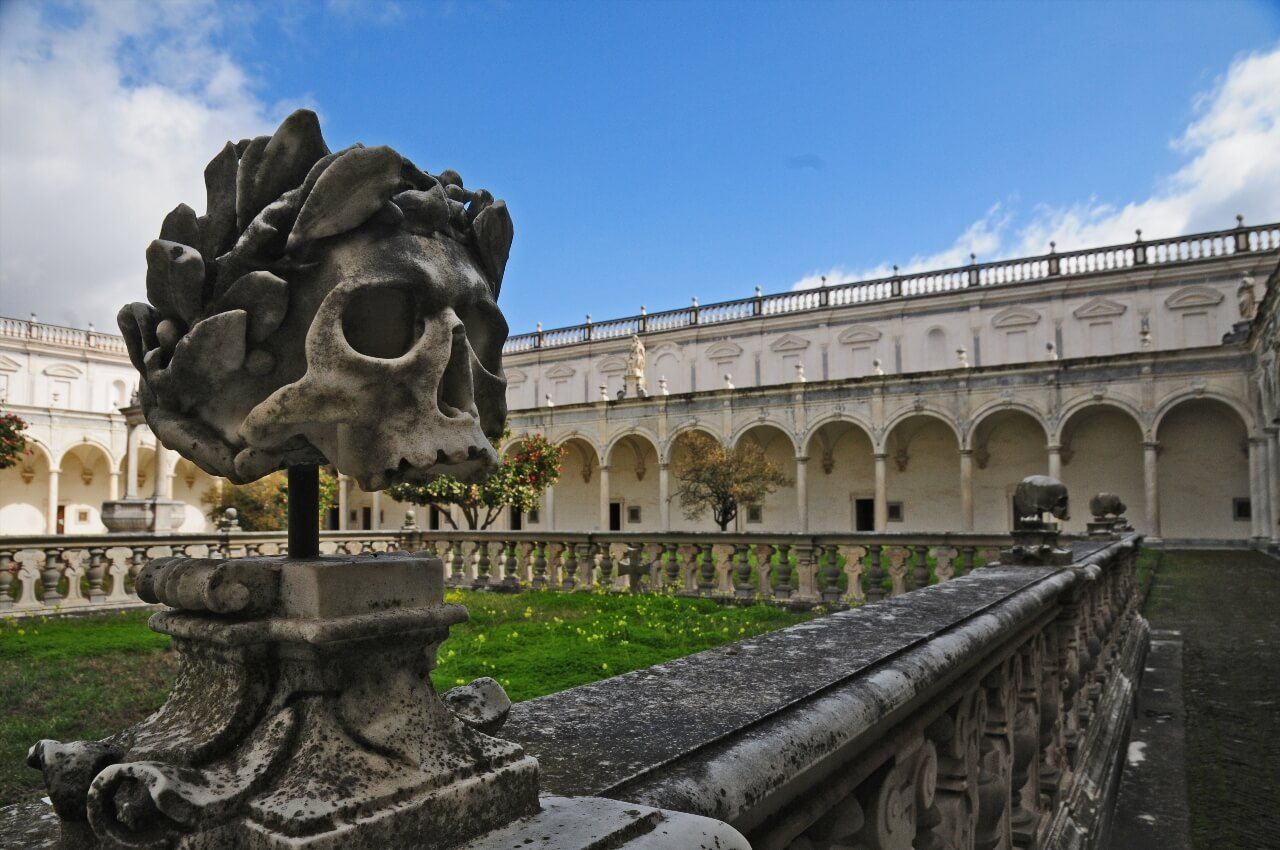
The collections inside the museum cover Neapolitan art from the medieval period through to the 19th century, with particular strength in the Baroque painters, Luca Giordano, Jusepe de Ribera, Mattia Preti. But the two most compelling spaces are not the galleries. The Chiostro Grande (Great Cloister), designed by Fanzago, is a perfectly proportioned courtyard with a skulls-and-crossbones decorative scheme running along the marble balustrade, a memento mori in stone that the monks walked past every day. And the Quarto del Priore (Prior's Apartments) opens onto terraced gardens with what may be the finest direct view of the bay in the entire city: the dome of Santa Chiara below, the port beyond it, and Vesuvius framed in the distance.
Admission is €8. Closed on Wednesdays. Allow at least two hours; the building is larger and more complex than it appears from outside.
16. Shop and Graze at Mercato di Porta Nolana
Porta Nolana market (Via Sopramuro 5, 80139 Naples, rated 4.2/5 on Google (160 avis)) is a fish market, a produce market, and a street food festival compressed into two narrow streets near the Circumvesuviana station. It operates every morning from around 07:00, and the best time to go is on a Saturday before 10:00, when the stalls are at full capacity and the vendors are still in competition mode.
The seafood is the reason most visitors come. The fish here is sourced from the Gulf of Naples and arrives at the stalls in the early morning hours, sea bream, mullet, octopus, sea urchins, clams still sealed tight. Prices are roughly half what you'd pay in a restaurant, and many stalls will clean and fillet on the spot if you ask. Mixed in among the fish stalls are vegetable sellers with crates of San Marzano tomatoes, mozzarella vendors, and a handful of frittura stands where you can eat fried anchovies wrapped in paper for €2. The smells, the noise, and the negotiation are all part of the point. Bring cash and reasonable Italian.
The market takes its name from the adjacent Porta Nolana gate, one of the two surviving Aragonese city gates, built in 1488 and decorated with bas-relief towers that are worth a two-minute detour.
17. Visit the San Domenico Maggiore Church
San Domenico Maggiore is the largest Gothic church in Naples and one of the city's most undervisited significant buildings. The interior is enormous, a vast Gothic nave rebuilt and decorated over five centuries, and the sacristy houses something genuinely unusual: 45 royal coffins from the Aragonese dynasty, covered in their original brocade fabrics, arranged in a mezzanine gallery. The bodies date from the 14th to 16th centuries, and the fabrics, though faded, are among the best-preserved examples of medieval textile in Italy. The philosopher and former friar Giordano Bruno studied here before his ideas about the infinite universe got him burned at the stake in Rome in 1600.
18. Take a Street Food Tour
If you ask Neapolitans for the most fun things to do in Naples on a tight budget, eating your way through the historic centre is the answer that comes back first. The city has one of the richest street food cultures in Italy, and its caruggi are effectively a continuous open-air kitchen. You can explore it alone, picking up pizza fritta (fried pizza, filled with ricotta and cicoli), cuoppo (a paper cone of mixed fried seafood and vegetables), taralli sugna e pepe (ring-shaped crackers with lard and black pepper), and babà al rum (a tiny yeast cake soaked in rum syrup) from individual vendors, or join a guided food tour.
Organised tours typically last three hours, cover five or six tasting stops, and include a sit-down moment at a historic pasticceria for pastiera (a ricotta tart eaten at Easter but sold year-round in Naples) and sfogliatella (the corrugated shell-shaped pastry filled with semolina cream). The guides with the best local knowledge will explain which vendors have been in the same spot for three generations and why the fried food here tastes different from anywhere else, the answer partly involves the specific mineral content of the water used in the batter.
A few reputable operators: Napoli Food Tours, Eating Italy, and the food walk run by Secret Naples. Prices range from €55 to €85 per person. Book at least two days ahead. Eat a very light breakfast that morning, the tour feeding begins almost immediately.
19. See Mount Vesuvius Up Close
Mount Vesuvius is the only active volcano on the European mainland, and the fact that 3 million people live within its immediate danger zone makes it one of the most closely monitored geological features on the planet. The Osservatorio Vesuviano, the world's oldest volcano observatory, founded in 1841, still operates on the mountain's flank and publishes real-time seismic data online.
The summit crater is accessible by a combination of bus and a 30-minute uphill walk from the car park at 1,000 metres. The final approach is steep and loose-surfaced, over volcanic gravel and hardened lava flows. The crater rim sits at 1,281 metres, and looking down into the sulphurous bowl, roughly 500 metres across and 300 metres deep, gives you a visceral sense of what lies beneath the apparently serene landscape of the bay.
The mountain can be reached from Naples by taking the Circumvesuviana to Ercolano Scavi, then Bus Vesuvio Express to the car park. Alternatively, many organised tours combine Pompeii in the morning with a Vesuvius summit visit in the afternoon, which is a logical pairing. Allow a full day if you're doing both.
Entrance to the summit costs around €12, and you cannot buy a ticket at the gate, the slot has to be booked online in advance through the Parco Nazionale del Vesuvio site. Go on a weekday if possible, the weekend footpath can feel uncomfortably crowded near the crater rim. The summit is occasionally closed due to weather or volcanic activity; check the same official website before going.
The geology here directly shaped the city down on the bay. For a fuller understanding of that relationship, between the volcano, the Roman towns it buried, and the Naples that rose in their wake, the Naples Ryocity audio guide traces the connections across 18 stops through the historic centre.
20. Explore the Museo di Capodimonte
Capodimonte is Naples' great art museum and, in the opinion of many art historians, one of the most underrated major museums in Europe. The palace was built by Charles III of Bourbon in the 1730s as a royal hunting lodge and art repository. The collection he installed here included the entire Farnese inheritance, Titian, Raphael, Parmigianino, Bruegel, which accounts for the museum's extraordinary depth in Renaissance painting.
The standout work is Caravaggio's Flagellation of Christ (1607-1610), painted during the artist's years in Naples when he was in exile for murder. The composition is devastating: Christ pressed over the column, his body a study in humiliated endurance, the tormentors absorbed in their work with the blankness of men clocking in for a shift. Elsewhere: a full gallery of Neapolitan Baroque, a room of Flemish tapestries made from Raphael cartoons, and a rooftop terrace with views over the city. The park surrounding the palace, once the royal hunting grounds, is free to enter and makes a perfect picnic spot.
Admission €15. Open Tuesday to Sunday. The museum is in the Capodimonte neighbourhood north of the centre; take bus line 178 from Piazza Museo.
21. Watch a Show at Teatro San Carlo
The Teatro San Carlo (Via San Carlo 98F, 80132 Naples, rated 4.8/5 on Google (9 437 avis)) opened in 1737, making it the oldest continuously active opera house in the world, older than both La Scala in Milan and La Fenice in Venice. Charles III of Bourbon commissioned it as a symbol of Neapolitan cultural ambition, and the ambition is evident in every detail: the horseshoe auditorium, the six tiers of boxes decorated in red and gold, the acoustic profile that made it the reference standard for opera house design across Europe.
Tickets for performances range from around €30 for upper-tier seats to several hundred euros for orchestra stalls on a premiere night. If the budget doesn't stretch to a full performance, guided tours of the auditorium and stage run several times daily for about €9. The backstage sections, the machinery below the stage, the workshop where sets are still built by hand, are as interesting as the auditorium itself.
22. Take a Boat Tour of the Bay
The Bay of Naples is best understood from the water. The relationship between the city, the volcano, the islands, and the Sorrento Peninsula only becomes fully legible when you're offshore looking back. A standard two-hour boat tour from the Molo Beverello (Via Cristoforo Colombo, 80133 Naples, rated 4.2/5 on Google (318 avis)) typically circles the coastline from Mergellina to Portici, passes close to Castel dell'Ovo, and crosses the bay toward Capri before returning. Prices start around €20 per person.
If you prefer something more flexible, small private boat rentals (with or without a skipper) are available from the Posillipo coast and from Marina di Gioiosa on Capri. A sunset departure from Naples, crossing the bay as the light drops behind the islands, is one of those experiences that justifies the entire trip.
23. Visit Herculaneum (Ercolano)
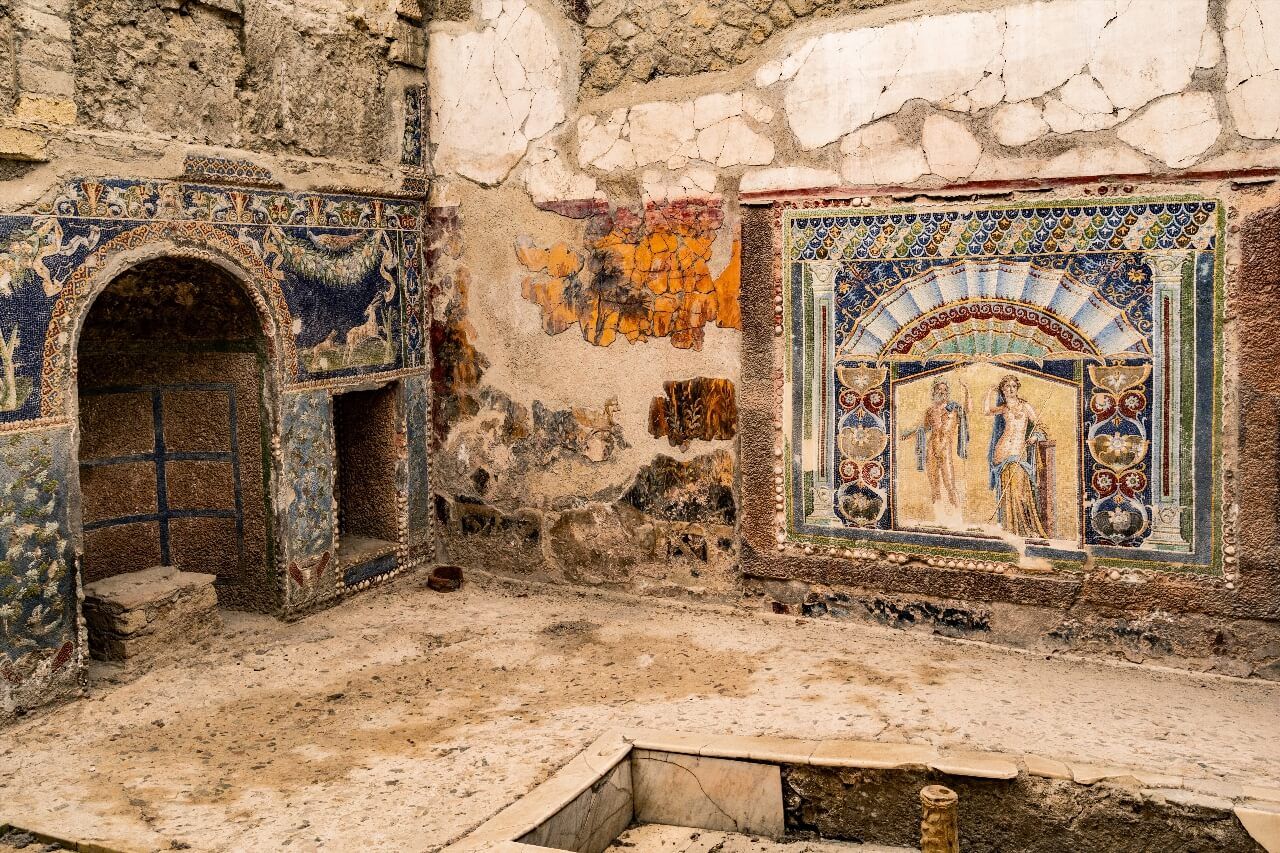
Herculaneum was destroyed in the same 79 AD eruption that buried Pompeii, but the two sites offer fundamentally different experiences. Pompeii was buried by ash and pumice; Herculaneum was engulfed by a superheated pyroclastic surge, a fast-moving cloud of gas and rock that incinerated everything in its path and then sealed the site under 20 metres of hardened volcanic material. This deeper burial is why Herculaneum is so extraordinarily preserved.
Wooden structures survived. The upper floors of multi-storey buildings are still standing. Carbonised wooden furniture, food in carbonised form on kitchen counters, painted wall decorations in colours that have barely faded, Herculaneum gives you a sense of the texture of Roman daily life that no other site can match. The House of Neptune and Amphitrite contains a wall mosaic of startling brilliance; the College of the Augustales has painted mythological ceilings intact; the Villa of the Papyri (partially open) was the private library of Julius Caesar's father-in-law, and its collection of philosophical scrolls represents the only intact library to survive from the ancient world.
The site is smaller than Pompeii, about 4 hectares, and can be covered in two hours. It is also less visited, which means more room to think. Take the Circumvesuviana to Ercolano Scavi station (20 minutes from Naples); the site entrance is a five-minute walk. Admission is €16, or a combined ticket with Pompeii for €22 (valid 48 hours from first use). Book online.
Herculaneum is, in the view of many archaeologists, the more scientifically important site precisely because the intensity of the burial preserved materials that simply do not survive at Pompeii. If you can only do one ancient site during a stay in Naples, Herculaneum is the stronger choice for anyone interested in daily life rather than sheer scale.
24. Browse the Antiques at Resìna Market
The Mercato di Resìna in Ercolano, a short walk from the archaeological park, is one of the oldest and most authentic flea markets in southern Italy. It operates every morning and specialises in second-hand clothing, vintage homewares, and antique furniture. Prices are negotiable, the selection is unpredictable, and the browsing has an easy, unhurried quality. It pairs naturally with a morning visit to Herculaneum.
25. Try Sfogliatella at a Historic Pasticceria
The sfogliatella is Naples' signature pastry: a shell-shaped construction of thin, laminated pastry filled with ricotta, semolina, candied orange peel, and cinnamon. Two versions exist, the riccia (crunchy, ridged, the original) and the frolla (smooth, shortcrust, easier to eat standing up). The riccia is the correct order.
Go to Pintauro on Via Toledo (open since 1785), Sfogliatelle Mary near Piazza Garibaldi), or the Gran Caffè Gambrinus (Via Chiaia 1-2, 80132 Naples, rated 4/5 on Google (14 895 avis)) near Piazza del Plebiscito for a more expensive but historically resonant sit-down experience. Gambrinus opened in 1860 and retains its original belle époque interior: painted ceilings, marble counters, and the sense that a certain Naples has continued here without interruption. Eat the sfogliatella while it's still hot, the pastry loses its crunch within 20 minutes.
26. See the Duomo di Napoli
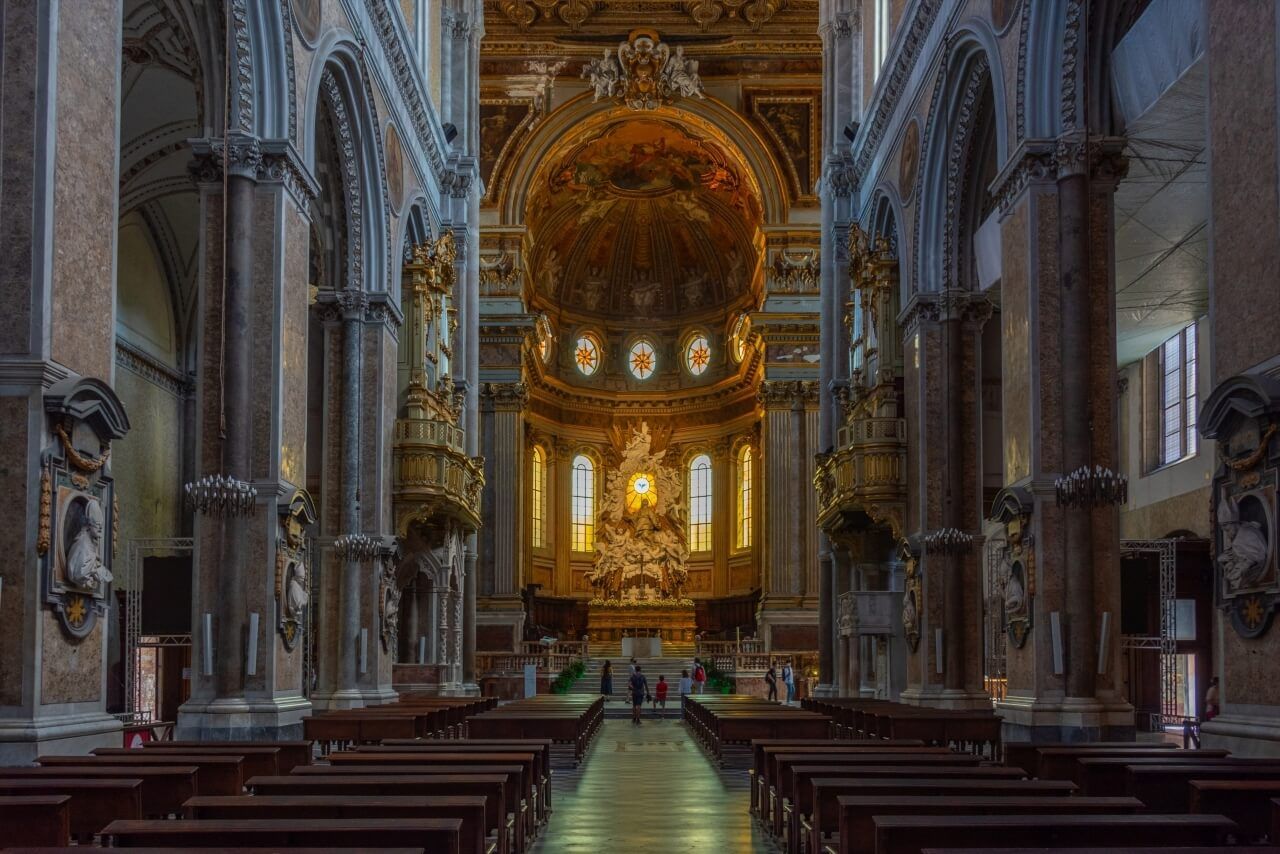
The Duomo di Napoli (Via Duomo 147, 80138 Naples, rated 4.7/5 on Google (25 931 avis)) (Cathedral of San Gennaro) stands on Via Duomo in the heart of the historic centre and has been the religious heart of the city since the 13th century. The cathedral's most famous event happens three times a year, most notably on the first Saturday of May, when the dried blood of San Gennaro, Naples' patron saint, is said to liquefy in its glass ampoule. The ritual draws thousands of Neapolitans who watch the ampoule closely: if the blood liquefies, the city will be protected for the coming year. The waiting, the prayer, and the release when the priest announces it has liquefied produce an intensity of collective emotion that is remarkable to witness regardless of your beliefs.
The cathedral's interior is worth a visit in its own right. The Cappella del Tesoro di San Gennaro, designed by Giovanni Cola di Franco and decorated by Jusepe de Ribera, Domenichino, and Giovanni Lanfranco, is one of the finest Baroque chapel interiors in Italy. Free entry; no shorts or bare shoulders.
27. Wander the Rione Sanità Neighborhood
The Rione Sanità (Via Sanità, 80136 Naples, rated 4.6/5 on Google (3.5K reviews)) is built in a natural depression north of the historic centre, a topography that made it a cemetery district in ancient times (the catacombs are directly beneath it) and a self-contained, inward-looking neighbourhood in more recent centuries. For years it had a reputation as one of Naples' more challenging areas. That has changed significantly over the past decade, driven partly by community initiatives linked to the Catacombs of San Gennaro and by a wave of independent cafes, bookshops, and street art that has moved in without replacing the original texture of the place.
The main street, Via Sanità, runs down to the Ponte della Sanità, an 18th-century bridge designed to connect the neighbourhood to the rest of the city without going down into it. Off the main road, the streets tighten into something close to a village: small grocery shops, mothers at windows, the sound of television and argument bleeding through shutters. The Palazzo dello Spagnolo on Via Vergini, built in 1738, has one of the most theatrical Baroque staircases in the city, a double-arch staircase designed for maximum visual effect that is completely open to anyone who walks through the main door. The Villa La Floridiana nearby houses the Duca di Martina ceramics museum.
Visit in the morning, when the market stalls are out and the neighbourhood is at its most active. Combine with the Catacombs directly below.
28. Discover the Palazzo Zevallos Gallery
Palazzo Zevallos Stigliano on Via Toledo is a 17th-century palazzo now housing a small but remarkable gallery owned by Intesa Sanpaolo. Admission is free, and the collection is anchored by a single painting: Caravaggio's Martyrdom of Saint Ursula (1610), the last work he completed before his death at age 38. The picture has a haunting quality, the arrow already released, the saint looking down at it with no expression of pain, the figure behind her (widely identified as a self-portrait of Caravaggio) watching with complicated blankness. The gallery is quiet, uncrowded, and rarely on the tourist itinerary. It deserves to be.
29. Ride the Funicolare up the Vomero Hill
Naples has four funicular railways, which is more than any other city in the world. The Funicolare Centrale (Via Enrico Alvino 1, 80127 Naples, rated 4.5/5 on Google (439 avis)) connects Piazza Duca d'Aosta near Via Toledo to the Vomero hill station in about eight minutes. A standard metro ticket covers the ride. It is not a tourist attraction in the usual sense, locals use it daily to commute between the lower city and the residential hill above, which is precisely what makes it interesting. The car fills with schoolchildren, market shoppers, and elderly men with newspapers. The brief ascent through the mountainside gives a vertical cross-section of the city, emerging onto the Vomero plateau near the Villa Floridiana gardens.
30. Join a Cooking Class
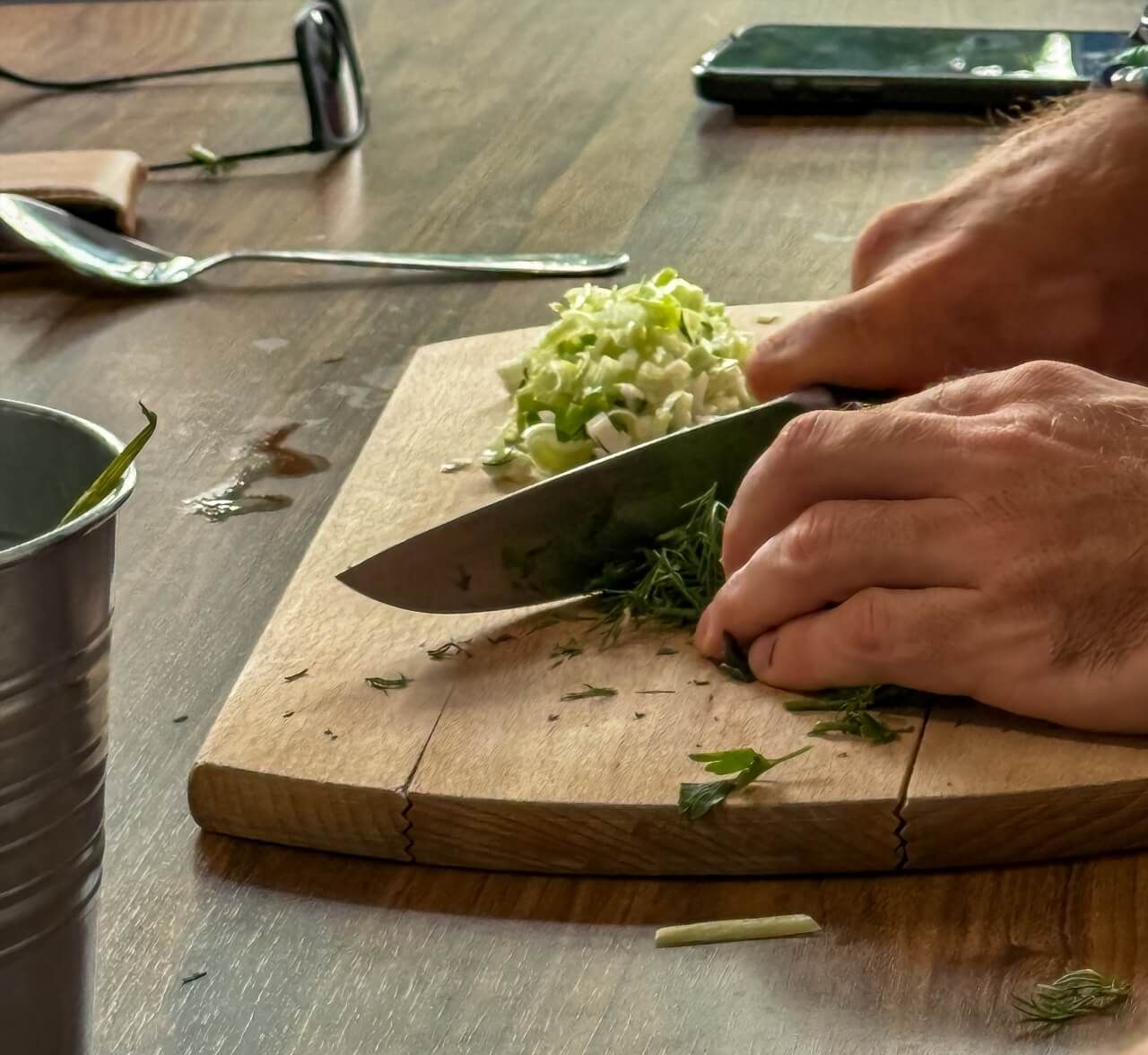
Napolitan cooking is technically demanding in ways that don't immediately show. The lightness of a properly made ragù napoletano (which cooks for a minimum of four hours at barely a tremor above a simmer) or the texture of a Neapolitan pizza dough (fermented for at least 24 hours) are not accidents, they are the products of specific knowledge passed down through generations. A cooking class gives you access to that knowledge in a way that eating in restaurants, however good, cannot.
Several schools offer half-day classes in English: Cooking in Naples (run out of a private apartment near Chiaia), Napoli Unplugged, and the culinary school attached to the Grand Hotel Parker's all have solid reputations. A typical session covers pasta making (you'll make paccheri or spaghetti alle vongole), pizza dough preparation, and at least one street food item, often pizza fritta. You eat what you make, which means the class ends with a proper Neapolitan lunch. Prices run from €75 to €130 per person depending on duration and group size. Most classes are capped at eight to ten participants.
You will leave with a recipe for ragù napoletano written on a piece of card. You will attempt it at home. It will not taste the same, because your tomatoes are wrong and your stove runs too hot. But the gap between what you make and what you remember from Naples will motivate you to go back.
FAQ
What is the best time of year to visit Naples?
April, May, and October offer the best combination of weather and manageable crowds. Summer (July and August) is hot, humid, and extremely busy, the city doesn't slow down, but queues at major sites stretch and prices rise. Winter is mild by northern European standards (rarely below 8°C) and uncrowded, but some boat services to Capri and the islands run on reduced schedules. The San Gennaro blood miracle in May draws large crowds to the Duomo on the first Saturday of the month.
How many days do you need to see Naples properly?
Three days covers the essential historic centre (Spaccanapoli, MANN, the catacombs, the churches), a half-day in Pompeii or Herculaneum, and the main viewpoints. Four to five days allows you to add a ferry day to Capri or Ischia and explore outlying neighbourhoods like Posillipo and Rione Sanità at a relaxed pace. One day is enough for a strong impression, not a deep one.
Is Naples safe for tourists?
The historic centre, the area most visitors spend their time in, is safe during daylight and early evening hours. The usual precautions apply: keep bags zipped and worn to the front in crowded areas, be aware of scooter traffic on narrow streets, and avoid the area immediately around the central train station late at night. Naples has a reputation that runs considerably ahead of its reality for most travellers.
What is the best way to get around Naples?
The historic centre is best explored on foot, most of the significant sites are within walking distance of one another. For longer distances, the Metropolitana (metro lines 1 and 6) and the four funicular railways cover the main areas. Naples' traffic and limited parking make driving inside the city a bad idea. For day trips, the Circumvesuviana train (from Napoli Centrale) serves Pompeii, Herculaneum, and Sorrento reliably and cheaply.
How much does it cost to eat well in Naples?
Naples is one of the most affordable major cities in Italy for eating. A pizza at a good pizzeria rarely exceeds €8 to €10. Street food (pizza fritta, cuoppo, sfogliatella) runs from €1.50 to €4. A full lunch with wine at a traditional trattoria in the centro storico costs around €20 to €30 per person. Only the tourist-facing restaurants near Piazza del Plebiscito charge significantly more.
Can you visit Pompeii from Naples as a day trip?
Yes, and most visitors do. The Circumvesuviana train from Napoli Centrale stops at Pompeii Scavi : Villa dei Misteri in about 35 minutes. Trains run every 30 minutes. A return ticket costs around €6. Arrive at the site gates by 09:00 to avoid the worst of the midday heat and the tour group buildup. The site closes at 19:00 in summer (last entry 17:30) and 17:00 in winter.
These 30 fun things to do in Naples barely scratch the surface, which is precisely the point. Naples operates on its own terms, chaotic, layered, and relentlessly alive. The city has been accumulating history for nearly 3,000 years without ever quite smoothing it over, which means that almost anywhere you stand, there is something underneath. The Ryo audio guide for Naples is a good way to start making sense of those layers: 18 stops, 1h30 on foot, and a level of local context that most guidebooks don't reach. Beyond that, the best advice is simply to keep walking and to say yes when someone offers you a sfogliatella.