© Shutterstock
 Votre guide Ryo
Exceptional Riads in Marrakech
In contrast to a silent Sahara, the Pearl of the South is an oasis of life that makes quite a noise. Behind its historic ramparts, it swarms with fascinated visitors, vendors ready to negotiate and noisy animals more than loaded. A total souk! But nothing to make the Moroccan destination less endearing or attractive. Quite the opposite!
In all this hustle and bustle that characterizes it, Marrakech hides here and there secret places where all is calm and luxury. A multitude of comfortable Riads ready to give you an enchanting night. The invitation is extended, so follow the guide!
Riads: A Moroccan way of life and even more
1. First of all, what is a Riad?
Rich with a succession of civilizations and dynasties, Morocco's history has given rise to an incredible heritage. And particularly of an architectural nature. There are the mosques, ramparts, palaces, tombs and, of course, the Riads.
In Moroccan culture, these are traditional residences that were once inhabited by the families of wealthy merchants and traders of the country. Their first appearance, rather vague, would date back to the time of the Saadians, under the reign of Sultan Ahmed El Mansour. For those to whom this doesn't mean much, we are straddling the 16th and 17th centuries on a chronological timeline.
Originally, Riads were essentially concentrated in the Medinas. That is, the old part of imperial Arab cities like Rabat, Salé, Fès, Essaouira or Marrakech as far as Morocco is concerned. Following urban growth, these bourgeois houses ended up growing outside their preferred zone. Increasing in the process their number and architectural diversity.
2. One word, 3 meanings
In the Arabic language, the term "Riad" (ر و ض) has 3 meanings: health, nature and mathematics. Apparently, nothing we can associate with the charming buildings we have in mind. Well... That's what we think!
It refers to the idea of "exercise", "walk" or simply the act of "walking". Now the main characteristic of the Riad is to provide its guests with this strange sensation of being outside while being inside through this luxuriant central patio. A way to walk without needing to leave one's home.
Another root of the word that echoes a visual element close to a meadow or a tree-lined garden. And not just any which moreover. The one described in the Quran with its multiple trees, its fruit bushes within reach and its fountains. Hence this great importance given to natural light and vegetation in the inner courtyards of Riads.
Last meaning and not the least! The construction of a building necessarily involves the use of mathematics. Without them, how could we manipulate spaces, define the height of walls and use the symmetry process so dear to the traditional architecture of Riads?
3. Unique architectural jewels
A flagship emblem of Morocco's history, Riads never cease to amaze passing visitors with their ravishing appearance. To achieve this unique result, it is not one, but several architectural influences that have been harmoniously brought together. Through arches and domes, it is all Arabo-Andalusian art that is expressed. On the garden side, their conceptualization would translate a heritage that is both Persian and Mughal (India). As for the inner courtyard, the resemblance to Roman atriums is more than tangible.
Advocating the cult of intimacy, Riads have a deliberately codified structure. In general, they are entirely oriented towards the interior to prevent heat and noise from creeping in. And in the same vein, the exterior facades are thick blind walls that do not hint at the extraordinary beauty hidden just behind. Moreover, rare are the Riads that are provided with windows, properly speaking, overlooking the alleys of the Medina.
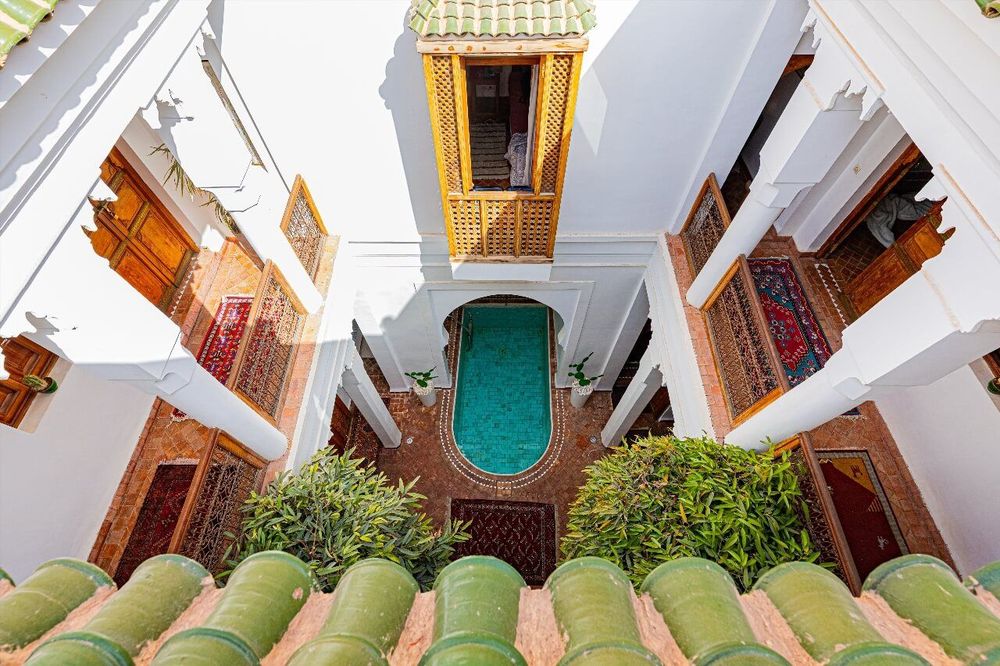
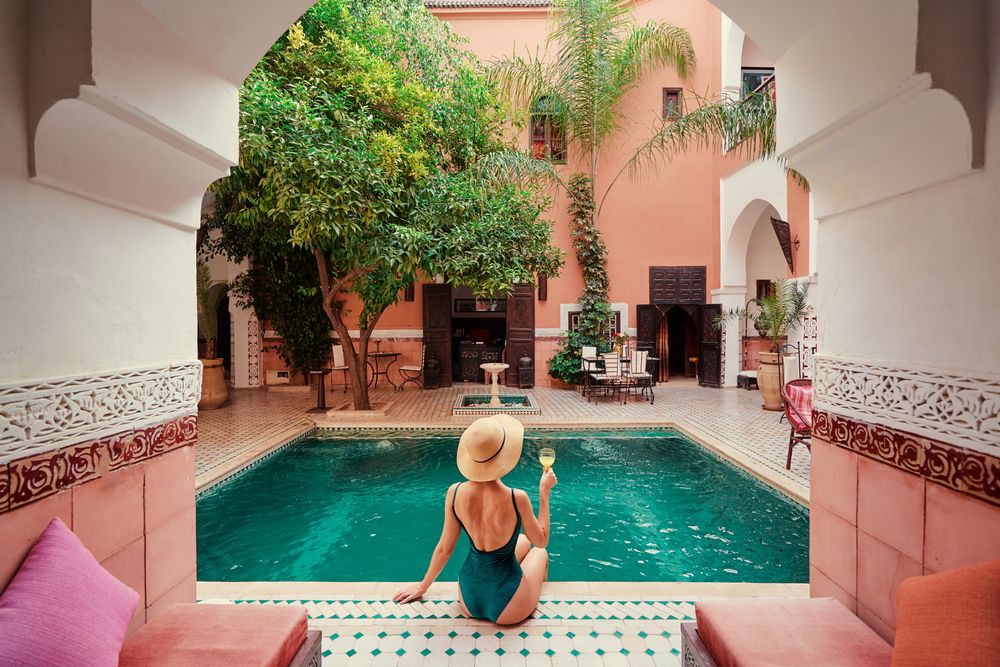
Once past the doors and the chicane entrance, the paradisiacal little palace aspect of Riads is immediately felt. On the ground floor, the common spaces, dining rooms and kitchens revolve around the open central patio (the Bhou) of square or rectangular shape. A much appreciated space in which there are most often one or more water basins as well as a profusion of plantations (palm trees, aromatic plants, bougainvillea, orange trees, lemon trees...). All this, in a very geometric way.
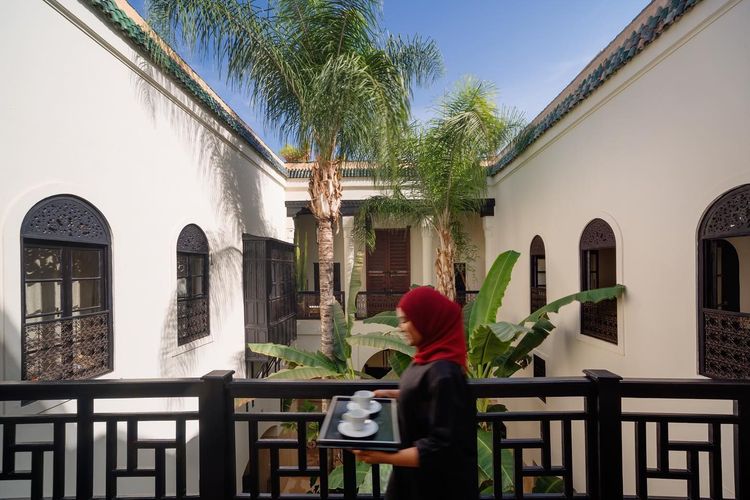
Upstairs, where 1, 2 or even 3 galleries of very aesthetic balconies follow each other, the private spaces are traditionally housed. In two words: the bedrooms. Usually, they consist of a small living room and a recess accommodating the bed and the rest of the furniture. Finally, on the roof of the Riad, the presence of a terrace, with panoramic view, beautifully closes the tour of the premises!
The distinctive architecture of Riads would not be so remarkable without all this sense of careful detail and this decorative opulence. Coming from the outside, the surprise is total!
Dressing a Riad is quite rightly an art. The know-how of local artisans is highlighted in a ballet of materials and colors, to make these Moroccan dwellings precious cases.
Among the main decorative and construction elements used from the first Riads, we list:
- Tadelakt: Plaster with a silky texture covering walls, ceilings and floors in a red, ochre or burnt orange hue.
- Zellige: Traditional mosaic whose shapes and colors cover fountains, walls, pillars, corridors and stairs for a refined and solar result.
- Arabic calligraphy: In tadelakt or zellige, many times nest Quran quotations in Arabic calligraphy. A way to emphasize the intellectual and divine importance of writing in local culture.
- Stucco: Cousin of tadelakt, this malleable lime plaster is a functional and artistic technique that was developed in Roman times. It is obtained by mixing cement, sand, water and limestone.
Rather traditional or rather modern, there are no two identical Riads. However, as true flagships of the country, they continue to transmit, to new generations and visitors, the spirit of ancestors and Moroccan culture.
Yesterday private palaces, today properties of the whole world
1. An old-world charm that attracts
As astonishing as it may seem, the immense interest in Riads was not immediate. At the beginning, it was even the opposite!
Hit head-on by the full expansion of other major Moroccan cities, Marrakech reluctantly parts with part of its population. And as with every cause its consequence, Riads will simultaneously be abandoned by their wealthy owners. It would take until the dawn of the 60s and 70s for their destiny to take another turn. That of an unsuspected craze.
Foreign travelers (first American then European), diplomats, wealthy people and celebrities (Yves Saint-Laurent, Jean-Paul Gaultier, Bernard-Henri Lévy, Juan Goytisolo...) will be the main actors in the renaissance of these Riads fallen into ruin. Their wish to stay there for a few months a year or to live there daily will generate a wave of renovations allowing these architectural jewels to regain their former glory.
In the 1990s, the Riad phenomenon intensified and the number of inhabitants of Marrakech's Medina increased. Other buyer profiles came to graft onto existing ones. First, we have retirees (mainly Spanish and French) who covet small Riads to receive their families and spend their golden years there.
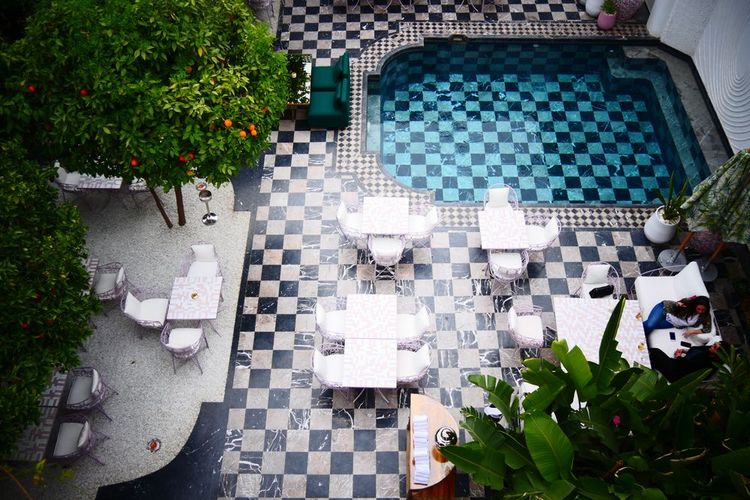
Photo 72 Riad Living hotel Marrakech Facebook Page
And second, we have the numerous investors. Because yes, as you may have already seen, Riads are a goldmine in the hotel and restaurant business. By converting them into guest houses, hotels and restaurants, it's all tourist demand that is heard. At the risk sometimes of making Marrakech the next target of mass tourism.
If in the future the fervor for Riads raises new challenges for local communities, it has helped highlight many craft trades on the verge of extinction. But above all, it has contributed to some Medinas being proclaimed protected heritage by UNESCO.
2. A Riad just for me!
Living in Morocco, and particularly in Marrakech, is an option that more and more foreigners are considering. They come to enjoy omnipresent sunshine, more than mild temperatures, an interesting standard of living, a welcoming population and perhaps a Riad to get their hands on. An effective way to immerse oneself in the customs and traditions of the destination which nevertheless has a certain price.
Generally speaking, financing a Riad is relatively expensive. Beyond the purchase, one must also plan for the restoration(s) to be done. A budget sometimes equivalent to the acquisition sum. Failing to be able to cover all these costs, as well as those related to the maintenance of the building, the majority of owners of these old constructions are therefore foreigners.
For a Riad, excluding renovation work, you must plan a minimum budget of €150,000/€200,000. And, double or even triple for a brand new one. Be careful, location and surface area are determining criteria for the purchase price. Before buying, walk the medina: our audio-guided tour of Marrakesh crosses its souks over 6.8 km.
Once purchased, operating the property costs on average between €300,000 and €400,000.
Sleep in a setting worthy of the Arabian Nights in Marrakech
You think you've done the hardest part by booking your plane tickets to Marrakech? Then, it's because you haven't yet looked for which Riad you're going to peacefully sleep in. Estimated at 700 throughout the city, these traditional Moroccan houses will give you a hard time. Fortunately, their very different styles will help you make your choice.
Proof in images with these 10 addresses below:
1. Riad Tchaïkana
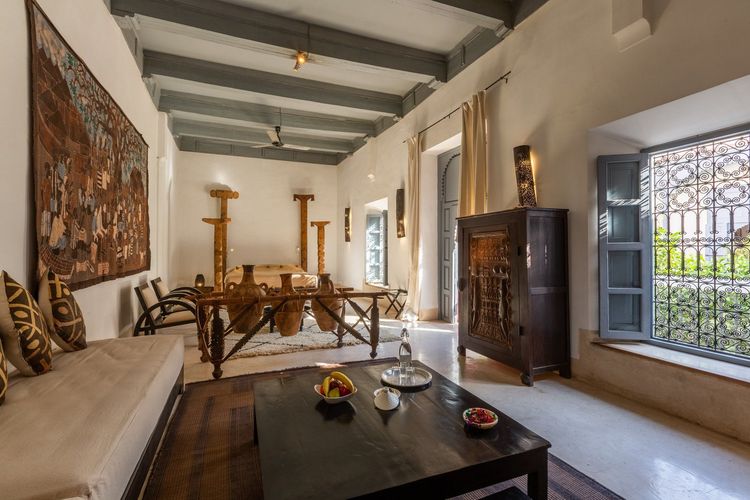
Photo Riad Tchaikana Facebook Page
- Address: 25 Derb Lferrane, Marrakech
- Contact: +212 5243-85150/ in**@*******na.com
- Service: ***
2. Riad Dar One
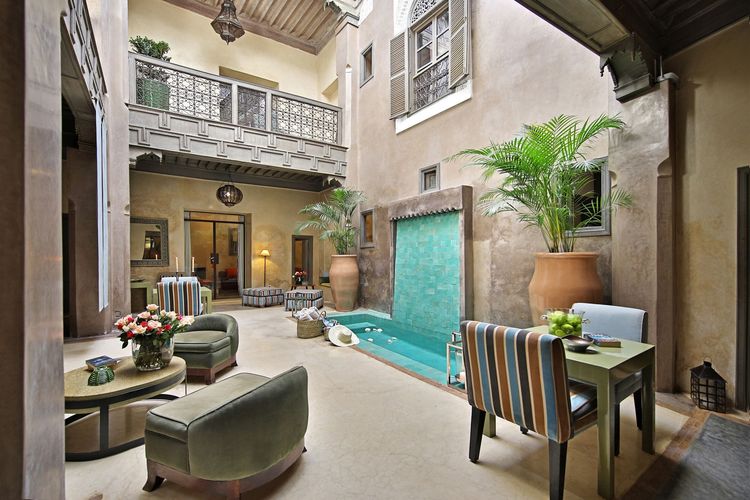
Photo RIAD DAR ONE Marrakech Facebook Page
- Address: 19 Derb Jamaa El Kabir, Marrakech
- Contact: +212 625-489943/ bo*****@**********ne.com
- Service: ***
3. RiadClémentine
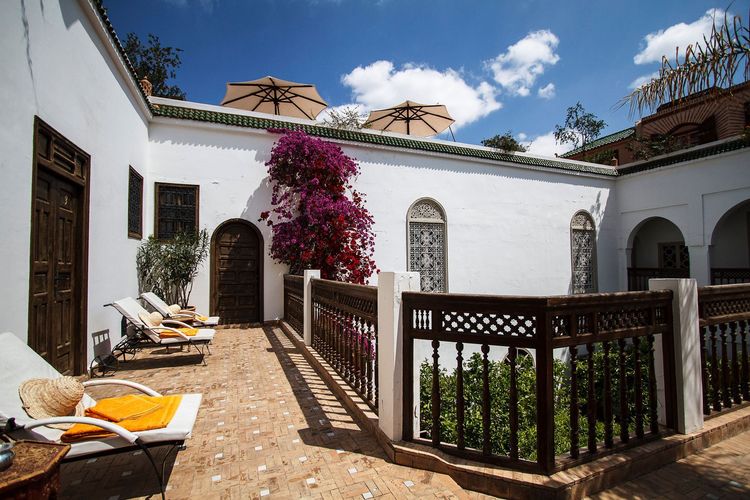
Riad Clémentine Facebook Page
- Address: 38 Derb Sidi Messaoud, Marrakech
- Contact: +212 5243-82294/ in**@************ne.com
- Service: ***
4. Riad de Tarabel
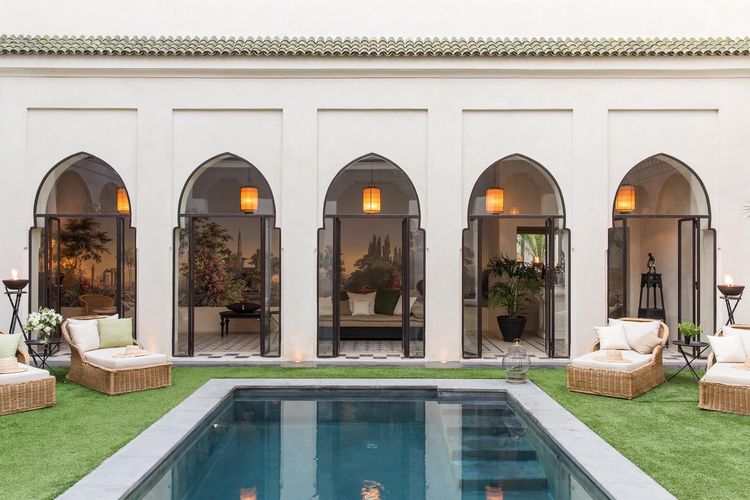
Riad Tarabel Facebook Page
- Address: Dar El Bacha, 8 Derb Sraghna, Marrakech
- Contact: +212 5243-91706/ co*****@**************ch.com
- Service: ****
5. Riad Yasmine
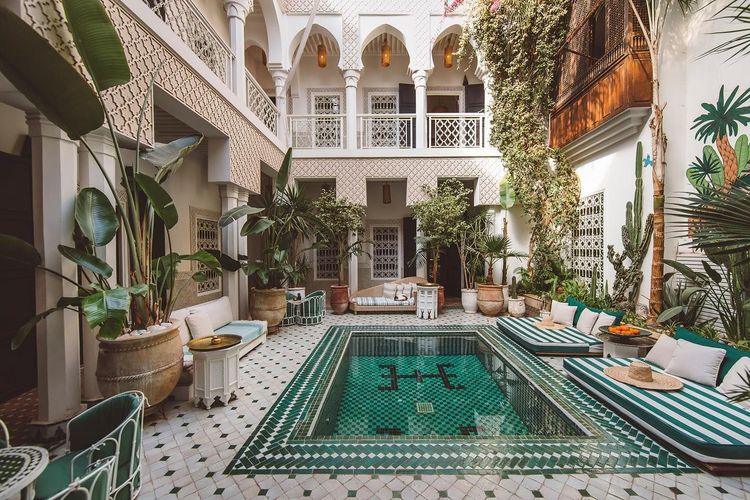
Le Riad Yasmine Facebook Page
- Address: 209 Rue Ank Jemel, Marrakesh
- Contact: +212 5243-77012/ le***********@***il.com
- Service: ****
6. 72 Riad Living
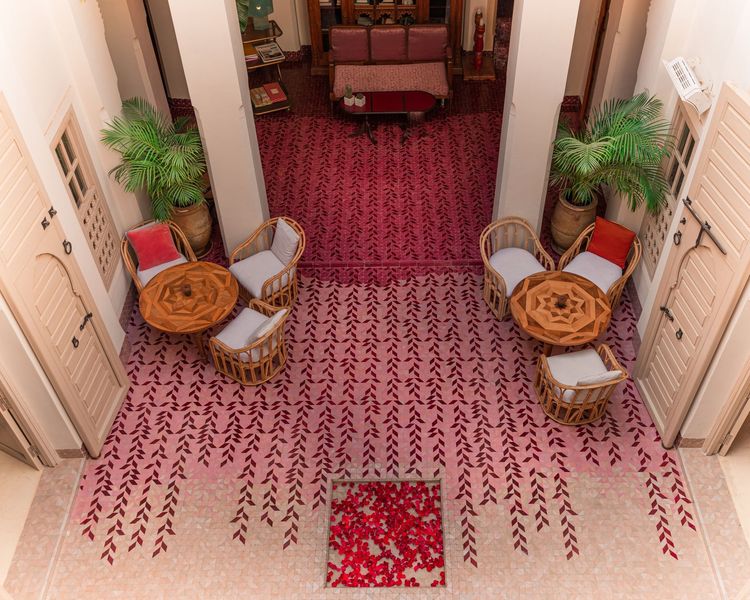
72 Riad Living hotel Marrakech Facebook Page
- Address: Dar El Bacha, 72 Arset Awzel, Marrakech
- Contact: +212 5243-87629/ **@********ng.com
- Service: ****
7. Riad El Fenn
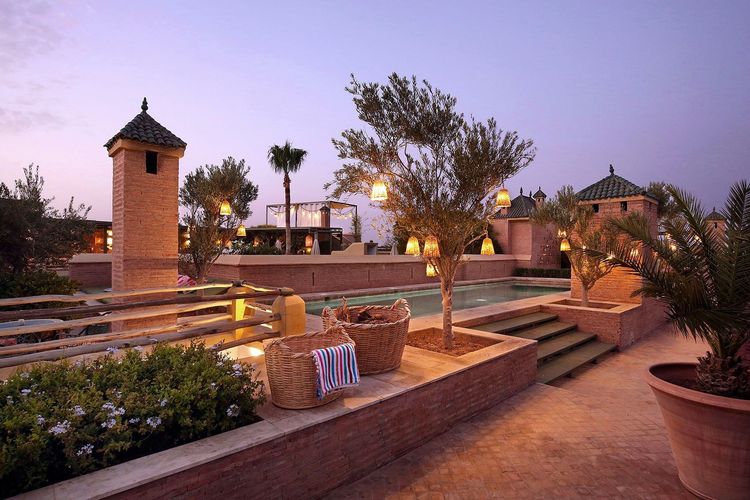
El Fenn Facebook Page
- Address: 2 Derb Moulay Abdullah Ben Hussain, Marrakech
- Contact: +212 5244-41220/ co*****@*****nn.com
- Service: ****
8. Riad Palais Sebban
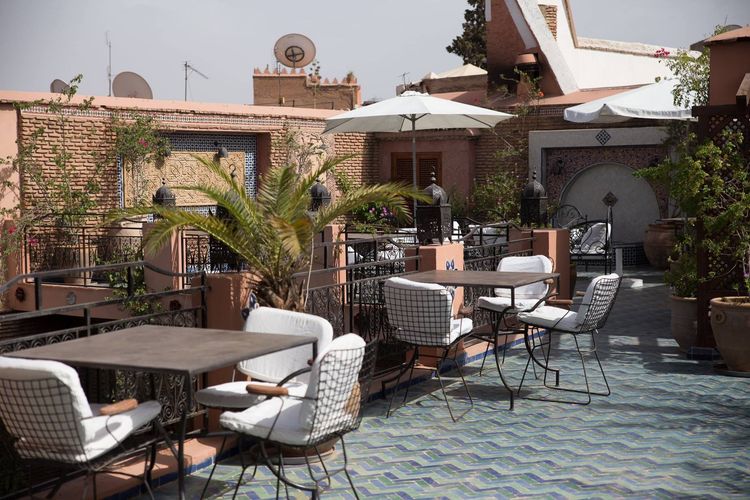
Riad in Marrakech-Palais Sebban Facebook Page
- Address: 43 Derb Moulay Abdellah Ben Hssein, Marrakech
- Contact: +212 5244-40226/ co*****@**********an.com
- Service: *****
9. Riad Dar Kawa
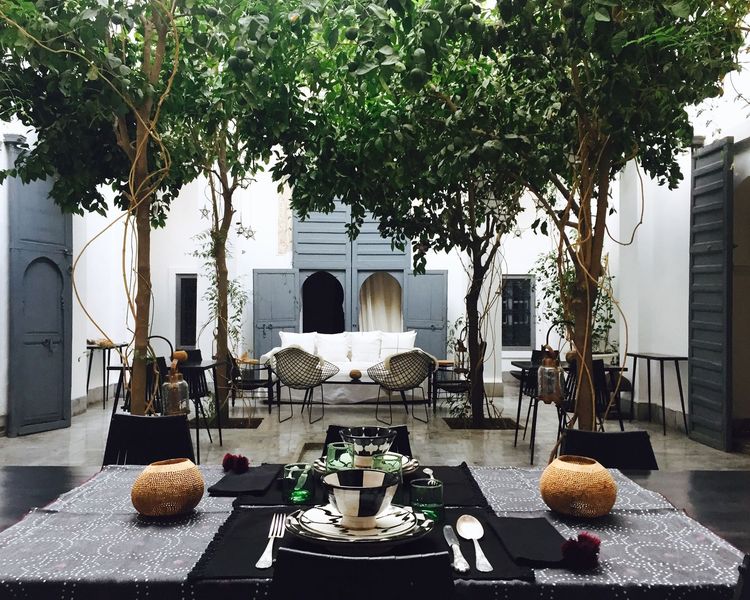
Dar Kawa Facebook Page
- Address: 18 Derb El Ouali, Kaat Benahid, Marrakech
- Contact: +212 661-344333/ in**@*****wa.net
- Service: *****
10. Riad Le Rihani
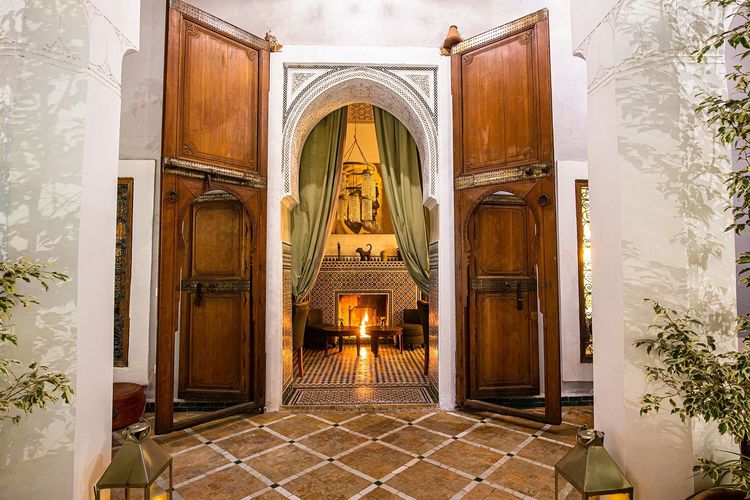
Riad Le Rihani-Marrakech Facebook Page
- Address: 52 Derb El Arsa, Marrakech
- Contact: +212 661-328668/ in**@*********ni.com
- Service: *****
À lire également