© Shutterstock
 Votre guide Ryo
Visiting Bergen with Family in 2026: Fjords, Summits and Hanseatic Alleys
In Bergen, it rains about two days out of three, but nobody seems to mind: strollers glide beneath the colorful arcades of the Bryggen wharf, children press their noses against the aquarium windows, and the funicular cabins climb toward the sky without a care for the clouds. Visiting Bergen with family means agreeing to swap the beach for the yellow raincoat and discovering that gray days often give you the best stories to tell in the evening at the hotel. To get your bearings right from arrival, the Ryo audio-guided tour of Bergen draws a thread between the Hanseatic port and the heights of the city, headphones on and kids in mind.
In the following lines, you will come across goats grazing at the top of a mountain reachable in six minutes by funicular, the tiny Beffen ferry that still crosses the harbor in season, a fortress where Norwegian kings were crowned more than seven hundred years ago, and a science museum where children trigger their own mini-tornado. Between UNESCO-listed Hanseatic alleys, effortlessly accessible summits and an aquarium full of seals and penguins, Bergen proves to be one of the easiest Scandinavian cities to enjoy with children, provided you organize well and accept a bill that is saltier than elsewhere.
Bryggen and the Hanseatic Old Port
The Bryggen Wharf and Its Hanseatic Houses
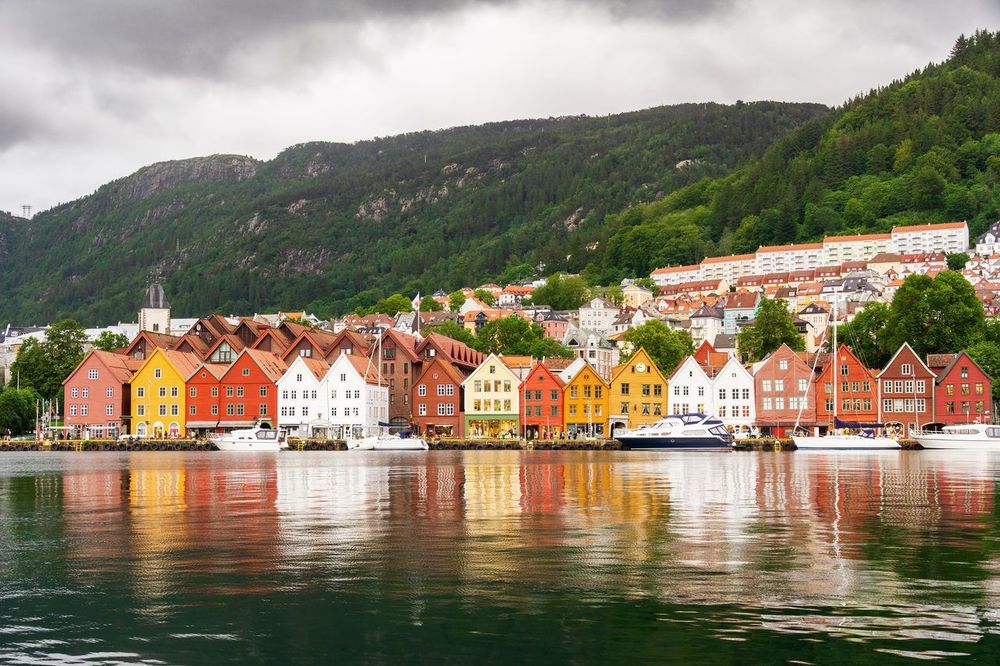
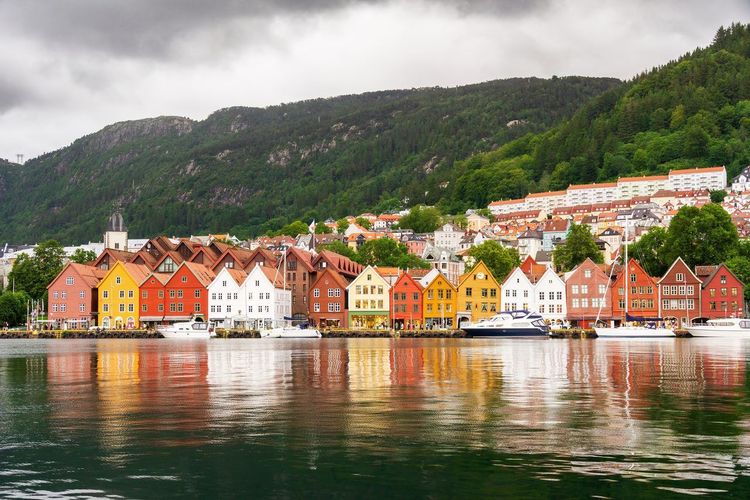
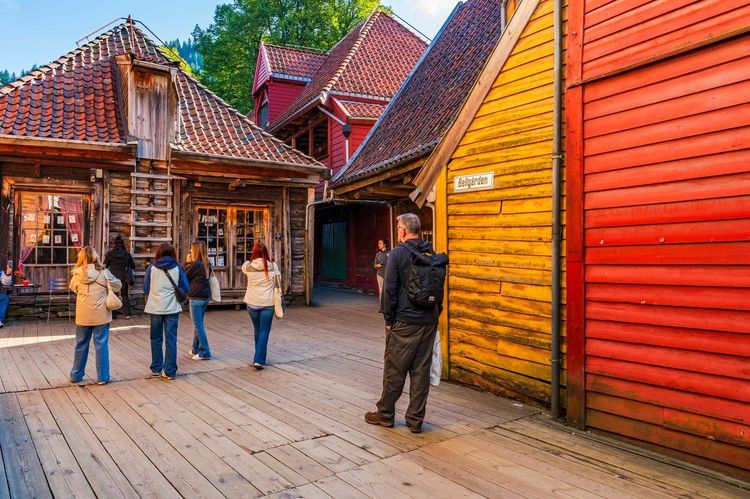
The Bryggen is the first place you discover when arriving in Bergen, and it is also the one that stays longest in children's memories. This waterfront lines up dozens of brightly colored wooden houses, built and rebuilt according to the same plan since the Middle Ages, after each fire that ravaged the district. The site has been a UNESCO World Heritage Site since 1979, which does not stop shops, workshops and small restaurants from going about their daily life there.
With children, the trick is to come early in the morning, before the cruise-ship buses arrive, to enjoy the narrow passages almost deserted. These corridors between the houses, sometimes barely a meter wide, quickly turn into an improvised hide-and-seek playground, and the floorboards creaking underfoot amuse the little ones as much as the parents.
In the days of the Hanseatic League, apprentice merchants slept on the upper floor of these same houses, crammed in next to stocks of dried cod and furs. The smell of wood and salted fish that still permeates some shops makes the anecdote almost tangible, and this is often where children's first questions come up. The main Ryo audio guide route stops right in front of these facades to tell, house by house, the daily life of the Hanse traders: enough to keep curious ears busy while you admire the steep roofs.
Hanseatic Museum and Bryggen Museum
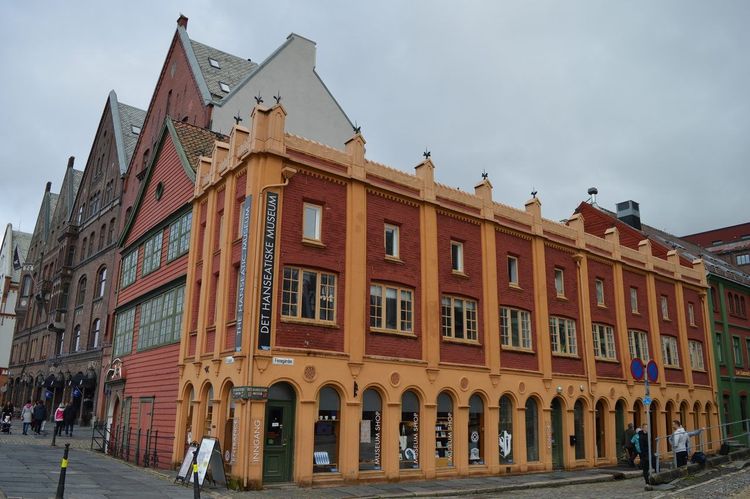
Just behind the wharf, the Hanseatic Museum tells the life of the German merchants settled in Bergen for four centuries. Its main building, Finnegården, is undergoing a long restoration: check its reopening before planning your day. The Schøtstuene, former assembly halls where merchants met and warmed themselves in winter, remain the best way in. Children learn there that lighting any fire in the wooden houses of Bryggen was forbidden, for fear of fires, and that these halls were the only heated rooms of the trading post.
A few minutes' walk away, the Bryggen Museum displays the archaeological remains unearthed after the great fire of 1955: medieval foundations, tools, leather shoes and toys found beneath the rubble. The foundations of the original houses are visible directly in the museum, which almost always fascinates the youngest, far more than conventional display cases.
Allow a little under an hour per museum with young children, double that with middle schoolers passionate about history.
Bergenhus Fortress and Rosenkrantz Tower
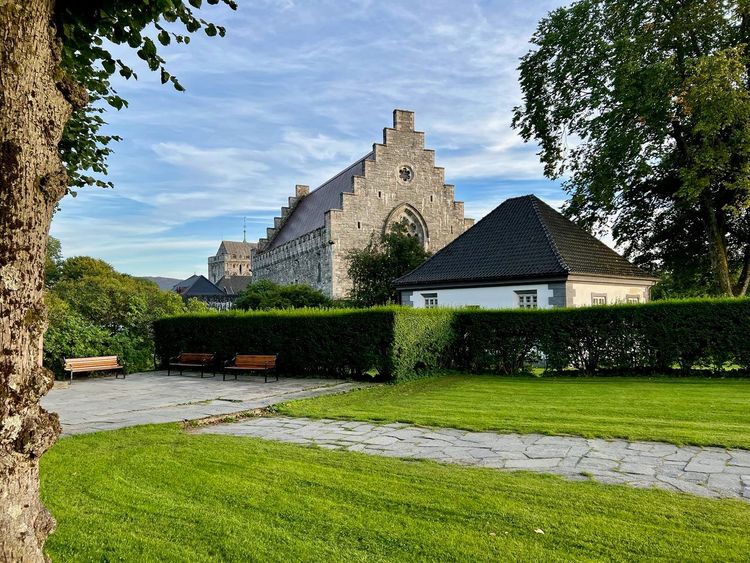
At the entrance to the harbor, the Bergenhus Fortress brings together several buildings including the great hall Håkonshallen, built in the 13th century, when Bergen served as the capital of the Kingdom of Norway. Access to the lawns and ramparts is free, an excellent place to burn off energy after visiting the museums.
At the heart of the fortress stands the Rosenkrantz Tower (Bergenhus Festning, 5003 Bergen, rated 4.4/5 on Google from 599 reviews), a defensive and residential tower remodeled in the 16th century. You climb a narrow spiral staircase up to the roof, from where the view takes in the harbor and the mountains. Forget the stroller: the steps are uneven and sometimes without a handrail. From age 6-7, however, budding knights love the arrow slits, the dungeons and the old cannons.
The Fish Market and the Colorful Neighborhoods
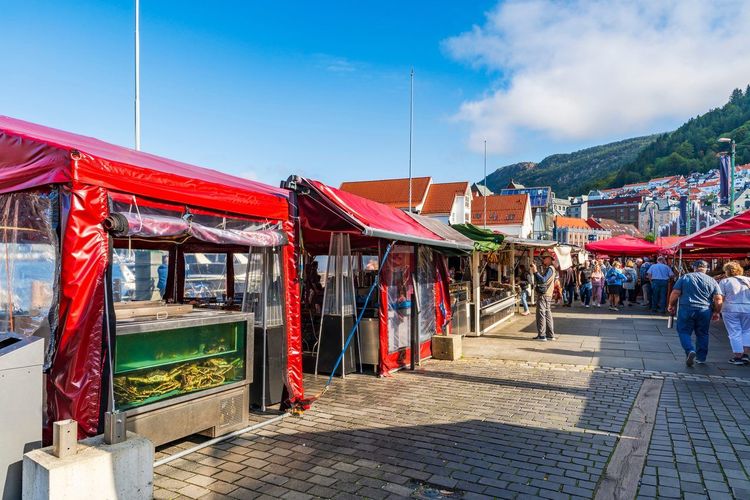
The Torget Fish Market and the Colorful Houses of Nostet
The Torget fish market has animated the central square since the 13th century, even though the traditional stalls have given up part of the ground to street-food stands. You will find shrimp, smoked salmon and fish soups served in paper cups, perfect for a quick lunch between two visits. Children linger mostly in front of the tanks where crabs and lobsters swim, before understanding where they end up.
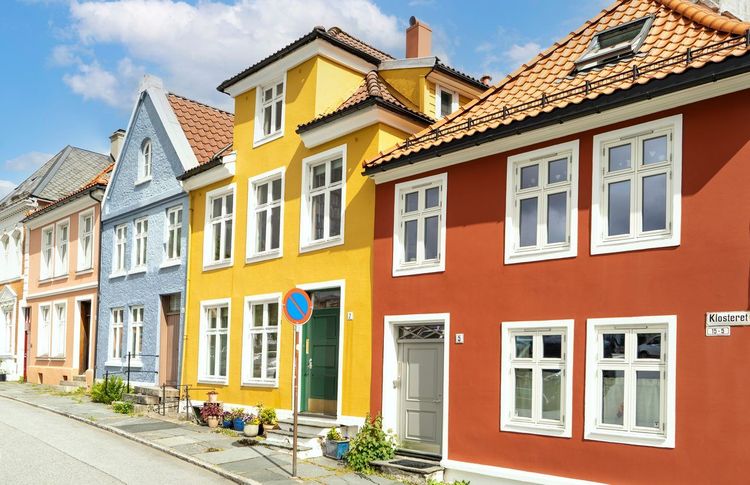
Heading west, the Nostet district (Nøstegaten, 5011 Bergen) lines up wooden houses painted red, yellow and blue, far less photographed than Bryggen but just as charming. Start a color hunt: ask your children to spot the most improbable house, the one leaning sideways or the one buried under flower pots.
The Ryo sub-route dedicated to the alleys of Bergen runs right along these two areas, from the fish market to the facades of Nostet, with audio commentary on local life and the fishing traditions that shaped the city. A simple way to turn the stroll into a Ryo audio-guided tour without having to look up the anecdotes yourself.
The Alleys of Nordnes and Sandviken
At the tip of the peninsula, Nordnes blends small fishermen's houses with a large seaside park. This is where the aquarium is located (detailed below), but also an open-air seawater pool and rocks where children dip their feet in good weather, which happens more often than you might think in midsummer.
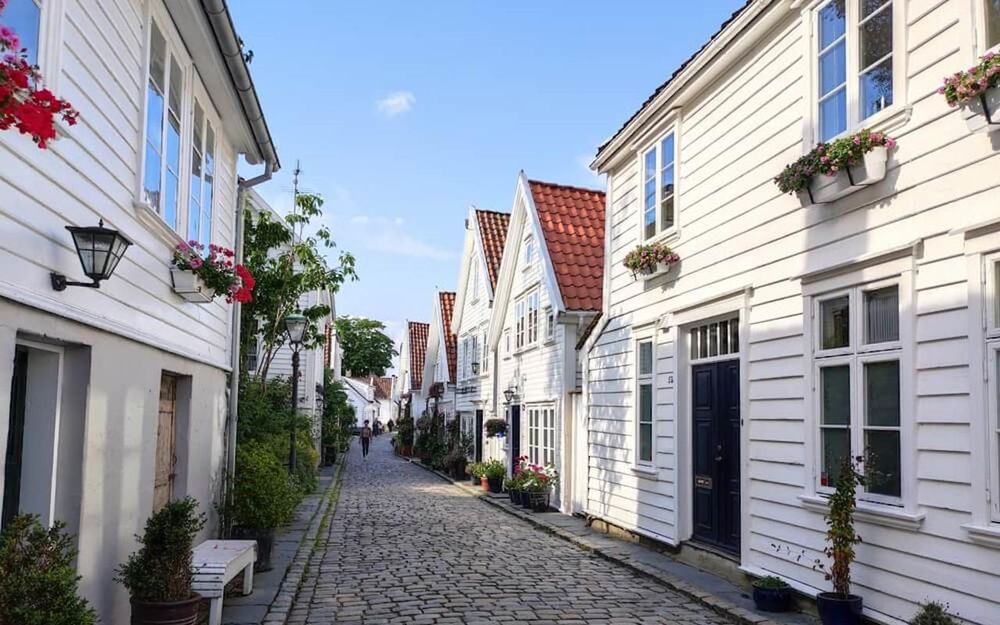
On the other side of the harbor, Sandviken (Sandviksveien, 5035 Bergen) preserves rows of white wooden houses, once inhabited by sailors and dock workers. The district is best explored at a leisurely pace on foot or by bus, and its calm contrasts with the bustle of the center: a real breath of fresh air after a busy morning.
Gaining Height: Mount Fløyen and Mount Ulriken
The Fløyen Funicular, Its Viewpoint and Its Goats
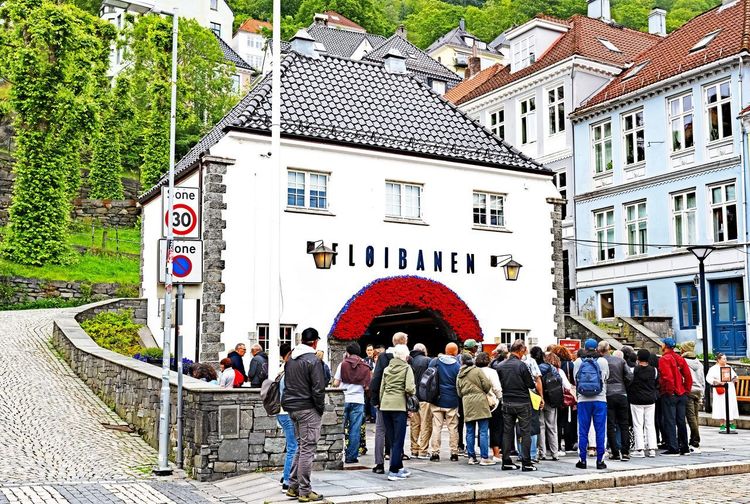
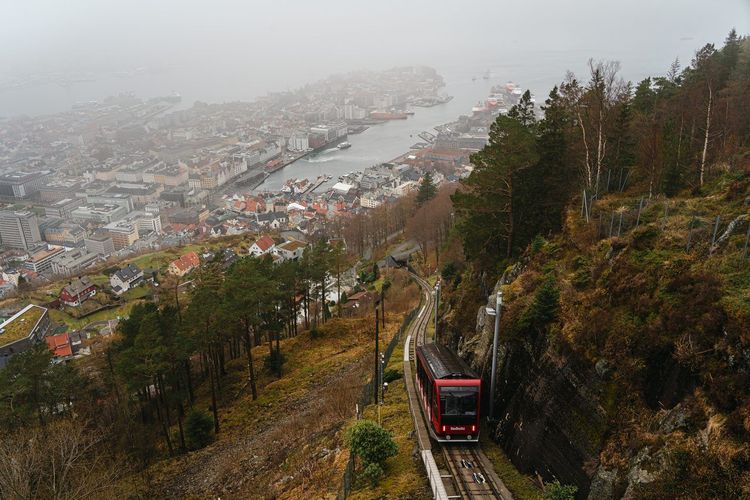
Going up Mount Fløyen is on the list of everyone who visits Bergen, and for good reason: the Fløibanen funicular (Vetrlidsallmenningen 21, 5014 Bergen, rated 4.7/5 on Google from 5,617 reviews) takes about six minutes to climb 320 meters above the city, with a panoramic view of the harbor and the seven mountains that encircle Bergen. It has been running since 1918, about every ten minutes, and the cars on the hillside are already an attraction in themselves.
At the top, several wide trails let you extend the walk effortlessly, even with a stroller. A large playground and a troll forest, populated with wooden sculptures, await children near the restaurant. In summer, goats graze on the mountainside and gladly approach visitors: admire them without feeding them, they have everything they need on site. A little farther on, the small lake Skomakerdiket rents canoes in the good season, half an hour of paddling that often leaves a stronger mark on the little ones than an entire museum.
Buy your tickets online if you come in July or August: the wait at the foot of the funicular can grow considerably in high season, a dead time that is hard to manage with impatient children. The Ryo audio-guided tour takes you to the lower station of the Fløibanen, ideal for linking the city center visit and the ascent without a detour.
Mount Ulriken by Cable Car and Its Hiking Trails
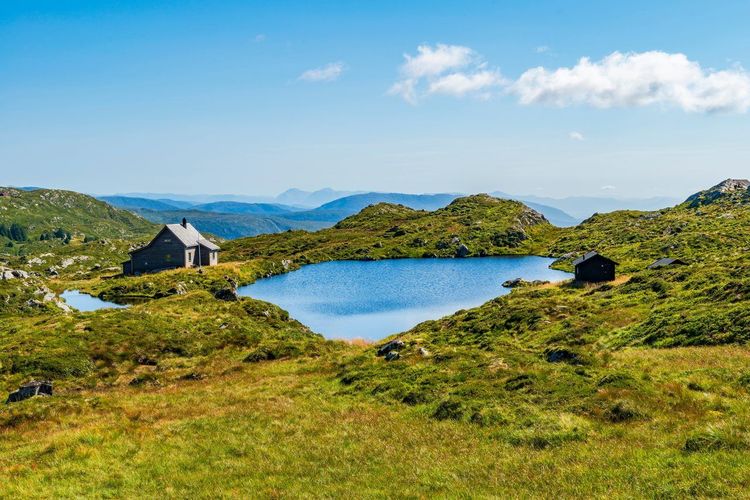
Higher and wilder, Mount Ulriken peaks at 643 meters, the highest point of the seven mountains. The Ulriken643 cable car departs from the Haukeland district, reachable by bus from the center, and runs continuously without reservation; children under 4 ride free. At the summit, in clear weather, the panorama stretches to the islands and fjords.
Unlike Fløyen, Ulriken suits older children or those used to walking better: the trails on the plateau are rocky and exposed to the wind. Experienced hikers even link the two summits via the Vidden, a crossing of several hours reserved for hardy teens. With little ones, it is better to do only one summit a day and save energy for the next.
Activities and Museums Designed for Children
The Bergen Aquarium and the VilVite Science Museum
The Bergen Aquarium (Akvariet), set on the tip of Nordnes, presents seals, penguins, North Sea fish and tropical reptiles. Keepers organize several feedings a day, and the seal feeding remains the most anticipated moment for young visitors: arrive a quarter of an hour early to be in the front row.
In a different vein, the VilVite science museum lines up more than a hundred interactive experiments: a tornado simulator, a bike that loops the loop, workshops on water and energy. It is one of the rare places in Bergen where rain becomes almost good news, since everything takes place indoors.
If you have to choose for a half day, favor the aquarium with children under 6 and VilVite from age 7-8, the age when scientific explanations really begin to intrigue.
The Høyt & Lavt Adventure Park and the Climbing Center
On the wooded heights of Fløyen, the Høyt & Lavt park (Fjellveien 73, 5020 Bergen, rated 4.7/5 on Google from 534 reviews) offers several treetop adventure courses graded by height and age, from the ground-level circuit to the ziplines reserved for the boldest. Supervision is serious and every harness is checked before departure.
In town, an indoor climbing gym rounds out the offer for rainy days. Several low boulders are accessible without experience, with thick landing mats, making it a fun activity from age 5-6.
If the rain sets in for several days in a row, string together VilVite in the morning and climbing in the afternoon: an effective combination to burn off the children's energy without setting foot outside.
Fjord Excursions with Children
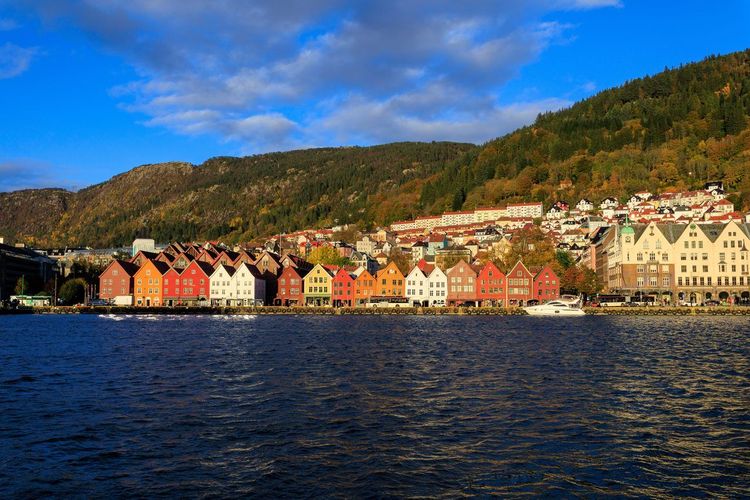
Short Cruise in the Byfjorden and Aboard the World's Smallest Ferry
There is no need to leave for a whole day to see a fjord from Bergen. A short cruise in the Byfjorden, the arm of the sea that borders the city, generally lasts one to two hours and suits very young children who tire quickly on long excursions.
Among the local curiosities, the Beffen (Dokkeskjærskaien, 5013 Bergen) is often described as one of the smallest ferries in the world: a tiny boat that crosses the harbor in a few minutes in season, for a handful of kroner. A short, inexpensive adventure that is always fun for the little ones, delighted to take a "real boat" even for such a brief trip.
Excursion to the Neighboring Fjords (Mostraumen, Osterfjord)
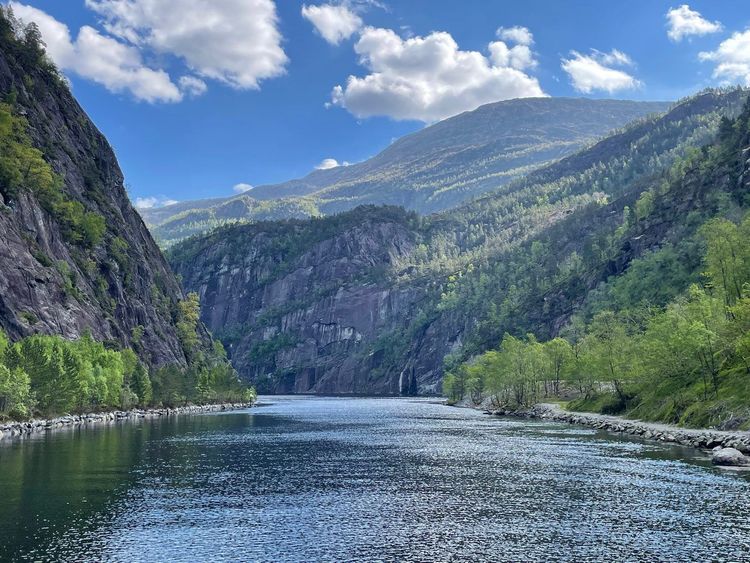
If you have a full day, longer cruises sail up the Osterfjord to the Mostraumen strait, northeast of Bergen. The rock walls close in there, waterfalls tumble directly into the water, and the boat gets so close to some falls that children can catch a few drops from the deck. Allow about three and a half hours round trip, a format that remains manageable with children from age 5-6.
Timing matters a lot: in June, the sun sets after 11 p.m., and an outing in the late afternoon offers a low light that colors the walls pink and orange. To go further, the Ryo road trip route of Fjord Norway extends the experience beyond Bergen, with audio stops at each viewpoint and the travel times between stops, very useful for planning breaks and naps in the car.
Heritage and Culture to Share with Children
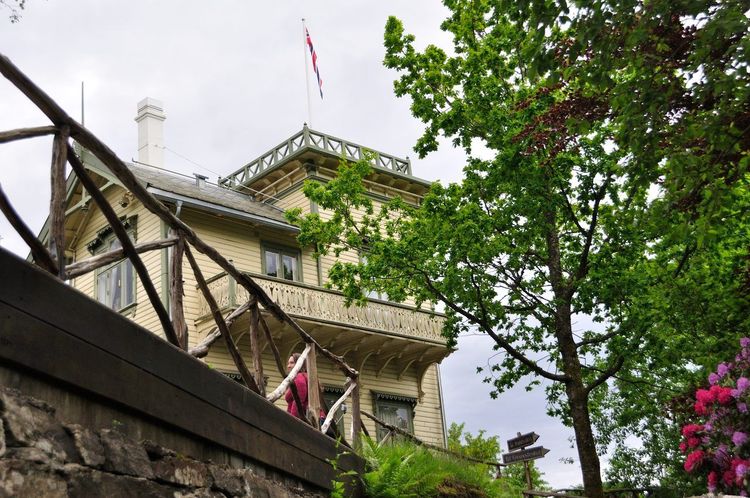
Edvard Grieg's House at Troldhaugen and the Concerts in His Honor
About twenty minutes from the center, the villa of Troldhaugen was the home of the composer Edvard Grieg, who lived there from 1885 until his death in 1907. The site preserves his piano, his furniture and the little wooden hut by the lake where he composed away from the noise. Grieg and his wife Nina also rest in a tomb carved into the cliff side, facing the water.
In summer, concerts of about half an hour are held in the Troldsalen hall: a good introduction to classical music for children unused to it, without risking the boredom of a full concert. Have them listen to "In the Hall of the Mountain King" before coming, they will recognize the tune. The short version of the Ryo audio guide tells the story of Grieg and the region's heritage in a few stops, handy if your time on site is limited.
The Fantoft Stave Church and the Maritime Museum
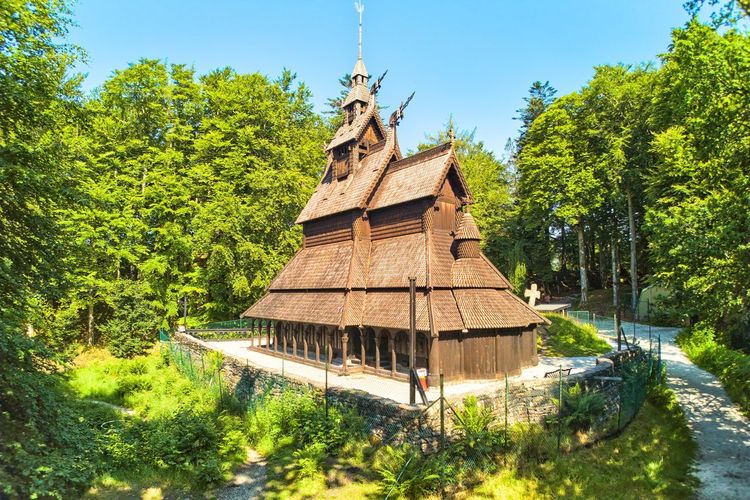
The Fantoft stave church, built around 1150 in Fortun, in Sogn, was dismantled then reassembled in Bergen in 1883. Burned down in 1992, it was rebuilt identically and reopened in 1997. Its dark silhouette, bristling with dragon heads on the gables, impresses children a great deal, who often compare it to a movie set.
For lovers of maritime history, the Maritime Museum (Bergens Sjøfartsmuseum (Haakon Sheteligs plass 15, 5007 Bergen, rated 4.5/5 on Google from 1,049 reviews)) traces the evolution of Norwegian navigation, from Viking ships to modern vessels, with numerous boat models that captivate young enthusiasts. Check its opening hours before coming, they vary a lot depending on the season.
If your stay falls in late May or in September, keep an eye on the calendar. The Bergen International Festival, between late May and early June, combines music, dance and theater, with a few family shows during the day. The film festival takes over in September, and the food festival showcases local products (salmon, goat cheeses, wild berries) at outdoor stands where you can taste without booking a table.
Nature and Easy Walks Around Bergen
Between two cultural visits, Bergen offers several options to get some fresh air without going far. The Milde Arboretum (Mildevegen 380, 5259 Bergen, rated 4.7/5 on Google from 438 reviews), half an hour to the south, gathers trees and rhododendrons from around the world along gently sloping paths, beside the fjord. Plan a picnic: the lawns lend themselves perfectly to it.
Closer to the center, Fjellveien is an almost flat pedestrian road that runs along the mountainside above the city: ideal with a stroller, with viewpoints over the harbor every hundred meters. At the foot of Ulriken, the lake Svartediket is skirted by a wide path that leads into the Isdalen valley, a walk of one to two hours round trip. And for an outing on the water, the canoes on Lake Skomakerdiket, at the top of Fløyen, remain the simplest option.
Where to Eat with Children in Bergen
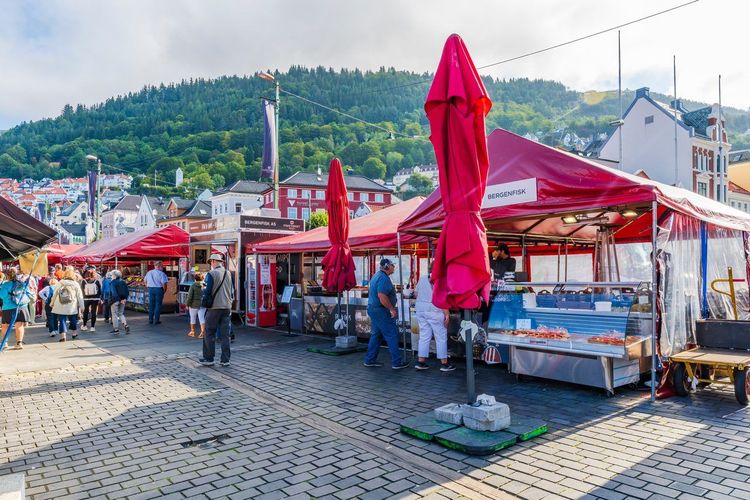
The fish market remains a quick option for a casual lunch. For a simpler break, the bakery Godt Brød offers sandwiches, pastries and fresh fruit juices in a no-frills setting that suits restless children.
Around Bryggen, several places serve grilled salmon or fish and chips at reasonable prices for Norway, with children's menus almost everywhere. For a more traditional dinner, Bryggeloftet & Stuene (Bryggen 11, 5003 Bergen, rated 4.5/5 on Google from 5,296 reviews), housed in a former Hanseatic house, serves Norwegian classics (reindeer, fish of the day, meatballs) in a wood-paneled setting that appeals to children curious about old houses.
In Nordnes, several cafés offer simple set menus with high chairs, handy after a morning at the aquarium. Book in high season if you are a large group: the small rooms of Bryggen fill up quickly at the end of the day. Budget tip: supermarkets sell fish balls and cinnamon buns (kanelboller) that are perfect for a picnic at the top of Fløyen.
Where to Stay in Bergen with Children
The city center, around Bryggen and the fish market, remains the most convenient option without a car: everything is done on foot, including the Fløyen funicular. It is also the liveliest area, so potentially noisy in the evening if your hotel overlooks a busy street.
Nordnes, more residential, offers a good compromise between calm and proximity, a quarter of an hour's walk from the port. If you are traveling by car, look at Fana or Fyllingsdalen, on the outskirts, where prices are often lower; the Ryo audio-guided tour of Bergen then helps you get your bearings quickly once you reach the center.
Several harbor hotels offer connecting rooms or suites with a sofa bed, a practical format to avoid booking two rooms. Furnished apartments, plentiful in Bergen, often offer more space and a small kitchen, a real plus for preparing a simple meal after a long day.
Practical Information for Visiting Bergen with Family
How Long to Plan and Which Season to Choose
Three full days are enough to cover Bryggen, a summit, the aquarium and a short fjord cruise, without rushing. With four or five days, you can add Troldhaugen, the Milde arboretum and the excursion to Mostraumen. Two days give an overview of the historic center and one summit; a week lets you combine city, fjords and nature walks without rushing anyone.
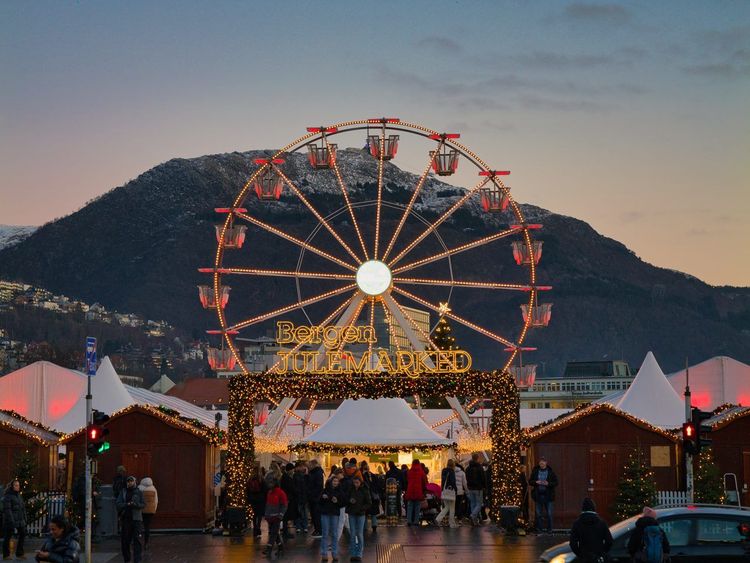
Weather-wise, Bergen is among the rainiest cities in Europe, with about 230 days of precipitation per year. Summer (June to August) remains the mildest and brightest period, with nearly 19 hours of daylight in late June. Winter attracts fewer visitors because of the cold and early nightfall, but offers considerably lower accommodation prices.
Getting Around Bergen and Budget to Plan
The center can be covered entirely on foot. The Bybanen light rail connects the airport to the center in about forty-five minutes, and Skyss buses serve the outlying districts. An adult fare costs around fifty Norwegian kroner, and children under 6 travel free. A car is only useful for the most remote fjords.
Plan on a budget considerably higher than in the rest of Europe: accommodation, meals and activities easily come to 350-450 euros per day for four people, excluding flights. Most museums offer reduced children's rates, often free for the youngest, which eases the bill a little.
The Norwegian krone is the only currency, but nearly all businesses, market stalls included, accept bank cards: no need to withdraw much cash. Also plan a European data package, as Norway is covered by European Economic Area roaming, useful for checking funicular times or booking a table at the last minute.


FAQ
How many days should you plan to visit Bergen with family?
Three days cover the essentials: Bryggen and its museums, a summit (Fløyen or Ulriken) and a short fjord cruise. Four to five days allow you to add Troldhaugen, the aquarium at a relaxed pace and a longer excursion to Mostraumen.
What is the best time to go to Bergen with children?
Summer, from June to August, offers the longest days and the mildest temperatures, even though rain remains frequent all year round. May and September are good alternatives, with fewer crowds and lower prices.
How do you get around Bergen with children?
On foot in the center, supplemented by the Bybanen light rail and Skyss buses for outlying neighborhoods or the airport. Strollers get through most sidewalks and public transport without trouble, but not into the Rosenkrantz Tower.
What budget should you plan for a family stay in Bergen?
Plan on 350 to 450 euros per day for four people, accommodation and meals included, excluding plane tickets. Free activities (the Bergenhus ramparts, Fjellveien, Nordnes Park, Fløyen trails once you are at the top) partly offset the cost of museums and lifts.
Should you book the Fløyen funicular and the aquarium in advance?
In July and August, buying your Fløibanen tickets online saves time at the foot of the funicular. For the aquarium, a ticket bought in advance avoids the queue at peak times, in the middle of the day.
Where should you stay in Bergen when traveling with children?
The center, around Bryggen, remains the most convenient for doing everything on foot. Nordnes offers a calmer setting a fifteen-minute walk away, and outlying neighborhoods like Fana are better suited if you have a car and are looking for lower rates.
Conclusion
Bergen is easy to tame with children: a Hanseatic wharf that you visit like a fairy-tale set, summits reachable in a few minutes by funicular, goats, seals and science experiments for rainy days. The hardest part is often choosing between two activities on the same afternoon, and accepting that the weather sometimes decides for you.
To connect all these places without wasting time looking for your way, slip the Ryo audio-guided tour of Bergen into your pocket: from Bryggen to the foot of the Fløibanen, each audio stop delivers an anecdote to share while walking.