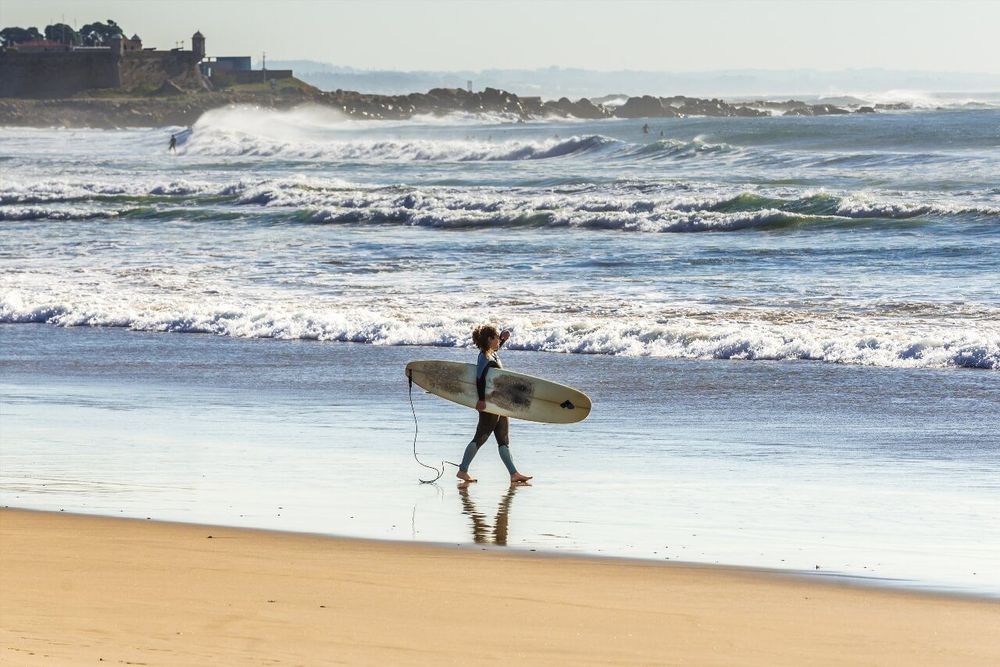
© Shutterstock
 Votre guide Ryo
The Most Beautiful Beaches Around Porto: Complete Swimming Guide 2026
We arrive in Porto for the azulejos, francesinha and port wine cellars. We often leave having discovered something unexpected: at 15 minutes by metro from the UNESCO-listed historic center, the Atlantic stretches for kilometers of supervised sand, with surf waves and charcoal-grilled fish restaurants. Porto beach Portugal is not an oxymoron, it's a reality that most guides underestimate.
The Ryo audio-guided tour of Porto covers the Ribeira and historic center, but the city's relationship with the Atlantic begins as soon as you leave the center. This guide lists 12 beaches and swimming spots within a 35 km radius of Porto, from north to south: the urban beaches of Matosinhos accessible by metro, the Piscina das Marés of Leça da Palmeira classified as a national monument, the semi-wild beaches of Mindelo and Agudela, and the large stretches of sand at Espinho and Miramar to the south. You will also find precise distances from the center, transport modes for each beach, water temperatures month by month and essential safety rules on this Atlantic coast that is not without surprises.
Matosinhos: Porto's Beach Par Excellence
If Porto had an official beach, it would be Praia de Matosinhos (Rua do Bairro Piscatório, 4450 Matosinhos, rated 4.5/5 on Google for 14,923 reviews). Technically, the beach is located in the municipality of Matosinhos and not within the administrative limits of Porto, but this distinction mainly interests geographers. For the Portuenses, it's simply 'a praia', the beach, the one they've been going to since childhood, the one they go to after work in summer, the one they defend with quiet pride when told that Porto has no beach.
Praia de Matosinhos is a 4-kilometer strip of sand, facing due west, with direct exposure to Atlantic swell. The sand is fine and beige, the beach is wide (150 to 200 meters depending on sections), and the blue flag is awarded each year, indicating that waters are controlled and European quality standards are met. Lifeguard posts are active from mid-June to mid-September.
Access is what makes all the difference compared to other beaches in the region: metro line A (blue line) directly connects Trindade, in the center of Porto, to Matosinhos Sul station in 22 minutes. The station is 5 minutes walk from the beach. Frequency: every 4 to 8 minutes during the day. Fare: 1.70 € with Andante Z4 ticket. There aren't many cities in Europe where a supervised, quality beach is so easily accessible from the historic center without a car.
The water at Matosinhos is cold compared to what one might expect. The northern coast of Portugal is subject to summer upwelling: the prevailing north-east winds push surface waters away and bring up colder deep waters. Result: 17 to 19°C in July-August, sometimes 20°C during exceptionally warm years. For comparison, the Mediterranean at the same time flirts with 25°C. Regulars don't care and enter without hesitation. For visitors with skin more sensitive to coolness, gradual immersion is advised, thermal shock can be real.
Waves are regular and often well-formed. Matosinhos is a recognized surf beach, with several schools set up on the sand and sections reserved for surfers and bodyboarders. Swimming areas are clearly marked by buoys and signaling flags are systematically displayed: green (free swimming), yellow (caution), red (swimming prohibited). Never enter the water under a red flag, rip currents on this coast can surprise the most experienced swimmers.
What transforms a day in Matosinhos into a complete experience is the immediate environment. Steps from the sand, Rua Heróis de França and its parallel streets concentrate one of Portugal's best grilled fish scenes. Dozens of restaurants offer sardines, octopus, lulas (squid) and bacalhau (cod) prepared on charcoal on street grills. The smell of embers mingles with that of sea salt from noon, and terraces fill with families in swimwear and port workers. It's authentic, delicious and cheap, the complete seafood platter with a carapinha (cold beer) runs around 20 to 25 euros.
To learn more about activities to do in the city before or after the beach, our article on the best things to do in Porto covers the essentials.
Leça da Palmeira and the Piscina das Marés by Álvaro Siza Vieira
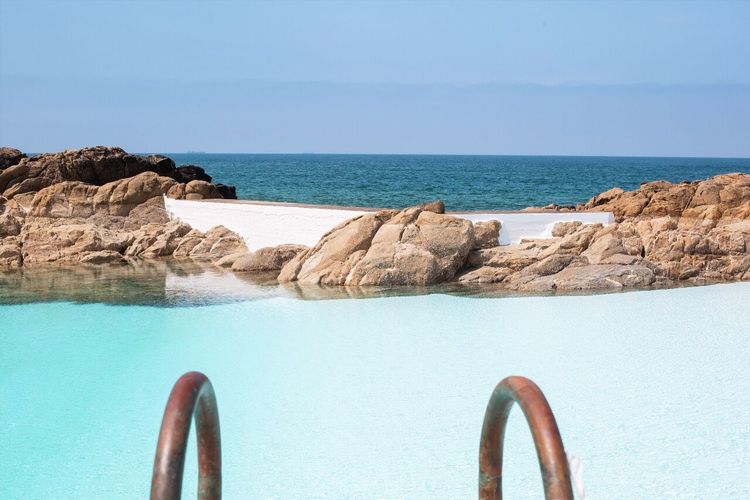
At 8 km north of Porto center, Leça da Palmeira houses one of the most remarkable architectural works in all of Portugal: the Piscina das Marés (Rua de Álvaro Siza Vieira, 4450 Leça da Palmeira, rated 3.1/5 on Google for 54 reviews), designed by Álvaro Siza Vieira between 1961 and 1966. Siza Vieira received the Pritzker Prize in 1992, the equivalent of the Nobel Prize in architecture, and this seawater pool is often cited as one of his most accomplished achievements.
The idea was radically simple: create a bathing infrastructure that dialogues with the rocky landscape of the coast rather than ignoring it. Siza worked with the natural topography of the beach rocks, carving two pools into the rock and delimiting them with raw concrete walls whose height varies to adapt to natural formations. The changing rooms are sunk into the rocks like descending ramps. The boundary between the constructed pools and the ocean remains deliberately blurred, at high tide, waves break over the low walls and continuously renew the water.
There are two pools: one large for adults (water between 50 cm and 1.5 m deep depending on the area) and one small for children (30 to 50 cm). Both are supervised by lifeguards in season. The water is naturally renewed by tides, without adding chlorine or chemicals. The pool has been classified as a national monument since 2011 and undergoes periodic restoration.
The Piscina das Marés is open from mid-June to mid-September, with hours that vary from year to year (generally 10am-8pm). Admission is charged: around 2 to 3 euros per adult (indicative rate, check in advance). In July-August, queues form between 11am and 4pm on sunny days. Arriving before 10:30am or after 5pm allows access without significant waiting.
Access from Porto is by metro line A to Leça da Palmeira (north terminus, 25 minutes from Trindade), then 5 minutes walk to the coast. Leça beach itself, right next to the pools, is a long strip of supervised sand with a view of the port of Leixões to the north. Less crowded than Matosinhos, it attracts more surfers and bodyboarders.
Note: the pool surroundings are also a photo spot prized by architects, photographers and instagrammers worldwide. The interplay of lines between concrete, rocks and Atlantic water produces images that seem timeless regardless of the lighting.
Foz do Douro: Porto's Urban Beaches
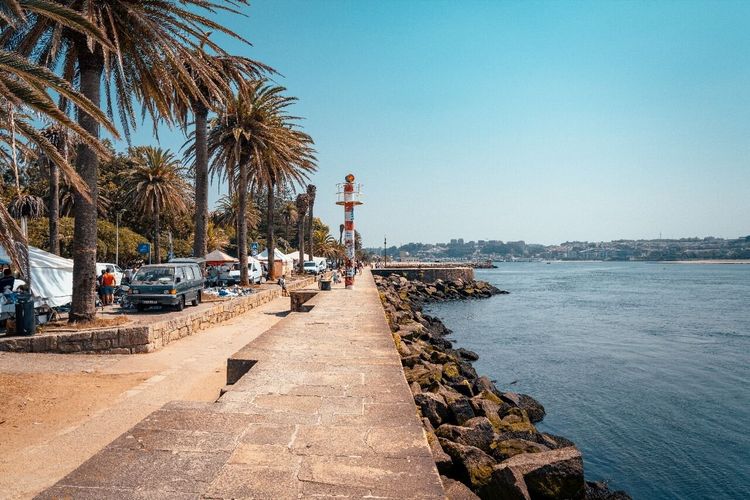
Foz do Douro is the only neighborhood in Porto proper that actually touches the sea. This is where the Douro meets the Atlantic, in a panorama that generations of artists and photographers have tried to capture without ever exhausting it. The neighborhood is elegant, with its 19th-century villas, café terraces and promenade that runs along the coast to the north.
The Praia do Molhe is Foz's main beach, nestled at the mouth of the river, partially protected from prevailing winds by the Douro's north jetty. It's small, about 300 meters of sand, but swimming there is often calmer than at Matosinhos: the swell is attenuated by position, making it an option appreciated by families with young children.
From Praia do Molhe, the Passeio das Virtudes runs along the rocky coast north towards Matosinhos: a 2 km walk through stairs carved into rock, small coves and viewpoints over the Atlantic. On the way, you'll pass Praia dos Ingleses and Praia da Luz (Foz do Douro, 4150 Porto, rated 4.3/5 on Google for 9,826 reviews), two coves without infrastructure but freely accessible, perfect for a wild swim a few kilometers from the city center.
Foz do Douro is accessible from Porto center by the historic tram line 1 (terminus Passeio Alegre, 35 minutes from Infante) or by bus 500 (20 minutes from Cordoaria). The tram is slow but the seaside experience it offers, along the Douro then the Atlantic coast, is delightful and worth the extra half hour if you're not in a hurry.
The Foz neighborhood itself deserves exploration: the Jardim do Passeio Alegre, Belle Époque villas, fish restaurants on Rua do Passeio Alegre and terraces facing the mouth of the Douro constitute a pleasant half-day program to combine with swimming.
Praia do Homem do Leme: The Family Beach
Halfway between Foz do Douro and Matosinhos, Praia do Homem do Leme (Avenida do Brasil, 4150 Porto, rated 4.4/5 on Google for 1,309 reviews) is one of the most versatile beaches on the Porto coast. Its name comes from the statue that dominates its northern end: a man at the helm, symbol of a city that built its wealth on maritime trade.
The beach extends about 600 meters in a geographical configuration that partially shelters it from northwest swell. The result is a sea generally less agitated than Matosinhos, with more regular and less powerful waves. Families with young children favor it for this reason. The beach is supervised in summer and facilities are well distributed on the sand.
The Avenida do Brasil runs along the beach its entire length. It's one of Porto's great promenade avenues, where joggers pass each other in the morning and families settle in late afternoon to watch the sunset over the Atlantic. Sunsets in Porto, on clear skies, are among the most beautiful on the European Atlantic coast: the low light on the waves and silhouettes of boats on the horizon make evenings a spectacle in their own right.
Access from the center is by bus 500 (Homem do Leme stop, 25 minutes from Cordoaria) or by bike along the cycle path that runs along the seafront from Foz. Parking is saturated in July-August from 10am, prefer public transport.
Praia do Carneiro and Praia de Lavadores: Gaia's Beaches
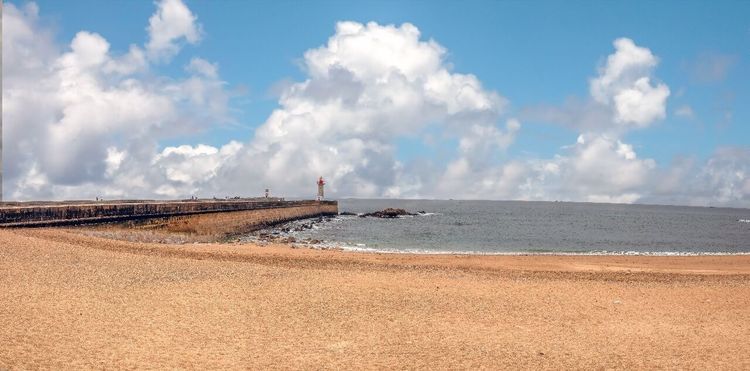
Vila Nova de Gaia is not Porto, but it is its natural extension on the left bank of the Douro. Known for its port wine cellars and waterfront facing the Ribeira, Gaia also has a quality Atlantic coastline, less crowded than that of Matosinhos.
Praia do Carneiro is the northernmost of Gaia's beaches, about 2 km as the crow flies from the mouth of the Douro. It stretches 1.5 km in a semi-urban setting: partially preserved dunes, clear sand, decent facilities (lifeguard posts, showers). The atmosphere is more relaxed than Matosinhos, Portuenses who flee the big weekend crowds often find their match here.
Praia de Lavadores (Rua da Lavadores, 4400 Vila Nova de Gaia, rated 4.6/5 on Google for 5,930 reviews), a few kilometers further south, offers an interesting contrast: dunes and pines have been partly preserved, giving the beach a more natural character. At low tide, natural pools form among the rocks south of the beach, deep enough for swimming, calm enough for children. It's not official (no lifeguards assigned to these areas), but it's one of the most original swimming experiences on the coast.
Access to Gaia beaches from Porto is mainly by bus 901 (from Jardim do Morro metro) or by car via the Arrábida bridge (A44). The journey takes 25 to 35 minutes depending on destination. Gaia beaches are a good weekday option: quieter, with more accessible parking and cheaper restaurants than on the Porto side.
If you're organizing your exploration of Portugal by car from Porto, our article on Portugal by car contains structured itineraries from the city.
Praia de Miramar and the Chapel of the Lord of the Stone
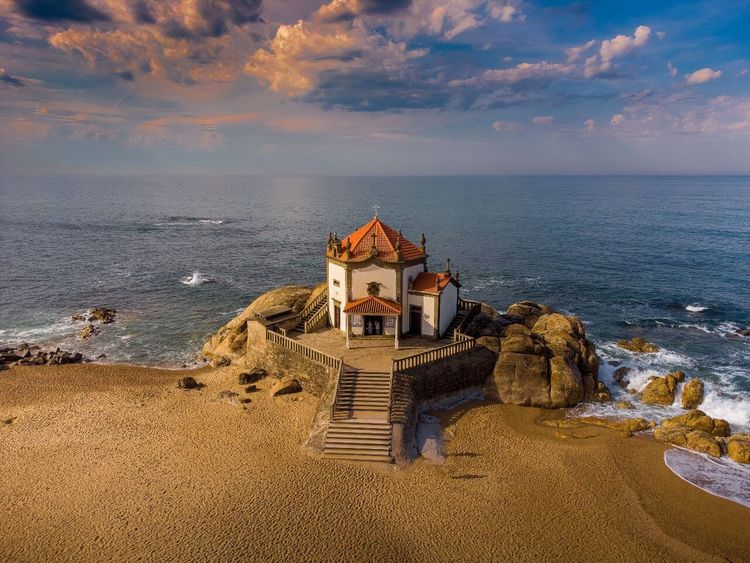
Miramar is probably the most photographed beach on Porto's coastline, and for good reason: the Capela do Senhor da Pedra (Praia de Miramar, 4405 Arcozelo, rated 4.7/5 on Google for 6,505 reviews) is built directly on a rock in the sea, accessible at low tide by a paved path from the sand. The combination of the white granite baroque chapel (1686), gray-green Atlantic waves and beige sand produces an unforgettable image, and, for once, reality lives up to what we've seen in photos.
Praia de Miramar is located 20 km south of Porto, in the municipality of Arcozelo (Vila Nova de Gaia). The beach itself is pleasant: beige sand, partially preserved dunes, supervised sea in season. The swell can be strong with northwest winds, check flags before entering the water, and don't attempt to access the chapel if the sea is rough.
The chapel is accessible on foot from the beach only at low or semi-low tide. At high tide, water surrounds the rock and cuts off access. Check tide times in advance (available on Instituto Hidrográfico Português websites). The chapel interior is tiny, a few benches, a granite altar, a nave of 4 by 3 meters, but the atmosphere is striking, especially outside peak hours.
Around the beach, Miramar is a quiet residential village with some cafés and fish restaurants. A local curiosity: the Clube de Golf de Miramar, one of the oldest courses in northern Portugal, whose seaside links directly dialogues with the dunes. Golf has a long history in the Porto region, the Oporto Golf Club, founded in 1890 by British port wine merchants, was the country's very first course.
Access from Porto is by Urbano train (line towards Aveiro, from Campanhã, Granja stop, 30 minutes then 15 minutes walk) or by car via N109 or IC1 (30 minutes). Arrive early: no large organized parking and wild parking in summer is a lottery.
To whet your appetite before lunch facing the sea, our article on Porto's culinary specialties details what you can expect to find in Gaia coastal restaurants.
Praia de Espinho: Surf, Dunes and Real Seaside Resort
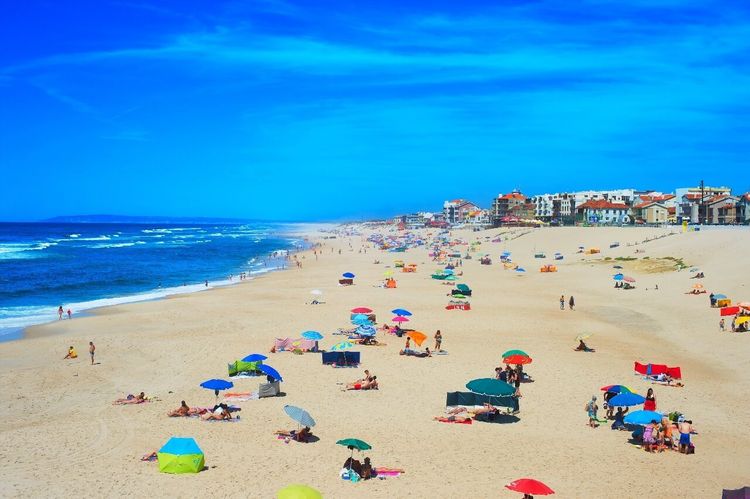
At 27 km south of Porto, Espinho is the seaside resort par excellence of Greater Porto, a real city organized around its beach since the 19th century. The railway line was inaugurated in 1875 and Portuenses already came by train to 'take the baths', as they said then. They still come there, more than a century and a half later, but the train now takes 30 minutes from São Bento.
Praia de Espinho (Avenida 8, 4500 Espinho, rated 4.5/5 on Google for 460 reviews) is large, straight, facing due west. The Atlantic swell is regular and well-formed, making it one of the best surf destinations in Greater Porto. Several surf and bodyboard schools operate on the beach from June to September. For swimming, areas are marked and supervised, but waves are not trivial in summer, and the beach is not recommended for young children when conditions are active.
The city behind the seafront is lively and offers complete seaside resort infrastructure: shops, restaurants, the Casino de Espinho (managed by the Solverde group), accommodations of all ranges and nightlife that lasts until dawn in July-August. For visitors who want a beach day extended by a lively evening, Espinho offers more resources than northern beaches.
Access is remarkably simple: Urbano trains (Porto-Aveiro lines) depart from São Bento and Campanhã about every 30 minutes, with a stop at Espinho in 30 to 35 minutes. The fare is around 2.15 € (Andante fare, check current rate). This is by far the most practical solution, as parking in Espinho city center is saturated in summer and several roads are in paid zones.
Besides the beach, the Mercado de Espinho (covered market) is an excellent place to buy pastéis de nata, local cheeses and fresh seafood at unbeatable prices. And if you're looking for an anecdote to tell on your return: Espinho's urban plan is organized in a grid, with numbered streets on one axis (1, 3, 5, 7...) and letters on the other (A, B, C...). Some neighborhoods have been swallowed by the sea over the last century, the city has had to retreat several times from the Atlantic. If you head back into Porto afterwards, the short version of our audio walking tour covers 18 stops in under two hours, from São Bento station to the Torre dos Clérigos.
Praia da Madalena: Southern Authenticity
The Praia da Madalena (Rua da Praia, 4405 Madalena, Vila Nova de Gaia, rated 4.5/5 on Google for 5,037 reviews) doesn't appear on any list of 'must-see' beaches in Greater Porto, which is precisely its best asset. At 15 km south of Porto in the municipality of Madalena (Vila Nova de Gaia), halfway between the mouth of the Douro and Espinho, it's a beach that lives at its own pace, without seeking to please tourists.
The sand is slightly coarser than Matosinhos. The swell is frank and regular. Behind the beach, a village of fishermen's houses with some colorful boats pulled onto the sand off-season. The atmosphere is domestic and relaxed, local families, some local surfers, no sun lounger rentals or souvenir vendors.
Madalena is known locally for its seafood restaurants, less visually spectacular than those in Matosinhos but often more generous in portions and more accessible in prices. The fish is fresh and the modest terraces, facing the ocean, make for a pleasant lunch setting.
Access is by Urbano train (Madalena stop, Porto-Aveiro line, 20 minutes from Campanhã) or by car via A44 (25 minutes without traffic). The beach is supervised in summer and has free parking nearby, a rarity on this coastline. It's often the choice of families living in southern Gaia who flee overcrowded August weekend beaches.
Vila do Conde and Póvoa de Varzim Beaches: The Northern Beaches
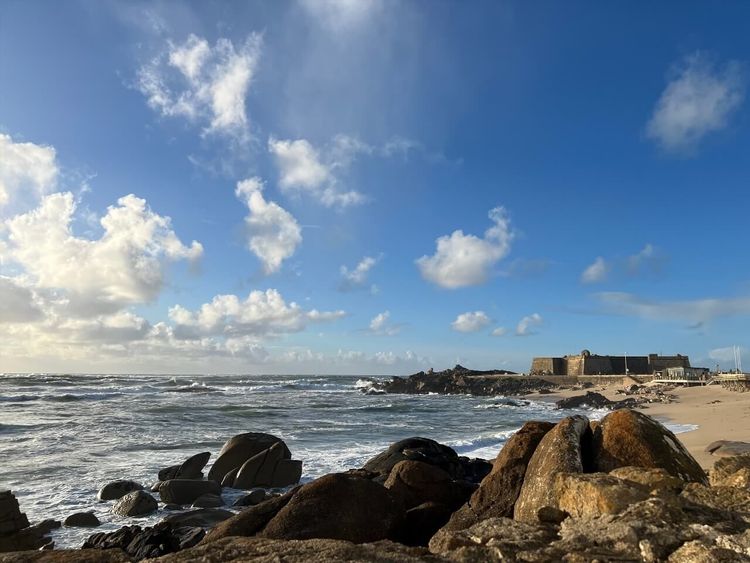
Going north from Matosinhos, the coastline extends for about forty kilometers to Viana do Castelo, with two seaside towns worth the trip from Porto: Vila do Conde (27 km) and Póvoa de Varzim (30 km).
Praia de Vila do Conde is a clean urban beach with a remarkable historic setting. The Convento de Santa Clara (14th century) dominates the cliff above the beach, and the medieval aqueduct that crosses the city is visible from the sand. It's one of the few beaches in the region where history and swimming combine in the same field of vision. The beach is well maintained, supervised in season, and the town is worth an afternoon exploration: the bobbin lace museum and marina district are 15 minutes walk away.
Praia de Póvoa de Varzim (Avenida dos Banhos, 4490 Póvoa de Varzim, rated 4.4/5 on Google for 1,778 reviews) is larger and livelier. The town has been an established seaside resort since the late 19th century, with casino, lively restaurants and substantial summer nightlife. The beach exceeds 3 km long, is well equipped and the sea is slightly more pleasant than further north thanks to the slightly sheltered orientation.
Both cities are accessible from Porto by metro line B (direction Póvoa de Varzim, from Trindade): Vila do Conde in 40 minutes, Póvoa de Varzim in 50 minutes. Comparable Andante fare to the rest of the network. These are ideal destinations for a full day combining beach in the morning and urban exploration in the afternoon.
How to Get to the Beach from Porto: Transport and Distances
Beach accessibility from Porto is one of the great strengths of the Porto coastline. If you're looking for the closest beach to Porto or how to get to the beach from Porto without a car, this table summarizes options by transport mode, with precise distances for each beach in Portugal around the city.
Metro line A (blue), northern beaches:
- Matosinhos Sul (Praia de Matosinhos): 22 min from Trindade
- Leça da Palmeira (Piscina das Marés): 27 min from Trindade
- Fare: 1.70 € Andante Z4 ticket. Frequency: every 4 to 8 min during the day.
Metro line B (red), far northern beaches:
- Vila do Conde: 40 min from Trindade
- Póvoa de Varzim: 50 min from Trindade
- Fare: 2.00 € Andante Z5 or Z6 ticket depending on destination.
Urbano train (Porto-Aveiro line), southern beaches:
- Madalena: 20 min from Campanhã
- Granja/Miramar: 30 min from Campanhã
- Espinho: 35 min from Campanhã or São Bento
- Frequency: approximately every 30 min. Fare: 1.85 to 2.15 € depending on destination.
STCP bus:
- Line 500 (Cordoaria, Matosinhos): serves Foz do Douro, Praia do Homem do Leme. Duration 25 min to Homem do Leme.
- Line 901: for Gaia beaches (Carneiro, Lavadores) from Jardim do Morro metro.
Historic tram line 1:
- Passeio Alegre terminus (Foz do Douro) from Infante: 35 min. Slow, but unique experience along the Douro.
By car:
- Matosinhos: 15 min (A28 north)
- Leça da Palmeira: 20 min (A28 north)
- Vila do Conde: 30 min (A28 north)
- Miramar: 25 min (IC1 south)
- Espinho: 30 min (A29 south)
- Gaia (beaches): 20 min (A44 south)
- Paid and saturated parking in July-August on all seafronts between 10am and 5pm. Arrive before 9:30am or after 5pm.
By bike: a cycle path runs along the coast from Porto center to Matosinhos (8 km, flat terrain). Extension planned to Leça da Palmeira. Realistic option if you're staying in Foz or Boavista neighborhoods.
Practical Info: Water, Weather and Safety
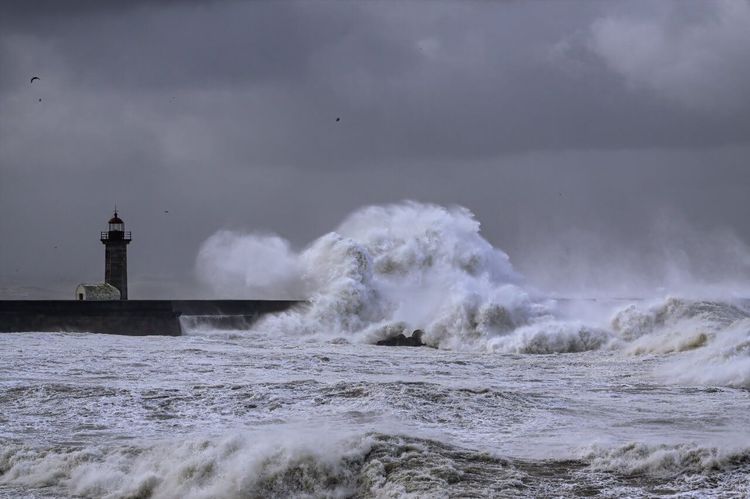
The Atlantic in northern Portugal is cold, rough and magnificent. Some essential data to make the beach day go well.
Water temperatures:
- June: 15 to 17°C
- July: 17 to 19°C
- August: 18 to 20°C (rarely more)
- September: 16 to 18°C
- Off-season (October to May): 12 to 15°C
The coolness is due to summer upwelling (rising of cold deep waters caused by north-east winds) and the Canary current that runs along the coast. This phenomenon is more marked in July and August than in June and September, which are paradoxically months when water can be slightly warmer.
Beach supervision: the official season (active lifeguard posts) runs from mid-June to mid-September on approved beaches. Swimming off-season or in unsupervised areas involves real risks, rip currents are the main cause of accidents on this coast.
Flag system:
- Green: free and safe swimming
- Yellow: swimming allowed with caution (moderate swell, possible current)
- Red: swimming prohibited, to be absolutely respected
- Purple (with jellyfish pictogram): jellyfish presence reported
Rip currents: if caught by a current, do not swim against it but parallel to the shore until escaping it, then return to shore diagonally. Don't panic, lifeguards are trained for these situations.
Prices and facilities:
- Beach access: free (exception: Piscina das Marés, ~2-3 €)
- Sun lounger rental: 5 to 8 € per unit depending on beach and season
- Umbrella rental: 3 to 5 €
- Showers: free on supervised beaches
- Blue flag: awarded to Matosinhos, Espinho, Leça, Miramar and several Gaia beaches
To prepare a day mixing beach and historic center, the Ryo audio-guided tour of Porto helps you discover the city on foot before swimming. The best period for swimming is July-August (maximum water temperature, stable weather). June and September offer fewer crowds for still acceptable conditions. Outside the official season, beaches remain beautiful but swimming is not recommended without good knowledge of local conditions.



FAQ
What is the closest beach to Porto?
In travel time, Praia de Matosinhos is the most accessible beach: 22 minutes by metro (line A, terminus Matosinhos Sul) from the center of Porto. Distance-wise, the small coves of Foz do Douro (Praia do Molhe, Praia dos Ingleses) are closer to the historic center, but less well served by rapid public transport. For most visitors, Matosinhos is the practical answer to the question.
Does Porto have sandy beaches within the city?
Porto proper has no sandy beach. The Foz do Douro district touches the sea and has some small coves and rocky beaches, but the large supervised sandy beaches are found in neighboring municipalities, Matosinhos to the north, Vila Nova de Gaia to the south. In daily usage by residents, this administrative distinction doesn't exist: 'going to the beach from Porto' usually means Matosinhos.
Is the water cold for swimming in Porto?
Yes, relatively: the water temperature reaches its maximum in August with about 18 to 20°C. This is noticeably colder than the Mediterranean or the Algarve at the same time. But the vast majority of swimmers, including families with children, swim there without problem in July-August. The coolness of the water is often experienced as an advantage on days when the temperature on the sand exceeds 30°C.
Which beach to choose for surfing near Porto?
Praia de Espinho (27 km south) and Praia de Matosinhos are the two best options. Espinho offers more regular swell and well-organized surf schools, good option for beginners. Matosinhos is more accessible but crowded in summer, which can be bothersome in the water. Praia de Leça da Palmeira and Praia de Angeiras (further north) are appreciated by advanced local surfers for their more technical swell.
Are there free beaches around Porto?
Yes, all public beaches around Porto are free access. The only optional expenses are renting sun loungers and umbrellas (5 to 8 € total) and entry to the Piscina das Marés in Leça da Palmeira (~2-3 €). Showers and toilets are free on supervised beaches. No entry fees, no mandatory beach passes.
Can you swim in Porto outside of summer?
Technically yes, but conditions are difficult. Off-season (October to May), beaches are no longer supervised, water drops to 12-15°C and Atlantic swell can be very powerful. Experienced surfers frequent the spots of Matosinhos and Angeiras year-round, but for recreational swimming, the reasonable window is mid-June to mid-September. Walks along the seafronts remain pleasant in all seasons.
How to reach Espinho from Porto?
Take an Urbano train from São Bento or Campanhã station (lines towards Aveiro). The journey takes 30 to 35 minutes and trains run approximately every 30 minutes. The ticket costs around 2.15 € (Andante fare, check current rate when purchasing). Espinho also has a station well located relative to the beach, 5 minutes walk from the platform.
Conclusion
Looking for a beach in Porto, Portugal, is therefore nothing absurd: the coastline surrounding the city is one of the most varied and accessible in Europe for an agglomeration of this size. From the 4 km of sand at Matosinhos to the architectural pools of Piscina das Marés, from the wild coves of Foz do Douro to the long stretches of Espinho, each section of coast has its own personality and logic. And all this within 35 km of the historic center, largely accessible without a car.
Before heading to the Atlantic, take time to explore Porto with the Ryo audio guide of Porto: the audio walking tour guides you through the Ribeira, São Bento, azulejos and wine cellars, to understand the city before leaving for the coast. The sea will still be there when you return, and the grilled sardines of Matosinhos will be waiting for you.
À lire également