© Shutterstock
 Votre guide Ryo
Port Wine Cellars: Complete Guide to the Best Lodges in Vila Nova de Gaia (2026)
Across the Douro from Porto, an entire hillside smells of oak wood and aged wine. Vila Nova de Gaia is home to the cellars where the great Port wine houses have been ageing their wines since the 18th century — Graham's, Taylor's, Sandeman, Cálem, Porto Cruz. This is no museum: it is a living industry, with hundreds of thousands of barrels stacked in lodges where the temperature never exceeds 16°C. If you are looking for a free Porto cellar visit, this guide is straightforward: almost all tastings are now paid, but genuine free options do remain, which you can plan alongside the Ryo audio guide tour of Porto, ideal for contextualising the Douro crossing and your arrival opposite the cellars.
This guide covers the 6 major addresses in Gaia, 2026 prices, actual durations, what each tasting includes, the rare free-entry options, and how to visit several cellars in one day without ending up exhausted. Because some offer live fado at €22, others a panoramic terrace overlooking Porto, and others still a four-level cellar-museum, the choice comes down to more than just the most famous name.
Why Are the Cellars in Vila Nova de Gaia and Not in Porto?
This is the question almost everyone asks on arrival. Port wine is produced in the Douro Valley, some 100 kilometres to the east, in quintas with schist terraces. But since the 18th century, English merchants — Sandeman, Graham, Taylor, Cockburn — chose Gaia to refine and store their production. The reason is climatic: the cellars carved into the granite hillside maintain a stable temperature and humidity year-round, with no need for air conditioning. The dry heat of the Douro would have accelerated ageing in an uncontrolled way.
A 1756 treaty formalised this geography: the demarcated Douro region was created under Pombal, and Gaia established itself as the only legal shipping point until 1986. Today, the great houses still own their lodges on the hillside, and Portuguese regulations still require that Port wine be lodged in Gaia before it can be sold commercially.
In practical terms, this means crossing the Ponte Dom Luís I on foot from the centre of Porto — 15 minutes from the Ribeira — and walking along the Gaia waterfront, where the signs of the great houses line up over 400 metres. Most cellars can be visited without a reservation outside July and August; in high season, booking the day before is strongly recommended, especially for Graham's and Taylor's.
A note on vocabulary: the French say « cave », the English say « lodge » or « wine lodge » to distinguish them from standard wine caves. It refers to the same thing. And no, there are no vineyards in Gaia — only barrels and stills.
Graham's Port Lodge: The Absolute Reference
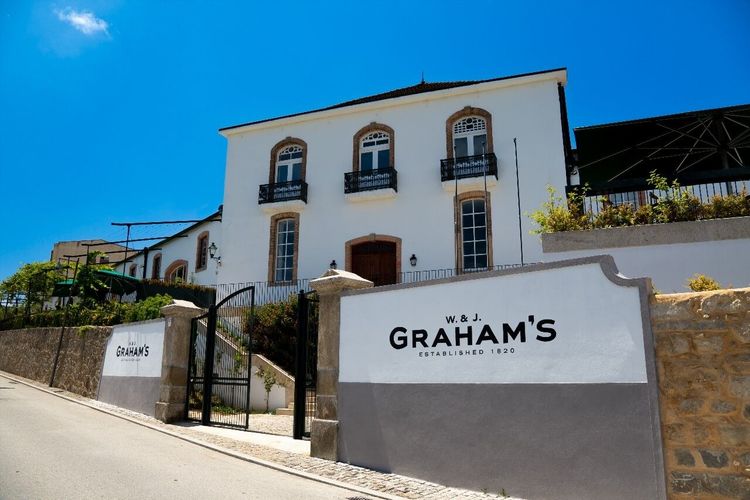
Graham's (Rua do Agro 141, 4400-281 Vila Nova de Gaia, rated 4.6/5 on Google with 1,895 reviews) is the cellar almost every guide mentions first, and that reputation is well deserved. The house was founded in 1820 by two Scottish brothers, William and John Graham, who originally imported textiles from Porto before switching to wine. Now owned by the Symington family — who also own Dow's, Warre's and Quinta do Vesúvio — Graham's offers one of the most carefully designed tours in Gaia.
The entrance fee ranges from €15 to €35 depending on the package. The standard tour at €15 lasts around 50 minutes and includes a visit to the cellars, the colheita (vintage-dated) barrels, the bottling room, and a tasting of two wines — typically a chilled Graham's Fine White Port and a 10-Year-Old Tawny. The premium package at €28 adds a guided tasting of four wines with food pairings — Portuguese cheeses, olives, and cornbread — in the upstairs room. The Quinta dos Malvedos package at €35 also includes a Late Bottled Vintage from the original quinta.
What sets Graham's apart from other cellars is the physical space: the cellars are spectacular, with rows of pipes (550-litre barrels) stretching across several underground levels. The lighting is carefully considered, the explanatory panels are available in French, and the guides — often oenology students from the University of Porto — can answer detailed questions about winemaking methods. The tasting room features a large terrace with a direct view over the Douro and the azulejo-tiled facades of Porto across the water.
Practicalities: tours begin every 30 minutes from 10am to 6pm (7pm in summer). Graham's has a mobile app offering an audio-documentary tour to complement the guided visit, useful if you prefer to go at your own pace. Allow 1h30 on site including the tasting. Graham's also has a restaurant, the 1890 Restaurant & Bar, whose short but precise menu is worth a lunch stop: confit duck pie paired with a Graham's 20-Year-Old.
Practical tips: come on a weekday morning to avoid groups. If you have already visited a smaller cellar, Graham's is ideal as a second visit at an industrial scale.
Taylor's: The Cellar on the Heights
Taylor's (full name: Taylor Fladgate & Yeatman) was founded in 1692, making it one of the oldest Port houses still operating independently. Unlike Graham's, which is owned by the Symington family, Taylor's has remained in the Fladgate family since its founding. The cellar sits higher up the hill, which means either an extra 10 minutes of walking from the waterfront or a 3-minute Uber ride from the quay.
The standard tour is €16, lasting 45 minutes, with a tasting of two wines. But what Taylor's truly sells is its terrace wine bar: the Barão Fladgate, open daily from 10am to 7pm, where the entire Taylor's range is available by the glass — from a dry White Port at €3.50 to a 2011 Vintage at €22. You can walk in without a reservation, without buying a tour ticket, and settle in facing Porto with a 20-Year-Old Tawny. It is technically the most accessible option on the entire hillside.
The cellar itself differs from Graham's in its more intimate atmosphere. Groups are smaller, the lodge architecture is more understated, and guides spend more time answering questions. Blending enthusiasts will appreciate that Taylor's explains in detail the solera method — the system by which a 10-Year-Old Tawny is in fact a blend of wines from different vintages whose average age is 10 years. Worth noting: Note: next door to Taylor's is The Yeatman Hotel, a five-star property with an infinity pool and a doubly Michelin-starred restaurant. Even if you are not staying at the hotel, The Yeatman bar is open to the public and offers one of the most exhaustive Port wine lists in the city — over 500 references, including Vintages from the 1960s.
For Vintage enthusiasts, the Vintage Collection tour at €45 allows you to taste a vintage-dated Port straight from the bottle (undecanted) — a rare experience, as most cellars restrict access to their old Vintages to their authorised importers. Advance booking required; available weekdays only.
Sandeman: The Icon in the Black Cape
The silhouette of the Don — black cape, musketeer hat — is one of the most recognisable logos in the wine world. Sandeman (Largo Miguel Bombarda 3, 4400-222 Vila Nova de Gaia, rated 4.3/5 on Google with 2,615 reviews) was founded in 1790 by George Sandeman, a Scotsman who ran his business from a London coffee house. The house is now owned by the Sogrape group, Portugal's largest wine producer, but the visual identity has remained intact since 1928, when the Don was created by Scottish illustrator George Massiot Brown.
Sandeman offers the most tourist-oriented visit in Gaia, which is a double-edged quality. On one hand, the facilities are very well signposted, audio guides are available in 11 languages, guides wear the famous cape and hat, and the shop is the largest on the waterfront. On the other, visitor numbers are higher than elsewhere: in July and August, the cellar can receive several hundred people per hour. Out of season, the experience is noticeably more pleasant.
Prices: tour + 2-wine tasting at €13.50, premium tour + 3-wine tasting at €19.50, Founders Reserve tour at €28 with a 4-wine guided tasting by an oenologist guide. Duration ranges from 40 minutes (standard) to 70 minutes (Founders Reserve). The cellar also offers tastings without a tour, from €5 per glass.
Where Sandeman outperforms its competitors is in style education. The exhibition space clearly explains the differences between Ruby, Tawny, White and LBV Port, which is genuinely useful if you are a newcomer. The panels include aroma wheels and serving temperature guides. For anyone visiting a cellar for the first time, Sandeman is probably the best starting point — accessible, clear and well organised.
A little-known fact: Sandeman is also a major player in Sherry from Jerez, in Spain. The house simultaneously runs bodegas in Andalusia and produces table wines in the Douro Valley. The diversification is recent but real.
Cálem: The Cellar with the Fado Show
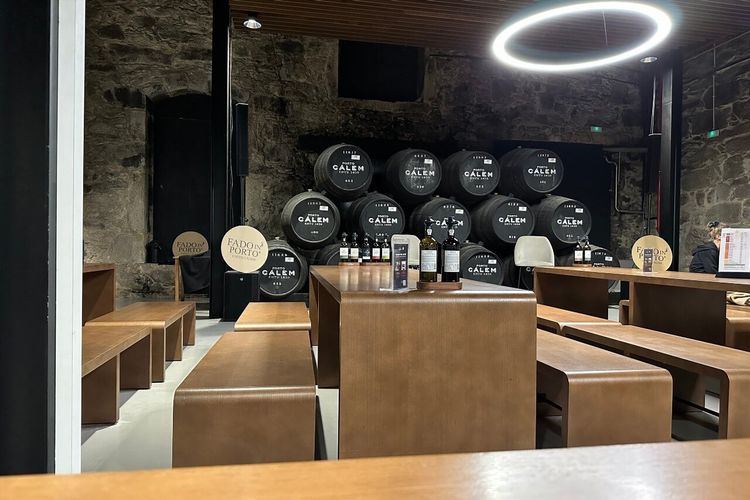
Cálem (pronounced "cah-lame") is the only major cellar in Gaia to have incorporated a fado show into its visit offering. The house, founded in 1859 by António Alves Cálem, has been owned since 2015 by the same holding company as Sandeman and Offley. Its location is ideal: directly on the Gaia waterfront, just a few metres from the Ponte Dom Luís, in a partially restored 19th-century lodge.
The visit + tasting with the Ryo Porto audio guide pairs well with Cálem, as the cellar is one of the first you encounter after crossing the bridge and heading down to the waterfront. The main offering:
- Tour + 2-wine tasting: €18, a 45-minute guided tour with access to the ageing cellars, tasting of a 10-Year-Old Tawny and a Reserve Ruby Port.
- Tour + fado show + tasting: €22, the same tour plus a 30-minute fado performance in the cellar's underground hall, with a tasting of 2 wines during the show.
- Fado only (without the cellar tour): €15, for visitors who simply want the show and the tasting.
The fado show deserves an honest appraisal. This is not fado from a traditional Lisbon or Coimbra house: it is a commercial performance, typically 3–4 fadistas performing in turn, with Portuguese guitar and viola baixo, in a space that seats around sixty people. Quality varies depending on the evening's performers. For many visitors, it is nonetheless an enjoyable introduction to the genre, in an authentic setting. If you want high-quality fado, it is better to go to Lisbon or seek out a specialist fado house in Porto.
The Cálem cellar is particularly well lit, and the barrels are presented didactically, with information cards explaining the differences between wood types (French oak, American oak) and their influence on aromas. Good value for money among the major cellars.
Porto Cruz: The Cellar-Museum and Its Panoramic Terrace
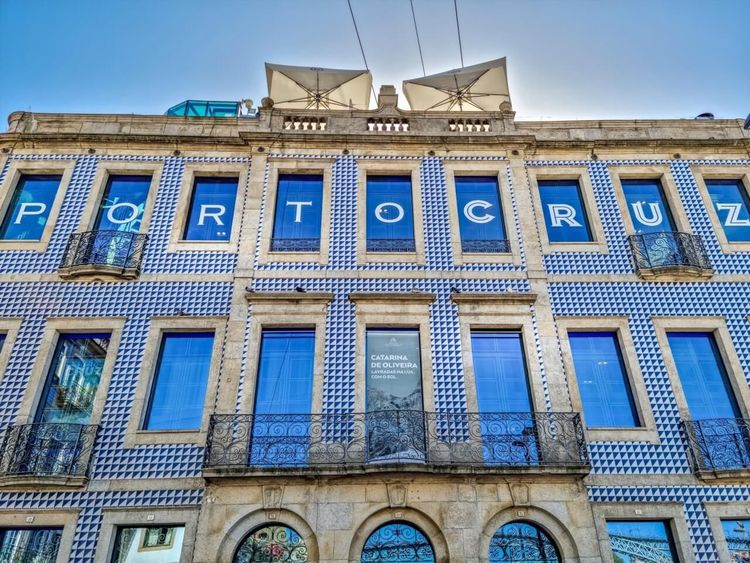
Porto Cruz has been the best-selling Port wine brand in France for decades — you have probably seen it in any supermarket. The house belongs to the La Martiniquaise group, making it a curiosity among Gaia's cellars: the only major house under French ownership. Its lodge stands out thanks to a spectacular renovation: in 2013, Porto Cruz transformed its building into a four-level tourist complex, complete with a restaurant, bar, shop and museum space.
The fourth-floor terrace is the main draw: 30 metres above the quay, it offers a 180° view over Porto, the Douro and the bridges. Access to the terrace and the ground-floor museum space is free — one of the rare no-cost options on the entire site. You can go up, settle at the terrace bar, order a drink and enjoy the view without paying for a tour.
The museum space in the basement traces the history of Port wine through a digital scenography: projections, sound archives, portraits of Port drinkers across the ages. It is well done, even if the commercial intent is clear. The guided tour with tasting is available at €12, making it one of the cheapest entry tickets in Gaia.
The terrace bar, the Roof Top Porto Cruz, serves Port-based cocktails (the Porto Tonic, a must at €7.50) and snacks. At the end of the day, it is one of the best spots in Gaia to watch the sun set over the Ribeira. That said, expect amplified background music in high season — the atmosphere is that of a contemporary rooftop bar, not a traditional cellar.
If you want to understand why Porto Cruz is the best-selling Port brand in France, the answer lies in history: French soldiers stationed in Porto during the Peninsular War developed a taste for this fortified wine, and commercial ties with France intensified after 1815. The brand then made France its primary export market throughout the 20th century.
Ramos Pinto, Ferreira and the Less-Visited Cellars
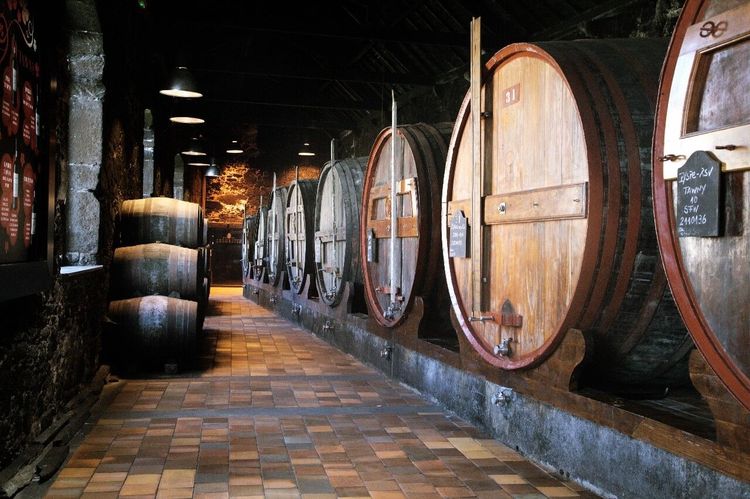
The big names attract the bulk of tourist traffic, but several cellars offer more intimate visits, often with more available guides and higher-range tastings.
Ramos Pinto is the perfect example of a cellar that connoisseurs recommend and casual tourists overlook. Founded in 1880 by Adriano Ramos Pinto, it was a pioneer in promoting Port through artistic posters — its Art Nouveau works from the 1900s, freely inspired by Mucha, have become icons of Portuguese advertising. Ramos Pinto is now owned by Champagne house Roederer, which explains the high standard of communication.
The tour (€14, 50 minutes) includes an internal museum of original posters — a little-known treasure — and a tasting of two wines, generally including a notably aged 20-Year-Old Tawny. The guide takes the time to explain why old Tawnies develop aromas of walnut, caramel and dried fig (oxidation in small casks), while Rubies retain aromas of fresh red fruits (aged in large vats protected from the air).
Ferreira deserves a special mention for its historical significance. It is the only major Port house founded by a Portuguese family — rather than an English one — in 1751. Its figurehead is Dona Antónia Adelaide Ferreira, nicknamed « A Ferreirinha », who developed the house in the 19th century despite difficult economic conditions. Her portrait adorns the bottles of Barca Velha, Portugal's most prestigious table wine. The cellar offers tours at €14 with a guided tasting of 3 wines, always including a dry White Port — a category that other houses tend to feature less prominently.
Other notable addresses: Quinta do Crasto (present in Gaia for certain tastings, with Vintages among the most sought-after), Offley (budget-friendly visit at €10, well suited for tighter budgets), Real Companhia Velha (founded in 1756 on Pombal's initiative, historically the oldest wine institution in the Douro). Once the cellars close, our short audio walking tour of Porto unfolds 18 stops in 1h50, from São Bento station to the Torre dos Clérigos.
Free Visits: What Actually Exists in 2026
Let us be direct on this point, as many online sources are inaccurate or out of date. In 2026, no major cellar in Gaia offers a complete free guided tour. What changed from the 1990s and 2000s: the houses gradually monetised their visits, as tourist demand exploded and free access made crowd management increasingly difficult.
What remains free of charge:
- The Porto Cruz terrace (Roof Top): free access, bar is paid. No obligation to order anything to go up, but the terrace is not a cellar in the strict sense.
- The Taylor's bar (Barão Fladgate): no entrance ticket to sit on the terrace. You pay for your drink, nothing else.
- The shops at all cellars: accessible without a ticket. Some offer complimentary tastings in the shop if you show genuine interest in purchasing — this depends on the staff.
- Strolling along the Gaia waterfront: the Cais de Gaia itself is public and lets you take in the cellar facades, read the historical panels, and admire the rabelos (traditional Douro boats) without spending a cent.
In the 2000s, Cálem and Sandeman did offer free entry on presentation of a student card or press badge. Those policies have been discontinued. What you sometimes find on travel forums reflects experiences from 10–15 years ago.
Some cellars do offer discounts: Porto Cruz sometimes offers reduced rates on its online ticketing (up to 20% off if you book 48 hours in advance). Children under 12 enter free at virtually all cellars.
How to Plan Your Day in Vila Nova de Gaia
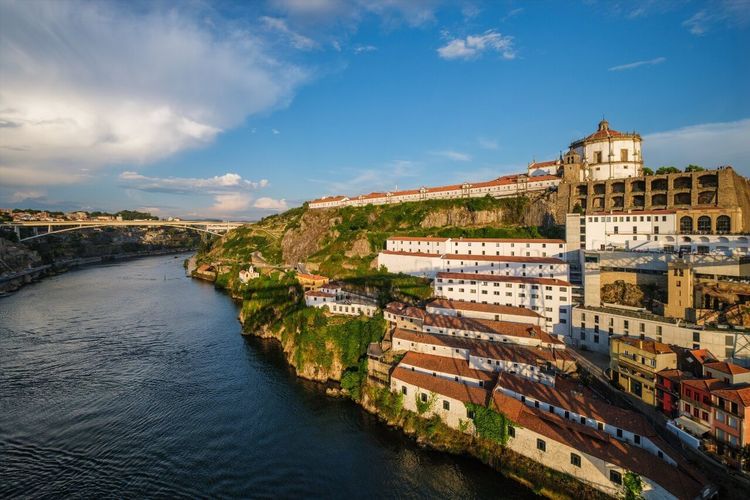
A well-structured day in Gaia allows you to visit 2 cellars, have lunch on the waterfront and return to Porto in the late afternoon without feeling overwhelmed. Here is how to organise it.
Morning (10am–1pm): start with Graham's or Taylor's, which are higher up the hill. Take the Gaia cable car (Av. de Diogo Leite, 4400-111 Vila Nova de Gaia, rated 4.3/5 on Google with 7,389 reviews) from the waterfront (€3.50 one way) to ascend without effort, and visit your first cellar as it opens. At 11:30am, walk back down through the cobbled lanes, passing the lodge terraces on the way.
Lunch (1pm–2:30pm): the Gaia waterfront has several restaurants with terraces overlooking the Douro. Avoid the ones with photo menus out front and opt for addresses set slightly back from the main strip. Graham's Vinum Restaurant, Arc Restaurant and Espaço Porto Cruz are reliable choices. Budget €20–35 per person including a glass of Port.
Afternoon (2:30pm–6pm): visit Sandeman or Cálem, both easily reached on foot from the waterfront with no elevation change. If you have chosen Cálem with fado, go for the 5pm session. Finish at the Porto Cruz terrace to watch the sunset over Porto.
Return: cross back over the Ponte Dom Luís on foot (lower level of the bridge) and reach the Ribeira in 15 minutes. From the other bank, the Ryo Porto audio guide leads you through the Sé and Baixa neighbourhoods with contextualised audio tracks on the city's history, if you want to extend the evening.
If you want to discover other sides of Porto beyond the cellars, the article on the best things to do in Porto lists the city's must-sees — Livraria Lello, São Bento, Foz do Douro.
Tasting and Pairings: Understanding Port Wine
Many visitors leave the cellars without really having grasped the difference between a Ruby and a Tawny, or why a Vintage Port costs €80 when a basic Ruby is €6. Here is the essential information.
Port is a fortified wine: during fermentation, grape spirit (aguardente) is added, which stops the fermentation and preserves residual sugar. The wine thus reaches an alcohol content of between 19% and 22% vol. The difference between styles comes from ageing.
Ruby: aged in large sealed vats with no contact with air. Retains its deep red colour and red fruit aromas. The simplest and most accessible style. LBV (Late Bottled Vintage) is a single-vintage Ruby aged 4–6 years in cask, more complex than a basic Ruby and considerably cheaper than a Vintage.
Tawny: aged in small casks (pipes of 550L) with gradual micro-oxidation. The colour shifts from orange to amber-brown. Aromas evolve towards walnut, caramel, fig and dried apricot. 10-, 20-, 30- and 40-Year-Old Tawnies indicate the average age of the blended wines — a 20-Year-Old is noticeably more complex than a 10-Year-Old.
Vintage: wine from a single exceptional vintage, aged 2 years in cask and then in bottle for 20 years or more. The rarest and most expensive category. Vintages from great years (1963, 1970, 1977, 2011) can fetch several hundred euros at auction.
For food pairings: dry White Port works well with oysters and fresh cheeses. A 10-Year-Old Tawny pairs with hard cheeses, nuts and almond desserts. Vintage Port is best enjoyed on its own or with 85% dark chocolate.
Where to Eat and Drink Around the Cellars
The Gaia waterfront and its adjacent lanes concentrate several dozen restaurants. Quality is uneven: addresses on the waterfront itself are often geared towards mass tourism, with prices 20–30% higher than Porto's northern bank for the same dish.
Vinum Restaurant & Wine Bar (Graham's): the most refined table in Gaia, with a short menu centred on Douro cuisine — hazelnut-crusted bacalhau, Alentejo black pork. Expect €45–60 per person. Reservation essential.
DeCastro Gaia: contemporary Portuguese cuisine, terrace with a view over the Douro, reasonable prices (€25–35 per person). The house caldo verde and polvo à lagareiro (octopus with olive oil and potatoes) rank among the best versions in Gaia.
Cervejaria Brasão (Av. de Diogo Leite 256, 4400-111 Vila Nova de Gaia, rated 4.6/5 on Google with 6,366 reviews): excellent francesinha — Porto's iconic layered sandwich smothered in a beer-tomato sauce — for €12–14. Informal setting, efficient service.
For a lighter break between visits, the cellar shops generally offer Port by the glass (€3–8) with a few small bites — a more economical option than the waterfront restaurants.




FAQ
Are Cellar Tours in Porto Really Free?
No, not for guided tours with tastings. In 2026, all major cellars in Vila Nova de Gaia charge an entrance fee, generally between €10 and €20 for the standard package. What remains free: access to the Porto Cruz panoramic terrace, the Taylor's terrace bar (you pay for your drink), and strolling along the Cais de Gaia. Some forums mention free Porto cellar visits from the 2000s, but those policies no longer exist.
How Do You Get to Vila Nova de Gaia from Porto?
The most pleasant crossing is on foot via the Ponte Dom Luís I, from the Ribeira or from the heights of the Sé. Allow 15 to 20 minutes' walk from the centre of Porto. By metro, line D (yellow) has a station in Gaia (General Torres), a 10-minute walk from the waterfront. By taxi or Uber, allow 3–5 minutes and €5–8. There is no direct shuttle between the cellars.
Do You Need to Book in Advance?
Outside of July and August, advance booking is generally not required for standard packages. However, Graham's and Taylor's regularly sell out by 10am in high season, so booking the day before on their official website is strongly recommended. For premium packages (Vintage, Founders Reserve at Sandeman), booking is always advisable regardless of the season.
Which Cellar Is Best Suited for a First Visit?
Sandeman is the best introduction for someone unfamiliar with Port wine: the educational approach is clear, audio guides are available in several languages, the facilities are well designed, and the price (€13.50) is on the lower end of the range. If you prefer a more intimate atmosphere with a guide available for questions, Ramos Pinto or Taylor's are better options. If you want to include a fado performance, Cálem is the only choice.
Can You Visit Several Cellars in the Same Day?
Yes, with no logistical issue. Two cellars in a day is a comfortable pace — one in the morning, one in the afternoon. Three cellars in a day is doable if you opt for standard tours (45 minutes each), but the cumulative tasting of 6 wines at 19–20% vol. calls for some caution. Drinking water between tastings and eating something substantial at lunch is the most practical advice.
Can You Buy Bottles Directly at the Cellars?
Yes, all cellars have a shop and generally offer prices slightly lower than retail, especially for premium ranges (20-Year-Old Tawny, vintage-dated LBVs). Vintage Ports are not always available for direct purchase — some houses reserve their Vintages for authorised importers. Graham's and Taylor's have the best-stocked shops in terms of rare vintages.
The Gaia Cellars: A Stop Worth Savouring
Visiting Porto's wine cellars means understanding how a drink produced in hills 100 kilometres away managed to conquer all of Europe over three centuries — thanks to pragmatic British merchants, a favourable geography and a still very much alive craft of ageing that thrives in Gaia today. Whether you start with Graham's for the architecture and the view, Sandeman for the education, or the free Porto Cruz terrace for an aperitif, each cellar tells a different version of the same story.
Before or after your day in Gaia, the Ryo Porto audio guide tour will take you through the Ribeira, the Bolsa quarter and the heights of the Sé with contextualised audio tracks on the city's history — a natural complement to the Douro crossing that turns a simple tasting into a full day of discovery.
À lire également