© Shutterstock
 Votre guide Ryo
What to Do in Braga in 2026: 15 Must-Have Experiences
Braga opens with a staircase of 577 steps once climbed on their knees by pilgrims, and that scene captures the spirit of the city rather well: a Portuguese religious capital that takes its time, nestled between green hills and baroque façades. Wondering what to do in Braga means first accepting the need to slow down, headphones on with the Ryo app so as not to miss a single sculpted detail on the doorways, then letting yourself drift from one shaded square to the next.
One of Portugal's oldest cities conceals a zigzag sanctuary listed as a UNESCO World Heritage Site since 2019, a Benedictine monastery whose gardens rise in terraces above the Minho countryside, and a café that has been serving espresso in its 1907 décor ever since. It can be visited just as easily on foot as in a rushed half-day, in the rain or in the height of summer, with surroundings that are well worth a day trip. Many travellers arrive from Porto for the day: if you are combining the two cities, the Ryo audio-guided tour of Porto extends the exploration of northern Portugal naturally. Here are the 15 experiences that make for a successful stay in Braga.
1. Bom Jesus do Monte Sanctuary
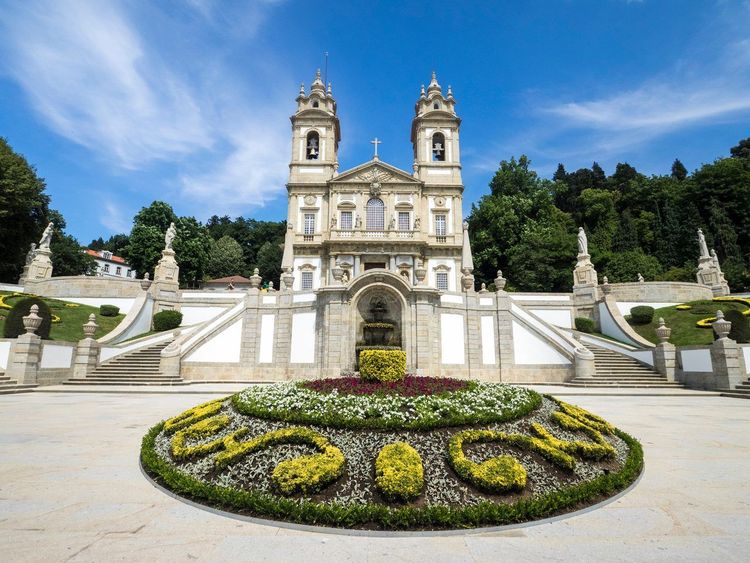
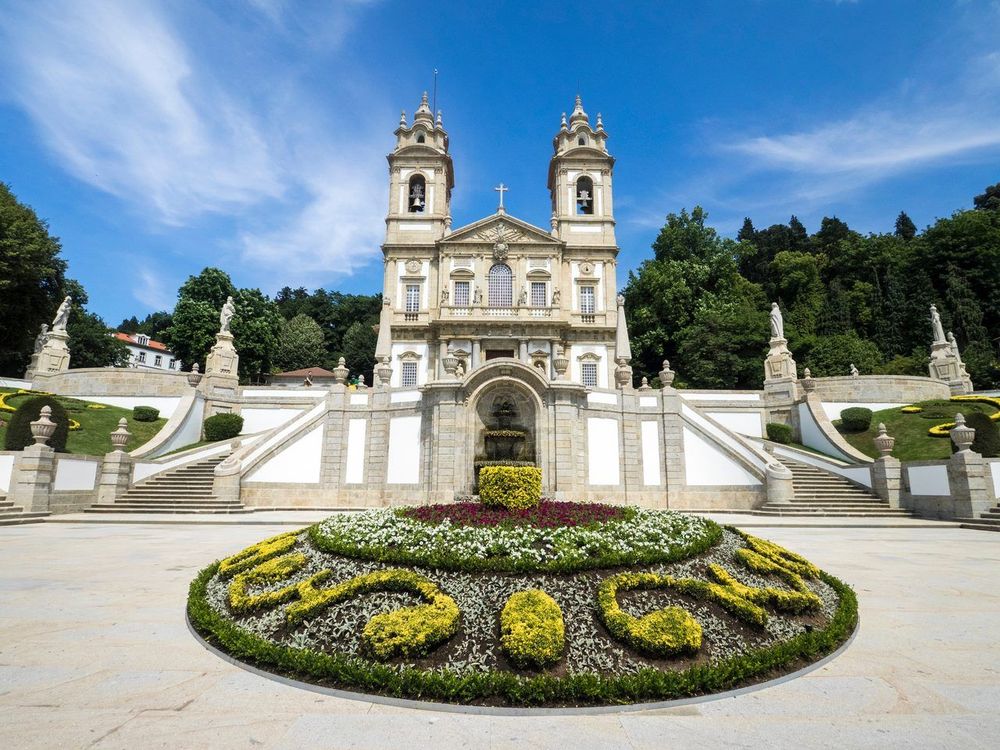
The Bom Jesus do Monte Sanctuary (Estrada do Bom Jesus, 4715-056 Braga, rated 4.8/5 on Google from 37,813 reviews) overlooks the city from a wooded hill about 6 kilometres from the centre. Its baroque staircase, begun in 1722 under Archbishop Rodrigo de Moura Telles, unfolds a succession of landings adorned with allegorical fountains representing first the five senses, then the virtues. Each landing tells a stage of the spiritual journey, making it far more than a monumental staircase. The ensemble has been on the UNESCO World Heritage List since 2019, as a baroque pilgrimage sanctuary.
You can climb the steps on foot in around thirty minutes, or take the funicular inaugurated in 1882, the oldest still in service in the world to operate by water counterweight. Allow around €1.50 for a single journey and €2.50 for a return, covering a 116-metre climb in three minutes of silent ascent. At the top, the white neoclassical church, completed in 1811 to plans by Carlos Amarante, offers a panoramic view over the valley and the red rooftops of Braga. The adjoining park, with its artificial lake and shaded paths, allows you to extend the visit by an extra hour without ever encountering the crowds on the main steps.
Arrive early in the morning, before 9:30 a.m., to photograph the staircase without stray figures and to make the most of the raking light on the granite stone. An urban bus connects the city centre to the foot of the hill in about twenty minutes, avoiding the need to find a parking space in high season. It is without doubt the most photogenic starting point for understanding why Braga developed as a pilgrimage city.
2. Our Lady of Sameiro Sanctuary
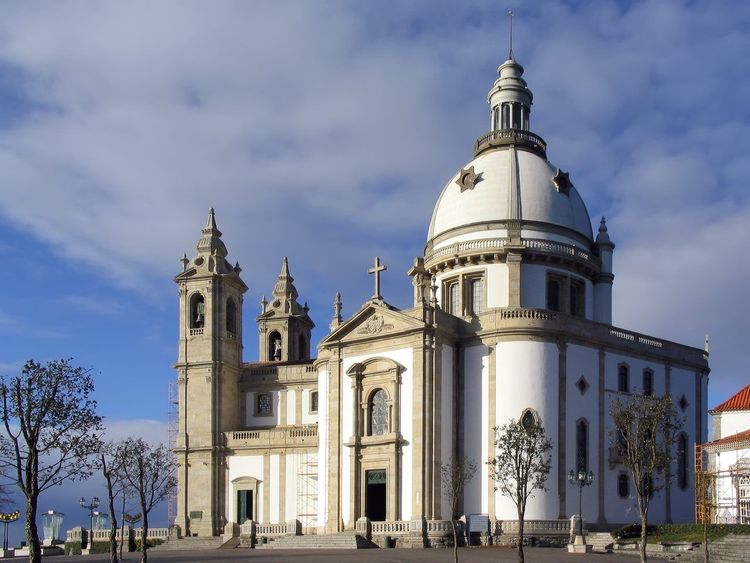
A few kilometres from Bom Jesus, the Our Lady of Sameiro Sanctuary (Sameiro, 4700-565 Braga, rated 4.8/5 on Google from 11,843 reviews) receives more Portuguese pilgrims each year than its neighbour, which is better known to foreign tourists. The site was founded in 1863 at the initiative of a vicar from Braga, but the neoclassical basilica you see today, begun in 1890, was not completed until 1953. Its dome can be spotted from almost every high point in the valley.
The Marian statue venerated here wears a solid gold crown offered in 1904 by the women of Portugal, led by Queen Amélie. It is easily reached by car or taxi from Bom Jesus, the road winding through a eucalyptus forest. The forecourt, often deserted on weekdays, offers an open view over Braga that rivals the one from Bom Jesus without ever being fully booked.
Allow 30 to 45 minutes on site, longer during the major pilgrimages of June and August, when thousands of the faithful make their way up from the city. The crypt inaugurated in 1979 beneath the basilica is open to visit freely and surprises with its contemporary sobriety, a world away from the baroque gold of the churches in the historic centre.
3. Braga Sé Cathedral
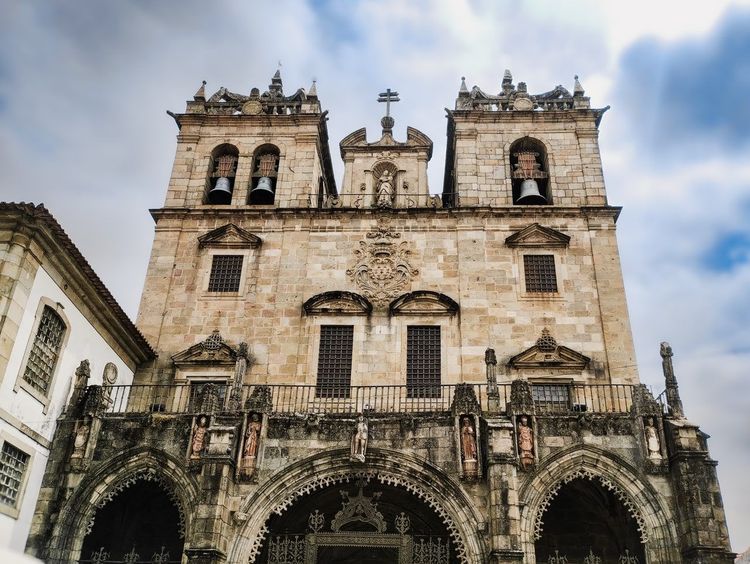
The Braga Sé Cathedral (Rua Dom Paio Mendes, 4700-427 Braga, rated 4.6/5 on Google from 11,608 reviews) is the oldest cathedral in Portugal, founded in 1070 on a site that was occupied long before the Christian city. Its façade blends Romanesque elements from the 12th century with Gothic and then baroque additions, a layering of styles that betrays nearly a thousand years of continuous use.
The interior preserves two gilded baroque organs from the 18th century still used for concerts, and the treasury houses a collection of sacred art considered one of the richest in the country. The cloister, more discreet, gives access to the Chapel of the Kings where Henry of Burgundy and Teresa of León rest — the parents of Afonso Henriques, the first king of Portugal. Few visitors venture that far, yet it is precisely the place where Portuguese national history took root.
Visiting the treasury and chapels costs a few euros on top of the free access to the main nave. Allow 45 minutes to an hour if you want to see everything, slightly less if you focus on the essentials. It is worth knowing that the episcopal see of Braga is the oldest in the Iberian Peninsula, which has earned the city its nickname of the Portuguese Rome and explains the unusually high density of churches in such a compact centre.
4. Arco da Porta Nova
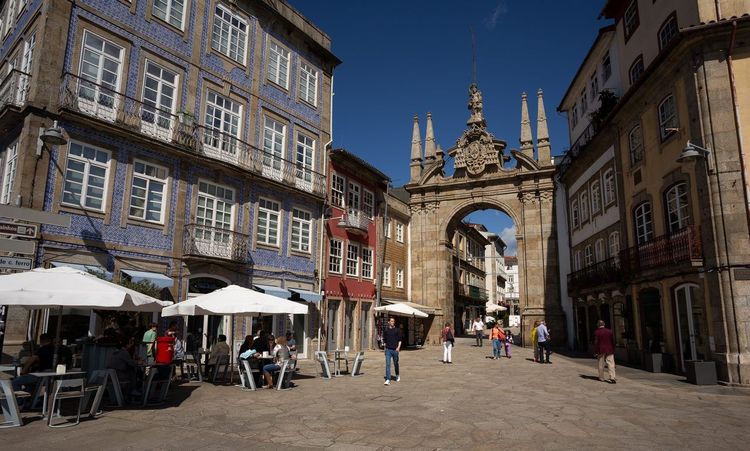
The Arco da Porta Nova (Rua Dom Diogo de Sousa, 4700-320 Braga, rated 4.6/5 on Google from 7,788 reviews) opens the historic centre on the western side. A first gateway was pierced here in 1512 at the request of Archbishop Diogo de Sousa, the very man who redesigned Braga during the Renaissance and gave it its grand perspectives.
The arch you pass through today is considerably later: it dates from 1772 and bears the signature of André Soares, the architect who endowed the city with its rococo vocabulary. Look at both its faces — they do not resemble each other. On the outer side, the composition plays the baroque card with sculpted coats of arms and a statue of Our Lady; on the city side, the restraint already anticipates neoclassicism.
A curiosity that few guides mention: this gateway never had doors. In the 18th century, sieges belonged to the past and the arch served primarily as an urban statement, that of a city stepping outside its walls to expand westward. Listed as a national monument since 1910, it remains the most convenient landmark for getting your bearings before a stroll through the pedestrian streets.
5. Jardim de Santa Bárbara
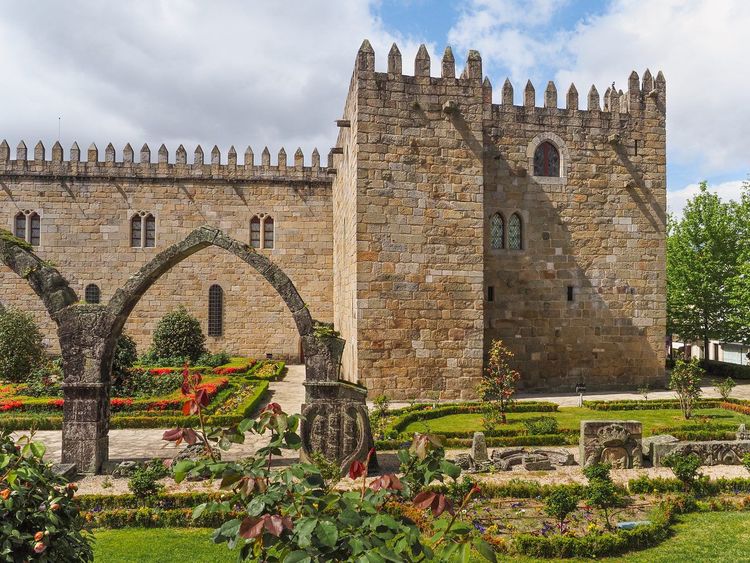
The Jardim de Santa Bárbara (Rua Justino Cruz, 4700-042 Braga, rated 4.7/5 on Google from 6,300 reviews) unfolds its geometric flowerbeds at the foot of the medieval wing of the Episcopal Palace. Despite what its décor might suggest, the garden is recent: it was laid out between 1951 and 1953 by the municipality on the former palace enclosure, and its official name was adopted in 1955.
At the centre, the 17th-century fountain comes from the former Convent of Remédios; the statue of Saint Barbara atop it gave the garden its name. The begonias and rose bushes change with the season, but the framework of clipped box hedges remains identical all year round. Listed as a cultural heritage site of municipal interest since 2018, it covers less than a hectare yet ranks among the most widely shared images of Braga after Bom Jesus.
Sit on a bench in the late afternoon: the granite walls of the palace in the background take on a particularly photogenic golden hue around 6 p.m. in summer. The terraces of the neighbouring street serve coffee just a few metres away, making this the most pleasant break between two museum visits.
6. Palácio do Raio
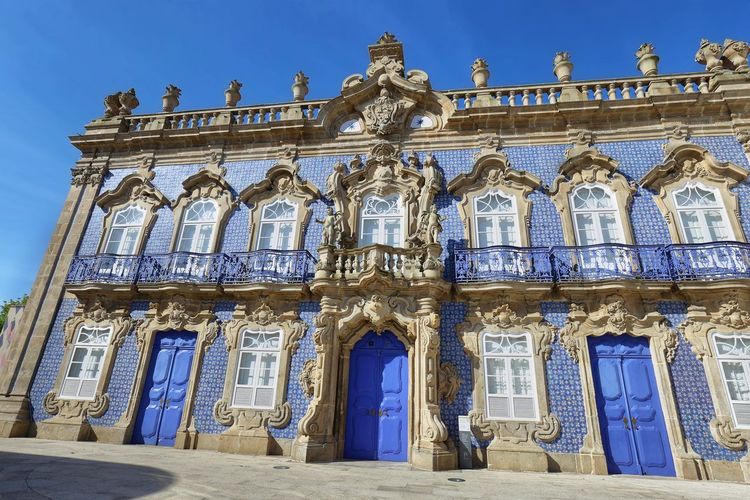
The Palácio do Raio (Rua de São Marcos, 4700-312 Braga, rated 4.6/5 on Google from 1,500 reviews), nicknamed the Casa do Mexicano, was built between 1752 and 1755 to plans by André Soares for the family of João Duarte de Faria. Its façade is a manifesto of late Portuguese baroque, with sculpted frames that seem to flow around the windows.
The blue azulejos that now cover the entire exterior do not date from the original construction: they were applied in the late 19th century and in doing so softened the monumentality of the original façade. As for the nickname Casa do Mexicano, it comes from the Hispanic-American motifs in the décor, not from a fortune brought back from across the Atlantic as is often heard around the city.
Since 2015, the restored building has housed the interpretive centre of the memories of the Misericórdia de Braga: period furniture, liturgical ornaments, silverware and trompe-l'œil painted ceilings. The visit is short — about thirty minutes is enough — but it sheds light on a little-known aspect of the city's social history, that of the charitable brotherhoods that managed hospitals and orphanages. The façade alone is worth a detour from the neighbouring commercial street.
7. Having a Coffee at A Brasileira
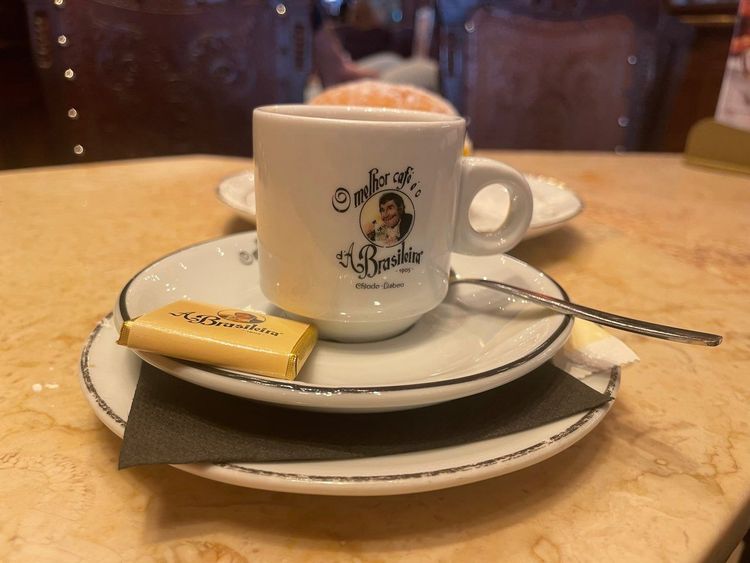
Café A Brasileira (Largo do Barão de São Martinho, 4700-000 Braga, rated 4.3/5 on Google from 2,100 reviews) has been serving espresso since 1907 in an Art Deco setting that has remained almost entirely intact: dark wood counters, bevelled mirrors and original pastry display cases. The name recalls the era when Portuguese cafés imported their coffee directly from Brazil and made it a selling point displayed on the shopfront.
Order a strong espresso with a local sweet rather than a standard pastry. Braga is particularly proud of pudim Abade de Priscos, a port-wine flan invented in the 19th century by a gourmand priest from the surrounding area, which several patisseries in the centre sell by the slice.
Sit on the terrace rather than inside to watch the comings and goings on the square, one of the few spots in the centre where locals and visitors mingle without any visible distinction. The clientele shifts throughout the day: students from the University of Minho mid-morning, neighbourhood retirees in the afternoon, office workers in a hurry during the lunch break. It is a free observation post on the daily rhythm of the city, and an inexpensive way to rest your legs between two monuments.
8. Biscaínhos Museum
The Museu dos Biscaínhos (Rua dos Biscaínhos, 4700-421 Braga, rated 4.5/5 on Google from 1,800 reviews) occupies a 17th-century baroque palace whose ground floor hides an unexpected find: a paved passageway that ran through the house to allow carriages to enter, so that their occupants could alight sheltered from prying eyes and rain.
The rooms preserve furniture, Chinese export porcelain and a collection of 18th-century Portuguese religious painting. The garden, with its clipped box hedges, statues and azulejo fountain, can be visited free of charge even without a museum ticket — a detail that many hurried visitors overlook. Allow an hour for the full visit, slightly less if you focus on the garden rather than the exhibition rooms, and check the weekly closing day before heading over, as with most Portuguese public museums.
9. D. Diogo de Sousa Archaeological Museum
The Museu D. Diogo de Sousa (Rua Dom Afonso Henriques, 4700-030 Braga, rated 4.5/5 on Google from 1,273 reviews) traces the history of Bracara Augusta, the Roman city founded around 16 BCE on the exact site of present-day Braga.
Mosaics, funerary stelae and scale models reconstructing the forum explain why the city was chosen as the capital of the province of Gallaecia. An outdoor space displays the remains of Roman baths visible in the open air. Rarely crowded, this museum usefully complements a visit to the historic centre by giving meaning to the stones encountered in the pedestrian streets.
Continue to the Fonte do Ídolo, a few minutes' walk away: this Roman sanctuary carved into living rock, with its niche and votive inscription, is one of the few remaining testimonies to water worship preserved in Portugal. Access is through a small modern pavilion that protects the rock, and the visit takes barely a quarter of an hour — an easy stop to fold in if you are pairing the trip with Porto's audio-guided tour, less than an hour down the road.
10. Theatro Circo
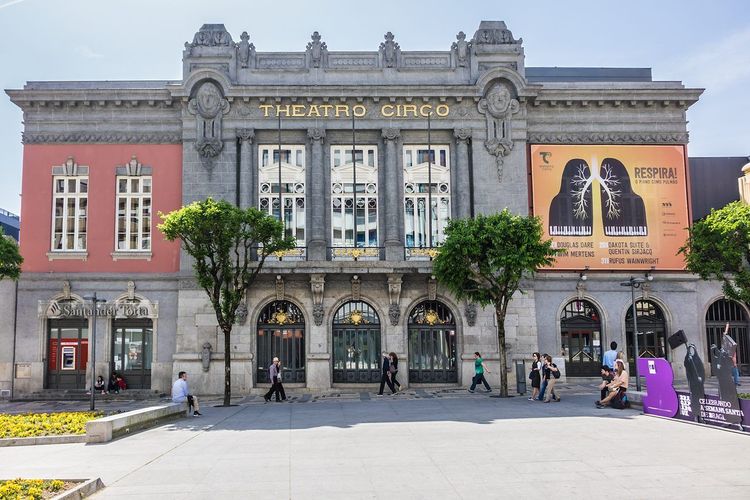
The Theatro Circo (Avenida da Liberdade, 4710-256 Braga, rated 4.8/5 on Google from 3,778 reviews) displays a façade built in 1915 on the city's most elegant boulevard, fully restored in 2006 after decades of dormancy.
The auditorium, with its gilded balconies, boxes and painted ceiling, programmes concerts, theatre and contemporary dance throughout the year, including Portuguese premieres rarely shown outside Lisbon or Porto. Check the programme before your stay: tickets remain considerably less expensive than in the major venues of the capital. Even without a show ticket, take a look at the entrance hall during the day, which is often accessible to the public.
11. São Martinho de Tibães Monastery
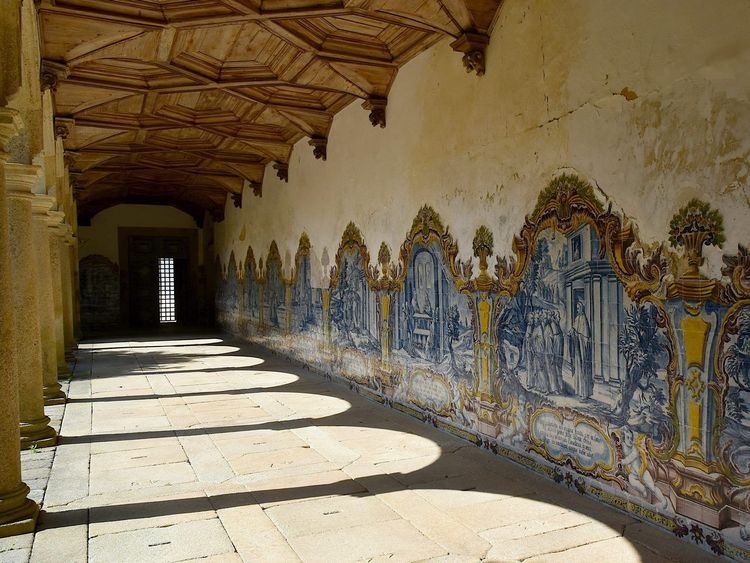
About ten minutes' drive from the centre, the Mosteiro de Tibães (Rua do Mosteiro, 4700-565 Mire de Tibães, rated 4.7/5 on Google from 2,500 reviews) was the mother house of the Benedictine order in Portugal until the dissolution of religious orders in 1834. The scale of the site consistently surprises visitors who imagined it to be more modest: baroque church, successive cloisters, terraced gardens and a kitchen garden still cultivated today.
The interior of the church preserves a gilded altarpiece of rare richness, carved across multiple levels up to the ceiling. The gardens, restored since the 1980s after a long period of abandonment, rise across several levels with views over the surrounding countryside, far from the bustle of the city centre. The outdoor route, punctuated by fountains and monumental staircases, lends itself particularly well to an audio-guided visit.
Come preferably in late morning to enjoy the gardens before the heat sets in, then picnic on the adjoining lawns. It is the least-visited excursion on this list, and probably one of the most memorable for those who love great, silent monastic complexes.
12. Miradouro do Picoto
The Miradouro do Picoto (Monte Picoto, 4700-000 Braga, rated 4.5/5 on Google from 1,398 reviews) crowns a hill at around 300 metres in altitude and offers one of the only 360-degree viewpoints over Braga and its surroundings.
It can be reached by car via a winding road, or on foot via the urban park trails that climb from the Parque da Ponte. The summit, marked by a stone cross, comes with picnic areas and wooded zones replanted with local species, making it as much a Sunday outing destination for Braga families as a tourist viewpoint. Come at sunset: the city lights turn on one by one while the silhouette of Bom Jesus still stands out against the fading sky.
13. Praça da República and the Historic Centre
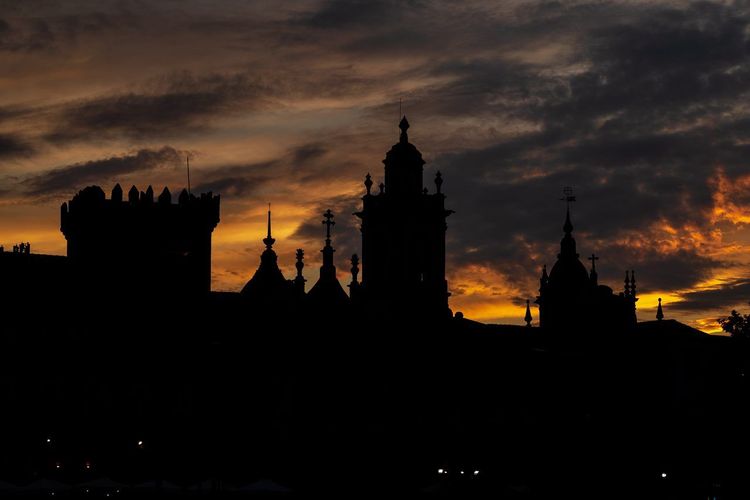
The Praça da República (Praça da República, 4700-311 Braga, rated 4.5/5 on Google from 3,400 reviews) serves as a natural gathering point between the pedestrian shopping streets and the terraces shaded by arcades. At the end of the day, the square fills with families and students from the University of Minho, one of the most dynamic in the country, which gives Braga a noticeably younger average age than other Portuguese heritage cities.
From this square, a network of pedestrian alleyways leads towards the Arco da Porta Nova, the cathedral and the main artisan shops, notably those selling the filigree jewellery typical of the region. Wandering at random through this grid is probably the best way to feel the daily rhythm of Braga, well away from the monuments listed in the guides.
The time of year changes everything, however. If you come in spring, Braga's Holy Week is considered the most spectacular in Portugal: night-time processions, hooded penitents carrying torches and streets draped in purple hangings. At the end of June, the St John's Festival takes over with brass bands, traditional dances and a popular festive atmosphere that spills well beyond the Praça da República. In both cases, book your accommodation several weeks in advance — the city fills up completely.
14. Day Trip to Guimarães, the Birthplace of Portugal
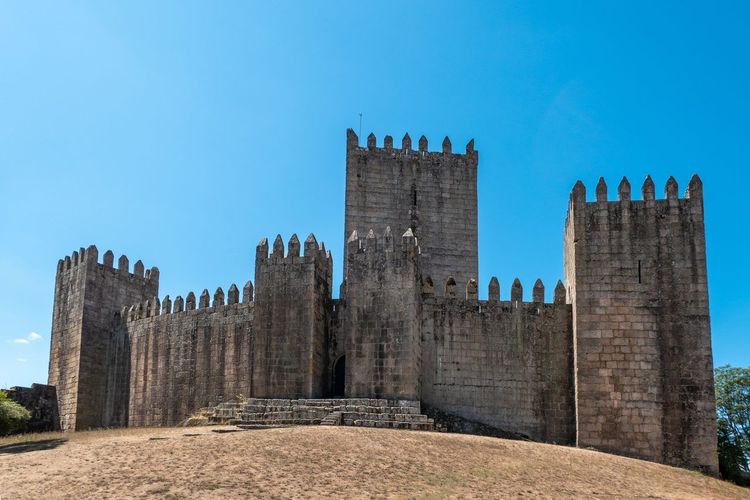
Just 25 minutes' drive from Braga, Guimarães is home to the medieval castle where the first king of Portugal is said to have been born around 1109, as well as a historic centre listed as a UNESCO World Heritage Site since 2001. The contrast with Braga, which is more religious and baroque, often surprises visitors who make the return journey in the same day.
The fortified castle, with its crenellated towers, can be visited in around 45 minutes, while the neighbouring Palace of the Dukes of Braganza, rebuilt in the 20th century, displays a collection of tapestries and period furniture. The old town, with its cobbled lanes and timber-framed houses, invites at least an additional hour's strolling.
A word of caution on transport: contrary to what is often written, there is no direct train between Braga and Guimarães, as the two lines converge further south. By train, you need to change at Lousado or Nine and allow around 1 hour 15 minutes in total. Regional coaches, on the other hand, connect the two cities directly in about an hour, several times a day. Many travellers consider this double stopover the best way to grasp the history of northern Portugal in a single day.
15. Peneda-Gerês and the Vinho Verde Wine Route
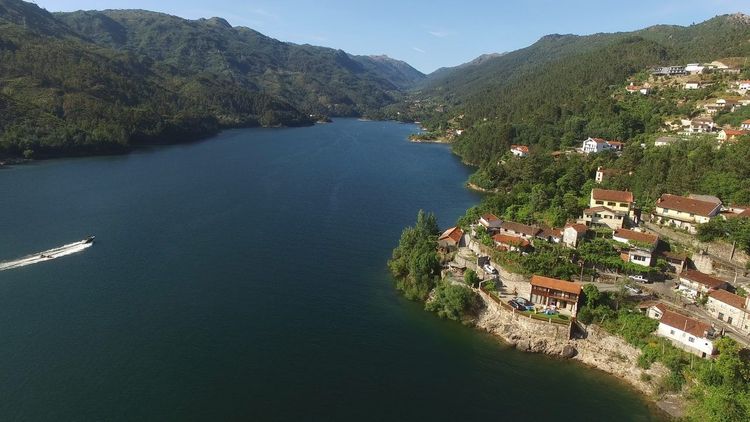
Less than an hour's drive away, the Parque Nacional da Peneda-Gerês is mainland Portugal's only national park, with its turquoise reservoir lakes, granite villages and wild Garrano ponies grazing freely on the heights. The reserve extends over more than 700 square kilometres up to the border with Spanish Galicia.
Marked trails lead to the waterfalls of the massif or to the village of Soajo, known for its grain stores on stilts — the espigueiros — lined up like a row of small stone chapels. Allow a full day if you plan to hike, half a day for a simple drive with photo stops, and bring water: supply points are scarce once you set off along the ridge road.
Braga also lies at the heart of the Vinho Verde wine region, producing the young, slightly sparkling white wine made in the north-west of Portugal. Several estates offer visits with tastings less than 30 minutes from the city centre, usually on advance reservation. It is a pleasant way to round off a stay focused on religious and medieval heritage with a more relaxed pause, glass in hand facing the vine-covered hills.
FAQ
How Long Does It Take to Visit Braga?
A full day is enough to see the essentials of the historic centre, the cathedral and Bom Jesus do Monte. To include Tibães, Guimarães or Sameiro at a relaxed pace, allow two to three days.
Can You Visit Braga on Foot?
The historic centre can be covered entirely on foot in half a day, with distances between the cathedral, Praça da República and Jardim de Santa Bárbara never exceeding 15 minutes' walk. Only Bom Jesus, Sameiro and Tibães require a bus, taxi or car.
What to Do in Braga When It Rains?
The Biscaínhos and D. Diogo de Sousa museums, the Sé cathedral and the Theatro Circo all offer fully indoor visits. The Palácio do Raio, though small, easily rounds out a half-day of museum visits under cover.
What to Do in Braga in the Evening?
Praça da República and the surrounding pedestrian streets come alive after 7 p.m. with café terraces and a few wine bars. The Theatro Circo offers a regular cultural programme, and the Miradouro do Picoto provides a memorable sunset for those with a car.
What to Do in Braga and Its Surroundings?
Beyond the centre, Guimarães, the Parque Nacional da Peneda-Gerês and the Vinho Verde wine route are the three most popular day trips, each accessible in under an hour's drive from Braga.
How to Get to Braga from Porto?
Trains connect Porto to Braga in about an hour from Campanhã station, with several departures per hour at peak times; fast services run in under 45 minutes. Coaches also make the journey, often at a lower fare for a comparable travel time. If you are making a day trip, the Ryo audio guide makes good use of the journey by helping you plan your visit.
Is Braga Suitable for a Family Visit?
The gardens, the Bom Jesus staircase and the pedestrian squares lend themselves well to a visit with children, as long as you alternate walking with cool-down breaks. The Bom Jesus funicular, in particular, tends to delight younger visitors as much as the climb on foot appeals to older ones.
Braga is best explored without rushing, between a baroque staircase to climb slowly and a century-old café in which to linger for no particular reason. Whether you stay for a day or push on to Tibães and Guimarães, the city rewards those who are willing to slow down and look up at the façades.
To make sure you miss none of the historical details encountered along the way, the Ryo audio guide accompanies the visit street by street, without imposing a fixed pace. And if you continue the trip towards the coast, the audio-guided tour of Porto follows on naturally from Braga: two cities, one shared valley of the Douro and Minho, headphones in and travel notes in mind.
À lire également