© Shutterstock
 Votre guide Ryo
Things to Do in Guimarães in 2026: 19 Experiences at the Birthplace of Portugal
On the façade of the old castle, an inscription in capital letters sums up the history of an entire nation: "Aqui nasceu Portugal" — here Portugal was born. Guimarães, a small city in the Minho region located less than an hour's drive from Porto, has never needed to say more. Its historic centre, listed as a UNESCO World Heritage Site since 2001, has preserved its cobbled lanes, its timber-framed houses, and its squares where neighbourhood life continues much as it did in the 15th century. Wondering what to do in Guimarães during a short break? Set aside a full day for this city, too often reduced to a quick day trip from Porto, and resist the urge to rush through it.
You can climb a 10th-century castle with seven crenellated towers, sometimes enter the ducal palace for free, take a cable car up to a sanctuary perched at 617 metres altitude, and end the day with a plate of cod "Guimarães-style" washed down with vinho verde. From archaeological ruins over 2,500 years old and a covered market converted into a cultural centre, to a contemporary art museum housed in a former industrial site, Guimarães packs far more heritage than its size suggests. Here are 19 experiences to help you discover what to do in Guimarães, in an order you can follow almost as-is on the ground in 2026.
1. Guimarães Castle
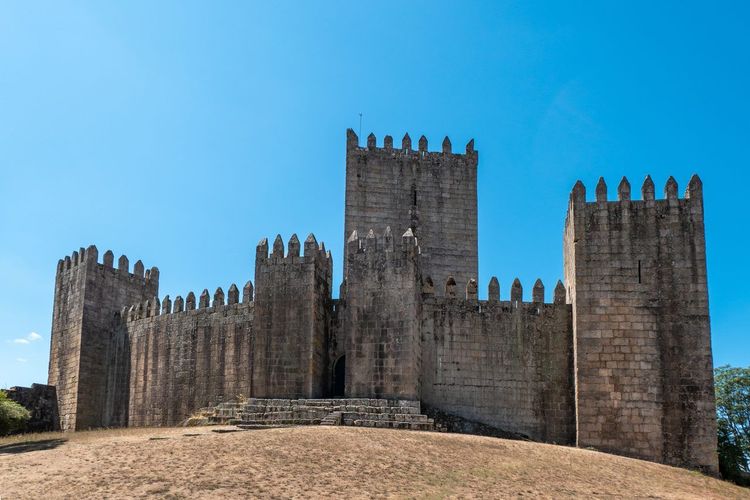
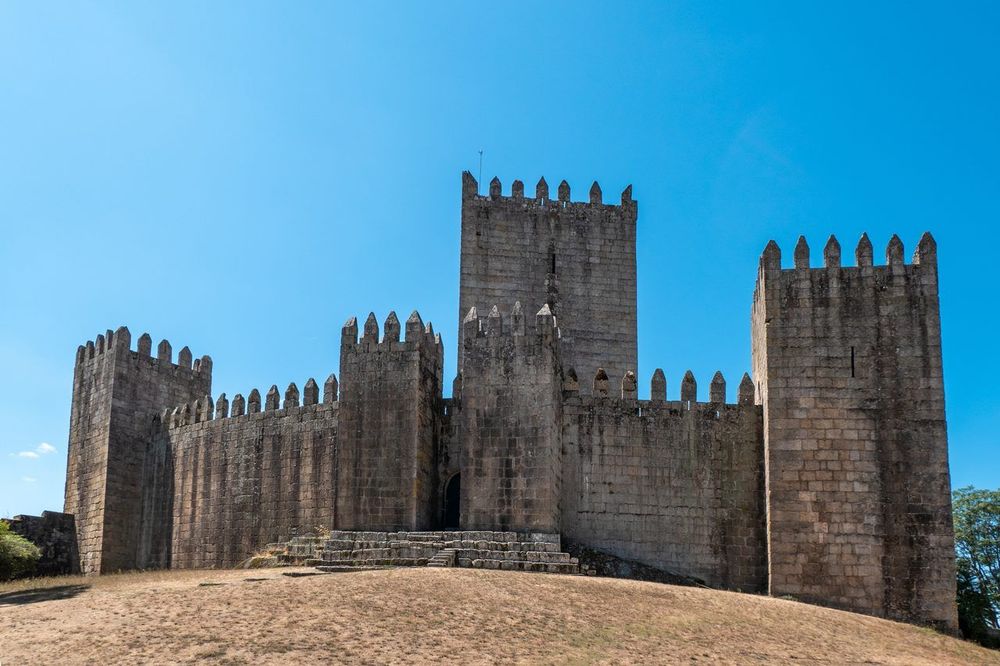
Perched on a granite hill above the old town, the Castelo de Guimarães (Rua de Santa Maria, 4810-235 Guimarães, rated 4.5/5 on Google from 35,155 reviews) is the most photographed monument in the Minho. Its construction dates back to the 10th century, when Countess Mumadona Dias had a fortress built to protect the neighbouring monastery from Norman and Moorish raids. The current keep and its seven crenellated towers date largely from the 12th century, a period during which Count Henry of Burgundy strengthened the structure to assert his authority over the County of Portucale.
Local legend, proudly kept alive by the Vimaranenses, holds that Afonso Henriques, the first king of Portugal, was born within these walls in 1109 or 1110. Historians are less certain about the exact location, but the story has left such a mark on national identity that the castle was listed as a National Monument as early as 1881, one of the very first in the country to receive that status.
The building also owes its current fame to a restoration carried out between 1937 and 1940 under the Estado Novo regime, which turned it into a national symbol through heavily reconstructed battlements. Purists lament certain additions that look too pristine to be authentic, but the whole remains one of the few Romanesque castles preserved on the Iberian Peninsula. Right at its foot, the small Capella de São Miguel do Castelo, also Romanesque in style, is said to date from the 12th century: tradition holds that this is where Afonso Henriques was baptised, even before the official founding of the kingdom.
Allow around 45 minutes to walk the battlements and climb to the top of the keep, from which the view takes in the entire historic centre and the surrounding hills. Access to the inner courtyard is free; only the climb up the Torre de Menagem is paid, at around 2 to 3 euros. The stone steps are narrow and slippery in wet weather: opt for closed-toe shoes and a morning visit, before the organised groups from Porto arrive.
From the top, the gaze stretches over the orange-tiled rooftops of the historic centre, the silhouette of the Paço dos Duques just below, and on clear days as far as the foothills of the Penha nature park to the east. Many visitors head straight to the palace without taking time to sit on the battlements steps: give yourself that moment, early in the morning, when the stone is still cool and the tourist coaches have not yet arrived.
Castelo de Guimarães
2. The Paço dos Duques de Bragança
A short walk from the castle, the Paço dos Duques de Bragança (Rua Conde Dom Henrique, 4810-227 Guimarães, rated 4.6/5 on Google from 6,468 reviews) impresses with its unexpected scale for a city of this size. Built from 1420 onwards by Afonso, the first Duke of Braganza and illegitimate son of King João I, the palace draws on the manor house tradition of northern France and Burgundy, with its tall brick chimneys. There are 39 of them today, lined up like sentinels along the slate rooftops.
The palace fell into disuse from the 16th century onwards, when the ducal court moved permanently to Lisbon, and subsequently served as a barracks, a military school, and a garrison headquarters. It was not until the 1930s that a major restoration, commissioned by the Estado Novo regime, gave it its current appearance: some art historians today consider it overly reconstructive, while others credit it with saving a building on the verge of ruin.
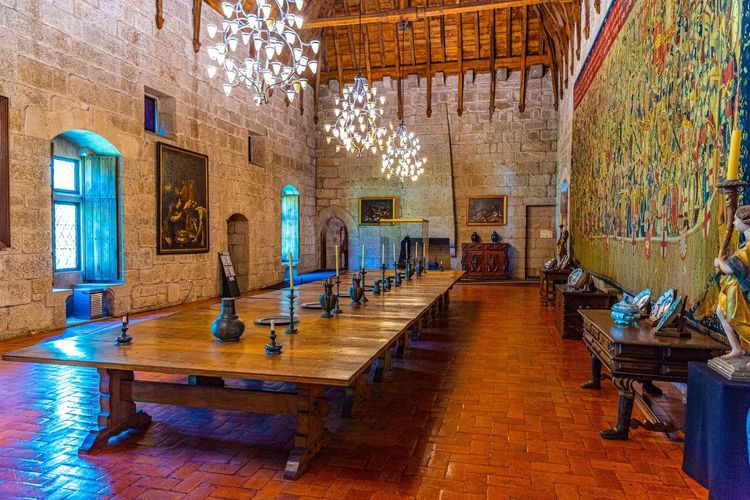
The interior, now a museum, displays a collection of Flemish tapestries, ancient weapons, and 15th- and 16th-century furniture. The great banqueting hall, with its exposed timber-frame ceiling inspired by Scandinavian halls, still serves today as the setting for official receptions hosted by the Portuguese presidency during its visits to the north. A tapestry depicting the capture of Ceuta in 1415 — a founding moment of Portugal's overseas expansion — covers an entire wall and deserves more than the usual five-minute glance.
Full-price admission is around 6 euros, with a worthwhile combined ticket that also covers the castle. Entry is free on the first Sunday of the month for Portuguese residents, but this free admission does not systematically apply to foreign visitors: check the notice on the day. Allow one hour for the visit, including the audio guide, available in several languages including English.
Paço dos Duques de Bragança (Rua Conde Dom Henrique, 4810-227 Guimarães)
3. The UNESCO-Listed Historic Centre
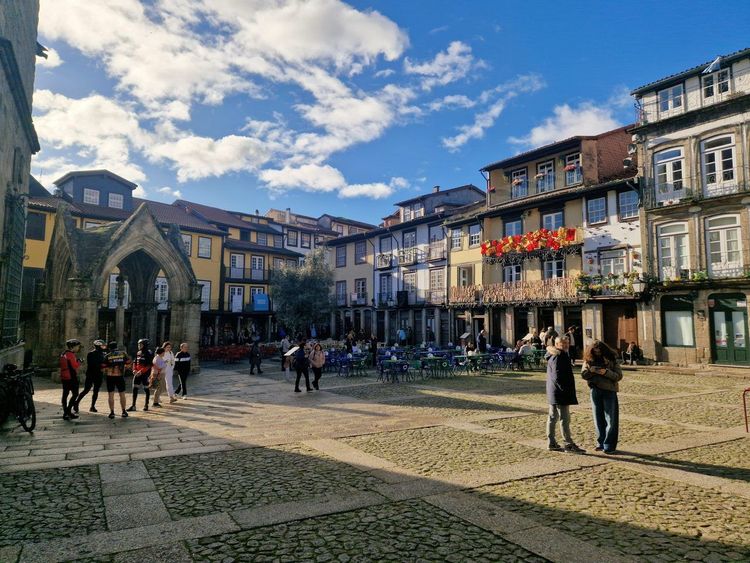
The historic centre of Guimarães was inscribed on the UNESCO World Heritage List in 2001, recognised as a remarkably well-preserved example of a Portuguese medieval town that evolved continuously until the 19th century without major urban disruption. The listed perimeter stretches from the castle to the Largo do Toural, following the line of the old city walls that have since disappeared.
You don't need a detailed map to find your way: the cobbled lanes of Rua de Santa Maria, the main artery linking the castle to the town centre, alone concentrate 14th-century arcaded houses, sculpted coats of arms, and public fountains. Take the time to look up at the first-floor façades, often more interesting than the commercial shop fronts at street level, which have sometimes dulled the character of the ground floor.
If you are travelling with the Ryo app, bear in mind that this city centre is best explored on foot and without a rigid itinerary, much like the audio-guided walks we offer in major Portuguese cities: let yourself drift from one square to the next, even if it means passing through the same covered passageway twice. The full walk from the castle to the Largo do Toural takes no more than 20 minutes at a leisurely pace.
At weekends, café terraces spill out onto the cobbled squares and foot traffic noticeably increases after 11am. To photograph the façades without passers-by, an early outing between 8am and 9am remains the best option, when shopkeepers are just opening their shutters. The quieter side streets are also worth exploring: Rua Egas Moniz and Rua de Gil Vicente, running parallel to the main axis, reveal equally ancient façades with no queue in sight.
4. The Church of Nossa Senhora da Oliveira and the Padrão do Salado
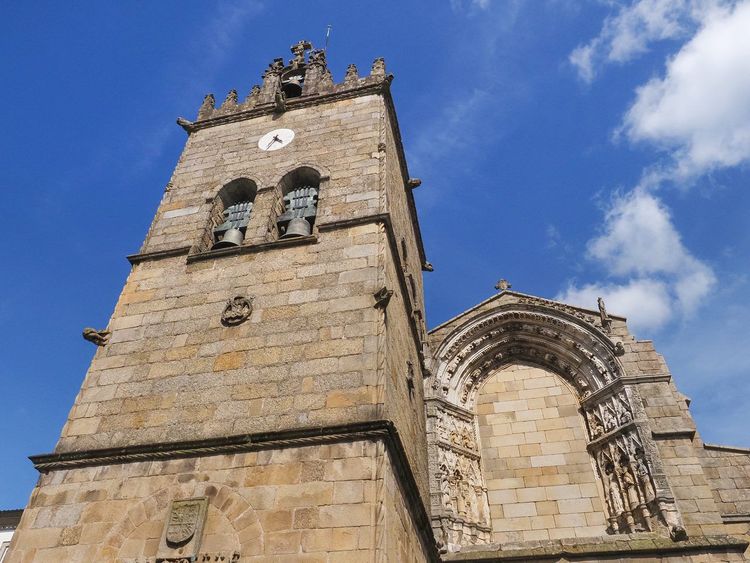
On the Largo da Oliveira, the collegiate church of Nossa Senhora da Oliveira stands on the site of a monastery founded as early as 949. The current Gothic building was rebuilt at the end of the 14th century on the orders of King João I, in thanksgiving for the decisive victory at Aljubarrota in 1385 against Castilian forces.
Just in front of the porch, a curious Gothic open-work canopy catches the eye: the Padrão do Salado, erected to commemorate another Portuguese victory, the Battle of Rio Salado in Spain in 1340. This miniature monument, with its tracery arches, stands in contrast to the general sobriety of the square and merits a two-minute stop before entering the church.
The interior, more modest than the façade suggests, is worth visiting mainly for the adjoining cloister, now integrated into the neighbouring museum. Access to the nave is free and opening hours generally follow those of religious services: it is best to avoid mass times if you simply want to observe the architecture without disturbing worshippers.
Church of Nossa Senhora da Oliveira (Largo da Oliveira, 4800-431 Guimarães)
5. The Museu de Alberto Sampaio
Housed in the former Romanesque cloister of the collegiate church, the Museu de Alberto Sampaio (Rua Alfredo Guimarães, 4800-407 Guimarães, rated 4.5/5 on Google from 875 reviews) holds one of the finest collections of religious goldsmithing in Portugal. The centrepiece, a gilded silver triptych depicting Our Lady of the Expectation, is thought to date from the 14th century and to have originated in French or Catalan workshops, evidence of the intense commercial exchanges between the Minho and medieval Europe.
Another relic draws school groups and historians alike: the tunic that King João I is said to have worn at the Battle of Aljubarrota in 1385, later offered as a votive gift to the collegiate church. The object, remarkably well preserved for its age, illustrates the way Portuguese military victories were transformed into founding narratives, kept alive for centuries through this kind of religious deposit.
Admission costs around 5 euros, with a reduced rate for students. The Romanesque cloister, with its sturdy columns and central garden planted with orange trees, takes about twenty minutes to explore and offers a welcome shaded pause in summer. The annexe rooms also display a lesser-known collection of ceramics and medieval funerary sculptures, often bypassed by visitors rushing straight to see the triptych.
Museu de Alberto Sampaio (Rua Alfredo Guimarães, 4800-407 Guimarães)
6. The Praça de São Tiago
Adjoining the Largo da Oliveira, the Praça de São Tiago forms with it one of the best-preserved urban ensembles in the historic centre. The arcaded houses lining it, once occupied by craftsmen and merchants, now house cafés and small souvenir shops.
The terraces set beneath the arcades stay cool even at the height of summer heat, a good excuse to watch local life go by at your own pace, coffee or glass of vinho verde in hand.
7. The Largo da Oliveira and the Jardim do Paço
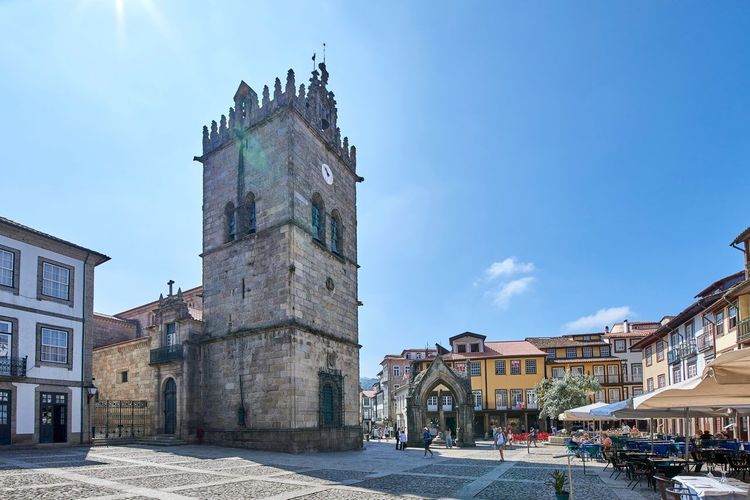
The quintessential central square, the Largo da Oliveira brings together the city's main religious and civic heritage: the collegiate church on one side, the former Paços do Concelho (the medieval town hall) on the other, recognisable by its Gothic arcades raised on stone pillars.
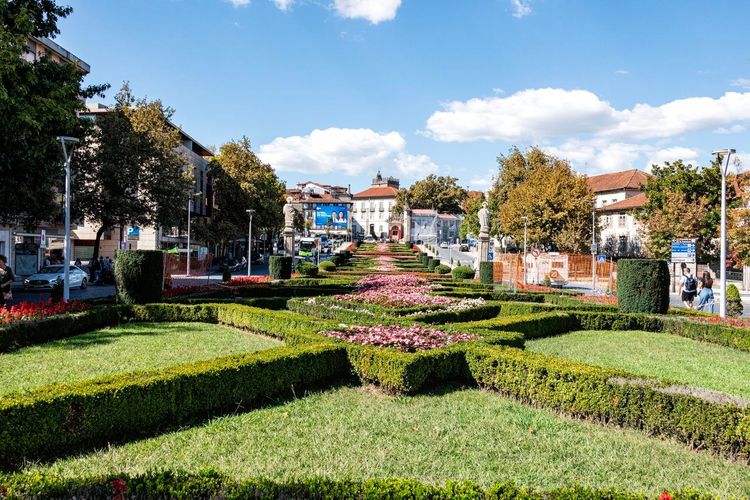
A few metres away, the Jardim do Paço, a formal French-style garden laid out at the foot of the ducal palace, offers an unexpected contrast with the surrounding medieval fabric: clipped box hedges, statues and a geometric basin evoke Versailles more than northern Portugal, a direct result of the 1930s restoration that sought to provide the palace with a setting worthy of its restored status.
In the late afternoon, the raking light on the palace façade and the garden's leafy canopy provides one of the best photographic compositions in the entire historic centre. The public benches, often free outside the season, offer a quiet pause between two visits.
8. The Couros District
Running alongside the stream of the same name, the Couros district takes its name from the tanneries that worked leather here for nearly six centuries, until the last workshops gradually closed in the 1970s. The stone industrial buildings, long left derelict, were partially rehabilitated when Guimarães became the European Capital of Culture in 2012.
Today you wander between deliberately preserved crumbling façades and restored buildings hosting temporary exhibitions or artists' studios. The atmosphere, rawer and less photogenic than the rest of the historic centre, appeals precisely to visitors in search of a less polished side of Guimarães, far from the tourist coaches clustered around the castle.
The district can be visited freely at any time and at no cost. Do wear sturdy shoes, though: some of the cobblestones remain uneven, and the area, still partially under rehabilitation in places, lacks adequate night lighting. A late-afternoon visit, before dark, remains the best option.
A few discreet artisan leather workshops, without showy window displays, still keep the local craft alive on a small scale. Push the door if it is open: the craftspeople are happy to explain traditional tanning to anyone who shows genuine interest, rather than treating it as mere tourist curiosity.
9. The Convento de Santa Clara
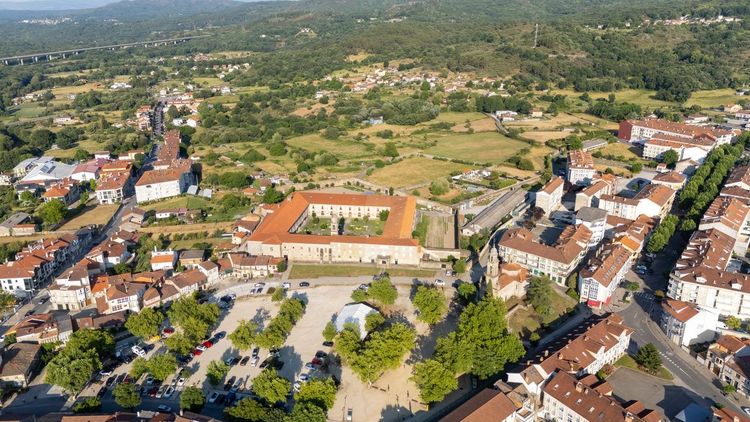
Founded in the 17th century, the Convento de Santa Clara (Praça do Município, 4804-534 Guimarães, rated 4.4/5 on Google from 21 reviews) lost its religious function in the mid-19th century and became the headquarters of the Câmara Municipal, the town hall of Guimarães, which it still houses today. The Baroque façade, restrained compared to the neighbouring religious buildings, contrasts with the more ornate decoration of the interior.
Access to the building is generally limited to the entrance hall and the courtyard, with the municipal offices occupying the rest of the premises; a quick stop is enough, on the way between the historic centre and the nearby Plataforma das Artes.
Convento de Santa Clara (Praça do Município, 4804-534 Guimarães)
10. Monte da Penha, the Sanctuary, and the Cable Car
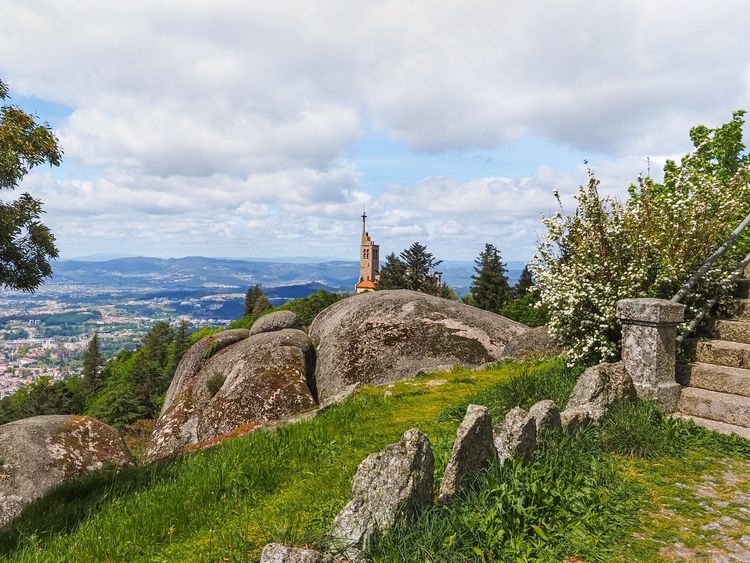
At 617 metres above sea level, Monte da Penha dominates Guimarães with its silhouette of granite rocks sculpted by erosion. The site, designated a regional nature park, combines pine forest, rocky outcrops, and a religious sanctuary at the summit, all reachable from the city centre by a cable car inaugurated in 1995, one of the longest in Portugal at nearly 1,700 metres of cable.
The Santuário de Nossa Senhora da Penha (Monte da Penha, 4810-011 Guimarães, rated 4.7/5 on Google from 7,034 reviews), built between 1930 and 1947 in a massive neo-Romanesque style, stands at the highest point. Its construction fulfilled a vow made during a cholera epidemic in the 19th century: according to local tradition, the inhabitants promised to build a sanctuary if the city were spared. The building, in rough granite, stands out for its sobriety compared to the decorative profusion of the Baroque sanctuaries found further south in the country.
Around the sanctuary, a maze of paths winds between granite boulders of suggestive shapes, some given names by local tradition (the Devil's Stone, the Lovers' Grotto). Portuguese families come here to picnic on Sundays, between visits to the small cave chapel carved directly into the rock, dedicated according to local legend to a hermit who retreated here in the Middle Ages.
The cable car journey takes about ten minutes and costs around 6 euros return; hours vary by season, with frequent closure on Mondays outside high season — worth checking before you set off. If you prefer to walk, a marked trail links the historic centre to the summit in just under two hours of steady climbing, suitable only for experienced hikers given the elevation gain.
On clear days, the view from the designated viewpoints stretches across the Ave valley and, in the distance, towards the foothills of the Peneda-Gerês national park. Pack a jacket even in summer: the wind sweeping the summit makes the air noticeably cooler than in the city centre.
A few restaurants and cafés have set up near the sanctuary, catering to the weekend clientele. Prices there are slightly higher than in the city centre, which is understandable given the altitude and the sole access by cable or the winding road climbing from the valley. An abandoned mountain hotel, derelict for several decades, adds an almost melancholy note to the landscape, nestled among the granite boulders and parasol pines.
Santuário de Nossa Senhora da Penha (Monte da Penha, 4810-011 Guimarães)
11. The Citânia de Briteiros
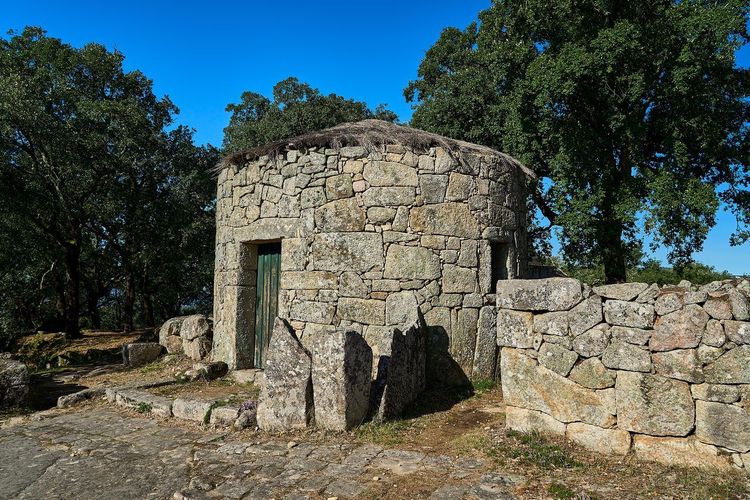
About fifteen kilometres north of Guimarães, the Citânia de Briteiros (Monte de São Romão, 4805-051 Briteiros, Guimarães, rated 4.5/5 on Google from 1,751 reviews) ranks among the most complete remains of the Castro culture — the fortified Celtiberian hillforts that occupied the north-west of the Iberian Peninsula between the 6th century BCE and the 1st century CE. The site, excavated from 1875 by local archaeologist Francisco Martins Sarmento, reveals several dozen foundations of circular stone huts, sections of defensive walls, and a remarkably sophisticated system of channelled water reservoirs for the period.
It is easy to picture a community of several hundred inhabitants, organised around cobbled lanes and ritual baths whose exact function archaeologists still debate. The site resisted the Roman arrival, became partially Romanised in the 1st century, before being gradually abandoned in favour of the more accessible valleys.
Allow at least an hour and a half on site, more if the heat is not too intense, as the site spreads over several hectares of rocky slope with little shade. Good walking shoes are absolutely essential: the terrain is partly natural and nothing like a paved path suitable for pushchairs or limited mobility.
Getting there by car is the most practical option, as no regular bus route serves the site directly from Guimarães. The archaeological museum of the Sociedade Martins Sarmento, in the city centre of Guimarães, usefully complements the visit by displaying finds from the site: ceramics, coins, and above all remarkable granite sculptures of Lusitanian warriors, including the famous "pedras formosas", sculpted blocks whose ritual function remains debated. Back in Porto, the city's own audio-guided tour offers a fitting way to close out the trip on a more urban note.
Citânia de Briteiros (Monte de São Romão, 4805-051 Briteiros, Guimarães)
12. The Centro Internacional das Artes José de Guimarães
Opened in 2012, the CIAJG occupies a contemporary building constructed on the remains of former convent structures, a short walk from the Convento de Santa Clara. The museum takes its name from the visual artist José de Guimarães, who donated to the city a personal collection of African, Asian, and pre-Columbian art assembled over more than forty years.
Temporary exhibitions, often devoted to international contemporary art, occupy the upper floors, while the ground floor permanently displays a selection of African ritual masks and statuettes, presented in dialogue with modernist works influenced by those same forms.
Full-price admission is around 5 euros, free on certain Sunday mornings for residents. The museum closes on Mondays like most cultural institutions in the city — a detail worth checking before planning your day.
The architecture itself is worth the visit: glass, raw concrete, and ancient stone remains coexist across several levels connected by walkways, offering unexpected views over the rooftops of the adjacent historic centre.
Centro Internacional das Artes José de Guimarães (Avenida Conde Margaride, 4810-535 Guimarães, rated 4.5/5 on Google from 707 reviews) (Avenida Conde Margaride, 4810-535 Guimarães)
13. The Plataforma das Artes e da Criatividade
A former municipal market converted for the 2012 European Capital of Culture year, the Plataforma das Artes now brings together a design school, an art-house cinema, and an exhibition gallery under a single rehabilitated metal hall.
The programme changes frequently: it is best to check the local website before visiting, as some exhibitions only open a few afternoons per week outside the tourist season.
Plataforma das Artes e da Criatividade (Avenida Alberto Sampaio, 4810-101 Guimarães, rated 4.4/5 on Google from 142 reviews) (Avenida Alberto Sampaio, 4810-101 Guimarães)
14. The Municipal Market of Guimarães
Less well known than the historic monuments, the municipal market of Guimarães is a good way to step off the standard tourist circuit. Here you will find Minho sheep's cheese, smoked charcuterie, and seasonal fruit sold directly by producers from the region on weekday mornings.
Saturday mornings are the liveliest, with a noticeably larger local crowd than the rest of the week. Bring cash, as small producers do not always accept card payment.
Municipal market (Praça do Mercado, 4800-441 Guimarães)
15. The Casa da Memória
Installed in a rehabilitated former textile factory, the Casa da Memória de Guimarães (Rua Nossa Senhora da Conceição, 4810-215 Guimarães, rated 4.6/5 on Google from 317 reviews) has since 2016 offered a multimedia journey through local history and identity, from Celtiberian origins to 20th-century deindustrialisation. The venue is aimed more at visitors curious about context than at those seeking collections of rare objects.
The visit, entirely free, works well as a complement to the castle and the ducal palace: it sheds light on whole chapters of local history rarely explained on site, due to the lack of adequate panels in the monuments themselves. Allow 45 minutes, a little more if you take the time to read all the explanatory panels, available in Portuguese and English.
The building, with its preserved industrial metal framework, provides a pleasant contrast to the granite architecture that dominates the rest of the city, a useful reminder that Guimarães is not simply a museum city frozen in the Middle Ages. A small section devoted to the local textile industry, the city's economic engine for over a century, usefully rounds out a heritage narrative otherwise focused elsewhere on the medieval period.
Casa da Memória (Rua Nossa Senhora da Conceição, 4810-215 Guimarães)
16. Where to Eat: the Gastronomy of Guimarães
Local cuisine revolves around two specialities inseparable from the Minho: bacalhau à Guimarães, flaked cod baked under a crust of corn breadcrumbs (broa), and toucinho do céu, a dessert made with eggs, almonds, and sugar whose recipe is said to originate in the region's convents. All of it is traditionally washed down with vinho verde, a lightly sparkling white wine produced in the surrounding vineyards.
In the heart of the historic centre, restaurants such as Histórico by Ferrugem (Largo do Toural, 4800-431 Guimarães, rated 4.6/5 on Google from 5,675 reviews) offer updated regional cuisine without betraying the original recipes. For a vegetarian option — rarer in this very meat-focused region — Cor de Tangerina serves reimagined Portuguese dishes without meat or fish, in a relaxed setting near the Largo João Franco.
Book ahead if possible at weekends, as tables fill up quickly after 8pm at the most popular places in the centre. Conversely, the small tascas (neighbourhood eateries) around the Praça de São Tiago often serve a full set lunch for less than 10 euros on weekdays, at lunchtime only.
If you are using the Ryo app at another stop on your Portuguese journey, you will find the same principle of locally selected rather than imposed recommendations: in Guimarães, it is often better to follow the tables filled with locals than the terraces most visible from the main street.
Wine lovers can venture out to the small family cellars in the surrounding area, where some vinho verde producers open their doors by appointment for an informal tasting, far from the organised commercial circuits of the major Minho estates. The municipal market, mentioned above, is also a good place to put together a picnic before heading up to Monte da Penha.
Histórico by Ferrugem (Largo do Toural, 4800-431 Guimarães)
17. Where to Stay in Guimarães
Staying in the listed historic centre lets you enjoy the cobbled lanes once the tourist groups have left in the late afternoon — a real advantage, as the city's atmosphere changes markedly after 6pm. Several old houses in the centre have been converted into small boutique hotels, with exposed beams and granite walls retained.
For a more unusual experience, the Pousada Mosteiro de Guimarães (Rua de Santa Marinha, 4810-011 Guimarães, rated 4.7/5 on Google from 1,526 reviews), set in the former monastery of Santa Marinha da Costa on the heights above the city, occupies a 12th-century building remodelled in the 18th. Its cloister, terraced gardens, and views over the valley make it a sought-after address, best booked several weeks in advance during high season.
If you are travelling by car, check parking availability before booking: the largely pedestrianised historic centre makes vehicle access seriously difficult and often means parking at a distance and walking to your hotel with your bags. Hotels on the immediate outskirts of the centre, slightly less picturesque, generally compensate with an included private car park.
Pousada Mosteiro de Guimarães (Rua de Santa Marinha, 4810-011 Guimarães)
18. How to Get to and Get Around Guimarães
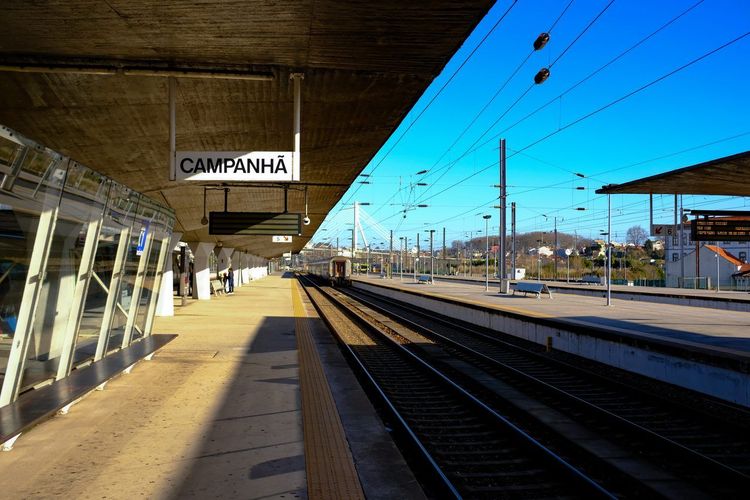
From Porto, Guimarães is reached by train in just under an hour, with frequent departures from Porto Campanhã or Porto São Bento on a direct line with no change. By car via the A7 motorway, the drive takes around 45 minutes outside rush hours, with a toll to budget for.
GetBus and Rede Expressos coaches also connect Porto to Guimarães, with a slightly lower frequency than the train but often at a cheaper fare. From Francisco Sá Carneiro Airport, allow around one hour by any means, as there is no direct link: a change in Porto is required.
Once there, forget the car: the historic centre is entirely walkable, with most monuments less than ten minutes' walk from each other. Only the Citânia de Briteiros requires a vehicle or taxi, as there is no reliable public transport serving the site directly.
To reach Monte da Penha, the cable car remains the simplest option from the city centre; otherwise, allow around 20 minutes by car along a winding but year-round road. The train station itself is about fifteen minutes' walk from the Largo do Toural, a pleasant route that already passes some remains of the old city fortifications.
19. The Festas Gualterianas
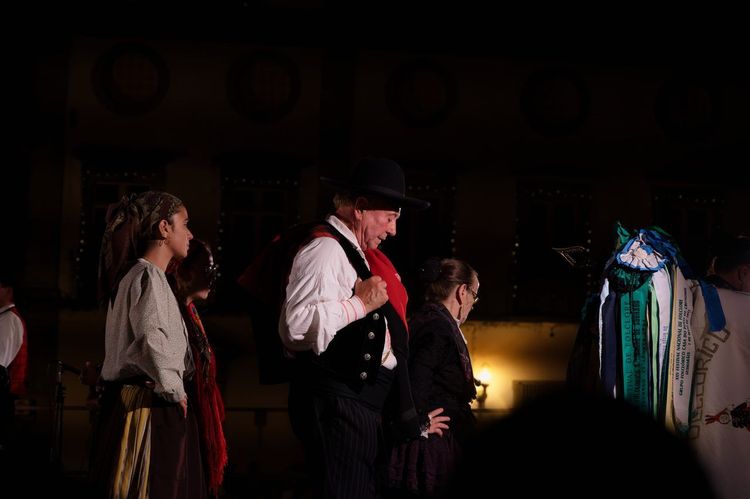
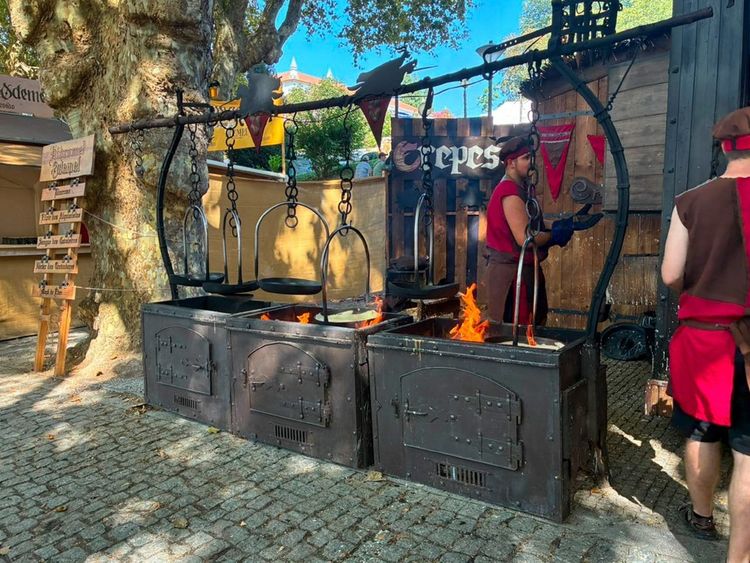
Every year in early August, Guimarães comes alive with the Festas Gualterianas, a popular festival officially dating back to 1452, one of the oldest festive traditions still celebrated in Portugal. For three days, folk parades, a reconstructed medieval market, and concerts fill the streets of the historic centre, turning the heritage city into a living stage.
The highlight is the Cortejo Histórico, a costumed procession retracing eight centuries of local history, from the Castro tribes to the Counts of Burgundy and medieval craft guilds. Hundreds of residents take part as volunteers, with some costumes passed down through generations within the same families.
If your visit coincides with these dates, book your accommodation several months in advance: prices rise noticeably and rooms in the historic centre fill up from spring onwards. Outside the festival period, the atmosphere is naturally quieter, but local shopkeepers readily bring up the event if you start a conversation, often with infectious pride.
The origin of the name "Gualterianas" is said to refer to Saint Walter, whose relics were honoured at the origin of the festival in the 15th century, although the original religious dimension has today largely given way to a festive and identity-driven celebration.



FAQ
How many days do you need to visit Guimarães?
A full day is enough to cover the essentials: the castle, the ducal palace, the historic centre, and Monte da Penha. To add the Citânia de Briteiros and take time to wander through less touristy neighbourhoods like Couros, plan for two days with an overnight stay.
Is Guimarães worth a day trip from Porto?
Absolutely. If you're still wondering what to do in Guimarães, know that unlike many half-day excursions from Porto, the city packs a complete UNESCO-listed historic centre, a major medieval castle, and a pre-Roman archaeological site nearby — more than enough to fill an entire day at a leisurely pace.
Is Guimarães Castle free to visit?
Access to the inner courtyard is free. Only the climb up the keep and the battlements is paid, at a modest price of around 2 to 3 euros, with combined tickets sometimes available for the nearby Paço dos Duques.
How do you get to Guimarães from Porto?
The train is the easiest option, with a direct journey of about one hour from Porto Campanhã or São Bento. By car via the A7 motorway, the drive takes around 45 minutes, and GetBus or Rede Expressos coaches offer a budget-friendly alternative.
What is the best time to visit Guimarães?
Spring and early autumn offer pleasant temperatures without the crowds of peak summer. Weekday mornings are the quietest throughout the year, especially useful for photographing the historic centre without passers-by.
What does the inscription "Aqui nasceu Portugal" on the castle mean?
This phrase, carved into the ramparts, means "here Portugal was born" and recalls the tradition that Afonso Henriques, the country's first king, was born in this castle around 1109, before founding the independent kingdom.
Where can you park in Guimarães?
Since the historic centre is largely pedestrianised, it is best to park in one of the peripheral car parks signposted from the main entry roads into town, then walk to the castle and the palace in just a few minutes.
Is Guimarães suitable for families with children?
Yes, the compact layout of the pedestrianised historic centre works well for families: little elevation change in the city itself, a castle that captivates children, and a cable car up to Monte da Penha that never fails to impress. Just plan for frequent breaks, as the cobblestones tire small legs quickly.
That gives you a solid sense of what to do in Guimarães beyond its status as the "city where Portugal was born" — a phrase that still rightly adorns the castle ramparts. Between listed medieval heritage, pre-Roman archaeological sites, contemporary art housed in former industrial spaces, and regional gastronomy little diluted by mass tourism, the city easily deserves the full day — or even two — that many visitors rushing from Porto still deny it.
If your Portuguese itinerary continues elsewhere, keep the reflex of opening the Ryo app to rediscover this same spirit of audio-guided walks, designed to explore a city on foot, neighbourhood by neighbourhood, without depending on a fixed paper guide. Guimarães, with its cobbled lanes and squares that echo one another, lends itself particularly well to this kind of free exploration, badge by badge, all the way to the summit of Monte da Penha.
À lire également