© Shutterstock
 Votre guide Ryo
Things to Do in Belgrade in 2026: 20 Unforgettable Experiences
What should you do in Belgrade when the Serbian capital layers three empires, two rivers, and a 20th-century history that left visible scars right in the city center? The question deserves a thorough answer, because Belgrade is neither just a weekend party destination nor a single line in a travel guide. Perched on a promontory at the confluence of the Sava and the Danube, the city organizes its life around Kalemegdan Fortress, a pedestrian street less than a kilometer long, and a cobblestoned bohemian quarter that smells of grilled meat come evening. If Belgrade does not yet have its own Ryo audio-guided tour, the app already covers several European capitals and remains a solid reference for planning this kind of neighborhood-by-neighborhood walking trip.
Across the twenty stops that follow, you will come across a telecommunications tower rebuilt after a NATO bombing, a museum that keeps Nikola Tesla's ashes in a golden sphere, a market where village women still hawk their vegetables by the crate, and a river island turned urban beach that sees up to 300,000 visitors on sweltering days. We also cover the boats moored along the Sava that transform into nightclubs after dark, a century-old tram line that loops through the historic center, and an entire block left frozen since the 1999 bombings. Plenty to fill three to four days on the ground, between heritage, curiosities, and nightlife.
1. Kalemegdan Fortress and Its Park
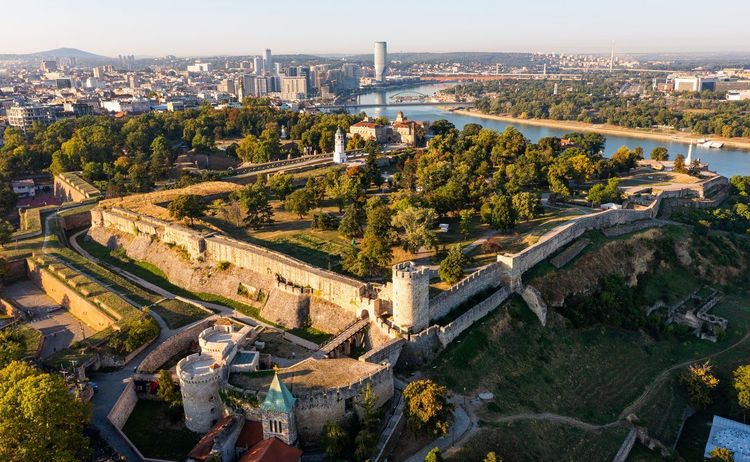
Kalemegdan Fortress (Kalemegdan bb, 11000 Belgrade, rated 4.8/5 on Google based on 36,590 reviews) occupies the rocky promontory where the Sava meets the Danube, and this is precisely where Belgrade began, twenty-three centuries before the city hosted the country's first rock concert. The Scordisci Celts settled here first, followed by a Roman garrison that gave the city its ancient name, Singidunum. The Byzantines, medieval Serbs, Ottomans, and Habsburgs each added their own layer of fortifications, which explains why 15th-century walls stand side by side with 18th-century bastions.
The site divides into two sections that flow seamlessly into each other: the fortress proper, with its dry moats converted into sports courts, and Kalemegdan Park, one of the largest green spaces in the capital. The Zindan Gate, the most photographed fortified entrance, opens onto a maze of towers and casemates where Belgrade children have played hide-and-seek for generations. A little further on, the Clock Tower (Sahat kula) recalls the Austrian occupation of the 18th century, while the cannon displayed on the ramparts invariably prompts guides to describe the old Ottoman front line facing the Habsburgs.
The highlight of the visit is the Pobednik (Victor) monument, a bronze statue erected in 1928 that towers over the confluence of the two rivers. Originally intended for the city center, the authorities eventually placed it here, deeming its nudity too daring for the main square. You can sit on the bastion ledge just below and watch barges make their way up the Sava — one of the city's most popular free spectacles at sunset. Allow a good hour for the fortress alone, and double that if you add a full stroll through the park, with its shaded alleys, adjacent zoo, and historic tennis court.
Every summer since the 1930s, the park has also hosted an open-air cinema festival on the esplanade near the zoo, with free screenings that draw entire families on hot evenings. A little lower down, the Roman Well (Rimski bunar), a 60-meter fortified well sunk in the 18th century on older foundations, can be visited with a caretaker who is happy to recount legends of prisoners thrown into it — more folklore than historical fact. These two details, often absent from express visits, are well worth the extra time if you linger beyond the usual hour. Park admission is free and the grounds remain open throughout the day, making this a flexible stop to combine with any other point in this article.
2. The Nikola Tesla Museum
In a bourgeois villa in the Vračar neighborhood, the Nikola Tesla Museum (Krunska 51, 11000 Belgrade, rated 4.2/5 on Google based on 19,886 reviews) holds the inventor's funeral urn — a golden sphere on a black marble pedestal — surrounded by his original patents and coils still capable of producing electric arcs during demonstrations.
Tesla was born in present-day Croatia but always claimed his Serbian heritage, which explains why his ashes eventually made their way to Belgrade in 1957, fourteen years after his death in New York. The museum holds the only complete collection of his personal effects in the world — more than 160,000 documents and objects, only a rotating portion of which is on display. The guided tour, included in the admission price, culminates in a Tesla coil demonstration: sparks fly a meter wide and the smell of ozone lingers long after you leave.
These archives — roughly 164,000 items spread across more than 500 boxes — have been listed since 2003 on UNESCO's Memory of the World Register, a rare distinction for the personal collection of a single scientist. The villa housing them dates from 1929, and the museum opened there in 1952, the year Tesla's legacy was returned from New York to Yugoslavia. The gift shop, often overlooked, sells faithful reproductions of his laboratory notebooks — a more original souvenir than a fridge magnet. Book your time slot in advance during peak season, as school groups frequently fill the morning demonstrations.
3. Saint Sava Cathedral
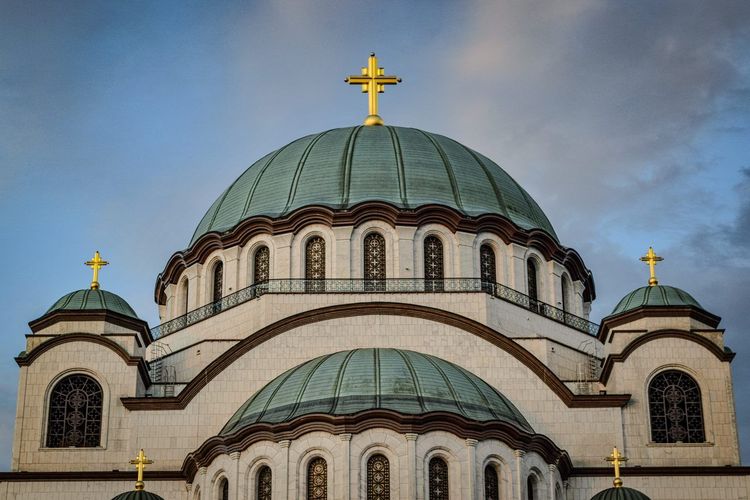
Visible from almost every high point in the city, Saint Sava Cathedral (Krušedolska 2a, 11000 Belgrade, rated 4.9/5 on Google based on 45,266 reviews) claims the title of largest Orthodox church in the Balkans, with a dome rising to 70 meters and a standing capacity of 10,000 worshippers.
Construction began in 1935 on the site where the Ottomans are said to have burned the relics of the founding saint of the Serbian Church in 1595. Building stretched across nearly nine decades, interrupted by the Second World War and then by decades of a communist regime with little appetite for funding a religious edifice. The golden mosaics inside, completed in 2020, rank among the largest ensembles in the Orthodox world: the Christ Pantocrator mosaic crowning the dome, unveiled in 2018, weighs over 40 tonnes on its own and required some sixty Russian and Serbian mosaic artists working for a full year.
In terms of sheer scale, the building stands among the largest Orthodox places of worship in the world, often compared to the Hagia Sophia in Istanbul for the breadth of its central dome. Do not leave without descending to the crypt: 1,800 m² underground, covered in frescoes and gilding, housing the Treasury of Saint Sava and the tomb-church of Prince Lazar. Admission is free, but dress accordingly: covered shoulders for everyone, long skirt or trousers recommended. On the way out, the adjacent square offers one of the best free vantage points over the full dome, particularly photogenic in the golden hour.
4. Skadarlija, the Bohemian Quarter
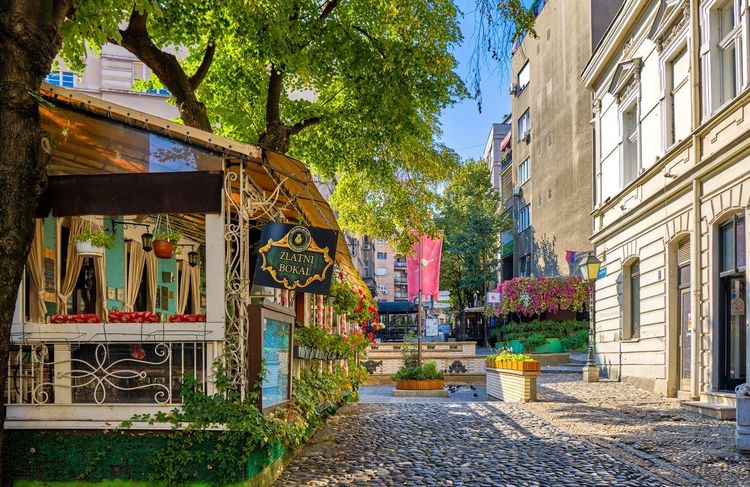
The uneven cobblestones of Skadarlija (Skadarska ulica, 11000 Belgrade, rated 4.3/5 on Google based on 99 reviews) slope gently down from Republic Square, lined with 19th-century facades painted in ochre and kafanas where the accordion never quite stops in the evening.
The neighborhood owes its bohemian reputation to the artists and writers who settled here in the late 19th century, fleeing a city center they found too stuffy for their excesses. The poet and painter Đura Jakšić lived and died at number 34 Skadarska Street: his house, one of the oldest in the quarter, now hosts a cultural space that mixes exhibitions, literary evenings, and Šumadija wine tastings rather than a glass-case museum. This kind of free-form stroll, without a fixed plan, recalls the philosophy of Ryo audio-guided tours practiced elsewhere in Europe: following your own pace, stop by stop, rather than a rigid itinerary.
Dining in Skadarlija is neither a discreet nor a budget option: traditional kafanas here charge tourist prices and rotate through groups of musicians who play table by table, with a tip expected. If you prefer a more authentic and less expensive atmosphere, save this neighborhood for a leisurely walk after 10 pm rather than for dinner itself, and keep your meal for a quieter side street nearby. The stroll alone, without spending a dime, is entirely free and well worth the detour at the end of the day, especially on a Thursday or Friday evening when the energy picks up.
5. Knez Mihailova and Republic Square
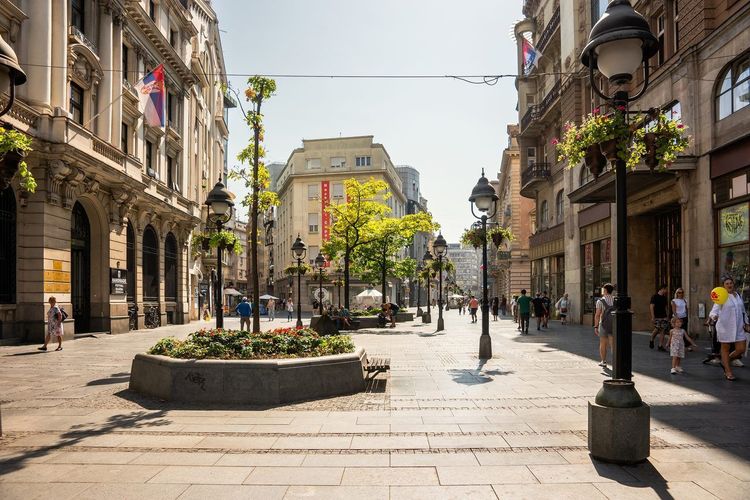
The pedestrian street Knez Mihailova (Knez Mihailova, 11000 Belgrade, rated 4.8/5 on Google based on 2,166 reviews) connects Republic Square to the entrance of Kalemegdan over roughly 900 meters, concentrating in a single stretch the bulk of the historic center's shopping, terraces, and listed facades.
Pedestrianized since the 1980s, the street lines up Neo-Renaissance and Art Nouveau buildings constructed between 1870 and 1930, a period when Belgrade was striving to resemble Vienna or Budapest rather than a Balkan capital recently freed from Ottoman rule. Republic Square (Trg Republike), at its southern end, serves as the universal meeting point for any rendezvous in the city: the equestrian statue of Prince Mihailo has stood there since 1882, flanked by the National Museum and the National Theatre, both recently renovated.
Several of the most ornately decorated facades once belonged to foreign banks or insurance companies, a sign of Belgrade's relative prosperity before the two World Wars. On weekends, the street also hosts open-air photography exhibitions organized by the city, free of charge and renewed several times a year. Keep an eye out for the discreet commemorative plaques on certain buildings — they recount episodes of Serbian resistance during the Nazi occupation that few guides mention. Allow twenty minutes to walk the full length of the street without stopping, or an hour or two if you give in to the shop windows.
6. The Museum of Yugoslavia and the House of Flowers
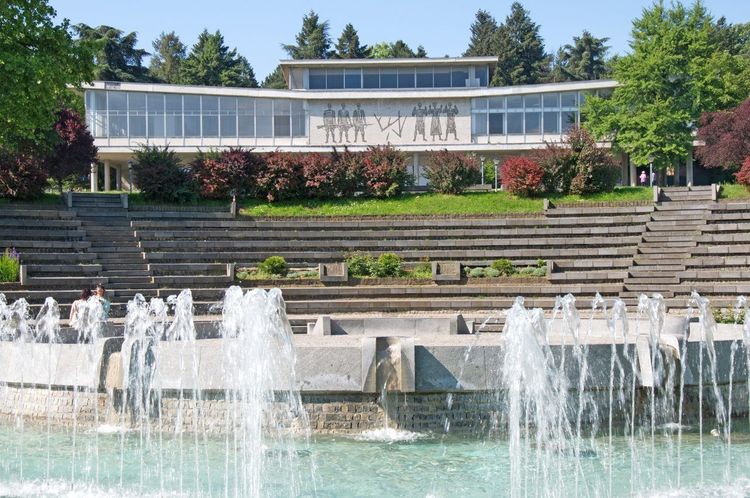
The Museum of Yugoslavia (Botićeva 6, 11000 Belgrade, rated 4.5/5 on Google based on 4,349 reviews) holds one of Europe's most unusual collections: tens of thousands of diplomatic gifts presented to Josip Broz Tito by heads of state from around the world, relay batons sent every year by Yugoslav youth for his official birthday, and traditional costumes from each republic of the vanished federation.
The ticket also includes entry to the House of Flowers (Kuća cveća), the mausoleum where Tito has rested since 1980, surrounded by a tropical conservatory he had built during his lifetime. His funeral in May 1980 drew delegations from 128 countries, including four kings, 31 presidents, and 22 heads of government — to this day the most attended state funeral in history. The tomb remains a quiet pilgrimage site for a portion of the population nostalgic for the former Yugoslavia, and the display cases also document the regime's darker chapters without fully euphemizing them, setting this museum apart from a simple official memorial.
Among the most unusual pieces are replica weapons offered by newly independent African heads of state in the 1960s, testament to the central role Tito's Yugoslavia played within the Non-Aligned Movement. The carefully landscaped garden surrounding the House of Flowers is one of the few parts of the complex where you can visit at your own pace without a guide. A visit here calls for at least some historical context to be fully appreciated — the English audio guide available at the entrance is well worth taking. The site lies about 4 km from the historic center in the residential Dedinje neighborhood, reachable in ten minutes by taxi or by bus from Slavija Square.
7. Zemun, the Old Danubian Town
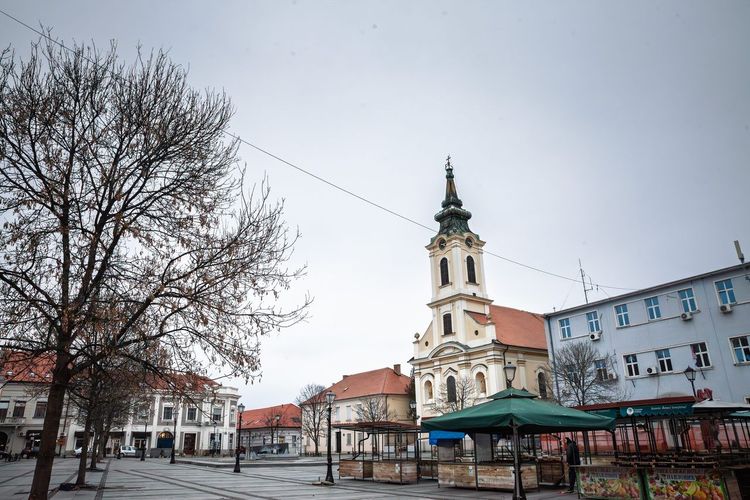
About twenty minutes from the center, Zemun retains the feel of a distinct Central European town separate from Belgrade — which it officially was until 1934 — with cobbled lanes, low pastel-colored houses, and a riverside promenade lined with fish restaurants.
The Gardoš Tower (Gardoš, 11080 Zemun, rated 4.7/5 on Google based on 6,763 reviews), also known as the Millennium Tower, has dominated the neighborhood since 1896, erected by the Hungarians to celebrate a thousand years of their statehood. Climb it for a sweeping panorama over the confluence, Zemun's red rooftops, and, in the distance, the towers of Novi Beograd on the far bank.
The old Orthodox cemetery surrounding the tower deserves a quiet pause, with its ivy-covered 19th-century graves. Below, the Danube promenade (Kej) lines up a dozen fish restaurants regarded as some of the best in the city, where grilled carp and catfish are savored on terraces overlooking the water. The covered market in Zemun, more modest than the one in Kalenić, rounds off the walk nicely for anyone looking for a quick lunch on the go, between a warm burek and locally made cheese sold by the slice. Some Belgrade residents still refer to Zemun with a touch of irony as a town in its own right — a parochial rivalry stretching back to the days when the two banks belonged to different empires, with the Sava marking the border between the Austro-Hungarian and Ottoman empires. Allow two to three hours including a meal, and take the tram or bus rather than a taxi during rush hour.
8. Ada Ciganlija, the Urban Beach
Turned into a peninsula by a dam built in the 1960s, Ada Ciganlija (Ada Ciganlija, 11040 Belgrade, rated 4.7/5 on Google based on 85 reviews) regularly draws more than 100,000 visitors a day in summer, and up to 300,000 during heatwaves, around its 4.2-km artificial lake — attendance comparable to a seaside resort on the Adriatic, despite being less than ten minutes from the city center.
The site combines 7 km of sandy and gravel beaches, a forest trail for jogging or cycling, and around thirty water activities: paddle boarding, wakeboarding, bungee jumping from a dedicated pylon, and beach volleyball courts rented by the hour. Unlike a natural beach, the lake water is supervised and regularly tested, which reassures families spending the day there with young children.
In winter, part of the lake freezes in some years, offering the most daring an entirely unofficial wild skating session. Local families also come out of season for impromptu barbecues in the forest, a practice tolerated in designated areas on weekends. Budget around €3 for a sun lounger for the day on the paid beaches — an option that remains just that, since general access to the site is free. Rent a bike on site rather than bringing one from the center: rental stations are plentiful and inexpensive.
9. Kalenić Market
Kalenić Market (Njegoševa, 11000 Belgrade, rated 4.5/5 on Google based on 11,023 reviews), in Vračar, opens at the crack of dawn every morning of the week and concentrates the bulk of the capital's traditional market gardening trade: seasonal fruit, sheep's cheese, Balkan honeys, and cut flowers sold by producers who have come in from the surrounding countryside.
Unlike the tourist markets in the center, this one still runs primarily for local residents rather than visitors, making it a good place to observe everyday Belgrade without any staging. The older vendors will happily negotiate if you buy several kilos at once — a practice that often surprises Western visitors accustomed to fixed supermarket prices. One stall, recognizable by its queue, sells homemade ajvar, the famous roasted pepper spread typical of the Balkans, in jars to take away. Come on a Saturday morning before 10 am to catch the market at its liveliest.
10. The Splavovi, Belgrade's Floating Nightclubs
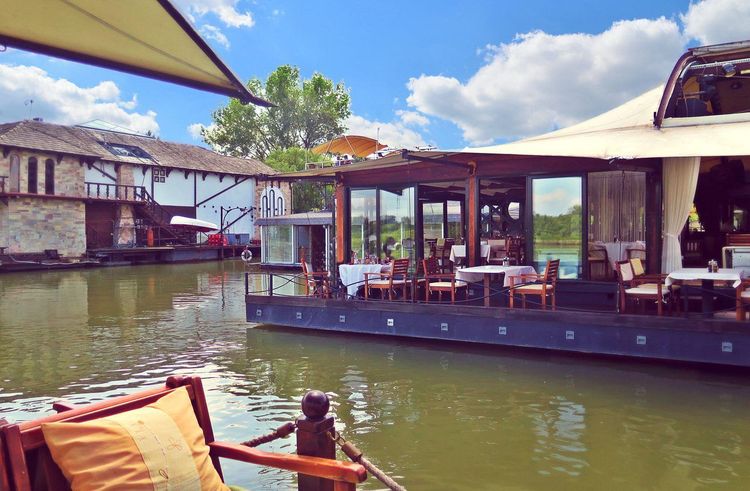
Moored in tight rows along the Sava, the splavovi (raft clubs) have formed the backbone of Belgrade's nightlife since the 1990s — a phenomenon born of local ingenuity during the years of international embargo, when opening a floating bar allowed operators to sidestep certain regulations that applied to fixed premises.
The Beton Hala district (Karađorđeva 2-4, 11000 Belgrade, rated 4.5/5 on Google based on 1,302 reviews), a former industrial warehouse converted into a riverside restaurant and bar promenade, often serves as the starting point before heading to the more outlying rafts.
Each splav cultivates its own musical identity: electronic and techno on the Novi Beograd side, turbofolk and Balkan pop at the more traditional venues, eclectic programming on the oldest rafts in the center. Entry is usually free on weekdays and ticketed with a queue on Friday and Saturday nights after midnight. Belgradians themselves rarely head out before 11:30 pm, and the real atmosphere only builds after 1 am — a rhythm worth knowing before venturing out too early and finding yourself alone on the dance floor.
The splavovi season truly peaks from April to October, with some venues closing entirely in winter due to inadequate heating on the water. EXIT, an open-air electronic music festival born in Novi Sad whose influence permeates the entire Serbian nightlife scene, draws increasing numbers of young Europeans to these rafts every summer before or after the festival itself. Dress smart rather than casual: several venues apply strict door policies, especially on weekends. If partying is not your priority, a simple evening stroll along the quays is enough to feel the distinctive energy of this scene without spending a single dinar.
11. The Belgrade Military Museum
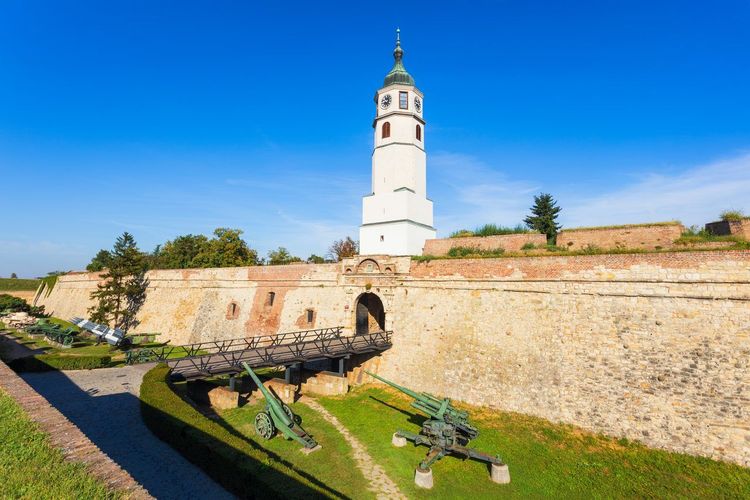
Located within the walls of Kalemegdan Fortress itself, the Military Museum (Kalemegdan bb, 11000 Belgrade, rated 4.6/5 on Google based on 1,897 reviews) covers twenty-five centuries of conflict on a territory that has seen more than most European capitals, from medieval Serbian armor to Second World War tanks displayed in the open air on the ramparts.
The most talked-about exhibit is a fragment of the American F-117 stealth fighter shot down over Serbia on 27 March 1999 — tangible proof that local air defenses managed to outwit the most sophisticated air force of the time. Note, however, that the bulk of the wreckage, including the canopy and wing, is displayed elsewhere at the Aeronautical Museum near Nikola Tesla Airport, about twenty kilometers from the center. Other displays trace the two Balkan Wars of the early 20th century, often overshadowed in Western narratives by the two World Wars that quickly followed. The cannons lined up on the outer ramparts make for particularly striking photographs at sunset, with the Sava in the background. Allow an hour, longer if the English-language display texts hold your interest — quality varies from room to room.
12. Mount Avala and Its Tower
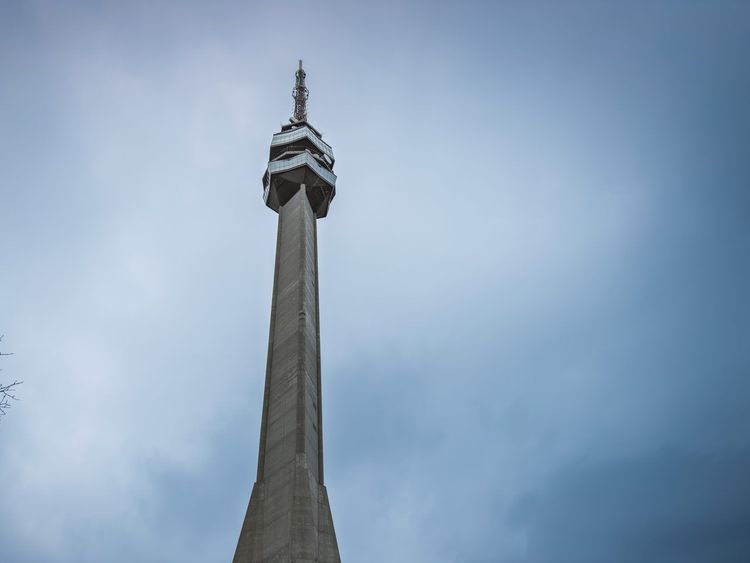
About twenty kilometers south of the center, Mount Avala peaks at 511 meters and offers one of the most unobstructed views over the Belgrade metropolitan area, punctuated by the distinctive silhouette of its television tower (Avala, 11000 Belgrade, rated 4.6/5 on Google based on 10,000 reviews), rebuilt to the original design after it was destroyed in the NATO bombing on 29 April 1999.
Standing 204.68 meters tall, it is the highest tower in the Balkans and the only one in the world resting on three legs rather than a single base — an architectural choice inherited from the original tower completed in 1965. The current version reopened on 21 April 2010, two meters taller than its predecessor. The observation platform at 122 meters is reached by a fast elevator and, in clear weather, affords a view stretching as far as the Fruška Gora hills. A Monument to the Unknown Heroes, sculpted by Ivan Meštrović, stands on the neighboring summit, surrounded by an oak forest ideal for hiking. A panoramic restaurant at the foot of the tower serves traditional Serbian cuisine — a pleasant option for extending the outing with a lunch and a view. Experienced cyclists also enjoy the road climbing to the summit, regularly used by local sports clubs on weekends. Allow half a day including travel, either by rental car or on an organized excursion.
13. Tram No. 2, the Free Panoramic Line
Without making a fuss about it, tram line No. 2 loops around most of the historic center in about thirty minutes for the price of an ordinary ticket, making it the cheapest tourist excursion in the entire city.
Board anywhere along its route and let yourself be carried: the line runs past the central station, skirts Kalemegdan, and cuts through several typical residential neighborhoods that hurried visitors never see. It also passes, without any fanfare, several former industrial sites converted into cultural spaces in recent years — a glimpse of a Belgrade reinventing itself well off the beaten track. Keep some coins on you, as card payment is not always accepted on board.
14. Underground Belgrade
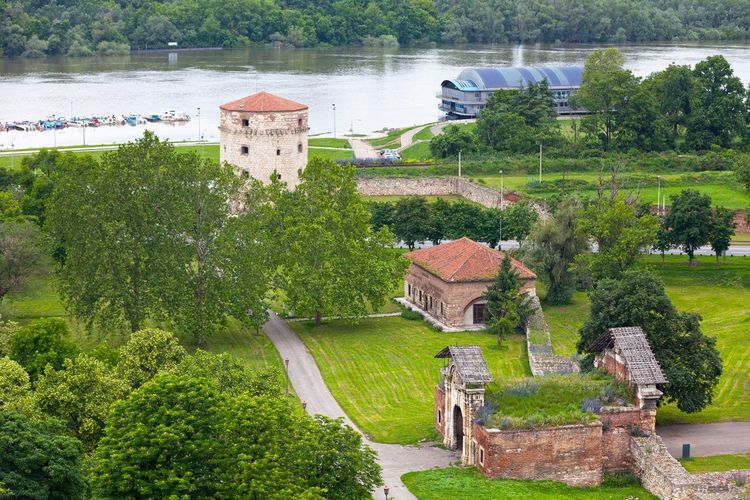
Beneath the city-center cobblestones lies a network of tunnels, cellars, and shelters that few visitors suspect, including the Nebojša Tower (Bulevar Vojvode Bojovića 8, 11000 Belgrade, rated 4.7/5 on Google based on 529 reviews), the only medieval tower in Belgrade preserved on the Danube bank, long used as a political prison.
The Greek poet Rigas Feraios, a key figure in the Greek independence movement, was held and then executed here in 1798 — an episode the small interior exhibition documents in detail. Several local agencies also offer guided tours of Kalemegdan's underground galleries and the Cold War air-raid shelters built under Tito, a theme that particularly appeals to enthusiasts of 20th-century history. Other galleries, closed to the public for most of the year, open exceptionally during the Night of Museums held each spring — an event worth watching for if your stay falls during that period. The air-raid shelters built under Tito could accommodate several thousand people, a figure that conveys the scale of nuclear paranoia during the Cold War in the Balkans.
15. The Museum of Contemporary Art (MSU)
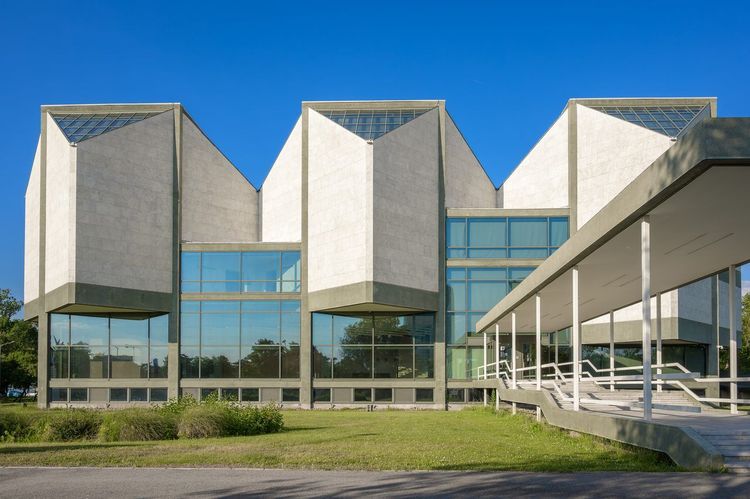
On the Novi Beograd bank, the Museum of Contemporary Art (Ušće 10, blok 15, 11070 Belgrade, rated 4.6/5 on Google based on 3,746 reviews) reopened on 20 October 2017 after ten years of closure for renovation, in an iconic modernist building inaugurated in 1965.
The collection, comprising more than 8,000 works, constitutes the largest ensemble of Yugoslav art in the world, tracing an avant-garde scene largely unknown outside the Balkans — from Constructivist sculptures of the 1920s to conceptual installations from the Tito era. The space deliberately contrasts with the more historical image of the rest of the city: skylights, raw concrete, and open views over the confluence from the glass-fronted top floor. The museum café, set on a mezzanine, shares the same view over the confluence as the exhibition rooms — a discreet spot for a break that costs less than anywhere in the historic center. Temporary exhibitions regularly refresh the programming with contemporary artists from across the former Yugoslavia, not just Serbian ones. An hour is enough for the essentials, a little longer if a temporary exhibition is running alongside the permanent collection.
16. The Ruins of the 1999 Bombings
On Kneza Miloša Avenue, a few hundred meters from the government district, the gutted shells of the former Yugoslav Army headquarters have deliberately been left unrestored since the 1999 NATO strikes — a conscious political choice that transforms an otherwise ordinary administrative street into an open-air memorial.
The buildings, designed by architect Nikola Dobrović and constructed between 1955 and 1965, were among the strategic targets designated during the aerial campaign tied to the Kosovo conflict. More than a quarter of a century later, the concrete structure remains exposed and fenced off, while the neighboring buildings have long since returned to normal activity all around it. The contrast is all the more striking given that this stretch of the avenue also hosts several foreign embassies and active ministries.
Listed as a cultural monument since 2005, the complex nevertheless came close to disappearing: a luxury hotel project backed by Jared Kushner's company, approved by the Serbian government in 2024, had planned its partial demolition. Repeated protests and controversy over the exceptional legislation intended to lift the site's protected status ultimately derailed the deal, with the American investor withdrawing his bid in December 2025. The site therefore continues to feature, almost despite itself, on the itineraries of several guided tours focused on the country's recent history. It is not an attraction in the conventional sense: no explanatory panels, no organized visits — simply an urban trace on which the city has never quite managed to reach a decision. Count this stop as a ten-minute parenthesis on the walk between the historic center and the Slavija neighborhood.
17. Tašmajdan Park and Saint Mark's Church
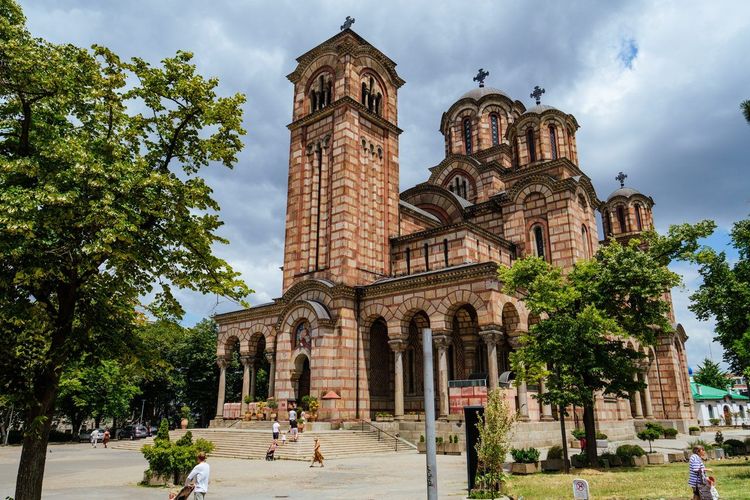
A short walk from the bus station, Tašmajdan Park offers a green pause appreciated by Belgrade families, with its sports court, playgrounds, and Saint Mark's Church (Bulevar kralja Aleksandra 17, 11000 Belgrade, rated 4.8/5 on Google based on 12,805 reviews), a faithful replica of the medieval Gračanica monastery in Kosovo.
The current building, completed in 1940, houses the tomb of the medieval Serbian emperor Stefan Dušan, whose 14th-century reign marked the territorial apex of the Serbian kingdom. The park also hosts, in summer, an open-air cinema distinct from the one at Kalemegdan, as well as a farmers' market on Saturday mornings popular with local families. Beneath the park itself, former stone quarries converted into shelters during the Second World War are occasionally opened to the public during open-house days organized by the city, revealing wartime graffiti left by residents who took refuge there during the bombings.
18. Dorćol, Between Cafés and Street Art
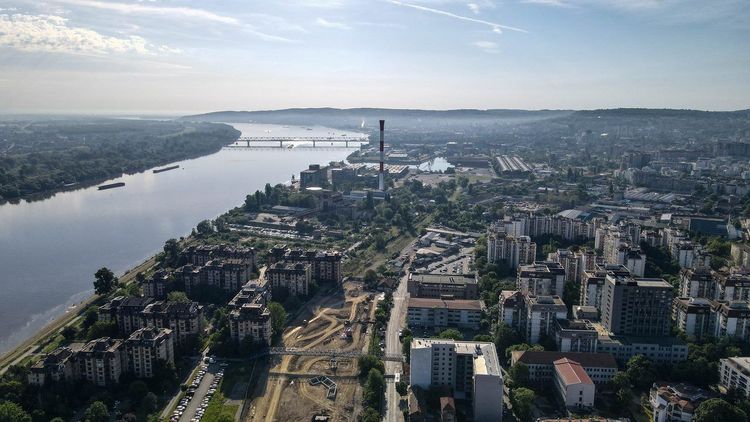
A former Ottoman quarter of narrow lanes, Dorćol has transformed over the past fifteen years into a hub of independent cafés, colorful murals, and small galleries installed in former craft workshops.
Cetinjska Street has the highest concentration of cocktail bars and specialty coffee shops in the neighborhood, frequented mostly by a young, local crowd rather than tourists. You will also find one of the city's oldest mosques here — Bajrakli, the sole survivor of the roughly 270 that existed under Ottoman rule — wedged between two residential buildings with barely a sign to point it out. Kralja Petra Street, running parallel to Cetinjska, is home to more independent art galleries than bars, for those seeking a quieter atmosphere. The murals change regularly, some commissioned by the city as part of street art festivals, others more spontaneous and short-lived.
Set aside a late morning with no fixed itinerary for this neighborhood: it is a place to discover by wandering, café by café, rather than ticking off a list of monuments. The contrast with the institutional grandeur of Knez Mihailova, ten minutes on foot, says a great deal about how many faces Belgrade has.
19. The Sava-Danube Confluence and the Great War Island
Few European capitals can boast a confluence as spectacular as the one where the Sava meets the Danube, right beneath Kalemegdan's ramparts. Several companies offer roughly one-hour cruises departing from the Beton Hala quays — a relaxing way to gain perspective on the city's geography without covering it all on foot.
In the middle of the river, the Great War Island (Veliko ratno ostrvo, 11080 Zemun, rated 4.6/5 on Google based on 169 reviews) remains a protected nature reserve, accessible by river shuttle from Zemun or Ušće, known for its heron colonies and a discreet naturist beach at its northern tip.
The island owes its name to the battles fought there during the Ottoman and Austro-Hungarian sieges of Belgrade, its strategic position at the confluence making it a contested crossing point for centuries. Sunset cruises often fill up in summer — better to book the day before directly at the quays than to hope for a last-minute spot. Local fishermen, a common sight on the banks of the Great War Island, sometimes catch catfish weighing several dozen kilos — a distinctive feature of the Serbian Danube that also attracts sport fishermen from across Europe. Today people come mainly for kayaking, fishing, or simply to escape the urban buzz for an afternoon, less than fifteen minutes by boat from the center.
20. Belgrade Zoo
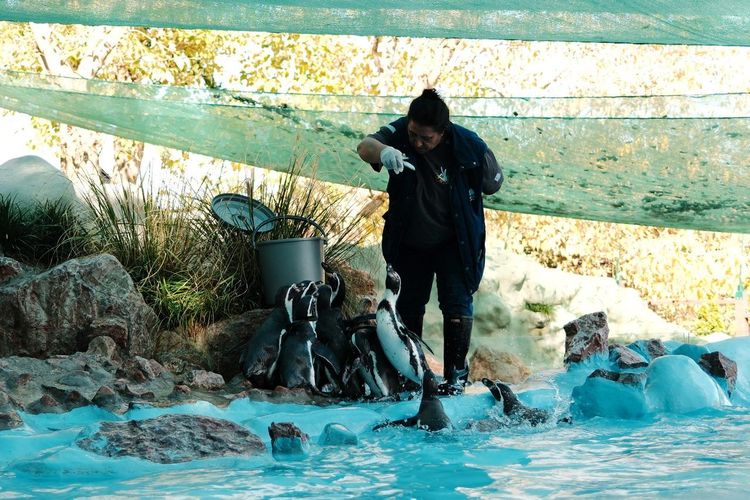
Established at the foot of the fortress since 1936, Belgrade Zoo (Mali Kalemegdan bb, 11000 Belgrade, rated 4.5/5 on Google based on 27,055 reviews) remains one of the oldest in the Balkans, known in particular for its colony of white lions — a genetic rarity born in captivity in the 2000s.
The institution survived both World Wars and the 1941 bombings, which explains the occasionally romanticized stories circulating about certain surviving animals. A portion of ticket revenues now funds captive breeding programs for several endangered species — a more conservation-oriented approach than in the past. The historic stone enclosures built in the 1930s contrast with the more recent facilities in the African section, renovated in the 2010s. A full visit takes around two hours, a practical option if you are traveling with young children and looking for a playful break between two more demanding museums.
FAQ
Is Belgrade a dangerous city for tourists?
No, Belgrade ranks among Europe's generally safe capitals for visitors, with violent crime against tourists being rare. Standard precautions are sufficient: stay alert late at night near the splavovi, avoid flashing valuables on crowded public transport, and opt for official taxis or ride-hailing apps rather than unmarked vehicles offered on the street. The areas described in this article, including in the evening, pose no particular safety concern for an attentive traveler.
How many days do you need to visit Belgrade?
Three to four days allow you to cover the essentials: the historic center and Kalemegdan on the first day, museums and Zemun on the second, Ada Ciganlija and a splav evening on the third, with an extra day for Mount Avala or a more unusual excursion such as underground Belgrade. A two-day stay is still possible by focusing on the historic center, at the cost of skipping outlying excursions like Avala or the Great War Island.
What can you do in Belgrade in just one day?
Focus on Kalemegdan, Knez Mihailova, and Saint Sava Cathedral — three sites within reasonable walking distance of each other. Add lunch in Skadarlija and finish with a drink on a terrace in the center to capture the essence of Belgrade's atmosphere without rushing. Tram No. 2 remains a good option for completing the loop at the end of the day without extra fatigue.
What are the most unusual things to do in Belgrade?
The unrestored ruins of the 1999 NATO bombings on Kneza Miloša Avenue, the underground galleries of Kalemegdan, and Tito's House of Flowers rank among the city's most offbeat experiences, far removed from the usual postcards of Central European capitals. Underground Belgrade and the Nebojša Tower round out this type of itinerary nicely for anyone curious about recent history.
Does Belgrade's nightlife live up to its reputation?
Yes, the splavovi moored along the Sava and the Danube more than justify Belgrade's reputation as the Balkans' party capital, with a varied music offering and nights that start late — generally after 11:30 pm — and stretch into the early hours on weekends. The EXIT festival, held in Novi Sad, further amplifies that reputation every summer.
Is Belgrade an expensive destination?
No, the cost of living remains well below that of Western Europe: a full meal at a traditional kafana often costs less than €15, and public transport as well as museums charge very affordable prices compared to other European capitals. Only the most tourist-heavy areas like Skadarlija tend to charge higher prices in the evening.
What is the best time to visit Belgrade?
Spring (April–May) and early autumn (September) offer pleasant temperatures without the sometimes oppressive heat of July and August, when Ada Ciganlija is packed to capacity. Winter remains quiet and affordable, with a special atmosphere around the city-center Christmas markets, though some outdoor activities such as river cruises slow down considerably.
Planning Your Stay in Belgrade
Belgrade defies any single postcard, and that is precisely what makes it a destination that far exceeds its reputation as a mere party stopover between two Balkan capitals. In just a few days, you move from a fortress twenty-three centuries old to a museum documenting a vanished federation, from a popular market to a packed river beach in summer, all without ever truly leaving the same urban perimeter. It is this density — more than any single monument — that sets the Serbian capital apart from other cities in the region.
When organizing this kind of neighborhood-by-neighborhood walking trip, keep in mind the approach that works well elsewhere in Europe with audio-guided tours: a clear starting point, a handful of commented stops, and the freedom to linger wherever you please rather than following a rigid itinerary. While an official Ryo audio-guided tour of Belgrade is still to come, this list of twenty stops is more than enough to fill three to four packed days, between the fortress, Yugoslav-era museums, and the lively banks of the confluence. All that remains is choosing where to begin — and for most visitors, Kalemegdan at sunrise remains the most obvious starting point.