© Shutterstock
 Votre guide Ryo
Cities to Visit in South Korea: the 7 Fascinating Destinations of the Land of the Morning Calm (2026)
Choosing which cities to visit in South Korea is no easy task, as the country surprises you from the very first hours. In Séoul, a royal palace over six centuries old stretches in the shadow of glass skyscrapers, and in the neighbouring alley, a grandmother in a floral apron sells spicy tteokbokki for 1,000 won a serving. This coexistence of contrasts is no accident: it is the operating mode of a country that entirely rebuilt its capital in fifty years without erasing its ancient layers. Among the cities to visit in South Korea, Séoul is the usual entry point, but the country holds many more discoveries for the traveller who ventures beyond the capital. It is also a territory that Ryo covers with its audio-guided tours: The Land of the Morning Calm takes you to explore historic Séoul at your own pace.
This guide takes you through 7 fascinating cities spread across the country: a monster capital with neighbourhoods as contrasted as distinct cities, a port metropolis known throughout Asia for its clifftop cafés, a millennial city where 2,000-year-old royal burial mounds stand next to convenience stores open at night, a volcanic island with black sand beaches. Practical keys (transport, budget, best season) are gathered at the end of the guide.
Why South Korea Deserves a Trip of Its Own
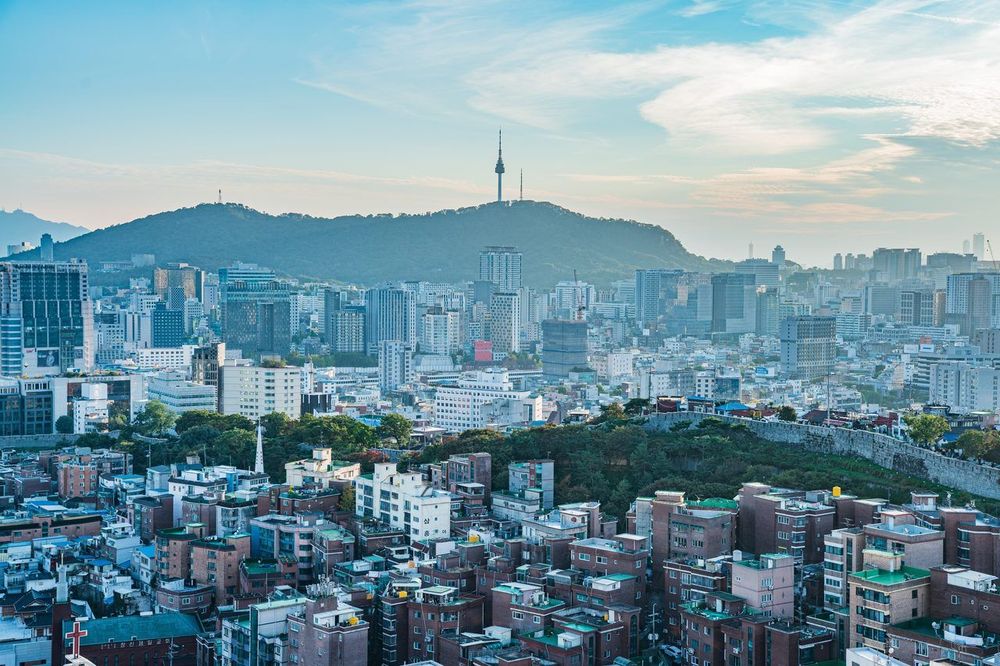
Many travellers arrive in South Korea with a week, stay in Séoul and leave convinced they have "done the country". That is a beautiful mistake. The Séoul metropolitan area covers barely 12% of the country's surface area yet concentrates more than half of the national population, nearly 26 million inhabitants. Outside this megalopolis, the landscapes change radically: pine forests and Buddhist temples perched on mountains, villages of fired-earth houses (hanoks), jagged coastlines facing the Sea of Japan, and a gastronomy that varies from one province to the next to the point of seeming to come from different countries.
The language is not as formidable an obstacle as one might think. The Korean alphabet (hangul) is phonetic and can be learned in a few hours; transport signs in major cities are systematically translated into English. What surprises visitors more is the country's safety: handbags left on café tables generally remain there until their owner returns. And the cultural density strikes at every stage. In two weeks, it is possible to combine a royal palace, a lantern festival, a tea ceremony, an underground thermal spa and a nocturnal street food expedition in cities of very different sizes. South Korea is not a country to pass through: it is a country to be tamed.
1. Séoul, the Capital of a Thousand Faces
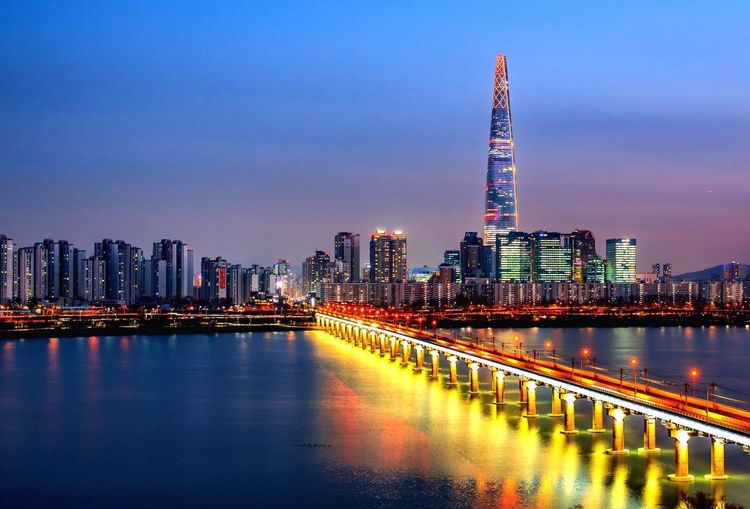
Séoul is the city that takes you by surprise even when you think you know it. Capital for 600 years, 80% destroyed during the Korean War then rebuilt at a speed few other countries have matched, it presents a unique physiognomy today: ultra-modern and deeply rooted in its traditions, simultaneously glittering and authentic depending on the neighbourhood where you set foot.
Gyeongbokgung, the grand palace of the Joseon dynasty, opens from 9am and looks out onto Bugaksan mountain to the north. This framing — glazed tile facades against a backdrop of a wooded summit — that visitors have been photographing identically for decades loses none of its power regardless of the season.
Fifteen minutes away on foot, Bukchon Hanok Village lines its alleys of traditional houses on the hill between Gyeongbokgung and Changdeokgung. Arrive before 8am to still find silence there. After that hour, groups of tourists transform the narrow lanes into crowded corridors, and the charm fades.
The Myeongdong district represents the other face of Séoul: neon signs, K-beauty cosmetics shops stacked six floors high, street vendors selling grilled octopus at two in the morning. No cultural pretensions here, just the commercial frenzy of an Asian capital that fully embraces its appetite for consumption.
For a different reading of the city, Dongdaemun Design Plaza (281 Eulji-ro Jung-gu, 04566 Seoul, rated 4.4/5 on Google with 31,782 reviews) (DDP) deserves a specific detour. This curved aluminium building designed by Zaha Hadid has become within a few years one of the most reproduced architectural images in Asia. It houses international-level temporary exhibitions and a night market active until dawn.
To explore historic Séoul on foot with audio commentary at each stage, the Ryo audio guide The Land of the Morning Calm guides you through the alleys of the Jangchung-dong district, among memorials, forgotten gardens and period facades that conventional tours overlook.
The Hongdae neighbourhood, near the arts university of the same name, boasts a live music scene and a dense graffiti culture that stands in contrast to the rest of the capital. Namdaemun Market, one of the oldest markets in the country, is worth visiting from 5am when the food halls come alive.
Allow a minimum of 3 days in Séoul, 5 if you also wish to explore Insadong, Namsan Park and the trails of Mount Bugak.
2. Busan, between Cliffs and Neon Lights
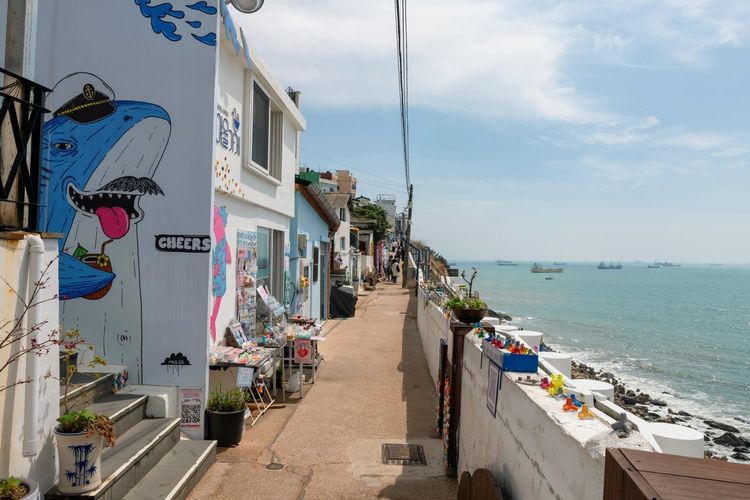
Busan is the country's second city and nothing about its atmosphere resembles Séoul. Perched on the hills of the southern peninsula, open to the Korea Sea, it has a slower pace, a more maritime cuisine, a rougher identity. It is also the Korean capital of the view café: hundreds of establishments wedged into cliffsides serve cappuccinos with a sea horizon as backdrop.
Gamcheon Culture Village is Busan's most photographed neighbourhood: pastel-painted houses stacked on a hillside in organised disorder, accessible through a labyrinth of alleys where sculptures and art installations appear around every wall. The place has become touristy without losing its soul as an inhabited district.
The Haedong Yonggungsa temple is worth the detour to Busan alone. Clinging to the rocks on the eastern edge of the city, it is one of the rare Korean Buddhist temples located directly by the sea. Buddha statues gaze at the horizon, waves crash below, and the whole creates an atmosphere that even the busiest days struggle to diminish.
Gwangalli Beach (219 Gwanganhaebyeon-ro Suyeong-gu, 48212 Busan, rated 4.5/5 on Google with 10,396 reviews) is the favourite urban beach of Busanites: less well-known than Haeundae (the main beach, overcrowded in summer), it benefits from a direct view of the Gwangan suspension bridge illuminated at night, and a row of bars open until dawn in season.
Do not leave Busan without passing through Jagalchi Market: the largest fish market in South Korea, where vendors slice sashimi in front of you at any hour. The ground floor is reserved for stalls, the first floor for restaurants that cook what you just bought downstairs. This system — buy downstairs, cook upstairs — exists virtually nowhere else.
2 days in Busan is a minimum. The Hurshimchung thermal baths and the hike up to Taejongdae Park easily add a third day for travellers who wish to go off the beaten track.
3. Gyeongju, the Ancient Millennial Capital
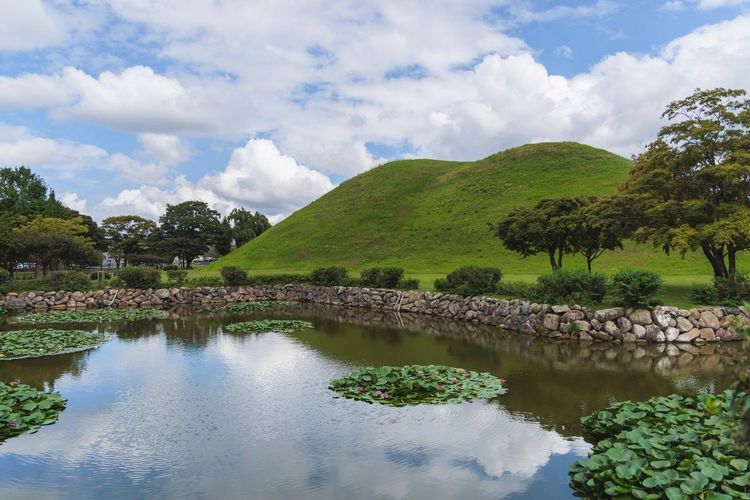
Gyeongju is no ordinary city. Capital of the Silla kingdom for almost a millennium (57 BC – 935 AD), it is sometimes nicknamed Korea's "museum without a roof" — an entirely fitting label. Green royal burial mounds rise in the middle of intersections, century-old pagodas line secondary roads, and archaeological treasures continue to be unearthed in suburban fields.
The Tumuli Park (Daereungwon) gathers 23 royal tombs from the Silla era in a green space in the city centre. The entrance costs a few thousand won and allows you to enter one of the burial chambers to see reconstructions of funerary furnishings: gold crowns, pottery, jewellery and weapons.
The Bulguksa temple is the most emblematic monument in the region and one of the best-preserved Buddhist sites in all of South Korea. A UNESCO World Heritage Site, it dates from the 8th century and is set on Mount Toham in an architectural balance that has endured through the centuries without major alteration. The two stone pagodas (Dabotap and Seokgatap) facing the main building are among the most photographed structures on the entire peninsula.
A single day in Gyeongju is enough for the main sites if you have a vehicle. Allow two days if you also wish to visit the Seokguram Grotto (also UNESCO-listed) and the Gyeongju National Museum, which holds the site's most important archaeological treasures, including the bell of King Seongdeok, one of the largest and best-preserved in Asia.
4. Jeju Island, the Volcano by the Water
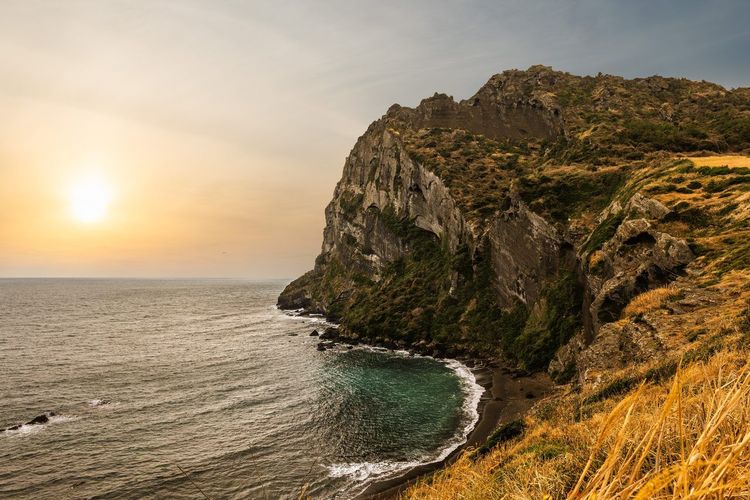
Jeju is a geographical and climatic anomaly in the Korean context. This volcanic island of 1,833 km², 90 minutes from Séoul by plane, belongs to no continental region. It has its own dialect (Jeju-eo, almost incomprehensible to a mainland Korean), its own coastal ecosystem and its own culinary traditions based on abalone and free-range black pork.
Hallasan, the dormant volcano occupying the centre of the island, peaks at 1,947 metres: the highest point in South Korea. Several hiking trails allow you to reach the summit crater or cross its forests of flowering rhododendrons in spring. Booking an ascent slot is mandatory during peak season to preserve the fragile high-altitude ecosystems.
Seongsan Ilchulbong (284-12 Seongsan-ri Seongsan-eup Seogwipo, 63642 Jeju, rated 4.6/5 on Google with 4,862 reviews) (Sunrise Peak) is Jeju's most photographed site: a 182-metre-high volcanic cone rising directly from the sea at the eastern tip of the island. Sunrises there have been legendary for centuries, and the first light over the crater has inspired an abundant Korean poetic tradition.
Jeju is also the island of the haenyeo, the free-diving women who have harvested shellfish and sea urchins for generations, a practice inscribed on UNESCO's Intangible Cultural Heritage list since 2016. Live dives are organised at Seongsan and in the village of Udo.
The Jusangjeolli basalt cliffs, on the southern coast, form an alignment of hexagonal lava columns reminiscent of the Giant's Causeway in Northern Ireland. The contrast of black against a turquoise sea makes the excursion to the south of the island worthwhile on its own.
Allow a minimum of 3 days in Jeju to combine volcanic hiking, coastal exploration and village markets in the morning.
5. Jeonju, Capital of Bibimbap and Hanoks
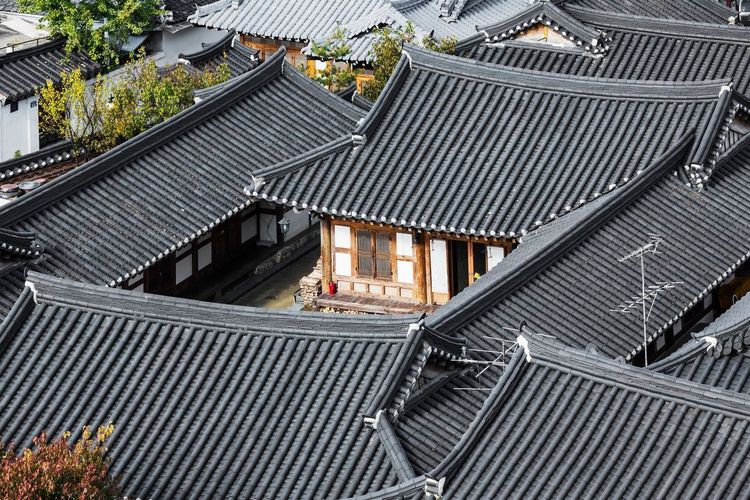
Jeonju is not a spectacular city in the visual sense of the term. No iconic skyscrapers, no world-listed site, no breathtaking coastline. What Jeonju offers instead is something more discreet and harder to find in the rest of the country: an urban and cultural continuity that the economic modernisation of the 1970s–90s did not sacrifice.
Its hanok village (Jeonju Hanok Maeul) brings together more than 700 traditional houses in the city centre, all inhabited or converted into restaurants, workshops and guesthouses. It is the largest hanok complex in South Korea, and unlike Bukchon in Séoul, it has not been turned into a museum: residents live there, merchants cook there.
Jeonju's bibimbap is different from the one you know. Local recipes use ingredients specific to the Jeolla province (soybean sprouts, local namul, rice cooked in a particular broth) and several historic restaurants serve versions that constitute a travel destination in themselves. Jeonju is officially recognised as a UNESCO Creative City of Gastronomy.
One to two days in Jeonju is sufficient for the village and its surroundings. If you arrive on a weekend, the hanok village's night markets transform the alleys into a street festival until the early hours of the morning.
6. Suwon and the Hwaseong Fortress
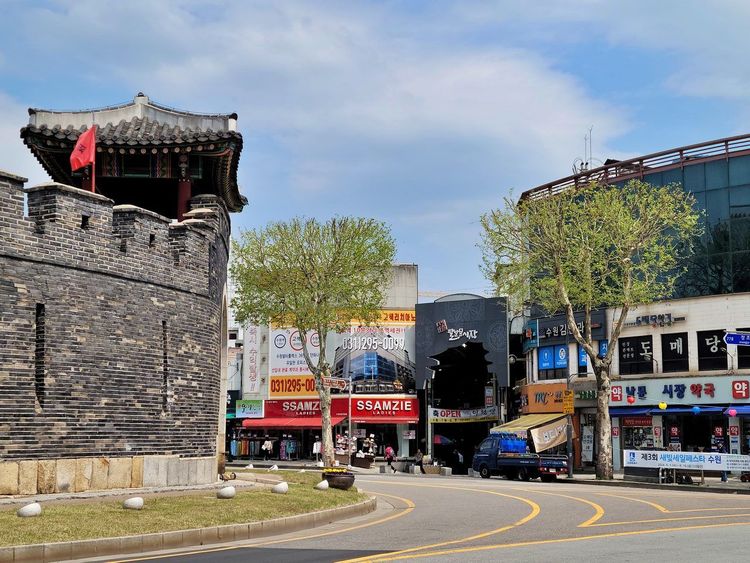
Suwon is technically a satellite city of Séoul, 30 minutes by train from the capital. It nonetheless deserves a specific stop for one site: the Hwaseong Fortress, built between 1794 and 1796 under King Jeongjo of the Joseon dynasty, inscribed as a UNESCO World Heritage Site.
Stretching 5.7 km in length, the wall encircles the historic centre of the city with its watchtowers, monumental gates and stone-and-brick bastions. Unlike many historic fortifications around the world, Hwaseong is in excellent condition. You can walk its entire length in approximately two hours, with panoramic views over the modern city below from the elevated sections.
The historic village of Haenggung inside the walls (King Jeongjo's annex court residence) regularly organises reconstructed ceremonies: royal guards in period costume, processions and traditional archery demonstrations. Check the events calendar on the official Suwon website before planning your visit.
Suwon combines easily with other stops from Séoul in a half-day. Some travellers use it as the starting point for a day that chains the fortress in the morning with Minsokchon village (Korea Folk Village) a few kilometres away, one of the largest open-air museums in the country. Back in Séoul, our audio-guided tour picks up the thread with 20 commented stops, from Gyeongbokgung Palace to the Bukchon hanok village.
7. Daegu, the Secret City of the Centre
Daegu is the Korean city that French-speaking travellers mention the least, and yet it is the country's third-largest city with 2.4 million inhabitants. Renowned for its stifling summers (temperatures there are among the highest in South Korea in July–August) and for having been the birthplace of a disproportionate number of South Korean presidents, it holds a few surprises for those who stop there.
The Yangnyeongsi Oriental Medicine Street (Yakjeon Golmok) is one of the most singular in the country: an entire thoroughfare dedicated to traditional pharmacopoeia, with its herbalists, medicinal teas and Korean medicine museum. The scent of dried herbs drifts for several hundred metres.
The Seomun Market, one of the oldest in South Korea, spreads its stalls of textiles, jewellery and food across several hectares of covered halls.
The Apsan park to the south of the city offers forest trails accessible from the centre by cable car, with views over the urban area rarely described in guidebooks. A single day is enough for Daegu, unless you are passionate about temples: the surrounding region is home to Haeinsa, one of the largest Buddhist complexes in the country, which preserves the Tripitaka Koreana — 80,000 wooden tablets engraved with 13th-century Buddhist texts, inscribed on the UNESCO World Heritage List.
How to Travel between Cities in South Korea
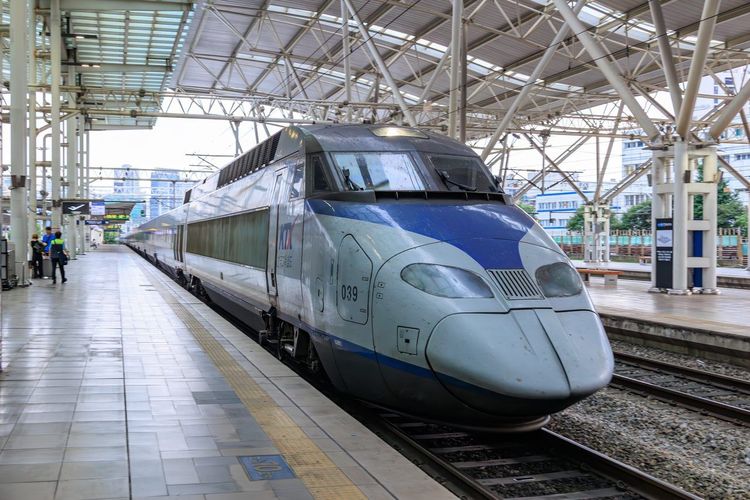
South Korea is one of the best-served countries in Asia by train. The KTX network (Korea Train eXpress, the Korean equivalent of the TGV) connects Séoul to Busan in 2h30, to Daegu in 1h40 and to Gyeongju in approximately 2h10. Trains depart every 20 to 30 minutes at peak times. Tickets can be booked easily via the Korail or Let's Korail app, both available in English.
The T-money Card, Your Best Ally
The T-money card is a rechargeable prepaid transport card that works on all metros, buses and local trains in the country, as well as in most convenience stores. It can be purchased at any convenience store (CU, GS25, 7-Eleven) at the airport exit for 2,500 won, then topped up at metro kiosks or at convenience store checkouts. It is indispensable from day one.
Getting to Jeju
Only a flight or ferry can access the island from the mainland. Low-cost airlines (Jeju Air, Air Busan, T'way Air) connect Séoul-Gimpo to Jeju in 1 hour, with very competitive fares if you book in advance. The ferry from Mokpo (the country's south-western tip) takes 10 to 13 hours depending on the type of vessel, but has the advantage of avoiding airline baggage restrictions.
Renting a Car
Car rental is only truly useful for Jeju (where public transport is less convenient) and for exploring the east coast between Gyeongju and Sokcho. For the rest of the country, the bus and metro network is dense enough to do without a personal vehicle. Driving in South Korea follows continental road rules, and Google Maps works correctly across the entire territory.
Navigation Apps
Naver Maps is the Korean equivalent of Google Maps, often more accurate for local addresses and bus schedules. The interface has been available in English since 2019. Download it before you leave, especially in cities where street numbering follows a logic different from the European system.
When to Travel to South Korea
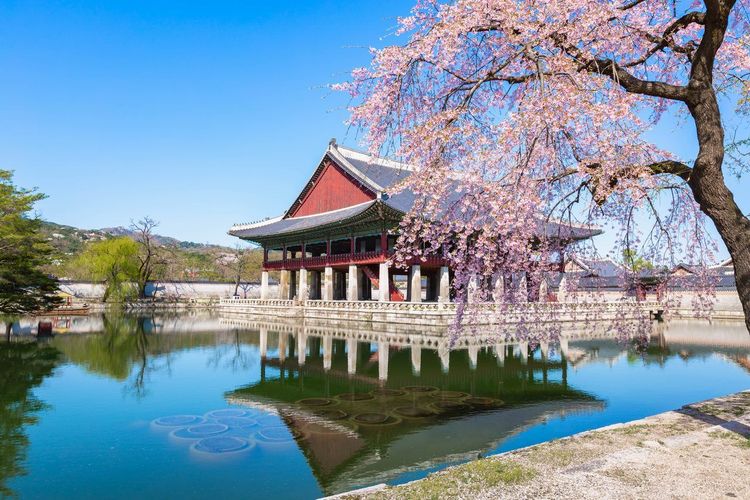
South Korea has a marked continental climate: cold and dry winters, hot and humid summers, and two transition seasons of spectacular beauty.
Spring (April–May) is considered the best period to visit the country. Cherry trees blossom from mid-March in Jeju, late March in Séoul, and early April in colder regions. Cherry blossom festivals, notably the one in Jinhae — an hour from Busan — which draws more than a million visitors every year, require booking accommodation and transport months in advance if you target this period.
Autumn (October–November) offers the second ideal window. The foliage of maples and ginkgos transforms national parks and temple surroundings into orange scenery. Temperatures are cool without being cold, and rain is rare.
Summer (June–August) is not recommended for high-altitude hiking: the monsoon (jangma) brings a period of continuous rain for 3 to 6 weeks in July, and typhoons sometimes affect the south of the country through September. On the other hand, it is beach season in Busan and Jeju when the weather is favourable.
Winter (December–February) is cold and dry. Séoul regularly drops below -10°C. Temples in the snow and ice festivals (Hwacheon Sancheoneo Ice Festival, north of Séoul) have their devotees, but pack your equipment accordingly.
Budget: How Much Does a Trip to South Korea Cost
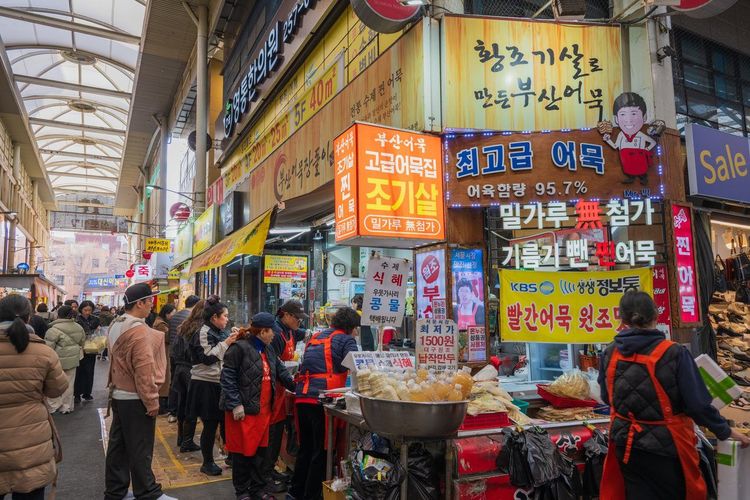
South Korea is cheaper than Japan but more expensive than Southeast Asian countries. The budget depends heavily on the level of accommodation and the type of dining.
Accommodation: a bed in a goshiwon (small, basic private room) starts at 15,000–20,000 won per night (approximately €10–14). A double room in a yeogwan (traditional inn) or a hanok guesthouse ranges from 50,000 to 100,000 won (€35–70). In international hotels in Séoul, expect 150,000–300,000 won per night (€105–210).
Food: eating locally is remarkably affordable. A full meal in a neighbourhood restaurant (gimbap, bibimbap, rice soup) costs between 8,000 and 15,000 won (€5.50–10). A meal at a Korean barbecue restaurant (galbi, samgyeopsal) comes to 15,000–30,000 won per person (€10–21). Korean coffee is often better and cheaper than in Europe: 3,000–6,000 won for an Americano.
Transport: KTX tickets between major cities cost 20,000–60,000 won (€14–42) depending on the distance. Booking at least 3 days in advance allows you to get discounts. A metro ticket in Séoul costs around 1,250 won, less than one euro.
Indicative daily budget: 60,000–100,000 won (€42–70) for a budget traveller; 150,000–250,000 won (€105–175) for moderate comfort in a major city.
FAQ
How many days should you plan to visit South Korea?
Ten days is a reasonable minimum to cover Séoul (3 days), Busan (2 days), Gyeongju (1 day) and a stop in Jeonju or Suwon. Two weeks allow you to add Jeju and explore each stage with less pressure. Three weeks offer the possibility of going beyond the main circuits: haenyeo villages, isolated mountain temples, the east coast between Sokcho and Pohang — destinations that take time but richly reward the effort.
Do you need a visa to visit South Korea?
French, Belgian, Swiss and Canadian nationals benefit from a visa exemption for tourist stays of up to 90 days. No special formalities are required, provided you present a passport valid beyond the duration of your stay and a return or onward ticket. The K-ETA (the Korean equivalent of the American ESTA) exists, but its requirement is temporarily suspended for French, Belgian, Swiss and Canadian nationals until December 31, 2026: you therefore do not need to apply for one for a tourist stay. However, an electronic arrival card (e-Arrival Card) must be filled in online within three days before your arrival. As these rules change regularly, check the updated conditions on the South Korean embassy website before travelling.
Is South Korea expensive for a European traveller?
Compared to Japan or Singapore, South Korea is significantly more affordable. An average traveller can manage a budget of 60 to 120 euros per day all-inclusive (double room accommodation, transport, local meals, site entrance fees) in major cities. Séoul can prove more expensive if you opt for luxury hotels or trendy restaurants in Gangnam, but the abundance of budget options — kimbap, ramyeon, street markets — more than compensates.
Is English spoken in South Korea?
In major cities (Séoul, Busan, Jeju), English is widespread enough to travel without speaking Korean. Metro signs, menus in many restaurants and transport apps are translated into English. In rural areas or smaller towns, Korean remains essential. A minimum vocabulary in hangul considerably facilitates exchanges: numbers, polite phrases and directional terms can be learned in an evening.
Which is the best city to visit first in South Korea?
Séoul is the almost universal entry point due to its international air connections from Incheon Airport. It allows you to acclimatise to the country's way of operating before venturing into smaller cities. If you arrive in Busan on a direct flight, starting from the south is equally logical: the KTX then heads back up to Séoul in 2h30, and you travel the country from south to north instead of the reverse.
Is it possible to travel independently in South Korea?
Absolutely. South Korea is one of the most accessible countries in Asia for independent travel. The rail network is dense, transport apps are available in English, most accommodation accepts online bookings, and tourist sites almost systematically provide information materials in English. To go beyond the explanatory panels, our Ryo app offers audio-guided walking tours in historic neighbourhoods, with stories and anecdotes you will not find in printed guides.
South Korea is not a country to "do" in a few days. It is a country to be tamed, to let surprise you in the Gyeongju neighbourhood where a 2,000-year-old royal burial mound stands ten metres from an ATM, in the underground thermal baths of Busan where regulars read the newspaper in 42-degree water, in the small cafés perched above Séoul that appear on no tourist map. These 7 cities to visit in South Korea cover the country's essential facets, from the hyperstimulating megalopolis to the peaceful medieval city. To explore historic Séoul beyond conventional tours, the Ryo audio-guided tour The Land of the Morning Calm guides you through the layers of the capital with stories that explanatory panels will never offer you. Enjoy your discovery of the Land of the Morning Calm.