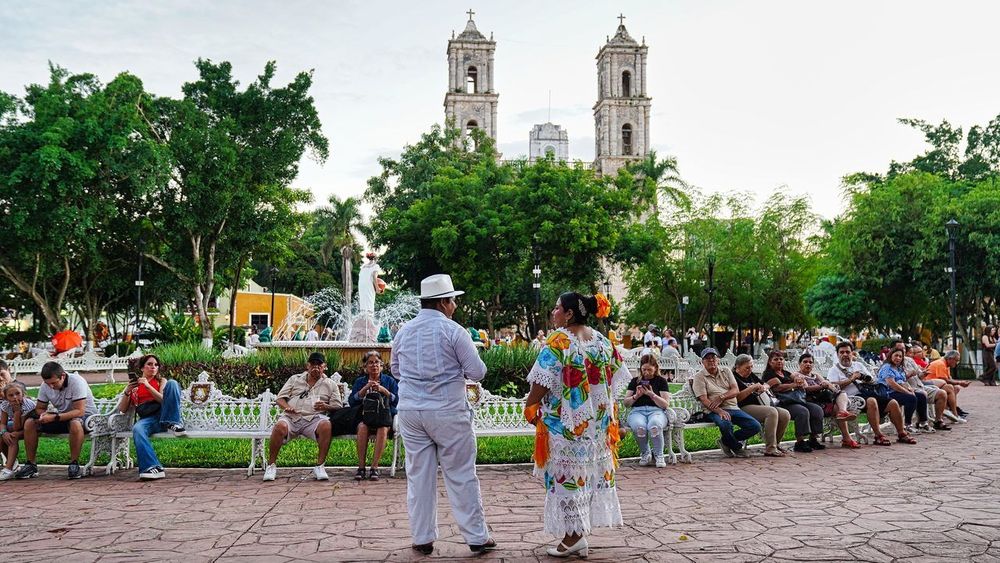
© Shutterstock
 Votre guide Ryo
Free Things to Do in Mérida, Yucatán: The Complete 2026 Guide
This guide to the best free things to do in Mérida starts with a simple observation: Mérida keeps getting ranked as Mexico's safest big city, and most visitors arrive assuming that safety and comfort come with a price tag. They don't, not here. Walk two blocks off Plaza Grande on any given night and you'll find state murals open to the public, a brass band playing to a plaza full of strangers dancing the jarana, or a cantina handing out a free botana with your beer. The cathedral, most of the museums, the parks and an entire calendar of weekly folk performances cost zero pesos. Before you dive in, it's worth knowing that Ryo's self-guided audio tour of Mérida threads many of these same landmarks into one walkable route, so you can listen to the stories behind them as you go.
A few numbers to set expectations. The historic center holds around a dozen free museums and cultural centers, several of them former colonial mansions or public buildings repurposed as galleries. Almost every night of the week, the city government stages a different free performance somewhere downtown, from a Monday-night vaquería dance to a Thursday serenade that has run since 1965. On Sunday mornings, Paseo de Montejo and the streets around it close to cars so cyclists, skaters and joggers can take over. None of it requires a ticket, a reservation, or much planning beyond knowing which day of the week you're in, which is exactly what the rest of this guide sorts out for you.
1. Plaza Grande and Mérida's free historic landmarks
Every list of free things to do in Mérida starts in the same place, because every road in the historic center really does start here. The Plaza Grande) is a shaded, laurel-lined square ringed by four of the city's oldest buildings, and simply sitting on one of its curved confidente benches at sunset, when the heat breaks and the shoeshine stands start packing up, costs nothing at all.
Palacio Municipal and Palacio de Gobierno: murals and government buildings
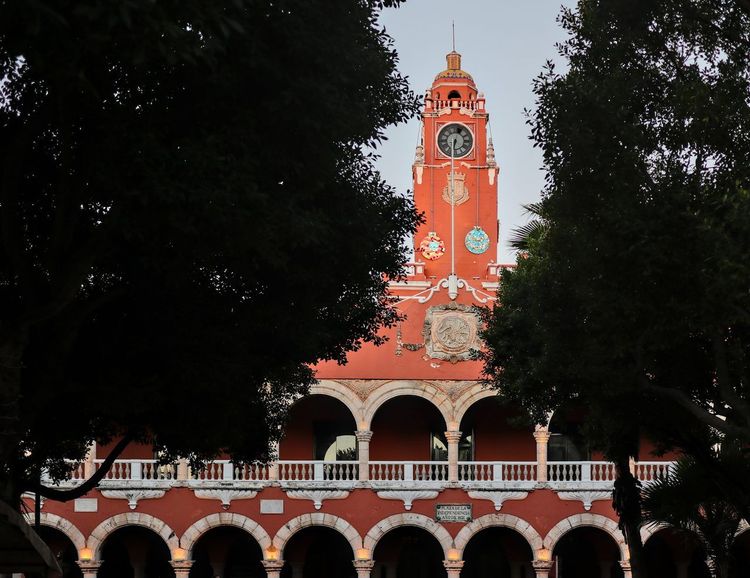
On the plaza's west side, the whitewashed Palacio Municipal) has served as Mérida's city hall since colonial times, its arcaded ground floor and clock tower forming one of the most photographed facades in the Yucatán. Step inside during opening hours and you can climb to the upper gallery at no cost for a view straight across the square.
On the north side, the Palacio de Gobierno) houses Yucatán's state government, and its courtyard corridors, staircase and upstairs Hall of History display 27 monumental paintings by Fernando Castro Pacheco, produced between 1971 and 1978 on galvanized steel panels. They depict Maya cosmology, the Spanish conquest and the henequen plantation era in dense, almost overwhelming detail, and you can walk the full circuit of panels for free during business hours, no ticket booth in sight. The corn-man figure on the staircase landing is the one everyone photographs; take a minute for the quieter panels upstairs too.
Catedral de San Ildefonso and Casa Montejo's colonial facade
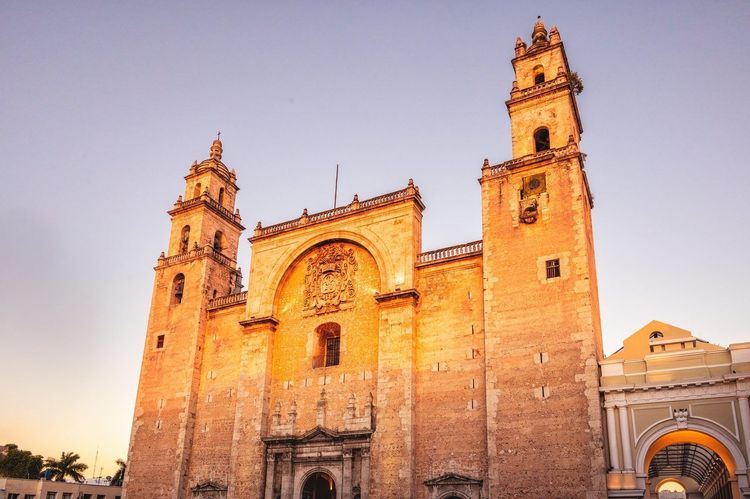
The Catedral de San Ildefonso) fills the plaza's east side and is widely cited as the oldest cathedral on the mainland of the Americas, completed in 1598 partly with stone taken from the Maya city of T'hó that stood here before the Spanish. Mass times aside, the cool stone interior is open to visitors throughout the day, and admission has never cost a peso.
On the south side, Museo Casa Montejo (Calle 63 508 x 60, Centro, 97000 Mérida, Yuc., rated 4.6/5 on Google (3 200 avis)) occupies a 16th-century mansion built for the conquistador family that founded the city, and its plateresque stone facade, crowded with carved soldiers standing on the heads of indigenous figures, is worth studying from the sidewalk alone. The furnished rooms inside, now a small history and art museum, are also free to enter. If you only budget an hour for Plaza Grande, spend it here: Ryo's audio-guided walk through Mérida's historic center begins right on the square and narrates the murals inside the Palacio de Gobierno panel by panel, so the history clicks into place instead of blurring together.
2. Take a free walking tour of the historic center
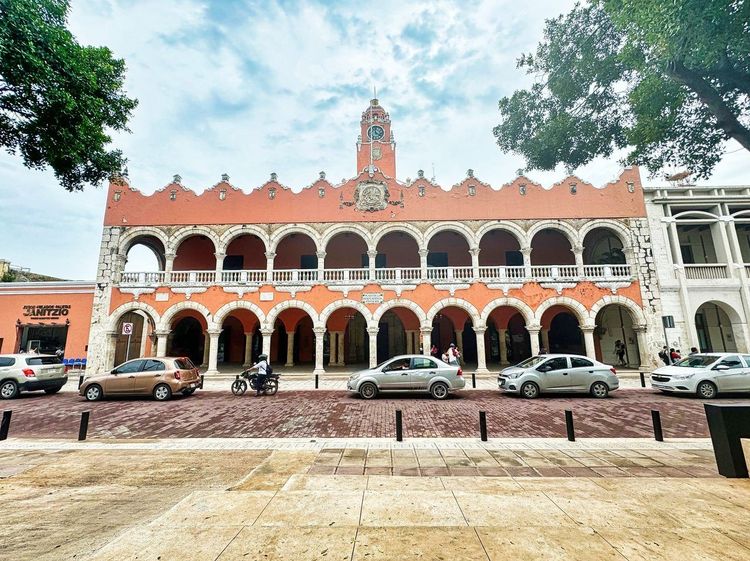
Mérida's city hall runs a free guided walking tour of the historic center most mornings, departing from the Palacio Municipal with a local guide who covers the plaza's landmarks plus a few blocks beyond, including colonial churches most visitors miss entirely. Schedules shift with the season, so confirm the current departure time at the tourism module inside the Palacio Municipal the day before; tours sometimes run in Spanish only, depending on the guide on duty that week. Tipping the guide is customary even though the tour itself is free.
If the fixed schedule doesn't suit you, the historic center rewards aimless wandering just as well. The streets are numbered on a simple grid, even numbers running north-south and odd numbers east-west, so getting lost is rarely a real risk, and every few blocks turns up another chapel, courtyard or shaded pocket park. You can also keep your own pace with the Ryo audio guide walk for Mérida, which you start whenever you arrive and pause whenever a coffee or a patch of shade calls.
For a self-led loop of roughly two hours, head north from Plaza Grande along Calle 60. Within two blocks you pass Parque Hidalgo and the Iglesia de Jesús, the 17th-century Jesuit church also known as the Tercera Orden, whose side walls still show carved Maya stones reused by the builders. Continue past the Peón Contreras Theater to Parque Santa Lucía, then on to Santa Ana, where Paseo de Montejo begins. On the way back, detour south of the plaza to the Arco de San Juan, one of the colonial gateways that once marked the edge of the Spanish city, and the quiet park beside it. Every stop on that loop is free, and it strings together most of the landmarks in the first half of this guide.
3. Mérida's free museums and cultural centers
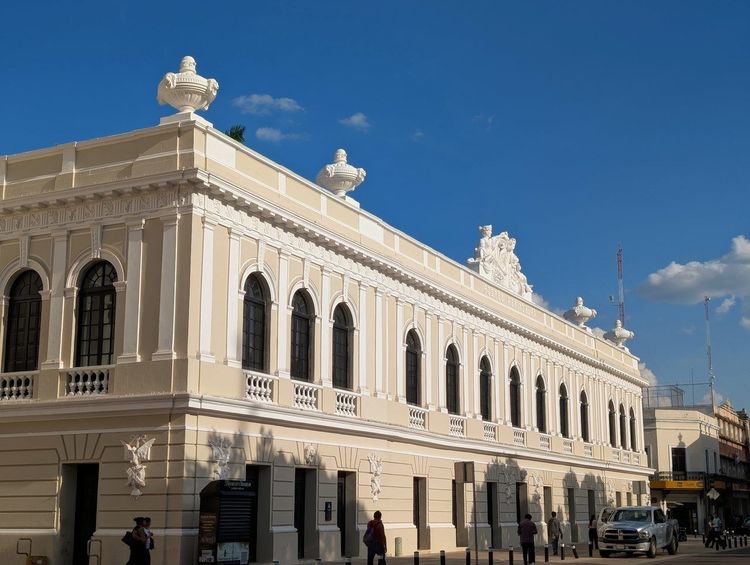
Few mid-sized Mexican cities pack in as many free museums per block as Mérida, and most share the same origin story: a colonial mansion or public building, emptied decades ago, now filled with rotating exhibits and, blessedly, air conditioning.
Art and history heavyweights: MACAY, Museo de la Ciudad de Mérida and Museo de Historia Natural
For almost 30 years, the MACAY Museum), Yucatán's contemporary art museum, occupied the Ateneo Peninsular beside the cathedral. When the restored building reopened in April 2025, the museum did not come back: its collection of nearly 900 works was divided between the city, the University of the Arts of Yucatán and the Autonomous University of Yucatán, while the MACAY foundation looks for a new home. You can still step into the Ateneo's arcaded passage beside the cathedral, but don't plan a museum afternoon around MACAY until it announces a new venue.
A short walk southeast of the plaza, the Museo de la Ciudad de Mérida) fills the grand old post office building next to the market, tracing the city's growth from Maya T'hó to the henequen boom through maps, photographs and colonial-era objects, all free. The Museo de Historia Natural) sits at the edge of Parque del Centenario and covers the geology, flora and fauna of the Yucatán Peninsula across six permanent rooms, including a Mesozoic gallery with fossils and dinosaur models that kids tend to love. It's free, open Tuesday to Sunday from 9am to 2pm, and makes useful context if you're heading to the coast or the cenotes afterward.
Heritage house and specialty museums: Centro Cultural Olimpo, the Yucatán Railway Museum and the Korean Immigration Museum
Centro Cultural Olimpo) sits on the plaza's northwest corner, beside the Palacio Municipal, in a modern building designed to echo the facade of the old Olimpo that stood here. It hosts free art exhibitions, film screenings, a planetarium and the Tuesday trova concerts, and its interior courtyard alone is worth ducking into on a hot afternoon.
The Museo Conmemorativo de la Inmigración Coreana) tells a far less publicized story: the arrival of over a thousand Korean laborers in 1905, recruited for the henequen plantations under contracts close to indentured servitude. Photographs, letters and personal objects fill a handful of rooms, and you'll rarely need more than 30 minutes, but it's one of the more affecting free stops in the city. Up on Paseo de Montejo at Calle 39, the Centro Cultural Fernando Castro Pacheco (Paseo de Montejo x Calle 39, Centro, 97000 Mérida, Yuc., rated 4.8/5 on Google (69 avis)), opened in October 2023 in the former municipal archive, shows oils, engravings and bronzes by the same artist behind the Palacio de Gobierno panels, free of charge from Tuesday to Sunday.
One exception to flag: the renovated Museo de los Ferrocarriles de Yucatán), reopened in October 2024 inside Gran Parque La Plancha, is not free for visitors from abroad (120 pesos, 80 for Mexican nationals, under-13s free). Its restored locomotives, video mapping and simulated train carriage are worth the fee for rail fans, and the surrounding park, with old tracks and rolling stock scattered across it, costs nothing to walk through.
Most of these museums close on Mondays and keep shorter hours on Sundays, so if a museum crawl is the centerpiece of your day, aim for Tuesday through Saturday and check hours the morning you go.
4. Stroll Paseo de Montejo and the Monumento a la Patria
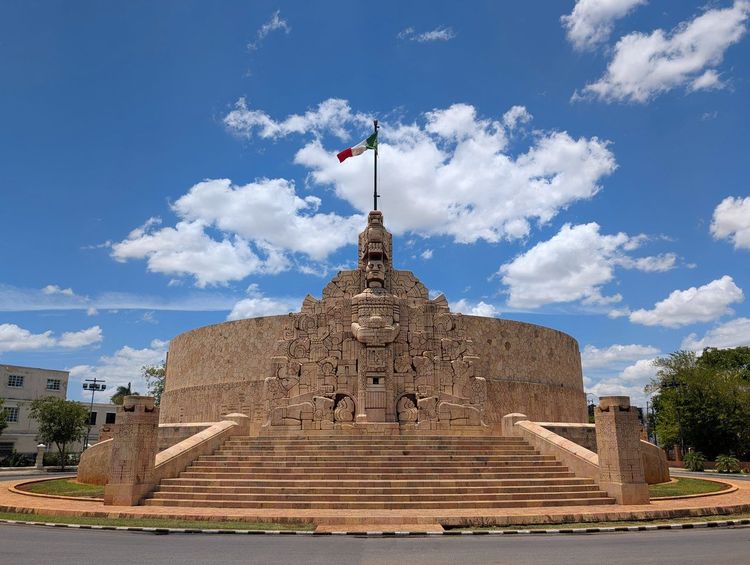
Paseo de Montejo) is Mérida's grand boulevard, laid out from 1888 during the henequen boom, when plantation families flush with money from the fiber trade commissioned French- and Italian-style mansions to rival anything in Paris or Havana. Walking its full length costs nothing, and the mansions, many still privately owned or converted into banks and cultural institutions, are reason enough to make the trip. Look out for the Casas Gemelas, two near-identical Beaux-Arts houses facing each other, and the Palacio Cantón, whose Museo Regional de Antropología charges admission but whose facade and front steps are free to admire.
At the boulevard's northern end stands the Monumento a la Patria (Paseo de Montejo x Calle 43, 97000 Mérida, Yuc., rated 4.8/5 on Google (12 969 avis)), a stone monument carved by Colombian sculptor Rómulo Rozo between 1945 and 1956. Its surface is covered edge to edge with figures representing Mexican history, from pre-Hispanic civilizations through independence and the revolution, and it rewards circling on foot rather than glancing at from a passing car. It's lit at night, so time an early evening walk to catch the light change: it's one of the better free ways to close out a day in the city.
5. Mérida's free parks and green spaces
Between the museums and the boulevard, Mérida's parks give you somewhere to sit down, and several double as the stage for the weekly events covered below.
Downtown pocket parks: Parque de Santa Lucía and Mérida's city parks
Parque de Santa Lucía) is a small, colonnaded square that has hosted the Thursday serenade since 1965, and it's a pleasant stop any day of the week, ringed by cafes with outdoor seating and shaded by mature trees. Mérida's other barrio parks, Santiago, Santa Ana, San Juan, La Mejorada, follow the same pattern: a church, benches arranged for conversation, marquesita carts after dark and enough shade to make a 10-minute rest worthwhile between museum stops. Santiago, with its covered market next door, is the best one for people-watching over a cheap breakfast.
Green escapes beyond downtown: Las Américas Park and Parque de la Plancha
Outside the historic center, Las Américas Park) offers much more room to roam, with an open-air amphitheater, playgrounds and Maya-revival architecture that makes it a neighborhood park rather than a plaza. Parque de la Plancha (Calle 21, García Ginerés, 97070 Mérida, Yuc., rated 4.7/5 on Google (2 026 avis)), built on the former railway yards, is the newest of Mérida's big green spaces and leans toward joggers, skateboarders and families on bikes, with wide paths that stay busy well into the evening once the heat drops.
Travelling with children? West of the center, Parque del Centenario, opened in 1910 for the centenary of Mexican independence, includes a free zoo with jaguars, monkeys and native birds, plus a miniature train. Pair it with the Natural History Museum on its edge and you have a whole free morning. If you're staying near Paseo de Montejo, Las Américas makes a reasonable early walk before the day heats up.
6. Mérida's free weekly cultural evenings
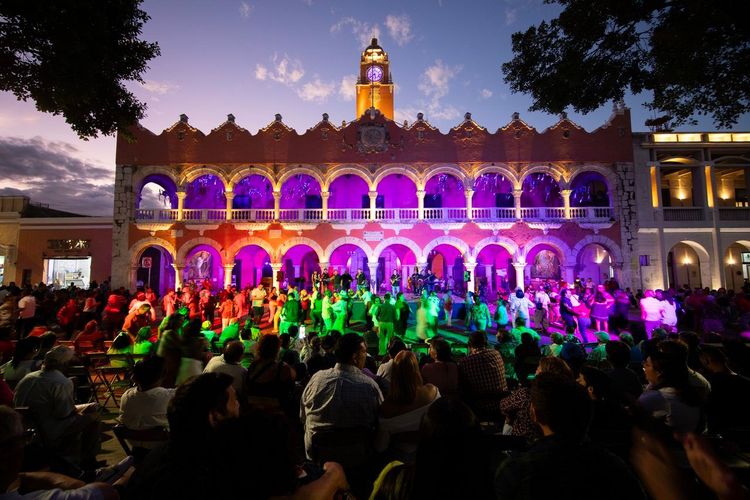
This is the part that turns a pleasant colonial city into something closer to a folklore festival that never stops touring its own neighborhoods. Mérida's city government stages a different free performance almost every night of the week, a program that has run in some form for decades. Rain, holidays and festival weeks can shift the lineup, so check the city's weekly listings or ask at the tourism module before you head out.
Here's the week at a glance, so you can plan your evenings before you read the details:
- Monday: Vaquería in front of the Palacio Municipal, 9pm
- Tuesday: trova at Centro Cultural Olimpo, 8pm, and big-band dancing in Parque de Santiago, 8:30pm
- Wednesday: video mapping on Casa Montejo, 8:30pm
- Thursday: Yucatecan Serenade in Parque de Santa Lucía, 9pm
- Friday and Saturday: Corazón de Mérida on Calle 60, Pok ta Pok in front of the cathedral
- Saturday: Noche Mexicana at the Remate de Paseo de Montejo, cathedral video mapping
- Sunday: Biciruta in the morning, Mérida en Domingo all day
Monday and Tuesday nights: La Vaquería, Trova Music and Musical Memories
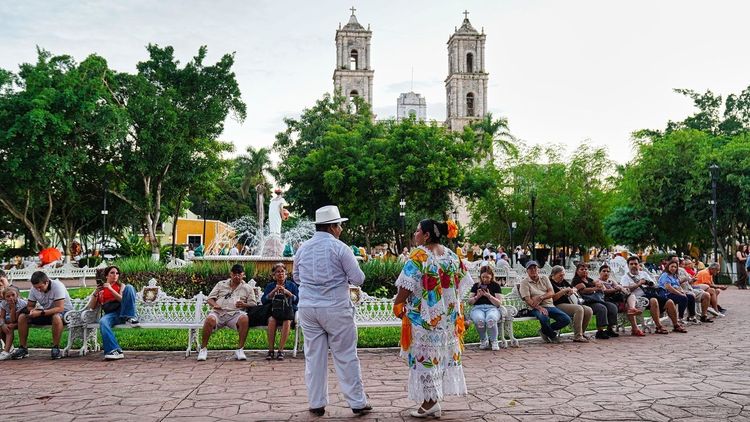
Monday at 9pm belongs to La Vaquería, performed in front of the Palacio Municipal and rooted in the old hacienda fiestas that celebrated cattle branding with music and dance. Dancers in white embroidered ternos and guayaberas perform the jarana to a live jarana orchestra, some balancing trays of bottles on their heads, and by the end the mood is closer to a community party than a staged show.
Tuesday splits in two. At 8pm, Centro Cultural Olimpo hosts Trova Music, the intimate guitar-trio style of Yucatecan romantic song. Half an hour later, Parque de Santiago fills up for Musical Memories (Remembranzas Musicales), where a big band plays mambos, danzones and boleros and older couples in their best clothes take over the dance floor. Both are free, and you'll find plastic chairs set out for anyone who wants to sit.
Wednesday and Friday: video mapping light shows
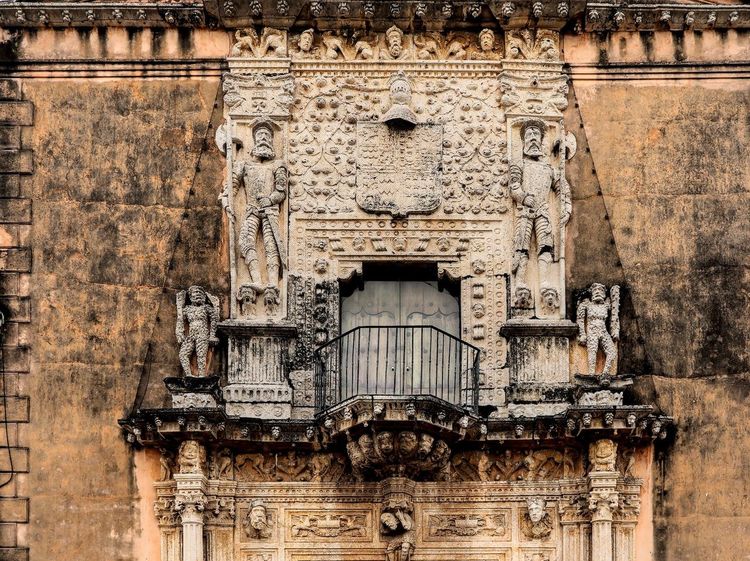
On Wednesday at 8:30pm, the facade of Casa Montejo becomes the screen for Encuentro con Francisco de Montejo, a 30-minute free video mapping show that retells the city's founding in projected light and sound, no registration required. Wednesday nights also bring guided evening visits to the Cementerio General, worth asking about at the tourism module. The cathedral facade gets its own free projection, usually on Saturday nights, and the city programs extra mapping shows around festivals, so the exact day can shift. Either way, families and couples claim bench space on the plaza well before the start.
Thursday's Yucatecan Serenade and Saturday's Noche Mexicana
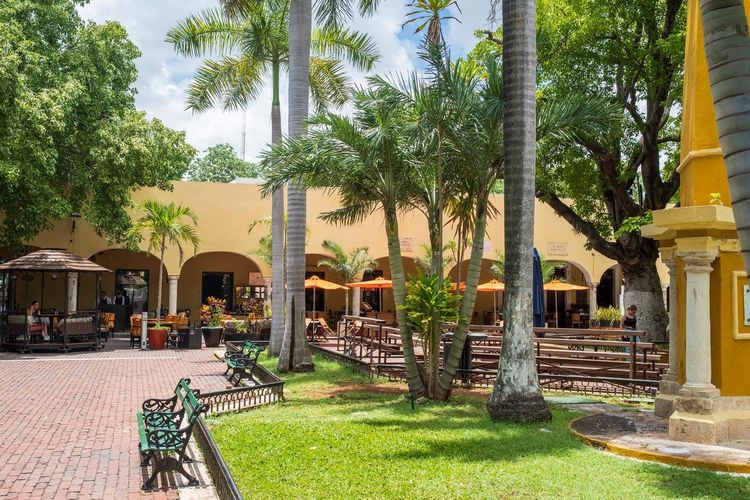
Thursday's Yucatecan Serenade at Parque de Santa Lucía has been running since 1965, making it the city's longest-standing free weekly event. A full orchestra and a rotating cast of singers and dancers perform trova, bambuco and bolero standards under the park's arches, and the crowd skews older and more local than at the weekend shows, which gives it a quieter atmosphere worth experiencing at least once.
Saturday's Noche Mexicana, staged at the Remate de Paseo de Montejo where the boulevard meets Calle 47, is the opposite in tone: folk dance troupes and mariachi from across Mexico, craft stalls, and a much larger, livelier crowd that treats the evening as a proper night out. Vendors sell everything from marquesitas to esquites, and while the food isn't free, admission to every performance is.
Saturday's Maya ball game
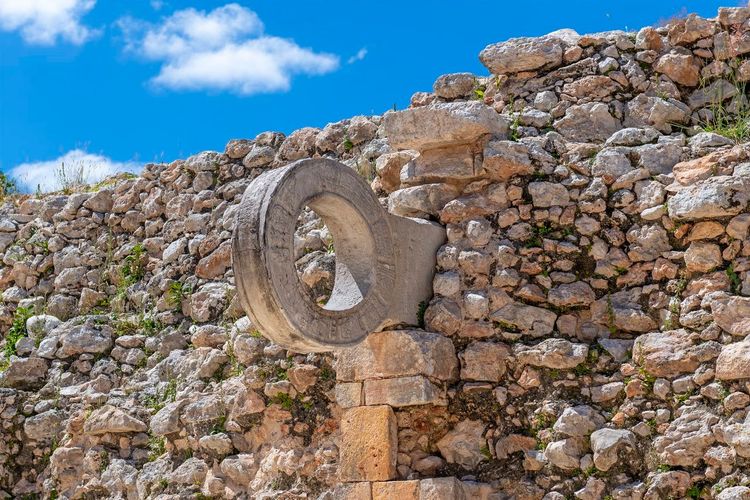
Look for Pok ta Pok, a free reenactment of the ancient Maya ball game, staged on the esplanade in front of the cathedral around 8pm (Saturday in recent seasons, Friday in some listings, so check the week you visit). Performers in body paint explain the rules and ritual meaning of a sport played for well over two millennia, then light up a burning ball for the finale. It's shorter than the other evening shows, but it's one of the few places where you'll see the game performed rather than described on a museum placard. If folklore is what draws you to Mérida, our Ryo audio guide to Mérida includes the backstory behind the Vaquería and the Yucatecan Serenade, narrated as you stand in the same plazas where both traditions still play out every week.
7. Cycle for free on Mérida's Sunday Biciruta
Every Sunday morning, Paseo de Montejo and a string of connecting streets close to car traffic for the Biciruta, Mérida's version of the ciclovía programs found in bigger Latin American cities. Cyclists, rollerbladers, joggers and families pushing strollers take over from roughly 8am until early afternoon, and it's one of the few times you can walk down the middle of Paseo de Montejo without dodging traffic.
Bike rental stands pop up along the route, and hiring one for an hour costs little; the route itself stays free. The city runs more than one Biciruta loop, so if the downtown stretch feels crowded, ask which route is active that Sunday and head for a quieter neighborhood section. Go early if you want cooler air and thinner crowds: by 11am the sun is high enough that most riders have already headed home. Bring water, since shaded stretches are rarer than they look on a map.
8. Corazón de Mérida and the weekend market
On Friday and Saturday nights, Calle 60 closes to traffic between Parque Santa Lucía and Plaza Grande for Corazón de Mérida, a pedestrian zone where restaurants spill tables into the street, musicians play on corners and crafts sellers set up along the route. Browsing costs nothing, and even if you're not shopping for a hand-embroidered huipil, the atmosphere of string lights, live guitar and families out for the evening makes it worth the walk.
The Plaza Grande Weekend Market (Mercado Domingo) fills the square on Sunday with vendors selling hammocks, jewelry, leather goods and Yucatecan textiles. If antiques are your thing, head to Parque Santa Lucía on Sunday morning, where dealers lay out old postcards, religious figures and vintage household objects until around midday, and haggling is expected rather than awkward.
9. Mérida en Domingo: car-free Sunday family fun
Mérida en Domingo closes Plaza Grande (Calle 62 x 61 y 63, Centro, 97000 Mérida, Yuc., rated 4.7/5 on Google (48 803 avis)) and the surrounding streets to cars every Sunday, turning the heart of the city into a pedestrian zone packed with free activities aimed at families. Horse-drawn calesas clip-clop past stalls offering face painting, bike rentals and handicrafts, while a band plays danzón in front of the Palacio Municipal and couples dance in the street from midday.
It's one of the easiest introductions to Mérida if you're traveling with kids, since almost nothing requires a queue or an entry fee, and the closed streets mean you don't have to keep one eye on traffic. You can also pair the car-free streets with the Ryo audio guide, letting the kids run ahead to the next plaza while the narration tells you who built the palace in front of you. Stay until the afternoon Vaquería repeat if one is scheduled, and grab lunch from the food stalls rather than a restaurant.
10. Free art galleries and the Peón Contreras Theater
Beyond the major museums, Mérida's downtown streets hide a scattering of small independent art galleries, many run by working artists who double as their own attendants and are happy to talk about a piece if you show interest. Most cluster within a few blocks of Parque Santa Lucía and along Calle 60, and entry is free since many operate as working studios. Friday and Saturday evenings, when Corazón de Mérida brings foot traffic past their doors, are the best time to find them open.
The Peón Contreras Theater (Calle 60 x 57, Centro, 97000 Mérida, Yuc., rated 4.8/5 on Google (3 832 avis)), an Italian-designed playhouse inaugurated in 1908, is worth a look even if you're not catching a performance. Its lobby often hosts a small, free gallery space, and the marble staircase and painted dome are visible from the entrance without a ticket. Tickets for the Yucatán Symphony Orchestra concerts here are also far cheaper than you'd pay in Europe or North America.
11. Browse the Mérida market and taste free botanas
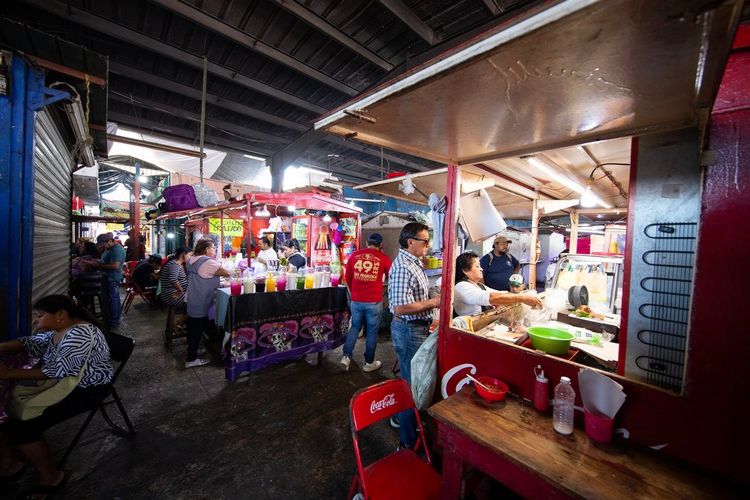
Mérida's main municipal market, Mercado Lucas de Gálvez (Calle 56 x 65 y 67, Centro, 97000 Mérida, Yuc., rated 4.3/5 on Google (65 avis)), sprawls across several blocks southeast of Plaza Grande and rewards an hour of aimless browsing even if you're not buying anything. Spice stalls, hammock vendors, fruit sellers and butchers pack the lanes, while simple comedores serve lunch to locals rather than tourists, which usually means better food for less money. Go in the morning, when it's cooler and busiest, and keep an eye on your bag in the tighter passages.
The Yucatecan tradition of botanas is worth knowing before you head out. Order a beer at many of the cantinas around the market or downtown, and a small free snack arrives alongside it, anything from sikil p'ak and cucumber with chili to a plate of panuchos, with more dishes appearing each round. It's a holdover from the peninsula's older drinking culture, and a few rounds at the right cantina can double as a light, very affordable dinner. The best spreads usually come at lunchtime, roughly 1pm to 6pm.
12. Free festivals and seasonal celebrations in Mérida
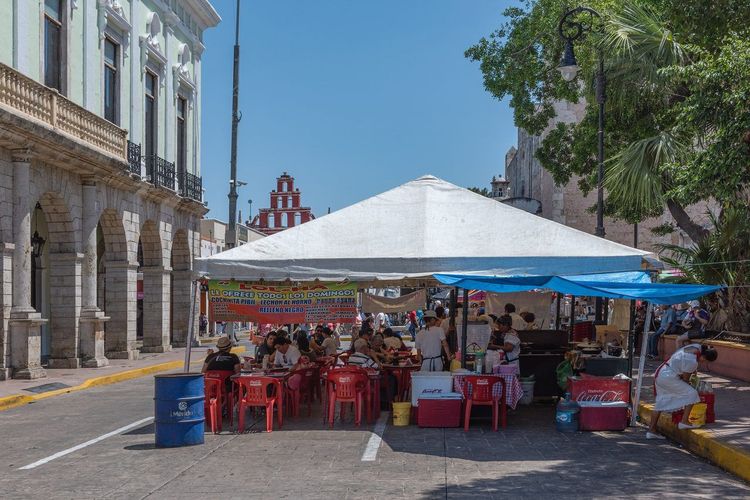
Mérida's civic calendar is dense enough that almost any month puts you within reach of a free festival, though scale and theme shift with the season.
Late winter and spring festivals: January through May
January brings the Festival Internacional de la Cultura Maya season and the city's birthday on January 6, marked with free concerts and events downtown. February or early March brings Carnaval, one of the larger carnivals in Mexico. Since 2013 its main parades have been held at the Xmatkuil fairgrounds south of the city, with free entry and parking; the 2026 edition (February 11 to 18) also brought a parade back to Paseo de Montejo for the first time in over a decade, so check whether the downtown route returns. By May, the focus shifts to neighborhood patronal festivals, parish celebrations with processions, fireworks and free live music, though schedules vary by barrio and year.
Fall and year-end celebrations: September through December
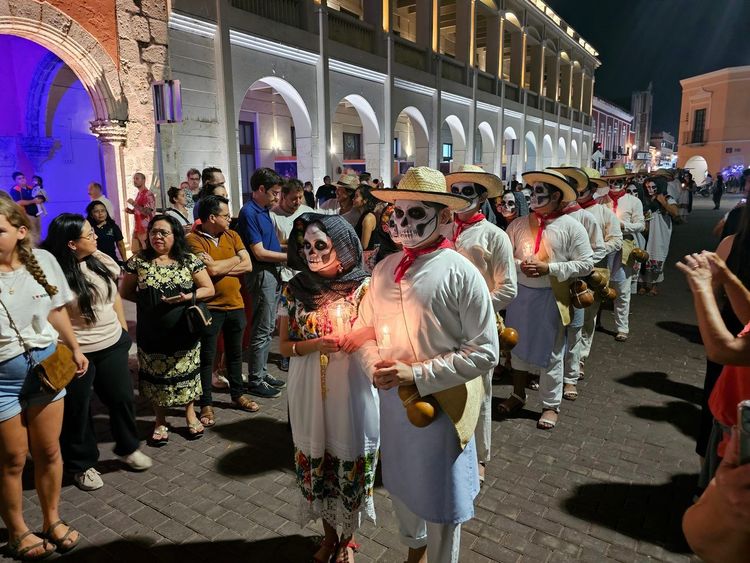
On the night of September 15, Plaza Grande hosts Mexico's Independence celebrations, with the traditional grito from the Palacio de Gobierno balcony, fireworks and free concerts. Late October into early November is dominated by Hanal Pixán, the Yucatecan Day of the Dead, when altars fill plazas and cemeteries, and a large free altar display and procession take over the historic center for several days; try the mucbipollo, the region's festive baked tamal, from a street stall. The highlight is the Paseo de las Ánimas, a free night procession in which thousands of people, faces painted as skulls and dressed in white ternos, walk from the Cementerio General to the Arco de San Juan past rows of family altars. There are no tickets and no seats: find a spot along Calle 66 early, bring water, and let the procession come to you. The route is lined with stalls selling pib and hot chocolate, so a cheap dinner comes with the show. December closes the year with posadas, nativity scenes and free light displays around Paseo de Montejo and Plaza Grande.
13. Read for free at the Mérida English Library
The Merida English Library (Calle 53 524, Centro, 97000 Mérida, Yuc., rated 4.8/5 on Google (152 avis)) has operated as a nonprofit community library since 1994, and while borrowing books requires a paid membership, browsing the shelves, reading in the courtyard, or dropping into one of the talks and cultural events it regularly hosts costs nothing or close to it. It's a useful stop if you're craving air conditioning, a quiet hour and a break from Spanish-language signage, and it doubles as a meeting point for the city's large expat community, a good place to pick up tips on free events that never make it online.
14. Getting to Mérida and getting around without spending money
Mérida has its own international airport, a short taxi or rideshare ride from the historic center, and long-distance ADO buses connect it to Cancún, Campeche and other cities across the peninsula, a comfortable way to arrive if you're already traveling overland. The Tren Maya also stops at Teya-Mérida station on the city's eastern edge.
Once you're here, the historic center is fully walkable, and flat enough that heat, rather than distance, is usually the limiting factor. The numbered grid, even streets running north-south and odd streets east-west, makes navigating without a map far easier than in most colonial Mexican cities; addresses like Calle 60 x 57 simply mean the corner of 60 and 57. Beyond downtown, city buses and the newer Va y Ven network cover most routes for a few pesos, and taxis remain inexpensive by North American or European standards. Walk in the morning and evening, rest in a museum or park at midday, and you'll rarely need transport at all.
15. Money-saving extras: cheap eats and low-budget stays

None of the attractions above require you to spend anything, but a few habits round out a low-budget trip to Mérida. Street food and market comedores routinely beat restaurant prices without sacrificing quality: a cochinita pibil taco from a market stall can cost a fraction of the same dish at a sit-down restaurant nearby, and the flavor rarely suffers. Refill water bottles at your hostel or hotel rather than buying new ones, and carry small peso notes, since many stalls struggle to change large bills.
On the accommodation side, Mérida has a solid hostel scene. Che Nomadas Hostel, a longtime favorite among backpackers passing through the Yucatán, isn't free, but it costs well below most hotels near the historic center and puts you within walking distance of everything in this guide.
Here's how a zero-peso weekend can look. Friday: Plaza Grande, the Palacio de Gobierno murals and Casa Montejo in the morning, the Museo de la Ciudad after lunch, then Corazón de Mérida at night. Saturday: Paseo de Montejo and the Castro Pacheco cultural center, a siesta, then Noche Mexicana or Pok ta Pok. Sunday: the Biciruta at 8am, Mérida en Domingo at midday and the antique dealers in Santa Lucía. When you're ready to string it into a single walk, the complete audio-guided route Ryo built for Mérida is a good place to start planning your first day.
FAQ
Is Mérida expensive to visit?
Not compared to most Mexican destinations of its profile. Many museums across the historic center are free, street food and market meals cost very little, and budget accommodation is widely available. Your biggest expenses will likely be the flight in and day trips to cenotes or archaeological sites such as Uxmal or Dzibilchaltún, which charge separate admission.
Is Mérida a walkable city?
Yes. The historic center follows a flat, numbered grid that's easy to navigate on foot, and most of the free attractions in this guide sit within a 20 to 30 minute walk of Plaza Grande. Heat is the main obstacle rather than distance, so mornings and evenings are more comfortable for longer walks than the middle of the day.
What is the best time of year to catch Mérida's free weekly events?
The weekly cultural evenings, Vaquería, Trova, the Yucatecan Serenade and Noche Mexicana, run year-round. That said, November through February brings cooler evenings, which makes sitting through an outdoor performance far more comfortable than in the April and May heat.
Do you need to book a spot for the Yucatecan Serenade or Noche Mexicana?
No booking is required for either event. Both are open-air with first-come seating, so arriving 20 to 30 minutes before the start is usually enough to find a decent spot, especially for the more popular Saturday Noche Mexicana.
How many days do you need to see Mérida's free attractions?
Three to four days lets you cover the historic center's landmarks and museums at a relaxed pace while catching two or three of the weekly evening performances, since they're spread across different nights. Arriving on a Thursday or Friday gets you the serenade, the weekend events and the Sunday programs in one stay.
Is it safe to attend Mérida's free evening events?
Mérida is consistently ranked among the safest cities in Mexico, and its weekly evening events draw large, family-heavy local crowds. Normal city precautions still apply: keep an eye on belongings in a crowd and stick to well-lit routes back to your accommodation.
Are Mérida's museums really free every day, or only on certain days?
Most of the museums covered here are free every day they're open, rather than only on discount days. The exceptions are the Railway Museum and the Museo Regional de Antropología in Palacio Cantón, which charge admission. The more common catch is a weekly closure, usually Monday, so check a museum's schedule the morning of your visit.
What free things can you do in Mérida on a rainy day?
Head indoors to the Palacio de Gobierno murals, Casa Montejo, the Museo de la Ciudad in the old post office and Centro Cultural Olimpo, all within a few blocks of each other around Plaza Grande. The Castro Pacheco cultural center on Paseo de Montejo and the Mérida English Library round out a dry afternoon. Summer downpours usually pass within an hour, so the evening shows often go ahead anyway.
Are there free things to do near Mérida outside the city?
Yes. Progreso, about 35 km north on the Gulf coast, has a long public beach and malecón that cost nothing beyond the inexpensive bus fare from downtown Mérida. The beach is free, the pier is one of the longest in Mexico, and on weekdays outside holiday periods you'll share the sand mostly with local families. Cenotes and Maya sites nearby, by contrast, almost always charge admission.
Making the most of Mérida without spending a peso
What makes Mérida stand out isn't a single free attraction; it's how many of them stack into a full itinerary without ever touching a ticket counter. Spend your mornings moving between museums and colonial landmarks, your afternoons in a shaded park, and your evenings following whichever free performance the calendar has scheduled that night, and you'll come away having seen more of the city than most paid tours cover in the same time.
If you'd rather not juggle a paper itinerary while you walk, open Ryo's audio-guided tour of Mérida before you set out and let the app handle the sequencing and the history, leaving you free to follow the route and look up.