
Créé par Emilie, le 16 mai 2026
Votre guide Ryo
© Shutterstock
Edinburgh defies easy summary. A city where a volcanic rock anchors a medieval castle above a 21st-century parliament, where you can descend into streets that were buried alive in the 18th century or climb a 251-metre Victorian monument for a view that reaches across the Firth of Forth. Scotland's capital packs more layers of history per square kilometre than almost anywhere in Britain. For first-time visitors and returning travellers alike, the sheer density of things to do in Edinburgh can feel overwhelming, which is exactly why a proper guide matters. This list narrows the genuinely worthwhile things to do in Edinburgh down to thirty.
This list of 30 experiences spans the iconic and the overlooked: a whisky tasting in a 17th-century merchant's house, a Victorian cemetery haunted by a loyal Skye terrier, a royal yacht decommissioned in 1997 that still serves afternoon tea to 300,000 visitors a year, and a botanic garden dating back to 1670 that sprawls across 70 acres of the New Town. Whether you have two days or two weeks, Edinburgh rewards you in full, and the audio-guided Ryocity walk of Edinburgh is one of the best ways to navigate the Old Town's labyrinthine closes and wynds without missing a story.
1. Edinburgh Castle
Edinburgh Castle stands on Castle Rock, a plug of volcanic basalt formed around 340 million years ago. The rock was inhabited from at least the Iron Age, and the fortification that eventually rose here shaped the fate of Scotland for eight centuries. Today it is Scotland's most-visited paid attraction, drawing well over two million visitors annually, and for good reason.
The castle complex is larger than most first-time visitors expect. The Crown Room holds the Honours of Scotland, the Scottish crown jewels, which are the oldest surviving royal regalia in Britain, pre-dating the English crown jewels by more than a century. The crown itself was remodelled in 1540 for James V; the sceptre and sword of state arrived as papal gifts in 1494 and 1507 respectively. Alongside them sits the Stone of Destiny, the ancient coronation stone of Scottish kings, returned from Westminster Abbey in 1996 after 700 years of English custody.
The castle's other unmissable spaces include St Margaret's Chapel, Edinburgh's oldest surviving building dating to around 1130, and the Great Hall with its original 16th-century hammerbeam roof. The National War Museum of Scotland, housed within the castle's lower ward, holds four centuries of Scottish military history and is often skipped by visitors rushing to the crown jewels, a genuine mistake.
Practical planning matters here. Book online in advance: adult tickets cost around £22 and timed entry slots sell out weeks ahead in summer. The One O'Clock Gun fires from the Half Moon Battery every day except Sunday, Good Friday, and Christmas Day. Arrive early, the castle opens at 9:30 am, and allow at least two to three hours. The views from the Argyle Battery looking north over Princes Street Gardens and the New Town are worth pausing over. If you only have time for one of the things to do in Edinburgh, this is the safe choice, no other single site packs so much Scottish history into a single ticket.
If you want context before you go in, the Ryo audio guide to Edinburgh covers the castle's silhouette from multiple vantage points along the Royal Mile and sets up the history before you reach the ticket desk.
2. The Royal Mile
The Royal Mile is not strictly one mile, it runs approximately 1.6 kilometres from Edinburgh Castle down to the Palace of Holyroodhouse, threading through the heart of the medieval Old Town. The name is a 16th-century invention; the street is actually a succession of five named sections: Castlehill, Lawnmarket, High Street, Canongate, and Abbey Strand.
Walking it end-to-end takes about twenty minutes at a stroll, but doing it properly takes half a day. The closes and wynds that branch off both sides, narrow passages squeezed between tenements, contain some of Edinburgh's most atmospheric corners. Advocate's Close offers one of the best framed views of the castle from below; Riddle's Court hides a 16th-century courtyard where King James VI held a banquet. Brodie's Close is the building that allegedly inspired Robert Louis Stevenson's Jekyll and Hyde: William Brodie, Deacon of the Wrights by day, was a serial burglar by night, hanged in 1788 on gallows he had helped design.
The street itself is lined with tourist shops, whisky merchants, tartan sellers and a remarkable concentration of historic pubs. Among them, The World's End on High Street marks the point where Edinburgh's city wall once stood, beyond it, you were technically outside the city. Allow time to duck into the closes. Of all the things to do in Edinburgh, walking the Royal Mile slowly and with curiosity may be the single most rewarding.
3. Arthur's Seat
At 251 metres, Arthur's Seat (Holyrood Park, Edinburgh EH8 8HG, rated 4.9/5 on Google (4 690 avis)) is the highest point in Edinburgh and the remains of a volcanic system whose lavas have been dated to around 340 million years ago. It sits within Holyrood Park, less than a mile from the Scottish Parliament, which makes it one of the most dramatic wild landscapes available from the centre of any European capital.
The ascent takes between 45 minutes and an hour depending on your route. The most popular path starts from the Salisbury Crags, the dramatic basalt cliffs that rim the park to the west. James Hutton, the 18th-century geologist who founded modern geology, studied these very crags and developed his theory of deep time while observing their rock formations, a plaque near the base acknowledges his work. The path from St Anthony's Chapel ruins on the northeast side is quieter and more rewarding for those who want to avoid crowds.
The summit plateau is surprisingly wide, with views north to the Firth of Forth and the Kingdom of Fife, east toward the Pentland Hills, south over Arthur's Seat's own grassy shoulders, and west back across the full skyline of Edinburgh. On clear days, you can see Ben Lomond, 70 kilometres to the northwest. Wear layers regardless of the season: the wind at the top is unpredictable even in July, and the summit catches every gust off the Firth. Proper walking shoes are more useful than trail runners, the volcanic rock is uneven and slick in damp weather.
The park itself, covering 263 hectares, contains seven hills, three lochs including Duddingston Loch (Edinburgh's only natural loch), and geological features spanning half a billion years. Many visitors combine Arthur's Seat with a morning walk around the park before visiting Holyroodhouse in the afternoon.
Edinburgh is one of those rare cities where a serious hike begins in the city centre. That contrast, medieval closes one moment, moorland summit the next, is part of what makes spending time here so memorable.
4. The Real Mary King's Close
Beneath the Royal Mile, the old medieval streets of Edinburgh were not demolished when the city expanded, they were sealed, built over, and left underground. The Real Mary King's Close (2 Warriston's Close, Edinburgh EH1 1PG, rated 4.6/5 on Google (17 612 avis)) is the best-preserved of these buried streets, a warren of 17th-century rooms and passageways that survived beneath the City Chambers building constructed above them in the 1750s.
The attraction offers guided tours only, running approximately 60 to 75 minutes. Your guide leads you through a series of rooms frozen at different points in Edinburgh's past, a merchant's house from around 1650, a plague-period chamber sealed after an outbreak in 1645, and the cramped quarters of tenement families who lived here before the street was buried. The stories are grounded in historical research, not theatrical embellishment (though the atmosphere provides plenty of the latter on its own).
The most famous story belongs to Annie, a young girl whose doll was allegedly left as an offering by a Japanese psychic in 1992. The room where she reportedly appeared is now piled high with toys left by visitors, a genuine folk tradition that grew up organically around the tour. It is either moving or peculiar depending on your disposition.
Book tickets at least a week in advance during summer; the tours sell out. Adult tickets are currently around £17. Evening tours lean harder into the ghost-story angle if that is what you are after; afternoon tours are more historically focused. The street-level entrance is easily missed, look for the narrow close off the Royal Mile marked by a discrete sign.
The experience is genuinely unlike anything else in Edinburgh. Walking through a 17th-century kitchen that has not seen daylight since the 1750s is a particular kind of time travel.
5. National Museum of Scotland
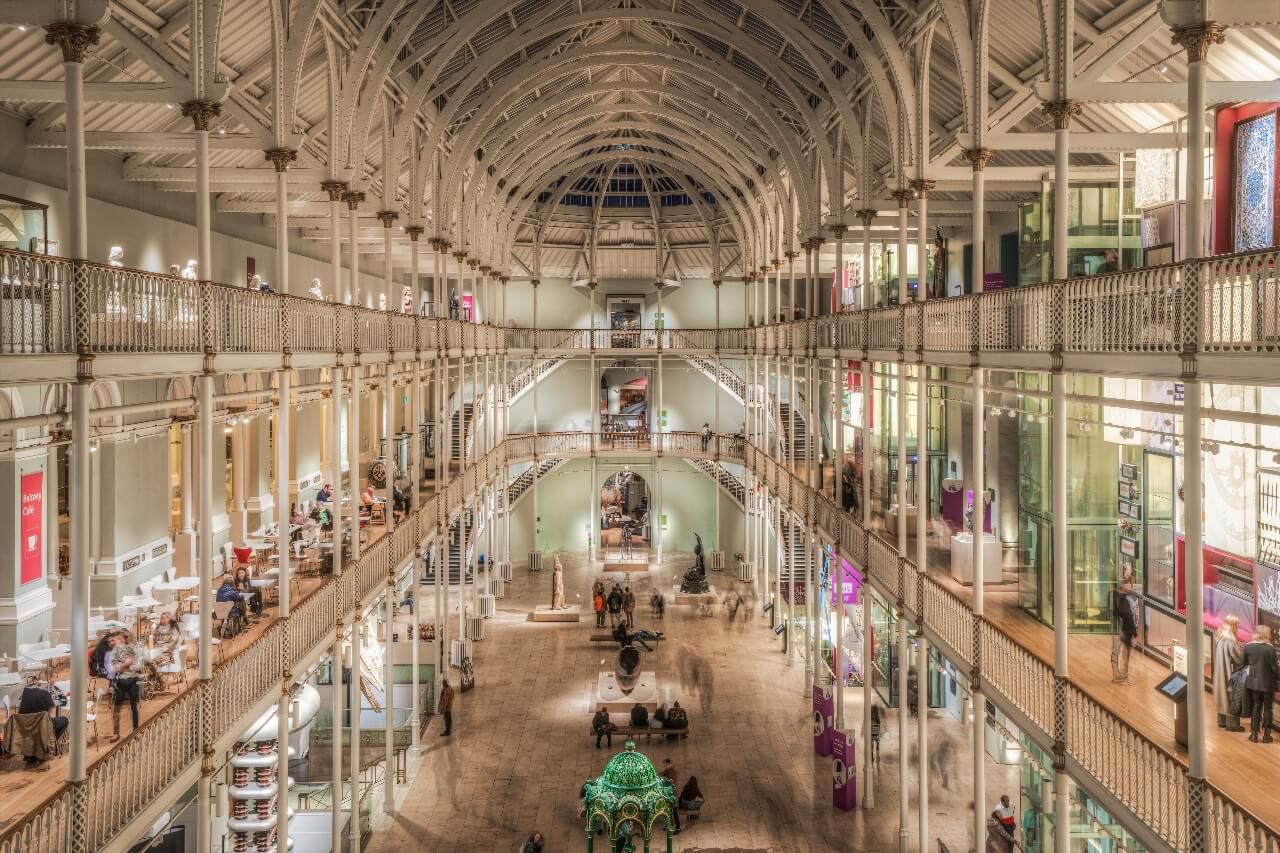
The National Museum of Scotland (Chambers Street, Edinburgh EH1 1JF, rated 4.8/5 on Google (57 202 avis)) on Chambers Street is one of the finest free museums in the United Kingdom. Its collection spans Scottish history from the earliest prehistoric settlements through the industrial revolution to the present, plus dedicated galleries on science, technology, world cultures, and natural history.
The building itself rewards attention. The Victorian Grand Gallery, a soaring iron-and-glass atrium built in 1866, leads into the modern wing added in 1998, which houses the Scottish history galleries. The centrepiece of the natural history section is the mounted skeleton of a Diplodocus carnegii, a gift from American steel magnate Andrew Carnegie in 1905. The Science and Technology galleries trace Scottish inventors from James Watt's improvements to the steam engine through to the telephone (Alexander Graham Bell was born in Edinburgh in 1847).
The Scotland galleries on the upper floors are the real draw. They trace the nation's story from the Celts and Romans through the Wars of Independence, the Reformation, the Jacobite risings, and the Industrial Revolution with exceptional depth and well-chosen objects. Allow at least three hours for a focused visit; a full exploration takes the better part of a day. Entry is free, which makes this one of the best-value things to do in Edinburgh for travellers on a budget.
6. Palace of Holyroodhouse
At the foot of the Royal Mile, the Palace of Holyroodhouse is the official Scottish residence of the British monarch. Unlike Windsor or Buckingham Palace, Holyroodhouse has a particular intensity of history, it is where Mary Queen of Scots lived for six years, where her secretary David Rizzio was stabbed 56 times in front of her in 1566, and where Bonnie Prince Charlie held court during his brief occupation of Edinburgh in 1745.
The palace is open to visitors when the Royal Family is not in residence, typically from November through late June, and again in August and September. The audio guide included with admission is genuinely excellent and covers each room in the correct sequence without rushing. The State Apartments where Mary Queen of Scots held court are the oldest surviving rooms; her bedchamber retains the original oak panelling and a four-poster bed dating to the 16th century.
The ruins of Holyrood Abbey adjacent to the palace are free to view from the grounds. Founded by David I in 1128, the abbey was systematically stripped during the Reformation and further damaged in 1688; its roofless nave now stands as one of Edinburgh's most photogenic ruins, particularly in late afternoon light.
Admission is currently around £22 for adults when booked in advance (£26 on the door). The Queen's Gallery next door runs changing exhibitions of works from the Royal Collection (separate ticket). The week of the General Assembly of the Church of Scotland in May triggers a brief royal visit and closure, check dates if planning a spring trip. The gardens visible from the palace grounds back directly onto Holyrood Park and Arthur's Seat.
The combination of Holyroodhouse and the abbey ruins with a walk through the park behind makes for one of the most satisfying half-days in the city.
7. Calton Hill
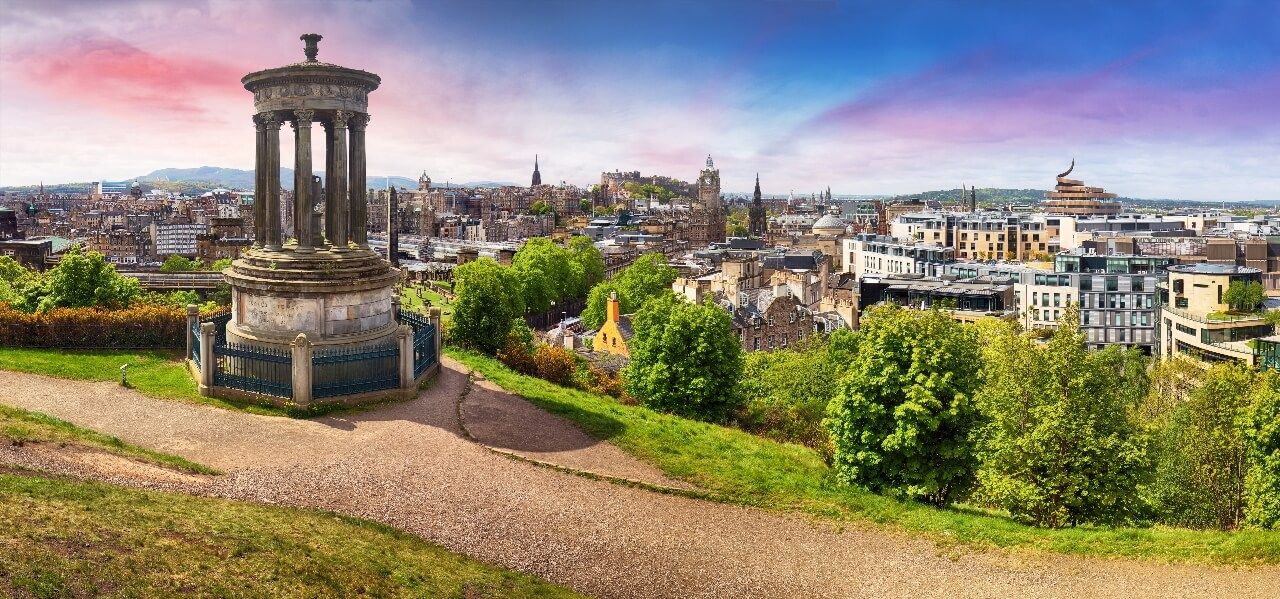
Calton Hill rises to 100 metres at the eastern end of Princes Street and offers what many photographers consider the definitive panoramic view of Edinburgh, the castle, the Old Town skyline, the Firth of Forth, the Pentlands, all in a single frame.
The hill is free to visit at any hour and is dotted with monuments in varying states of completion. The National Monument of Scotland, begun in 1826 as a replica of the Parthenon to commemorate the dead of the Napoleonic Wars, ran out of funding after 12 columns were erected and was never finished. Locals call it « Scotland's Disgrace », though the ruin has developed its own melancholy grandeur over two centuries. The Nelson Monument, a 32-metre tower topped with a time ball (dropped daily at 1 pm to allow ships in the Firth to set their chronometers), can be climbed for a modest fee. The circular City Observatory complex has been restored as a cultural venue.
Calton Hill is particularly rewarding at dusk: among the free things to do in Edinburgh, climbing it at sunset rivals attractions that charge £20 at the door. The city lights begin to catch as the sky darkens behind the castle, and the monument columns catch the last of the western light.
8. Greyfriars Kirkyard
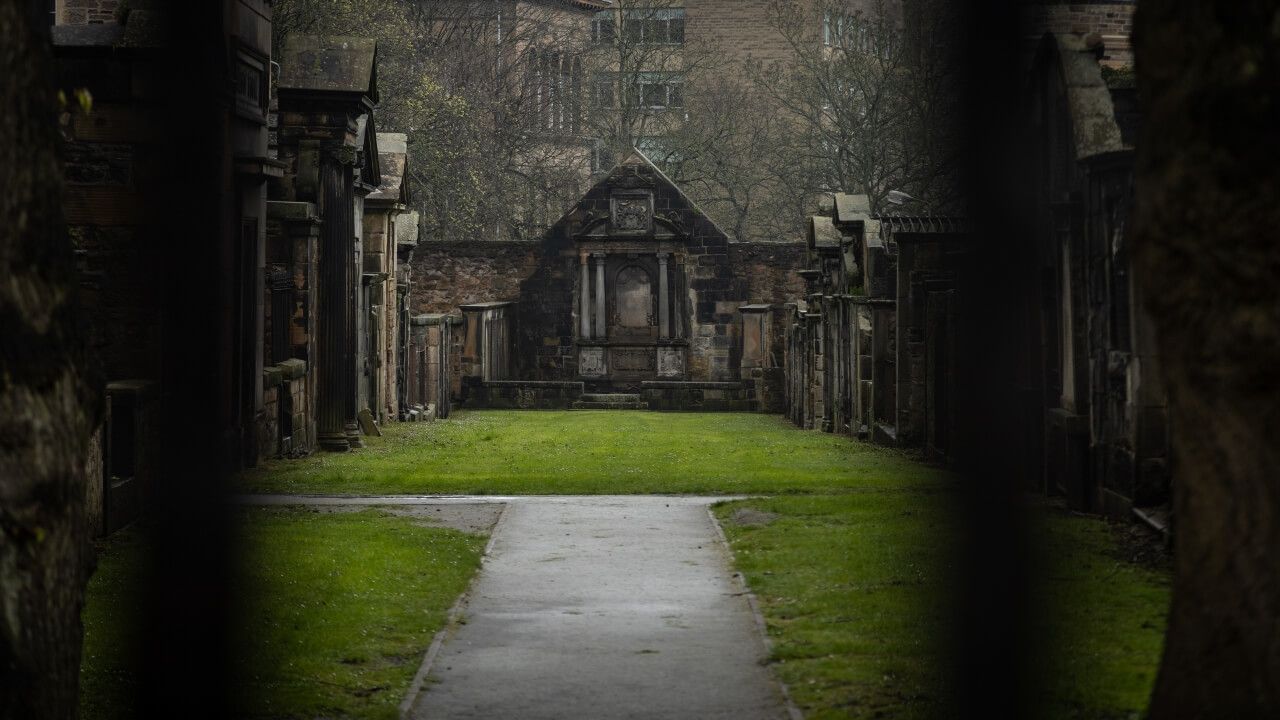
Greyfriars Kirkyard (Greyfriars Place, Edinburgh EH1 2QQ, rated 4.7/5 on Google (2 014 avis)), the churchyard surrounding Greyfriars Kirk near the National Museum of Scotland, is one of Edinburgh's most historically layered outdoor spaces. Founded in 1562, it was the first new church built in Edinburgh after the Reformation.
The cemetery is best known for two things. The first is Greyfriars Bobby, the Skye terrier who reportedly guarded the grave of his owner John Gray for 14 years after Gray's death in 1858. A small statue of Bobby stands at the kirkyard entrance and has been rubbed smooth by generations of visitors. The second is the Covenanters' Prison, a section of the cemetery where 1,200 Covenanters (Scottish Presbyterians who refused to accept Charles II's religious policies) were imprisoned in the open air through the winter of 1679 following the Battle of Bothwell Brig. Conditions were brutal, hundreds died of exposure and disease.
The kirkyard also contains the graves of several prominent Scots including the architect of the Royal Mile's Old College, Robert Adam. It is free to visit and genuinely eerie on a grey Edinburgh afternoon. The Mackenzie Poltergeist, associated with the tomb of Sir George Mackenzie who prosecuted the Covenanters, has made Greyfriars a regular stop on Edinburgh's many ghost tours, whether or not you believe in such things, the kirkyard atmosphere earns that reputation on its own terms, and it sits firmly among the most atmospheric free things to do in Edinburgh.
9. Scotch Whisky Experience
The Scotch Whisky Experience (354 Castlehill, Edinburgh EH1 2NE, rated 4.7/5 on Google (11 176 avis)) on Castlehill, immediately beside Edinburgh Castle, is not the cheapest whisky attraction in Scotland, but it is the most comprehensive introduction to Scotch available in the city without travelling to a working distillery.
The main tour runs about 60 minutes and takes you through the production process, malting, mashing, fermentation, distillation, maturation, via a combination of exhibits and a barrel ride that feels theatrical but works. The tasting component at the end is the point: you sample whiskies from the four main Scottish whisky regions (Highlands, Lowlands, Speyside, Islay) and learn to identify the flavour characteristics that differentiate them. The experience also holds the world's largest collection of Scotch whisky: 3,384 bottles amassed by Spanish collector Claive Vidiz and now displayed in a circular gallery.
Premium tasting tours go considerably further and pair whiskies with food. Book in advance, particularly for the whisky-and-chocolate or whisky-and-cheese sessions, they sell out quickly. Basic Silver Tour tickets are around £18 for adults. The restaurant here, Amber, serves Scottish dishes with strong local sourcing and pairs each course with whisky if requested.
10. Victoria Street
Victoria Street (Victoria Street, Edinburgh EH1 2JW, rated 4.7/5 on Google (9K reviews)) curves down from George IV Bridge to the Grassmarket in a graceful arc of coloured shopfronts that has been drawing photographers since Instagram was invented, and artists for considerably longer.
Built in the 1840s as part of the Old Town's improvement scheme, the curved terrace of contrasting-coloured facades, deep red, sage green, cobalt blue, dusty yellow, is one of Edinburgh's most recognisable streetscapes. It is also said to have inspired Diagon Alley in J.K. Rowling's Harry Potter novels, though Rowling herself has never confirmed this. The shops sell antique maps, tartan accessories, fine cheeses. Walk it in both directions: the perspective from the lower level is quite different from the upper.
11. The Scottish National Gallery
The Scottish National Gallery on The Mound holds Scotland's finest collection of Old Masters and Scottish art in a neoclassical building designed by William Playfair, completed in 1859.
Entry is free. The permanent collection includes Velázquez, Rembrandt, Titian, El Greco, and an exceptional grouping of Impressionists, Monet, Degas, Gauguin, donated to the national collection over the decades. The Scottish paintings are the part that most visitors rush past and should not: the works of Raeburn, Ramsay, and Wilkie form a coherent visual record of Scottish society from the 17th through 19th centuries that you will not find assembled at this quality anywhere else.
The lower Weston Link connects the main gallery to the Royal Scottish Academy building next door, which hosts major temporary exhibitions (usually ticketed). Allow 90 minutes for a focused visit to the permanent collection; the galleries are arranged logically and the signage is better than at many comparable institutions. The café in the basement is good and considerably less expensive than anything on the Royal Mile.
12. Princes Street Gardens
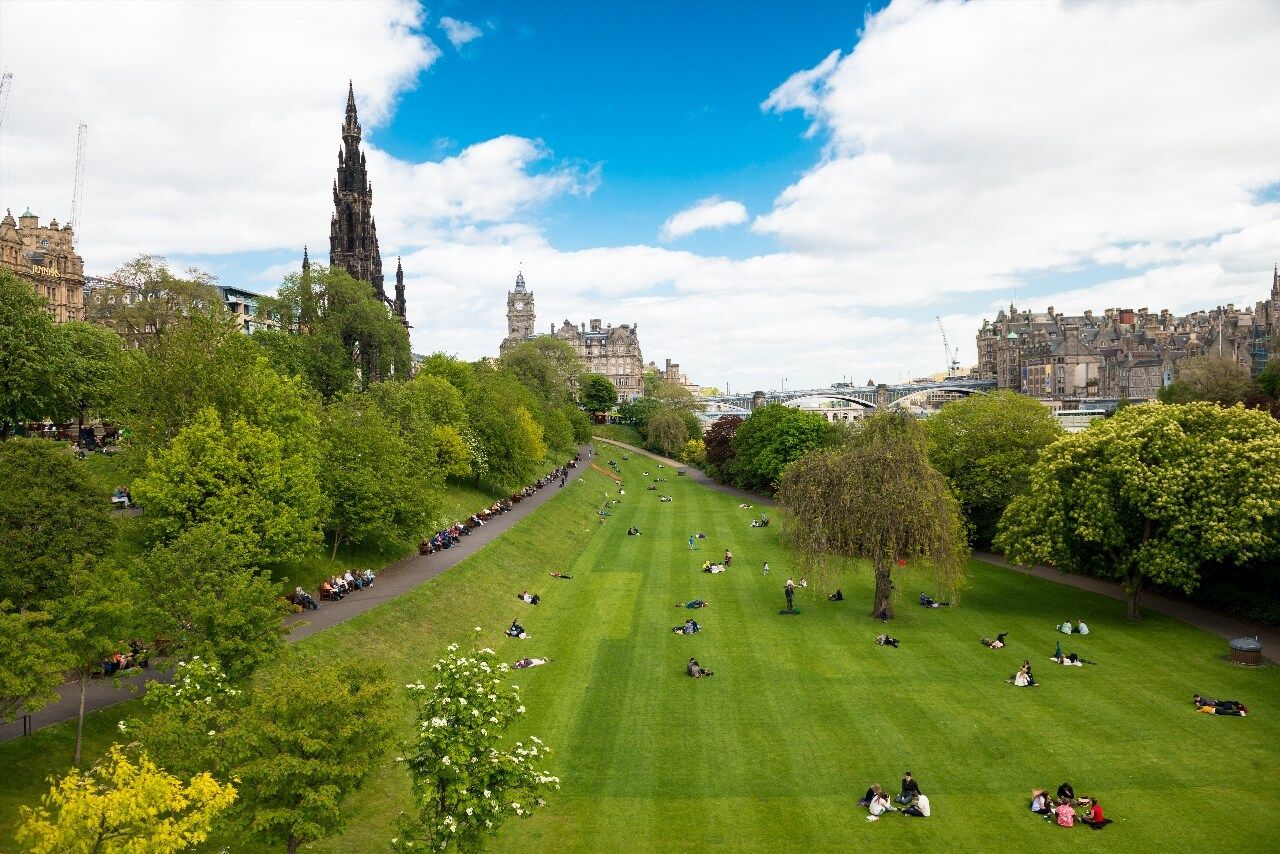
Princes Street Gardens (Princes Street, Edinburgh EH2 2HJ, rated 4.7/5 on Google (26 925 avis)) occupy the valley between the Old Town ridge and Princes Street, in the space where the Nor' Loch once sat before it was drained in the 1820s to create the gardens and the foundations for The Mound.
The gardens are free and divide into East and West sections. The West Gardens contain the Ross Bandstand, site of Edinburgh's outdoor concerts and the New Year's Eve Hogmanay fireworks, plus the oldest floral clock in the world (installed 1903) and a fountain presented by Prince Albert in 1869. The gardens offer perhaps the most dramatic urban park view in the UK: the castle perches on its volcanic crag directly above you while the Georgian facades of Princes Street rise behind. Come in spring: the gardens are planted with tens of thousands of daffodils and tulips, and the contrast with the castle above is one of the most photographed things to do in Edinburgh in April.
13. The Edinburgh Vaults
Below the South Bridge, built between 1785 and 1788, nineteen vaulted chambers were constructed between the bridge's arches to provide storage and workshop space. The Edinburgh Vaults (Niddry Street South, Edinburgh EH1 1NS, rated 4.7/5 on Google (54 avis)) were occupied for roughly thirty years before the damp made them uninhabitable; they were sealed and forgotten for a century, rediscovered in 1985, and now form the basis of one of Edinburgh's most atmospheric underground experiences.
Several tour companies operate through the vaults; Mercat Tours and Auld Reekie Tours are among the most established. The standard historical tour covers the social history of the vaults, their use as workshops by cobblers, wine merchants, and other tradespeople, the decline into slum housing, and the activities of criminals who exploited the dark network of passages. The historical record is legitimate and the space itself does the atmospheric work without much embellishment needed.
If you want the full ghost-story treatment, the vaults are the setting for dozens of reported paranormal encounters, and evening tours play to this angle extensively. Edinburgh has more underground tour operators per capita than any other British city, which tells you something about how the city has turned its subterranean past into a sustainable tourism proposition. The vaults are genuinely cold regardless of season, bring a jacket. Adult tickets for the historical tour run around £16; ghost tours are generally priced similarly.
Combining the vaults with a morning visit to Mary King's Close gives you a comprehensive picture of Edinburgh's underground layers, the buried medieval street on one side, the 18th-century bridge vaults on the other.
14. Royal Botanic Garden Edinburgh
The Royal Botanic Garden Edinburgh (Inverleith Row, Edinburgh EH3 5LR, rated 4.7/5 on Google (24 321 avis)) stretches across 70 acres of the New Town, about a mile north of Princes Street, and has been cultivating plants continuously since 1670, making it one of the oldest botanic gardens in Britain.
Entry to the garden itself is free; the glasshouses cost a modest fee (around £7). The outdoor collections are organised by geography and plant type, the Chinese Hillside, planted with species collected in Sichuan and Yunnan, is particularly impressive in spring. The rock garden contains alpine plants from across the world. The 1967 glass-and-steel Glasshouse Range houses tropical palms, orchids, and a giant waterlily that produces leaves up to two metres across.
The garden is at its best in spring (April : May) and autumn (September : October). Go on a weekday morning to have the winding paths largely to yourself; summer weekends bring families and picnickers who fill the lawns around the John Hope Gateway visitor centre. The café is good, the views of the city skyline from the upper paths are worth seeking out, and the children's garden makes it particularly easy for families.
15. Grassmarket
Grassmarket is a broad market square in the valley below the castle's south face, one of Edinburgh's oldest commercial spaces and, historically, one of its most turbulent.
The square was Edinburgh's primary market for livestock and agricultural produce from 1477 until well into the 19th century. It was also the city's main site of public executions: more than 100 people were hanged here between 1661 and 1784, including a group of Covenanters commemorated by a small monument on the east side of the square. The Last Drop pub, occupying the corner nearest the old gallows location, takes its name from this history with cheerful gallows humour.
Today the Grassmarket operates as a bar and restaurant district with a notably good independent food scene. The Grassmarket Community Project bakery and café runs a social enterprise training programme that also serves excellent coffee. Cowgate, which runs along the lower edge of the square, is Edinburgh's main late-night bar district, lively enough to be worth noting if nightlife is part of your Edinburgh plans.
The view of the castle looming directly above the square is one of the most dramatic in Edinburgh. Come for lunch or an early evening drink rather than midday when tour groups pass through on their Royal Mile loop.
For the walking route that connects Grassmarket to the rest of the Old Town, the Ryo Edinburgh audio guide maps the closes and stairways that link the valley floor back up to the Royal Mile.
16. Camera Obscura & World of Illusions
Camera Obscura (Castlehill, Edinburgh EH1 2ND, rated 4.6/5 on Google (15 712 avis)) at the top of Castlehill has occupied the same tower on the Royal Mile since 1853 and offers one of Edinburgh's more unexpected experiences: a live, unamplified, real-time projection of the city streets onto a white dish in a darkened room.
The camera itself is genuinely Victorian, a mirror-and-lens system that captures moving images of the city without any electronics. On a clear day, the view projected onto the table includes Princes Street, the Grassmarket, and pedestrians going about their business in the streets below. The presenter manipulates the projection to demonstrate perspective distortions: you can appear to pick up a real person in the palm of your hand. It is a much more memorable experience than the description suggests.
Five floors of optical illusion exhibitions surround the camera. Some of these are aimed at children; others, particularly the ames room and the pepper's ghost demonstrations, are fascinating for adults. Allow two hours for a complete visit. Adult tickets are around £22, which makes it one of the pricier Edinburgh attractions, but it is consistently rated among the top experiences in the city on visitor review platforms. Book online to skip the queue.
17. Dean Village
Dean Village (Dean Village, Edinburgh EH4 3BQ, rated 4.8/5 on Google (999 avis)) sits in a gorge of the Water of Leith, about 20 minutes on foot from the west end of Princes Street, and feels so unlike central Edinburgh that it regularly causes genuine surprise in visitors who stumble across it.
The village was Edinburgh's main grain-milling centre from the 12th century; the mills are gone but the workers' cottages and granary buildings remain along the riverbank. The classic view, stone buildings reflected in the Water of Leith below the Thomas Telford bridge of 1832, is picturesque and free. A riverside walkway follows the Water of Leith upstream toward Stockbridge and the Royal Botanic Garden.
18. St Giles' Cathedral
St Giles' Cathedral (High Street, Edinburgh EH1 1RE, rated 4.6/5 on Google (12 694 avis)) on the Royal Mile is Edinburgh's principal church, a High Kirk of the Church of Scotland that has occupied its position on the High Street since the 12th century.
The current building dates largely from the 15th and 16th centuries; the famous crown spire, completed around 1500, is one of Edinburgh's most recognisable skyline features. Entry is free, though a donation is requested. Inside, the most important space is the Thistle Chapel, added in 1911 as the ceremonial home of the Order of the Thistle (Scotland's highest order of chivalry). Its Gothic Revival woodcarving is extraordinarily detailed, the canopies above each knight's stall contain individual heraldic devices and carved animals that reward close inspection. Spot the angel playing the bagpipes in the upper carvings.
The heart of Midlothian is set into the cobblestones outside the cathedral's main entrance, a heart-shaped pattern in the paving that marks the site of the Old Tolbooth prison. It is traditional to spit on it for luck, which most visitors find they do instinctively after reading the sign. The cathedral hosts regular concerts; check the programme during your visit as the acoustics in the nave are good.
19. The Royal Yacht Britannia
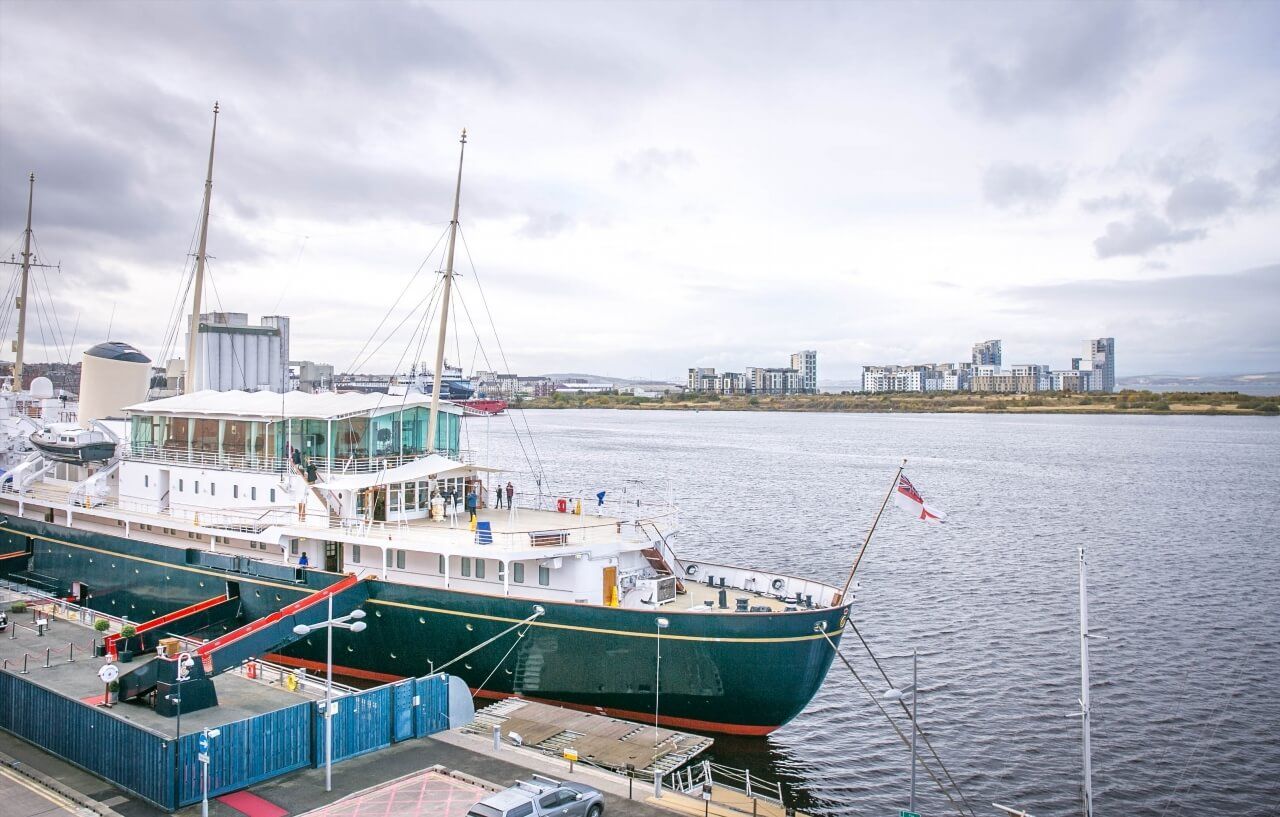
The Royal Yacht Britannia (Ocean Terminal, Leith, Edinburgh EH6 6JJ, rated 4.7/5 on Google (13 451 avis)) is moored at Ocean Terminal in Leith, Edinburgh's port district, roughly four kilometres north of the city centre. Decommissioned in December 1997 after 43 years and 1,087,623 nautical miles of service, the yacht is now one of Scotland's most visited paid attractions, receiving around 350,000 visitors per year.
The self-guided audio tour, included in admission, takes approximately 90 minutes and covers five decks of the ship from stem to stern. The contrast between the public-facing State Rooms, designed by Sir Hugh Casson with deceptively understated elegance, and the working areas of the yacht is striking. The State Dining Room is set for a formal dinner as it would have appeared during a royal banquet; the Queen's sitting room feels immediately domestic, with her personal collection of corgis memorabilia and comfortable furniture chosen to her own taste rather than protocol.
The Working Decks reveal a different vessel entirely: the boiler room, the engine room, the chart room, and the 140 officers and 220 yachtsmen who crewed her. The mess decks show the strict hierarchy of naval life, there were 13 grades of accommodation on board. The garage on the aft deck still contains the 1935 Rolls-Royce Phantom III used for royal engagements ashore.
Adult admission is around £20. The yacht is accessible by Lothian Bus from the city centre (routes 11, 22, 34, 35) or by taxi. Allow time for the excellent Britannia Bistro at the bow of the ship, afternoon tea with a view of the Firth of Forth is one of Edinburgh's more civilised ways to spend an hour. Book the Champagne afternoon tea well in advance if that appeals; it sells out weeks ahead.
Leith itself has developed into one of Edinburgh's most interesting neighbourhoods over the past decade, with a concentration of excellent restaurants along The Shore and Constitution Street that makes an evening visit one of the more memorable things to do in Edinburgh after dark.
20. Scott Monument
The Scott Monument on Princes Street is the largest monument to a writer anywhere in the world, a 61-metre Gothic spire completed in 1846 to commemorate Sir Walter Scott, who died in 1832 and is largely responsible for creating the modern literary image of Scotland.
Climbing the monument's 287 steps to the upper observation deck is not for the claustrophobic, the internal staircases are extremely narrow, but the view from the top is excellent and the price is modest (around £10). The four main niches on the base hold statues of characters from Scott's novels; 64 Scottish writers, poets, and philosophers appear in carved niches on the spire itself. The statue of Scott at the base shows him with his deerhound Maida. The monument is built from Binnie shale, a cream-coloured stone that turned black from Victorian air pollution and has only partially been cleaned.
21. The Writer's Museum
The Writer's Museum (Lady Stair's Close, Edinburgh EH1 2PA, rated 4.4/5 on Google (2 105 avis)) occupies Lady Stair's Close, a narrow passageway off the Lawnmarket that has been there since 1622. The museum itself is free and devoted to three Scottish writers: Robert Burns, Sir Walter Scott, and Robert Louis Stevenson.
The collection is compact but well chosen: Burns's writing desk, the printing press on which the Waverley novels were first set in type, Stevenson's riding boots and his toy theatre from childhood. The close outside has quotations from Scottish writers set into the paving stones, look down as you walk in. The museum takes about 30 to 40 minutes and makes an excellent complement to visiting the Scott Monument a few hundred metres away. Worth it as much for the building as for the exhibits. For anyone interested in Scottish literary history, this is one of the most concentrated and free things to do in Edinburgh, and pairs neatly with the Scott Monument and a wander through the Old Town's bookshops.
22. Dynamic Earth
Dynamic Earth (112 Holyrood Road, Edinburgh EH8 8AS, rated 4.4/5 on Google (2 135 avis)) is Edinburgh's interactive science centre dedicated to the formation and evolution of the planet, housed in a striking white tensile-roofed building designed by Michael Hopkins & Partners at the foot of Holyrood Road.
The exhibition takes visitors on a journey from the Big Bang through the formation of the Earth's crust, the evolution of the atmosphere, the emergence of life, and the current state of the planet's ecosystems. The 4D theatre simulates volcanic eruptions and tropical storms with physical effects (seats that vibrate, water sprays, temperature changes). The polar ice cap exhibit recreates the conditions of the Antarctic with a walk-in freezer section. Dynamic Earth is primarily designed for families and school groups, but the geological content is genuinely rigorous and the production values are high. Adult tickets are around £16. Allow two hours. The building's position at the foot of Salisbury Crags, with Arthur's Seat rising behind, makes the entrance approach visually memorable.
23. Portobello Beach
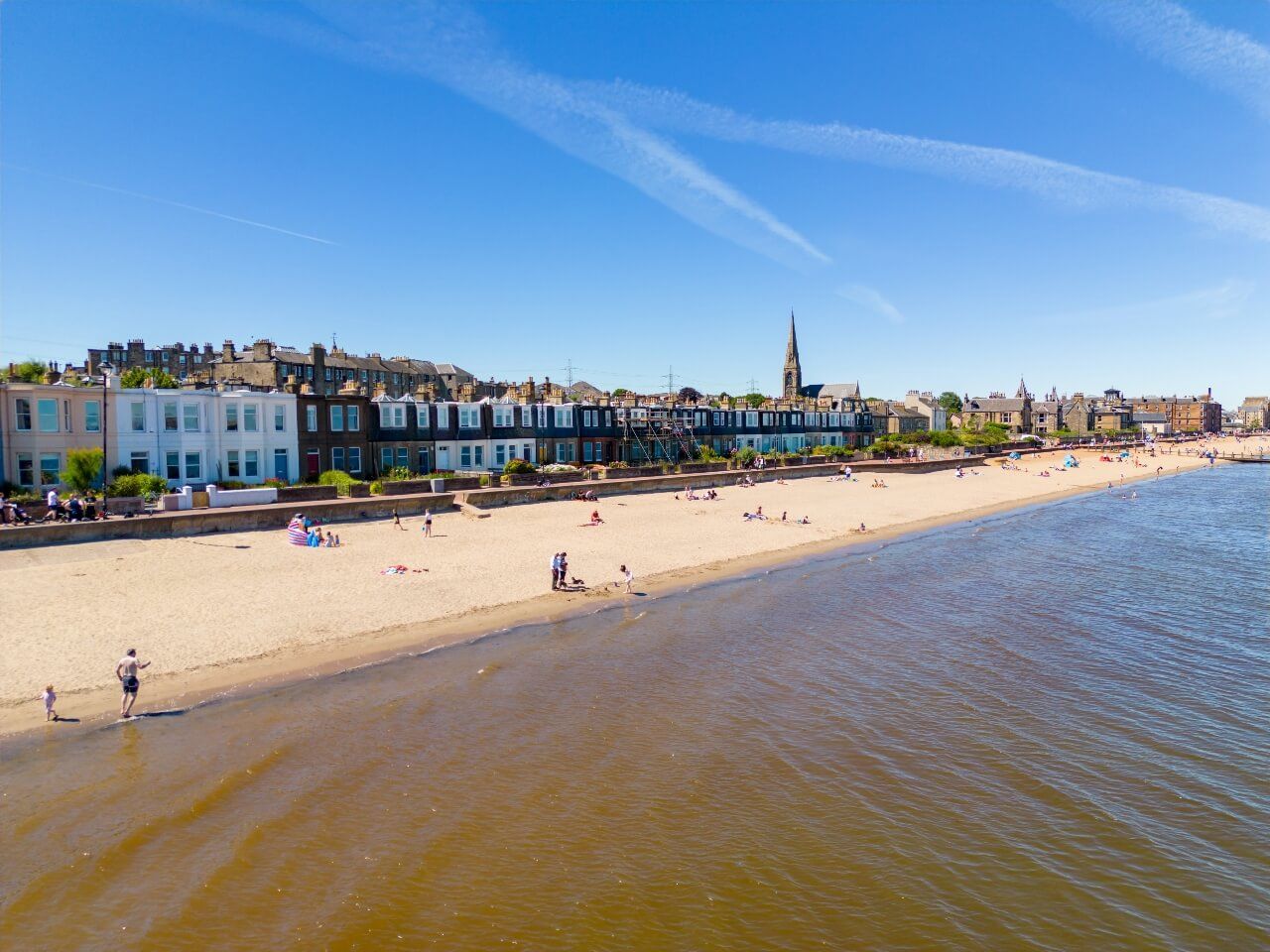
Five kilometres east of Edinburgh city centre, Portobello Beach (Portobello Promenade, Edinburgh EH15 2DP, rated 4.6/5 on Google (1 165 avis)) is the city's Victorian seaside suburb: a broad, sandy beach running for about a kilometre along the Firth of Forth, backed by a promenade of ice cream parlours, amusement arcades, and Georgian and Victorian seaside terraces.
This is where Edinburghers come to swim, and swim they do, year-round, including members of the Portobello Swim Club who enter the sea on Christmas morning. The water is cold, but the beach is clean, the sand is real, and the promenade has genuine seaside energy on a sunny summer afternoon. There is outdoor table tennis, beach volleyball, and a paddling pool that fills in summer. The independent shops and cafés along the high street have made Portobello a destination in its own right in recent years, Pintxos Bar, Espy, and Café Truva are all worth visiting. Accessible by bus from the city centre (Lothian Buses 26, 45) in about 25 minutes. On a sunny day, it ranks among the most refreshing things to do in Edinburgh between two cathedral visits.
24. Edinburgh Zoo
Edinburgh Zoo (134 Corstorphine Road, Edinburgh EH12 6TS, rated 4.3/5 on Google (14 132 avis)) on Corstorphine Hill occupies 82 acres of hillside woodland, about four kilometres west of the city centre, and is home to over 1,000 animals from 170 species, including one of the most visited collections of great apes in the UK.
The zoo is operated by the Royal Zoological Society of Scotland and is one of only a handful of zoos in the world to house giant pandas, though the current pandas Yang Guang and Tian Tian have returned to China; check ahead on this. The penguin parade, a daily procession of the zoo's King and Gentoo penguins walking through the grounds, has operated since 1950 and remains a genuine crowd-pleaser. The Budongo Trail chimpanzee enclosure, opened in 2010, is among the best great-ape facilities in Europe. The hillside setting means some walking is required; the terrain is uneven and hilly.
Adult admission is around £22 and the zoo is open 365 days a year. Combine with Corstorphine Hill for a good half-day on the west side of the city.
25. The Scottish National Portrait Gallery
The Scottish National Portrait Gallery (1 Queen Street, Edinburgh EH2 1JD, rated 4.7/5 on Google (5 654 avis)) on Queen Street, completed in 1889, was the world's first purpose-built portrait gallery and remains one of Edinburgh's most beautiful Victorian interiors.
Entry is free. The building's Great Hall features a frieze running around all four walls depicting a continuous procession of significant figures from Scottish history, designed by William Hole and completed over a decade from 1897. The portrait collection upstairs organises Scottish history through faces: Mary Queen of Scots, Bonnie Prince Charlie, Robert Burns, David Hume, James Watt, Robert Louis Stevenson. The Modern Two galleries on the upper floor lean into 20th-century Scottish painters: Joan Eardley's North Sea coast paintings and the late portraits by Alison Watt are particular highlights worth tracking down. The adjacent photography galleries, refurbished in the past decade, are among the strongest in Scotland and frequently rotate exhibitions drawn from the gallery's archive of Hill & Adamson calotypes, the world's first photographic portraits. Allow 60 to 90 minutes; longer if a temporary exhibition is running. The café in the basement is a quieter alternative to the busier National Gallery café on The Mound.
26. Holyrood Park
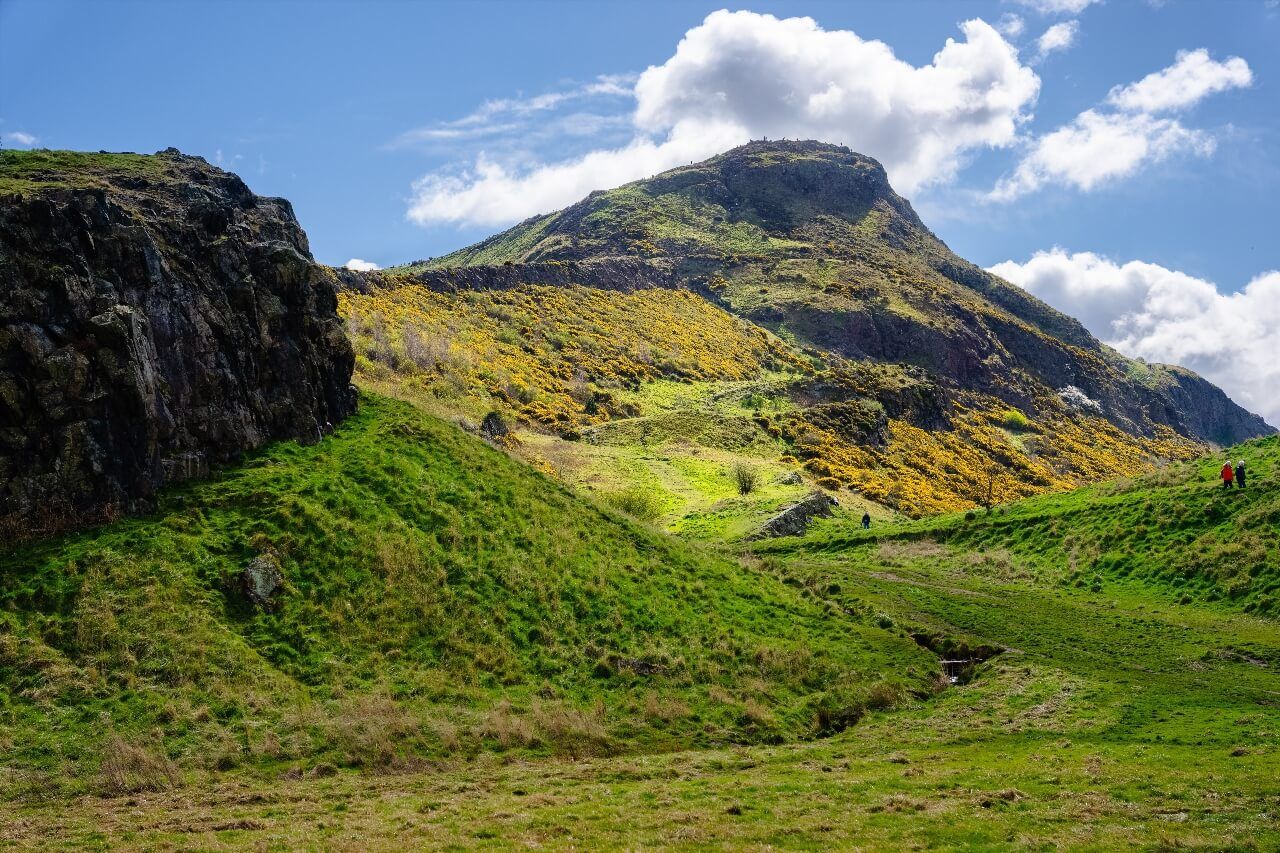
Holyrood Park (Queen's Drive, Edinburgh EH8 8HG, rated 4.8/5 on Google (14K reviews)) is a 263-hectare royal park contained almost entirely within the city boundaries, a fact that takes some getting used to when you are standing on moorland with curlews calling overhead and can see the glass facade of the Scottish Parliament 400 metres below.
Beyond Arthur's Seat itself, the park contains the Salisbury Crags (whose exposed rock face helped James Hutton frame the foundations of modern geology), the ruins of St Anthony's Chapel perched on the northern flank, and Dunsapie Loch, a small reservoir formed in the 1840s that now draws waterfowl year-round. Queen's Drive, the four-and-a-half-mile road that circles the park, is closed to motor traffic on Sundays, which makes it popular with cyclists and joggers and turns it into one of the most peaceful free things to do in Edinburgh on a weekend morning. The park is free and open at all times, and Edinburgh locals use it as a daily walking route rather than a tourist sight, which is arguably the best way to experience it.
27. Craigmillar Castle
Craigmillar Castle (Craigmillar Castle Road, Edinburgh EH16 4SY, rated 4.7/5 on Google (2 995 avis)), three kilometres southeast of the city centre, is one of the best-preserved medieval tower houses in Scotland and one of Edinburgh's most undervisited major attractions.
The castle dates from the late 14th century and was significantly expanded in the 15th and 16th centuries into a substantial fortified residence. Mary Queen of Scots retreated here after the murder of Rizzio in 1566; it was at Craigmillar that a group of Scottish nobles allegedly plotted the murder of her husband Lord Darnley, an event that triggered one of the most sensational scandals of Renaissance European politics. The castle passed into ruin in the 18th century and is now in the care of Historic Environment Scotland.
Admission is around £8 for adults. The views from the upper tower over Edinburgh and toward the Firth of Forth are excellent and the site is rarely crowded, even in summer. Getting there on public transport requires a short walk from the bus stop; a taxi is easier.
28. The Surgeons' Hall Museums
The Surgeons' Hall Museums (Nicolson Street, Edinburgh EH8 9DW, rated 4.7/5 on Google (4 459 avis)) on Nicolson Street are operated by the Royal College of Surgeons of Edinburgh, one of the world's oldest surgical colleges (founded 1505), and contain a combination of medical history, pathology specimens, and dental history that manages to be simultaneously educational, fascinating, and genuinely unsettling.
The History of Surgery Museum traces surgical practice from the Edinburgh Medical School's 18th-century golden age through the development of anaesthesia, antiseptics, and modern surgical techniques, many of which were developed or refined in Edinburgh. The Pathology Museum holds over 3,000 preserved anatomical specimens, including objects connected to the Burke and Hare murders of 1828 (the serial killers who provided fresh bodies to Edinburgh's anatomy schools). Admission is around £8. Not recommended for the squeamish, but one of the most genuinely illuminating museums in Edinburgh for those with a strong stomach and an interest in medical history.
29. Edinburgh's Underground City Tour
Distinct from the Edinburgh Vaults, several companies offer tours of Edinburgh's historical underground passages that focus on the network of passages and cellars beneath the Old Town created by successive waves of building above older street levels.
Mercat Tours' « Secrets of the Royal Mile » is the most historically rigorous, covering the development of Edinburgh's vertical city, buildings that rose six to eight storeys in the 17th century because space on the volcanic ridge was limited. The tour visits closes and vaults not accessible on the standard Vaults itinerary. The best underground experience in the city for those who want historical depth rather than ghost stories. Adult tickets are around £15.
30. Duddingston Village & Loch
Duddingston Village (The Causeway, Edinburgh EH15 3PX, rated 4.6/5 on Google (2K reviews)), at the southeastern corner of Holyrood Park, is one of Edinburgh's oldest settlements, a medieval farming and fishing village that has somehow survived the expansion of the city almost entirely intact.
The village consists of a handful of buildings along The Causeway, including the Sheep Heid Inn, Edinburgh's oldest pub, with a licence dating back to 1360. Robert Burns visited; Bonnie Prince Charlie reputedly played skittles here before the Battle of Prestonpans in 1745. The inn still operates a Victorian skittle alley. Duddingston Loch immediately behind the village is Edinburgh's only natural loch and a designated bird sanctuary, home to breeding swans, herons, and over a dozen duck species year-round. The loch and its surrounding reed beds can be viewed from the path that runs below Holyrood Park's boundary wall. The combination of the ancient village, the historic pub, and the loch wildlife makes this a genuinely rewarding two-hour walk from the Holyrood Park car park.
FAQ
How many days do you need to see Edinburgh?
Three days is the realistic minimum to cover the major attractions without rushing. Two days is enough for the Old Town highlights (Castle, Royal Mile, Greyfriars, a underground tour), but misses Leith, the New Town galleries, and the Royal Botanic Garden. Five days allows you to reach the outer edges, Portobello, Craigmillar, Dean Village, without feeling pressured. Many people return for a second visit specifically for the areas they missed the first time.
Is Edinburgh expensive?
Edinburgh is one of the UK's more expensive cities outside London, but the free attractions are genuinely world-class. The National Museum of Scotland, Scottish National Gallery, Scottish National Portrait Gallery, Princes Street Gardens, Calton Hill, Holyrood Park, and the Royal Botanic Garden all cost nothing to enter. A realistic daily budget covering paid attractions (castle, one underground tour, a whisky tasting), a pub lunch, and a sit-down dinner is around £80 : 120 per person.
When is the best time to visit Edinburgh?
August is Edinburgh at its most intense: the Edinburgh Festival and Fringe transforms the city into the world's largest arts festival, with over 50,000 performances across three weeks. Hotels cost two to three times their off-season rates. May, June, and September offer the best balance of reasonable prices, longer daylight hours, and manageable crowds. December brings Edinburgh's Christmas Market to Princes Street Gardens and St Andrew Square, popular and well-organised, though busy at weekends.
Is Edinburgh safe to visit?
Edinburgh is one of the safer large British cities. The Old Town and tourist areas are well-policed and the main streets are busy until late. Cowgate and the Grassmarket area can get rowdy on weekend nights; standard city-centre awareness applies. The main risks are the usual ones: watch your belongings in crowded tourist areas, particularly around the castle in summer.
What is Edinburgh famous for?
Edinburgh is internationally known for its medieval castle, the Edinburgh Festival and Fringe (the world's largest arts festival), its whisky heritage, its literary culture, Robert Burns, Sir Walter Scott, Robert Louis Stevenson, and Arthur Conan Doyle all have strong Edinburgh connections, and its dramatic Old Town built on a volcanic rock. The city is also the seat of the Scottish Parliament and the official Scottish residence of the British monarchy.
Can you walk everywhere in Edinburgh?
The Old Town and New Town are comfortably walkable, the core tourist area fits within about a 2-kilometre radius. Leith (Royal Yacht Britannia), Portobello Beach, and Edinburgh Zoo each require a bus or taxi. The Water of Leith Walkway connects Dean Village to the Royal Botanic Garden on foot in about 45 minutes. Good walking shoes are essential: the Old Town's steep cobbled streets and closes are hard on smooth-soled footwear.
Edinburgh rewards visitors who arrive curious about Scotland's complicated, violent, and creative history, and the best things to do in Edinburgh tend to be the ones that explain why the city looks the way it does. Every close on the Royal Mile has a story; every building on Princes Street was argued over. The city has been building on the same volcanic rock for a thousand years, layering history beneath history, and that depth is what separates a good Edinburgh visit from a great one. For a route that walks you through all of it, medieval close to Georgian crescent to volcanic summit, the Ryo Edinburgh Ryocity guide puts 24 audio stories into your ears as you walk the city's 8.3-kilometre circuit.