
Créé par Emilie, le 15 mai 2026
Votre guide Ryo
© Shutterstock
Looking for genuinely fun things to do in London? The city does not slow down. The capital that gave the world the Tube, afternoon tea and punk rock now layers rooftop saunas, immersive street art tunnels and self-guided audio walks into a schedule that could keep you busy for a month. Whether you are planning your first visit or your fifteenth, this list covers 35 genuinely rewarding experiences, from the iconic Thames panoramas you absolutely should see to the ruined church garden that barely appears on any map. Start your London adventure with the Ryo Ryocity audio tour of London, which brings the city's layered history to life as you walk its streets.
What you will find here goes beyond the generic sightseeing checklist. The best things to do in this city are rarely the ones at the top of the standard guidebooks. Think a cemetery where Victorian celebrities sleep under moss-covered obelisks, a food market under railway arches where a single stall sells four varieties of Scotch egg, a free rooftop garden 155 metres above Fenchurch Street, and a karaoke bar tucked beneath a Soho hotel that takes booking very seriously. London's range is absurd in the best possible way, and 2026 is an especially good year to plan your trip to London.
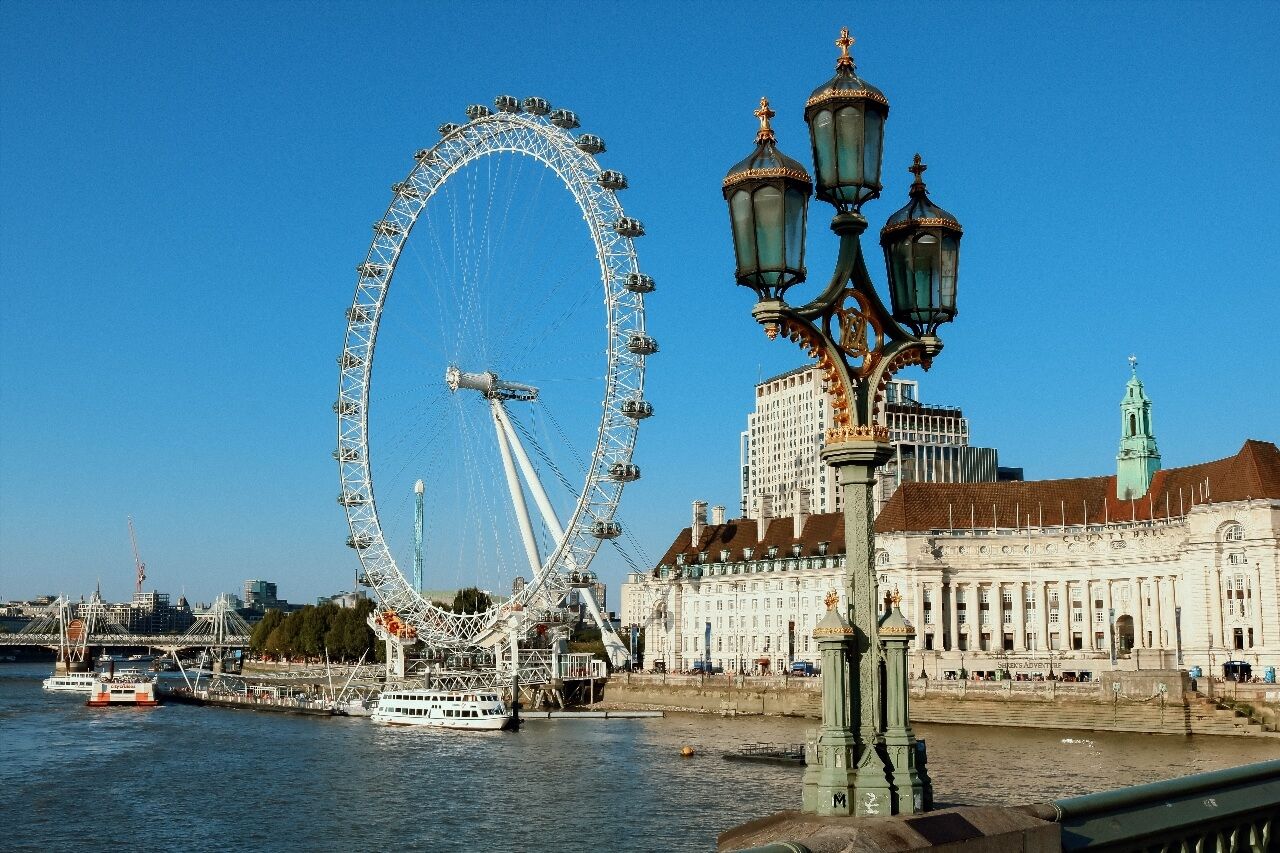
1. Ride the London Eye
The London Eye opened on the South Bank in 2000 and has since become as much a symbol of the city as the bridges it overlooks. At 135 metres, each rotation takes roughly 30 minutes and carries up to 800 passengers across 32 glass capsules, one for each of London's boroughs.
The views stretch west toward Windsor on a clear day and east past Canary Wharf to the Thames Estuary. Book the first or last ride of the day: the light at dawn and dusk turns the city gold, and the queues are a fraction of the midday crowds. Standard tickets start around £30, the fast-track option is worth it in summer when lines stretch back 45 minutes. If you want to turn the experience into something more memorable, champagne capsule packages are available and include a glass of sparkling wine during your rotation.
For most visitors, the Eye is the logical first stop: it gives you a geographic overview of the city before you navigate it on foot.
2. Explore the British Museum
Few institutions in the world collect human history as comprehensively as the British Museum. The building itself, a neoclassical construction on Great Russell Street with a Great Court roof designed by Norman Foster, is striking before you see a single artefact.
The collection spans 8 million objects across civilisations that no longer exist and some that are thriving. The Rosetta Stone sits in Room 4 behind a permanent crowd of smartphones, but the rooms that most visitors miss are equally extraordinary. The Lewis Chessmen, carved from walrus ivory in the 12th century and rediscovered on a Hebridean beach in 1831, occupy Room 40 with their grim, sideways stares. The Portland Vase in the Roman collection is the most famous piece of cameo glass ever made and was the object Josiah Wedgwood spent four years trying to copy. Room 62 holds the Egyptian Book of the Dead, with illustrated papyrus scrolls describing the soul's journey through the afterlife, and Room 25 contains the Benin Bronzes, whose legal status remains one of the most contested questions in modern museum ethics.
Practical strategy matters here because the museum is enormous and easy to do badly. Admission to the permanent collection is free. The museum opens at 10:00 and fills quickly; arrive at opening time or after 15:00, when school groups have largely cleared out. Allow at least three hours, allow a full day if you intend to be thorough, and accept that you will not see everything regardless of how long you stay. The Reading Room café inside the Great Court is a good spot for lunch without leaving the building, and the Norman Foster glass-and-steel roof above it is itself one of the most photographed architectural features in central London.
The temporary exhibitions carry an admission charge of around £20 and are often worth it: past shows on ancient Babylon, the Renaissance and the Aztec world have drawn international queues. Check the schedule before your visit, the major exhibitions sell out weeks in advance. The shop, occupying the same Great Court level, is one of the few museum shops worth a deliberate visit on its own terms, with a serious book collection on archaeology, ancient civilisations and museum history.
3. Walk Across Tower Bridge
Tower Bridge is the bridge most people picture when they think of London, not London Bridge, which is the relatively plain span just upstream. Built between 1886 and 1894, Tower Bridge was an engineering spectacle in its time: a Victorian bascule bridge capable of lifting its roadway to allow tall-masted ships through.
Crossing on foot is free and takes about five minutes, but the Tower Bridge Exhibition, which gives access to the glass walkways 42 metres above the Thames, costs around £12 and is worth the upward detour. Looking down through the glass floor to the river below is genuinely vertiginous. The exhibition also explains the Victorian steam engines that originally powered the bridge's lifting mechanism; they have been preserved in the engine rooms on the south side. Combine this with a visit to the Tower of London, just steps away on the north bank, for a half-day of medieval and Victorian history.
4. Watch a West End Musical
London's West End is the theatrical equal of Broadway, and by some measures its superior, given that the concentration of world-class venues within a walkable half-mile is unmatched anywhere else. Shows like The Phantom of the Opera, Les Misérables, Hamilton and Back to the Future: The Musical run in theatres that are architectural experiences in their own right.
Tickets vary enormously: day-seats are sold at many theatres from around £25 on the morning of the show, while premium Saturday-night seats for the biggest productions can exceed £150. The TKTS booth in Leicester Square sells same-day tickets at discounts of up to 50 percent, arrive before it opens at 10:00 to secure the most sought-after shows. Booking online in advance is advisable for any production you specifically want to see. The atmosphere inside a full house at the Lyceum, the Aldwych or the Shaftesbury is one of those London experiences that does not translate well into photographs.
5. Wander Camden Market
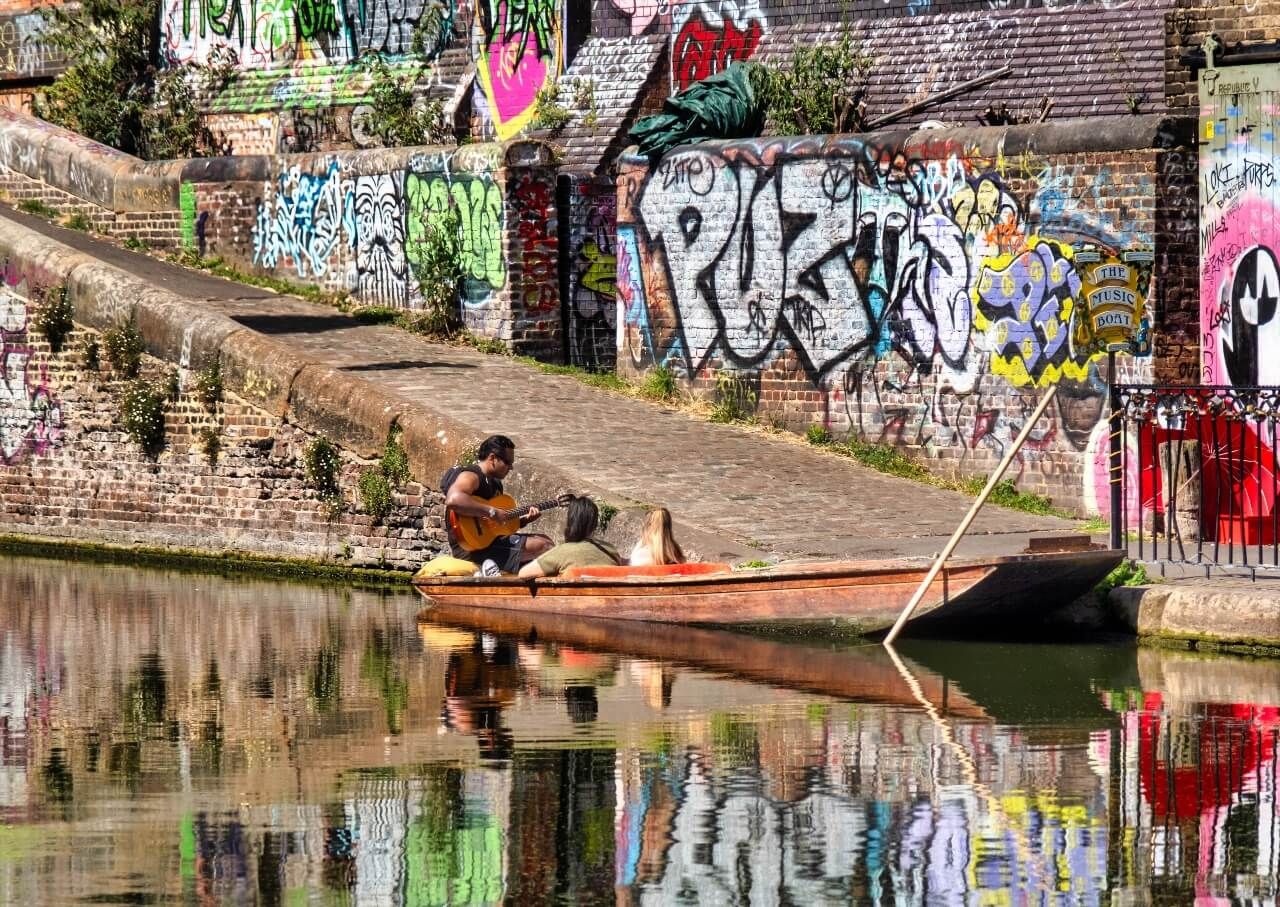
Camden has been London's alternative heartland since the 1970s, and the market that grew around the Lock has become one of the most visited destinations in the entire city, around 100,000 people pass through on a busy weekend. Do not let the crowds put you off.
The market sprawls across several interlocking areas: Camden Lock Market itself, the Stables Market in a converted horse hospital with vaulted catacombs, the Electric Ballroom and the outdoor stalls along the high street. Food is a genuine strength, you can eat Korean BBQ, Ethiopian injera, Venezuelan arepas and Jamaican patties within a 100-metre radius. The Stables Market in particular rewards slow exploration: taxidermy, vintage militaria, antique jewellery, independent clothing designers and second-hand vinyl compete for your attention across three floors of Victorian brickwork.
Arrive before 11:00 on a Sunday to beat the worst of the crowds. Camden Town station exits directly onto the high street; the walk along Regent's Canal from Camden toward Regent's Park afterward is one of the most pleasant half-hours in London.
Note that the Inverness Street Market, just south of the main Lock area, offers a more relaxed shopping experience with produce stalls and independent traders.
6. Cruise the Thames
Seen from the water, London resolves into clear layers: medieval fortress, Victorian civic facades and the glass towers of the last 30 years stacking up behind them.
City Cruises runs between Westminster, the South Bank, Tower Bridge and Greenwich. A single journey takes about an hour and costs roughly £15. Evening dinner cruises depart from several piers and are particularly striking between Waterloo Bridge and Tower Bridge once the floodlights come up.
7. Visit Tate Modern
Tate Modern occupies the former Bankside Power Station on the South Bank, a building so architecturally dramatic that the art inside sometimes struggles to compete with the turbine hall it inhabits. The main space, the Turbine Hall itself, is five storeys tall and hosts a rotating series of large-scale commissions that are free to view.
The permanent collection of modern and contemporary art is spread across two buildings: the original Boiler House and the newer Blavatnik Building, which opened in 2016. Highlights include Rothko's Seagram Murals, Picasso's cubist portraits, Warhol's silkscreens and a permanent room dedicated to Joseph Beuys. The top-floor café offers one of the best unobstructed views of St Paul's Cathedral across the river, no ticket required. Admission to the permanent collection is free; temporary exhibitions charge £20-25. The Millennium Bridge connects Tate Modern directly to the north bank and St Paul's in a five-minute walk.
8. Tour the Tower of London
Over 900 years old, the Tower of London has served as a royal palace, a political prison, a mint, a menagerie and the home of the Crown Jewels. It remains one of the most historically dense sites anywhere in Europe and one of the most rewarding fun things to do in London with a half-day to spare.
Admission costs around £34 for adults and includes access to the Crown Jewels. The Cullinan I diamond set into the Sovereign's Sceptre weighs 530 carats, making it the largest clear-cut diamond in the world; the cabinets housing the regalia run on a moving travelator so the queue keeps moving even at peak times. The Yeoman Warder tours, conducted by the Beefeaters who actually live within the Tower walls with their families (a rare residential lease in central London), run roughly every half hour and are included with entry. They are more entertaining than most paid tours: gallows humour, capital punishment trivia and the occasional dig at Henry VIII delivered with practised timing.
The White Tower in the centre of the complex, built by William the Conqueror from 1078 onwards, contains the Royal Armouries collection. Henry VIII's personal armour is the showpiece, expanding noticeably in the waist as his years progress, and the upper floors hold the Line of Kings, one of the oldest tourist attractions in the world (visitors paid to see it as early as the 1660s). Don't miss the graffiti carved by 16th-century prisoners in the Beauchamp Tower, some of it executed with painful precision over months of confinement.
The ravens are a draw in themselves. At least six must remain on the grounds at all times, per a tradition that claims the kingdom will fall if they leave; in practice the Ravenmaster keeps seven, with one in reserve. Each bird has a name, a territory within the grounds and a daily rotation of meat, dog biscuits soaked in blood, and the occasional egg. Allow two to three hours minimum, more if you linger over the Jewel House or follow the Ryo Ryocity audio guide for context as you cross between bastions and towers.
9. Afternoon Tea on a Double-Decker Bus
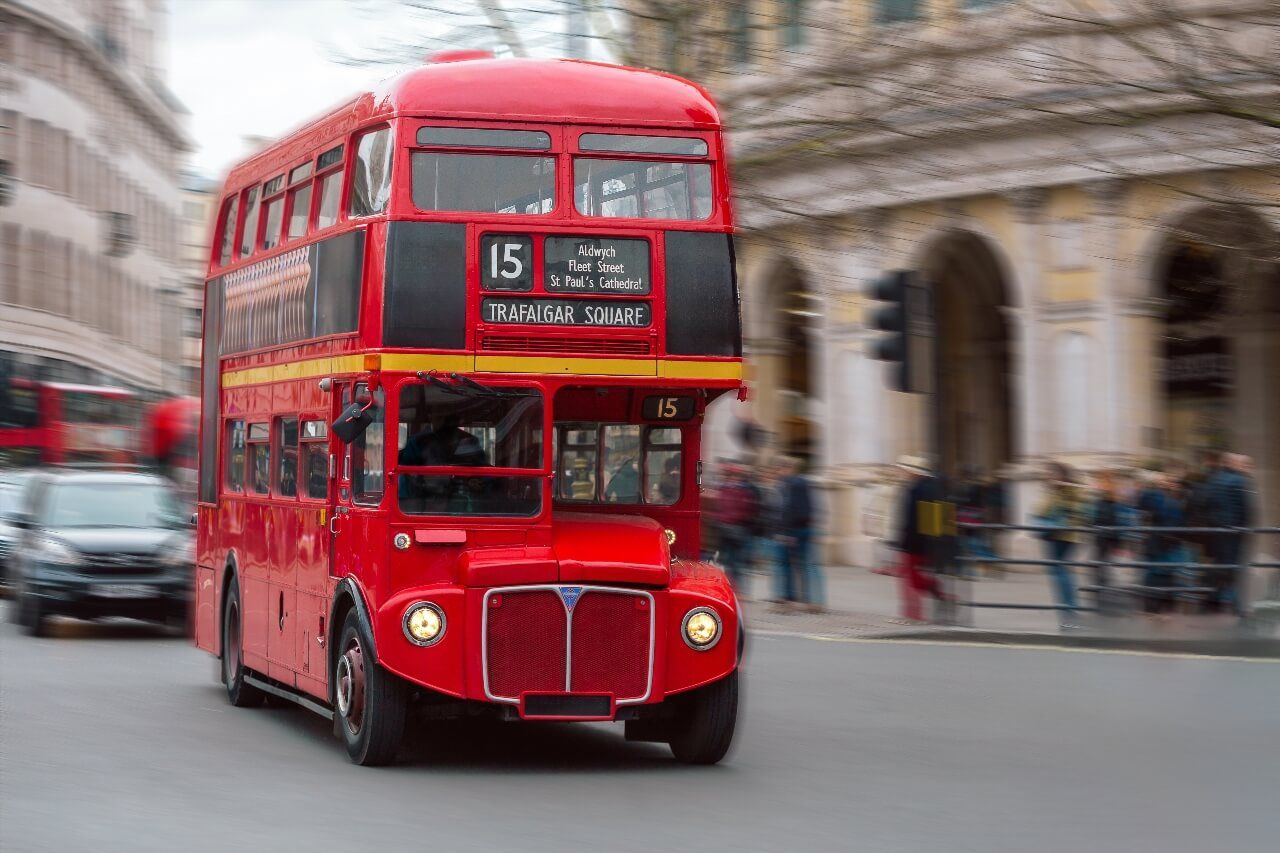
Combining a red double-decker bus with afternoon tea sounds gimmicky and somehow works.
B Bakery Afternoon Tea Bus Tours depart from Victoria Embankment and route past Westminster, Buckingham Palace and Hyde Park while you work through finger sandwiches, scones and pastries. Journey: 90 minutes. Prices: £45-65. Book a week ahead, it sells out on weekends.
10. Climb to the Sky Garden
The Sky Garden at 20 Fenchurch Street, the building popularly known as the Walkie-Talkie, is free to visit and offers a 360-degree view across London from 155 metres. It is also, improbably, a functioning garden: tropical plants fill the three floors of glass-enclosed viewing space.
Booking is essential and free, reserve your slot at least two weeks in advance on the Sky Garden website, especially for weekend mornings. Slots are released 21 days ahead and disappear within hours. If you cannot get a garden ticket, the bar and restaurant at the top also require reservations but provide the same views over drinks. The north-facing panorama takes in St Paul's, the Gherkin, the Tower of London and, on clear days, the Shard and Canary Wharf simultaneously. This is one of London's genuinely generous experiences: a world-class view at no cost, in a space that is architecturally impressive and properly maintained.
11. Discover Borough Market
Borough Market (8 Southwark St, SE1 1TL London, rated 4.6/5 on Google (126 909 avis)) under the railway arches at London Bridge is one of the oldest markets in England, with trading on this site since at least the 13th century. The modern market, rebuilt after a 2017 fire and partly modernised after the 2017 London Bridge terror attack that hit it directly, operates Thursday through Saturday and reaches peak energy on Friday and Saturday mornings.
The food offer is the densest concentration of serious British produce anywhere in the country. Neal's Yard Dairy sells clothbound cheddars from Westcombe and Montgomery, washed-rind alpine-style cheeses from Sussex and the kind of fresh goat's curd that ruins supermarket cheese for you afterwards; Monmouth Coffee has one of its two London locations here and roasts on Bermondsey Street nearby. The Scotch Egg Challenge stall produces eggs with yolks ranging from runny to set, wrapped in sausage meat seasoned with wild garlic, black pudding or spiced lamb, with a perfect golden breadcrumb crust. The bread stalls are serious: Bread Ahead runs courses in the railway arches behind the market, Olivier's Bakery specialises in Pain de Campagne and sourdough rye, and the German-style seeded loaves at the Black Pig stall sell out by mid-morning.
Beyond the bakers and cheesemongers, look for the Ginger Pig butcher counter (whole hogget, mutton, dry-aged beef), Brindisa for jamón ibérico carved to order, and the Turnips fruit and veg stall where chef Andrea Riva does pop-up dinners on the produce that did not sell. Come hungry and allow at least 90 minutes to eat your way through it properly. The market is enclosed enough to remain usable in rain, which is a practical consideration in London almost year-round. Arrive before 11:00 on Saturday if you want to move freely; by midday the central avenue is shoulder-to-shoulder and getting from a cheese counter to a coffee queue takes twice as long.
12. Walk Under the River Thames
Most visitors cross the Thames on bridges. Far fewer walk under it, which is exactly what makes the Greenwich Foot Tunnel (Cutty Sark Gardens, SE10 9LW London, rated 4.6/5 on Google (85 avis)) worth doing.
Built in 1902 to allow south-bank workers to reach the docks on the Isle of Dogs, the tunnel runs 504 metres beneath the riverbed at a depth of about 9 metres below the water surface. You descend via a circular elevator or a spiral staircase at the Greenwich entrance, walk a white-tiled corridor with a slight upward curve midway (following the riverbed contour), and emerge on the Isle of Dogs. The experience is oddly meditative, it is very quiet, slightly echo-y, and entirely free. Combine it with a visit to the Cutty Sark, the Painted Hall at the Old Royal Naval College and the Royal Observatory for a full Greenwich day.
13. See the Churchill War Rooms
Beneath the streets of Westminster, the basement complex where Winston Churchill and his cabinet directed Britain's war effort from 1939 to 1945 has been preserved exactly as it was on VE Day, when the lights were switched off and the door was locked.
The Churchill War Rooms (119 Kensington Church St, W8 7LN London, rated 4.5/5 on Google (8 435 avis)) (Clive Steps, King Charles St, SW1A 2AQ London, rated 4.6/5 on Google (15 412 avis)) are now operated by the Imperial War Museum and include both the original Cabinet War Rooms, the Map Room still shows the positions of convoys across the Atlantic as they were tracked in real time, and the Churchill Museum, which opened in 2005 and traces his life and political career through documents, personal objects and audio recordings.
Admission is around £30 for adults. The Map Room is the emotional centrepiece: rows of coloured pins in the Atlantic map, telephone receivers, and an ashtray on the conference table create the feeling of having walked into 1943. Allow two hours. The site is relatively compact but information-dense; audio guides add significant depth to the visit.
14. Stroll Through St Dunstan in the East
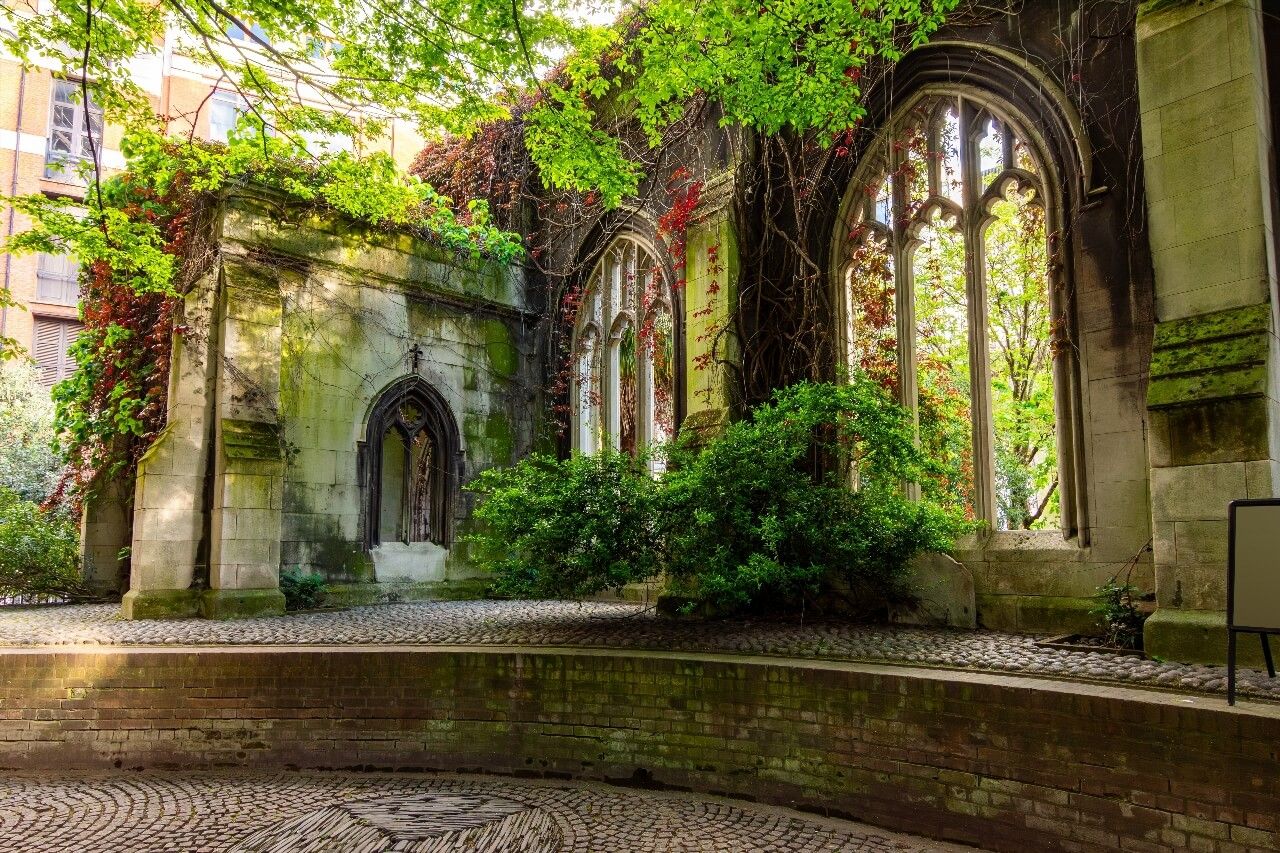
St Dunstan in the East (St Dunstan's Hill, EC3R 5DD London, rated 4.7/5 on Google (8 239 avis)) was bombed in the Blitz and left as a ruin. The City of London turned it into a public garden rather than restoring it.
Climbing plants now cover the Gothic stonework, trees grow from the old floor, and light pours through the open nave. One of the quietest spots in the City, free, and almost unknown outside the immediate neighbourhood.
15. Explore the Barbican Conservatory
The Barbican Conservatory (Silk St, EC2Y 8DS London, rated 4.5/5 on Google (1 206 avis)) is London's second-largest indoor tropical garden, and it sits improbably inside the brutalist Barbican complex, a 1970s residential and arts centre in the City that looks, from the outside, like a building designed to discourage visitors.
Inside, 2,000 species of tropical plants and cacti fill a glass-roofed space built into the roof of the Barbican's fly tower. Tree ferns from New Zealand share the space with bird-of-paradise flowers, desert succulents arranged in dramatic architectural groupings and the kind of palms that take decades to grow this large. The conservatory is open to the public on Sundays and some bank holidays, free of charge. Arrive at opening, it fills quickly, and the space is best experienced when you can stand still under the canopy and take in how unexpected the whole thing is. Check the Barbican website before visiting as opening hours vary seasonally.
16. Catch a Show at Shakespeare's Globe
Shakespeare's Globe (21 New Globe Walk, SE1 9DT London, rated 4.6/5 on Google (24 252 avis)) on the South Bank is a reconstruction of the original 1599 Globe Theatre, built as close as possible to the original site using Elizabethan construction methods, including the only thatched roof permitted within the City of London since the Great Fire of 1666.
Groundling tickets, standing in the yard directly in front of the stage, cost £5 and represent one of the most authentic theatrical experiences the city offers. You stand exactly as Shakespeare's original audience stood: close to the actors, exposed to the weather (bring a waterproof for the evening performances), and fully present in the circular open-air architecture. Gallery seats with a view range from £25 to £55. The season runs from April to October. Even outside performance times, the Globe offers educational tours of the theatre and its reconstruction process, which are particularly interesting for the forensic detail of how Elizabethan staging worked.
17. Visit Highgate Cemetery
Highgate Cemetery (Swain's Lane, N6 6PJ London, rated 4.7/5 on Google (1 528 avis)) opened in 1839 as one of London's Magnificent Seven Victorian cemeteries, planned garden cemeteries built to relieve the catastrophically overcrowded churchyards of the expanding city.
The East Cemetery, where Karl Marx is buried beneath a large bronze bust commissioned in 1956, is open to independent visitors for a small fee. The West Cemetery, the older, more atmospheric half, can only be visited on a guided tour. The Egyptian Avenue, a corridor flanked by obelisks leading to the Circle of Lebanon (a sunken ring of mausolea built around a centuries-old cedar tree), is genuinely extraordinary architecture for a burial ground. Among those interred here are George Eliot, Douglas Adams, Malcolm McLaren and a Victorian lion tamer named George Wombwell, whose tomb is topped with a recumbent stone lion.
Tours of the West Cemetery depart regularly; booking online is advisable. Entry to the East Cemetery costs around £5; West Cemetery tours cost around £15. The Friends of Highgate Cemetery, who maintain the grounds entirely through volunteer effort and ticket sales, deserve the revenue.
18. Spend an Evening in Shoreditch
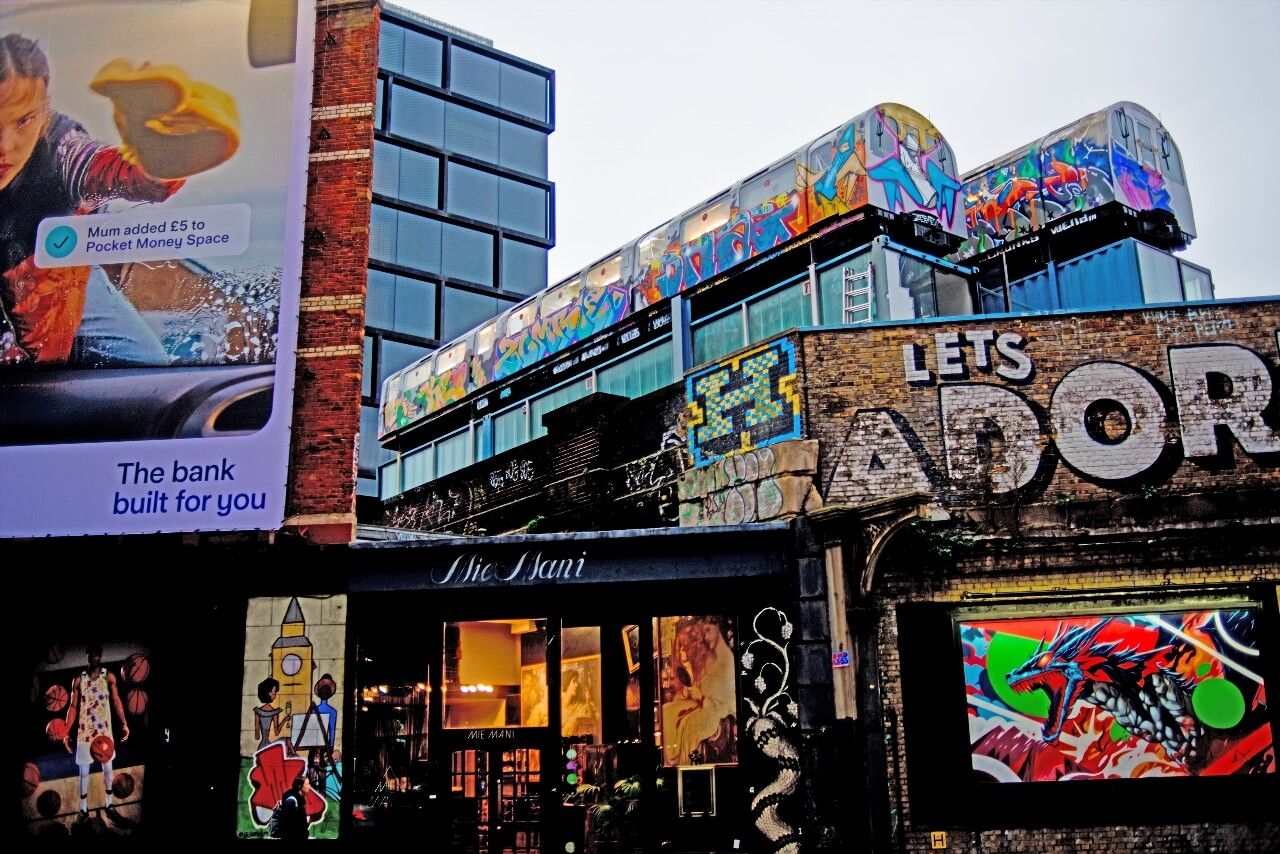
Shoreditch (Shoreditch High St, E1 6JE London, rated 4.2/5 on Google (895 avis)) in East London shifted from industrial warehouse district to creative quarter over the course of about a decade starting in the late 1990s, and has since become one of the most architecturally and culturally energetic neighbourhoods in the city. The regeneration was uneven, parts of it remain unsentimental and parts have tipped into expensive parody, but the overall density of interesting things per square mile is unmatched in London.
The street art along Brick Lane and the surrounding streets changes continuously, some of it by internationally recognised artists (Stik, ROA, D*Face), some by unknowns who work at night and disappear before sunrise. Walk a slow loop around Hanbury Street, Princelet Street and Heneage Street to catch the largest concentration of new pieces, then double back via Buxton Street where the Banksy work referenced in the early Cans Festival posters once stood. Redchurch Street has London's best concentration of independent design shops (Aida, Labour and Wait, Maiden), concept restaurants (Brat above the Climpson's Arch coffee bar) and serious coffee. The Box Park on Shoreditch High Street, a shopping centre made entirely of shipping containers, was the template for a format that has since been replicated worldwide from Detroit to Dubai.
In the evening, the area around Curtain Road and Hoxton Square fills with a mix of craft beer bars (the Old Fountain has been pouring obscure cask ales since 1934 without trying to be ironic), natural wine venues (P. Franco, Sager + Wilde), and restaurants covering cuisines from Georgian khachapuri to Japanese izakaya. If you are exploring London with the Ryo London audio guide, the financial district borders Shoreditch to the west and the contrast between the two, glass towers versus brick warehouses, suits versus tattoo sleeves, is itself instructive about how the city regenerates and resists at the same time.
The best time to visit is Friday evening, when the energy peaks without the overcrowding of Saturday night. Sunday is the calmer alternative if you also want to do the Spitalfields and Columbia Road markets in the same trip.
19. Experience the Leake Street Arches
Leake Street (Leake St, SE1 7NN London, rated 4.7/5 on Google (5 841 avis)) runs beneath Waterloo station and has been designated a legal graffiti tunnel since street artist Banksy organised the Cans Festival there in 2008.
The tunnel walls are repainted continuously, the artwork you see today will be different from what was there last week. During the day it is walkable for free; at night several bars and event spaces within the tunnel operate separately. The arches have evolved into a mixed-use venue that hosts club nights, pop-up restaurants and art shows. It is one of those genuinely Londonspecific spaces that emerged not from planning but from permission, a legal grey area that became legitimate and then thriving.
20. Browse Portobello Road Market
Portobello Road Market (Portobello Rd, W11 1LU London, rated 4.5/5 on Google (28 428 avis)) in Notting Hill is one of the longest street markets in the world, stretching for roughly a mile from Notting Hill Gate station down toward Ladbroke Grove.
The antique market, which concentrates in the southern section toward Notting Hill Gate, operates mainly on Saturdays and is one of the best places in Britain to find Georgian silver, Victorian jewellery, art deco ceramics and edwardian curiosities at prices that, while not bargain-basement, are significantly below what auction houses charge. The further north you walk, the more the market transitions from antiques to fresh produce, vintage clothing and food stalls. The side streets off Portobello, Elgin Crescent, Blenheim Crescent (home of the Travel Bookshop that inspired the film Notting Hill) and Westbourne Grove, are worth exploring for their independent shops and cafés.
21. Step Inside the Natural History Museum
The Natural History Museum in South Kensington is housed in a Romanesque building designed by Alfred Waterhouse and completed in 1881, itself a significant work of Victorian architecture, with terracotta panels depicting animals from across the natural world decorating every surface.
Admission is free. The central hall is dominated by a cast of a blue whale skeleton 25.2 metres long, suspended from the ceiling, it replaced the famous Diplodocus cast (on long-term loan to Carnegie Museum) in 2017 and is, if anything, more impactful. The Human Evolution gallery traces the genus Homo from early African ancestors through Neanderthals to anatomically modern humans with forensic clarity. The Vault in the Earth Galleries contains the Sikhote-Alin meteorite and a 563-carat Star of India sapphire. The Hope diamond of London, a blue diamond in the Vault collection, is frequently overlooked by visitors rushing to the dinosaur gallery, which is also excellent.
Arrive at opening (10:00) or after 14:30 on weekdays to avoid school groups. The museum is open daily and free of charge for the permanent collection.
22. Sing at Lucky Voice Karaoke
Lucky Voice invented the UK private karaoke booth in Soho in 2005. Rooms hold 2 to 30 people, the catalogue runs to over 10,000 tracks, and food and cocktails arrive straight to your door. Two hours costs roughly £20-30 per head. Thursday and Friday evenings fill fast, book a week ahead.

23. Take a Harry Potter Studio Tour
Warner Bros. Studio Tour London, The Making of Harry Potter (Studio Tour Drive, WD25 7LR Watford, rated 4.8/5 on Google (101 377 avis)) is technically in Watford, about 20 minutes by train from Euston, but it functions as a London excursion and sells out months in advance for good reason.
The tour covers the original film sets, the actual Great Hall, the Forbidden Forest, the Hogwarts Express, alongside thousands of original costumes, props and animatronics used across the eight films. The detail is remarkable: the Potion Master's classroom still has original labels on every jar. The outdoor section includes the Knight Bus, Privet Drive and the original flying Ford Anglia. Butter Beer is served in the studio café and is, objectively, very good. Tickets run about £52 for adults and are released months ahead; always book the specific date and time you want rather than hoping for last-minute availability.
24. Wander the Hill Garden and Pergola
The Hill Garden and Pergola (Inverforth Close, NW3 7EX London, rated 4.8/5 on Google (2 531 avis)) on Hampstead Heath was built for William Leverhulme between 1905 and 1925 as an elevated walkway above his private garden.
Wisteria-draped columns, climbing roses, raised terrace views across north London. Free. Best in late May and early June when the wisteria blooms. Access via a footpath from North End Way.
25. Explore Brick Lane
Brick Lane (Brick Lane, E1 6RF London, rated 4.6/5 on Google (1 473 avis)) is simultaneously a street, a neighbourhood, a Sunday market and a slice of the history of immigration in East London.
The street runs north to south through Spitalfields and Whitechapel, and the community that lines it has shifted over centuries: from Huguenot silk weavers who fled France in the 17th century, to Jewish immigrants who established the rag trade in the 19th, to the Bangladeshi community that arrived in the 20th and whose restaurants have made the street synonymous with curry in London. The Beigel Bake at the northern end, open 24 hours, seven days a week, sells salt-beef beigels for around £4 and is a London institution without sentimentality. On Sundays the market stretches from the Truman Brewery complex all the way into Sclater Street and Columbia Road, with vintage clothes, street food, vinyl and miscellaneous objects filling every available space.
26. See the House of MinaLima
The House of MinaLima (26 Greek St, W1D 5DE London, rated 4.7/5 on Google (3.8K avis)) on Greek Street is the Soho studio of Miraphora Mina and Eduardo Lima, the graphic designers behind the wizarding world's entire visual identity across all eight Harry Potter films.
Free entry, four floors of original prints and props inside a Georgian townhouse. Quieter and more design-focused than the Warner Bros tour. Allow about an hour.
27. Visit the Wellcome Collection
The Wellcome Collection (183 Euston Rd, NW1 2BE London, rated 4.5/5 on Google (1 410 avis)) on Euston Road describes itself as a museum for the curious, which is accurate but undersells what it actually does: display the intersection of art, science and medicine in ways that are consistently thought-provoking.
The permanent gallery, Medicine Man, was assembled by pharmaceutical entrepreneur Henry Wellcome and contains around 5,000 objects: Napoleon's toothbrush, an iron lung used in a 1950s polio ward, Peruvian trepanation tools from 1000 BCE, Darwin's walking stick and a 17th-century ivory anatomical model of a pregnant woman. The temporary exhibitions change several times a year and have explored topics ranging from the science of sleep to the history of ovulation. Admission is free. Open Tuesday through Sunday; closed Mondays.
28. Discover Covent Garden
Covent Garden was London's central fruit and vegetable market from the 17th century until 1974, when the market relocated to Nine Elms and the Victorian market building was repurposed as a shopping and dining complex.
The piazza outside is now one of the most reliably entertaining public spaces in the city: street performers, human statues, opera singers and acrobats work the crowds throughout the day, sometimes with extraordinary skill. The London Transport Museum on the east side of the piazza is worth the £22 admission if you have any interest in the history of the Tube or in the iconic design legacy of the Underground. The covered market building houses independent shops on two levels, with a food market in the lower level. The streets north toward Seven Dials, particularly Neal Street and Monmouth Street, are London's best territory for independent booksellers, independent shoe shops and quality coffee.
29. Take a Bike Tour Along the Canal
London's canal network predates the railway and ran for a century as the city's primary goods transport system. Today the towpaths are cycle routes, and the stretch between Camden and Little Venice along Regent's Canal is arguably the most scenic two hours you can spend in London without paying entry to anything.
Several cycle hire operators in Camden offer bike rentals from around £20 for a half-day. The route passes houseboats, narrowboats selling coffee and cake, the London Zoo (visible from the canal path behind its fence), the aviary over the towpath, and the park-edge of Regent's Park before opening into the basin at Little Venice, a wide junction where three canals meet and narrowboats are moored in clusters. The walk takes about 45 minutes; the cycle about 25. You can return on the same route or take the Tube from Warwick Avenue, a five-minute walk from the basin.
30. Visit the Churchill Arms Pub
The Churchill Arms on Kensington Church Street is one of the most photographed pub facades in London, its exterior so comprehensively covered in seasonal flower baskets that the building itself becomes temporarily invisible beneath the blooms.
Over 50 hanging baskets are maintained in summer, along with the Union flags, old photographs, chamber pots and Winston Churchill memorabilia that cover every interior surface. The pub was established in 1750 and has been trading in some form since. The attached Thai restaurant, operating from a converted conservatory at the back, serves some of the best value Thai food in London. The combination of Victorian pub atmosphere and good cooking makes this worth the detour to Kensington.
31. Explore Kensington Palace
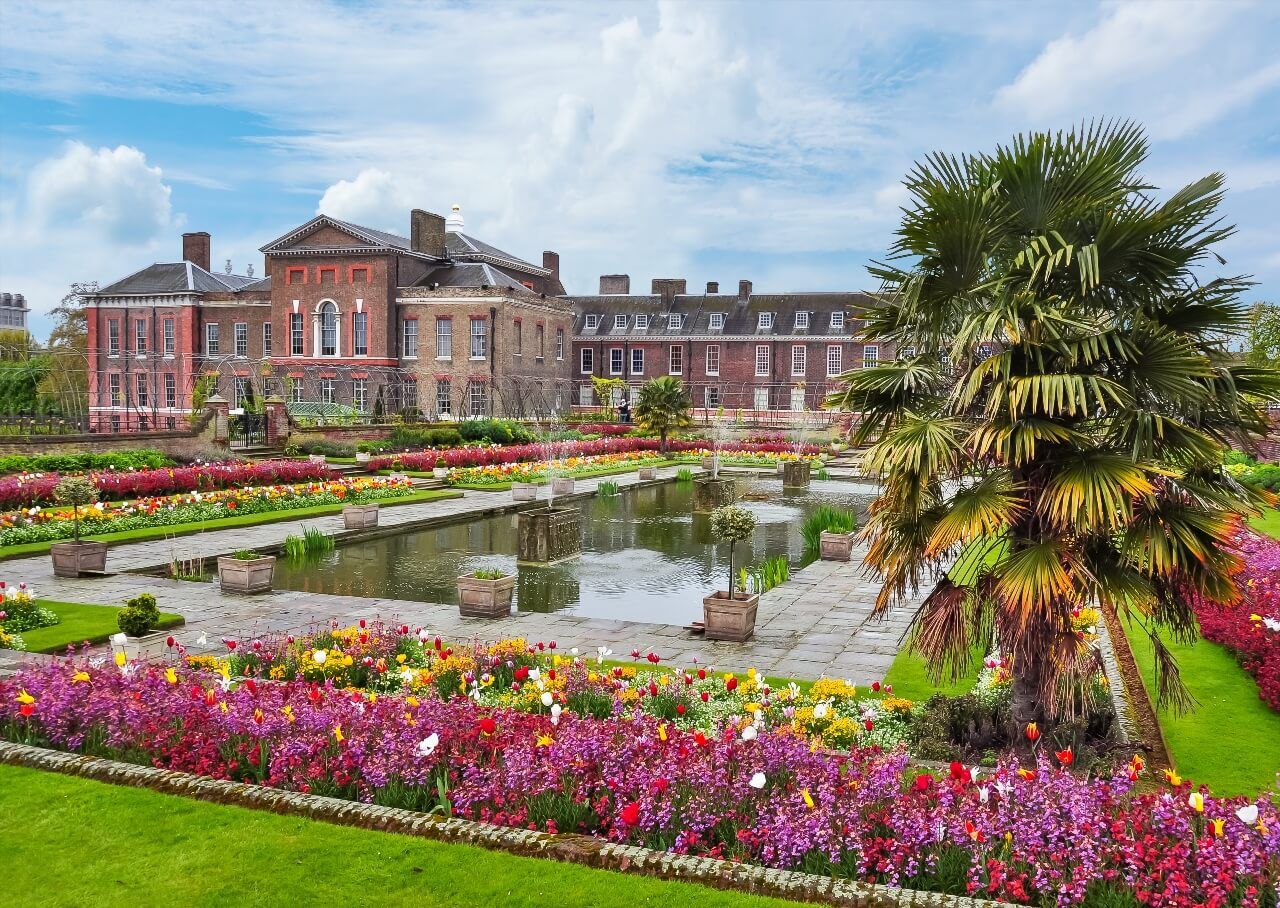
Kensington Palace (Kensington Gardens, W8 4PX London, rated 4.5/5 on Google (31 787 avis)) has been a royal residence since William III bought and expanded it in 1689. It is still used as a working royal residence, several members of the Royal Family live in private apartments within the palace, but significant portions are open to the public.
The State Apartments were designed partly by Christopher Wren and contain an exceptional collection of royal portraits. The King's and Queen's State Apartments date from the early 18th century and retain their original painted ceilings and gilt furnishings. The exhibition spaces are used for rotating displays: the palace has hosted major exhibitions on Queen Victoria, Princess Diana's wardrobe and the history of royal fashion. Admission costs around £20. The surrounding Kensington Gardens are free and contain the Serpentine Gallery (contemporary art, free admission) and the Diana Memorial Playground, both worth the detour.
32. Marvel at the View from The Shard
The Shard is the tallest building in the United Kingdom at 309.6 metres, and its observation deck, The View from The Shard, provides a 360-degree panorama over London and, on exceptionally clear days, as far as 64 kilometres in every direction. The architect Renzo Piano designed the building as a vertical city, with offices, residences, hotel and viewing platform stacked into a single tapered glass spire that catches different colours depending on the weather.
Admission to the observation deck costs around £32 and includes access to floors 68 to 72. The open-air terrace on floor 72 is exposed to the weather, which, depending on the season, can mean exhilarating wind, sideways rain or misty cloud at roof level (the cloud experience is genuinely strange, a small price to pay if your booking falls on a grey day). Book for early morning on a weekday: the city waking up below, with low light and minimal cloud, is the best version of this view. Avoid school holidays and Saturday afternoons unless you enjoy crowds at altitude.
The Shard also contains hotels, restaurants and bars on the upper floors, including the Aqua Shard restaurant on floor 31 (modern British, three-course lunch around £45), the Hutong Chinese restaurant on floor 33, and the Oblix bar on floor 32 where you can drink at altitude without paying the observation deck ticket, though you will need a reservation for any of them. The Shangri-La hotel occupies floors 34 to 52, with one of the highest hotel swimming pools in Europe on level 52, accessible to guests only.
33. Spend a Morning at Spitalfields Market
Old Spitalfields Market (16 Horner Square, E1 6EW London, rated 4.6/5 on Google (9 868 avis)) has been operating on the same site in the East End since 1682, when Charles II granted a licence for fresh fruit and vegetables to be sold here on Sundays.
The Victorian market hall, built in 1893, still stands, though it has been extended and partly modernised. Today the market operates daily, with the best selection of independent traders on Thursdays and Sundays. The food stalls alone justify a visit: smoked meats, artisan chocolates, international street food and quality coffee from independent roasters. The clothes and crafts section mixes established independent labels with student designers and vintage dealers. The surrounding neighbourhood, Shoreditch to the north, the City to the west and the Bengali community of Brick Lane to the east, makes Spitalfields a natural hub for a half-day in the East End.
34. Visit the Outernet London
The Outernet (1 St Giles High St, WC2H 8AG London, rated 4.6/5 on Google (2 804 avis)) at St Giles Circus, adjacent to Tottenham Court Road station, is a free immersive arts space that wraps four-storey digital screens around a public plaza in the heart of Central London.
The screens, some of the largest LED displays in the world, show rotating programmes of digital art, live music streams and commissioned works. Several underground venue spaces within the complex host live performances. Entry to the outdoor plaza is permanently free; indoor events vary. The combination of the screen scale and the urban setting creates something that is hard to categorise, not quite cinema, not quite street art, not quite concert, and it represents a genuinely new kind of cultural space for London.
35. Experience a Rooftop Sauna
London has developed a taste for rooftop experiences, and the most surprising addition to this genre is the Peckham Levels (95A Rye Lane, SE15 4TG London, rated 4.4/5 on Google (1 464 avis)) rooftop sauna operated seasonally by several wellness operators who set up wood-fired saunas on the seventh floor of a multi-storey car park in southeast London.
The view over south London from a sauna bench while the city goes about its business below is a genuinely strange and enjoyable experience. Sessions are bookable, cost around £25-35, and are typically combined with cold plunge pools on the same rooftop terrace. Several similar pop-up sauna experiences operate across London at various locations, check current operators as these change seasonally. For a more permanent option, the spa at the Leman Locke Hotel in Aldgate includes rooftop bathing facilities open to non-guests.
FAQ
What are the best free things to do in London?
London offers an extraordinary range of free attractions. The British Museum, Natural History Museum, Tate Modern, National Gallery, Victoria and Albert Museum and the Science Museum all offer free admission to permanent collections. The Sky Garden observation deck is free but requires advance booking. St Dunstan in the East garden and the Barbican Conservatory (Sundays) are free and almost entirely unknown to tourists. Hyde Park, Regent's Park and Hampstead Heath cost nothing to enter.
How many days do you need to see London properly?
A minimum of four days allows you to cover the central highlights without rushing, the South Bank, the City of London, Westminster and one or two outer neighbourhoods. A week is more comfortable. Ten days allows you to include day trips to Greenwich, Hampton Court, Kew Gardens and the Harry Potter Studio Tour. Most visitors who feel they have seen London adequately have spent at least five days.
What is the best way to get around London?
The London Underground (the Tube) is the fastest way to cover long distances. For shorter journeys, walking is often faster than any other method, the distance between many central landmarks is deceptive on the map. Use an Oyster card or contactless bank card for all public transport: buying single paper tickets is significantly more expensive. Buses are cheaper than the Tube for short hops and give better views of the city, particularly the double-decker routes across Westminster Bridge and along the Embankment.
When is the best time to visit London?
Late April through June offers the best balance of mild weather and manageable crowds. July and August are the peak tourist months, school holidays fill the major attractions and accommodation prices peak. September and October are excellent: the weather remains reasonable, the crowds thin, and the cultural calendar (theatre, gallery openings, food festivals) reaches its autumn high point. December brings Christmas markets and lights but also cold weather and higher prices.
Is London expensive for tourists?
London's major museums are free, which dramatically reduces the cost of a cultural visit. The main expenses are accommodation, transport and food. A mid-range dinner for two in a neighbourhood restaurant costs £60-90 including wine. The Tube is expensive by European standards, budget roughly £5-8 per day on transport if using Oyster. Borough Market, the various street food markets and the pub lunch circuit offer good value eating. A realistic daily budget for a mid-range visitor, excluding accommodation, runs around £80-120.
What neighbourhoods are worth exploring beyond the tourist centre?
Shoreditch and Spitalfields in the East End offer the best street art, independent restaurants and market culture. Brixton in south London has one of the city's best food markets and a music culture centred on venues like the Ritzy and the O2 Academy. Stoke Newington in north London offers a quieter, more residential version of London with good independent bookshops, parks and excellent Turkish restaurants. Bermondsey has become London's best destination for independent galleries and quality wine bars over the last decade.
London rewards curiosity above almost any other quality. The city's 32 boroughs plus the City of London each have their own character, their own markets, their own pubs and their own micro-histories, and very few of them appear on standard tourist itineraries. The most fun things to do in London are usually the ones that emerge once you stop following the standard route. Start with the Ryo London Ryocity audio tour to get your bearings in the historic centre, then let the neighbourhoods pull you outward at their own pace. The city will keep delivering discoveries for as long as you keep looking.