





Walk
Between Ancient Shadows and Hilltop Views
Gjirokastër, Albania
Walk
Between Ancient Shadows and Hilltop Views
Gjirokastër, Albania
2.2 km
Distance
1h00
Durée
21
Audios
Loop
Parcours
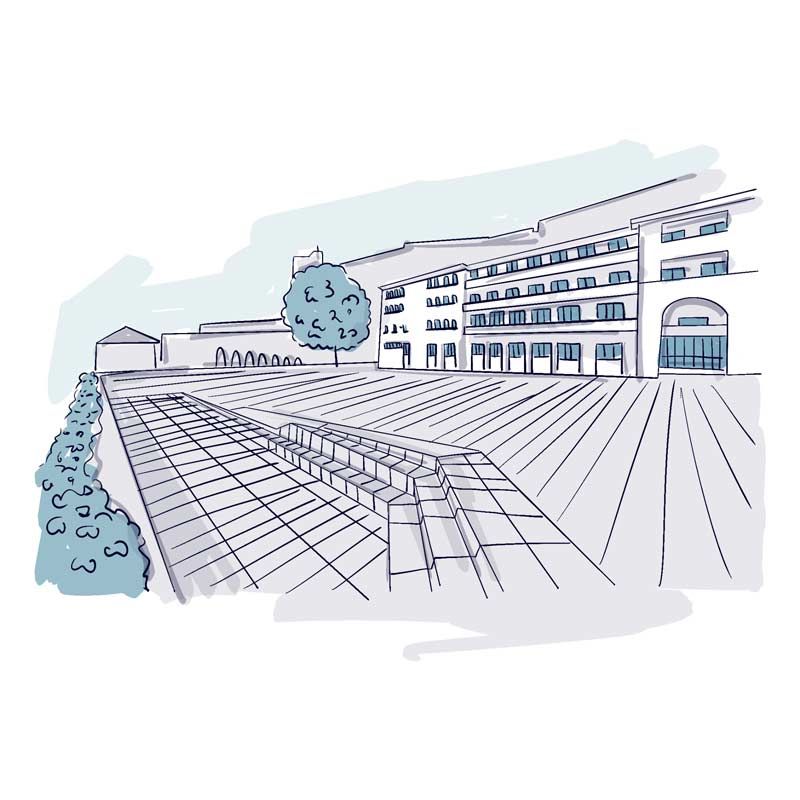
Çerçiz Topulli Square is one of the most lively places of Gjirokastër, in the heart of the old town. The Gjirokastër audio-guided tour stops here to evoke this lively square, a meeting point linked to the historic bazaar.
Çerçiz Topulli Square is one of the most lively squares of Gjirokastër. It corresponds to an enlargement of the street that crosses the historic district, at the level of the old bazaar. It bears the name of Çerçiz Topulli, a figure of the Albanian national movement, a hero of the struggle for the independence of the country at the beginning of the twentieth century. Lined with old buildings, cafés and shops, the square is a meeting and passage point, where the heart of the old stone town beats. It is also near here that the tourist information centre and the access to the Cold War tunnel are located. Çerçiz Topulli Square is an excellent starting point to explore Gjirokastër.
Here you enjoy the lively square in the heart of the old town, an enlargement of the old bazaar street, lined with old buildings, cafés and shops, which bears the name of the hero Çerçiz Topulli, near the information centre and the access to the tunnel. The square is the beating heart of Gjirokastër. It is a must-see stop, to be explored on foot.
Çerçiz Topulli Square lies in the heart of the old town of Gjirokastër, reachable on foot. It is a public square freely accessible; the cafés, shops and the information centre have their own hours. It is particularly lively during the day.
A figure of the Albanian national movement, a hero of the struggle for the independence of the country at the beginning of the twentieth century; the lively square of the old bazaar bears his name.
In the heart of the old town of Gjirokastër, in Albania.
Aucun avis pour le moment
