




Walk
Between Ancient Shadows and Hilltop Views
Gjirokastër, Albania
Walk
Between Ancient Shadows and Hilltop Views
Gjirokastër, Albania
2.2 km
Distance
1h00
Durée
21
Audios
Loop
Parcours
Shutterstock
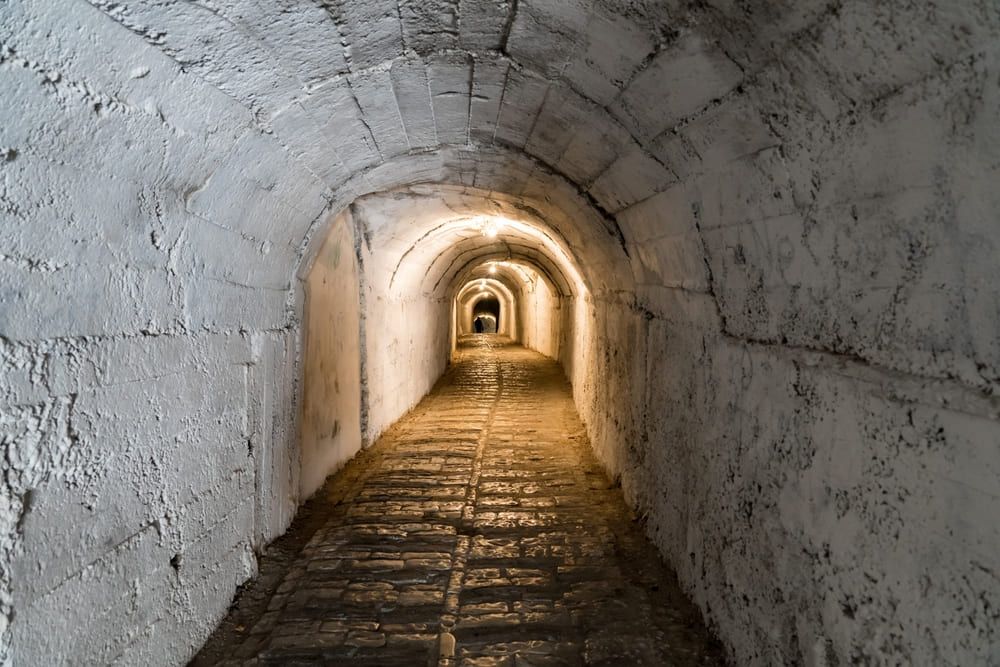
The Cold War tunnel is a vast underground complex dug under Gjirokastër in the communist era, as an anti-nuclear shelter. The Gjirokastër audio-guided tour stops here to evoke this striking witness of the recent history of Albania.
The Cold War tunnel is one of the most striking testimonies of the recent history of Gjirokastër. This vast underground complex was dug under the town in the era of the Albanian communist regime, which isolated the country from the rest of the world and had countless bunkers and shelters built for fear of an attack. Designed as an anti-nuclear refuge intended to protect the authorities and the population in case of conflict, the tunnel extends over numerous galleries and rooms, under the rock, not far from the castle that dominates the town. Today open to visit, it offers a chilling dive into the paranoia and the history of the dictatorship. It is a strong stop of the discovery of Gjirokastër.
Here you discover the vast underground complex of galleries and rooms dug under the town in the communist era as an anti-nuclear shelter, under the rock near the castle, a witness of the isolation and the fear under the Albanian dictatorship. The Cold War tunnel is a strong stop of Gjirokastër. It is a stop to be discovered, to be explored on foot.
The entrance of the tunnel lies under the rock, near the castle and Çerçiz Topulli Square, in Gjirokastër, reachable on foot. The visit is generally done in a guided way, according to its own hours and conditions, which vary; the tourist information centre of the square provides information. It is best to check the arrangements before coming and to bring a garment, the underground passages being cool.
Under the Albanian communist regime, which isolated the country and feared an attack, this vast underground complex was dug as an anti-nuclear shelter to protect the authorities and the population in case of conflict.
Under the rock, near the castle of Gjirokastër, in Albania.
Aucun avis pour le moment
