





Walk
Between Ancient Shadows and Hilltop Views
Gjirokastër, Albania
Walk
Between Ancient Shadows and Hilltop Views
Gjirokastër, Albania
2.2 km
Distance
1h00
Durée
21
Audios
Loop
Parcours
Shutterstock
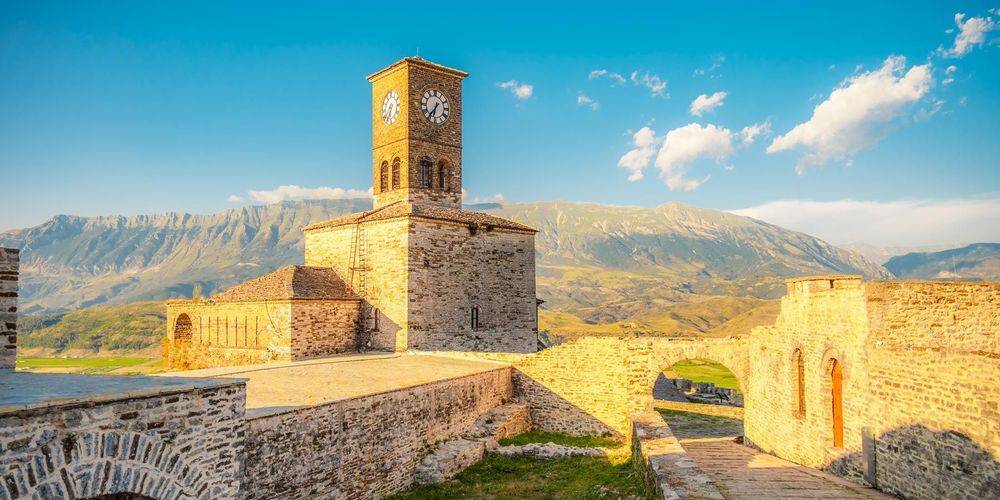
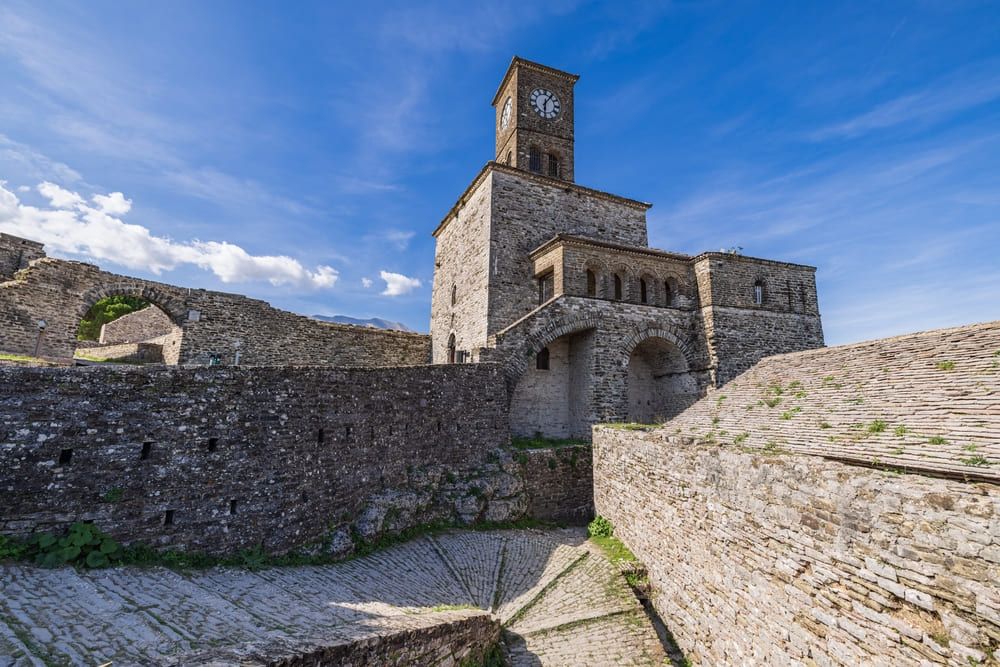
The castle of Gjirokastër is an imposing fortress that dominates the stone town, one of the most impressive of the Balkans. The Gjirokastër audio-guided tour stops here to evoke this major monument, its weapons museum and its exceptional panorama.
The castle of Gjirokastër is the emblematic monument of the town and one of the most impressive fortresses of the Balkans. Perched on a hill that dominates the old town and the valley, this vast fortified ensemble, whose origins date back to the Middle Ages, was enlarged and altered over the centuries, notably in the Ottoman era. Its powerful ramparts, its towers and its long vaulted galleries today shelter a national weapons museum, which presents a collection of armaments and artillery pieces, as well as a military plane. From the top of its walls and its clock tower, the panorama over the stone roofs of Gjirokastër and the surrounding mountains is exceptional. The castle also hosts a famous folklore festival.
You admire the vast fortress with powerful ramparts, towers and long vaulted galleries, dominating the stone town, its national weapons museum with its collection of armaments and a military plane, and the exceptional panorama over the roofs and the mountains from the clock tower. The castle is the emblematic monument of Gjirokastër. It is a must-see stop, to be explored on foot.
The castle of Gjirokastër lies on the hill that dominates the old town, reachable on foot by climbs and stairs. The visit of the castle and its weapons museum follows its own hours and conditions, which vary with the season. It is best to check the arrangements before coming and to bring good shoes.
A national weapons museum, with a collection of armaments, artillery pieces and a military plane, in its vaulted galleries; it also offers an exceptional panorama and hosts a famous folklore festival.
On the hill that dominates the old town of Gjirokastër, in Albania.
Aucun avis pour le moment
