





Walk
Between Ancient Shadows and Hilltop Views
Gjirokastër, Albania
Walk
Between Ancient Shadows and Hilltop Views
Gjirokastër, Albania
2.2 km
Distance
1h00
Durée
21
Audios
Loop
Parcours
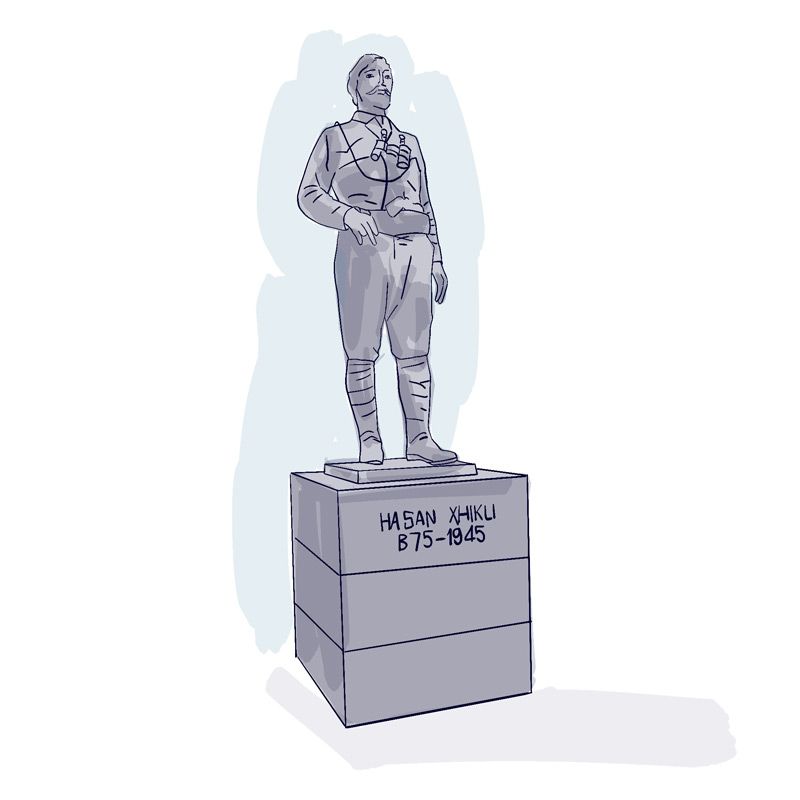
The statue of Hasan Xhikli and the Teqe mosque, a former Ottoman religious ensemble, are discovered side by side in Gjirokastër. The Gjirokastër audio-guided tour stops here, with respect, to evoke this place of memory and spirituality.
At this place in Gjirokastër, two elements draw the attention. On one side stands the Xhamia e Teqes, the Teqe mosque, a former Ottoman religious ensemble today inactive and partly in ruins, but protected as a cultural monument in Albania since 1973. It was a tekke, a place of meeting and prayer linked to a Sufi brotherhood, where Muslim believers gathered for devotion. This vestige testifies to the rich spiritual history and the religious diversity of the town in the Ottoman era. Nearby is a statue dedicated to Hasan Xhikli, a figure linked to local history. You discover this place of memory with respect, attentive to its religious past.
Here you discover, with respect, the Xhamia e Teqes, a former Ottoman religious ensemble today inactive and partly in ruins, protected as a cultural monument since 1973, a former Sufi tekke, as well as the statue dedicated to Hasan Xhikli. This place testifies to the spiritual past of Gjirokastër. It is a stop to be discovered with respect.
The Teqe mosque and the statue of Hasan Xhikli lie in the old town of Gjirokastër, reachable on foot. The former religious ensemble is partly in ruins and protected; you observe it from outside. It is best to respect the sacred and heritage character of the place.
The Teqe mosque, a former Ottoman religious ensemble today inactive and partly in ruins, protected as a cultural monument since 1973; it was a tekke, a place of meeting and prayer linked to a Sufi brotherhood.
In the old town of Gjirokastër, in Albania.
Aucun avis pour le moment
