




Walk
The City in the Sky
La Paz, Bolivie
Walk
The City in the Sky
La Paz, Bolivie
Distance
2.7 kmDurée
1h15Audios
16Parcours
Loop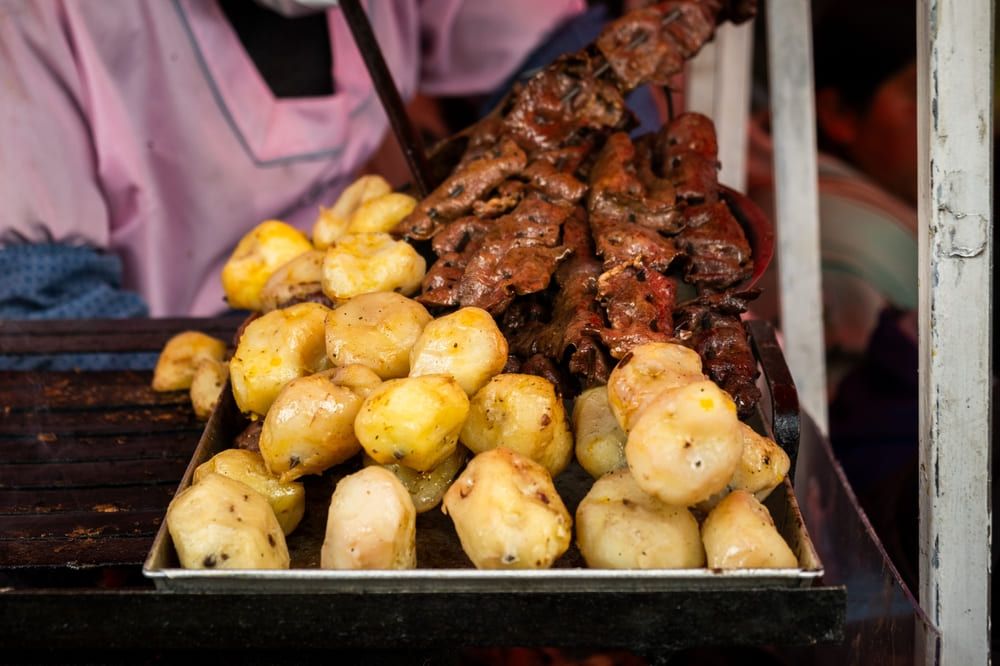
Shutterstock
If you’re walking along calle Pichincha after dark, let yourself be guided by your senses: you’ll soon be drawn in by the mouthwatering aroma of grilled meat and charcoal-smoke. You’re in the right place! Welcome to the world of anticucho, La Paz’s essential late-night snack. When the bars close and the temperature drops, night owls and late-shift workers gather around the braziers lining this street. And don’t mistake anticucho for an ordinary skewer: the star ingredient is beef heart. This tradition comes straight from the heart of popular Andean cuisine, turning less prized cuts into something delicious through fire and know-how. Cut into thin pieces, the heart is marinated for hours in a carefully balanced blend of garlic, oregano, cumin, and chili before being seared over glowing coals right before your eyes. The result? Firm, juicy meat with a surprisingly tender texture that can hold its own against the most expensive cuts. But the real secret to a great anticucho lies in what comes with it. The sizzling skewer is served with a grilled potato and topped with a generous ladleful of ají de maní, a creamy, spicy sauce made with roasted peanuts. It’s a perfect combination of bold meat, comforting potato, and fiery chili. For generations, this nighttime tradition has been kept alive by anticucheras, women in polleras who have become true custodians of one of La Paz’s most beloved after-dark traditions. Eating an anticucho standing on the sidewalk of Calle Pichincha, warming your hands over the steam from the plate while the smoke from the brazier stings your eyes, is more than just a late-night snack. It’s a deeply Bolivian ritual. But be warned: this street food may be a challenge for sensitive stomachs!
Aucun avis pour le moment
