



Walk
The City in the Sky
La Paz, Bolivie
Walk
The City in the Sky
La Paz, Bolivie
Distance
2.7 kmDurée
1h15Audios
16Parcours
Loop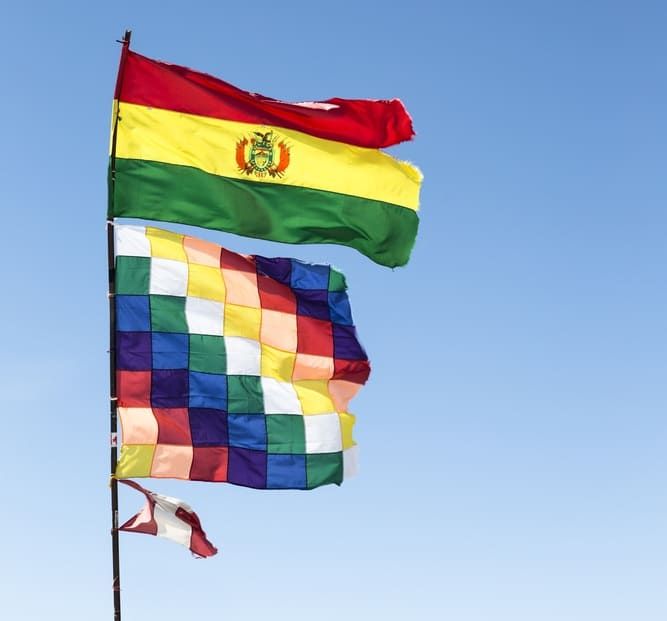
Shutterstock
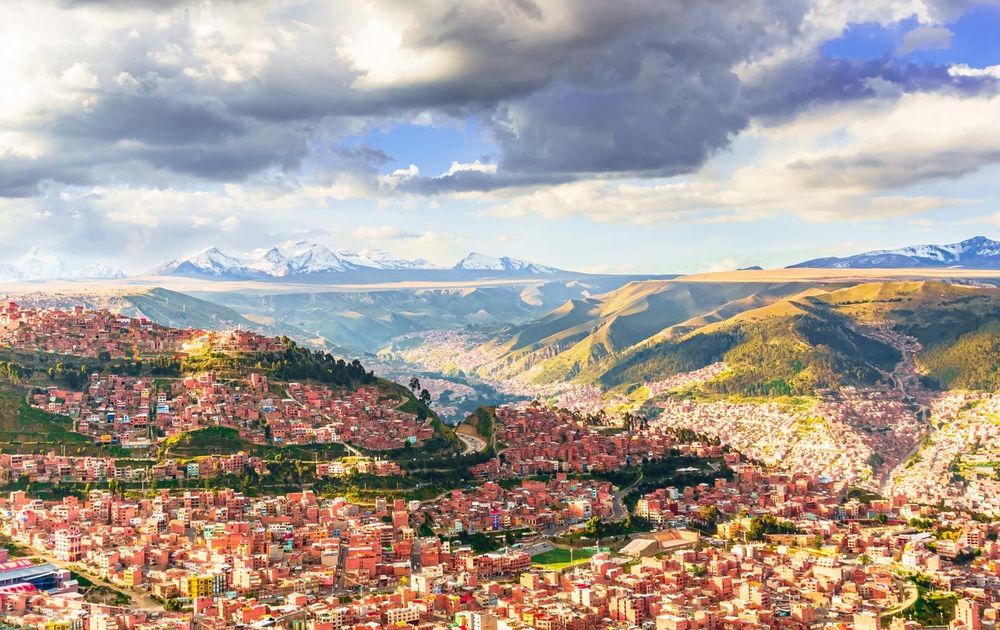
From its Andean birthplace to the heights of El Alto, the history of La Paz is enough to make your head spin! Long before the Spanish arrived, this deep basin was already shaped by the Aymara people, the Tiwanaku Empire, and the Incas. In 1548, conquistador Alonso de Mendoza founded Nuestra Señora de La Paz here to celebrate peace among the Spanish themselves, who had been fighting over the region’s riches. That’s where the city gets its name. La Paz soon moved down from the high plateau and settled into the valley, sheltered from the icy winds. It then became a major hub of colonial trade, with mule trains loaded with supplies passing through on their way to the legendary silver mines of Potosí. But despite the cool climate at more than 3,600 meters (11,800 feet) above sea level, La Paz has always had a hot temper! In 1781, the Aymara leader Túpac Katari subjected the city to a brutal months-long siege in resistance to colonial oppression. Then, 28 years later, it was Pedro Domingo Murillo’s turn to launch a revolt that would help spark a much larger independence movement across South America. In 1825, Bolivia finally became independent, but the story was far from over. Sucre became the official capital, while La Paz took the lead economically. The result? In 1899, after a brief civil war, La Paz became the seat of the president, government, and Parliament. And so began Bolivia’s famous two-capital system. The 20th century was hardly uneventful either. From the wounds left by the War of the Pacific against Chile, which deprived Bolivia of access to the ocean, to the 1952 Revolution, which granted universal suffrage, the city was in constant upheaval. Eventually, La Paz began spilling upward, giving rise to its high-altitude twin: El Alto, an Aymara and working-class stronghold at 4,000 meters (13,100 feet) above sea level. It was here that Evo Morales found a powerful base of support that helped bring him to power and advance the recognition of Indigenous peoples. Today, visiting La Paz means moving through a thousand stories at once: a colonial landscape suspended in the clouds, where the memory of revolution meets the pride of Bolivia’s Plurinational State.
Aucun avis pour le moment
