





Walk
The City of Six Harbors
Lorient, France
Walk
The City of Six Harbors
Lorient, France
4.5 km
Distance
1h50
Durée
24
Audios
Loop
Parcours
Shutterstock
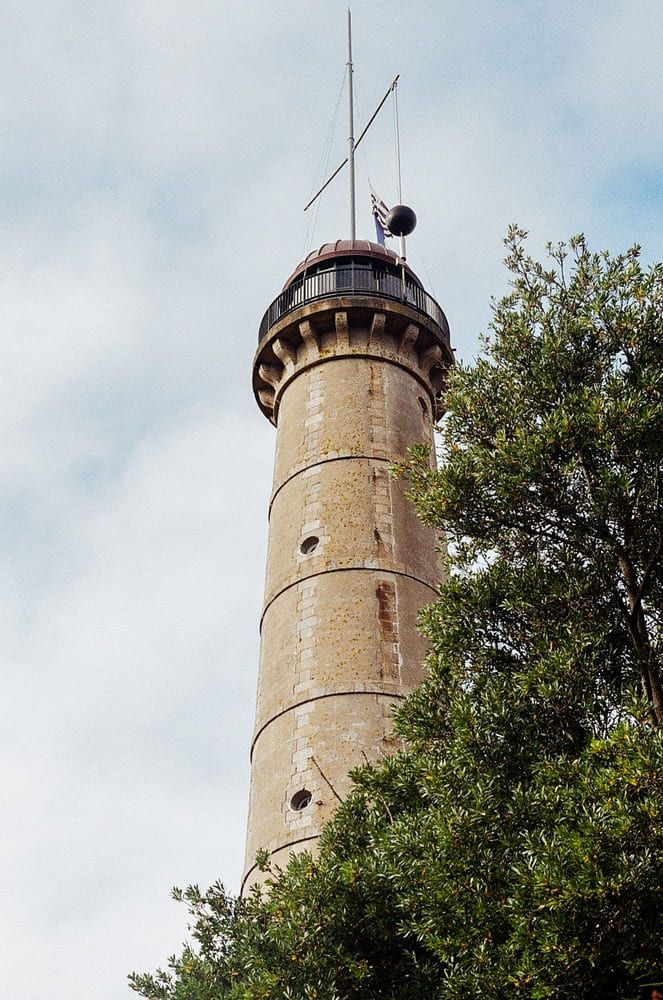
Welcome to Faouëdic Hill. Three of Lorient’s most distinctive landmarks rise before you: the Tour de la Découverte and the two former windmills that appear to stand guard beside it. Despite its lantern and its height of 38 meters (125 feet), the tower is not a lighthouse.
Built in the 1740s for the French East India Company, it served as both a lookout post and a signal tower. From the top, watchmen kept an eye out for ships returning from Asia, smugglers operating around the island of Groix, and possible enemy attacks. Its commanding position above the harbor left it exposed to the elements, and over the years, lightning struck the tower three times.
When it was rebuilt, it was fitted with one of the first Franklin-style lightning rods installed in Europe. In the 19th century, the tower gained another technological innovation: a 75-kilogram (165-pound) time ball. Dropped at noon each day, it gave sailors an exact time signal for setting their onboard chronometers.
Beside the tower, the two Faouëdic windmills served a much more practical purpose. They ground the flour used to make sea biscuits, the famous hard bread that sustained sailors on long voyages. Baked and rebaked to keep them from spoiling, these biscuits could last for up to two years—exactly the length of a round trip to the trading posts of India and China.
Quite a contrast with today’s few hours by plane. A storm damaged the windmills in 1825, stripping them of their sails. They were later converted into living quarters and an observatory.
For many years, they remained closed to the public within a military zone, but today they are open to visitors and stand in the heart of the Jardin des Moulins. Together, these three stone guardians tell the story of Lorient’s maritime, scientific, and industrial past.
Aucun avis pour le moment
