





Walk
The City of Six Harbors
Lorient, France
Walk
The City of Six Harbors
Lorient, France
4.5 km
Distance
1h50
Durée
24
Audios
Loop
Parcours
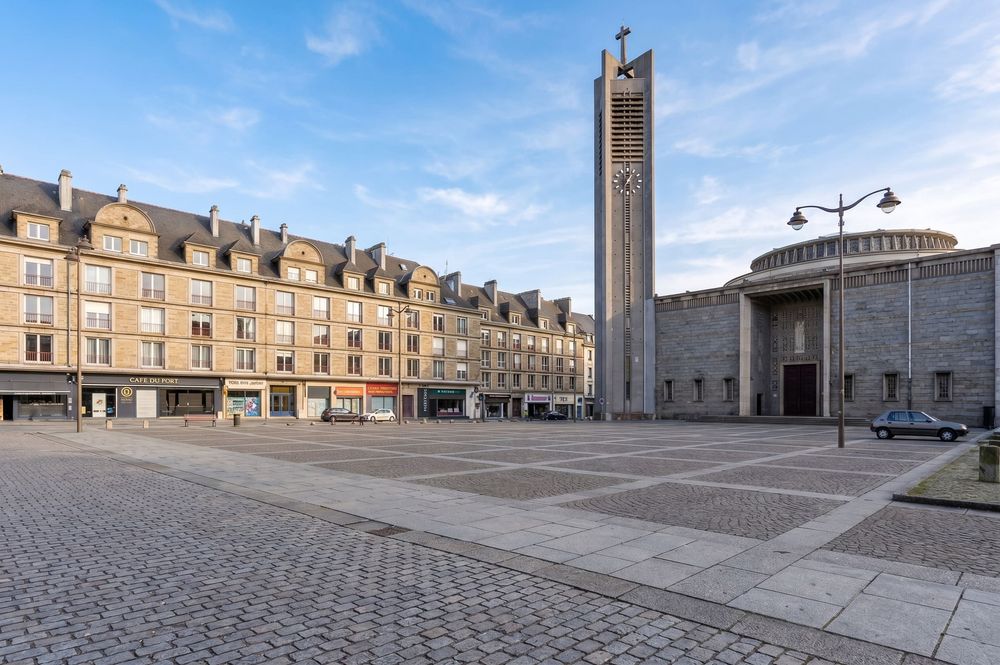
Générée par Intelligence Artificielle Gemini
You may be a long way from Strasbourg, but this square bears the name of its region: welcome to Place Alsace-Lorraine. Today, it is a lively commercial square, full of activity and looking firmly toward the future. Yet beneath your feet and behind these facades lie more than two and a half centuries of turbulent history.
The square even holds an unusual record: since it was created in the mid-18th century, it has changed names seven times. Under the Ancien Régime, during the era of the French East India Company trading posts, it was known as Place Royale. It later became Place de la Fédération, then Place de la Montagne during the Reign of Terror, when the guillotine was erected here, and afterward Place Napoléon.
On October 29, 1872, it received the name it still bears today: Place Alsace-Lorraine. The choice was deeply political. The city council wanted to express its solidarity with the provinces annexed by Germany following the Treaty of Frankfurt.
For longtime Lorient residents, however, far removed from such grand political statements, the square remained simply “La Plaine,” or “the Plain.” At the turn of the 20th century, Place Alsace-Lorraine stood at the center of Lorient’s elegant social scene and reflected the refinement and prosperity of the Belle Époque. Then World War II brought that era to a violent end. Explosive and incendiary bombs rained down on the city, and within hours, the square and the surrounding streets lay in ruins.
During 1943, nearly 80,000 bombs devastated Lorient, destroying 85 percent of the city. Yet men and women survived directly beneath your feet. Hidden about 3 meters (10 feet) below the pavement is a reinforced-concrete air-raid shelter built in 1941.
Designed for 200 people, this narrow, dark space held as many as 800 during the bombing raids. Imagine the darkness, the lack of air, and the deafening crash of explosions overhead. To keep the air circulating and generate light, those sheltering inside had to pedal continuously on bicycles fixed to the floor.
One witness later recalled the lingering fear that nothing would remain once they reopened the shelter doors. The bunker can still be visited today, but be sure to book ahead if you would like to explore this chapter of Lorient’s history in greater depth. After the ruins came rebirth.
In 1950, French President Vincent Auriol came to Lorient in person to lay the official cornerstone of the city’s reconstruction. Sealed inside that stone was a parchment preserving the hopes of an entire city. The reinforced concrete that surrounds you today conceals more secrets than meet the eye.
Aucun avis pour le moment
